
Foolish Games (1995) – Jewel

I would have liked a dollar every time I heard this song when it came out and I’m still a big fan of it. I hardly know any of the rest of Jewel’s discography, but this one always tugs at my heart-strings. I decided not to add the ineffectual official video below, rather a simple – song with lyrics video.
Foolish Games is just a gorgeously written ballad and the melody is to die for. It was released from her debut album Pieces of You in 1995. The song details the frustration and agony of knowing that the intensity of one’s love is not reciprocated by one’s lover.

The single is ranked at number 20 on Billboard‘s All Time Top 100 and held the Guinness World Record for the longest chart run of a single, 65 weeks.

You took your coat off and stood in the rain
You’re always crazy like that
And I watched from my window
Always felt I was outside looking in on you
You’re always the mysterious one with
Dark eyes and careless hair
You were fashionably sensitive, but too cool to care
You stood in my doorway, with nothing to say
Besides some comment on the weather


Well, in case you failed to notice
In case you failed to see
This is my heart bleeding before you
This is me down on my knees


These foolish games are tearing me apart
And your thoughtless words are breaking my heart
You’re breaking my heart

Everytime I hear, ‘You’re breaking my heart’, my eyes well up with tears. Jewel Kilcher was born 4 months after me in May 23, 1974. She grew up singing and yodeling as a duo with her father, a local musician. At age 15 she studied Operatic voice and performed in clubs and coffeehouses in San Diego. Based on media attention she received a record contract with Atlanta Records when she released her debut album. Jewel has also had endeavours in writing and acting; and in 1999 appeared in a supporting role in Ang Lee’s Western film Ride with the Devil (1999) which earned her critical acclaim.

References:
1. Foolish Games – wikipedia
2. Jewel – wikipedia

Tagged with: , ,
Posted in Music

500 Miles – (Justin Timberlake, Carey Mulligan, Stark Sands)

This is the third article here from the Inside Llewyn Davis movie. It was a song made popular in the United States and Europe during the 1960s folk revival. The simple repetitive lyrics reflect a traveller who is far from home, out of money and too ashamed to return. The song is credited as being written by Hedy West which was her most famous song and who belonged to the same revivalists as Joan Baez and Judy Collins. Johnny Cash is known to have included “500 Miles” on his list of 100 essential country songs in the early 1970s.

It’s interesting to watch the making of documentary of Inside Llewyn Davis and hear the Coen brothers’ thoughts about Justin Timberlake’s involvement in the music. They were impressed to say the least.

If you miss the train I’m on
You will know that I am gone
You can hear the whistle blow
A hundred miles
A hundred miles
A hundred miles
A hundred miles
A hundred miles

The pre-Bob Dylan music folk-era in the early 1960’s is not pretty. The people weren’t always the most fetching and nicest people. As John Goodman says in his character as Rolland Turner:

‘In Jazz you know, we play all the notes,
Twelve notes in scales, dipshit
!
Not 3 chords on a ukulele‘

Tagged with: , , , ,
Posted in Music

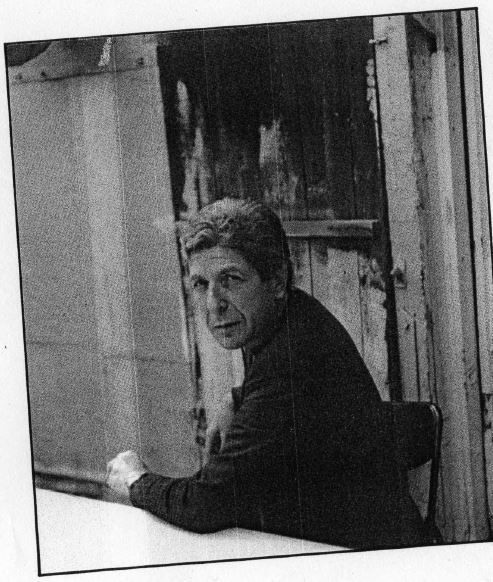
First We Take Manhattan (1986) – Leonard Cohen

I love everything 80’s about this track; the synthpop and corny women voices singing ‘I’d really like to live beside you, baby‘. The irony is, it’s an apocalyptic message and Leonard seems to be playing the instigator of this world transformation. There is an eerie pre September 11, 2001 warning in this, when you read the lyrics.
He said in an 1988 interview ‘There’s something about terrorism that I’ve always admired. The fact that there are no alibis or no compromises. That position is always very attractive. I don’t like it when it’s manifested on the physical plane – I don’t really enjoy the terrorist activities – but Psychic Terrorism’.

They sentenced me to 20 years of boredom
For trying to change the system from within
I’m coming now, I’m coming to reward them
First we take Manhattan, then we take Berlin

I’m guided by a signal in the heavens (Guided, guided)
I’m guided by this birthmark on my skin (I am guided by)
I’m guided by the beauty of our weapons (Ooh, ooh)
First we take Manhattan, then we take Berlin

The song has been covered a dozen of times most notably by R.E.M. It is the third song to appear here from Leonard’s ‘I’m Your Man‘ album. It was the eighth studio album from Leonard with many songs having a synthesizer-oriented production. It reached number one in several European countries, transforming Cohen into a best-selling artist. Cohen felt by this time his singing had improved and he said, ‘when I got to I’m Your Man, I was in full stride..I could at last deliver the songs with the authority and intensity required.”

The album includes some of Cohen’s most popular songs and concert staples, including the single “Ain’t No Cure for Love“, “First We Take Manhattan”, and “Everybody Knows”, which was a collaboration with Cohen’s backup singer Sharon Robinson. Although Cohen had earned a reputation among critics and some listeners for excessive gloominess, several tracks on the album displayed his wry sense of humor and playfulness.

Tagged with: ,
Posted in Music

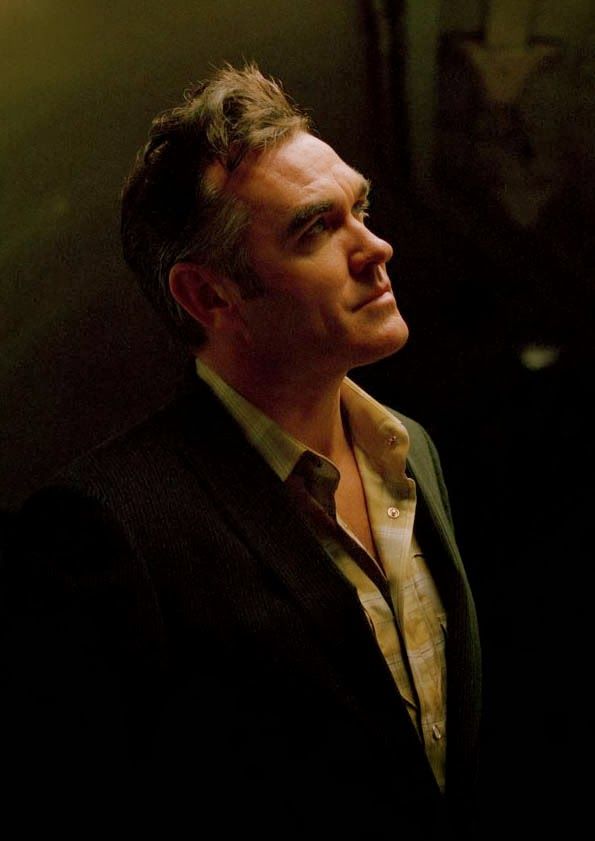
First of the Gang to Die (2004) – Morrissey

It’s the strangest thing that the first two songs here from Morrissey are from his solo career, but nothing from his time in the Smiths. My friend who lives close-by put me onto the Smiths which I wrote in the article recently Everyday is like Sunday. I soon ventured perusing Morrissey’s solo works and really liked today’s featured track – First of the Gang to Die.

We are the pretty petty thieves
And you’re standing on our streets
Where Hector was the
First of the gang with a gun in his hand
And the first to do time
The first of the gang to die, oh my

“Bullet in his gullet” – fantastic poetry, vivid shocking image. Love will finally break the core of our flesh.

This was the second single released from his 2004 album You Are the Quarry. This single stayed in the charts longer than any other Morrissey song. This song is steeped in the Noir-genre and just reeks of gang violence because of love. Only Morrissey could write: “You have never been in love until you’ve seen the sun rise behind the home for the blind.” We all know Morrissey likes gloomy-irony. I think ‘First of the Gang‘ it’s one of his best written songs in my humble estimation.

Morrissey is hugely popular in South America particularly Chile, Argentina and Central America in Mexico.

Someone wrote on Songmeanings:

Death is an allegory for marriage. Indeed, marriage is death of passion, death of emotion, death of individuality. The image of smashed human bone inspires fear and disgust, just like the thought of marriage does. But when you are able to see beauty in this horrendous picture (“you’ve seen the sunlight thrown”), you know you are really in love.

Tagged with: , ,
Posted in Music

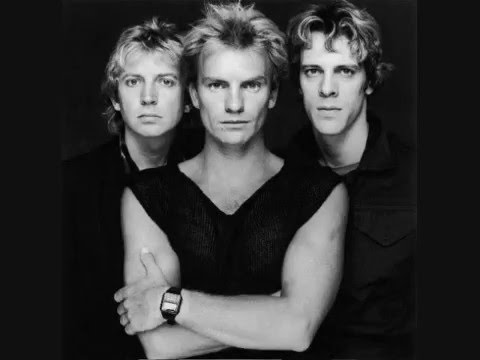
Every Breath You Take (1983) – Sting (The Police)

We are backtracking in the music project as I realised when I was researching Sting’s Fields of Gold that I hadn’t included one of my favourite live performances which appears below. Like almost everyone in the Western-world I have heard Every Breath You Take more times than I care to admit, but the Human Rights Now concert version below of a young Bruce Springsteen and Sting is something to behold.

Today, I was just telling a friend that when I saw this concert on TV as an adolescent with my Mother, she remarked at the end (words to the effect), ‘OK, I am convinced Bruce Springsteen is on another level as a performer and I’m hooked‘. I believe the concert is available in its entirety on You Tube to view.

Every Breath You Take is so popular here in Colombia. It was the biggest hit in 1983 and won song of the year at the Grammys. It was recognised by BMI in 2019 as being the most played song on radio in history. Sting wrote the song in 1982 in the aftermath of his separation from Frances Tomelty and the beginning of his relationship with Trudie Styler. Their split was controversial. As The Independent reported in 2006, “The problem was, he was already married – to actress Frances Tomelty, who just happened to be Trudie’s best friend“.

Sting later said he was disconcerted by how many people think the song is more positive than it is. He insists it is about the obsession with a lost lover, and the jealousy and surveillance that follow. “One couple told me ‘Oh we love that song; it was the main song played at our wedding!’ I thought, ‘Well, good luck.‘

Reference:
Every Breath You Take – wikipedia

Tagged with: , ,
Posted in Music

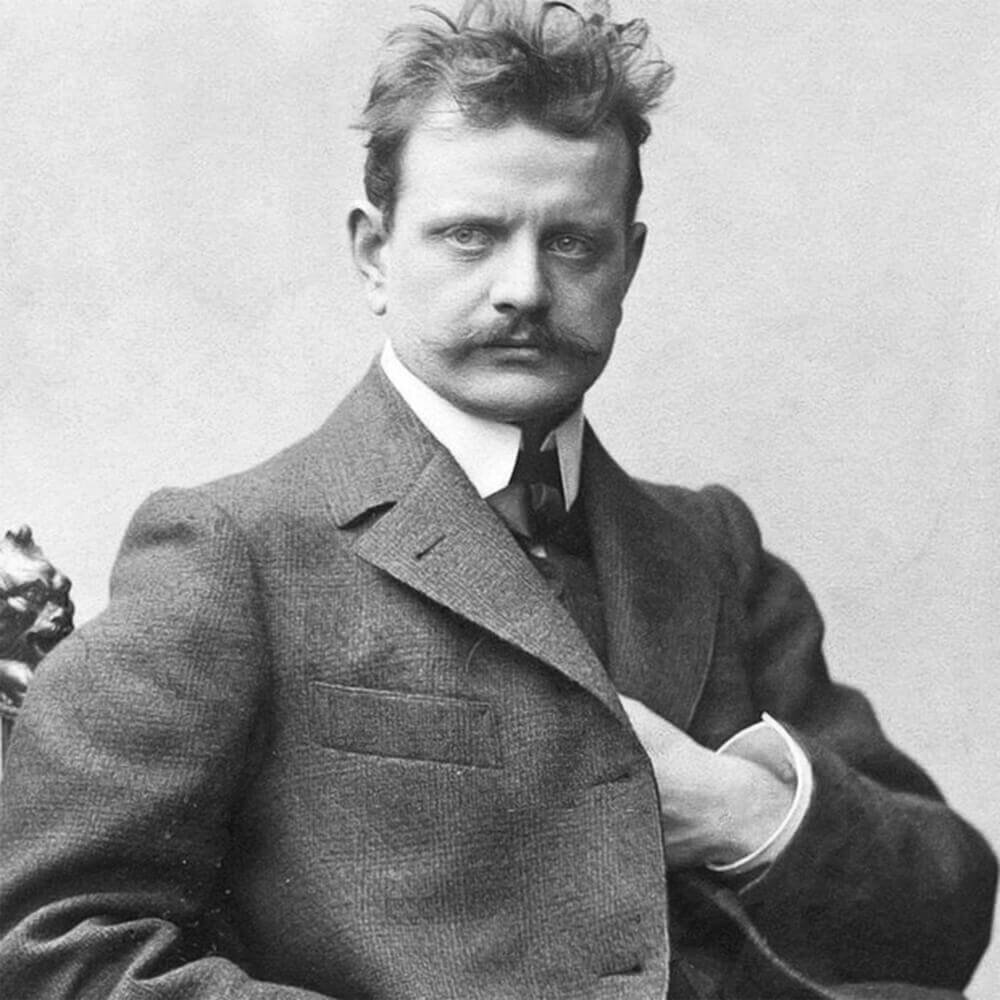
Finlandia Op. 26 (1900) – Jean Sibelius

Jean Sibelius is a Finnish composer and violinist and recognised as his country’s greatest. Today’s piece Finlandia was composed for the Press Celebrations of 1899, a covert protest against increasing censorship from the Russian Empire, and was the last of seven pieces performed as an accompaniment to a tableau depicting episodes from Finnish history. Jean Sibelius’ music is often credited with having helped Finland develop a national identity during its struggle for independence from Russia.

To avoid Russian censorship, Finlandia had to be performed under alternative names at various musical concerts. Titles under which the piece masqueraded were numerous and often confusing —famous examples include Happy Feelings at the awakening of Finnish Spring, and A Scandinavian Choral March.

Sibelius composed prolifically until the mid-1920s, but after completing his Seventh Symphony (1924), the incidental music for The Tempest (1926) and the tone poem Tapiola (1926), he stopped producing major works in his last thirty years, a stunning and perplexing decline commonly referred to as the “silence of Järvenpää”, the location of his home.

Finlandia is an extraordinary piece of music. It’s difficult not to be in awe of its beauty and worth. I know next to nothing about Finland, but this music alone (along with the video images below) makes me want to visit. My favourite part of the piece is from 6:20 below when it slows down and turns into something entirely new. It then has one of the most satisfying endings to a classical piece I have heard.

References:
1. Finlandia – wikipedia
2. Jean Sibelius – wikipedia

Tagged with: ,
Posted in Music

The AnkiDroid Collection (Part 11) – Homogenous, Machiavellianism & Theosis

Ankidroid additions related to Science, History and Philosophy.

Homogenous

Corresponding in structure because of a common origen, common ethincity. When a group talks, looks and acts the same.

Machiavellianism

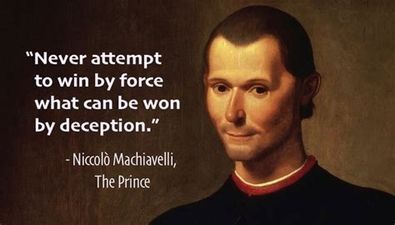
Cunning, scheming and unscrupulous especially in Politics. The term Machiavellianism was dervied from the Italian author and philosopher Nicholas Machiavel (1469 –1527) who claimed that his experience and reading of history showed him that politics have always been played with deception, treachery, and crime. He is best known for his political treatise The Prince (Il Principe). He has often been called the father of modern political philosophy and political science.

Theosis

Deification: The transformative process whose aim is likeness to or or union with God as taught by the Eastern orthodix church and eastern Catholic Church. As a process of transformation, theosis is brought about by the effects of catharsis (purification of mind and body) and theoria (‘illumination’ with the ‘vision’ of God). According to Eastern Christian teachings, theosis is very much the purpose of human life.

I found Theosis discussed by Jonathan Pageau in an interview by Jordan Peterson called ‘The Perfect Mode of Being‘. Jonathan Pageau is an Orthodox Christian, professional carver, writer, and public speaker. He specializes in symbolism and traditional Christian art.

Tagged with: , ,
Posted in politics, Reading

Finding You (2005) – The Go-Betweens

This is the third song to appear here from this quintessential indie-Australian music group’s 2005 album Oceans Apart. Finding You is one of my favourite songs from this group. The video below has got just 25,000 views. Now compare that to the Robbie Williams or the ABBA video I recently posted, Finding You is untamed and unspoilt; like an Oasis in the Australian desert. I cherish this song. The worst part about this song is that it has to end!!

Finding You peaked at Number 17 on the Australian music charts. Robert Forster co-founder of The Go-Betweens in an interview described it a song he loved, “I really like the powerful build-up, it hits the line about lightning and then it’s like a crescendo. It’s written by Grant and he wrote it probably two years or something before he died, and I think it’s one of the best five to 10 songs he ever did. Magnificent song“. I couldn’t agree with Robert Forster more; Finding You is easily in my top 20 Australian songs.

What would you do if you turned around
And saw me beside you
Not in a dream but in a song?
Would you float like a phantom
Or would you sing along?

Don’t know where I’m going
Don’t know where it’s flowing
But I know it’s finding you

Tagged with: , ,
Posted in Music

Filipino Box Spring Hog (1999) – Tom Waits

This is a lot of fun to listen to a bit dishevelled and frivolous. I find with Tom Waits you have to be in the mood and if not, he will soon put you in the mood. When listening to multiple songs I get swept up in the charm of his music. Right now hearing Filipino Box Spring Hog in the state I’m in, suits me just fine. This is the second song to appear after Big in Japan from his 1999 record Mule Variations which received a Grammy for Best Contemporary Folk Album.

Even for Tom Waits, Filipino Box Spring Hog is a truly weird song:

Well I hung on to Mary’s stump
I danced with a soldier’s glee
With a rum-soaked crook and a big fat laugh
I spent my last dollar on thee
I saw Bill Bones, I gave him a yell
Kehoe spiked the nog
With a chainlink fence
And a scrap-iron jaw


Cookin’ up a Filipino Box Spring Hog

From Songfacts:

It seems to be about a bunch of wild characters cooking up a dinner in a junkyard, with a hog cooked over a box spring as the main course. We even get some instructions on how to prepare such a feast:

Gotta roll em over twice
Baste him with a sweeping broom
You gotta swat them flies
And chain up the dogs

The funny thing is, for all the weirdness, there’s actually a lot in the song that was taken from the real world. For one, this is the first song where Waits ever mentions his wife Kathleen by name:

Kathleen was sittin’ down
In Little Red’s Recovery Room
In her criminal underwear bra

We know Waits’ wife and collaborator Kathleen actually was the reference in the song, too, because in a 1999 interview with Exclaim, he was asked if it was indeed the first time he used her name in a song. Waits answered, “Yeah. She said, ‘Gee, thanks a lot! You finally stick me in a song, and I’m sitting in a bar in my bra. And you’re there with the dog tied to the stool.’ It’s a nice family portrait. I had to do some explaining, but she got a kick out of it.”

Tagged with: , ,
Posted in Music

El Olvido Que Seremos (Colombia 2020) – Fernando Trueba (Friday’s Finest)

El Olvido Que Seremos is translated in English as Forgotten We’ll Be, but was released in English-speaking countries as Memories of my Father. It was the 2020 Colombian entry to the Academy Awards, but wasn’t nominated. It’s disappointing that this movie nor the previous Colombian 2019 entry Monos didn’t make the short-list for Best International Feature Film, but I understand the massive competition in this category. I was describing El Olvido this morning to someone as the Colombian equivalent of Mexico’s Roma film in terms of encapsulating the cultural and interpersonal passion and vibe so inherent in Latin America and specifically here – Colombia.

El Olvido Que Seremos is based on the true story of Héctor Abad Gómez, a Colombian university professor who challenges the country’s establishment. In 1980’s Colombia, Dr Hector Abad Gomez fights to lift the people of Medellin out of poverty. Despite the threats to his safety he refuses to remain silent. The fate of this dedicated doctor and devoted family man is shown through the gentle and admiring eyes of his son.

This moving film is based on the book by the same name written by his son Hector Abad Faciolince which is considered one of the most important works of 21st-Century Hispanic literature. I read this book a few years ago and was delighted that it had been made into a film. The director remarked the following on the film:

‘El Olvido Que Seremos needed to be adapted for cinema. The values the book defends have a profound effect on us. Nobody is left feeling indifferent because it affects us all. This story has to be told again and again. Whether the aim is just to make the world a better place, or more simply, to make thousands more people want to read it.’

References:
1. Cannes Film Festival – Forgotten We’ll Be

Below are more comments from director Fernando Trueba and his tribute to Colombian doctor Hector Abad Gomez including some scenes from the movie:

Tagged with: , , ,
Posted in Movies and TV

Follow Blog via Email

Enter your email address to follow this blog and receive notifications of new posts by email.

Join 783 other subscribers

← Back

Thank you for your response. ✨