Fields of Gold (1993) – Sting

Apart from Every Breath You Take, this is my favourite track from Sting. By the way if you haven’t seen the duet of Sting and Bruce Springsteen’s performance of Every Breath (at the 1988 Human Rights concert).. then you’re just letting the best pass you by. Now back to Fields of Gold which was one of Stings most famous songs in the 90’s. I also enjoy hearing Eva Cassidy’s version of this.

Sting said: ‘In England, our house is surrounded by barley fields, and in the summer it’s fascinating to watch the wind moving over the shimmering surface, like waves on an ocean of gold. There’s something inherently sexy about the sight, something primal, as if the wind were making love to the barley. Lovers have made promises here, I’m sure, their bonds strengthened by the comforting cycle of the seasons’.

I just love the sound layout and tranquility of this song. It just flows and the imagery propels me to a foreign land I haven’t seen. It’s wonderfully mellow and Stings intimate vocals are excellent. Paul McCartney even said that “Fields of Gold” was a song he wished he’d written himself. I am not across much of Sting’s discography, but Fields of Gold is a glorious peaceful ballad. It appeared on his fourth studio album, Ten Summoner’s Tales (1993) and reached No. 16 on the UK Singles Chart and No. 23 on the US Billboard:

You’ll remember me when the west wind moves
Upon the fields of barley
You’ll forget the sun in his jealous sky
As we walk in fields of gold

So she took her love
For to gaze a while
Upon the fields of barley
In his arms she fell as her hair came down
Among the fields of gold

Tagged with: , ,
Posted in Music

12 Rules For Life: An Antidote to Chaos (2018) – Jordan Peterson

This Wednesday literature piece has been a long time coming. I have written extensively here about Canadian clinical psychologist Jordan Peterson including one of his biggest literary influences – Fyodor Dostoevesky who was the subject of the last few weeks’ literature pieces. I have watched most of Jordan Peterson’s Maps of Meaning lectures at the University of Toronto as well as his Bible Studies: Genesis Lecture Series and his major interviews and debates. Since he first appeared on Sam Harris Making Sense podcast – ‘What is True‘ which I still consider one of the most provocative yet necessary philosophical debates of our time I found myself windswept in the phenomenon – that is Jordan Peterson.

My focus on Wednesday literature pieces has primarily been on presenting extracts from great Classical literature, but today we move into the Self-Help genre which you could classify Jordan Peterson’s book 12 Rules For Life: An Antidote to Chaos. This genre of reading is one of my least favourite although in my youth I was rivetted by M, Scott Peck’s – The Road Less Travelled. I thought when I procured Jordan’s book that it was unlikely I would read anything anew; challenging and engaging since I’d already heard hundreds of hours from him. But alas I have found myself pleasantly surprised like when reading today’s extract which explores a part of his upbringing; the town he came from – Fairview, Alberta – Canada.

I found this part a fascinating read since I was brought up in a totally distinct natural ambience – the rural outskirts of Western Sydney, Australia. I have written about that a lot here too, but today is about Jordan’s town – so without further ado I present to you – The Old Hometown:

The town I grew up in had been scraped only 50 years earlier out of the endless flat Northern prairie. Fairview, Alberta, was part of the frontier, and had the cowboy bars to prove it. The Hudson’s Bay Co. department store on Main Street still bought beaver, wolf and coyote furs directly from the local trappers. Three thousand people lived there, four hundred miles away from the nearest city. Cable TV, video games and internet did not exist. It was no easy matter to stay innocently amused in Fairview, particularly during the five months of Winter, when long stretches of forty-below days and even colder nights were the norm.

The world is a different place when it’s cold like that. The drunks in our town ended their sad lives early. They passed out in snowbanks at three in the morning and froze to death. You don’t go outside casually when it’s forty below. On first breath, the arid desert air constricts your lungs. Ice forms on your eyelashes and they stick together. Long hair, wet from the shower, freezes solid and then stands on end wraith-like of its own accord later in a warm house, when it thaws bone dry, charged with electricity. Children only put their tongues on steel playground equipment once. Smoke from house chimneys doesn’t rise. Defeated by the cold, it drifts downwards, and collects like fog on snow-covered rooftops and yards. Cars must be plugged at night, their engines warmed by block heaters, or oil will not flow through them in the morning, and they won’t start. Sometimes they won’t anyway. Then you turn the engine over pointlessly until the starter clatters and falls silent. Then you remove the frozen battery from the car, loosening the bolts with stiffening fingers in the intense cold, and bring it into the house. It sits there, sweating for hours, until it warms enough to hold a decent charge. You are not going to see out of the back window of your car, either. It frosts over in November and stays that way until May. Scraping it off just dampens the upholstery. Then it’s frozen too. Late one night going to visit a friend I sat for two hours on the edge of the passenger seat in a Dodge Challenger, jammed up against the stick-shift, using a vodka-soaked rag to keep the inside of the front windshield clear in front of the driver because the car heater had quit. Stopping wasn’t an option. There was nowhere to stop.

And it was hell on house cats. Felines in Fairview had short ears and tails because they had lost the tips of both to frostbite. They came to resemble arctic foxes, which evolved those features to deal proactively with the intense cold. One day our cat go outside and no one noticed. We found him, later, fur frozen fast to the cold hard backdoor cement steps where he sat. We carefully separated cat from concrete, with no lasting damage – except to his pride. Fairview cats were also at great risk in the winter from cars, but not for the reasons you think. It wasn’t automobiles sliding on icy roads and running them over. Only loser cats died that way. It was cars parked immediately after being driven that were dangerous. A frigid cat might think highly of climbing up under such a vehicle and sitting on its still-warm engine block. But what if the driver decided to use the car again, before the engine cooled down and cat departed? Let’s just say that heat-seeking house-pets and rapidly rotating radiator fans do not coexist happily.

Because we were so far north, the bitterly cold winters were also very dark. By December, the sun didn’t rise until 9:30 am. We trudged to school in the pitchblack. It wasn’t much lighter when we walked home, just before the sunset. There wasn’t much for young people to do in Fairview, even in the summer. But the winters were worse. Then your friends mattered. More than anything.

Tagged with: ,
Posted in Reading

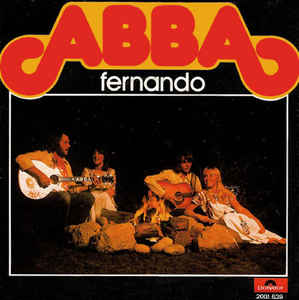
Fernando (1976) – ABBA

I was weighing up whether to include this song here, since the Dancing Queen article didn’t conjure any interest – woe is me. What the heck, I’ll continue down this nostalgic track, despite how little you might want to hear this track for perhaps the hundredth time. If anything I like to imagine a young child listening to it for the first time like when my kids did.

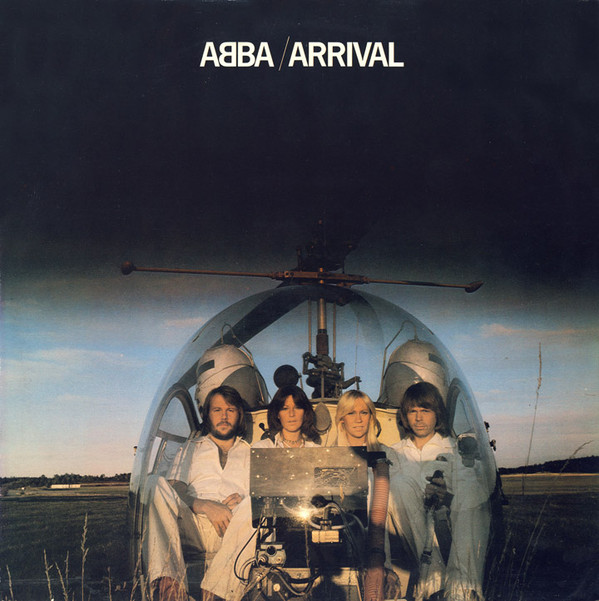
I remember as a boy sitting in front of the fireplace and holding the 1976 Arrival album in my hands and I was besotted by it. The helicopter looked just like the one used in the Skippy: The Bush Kangaroo episode called ‘Many Happy Returns‘ where Sonny has to fly Jerry’s helo on his own. Those were the days!
The track Fernando, which had been recently released as a single in March 1976, was included on the Australian and New Zealand versions of the Arrival album.

Fernando is one of ABBA’s highest selling singles with six million selling in 1976 alone. It is one of fewer than forty all-time singles to have sold 10 million (or more) physical copies worldwide, making it one of the best-selling singles of all time. Prior to 1997, it was Australia’s highest-selling single. The song originally carried the working title ‘Tango‘, but changed in the last minutes prior to recording. The name “Fernando” was inspired by a bartender of that name who worked at a club the band frequented in Stockholm, Sweden.

Interestingly, based on my observations ABBA unlike Michael Jackson and Queen are not very popular in Latin America. Although a Spanish version of the song exists on ABBA’s Spanish album, Gracias Por La Música (Thank you for the Music).

Can you hear the drums Fernando
I remember long ago another starry night like this
In the firelight Fernando
You were humming to yourself and softly strumming your guitar
I could hear the distant drums
And sounds of bugle calls were coming from afar

They were closer now Fernando
Every hour every minute seemed to last eternally
I was so afraid Fernando
We were young and full of life and none of us prepared to die
And I’m not ashamed to say
The roar of guns and cannons almost made me cry

Tagged with: , ,
Posted in Music

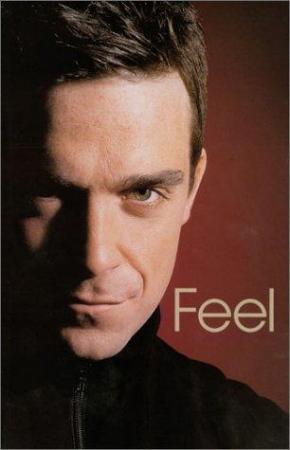
Feel (2002) – Robbie Williams

Feel is the second song to appear here from Robbie Williams. Like the previous entry Angels this was a worldwide commercial hit and still widely played. It peaked at number one in many countries and in the top five of many more. Feel was the lead single on his fifth studio album Escapology. Most of the vocals are from the original demo recording from 1999, as Williams felt unsatisfied with the re-recorded vocals. He commented, “I just couldn’t sing it as well as I did on that day.“.

Come and hold my hand
I wanna contact the living
Not sure I understand
This role I’ve been given
I sit and talk to God
And he just laughs at my plans
My head speaks a language
I don’t understand

I just wanna feel
Real love feel the home that I live in
‘Cause I got too much life
Running through my veins
Going to waste

Robert Williams was a former member of the group Take That. I really liked their song ‘Back For Good‘ because it reminded me of a Yorkshire lass who flew back to her homeland carrying my heart with her. Williams was just 16 years old when he joined the group, but wasn’t happy as he felt his musical ideas weren’t being taken seriously. Williams of course had a lot more success as a solo act. He lived many years in Los Angeles, but moved back to England.
According to wikipedia: His next door neighbour in London is Led Zeppelin guitarist Jimmy Page.. Page delayed Williams’ plans for an underground swimming pool in 2018, stating construction work would damage The Tower House, Page’s home since 1972: a listed Victorian-era town-house.

Like Angels, these days I am not as enamoured with Feel as when I first heard it, but it’s still a damn good song. The original black and white video below showing Robbie in a cowboy like lifestyle gained attention in the United States thanks to Daryl Hannah’s appearance as Williams’s love interest. The other video I liked is the slightly lesser known live version at Knebworth in 2003.

Tagged with: , ,
Posted in Music

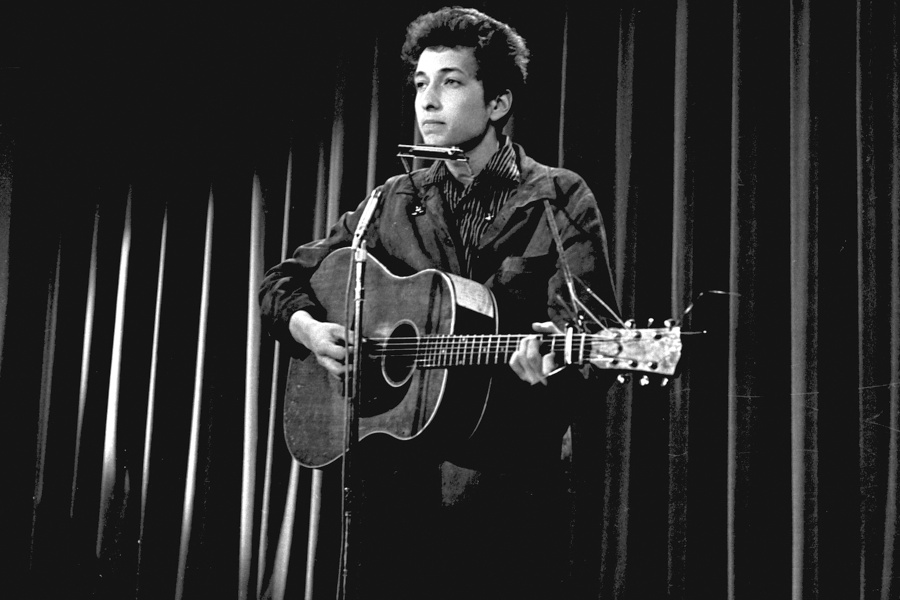
Farewell (1963) – Bob Dylan

As mentioned in the last song article of Fare Thee Well (Dink’s Song), the song which concludes the Inside Llewyn Davis soundtrack and movie is Bob Dylan’s Farewell. The version below which appears in the movie was released from the Witmark Demos Bootleg Series Vol 9. So I have presented the Witmark Demo from the authorised Dylan channel and the scene from the movie in which a young Dylan appears.

“Farewell“, also known as “Fare Thee Well” was considered for his third album The Times They Are a-Changin’, but Dylan only attempted a few takes during the album’s first studio session. Their are other versions which exist online believed to have taken place in Greenwich Village venues like the basement of either Gerde’s Folk City or the Gaslight Cafe. His friend Happy Traum backed him on vocals and banjo. This bootleg is known as the banjo tape.

According to wikipedia: Dylan based the song on the traditional British folk ballad “Leaving of Liverpool”. He first played it for friends in Greenwich Village after returning from a two-week trip to London in early January 1963. In “Leaving of Liverpool”, the ballad’s first verse and chorus tell the tale of someone sailing from Liverpool to California, bound to miss the loved one left behind.

Farewell to you, my own true love;
I am going far away.
I am bound for Californ-i-a,
And I know that I’ll return someday.

So fare thee well, my own true love,
And when I return, united we will be.
It’s not the leavin’ of Liverpool that grieves me,
But, my darling, when I think of thee

Tagged with: ,
Posted in Music

Bobok ‘Little Bean’ (1873) – Fyodor Dostoyevsky

Then how is it that I smell a stench if I don’t have a sense of smell?’

‘That’s ..he-he…Well, that’s where our philosopher gets a bit hazy. It was precisely in regard to the sense of smell that he observed that the stench that is smelled, so to speak, is a moral stench! He-he! The stench coming from our soul, as it were, so that in these two or three months one has time to look back…and that this is, so to speak, the final mercy…Only it seems to me, Baron, that this is all mystical gibberish, which is quite excusable given his circumstances…’

– From Dostoyevsky’s ‘Bobok’

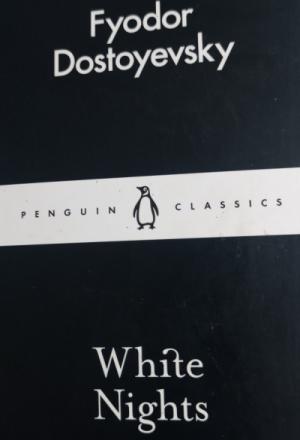
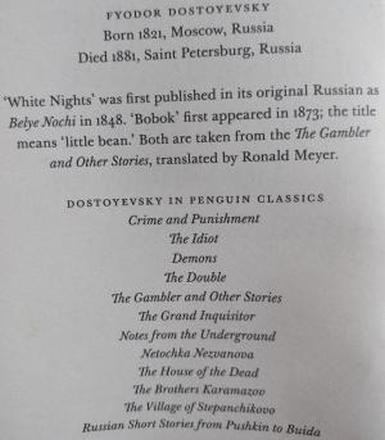
The most recent Wednesday literature piece featured here was an extract from Dostoevsky’s novella – White Nights written early in his career 1848. Today’s extract is from a short story called Bobok ‘Little Bean‘ appended by Penguin Classics to the White Nights novella as seen above.

If you want to enjoy this witty and highly intriguing story and encounter the surprises as they unfold then I recommend you go straight-ahead to the excerpts at the end of the following plot summary. (Don’t say, I didn’t warn you). I have taken extracts from various parts of the story, but I hope it can be understood as if it were an uninterrupted connection in the relative sequence of events.

Most of the following information is taken from the Reference – Wikipedia – Bobok:

Bobok first appeared in 1873 in his self-published Diary of a Writer. This read consists largely of a dialogue between recently deceased occupants of graves in a cemetery, most of whom are fully conscious and retain all the features of their living personalities. The dialogue is overheard by a troubled writer who has lain down near the graves.

The title “Bobok” refers to a nonsensical utterance repeatedly made by one of the cemetery’s residents, an almost completely decomposed corpse who is otherwise silent. The writer also reports a kind of auditory hallucination of the word prior to his hearing of the dialogue. The sound suggests “little bean” in Russian, but in the context of the story is taken to be synonymous with gibberish.

The philosopher and literary critic Mikhail Bakhtin regarded Bobok as one of the finest works in the literary tradition of Menippean satire, and argues that it encapsulates many of the thematic concerns of Dostoevsky’s major novels.

We’ll just get right into it shall we? I hope you find find this reading well worth your while. I know I certainly did!

Ivan Ivanovich (narrator) – ..Something strange is happening to me. And my character is changing, and my head aches. I’m beginning to see and hear certain strange things. Not exactly voices, but it’s as if someone were right beside me, saying ‘Bobok, bobok, bobok!’

….I began with the Moscow exhibition and ended with the subject of astonishment in general. Here’s what I came up with about ‘astonishment’.
‘To be astonished about everything, of course, is silly, while to be astonished at nothing is much more handsome, and it’s not like that in reality. In my opinion , it’s much sillier to be astonished at nothing than to be astonished at everything. And what’s more: to be astonished at nothing is almost the same thing as to respect nothing. And a silly man is not capable of showing respect.’


…I started daydreaming. I don’t like reading the inscriptions on gravestones; it’s forever the same thing. A half-eaten sandwich lay on a the gravestone next to me. It was silly and out of place. I threw it on the ground, since it wasn’t bread but just a sandwich. However, dropping bread crumbs isn’t a sin, it seems; it’s when it’s on the floor that it’s a sin. I should look it up in Suvorin’s calendar.
One night suppose that I’d been sitting there for a long time, even too long; that is I even lay down on a long stone in the shape of a marble coffin. And how did it happen that I began to hear various things? At first I didnt pay any attention and regarded it with disdain. However, the conversation continued. I listened – the sounds were muffled, as though they had pillows covering their mouths; and yet they were intelligible and very near. I roused myself, sat up and began to listen carefully.
‘Your Excellency, this is simply impossible, sir. You declared hearts, I’m following your lead and suddenly you have the seven of diamonds. We should have a dummy and the cards must be dealt face down.’

‘Well, you won’t find a dummy here.’
What arrogant words, however! Both strange and unexpected. One voice was so weighty and dignified, while the other seemed softly honeyed; I wouldn’t have believed it if I hadn’t heard it myself. I didn’t think I was at the prayer service. And yet how was it that they’re playing preference here and who was this general? That it was coming from under the gravestone there could be no doubt. I bent down and read the incription on the tombstone.

‘Here lies the body of Major General Pervoyedov..Knight of such and such orders.’ Hm. ‘Passed away in August of the year ….fifty-seven…Rest, dear ashes, until the joyful mourn!’
Hm, the devil, he really is a general! There wasn’t a tombstone yet on the other grave, the one the ingratiating voice came from; there was only a stone slab; must be a newcomer. Judging by his voice he was a court councillor.

Klinevich (a recently deceased libertine-nobleman who characterizes himself as a “scoundrel of pseudo-high society”) – We’ll quickly arrange things for the better here. The main thing is to spend the remaining time enjoyably; but how much time?

….Tell me, first of all (I’ve been wondering about this since yesterday), how is it that we can talk here? After all, we’re dead, and yet we can talk; and it seems that we can move as well, and yet we don’t talk and we don’t move. What’s the secret?’
…’If you wish, Baron, Platon Nikolayevich could explain this to you better than I.’
‘Who’s Platon Nikolayevich? Don’t shilly-shally, get to the point.’
‘Platon Nikolayevich is our local, homespun philosopher, scientist and master of arts. He’s put out several little books on philosophy, but for the past three months now he keeps falling sound asleep, so much so that it’s impossible to stir him. Once a week he mutters a few words beside the point.’
‘Get to the point, get to the point!…’

‘He explains it all by the simplest fact, namely, that up above, when we were still alive, we mistakenly deemed death there was death. The body comes to life here again, as it were, the residue of life is concentrated, but only in the consciousness. I don’t know how to say it – it’s as if life continues by inertia. Everything is concentrated, in his opinion, somewhere in the consciousness and continues for another two or three months…sometimes even half a year…There’s one fellow here, for example, who has almost completely decomposed, but once every six weeks he’ll still mutters a word, meaningless, of course, about some Bobok: ‘Bobok, bobok‘. But that means that an inconspicuous spark of life still glimmers inside him as well….’
‘Rather stupid . But then how is it that I smell a stench if i don’t have a sense of smell?’

‘That’s ..he-he…Well, that’s where our philosopher gets a bit hazy. it was precisely in regard to the sense of smell that he observed that the stench that is smelled, so to speak, is a moral stench! He-he! The stench coming from our soul, as it were, so that in these two or three months one has time to look back…and that this is, so to speak, the final mercy…Only it seems to me, Baron, that this is all mystical gibberish, which is quite excusable given his circumstances…’
…’Enough, and the rest of it, I’m sure, is all nonsense. The main thing is that there’s two or three months of life and in the end – bobok. I propose that we all spend these two months as pleasantly as possible and to that end we should all arrange things on a different footing. Ladies and Gentlemen! I propose that we not be ashamed of anything!’

…‘Meanwhile I don’t want there to be anymore lying. That’s all I want, because that’s the main thing. On earth it’s impossible to live and not lie, for life and lying are synonymous; well, but here for the fun of it we won’t lie. The devil take it, the grave does mean something after all! We’ll all tell our stories out loud and we won’t be ashamed of anything now. I’ll tell about myself first. I’m a voluptuary, you know. Up there all this was bound together with rotten ropes. Down with rope, and let’s live these two months in the most shameless truth! Let’s strip ourselves bare and be naked!’
….’I so terribly, terribly want to be naked!’ Avdotya Ignatyevna squealed.

Ivan Ivanovich (narrator) – And that’s when I suddenly sneezed. It happened without warning and unintentionally, but the effect was startling: everything fell as silent as the grave, and it all vanished like a dream. A truly sepulchral silence ensued. I don’t think that they had become ashamed on my account: after all, they’d resolved not to be ashamed of anything! I wait for about five minutes and – not a word, not a sound. Nor can one suppose that they feared that I would inform on them to the police; for what could the police do here? I can only conclude that they must after all have some secret, unknown to us mortals, which they carefully conceal from every mortal.
‘Well, my dears,’ I thought, ‘I’ll come visit you again’, and with that I left the cemetery’.

… Depravity is such a place, the depravity of the final hopes, the depravity of the flabby and rotting corpses and – not sparing even the final moments of consciousness! They were granted, they were made a present of these moments and…But most of all, most of all – in such a place! No, this I will not tolerate…
I’ll spend some time in other classes of graves here, I’ll listen everywhere. That’s just what needs to be done, to listen everywhere and not just in one part, in order to come to an understanding. Perhaps I’ll stumble on to something comforting.

Tagged with: ,
Posted in Reading

Fare Thee Well (Dink’s Song) (2013) – Oscar Isaac & Marcus Mumford

I procured the soundtrack of the Coen Brothers’ Inside Llewyn Davis soon after it was released. Today’s song Fare Thee Well (Dink’s Song) is my joint favourite song from the movie along with Bob Dylan’s Farewell which closes the movie and will be featured here this Thursday. The scene in the movie where this song appears (see at the end of this post) Fare Thee Well (Dink’s Song) is spectacular and about the best thing I have seen from the Coen Brothers.

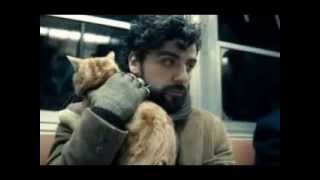
I wrote an article back in 2014 of Inside Llewyn Davis including distilling the meaning of the cats in the movie. The first cat which appears in the movie tries to escape Llewyn Davis in the scene below. The Coen Brothers mentioned how difficult it was filming a cat onset and inside a train carriage full of people. The cat’s name and identity is not mentioned. In folklore and mythology, to control anything of magic, you must know its true name. Cats in particular have universally been portrayed as nearly impossible to control.

-‘Could you just tell him.. Don’t worry, Llewyn has the Cat’
– ‘Llewyn is the cat,’
– ‘No, Llewyn has the cat’

Dink’s song is an American folk song which has been covered by many folk revival musicians, including Pete Seeger, Bob Dylan, Dave Van Ronk, and Cisco Houston as well as more recent musicians like Jeff Buckley. The song tells the story of a woman deserted by her lover when she needs him the most.
According to wikipedia: ‘The first historical record of the song was by ethnomusicologist John Lomax in 1909, who recorded it as sung by an African American woman called Dink, as she washed her husband’s clothes in a tent camp of migratory levee-builders on the bank of the Brazos River, a few miles from Houston, Texas‘.

Ef I had wings like Noah’s dove,
I’d fly up da river to the man I love.
Fare thee well, O Honey, fare thee well.

Ise got a man, an’ he’s long and tall,
Moves his body like a cannonball.
Fare thee well, O Honey, fare thee well.

Tagged with: ,
Posted in Music

Falling Slowly (2006) – Glen Hansard, Markéta Irglová

One of the iconic scenes in Once

This song won the Academy award (2008) for best original song seen in the movie ‘Once‘. I reviewed Once in Friday’s Finest September 2019. I wrote, ‘It’s very serendipitous how I see Bob Dylan in Sydney 2001 the night before he received his Oscar for Things Have Changed and then saw Glen Hansard in 2007 open for Bob in Melbourne and soon thereafter, he wins an Oscar for Falling Slowly in Once. What are the chances of that?‘
You can find more information about the movie at that page.

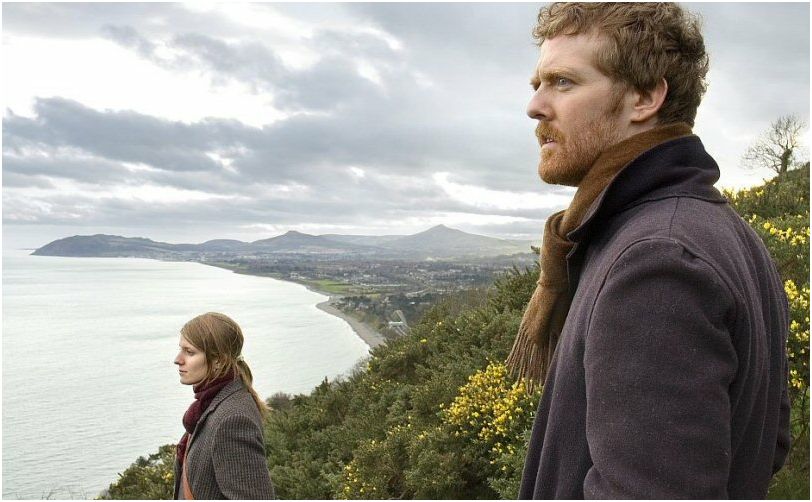
Glen Hansard and Markéta Irglová are about the most unlikely duo you could think of achieving chemistry in a movie, let alone winning an Oscar together. The song was composed while Once was already in production. As seen below, in the movie, they play the song in the Waltons Music shop across from the George’s Street Arcade in Dublin. Irglova said in her Academy Award acceptance speech: “This song was written from a perspective of hope, and hope at the end of the day connects us all, no matter how different we are…“

Falling Slowly as a stand-alone piece is very nice, but it works much better as seen in the movie in part with the rest. I haven’t seen Once for a long time, but I remember having vivid dreams about it soon after I saw it. It’s a very special indie movie for mine and has ‘the feel’ of a documentary sporting a scrappy, un-embellished naturalism. It’s adorable and hugely underrated. The movie has since been made into award winning musical.

Tagged with: , , ,
Posted in Music

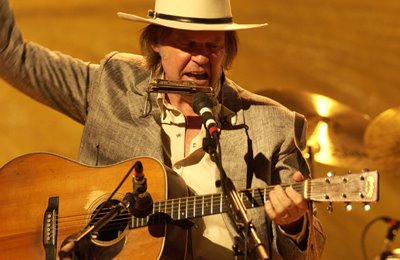
Falling off the Face of the Earth (2005) – Neil Young

Today’s article inaugurates the first song starting with ‘F’ in the library:

I watched so many times the Heart of Gold documentary directed by Jonathan Demme (Silence of the Lambs) about Neil Young’s Prairie Wind concert at the famous Ryman Auditorium also known as Grand Ole Opry House in Nashville. This documentary showcased Neil Young’s comeback performance after brain surgery. By my meagre estimation Neil ‘hit a homer‘ here. The whole concert had me enraptured.

The Prairie Wind concert is a great introduction to Neil Young although it’s more a sombre, melancholic and retrospective repertoire of what he does. It is a reflection of Neil’s childhood and his dedication to family. I immediately knew after I first heard it, this guy is the real deal. I had heard his amazing closing of the Philadelphia movie which is one of the most moving music sequences I’ve ever heard in a movie and also his captivating performance of Helpless with the Band on the Last Waltz.

I really like listening to Neil’s high-pitch vocals in Falling off the Face of the Earth. This song is Neil thanking his father for everything he has done to support his life and his career. He is saying his world will never be the same without his father being here. The texture, the pure ache, adds a timeless feel to the material.

I just want to thank you
For all of the things you’ve done
I’m thinking about you
I just want to send my love
I send my best to you
That’s my message of love
For all the things you did
I can never thank you enough

More music will come from Neil especially Prairie Wind.

Tagged with: , , ,
Posted in Music

Queen of the Night Aria (The Magic Flute K620) 1791 – Wolfgang Amadeus Mozart


Schinkel’s 1815 stage set design for Mozart’s “Queen of the Night” scene from The Magic Flute was famous.

The above scene in the film Amadeus (1984) is the subject of today’s musical piece Die Zaberflote (The Magic Flute K620) Aria No.14. The work premiered on 30 September 1791 just 2 months before the composer’s death hence its placement in the latter portion of the film. 1790/91 were hard years on Mozart as he was worried about money and Constanze’s health and struggling with the feeling of not being appreciated.

According to Mozart.com: An old friend, the actor, singer and poet Emanuel Schikaneder, made an appearance. He was looking for a new play and knew exactly what the audience wanted: a play about magic, all the rage in Vienna! Schikaneder wrote the libretto and Mozart composed. “Die Zauberflöte”, “The Magic Flute”, was to become one of the most popular and most performed operas in history.

The Plot in a nutshell of the Magic Flute: Tamino, a prince lost in a foreign land, is being pursued by an enormous monster. He is rescued by three mysterious ladies, who kill the monster and give Tamino a picture of Pamina, daughter of the Queen of the Night, with whom he falls instantly in love.

The Opera paints a vivid picture of each character, and the music reflects the skills and abilities of the original performers back in 1791.

The rustic character of Papageno has folksong-like arias built of simple melodies, whilst Sarastro’s music is deep, stately and almost hymn-like, reflecting his character as a spiritual leader. The lyrical arias of Tamino are more romantic in style (as befitting a prince) and look forward to the Italian bel canto era, while the music for the Armed Men harks back to the more regimented baroque era with its use of fugues. Most famously, the Queen of the Night’s Act II aria which is today’s piece.
For everything you need to know about Mozart’s The Magic Flute you can find in one place – right here at Opera North!

Without further to do, Ladies and Gents the scene of the Queen of the Night from my beloved Amadeus:

Tagged with: , ,
Posted in Music

Follow Blog via Email

Enter your email address to follow this blog and receive notifications of new posts by email.

Join 783 other subscribers

← Back

Thank you for your response. ✨