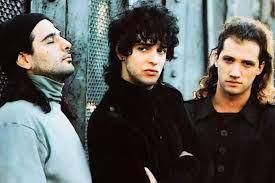
De Musica Lijera (translated – From Delicate Music) is the first Latin rock song I have presented here. The Argentine rock band Soda Stereo released it on their 1990 album Cancion Animal (Song Animal). It is one of their most famous and iconic songs (if 48 million views are to go by in the you tube video) still played with frequency here in Colombia. Apart from western rock music like Queen or Aerosmith which is very popular here, I rarely hear Latin rock music on the radio except Soda Stereo.
The drummer of Soda Stereo ‘Charly’ stated, ‘We recorded it (de musica lijera) in a single try, in a studio in Miami. This is unusual, because usually it takes like fifteen times to record. After, we recorded two additional versions, to try out different things, but they didn’t stick. The version that is heard on the album is the first take we did.‘
She slept in the heat of the masses
And I woke up wanting to dream of her
Some time ago I thought of writing to her
That I never dodged the traps of love

Of that love
Of light music
Nothing frees us
Nothing else remains

I will not send you ashes of roses
I do not intend to avoid a secret touch
(loose English translation)
I like to hear this song, not because I think it’s some masterclass classic rock song, but it seems to have harnessed a lot of an alternative rock arrangement that I would later be accustomed to hearing in English just after its release. I love it’s riff and it’s hard not to impressed by what it sets out to do. Even so, it’s surprising how it remains so successful in Latin America and be so fondly revisited by Generation X.
In November 2017 Coldplay did a cover of ‘De Musica Lijera‘ This song is recognised as one of the most memorable songs of rock in Spanish. From the ten songs that were on the record, 9 of them were released as singles. You can read more from each band members description of the album here (in Spanish).
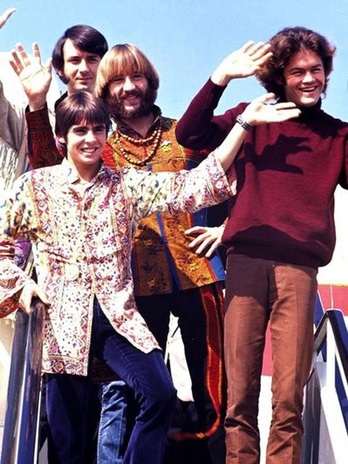
If I had to choose just one chorus which lifts my spirits higher than any other upon listen then it would be from the Monkees – Daydream Believer:
Cheer up, sleepy Jean Oh, what can it mean that To a daydream believer And a homecoming queen
It is also projects me back to simpler times even to those epochs before Mummy and Daddy did their thang. Oh, the zeitgeist 60’s – ‘How I have missed you my whole life‘. Daydream Believer is one of the most popular and commercial big hits from that era. It was No1 in the US for 4 weeks!
As the composer of the song John Stewart described it – “I remember going to bed thinking, What a wasted day — all I’ve done is daydream. And from there I wrote the whole song. I never thought it was one of my best songs. Not at all”.
Canadian singer Anne Murray who my Mother listened and wept to ad-nauseam recorded a cover version of Daydream Believer for her platinum-certified 1979 studio album I’ll Always Love You. It’s amazing Stewart was dismayed by the unlikely success of the song. It is said he was thrilled, stemming from the fact a folkie with a guitar following in the humble Woody Guthrie tradition could pull off a major pop hit. He wrote it just in a few minutes, but he lived off it for more than a year. ‘It is happy.It’ll always be “happy.”
Stewart added: ‘Write early in the morning when you first wake up — take your guitar to bed – before the critical voice kicks in’.
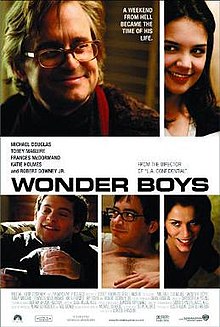
It’s a wonder I hadn’t reviewed Wonder Boys by now in Friday’s Finest. I’ll introduce this whimsical movie Wonder Boys by celebrating its stellar music soundtrack which includes Bob Dylan’s Oscar winning song ‘Things Have Changed‘ which I discussed in my movie review of ‘Once‘. I remember Bob parading that Oscar stature on his piano for many months; cheekily masquerading it to his audiences. Who can blame him?
In the above article I mentioned how I had seen Dylan perform the night before he was presented the Oscar in Sydney. My old man called me just after Dylan’s live performance at the Oscars and he said ‘Dylan eyes penetrated the TV screen. He didn’t sing that song, he was that song’. My dad wasn’t exactly full of his praises up until that point, so put it down to nostalgia or what have you – Wonder Boys holds a special place in my heart.
IMDB Storyline: Grady Tripp is a professor/writer living in Pittsburgh who is struggling with writer’s block. Whilst doing this, he also manages to get the chancellor pregnant. In the meantime, he and a college student, James Leer are trying to find a rare jacket once owned by Marilyn Monroe, and a college girl, Hannah Green boarding with Grady has a bit of a crush on him.
Wonder Boys is my favourite movie from Curtis Hanson, although it was a box office bomb. That could be because it appealed more to audiences with a penchant for Arthouse-Cinema. Nearly the whole movie is set around campus life and characters in a state of intellectual quandary, so that in of itself won’t get people bursting through turnstiles. Any hows, it rocks my boat and why it features here on Fridays..
What I am most fond about Wonder Boys (besides the above stated) is it’s perverse humour and eccentric details. It is a study of young and older adults found adrift, but seeking merit and / or significance in their existences. Wonder Boys cares a lot about the characters, but ironically its modus operandi is not to make you like them rather view them fully fleshed out and under duress. They aren’t your Atypical movie characters and some might repel you, like in real life, but they are at least interesting and quirky. It was a world I couldn’t resist being pulled into.
Not many people have heard of this film. This minor gem is strange, unconventional, rich and moving. It is a classically written character study with unexpected comic twists and turns from every angle. You feel warmer for having watched this movie, and it is a shame that films like these only occur once or twice a year. Since I am partial for Bob, I have relayed his music clip of Wonder Boys below.
*Curtis Hanson was a longtime fan of Bob Dylan, and personally approached the singer about writing a song for his movie adaptation. Dylan complied with “Things Have Changed”..
*The combination to the locked closet with the Monroe jacket is 5641. Fifty-six games is the record number of consecutive games that Joe Dimaggio recorded a hit, and forty-one is the year in which he accomplished it.
*The term “Wonder Boys,” a derivative of the German “wunderkind,” refers to someone who has greatly succeeded in their profession or art at an early age. In the movie, Grady applies the term “Wonder Boy” to James specifically.
We Are The World – 1985Bob Dylan & Patti Smith – Dark Eyes 1995
Dark Eyes is the stand-out 10th and final track from Dylan’s much maligned 1985 Empire Burlesque record. The simple acoustic style and arrangement of this timeless classic isn’t replicated again until Dylan went all acoustic guitar on the 1992 record Good As I Been To You.Dark Eyes is devoid of the “80s style” aesthetic for which the rest of the album is known. Empire Burlesque is an overly produced 80’s churn-out session. It’s a real shame since most of these songs work really well live – especially this Emotionally Yours version with Tom Petty at Farm Aid 1986 NY.
Dark Eyes is one of my favourite Dylan tracks from the 1980’s. I think he is unfairly criticised for his output in this decade. He made some obscenely good records and a plethora of classics, many unreleased until the bootleg series came out. Dark Eyes is indeed the high-point of Empire and arguably of the 80’s decade as well. But the unreleased gems Blind Willie McTell, Caribbean Wind and Series of Dreams give it very stiff opposition as well as many other commercial releases.
According to Wikipedia: According to his memoir, Chronicles: Volume One, Dylan wrote the song specifically to close the album at the suggestion of engineer Arthur Baker. Dylan claims that inspiration for the song came from seeing a prostitute in a hallway at the Plaza Hotel on 59th Street in New York City: “As I stepped out of the elevator, a call girl was coming toward me in the hallway—pale yellow hair wearing a fox coat—high heeled shoes that could pierce your heart. She had blue circles around her eyes, black eyeliner, dark eyes. She looked like she’d been beaten up and was afraid that she’d get beat up again. In her hand, crimson purple wine in a glass. ‘I’m just dying for a drink’, she said as she passed me in the hall. She had a beautifulness, but not for this kind of world. Poor wretch, doomed to walk this hallway for a thousand years“
Oh, the gentlemen are talking and the midnight moon is on the riverside, They’re drinking up and walking and it is time for me to slide. I live in another world where life and death are memorized, Where the earth is strung with lovers’ pearls and all I see are dark eyes.
A cock is crowing far away and another soldier’s deep in prayer, Some mother’s child has gone astray, she can’t find him anywhere. But I can hear another drum beating for the dead that rise, Whom nature’s beast fears as they come and all I see are dark eyes.
Verse 1, 2 Dark Eyes
Dylan only played Dark Eyes 8 times in concert. All of the 1995 outings were performed as duets with Patti Smith who was Dylan’s opening act for that leg of the Never Ending Tour. According to Smith, Dylan invited her to choose a song that they could perform together and “Dark Eyes” was her choice. I saw Patti open for Dylan in Sydney 1998. She was tremendous and narrated of lot of her own Poetry as well as singing some of her big hits. I hadn’t heard of her before that night, but she left one heck of an impression on me.
The irredeemable original studio track isn’t available for copyright reasons on You Tube. (Edited – The original has been made available. See it at the bottom of this page) Their are some OK recordings of Dylan and Patti live, but I’ve decided to relay a fan tribute recording of Dark Eyes by Virginia in celebration of Bob’s birthday (May 24, 1941) this year:
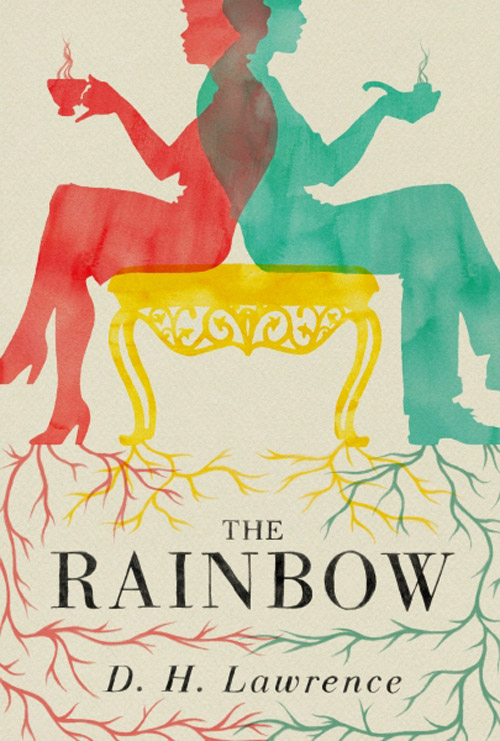
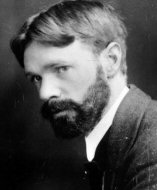
Today’s Wednesday literature piece is from one of D.H. Lawrence’s most popular, but contentious novels The Rainbow. I am astounded it was prohibited for a decade in England after its publication. I started reading it recently and I haven’t found anything lewd or scandalous of the sort so far. After reading Lawrence’s biography on wiki yesterday the censuring of The Rainbow seems to be part of a vendetta the English authorities had with Lawrence spanning much of his career commencing at the breakout of World War 1. He eventually achieved exile which he called ‘his savage pilgrimage’ on the Europe mainland and later would travel the world with the idea of setting up a utopian community with several of his friends. He once wrote:
“I want to gather together about twenty souls and sail away from this world of war and squalor and found a little colony where there shall be no money but a sort of communism as far as necessaries of life go, and some real decency… a place where one can live simply, apart from this civilisation..‘ (From a letter to Willie Hopkin, his old socialist friend from Eastwood – 1915)
More will be written here about Lawrence’s life in forthcoming literature pieces from his 1915 novel The Rainbow. Today’s literature excerpt comes from Chapter 2 ‘They Live at the Marsh‘. The Rainbow tells the story of three generations of the Brangwen family, a dynasty of farmers and craftsmen who live in the east Midlands of England. Lawrence was intrigued in the nature of relationships between men and women as they explored possibilities of life in the transition between agrarian living and industrialisation.
His depiction of sexuality through the sense of touch seemed to be associated with his observations that men and women had been ‘physically dislocated’ from each other by the demands of civilisation. He wrote in 1929: ‘It only remains for some men and women, individuals, to try to get back their bodies and preserve the flow of warmth, affection and physical unison‘. The Rainbow in particular seems to be about his desire to to restore an emphasis on the body, and re-balance it with what he perceived to be Western civilisation’s over-emphasis on the mind.
The following excerpt is about Polish refugee and widow called Lydia who suffers deep depression, barely registering anything around her in the new English surrounds. Lawrence’s characterisation of this mysterious figure Lydia is engrossing. It unlocks how it can feel to be a stranger in a strange land and how darkness can pervade the senses to such a degree that one can be possessed with a fear of light. Over the course of this extract from Chapter 2 we see how Lydia tortured by this opaque state of being is affected by her coming into the presence of a local farmer Tom Brangwem. Despite their feeling of foreignness to each other, they are mysteriously attracted to one another. I hope you find it as compelling as I did. It’s a wondrous piece of characterisation:
She had not the strength to come to life now, in England, so foreign, skies so hostile. She knew she would die like an early, colourless, scentless flower that the end of the winter puts forth mercilessly. And she wanted to harbour her modicum of twinkling life.
But a sunshiny day came full of the scent of a mezereon tree, when bees were tumbling into the yellow crocuses, and she forgot, she felt like somebody else, not herself, a new person, quite glad. But she knew it was fragile, and she dreaded it. The vicar put pea-flower into the crocuses, for his bees to roll in, and she laughed. Then night came, with brilliant stars that she knew of old, from her girlhood. And they flashed so bright, she knew they were victors.
She could neither wake nor sleep. As if crushed between the past and the future, like a flower that comes above-ground to find a great stone lying above it, she was helpless.
The bewilderment and helplessness continued, she was surrounded by great moving masses that must crush her. And there was no escape. Save in the old obliviousness, the cold darkness she strove to retain. But the vicar showed her eggs in the thrush’s nest near the back door. She saw herself the mother-thrush upon the nest, and the way her wings were spread, so eager down upon her secret. The tense, eager, nesting wings moved her beyond endurance. She thought of them in the morning, when she heard the thrush whistling as he got up, and she thought, “Why didn’t I die out there, why am I brought here?”
She was aware of people who passed around her, not as persons, but as looming presences. It was very difficult for her to adjust herself. In Poland, the peasantry, the people, had been cattle to her, they had been her cattle that she owned and used. What were these people? Now she was coming awake, she was lost.
But she had felt Brangwen go by almost as if he had brushed her. She had tingled in body as she had gone on up the road. After she had been with him in the Marsh kitchen, the voice of her body had risen strong and insistent. Soon, she wanted him. He was the man who had come nearest to her for her awakening.
Always, however, between-whiles she lapsed into the old unconsciousness, indifference and there was a will in her to save herself from living any more. But she would wake in the morning one day and feel her blood running, feel herself lying open like a flower unsheathed in the sun, insistent and potent with demand.
She got to know him better, and her instinct fixed on him—just on him. Her impulse was strong against him, because he was not of her own sort. But one blind instinct led her, to take him, to leave him, and then to relinquish herself to him. It would be safety. She felt the rooted safety of him, and the life in him. Also he was young and very fresh. The blue, steady livingness of his eyes she enjoyed like morning. He was very young.
Then she lapsed again to stupor and indifference. This, however, was bound to pass. The warmth flowed through her, she felt herself opening, unfolding, asking, as a flower opens in full request under the sun, as the beaks of tiny birds open flat, to receive, to receive. And unfolded she turned to him, straight to him. And he came, slowly, afraid, held back by uncouth fear, and driven by a desire bigger than himself.
When she opened and turned to him, then all that had been and all that was, was gone from her, she was as new as a flower that unsheathes itself and stands always ready, waiting, receptive. He could not understand this. He forced himself, through lack of understanding, to the adherence to the line of honourable courtship and sanctioned, licensed marriage. Therefore, after he had gone to the vicarage and asked for her, she remained for some days held in this one spell, open, receptive to him, before him. He was roused to chaos. He spoke to the vicar and gave in the banns. Then he stood to wait.
She remained attentive and instinctively expectant before him, unfolded, ready to receive him. He could not act, because of self-fear and because of his conception of honour towards her. So he remained in a state of chaos.
And after a few days, gradually she closed again, away from him, was sheathed over, impervious to him, oblivious. Then a black, bottomless despair became real to him, he knew what he had lost. He felt he had lost it for good, he knew what it was to have been in communication with her, and to be cast off again. In misery, his heart like a heavy stone, he went about unliving.
Till gradually he became desperate, lost his understanding, was plunged in a revolt that knew no bounds. Inarticulate, he moved with her at the Marsh in violent, gloomy, wordless passion, almost in hatred of her. Till gradually she became aware of him, aware of herself with regard to him, her blood stirred to life, she began to open towards him, to flow towards him again. He waited till the spell was between them again, till they were together within one rushing, hastening flame. And then again he was bewildered, he was tied up as with cords, and could not move to her. So she came to him, and unfastened the breast of his waistcoat and his shirt, and put her hand on him, needing to know him. For it was cruel to her, to be opened and offered to him, yet not to know what he was, not even that he was there. She gave herself to the hour, but he could not, and he bungled in taking her.
So that he lived in suspense, as if only half his faculties worked, until the wedding. She did not understand. But the vagueness came over her again, and the days lapsed by. He could not get definitely into touch with her. For the time being, she let him go again.
He suffered very much from the thought of actual marriage, the intimacy and nakedness of marriage. He knew her so little. They were so foreign to each other, they were such strangers. And they could not talk to each other. When she talked, of Poland or of what had been, it was all so foreign, she scarcely communicated anything to him. And when he looked at her, an over-much reverence and fear of the unknown changed the nature of his desire into a sort of worship, holding her aloof from his physical desire, self-thwarting.
She did not know this, she did not understand. They had looked at each other, and had accepted each other. It was so, then there was nothing to balk at, it was complete between them.
At the wedding, his face was stiff and expressionless. He wanted to drink, to get rid of his forethought and afterthought, to set the moment free. But he could not. The suspense only tightened at his heart. The jesting and joviality and jolly, broad insinuation of the guests only coiled him more. He could not hear. That which was impending obsessed him, he could not get free.
She sat quiet, with a strange, still smile. She was not afraid. Having accepted him, she wanted to take him, she belonged altogether to the hour, now. No future, no past, only this, her hour. She did not even notice him, as she sat beside him at the head of the table. He was very near, their coming together was close at hand. What more!
As the time came for all the guests to go, her dark face was softly lighted, the bend of her head was proud, her grey eyes clear and dilated, so that the men could not look at her, and the women were elated by her, they served her. Very wonderful she was, as she bade farewell, her ugly wide mouth smiling with pride and recognition, her voice speaking softly and richly in the foreign accent, her dilated eyes ignoring one and all the departing guests. Her manner was gracious and fascinating, but she ignored the being of him or her to whom she gave her hand.
And Brangwen stood beside her, giving his hearty handshake to his friends, receiving their regard gratefully, glad of their attention. His heart was tormented within him, he did not try to smile. The time of his trial and his admittance, his Gethsemane and his Triumphal Entry in one, had come now.
Behind her, there was so much unknown to him. When he approached her, he came to such a terrible painful unknown. How could he embrace it and fathom it? How could he close his arms round all this darkness and hold it to his breast and give himself to it? What might not happen to him? If he stretched and strained for ever he would never be able to grasp it all, and to yield himself naked out of his own hands into the unknown power! How could a man be strong enough to take her, put his arms round her and have her, and be sure he could conquer this awful unknown next his heart? What was it then that she was, to which he must also deliver himself up, and which at the same time he must embrace, contain?
He was to be her husband. It was established so. And he wanted it more than he wanted life, or anything. She stood beside him in her silk dress, looking at him strangely, so that a certain terror, horror took possession of him, because she was strange and impending and he had no choice. He could not bear to meet her look from under her strange, thick brows.
“Is it late?” she said.
He looked at his watch.
“No—half-past eleven,” he said. And he made an excuse to go into the kitchen, leaving her standing in the room among the disorder and the drinking-glasses.
Tilly was seated beside the fire in the kitchen, her head in her hands. She started up when he entered.
“Why haven’t you gone to bed?” he said.
“I thought I’d better stop an’ lock up an’ do,” she said. Her agitation quietened him. He gave her some little order, then returned, steadied now, almost ashamed, to his wife. She stood a moment watching him, as he moved with averted face. Then she said:
“You will be good to me, won’t you?”
She was small and girlish and terrible, with a queer, wide look in her eyes. His heart leaped in him, in anguish of love and desire, he went blindly to her and took her in his arms.
“I want to,” he said as he drew her closer and closer in. She was soothed by the stress of his embrace, and remained quite still, relaxed against him, mingling in to him. And he let himself go from past and future, was reduced to the moment with her. In which he took her and was with her and there was nothing beyond, they were together in an elemental embrace beyond their superficial foreignness. But in the morning he was uneasy again. She was still foreign and unknown to him. Only, within the fear was pride, belief in himself as mate for her. And she, everything forgotten in her new hour of coming to life, radiated vigour and joy, so that he quivered to touch her.
It made a great difference to him, marriage. Things became so remote and of so little significance, as he knew the powerful source of his life, his eyes opened on a new universe, and he wondered in thinking of his triviality before. A new, calm relationship showed to him in the things he saw, in the cattle he used, the young wheat as it eddied in a wind.
And each time he returned home, he went steadily, expectantly, like a man who goes to a profound, unknown satisfaction. At dinner-time, he appeared in the doorway, hanging back a moment from entering, to see if she was there. He saw her setting the plates on the white-scrubbed table. Her arms were slim, she had a slim body and full skirts, she had a dark, shapely head with close-banded hair. Somehow it was her head, so shapely and poignant, that revealed her his woman to him. As she moved about clothed closely, full-skirted and wearing her little silk apron, her dark hair smoothly parted, her head revealed itself to him in all its subtle, intrinsic beauty, and he knew she was his woman, he knew her essence, that it was his to possess. And he seemed to live thus in contact with her, in contact with the unknown, the unaccountable and incalculable.
They did not take much notice of each other, consciously.
“I’m betimes,” he said.
“Yes,” she answered.
He turned to the dogs, or to the child if she was there. The little Anna played about the farm, flitting constantly in to call something to her mother, to fling her arms round her mother’s skirts, to be noticed, perhaps caressed, then, forgetting, to slip out again.
Then Brangwen, talking to the child, or to the dog between his knees, would be aware of his wife, as, in her tight, dark bodice and her lace fichu, she was reaching up to the corner cupboard. He realized with a sharp pang that she belonged to him, and he to her. He realized that he lived by her. Did he own her? Was she here for ever? Or might she go away? She was not really his, it was not a real marriage, this marriage between them. She might go away. He did not feel like a master, husband, father of her children. She belonged elsewhere. Any moment, she might be gone. And he was ever drawn to her, drawn after her, with ever-raging, ever-unsatisfied desire. He must always turn home, wherever his steps were taking him, always to her, and he could never quite reach her, he could never quite be satisfied, never be at peace, because she might go away.
At evening, he was glad. Then, when he had finished in the yard, and come in and washed himself, when the child was put to bed, he could sit on the other side of the fire with his beer on the hob and his long white pipe in his fingers, conscious of her there opposite him, as she worked at her embroidery, or as she talked to him, and he was safe with her now, till morning. She was curiously self-sufficient and did not say very much. Occasionally she lifted her head, her grey eyes shining with a strange light, that had nothing to do with him or with this place, and would tell him about herself. She seemed to be back again in the past, chiefly in her childhood or her girlhood, with her father. She very rarely talked of her first husband. But sometimes, all shining-eyed, she was back at her own home, telling him about the riotous times, the trip to Paris with her father, tales of the mad acts of the peasants when a burst of religious, self-hurting fervour had passed over the country.
The Danse Boheme is the second piece from the 1875 Opera Carmen to appear here at the Music Library Project. What entails the ‘Music Library Project’? The first was the highly animated Spanish dance number called The Aragonaise from Suite No 1. The composer of Carmen – Georges Bizet (pictured above) died suddenly (at 37 years of age) after the 33rd performance, unaware that the work would achieve international acclaim within the following ten years. Carmen broke many conventions and shocked and scandalized its first audiences. Carmen of course has gone onto become one of the most popular and frequently performed operas in the classical canon.
I’m especially fond of the Danse Boheme – Gypsy Dance because it features prominently in one of my favourite television comedy series – Curb Your Enthusiasm. Like Carmen, this show also broke many conventions by exploring a wide range of taboo subjects. George Bizet was an outstanding pianist and won many prizes including the prestigious Prix de Rome in 1857. His final Opera Carmen was delayed because of fears that its themes of betrayal and murder would offend audiences which it eventually ended up doing.
According to wikpedia: The opera is written in the genre of opéra comique with musical numbers separated by dialogue. It is set in southern Spain and tells the story of the downfall of Don José, a naïve soldier who is seduced by the wiles of the fiery gypsy Carmen. José abandons his childhood sweetheart and deserts from his military duties, yet loses Carmen’s love to the glamorous torero Escamillo, after which José kills her in a jealous rage. The depictions of proletarian life, immorality, and lawlessness, and the tragic death of the main character on stage, broke new ground in French opera and were highly controversial.
Danse Boheme – Gypsy Dance (Les tringles des sistres tintaient) is from Act 2 of the Carmen Opera. It is performed at Lillas Pastia’s Inn two months after José was arrested for dereliction of duty. Carmen and her friends Frasquita and Mercédès are entertaining Zuniga and other officers. Carmen is delighted to learn of José’s release from detention.
More music will feature from the Carmen Suites where we will explore further Carmen and composer Georges Bizet.
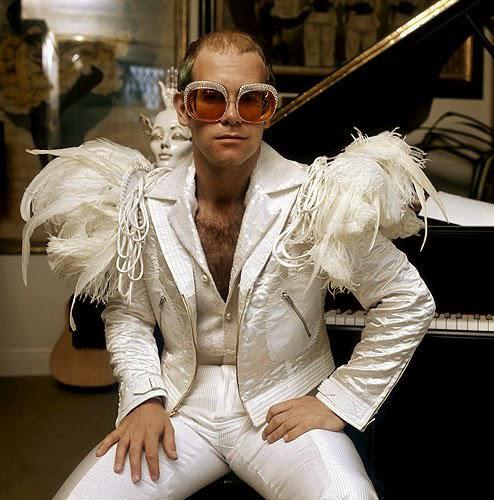
Daniel was one of the earliest songs I remember listening to in my life. It and Crocodile Rock were two of Elton John’s biggest breakout hits. It’s said that Bernie Taupin wrote the lyrics after reading an article about a Vietnam veteran who had been wounded, and wanted to get away from the attention he was receiving when he went back home. I had thought it was about the son of my Godmother whose name was Daniel and this song was called Daniel – so naturally Elton John a squillion miles away was writing about a lad in Australia about my age who hadn’t flown in a plane.
Daniel is traveling tonight on a plane I can see the red tail lights heading for Spain And I can see Daniel waving goodbye Oh it looks like Daniel, must be the clouds in my eyes
It takes a while to grow up. I am still yet to master it. The real Daniel which Bernie Taupin wrote about just wanted to get home after the War and live the simple life on his farm. Like Daniel in the song I have also want to get home, thanks to the great upbringing I had (kudos Mum and Dad), but it’s not going to happen. Daniel by Elton remains a landmark track and to this day I consider a classic of contemporary music.
Elton’s song composition prowess through Bernie’s superior lyrical writing were indeed a match made in heaven as far as commercial success was concerned. It’s also said from songfacts when Elton wrote the music for this song, he chopped off the last verse because he thought the song was already too long. The deleted verse explained that “Daniel” was a Vietnam vet. With the last verse chopped off, it became a fairly vague story of two brothers who parted ways, although Bernie Taupin maintained that losing the verse wasn’t a big deal.
The song was an overwhelming success in the US, Australia and Europe. It was instrumental in launching Elton to international stardom. Allegedly the record company didn’t want to release Daniel as a single because they thought it was too long and sombre to be a hit. Elton had other ideas, and insisted they release it as a single before the album came out. The record company did, but with very little promotion. It became a hit anyway.
Call me an old fashioned Olympic traditionalist… I regretted the decision to include Skateboarding as an Olympic sport. I rued the day it would be broadcasted, but that day soon came. I tuned in so I could scoff and vent my disdain. At its commencement I laughed under my breath as every second participant landed on their backsides doing their ramp-railing trick. Gradually my forecasted displeasure turned to one of intrigue and admiration as I found myself willing participants on.
These mostly kids through their endeavour, persistence and amicability (especially displayed towards their rivals) often in the face of their own individual downfall brought an atmosphere to the Olympic scene I wasn’t accustomed. Their relatability, humor and artistic merit made ‘Skateboarding’ (at least for me) captivating. I tuned into last night’s skating at peak dreariness after watching a full session of the Athletics. I didn’t imagine it would maintain my interest. But after Ollies and Nollie from these lasses I was plastered to the screen. You can’t teach an old dog new tricks, but I sure as hell can admire them!
The interactions between the competitors after they nailed or failed a run really drew me in. They each lasted 45 seconds. Brown, Hiraki and Okamoto amongst those who stood out from the beginning with bigger airs, more nuanced tricks and bursts of speed and confidence were awarded the medals and not in that order.
The moment for me making my hairs stand up on end was 13 year old Great Britain’s Sky Brown’s final. Sky (pictured above) had nothing going her way entering the final and had to pull every trick known to her to get into medal contention, and despite that pressure she pulled off the best run I saw last night. (you can see her run from 37:50 until 39:00 minutes in the video below)
Overall, no one was left behind. Every competitor it seemed rooted for the other like their soul depended on it. ‘Empathy‘ I have realised is the key descriptive word which categorises what young generations strive towards.
As an Olympic launching event, I think Skateboarding is definitely an Olympic keeper if grit, rhythmic art, suspense and human interaction are factors. I relayed this stunning Skateboarding Park event below although it is spoken in Spanish. The commentators I would award a fourth medal (if such a thing existed) for their exuberance and attention to detail. I think it’s the best Latin sporting commentary I have ever heard. I would love to read from anyone else about their opinions after watching the Skateboarding this Olympics.
I made the following edited statement as of today to all information contained in my blog which references Ivermectin and Vaccine:
Edited 3/8/2021
Individuals who follow my blog – Observation Blogger will know I trusted the information which was presented on the banned episodes of the Darkhorse podcast. I wrote articles supporting their arguments and the decision I have made today isn’t because I reject everything they said, but I am now very sceptical of what they espoused about the studies of Ivermectin and alleged dangers of the Vaccines. I feel obliged to change my course of action regarding how I proceed protecting myself during the Pandemic. Oh and I continue to be repulsed about the mass censuring by You Tube / Twitter / Facebook about pro-Ivermectin or Anti Vaccine presentations.
Based on the recent interview by Rebel Wisdom with Yuri Deigin called Yuri Deigin Responds to Bret Weinstein on Vaccines, Ivermectin & Quillette and the data presented within I will now stop taking Ivermectin and get the Vaccine at the first available opportunity. Thanks Rebel Wisdom for showing both sides. I don’t disrespect those still unwilling to take the vaccine because people should remain free to decide what they choose for their bodies to be administered. I will still continue to view the Darkhorse podcast as I admire Brett and Heather very much.
My own mind has been made up after waiting out a little bit of time to see what extra data and information surfaced about the efficacy and safety of the Vaccines. I may well have made the wrong decision and Ivermectin could be the more effective prophylactic choice and the long term effects of the Vaccines may well result in serious adverse effects (as much as that seems unlikely). I don’t know for certain because I’m not a medical or viral specialist. But I have at least received enough information / data which satisfies me to take the Vaccine plunge. I hope this information finds you all in good spirits and health..Cheers.
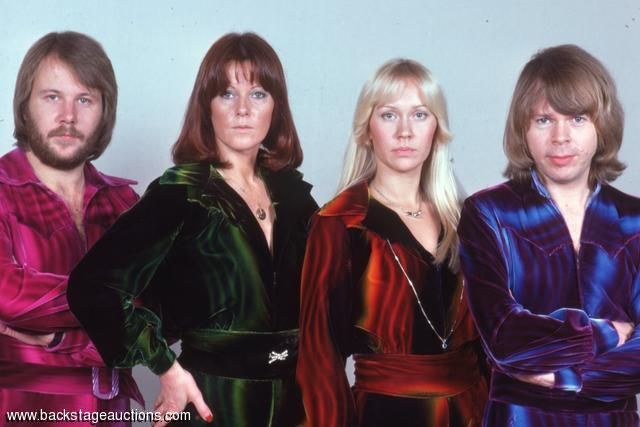
It is said after ABBA left the music scene, it would be impossible to find two female voices which replicated their superior harmony. Until now that statement holds true, despite the musicals and movies this group has produced, that harmony which the two ladies formed is irreplaceable. ABBA remains a bit of an enigma because their talent as music artists and songwriters of producing pure ‘Hits’ is immense although the Bee Gees are nothing to laugh at.
I remember seeing an ABBA documentary where Benny and Bjorn described just sitting in a cabin like you might imagine a best selling-author and just writing songs and it was no easy going. You have to admire their dedication to the process. Other songs will appear here from ABBA, but Dancing Queen is easily their most commercial successful. It topped the charts in almost every country.
It featured prominently in the much underrated Australian movie, Muriel’s Wedding which the songwriters allowed for its use. Essentially the song Dancing Queen made ABBA an international act. It is often cited as one of the greatest pop songs ever released. I couldn’t agree more with the Guardian’s take on it, ‘the perfect backdrop for a song that encapsulates the carefree bliss of youth‘. This song is in my top 10 pop songs ever.