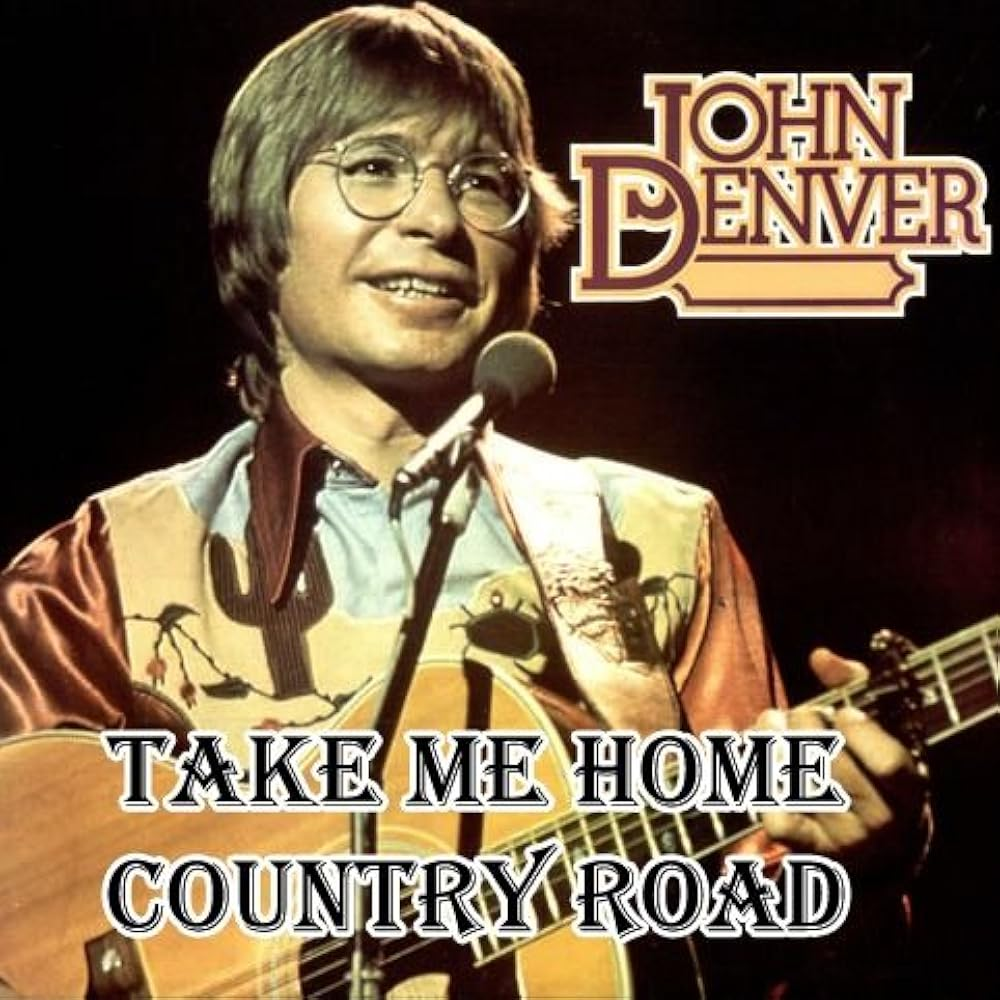
Take Me Home, Country Roads (1971) – John Denver

My son Jesus Mateo and I just got back from a four day holiday in Melgar, Tolima – jungle country, a four hour trip from where we live in Bogotá, Colombia. I’ve sent a video below of a ride we enjoyed at a park called Piscilago. Just a week earlier, my daughter Katherine Rose and I had also experienced this ride, which I presented here.

These trips lead us neatly into today’s featured track Take Me Home, Country Roads – one of the most nostalgic songs I have heard about childhood and nature. It’s one of the first songs I can recall hearing, and it remains dear to my heart – just as I imagine it does for many of you reading this. It also conjures memories of seeing the 70’s show The Life and Times of Grizzly Adams and its theme song Maybe.

[Verse 1]
Almost Heaven, West Virginia
Blue Ridge Mountains, Shenandoah River
Life is old there, older than the trees
Younger than the mountains, growing like a breeze

[Chorus]
Country roads, take me home
To the place I belong
West Virginia, mountain mama
Take me home, country roads

[Verse 2]
All my memories gather ’round her
Miner’s lady, stranger to blue water
Dark and dusty, painted on the sky
Misty taste of moonshine, teardrop in my eye

[Chorus]
Country roads, take me home
To the place I belong
West Virginia, mountain mama
Take me home, country roads

[Bridge]
I hear her voice in the morning hour, she calls me
The radio reminds me of my home far away
Driving down the road, I get a feeling
That I should have been home yesterday, yesterday

Most of the following was extracted from the Wikipedia reference below:

Take Me Home, Country Roads may well be one of the most popular songs revisited over the years on contemporary music radio stations. It was written by Bill Danoff, Taffy Nivert and John Denver and released as a single on April 12, 1971, peaking at number two on the Billboard charts. It is of course one of John Denver’s most popular songs and has continued to sell, with over 1.8 million digital copies sold in the United States alone. In 1998, the 1971 recording by John Denver was inducted into the Grammy Hall of Fame and considered a symbol of West Virginia.

Inspiration for the title line had come while Taffy Nivert and Bill Danoff, who were married, were driving along Clopper Road in Montgomery County, Maryland, to a gathering of Nivert’s family in Gaithersburg, with Nivert behind the wheel while Danoff played his guitar. “I just started thinking, country roads, I started thinking of me growing up in western New England and going on all these small roads“, Danoff said. “It didn’t have anything to do with Maryland or anyplace.”

To Danoff, the lyric “[t]he radio reminds me of my home far away” in the bridge is quintessentially West Virginian, an allusion to when he listened to the program Saturday Night Jamboree, broadcast from Wheeling, West Virginia, on WWVA at his home in Springfield, Massachusetts, during his childhood in the 1950s.

Danoff and Nivert ran through what they had of the song they had been working on for about a month, planning to sell to Johnny Cash. Denver decided he had to have it when he returned with the couple to their apartment for an impromptu jam (after a post Christmas reopening night at The Cellar Door in Washington, D.C) which prompted them to abandon plans for the sale. The verses and chorus were still missing a bridge, so the three of them went about finishing…When they finished, on the morning of Wednesday, December 30, 1970, Denver announced that the song had to go on his next album.

References:
1. Take Me Home, Country Roads – Wikipedia
Tagged with: , , ,
Posted in Music

20/1/25 – 26/1/25 – Colombia, Australian Open & Blackouts

news on the march

Welcome to Monday’s News on the March – The week that was in my digital world.

Yesterday, my adopted home country Colombia had the scariest rollercoaster ride because of a diplomatic entanglement with the United States. Yesterday morning the Colombian President Gustavo Petro (a committed socialist and ex guerilla warfighter) barred two US military deportation flights (of detained Colombian criminals and undocumented illegal migrants) from landing in Colombia. As a result the new US leadership under Donald Trump threatened Colombia with 25% Tariffs on all Colombian goods (as well as revoking Visas of officials and dignatarias aligned with the Petro Government) and in retaliation Petro did the same on US products. The effect such economic penalties would have on the already fragile Colombian economy would be nothing short of devastating and the run-off effects on security and people’s livelihoods paralleling the Venezuelan crises under the Socialist Dictatorship of revolutionary Hugo Chavez and his successor Nicolás Maduro.
After my troubled sleep last night (due to all this commotion), I woke up to the wonderful news that the Colombian Government agreed to accept – without restrictions the deported illegal Colombian aliens and Trump’s threat has been rescinded or put on hold. More information can be found in the BBC news article here.

‘You pay my bills’ – Collins reacts to hecklers
News article at BBC Sport

I am an unashamed Australian Sports-nut… so when the Australian Open rolls around just after the Christmas and New Year’s festivities I lock into tennis-mode despite the unpleasant start-times due to the time-zone differences (16 hours to be exact) between my native and adopted country. The Open is always embroiled in controversy and this year was no different. One of my favourite moments from the event has to be American Danielle Collins reactions to the heckles and booing of the crowd during and after her match against Australian home hope Destanee Aiava. I must admit I am left disappointed and somewhat embarrassed by the unruly behaviour of large sectors of the Australian crowd including how the GOAT (at least statistically speaking) Novak Djokovic was also boo’d off after retiring injured. On a side note: What he must think of Australia after this and being prohibited from competing in 2021 (for being an unvaccinated traveller) and detained in quarantine under Australian Government’s draconian COVID measures is anyone’s guess.

Collins is my new hero. This is what she said during the post-match interview:

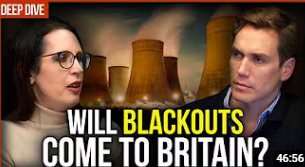
Will blackouts come to Britain?
Video interview hosted by UnHerd

Did the UK only narrowly avoid a blackout last week? Freddie Sayers is joined by energy analyst Kathryn Porter to break down the National Grid numbers and find out how Net Zero might cause blackouts by 2030.

I am a frequent UnHerd viewer and this recent video interview about the state of Electricity in Britain was surprisingly intriguing and educational. I never knew how a Country’s electricity system and grids work or the effect of renewable ‘clean’ energy on its correct functioning. My fear is of a disaster that will ultimately affect mostly working class people. I like how one astute viewer put it, ‘Net Zero means zero heating, zero lighting, zero industry, zero transport, zero shops‘. All in all, the video was a steep learning curve as Freddy Sayers forewarned but a rewarding one at that.

Before I sign-off, I would like to inform you I will be away from the blogger-sphere from tomorrow until Saturday due to a vacation my son and I will be taking to Jungle country in Melgar, Colombia. I recently posted about the same trip I took with my daughter last week. In the meantime I wish y’all a very pleasant week.

That is all. Thank you for reading.

news on the march the end

Tagged with: , , , , , , , , , , , , ,
Posted in News, politics, Sport and Adventure

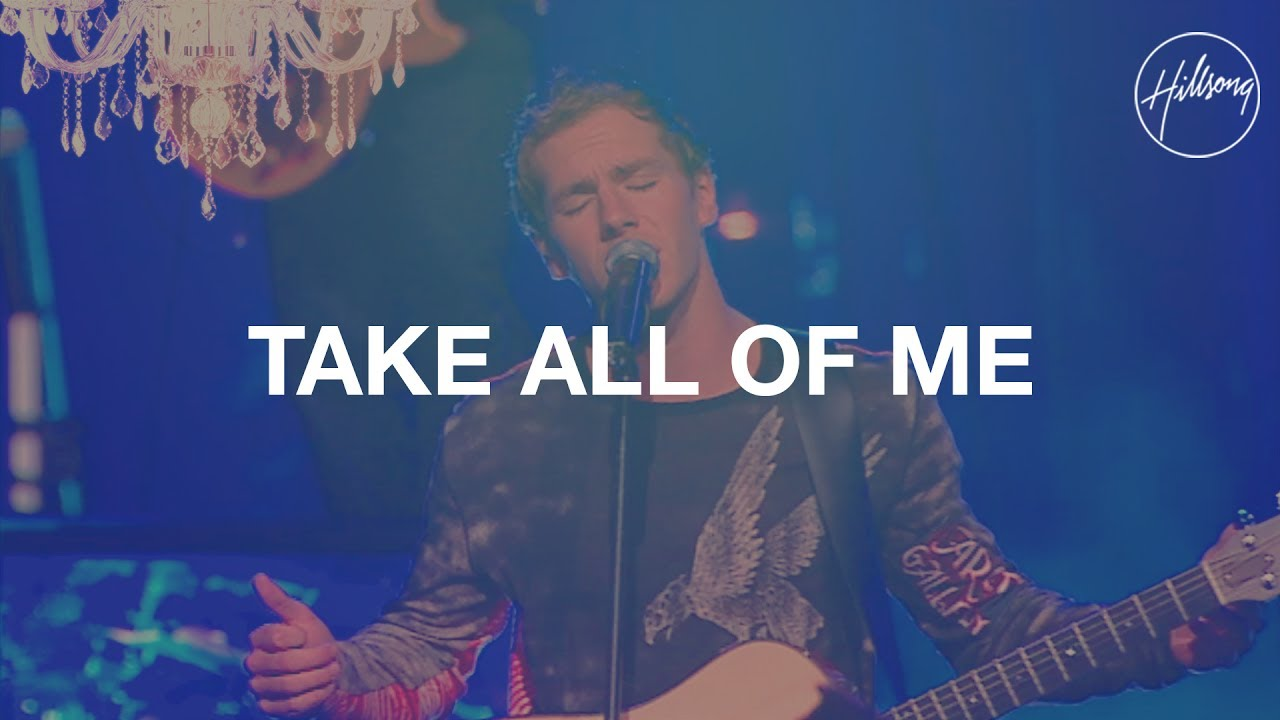
Take All of Me (2004) – Hillsong

Take All of Me embodies everything I cherish about Christian music – a melody that flows gently like a river, weaving through deeply contemplative lyrics and a choral backing steeped in pure worship. It builds steadily, gaining momentum with Marty Sampson’s rich tone and passion of voice, until it surges into the cascades and eventually the thundering instrumental roar of a waterfall. Take All of Me is the fifth song to be presented so far from one of my all-time favourite Australian album’s For All You’ve Done under the direction of Darlene Zschech and presented by the charismatic pentecostal church Hillsong. Today’s featured song and Evermore are two of the most uplifting and high spirited songs from the album.

Hillsong has recently been in the news for all the wrong reasons; even here in Colombia I saw a documentary recently about a series of scandals including allegations of sexual abuse going back nearly five decades, marital infidelity and accusations of bigotry among its leadership. Leaving all that aside (if one can) I still treasure their music output in this epoch – many calling it the golden era of Hillsong with so many enriching tracks.

After I was baptised at the Mornington Baptist Church in South East Melbourne, I couldn’t hear enough of For All You’ve Done. I now consider myself more of an agnostic-christian who holds dear ‘The Logos‘, archetypes, meta-heroes and spiritual truths of the bible, but For All You’ve Done still remains my Desert Island Christian album. It’s just a spectacular ensemble of modern Christian music that doesn’t grow old to my musical senses. Also, the album was a revelation (excuse the pun) in Australian music at the time of its release, since it was the first non secular album to reach number 1 on the mainstream music charts. It was recorded in the Spring of 2004 at The Sydney Entertainment Centre with a 500-voice choir and a house packed with thousands of worshipers. I wore out the dvd – that’s for sure!

[Verse 1]
You broke the night like the sun
And healed my heart
With Your great love
Any trouble I couldn’t bear
You lifted me upon Your shoulders

[Pre-Chorus]
Love that’s stronger
Love that covers sin
And takes the weight of the world

[Chorus]
I love You
All of my hope is in You
Jesus Christ take my life
Take all of me

[Verse 2]
You stand on mountain tops with me
With You I walk through the valleys
You gave Your only Son for me
Your grace is all I rely on

[Bridge]
I love You so
And I give up my life to say
I need You so
My everything

The Fader web site states: Hillsong is one of the largest evangelical Christian churches in the world. What began as a small pentecostal church in a suburb of Sydney now holds services on all six habitable continents, with 30 locations and more than 80 affiliated campuses. More than 100,000 people are estimated to attend Hillsong church services every week, including Justin Bieber, Selena Gomez, Nick Jonas, and the Jenner sisters. According to the church, for every person attending in person three more watch online.

References:
1. For All You’ve Done – Wikipedia
2. Hillsong: The Celebrity Megachurch’s Bombshell Scandals and Controversies Through the Years – People

Tagged with: , , ,
Posted in Music

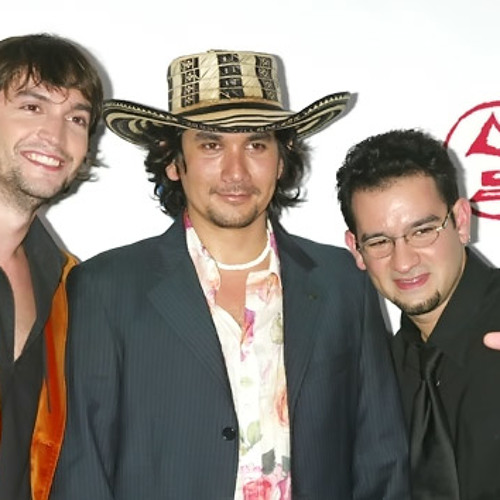
Tabaco y Chanel (2000) – Bacilos

Tabaco and Chanel inaugurates all songs (approximately 200) starting with ‘T’ in the alphabetical listing of the music library project.

I don’t know how the smell of tobacco conjures sweet romantic memories of the smell of someone’s skin, but it does in the case of the Latin-American Miami based group Bacilos. And if that wasn’t enough to get the love juices flowing, the group named themselves after a literal translation of bacilli, which is a bacteria widely found in soil and water where some forms are harmful to humans, plants, or other organisms. It is also a play on the Spanish language word “vacilón” meaning a fun, good time.

Tabaco y Chanel is a tender acoustic number with influences from Cuban folk music. I like the melody, percussion and strings in this. Their music has been described as a “fusion of Caribbean rhythms, South American folklore, pop melodies and rock aggressiveness“.
The band was created in 1997 by three students from the University of Miami. Jorge Villamizar – a Colombian singer and guitarist, formed the band with fellow students André Lopes, a Brazilian bassist, and José Javier Freire, a Puerto Rican percussionist. They first played at student bars, parties, and on campus before expanding to small venues in Miami and Miami Beach. 

In early 2000, Bacilos signed with Warner Music Group and in May 2000, they released the self-titled album, Bacilos. It was nominated for two Latin Grammy Awards and received gold certification in Colombia. The single Tabaco Y Chanel was nominated for a Latin Grammy Award. They have released 7 albums and 2 EPs. Their album Caraluna (2002) won the 2003 Grammy Award for Best Latin Pop Album.

Below is a crude English translation of the lyrics:

[Verse I]
A smell of tobacco and Chanel
Reminds me of the smell of her skin
A mix of honey and coffee
Reminds me of the taste of her kisses
The color of the end of the night
Asks me where I ended up
Where are you?
You only live this once
Where did you end up? Where are you?

[Chorus]
A smell of tobacco and Chanel
And a mix of honey and coffee
They ask me about her (her)
They ask me about her
The stars ask me too
They demand that I come back for her
Oh, come back for her (her)
Oh, come back for her

[Verse II]
A rose that didn’t bloom
But time doesn’t wither it
A promised flower, a love that wasn’t
But that’s still alive
And again the color of the end, of the end of the night
It asks me where I went
That this is only lived once
Where did you go? Where are you?

[Bridge]
But it was the same stars
That one day – marked my hands
And took away the flower, that flower of my life
Of my life

References:
1. Bacilos – Wikipedia

Tagged with: , ,
Posted in Music

Dune (2021) – Denis Villeneuve (Friday’s Finest)

I haven’t been as floored or thoroughly transported by a Science Fiction / Fantasy film series since George Lucas’ Star Wars and Peter Jackson’s Lord of the Rings. You could even say the Dune films are a mixture between the aforementioned adventure tales in the sense you follow individuals in a grand and complex world. My Friday’s Finest segment is usually dedicated to low budget, classic, foreign or independent films, but such is my adoration of Denis Villeneuve’s Dune and Dune 2, I felt it incumbent on me to dedicate an article to this epic saga.

IMDB Storyline:
A mythic and emotionally charged hero’s journey, “Dune” tells the story of Paul Atreides, a brilliant and gifted young man born into a great destiny beyond his understanding, who must travel to the most dangerous planet in the universe to ensure the future of his family and his people. As malevolent forces explode into conflict over the planet’s exclusive supply of the most precious resource in existence-a commodity capable of unlocking humanity’s greatest potential-only those who can conquer their fear will survive

Allow me to digress a moment. The best forms of art – the ones that resonate with me deeply over the years – often tend to be an ‘acquired taste.’ Whether in cinema or music, they challenge me as much as they reflect the artist’s effort to create and deliver them. This dynamic brings me to Denis Villeneuve’s Dune films, which epitomise this interplay of complexity and magnificence. These movies take their audience seriously and do not simply trap them into a cinematic odyssey but also tackles the storyline critically.

For first-time viewers, particularly those unfamiliar with Frank Herbert’s 1965 novel, the plot and intricate world-building of Dune can feel overwhelming. When I first watched Dune: Part 1 in Spanish, my second language, I left the cinema disoriented and unsure of what I had just experienced. It wasn’t until I saw Dune: Part 2 in the cinema and by reading detailed summaries of the first film as a precursor (this time in my native tongue) that I began to fully engage with the narrative and the worlds it presented.

Interestingly, Dune: Part 2 felt more accessible and allowed me to immerse myself completely. You can read more about Dune 2 in my fellow blogger friend’s review of the film – Awe Strikes Back in Dune 2 – Reely Bernie. After two additional cinema viewings, I revisited Dune: Part 1 when it aired on cable TV, and my appreciation for it grew exponentially with each rewatch. By then, I found myself as captivated by the first instalment as I had been by its sequel. Each scene feels necessary, although the film is mostly about setting the stage until the last third of the film. These films moreover, much like the best art, demand patience and effort – but the rewards are undeniably worth it.

The protagonist of the films is Paul Atreides played by Timothée Chalamet whose name has appeared here before but in connection with another film – the recent Bob Dylan biopic A Complete Unknown. This movie which received 8 nominations for the 2025 Academy awards will not premiere in my adopted country Colombia, until the 20th of February. But, better late than never as they say. I found Timothée Chalamet’s acting in these two Dune films nothing short of alluring and radiant so of course I cannot wait to see him in A Complete Unknown which by all’n sundry has been lauded as ‘great’.

The visuals in Dune: Part 1, combined with its hauntingly beautiful sound and music, create an almost otherworldly experience. With each rewatch, I found myself getting goosebumps, marvelling at how every scene felt like it had been meticulously crafted to resemble the canvas of a master fantasy painter. The cinematography captures not just the grandeur of the desert landscapes but also the intricate interplay of light, shadow, and scale, immersing the viewer in this vast world.

I do think that over time these movies will be considered masterpieces, but it will take the cinema world a while to catch up and recognise its excellence – just like it did for me. I count myself fortunate I had the time to invest in Dune unlike what most people can manage in their busy lives. It goes without saying, I cannot recommend these films anymore highly. To elaborate even further, I think the Dune movies will win over lots of Star Wars fans, who were disappointed in the Disney Star Wars tripe in recent years. Unlike these feeble turn-outs, Dune is way more mature and has actually deep lore and captivating characters as do the original Star Wars movies.

Below, I have forwarded two scenes from the Dune 1 film: firstly the weapons training of Paul Atreides with Gurney and secondly the ‘pain test’ Paul undergoes by the reverend mother.

References:
1. Dune (2021) – Wikipedia
2. Dune – IMDB

Tagged with: , , , , ,
Posted in Movies and TV

It Ain’t Me Babe (1964) – Bob Dylan

I like this photo of Bob. You know that standard Elizabethan image of Shakespeare we all see (with the large lace collar which encircles his neck – called a ‘ruff’), well I could imagine something like the above being the standard Bob image in 500 years time. He looks like he is on a mission, a crusade of sorts; A nutty young professor where the ghost of electricity howls in the bones of his face.

Today’s featured song It Ain’t Me Babe which became a hit for Johnny Cash and June Carter is a natural companion piece to another Dylan song presented here last year – Don’t Think Twice, It’s All Right. Both are viewed as ‘breakup’ songs where Dylan undercuts the sadness with clever, almost flippant lines that reveal a wry sense of humor. On a side note, you can compare the It Ain’t Me Babe Scene from A Complete Unknown (the recent Dylan biopic) to the Real Bob Dylan & Joan Baez Performance at the Newport Folk Festival here.

In those characters’ key scene together they take the stage at the 1964 Newport Folk Festival and sing “It Ain’t Me Babe,” a Dylan song that Baez also recorded. Their rendition conveys the depth of their romantic and artistic connection not just to the audience, but also to Dylan’s girlfriend, played by Elle Fanning, watching just offstage.

Open Culture

It Ain’t Me Babe is the final track from Dylan’s 1964 album Another Side of Bob Dylan. It embodies the changes to his style that he had made since his previous album, the same year’s The Times They Are a-Changin’. Rather than the sociopolitical lyrics found in his work up to this point, the album contained more traditional love songs, with only a few concessions to the protest song style popular among folk musicians and audiences at the time.

The following was extracted from the reference below:
Dylan’s biographers generally agree that the song owes its inspiration to his former girlfriend Suze Rotolo. He reportedly began writing the song during his visit to Italy in 1963 while searching for Rotolo, who was studying there.

Clinton Heylin reports that a Times reporter at a May 1964 Royal Festival Hall concert where Dylan first played “It Ain’t Me” took the chorus “no, no, no” as a parody of the Beatles’ “yeah, yeah, yeah” in “She Loves You“.

[Verse 1]
Go away from my window
Leave at your own chosen speed
I’m not the one you want, babe
I’m not the one you need
You say you’re looking for someone
Who’s never weak but always strong
To protect you and defend you
Whether you are right or wrong
Someone to open each and every door

[Refrain]
But it ain’t me, babe
No, no, no, it ain’t me, babe
It ain’t me you’re looking for, babe

[Verse 2]
Go lightly from the ledge, babe
Go lightly on the ground
I’m not the one you want, babe
I will only let you down
You say you’re looking for someone
Who will promise never to part
Someone to close his eyes for you
Someone to close his heart
Someone who will die for you and more

[Refrain]

[Verse 3]
Go melt back in the night
Everything inside is made of stone
There’s nothing in here moving
And anyway I’m not alone
You say you’re looking for someone
Who’ll pick you up each time you fall
To gather flowers constantly
And to come each time you call
A lover for your life and nothing more

[Refrain]

References:
1. It Ain’t Me Babe – Wikipedia

Tagged with: , , , , , ,
Posted in Music

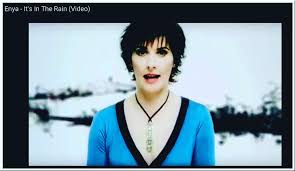
It’s In The Rain (2005) – Enya

Please excuse my recent hiatus from WordPress, but I went on an impromptu vacation for four days with my daughter Katherine Rose to Melgar, Tolima – jungle country, not too far from here – Bogotá, Colombia. Oh and also forgive my French in the video below. I was doing a Nathy Peluso voice impersonation. ;-P

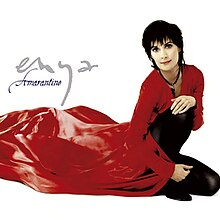
I heard today’s featured song at the gym last week at the end of ‘Integral’ class. I knew it was Enya, but I wanted to know the title which the Instructor kindly showed me. I know Enya is not everyone’s cup of tea, but given the right moment like in the warm down of last week’s class, almost nothing surpasses the experience at least to my musical senses. It’s in the Rain is the fifth song to be presented here from Enya after her previous entry – Only Time in November, 2023. The song is the second European single and the third track from her sixth studio album Amarantine (2005). Enya performed the song at the 2006 World Music Awards.

The following was extracted from the second Wikipedia reference below:
Amarantine was recorded in Ireland with Enya’s longtime recording partners, arranger and producer Nicky Ryan and his wife, lyricist Roma Ryan. It is her first album not to include a song in Irish and her first to include songs sung in Japanese and Loxian, a fictional language created by Roma. Amarantine received mixed reviews from critics, but it was a commercial success and reached No. 6 on the Billboard in the United States, where it sold one million copies in its first month of release, and No. 8 on the UK Albums Chart. In 2007, the album won Enya her fourth Grammy Award for Best New Age Album.

[Verse 1]
Every time the rain comes down
Close my eyes and listen
I can hear the lonesome sound
Of the sky as it cries

[Chorus]
Listen to the rain
Here it comes again
Hear it in the rain

[Verse 2]
Feel the touch of tears that fall
They won’t fall forever
In the way the day will flow
All things come, all things go

[Verse 3]
Late at night I drift away
I can hear you calling
And my name is in the rain
Leaves on trees whispering
Deep blue sea’s mysteries

[Interlude]

[Verse 4]
Even when this moment ends
Can’t let, go this feeling
Everything will come again
In the sound, falling down
Of the sky as it cries
Hear my name in the rain

References:
1. It’s in the Rain – Wikipedia
2. Amarantine (album) – Wikipedia

Tagged with: , , , , , ,
Posted in Music

The Book Thief (2013) –  Brian Percival (Friday’s Finest)

The Book Thief is a rare kind of film for its day. It gleams like the sun, glistens like rays on the surface of water – for here is a dark tale that lights up the very soul.

The Book Thief is the first movie article from my Friday’s Finest segment to appear here in 2025 and it couldn’t be a more apt one to begin with. During the Christmas Holidays just past, my children and I saw The Book Thief twice and we adored it the same both times. It’s one of those movies that as a parent you feel blessed to be able to share with your children, such is its beauty – steeped in historical context of an important time in 20th Century history, specifically the Nazi era.

Storyline:
The film is about a young girl living with her adoptive German family during the Nazi era. Taught to read by her kind-hearted foster father, the girl begins “borrowing” books and sharing them with the Jewish refugee being sheltered by her foster parents in their home. The film features a musical score by Oscar-winning composer John Williams.

The scenery is both breathtaking and captivating. One feels transported, yet insulated from the realities of a terrible war in a terrible time by the endearingly human performances of the actors and the depth they lent to their characters. There are few more enriching and ‘significant’ family movies I have seen. By the end I was a blubbering mess.

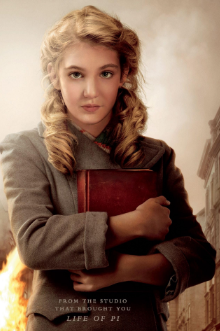
The young actress Marie-Sophie Nélisse (see left) was engrossing as the protagonist. The movie is largely seen through her eyes and she convinces over a full range of emotions. I was perplexed during the viewing – how I hadn’t seen her in anything else, because she’s going to be a superstar; and low and behold just 2 weeks ago I saw her in a fantastic Canadian French-language drama film called Monsieur Lazhar which I will write about in the coming weeks.
Geoffrey Rush, although portrayed a “Disney Dad” as some reviewers suggested; was inspirational and perfectly cast to my mind. He manages to convey the emotions of a man living with fear, yet playing it down for the sake of his young adopted charge. ‘Death‘ (as the narrator) tells the story, which makes the severity and grimness of their predicament all the more compelling.

Films of The Book Thief’s quality have become rare these days and are often overlooked or tossed to their side by cynical critics (49% on RT) and dopamine junkies hellbent on their next Hollywood comic book action blockbuster fix. Films like this (from the producers of the Life of Pi) remind us all of our humanity. The film is rather traditional and almost doesn’t fit in with the rest of today’s movies (as aforementioned), but seems more aligned with the older classics.

References:
1. The Book Thief (Film) – Wikipedia
2. The Book Thief (2003) – Wikipedia

Tagged with: , , ,
Posted in Movies and TV

[Nothing But] Flowers (1988) – Talking Heads

My friend Nancy over at The Elephant’s Trunk postscripted her January 10th article: ‘By The Side Of The Road‘ with today’s featured song [Nothing But] Flowers by Talking Heads:

I don’t know whose idea it was and I don’t care but having Dunkin Donuts and Baskin Robbins merge was a brilliant move. Now just add Pizza Hut.

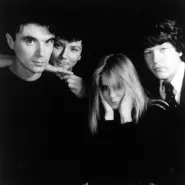
I hadn’t heard the song before and I’m largely unfamiliar with the group Talking Heads, but it hit me straight off the bat. I couldn’t help be drawn to its unusual musical composition and innovative sound techniques, which cleverly align with its ironic, anti-establishment message. In addition to the band, the song features Johnny Marr, formerly of The Smiths (who I am a big fan of) on lead guitar.
The song is steeped in African and Caribbean rhythms creating a lush sonic landscape with intricate percussive patterns and melodic layers. The organic instrumentation evokes a return to nature – but the tight, disciplined arrangements remind us of the comforts of modern life and the mechanized, globalized world. David Byrne’s ‘Morrissey-like’ vocals also reflect this juxtaposition between earnestness and parody, underscoring the song’s ironic undertones.

Written by David Byrne, the song tells the story of a man living in a world where modern conveniences have largely disappeared. While he may have initially been happy with this (notice the sarcastically delivered and repeated line “you’ve got it”), the man now yearns for what he knew and had become accustomed to. The song can be understood as a reply to Joni Mitchell’s most famous song, Big Yellow Taxi, which deals with the opposite phenomenon (the destruction of nature to make room for human society). Whilst the song may be seen as comedic in nature, Byrne suggests that environmentalists keen to abandon the comfortable trappings of modern life may not enjoy it very much.

[Nothing But] Flowers is the 5th track off Talking Heads‘ 1988 album Naked and was the second single from the album, released after Blind, and it peaked at number 79 on the UK singles chart. For trivia buffs out there – The song is quoted at the start of Bret Easton Ellis’ novel American Psycho (1991).
The band performs in the video below with an expanded lineup featuring Marr, MacColl, Brice Wassy, Yves N’Djock and Abdou M’Boup, all of whom performed on the studio recording of the song.

Here we stand
Like an Adam and Eve
Waterfalls
Garden of Eden
Two fools in love
So beautiful and strong
Birds in the trees
Are smiling upon them
From the age of the dinosaurs
Cars have run on gasoline
Where? Where have they gone?
Now it’s nothing but flowers

There was a factory
Now there are mountains and rivers
You’ve got it, you’ve got it
We caught a rattlesnake
Now we’ve got something for dinner
You’ve got it, you’ve got it
There was a shopping mall
Now it’s all covered with flowers
You’ve got it, you’ve got it
If this is paradise
I wish I had a lawn mower
You’ve got it, you’ve got I

Years ago
I was an angry young man
I’d pretend
That I was a billboard
Standing tall
By the side of the road
I fell in love
With the beautiful highway
This used to be real estate
Now it’s only fields and trees
Where? Where is the town?
Now it’s nothing but flowers

[Bridge]
The highways and cars
Were sacrificed for agriculture
I thought that we’d start over
But I guess I was wrong

(Hey!)

Once there were parking lots
Now it’s a peaceful oasis
You’ve got it, you’ve got it
This was a Pizza Hut
Now it’s all covered with daisies
You’ve got it, you’ve got it
I miss the honky tonks
Dairy Queens, and 7-Elevens
You’ve got it, you’ve got it
And as things fell apart
Nobody paid much attention
You’ve got it, you’ve got it

I dream of cherry pies
Candy bars and chocolate chip cookies
You’ve got it, you’ve got it
We used to microwave
Now we just eat nuts and berries
You’ve got it, you’ve got it
This was a discount store
Now it’s turned into a cornfield
You’ve got it, you’ve got it
Don’t leave me stranded here
I can’t get used to this lifestyle

References:
1. [Nothing But] Flowers – Genius Lyrics
2. (Nothing But) Flowers – Wikipedia

Tagged with: , , , , ,
Posted in Music

Piano Concerto No. 10 (Concerto For Two Pianos), K. 365; 3rd Movement (1779) – Wolfgang Amadeus Mozart

I let this jubilant and playful finale play in the background this morning as I tended to a few things and I couldn’t help feel more buoyant and lightness. I first heard it as a teenager in the Amadeus movie soundtrack. The interplay between the pianos can feel like a spirited and witty conversation between two close companions – a representation of camaraderie or good-natured rivalry. It conjures in my mind images of elegant ballrooms or serene outdoor festivities, where joy and refinement coexist.

The following was mostly extracted from the Wikipedia reference below:

It is presumed that Mozart wrote this Concerto to play with his sister Maria Anna (“Nannerl”). She was born in Salzburg on July 30, 1751 and like Wolfgang was taught by their father and became an excellent pianist. Mozart also played this Concerto twice in concerts in Vienna with his pupil Josephine Auernhammer.

The concerto was originally scored for two fortepianos (see image inset) together with two oboes, two bassoons, two horns in E♭, and strings. Mozart expanded the score in 1782 with pairs of clarinets, trumpets and timpani. However, the authenticity of the additions is not beyond question; as they do not appear in the score.

Research by Alan Tyson shows that this was written in Mozart and his father’s handwriting on a type of paper used between August 1775 and January 1777. However, most sources, including Tyson’s book Mozart: Studies of the Autograph Scores or more recently Lindeman’s The Concerto: A Research and Information Guide (2006) indicate that it was composed in 1779.

References:
1. Piano Concerto No.10 (Mozart) – Wikipedia
2. Concerto in E-flat for two pianos, K.365 – Boston Symphony Orchestra

Tagged with: , , , ,
Posted in Music

Follow Blog via Email

Enter your email address to follow this blog and receive notifications of new posts by email.

Join 780 other subscribers

← Back

Thank you for your response. ✨