Don’t Think Twice, It’s All Right (1963) – Bob Dylan

Dylan and Suze Rotolo

(Beautiful shots from my all-time favorite album cover. Mike Batt’s Tarot Suite may be a close second, but The Freewheelin’ Bob Dylan is iconic. I’ve always said that if I ever had the chance, I’d do a Dylan pilgrimage across the U.S., and Jones Street in New York, where the cover photo was taken, would be a must-visit. It’s close to where Dylan and Suze Rotolo lived, and the image has become legendary, often featured in art and recreated in films. I especially love how Cameron Crowe brought it to life in Vanilla Sky).

Bob Dylan has an incredible collection of breakup songs, and an early standout is the timeless classic, Don’t Think Twice, It’s All Right. This was one of the first Dylan tracks I remember hearing. Though I don’t hear it as much now as I did growing up in Kurmond, Western Sydney, in the late ‘80s, that’s likely because it’s taken me most of my life to explore and appreciate the full breadth of his work. A natural companion to this song is It Ain’t Me, Babe which was released on the 1964 record Another Side of Bob Dylan and became a hit for Johnny Cash and June Carter.

Though Don’t Think Twice, It’s All Right is often viewed as a breakup song filled with regret, Dylan undercuts the sadness with clever, almost flippant lines that reveal a wry sense of humor. Phrases like “I gave her my heart, but she wanted my soul” convey a sense of exasperation, while the refrain “Don’t think twice, it’s all right” feels like a half-hearted attempt to downplay the emotional toll. This playful, almost nonchalant attitude toward heartbreak is somewhat a hallmark of Dylan’s early songwriting style.

Don’t Think Twice, It’s All Right was written by Bob Dylan in 1962 and released in 1963 on his album The Freewheelin’ Bob Dylan, also appearing as the B-side to the single Blowin’ in the Wind. Over the years, the song has been covered by numerous artists, including Waylon Jennings in 1964 and Peter, Paul and Mary, whose version became a Top 10 hit on the Billboard Hot 100.

In the original release’s liner notes, Nat Hentoff describes the song as “a statement you might use to console yourself, as though speaking inwardly.” Dylan wrote it around the time when Suze Rotolo, his girlfriend at the time, extended her stay in Italy. Following his first trip to England in ’62, Dylan left England for Italy to search for Suze, whose continuation of studies there had caused a serious rift in their relationship. The song’s opening melody draws inspiration from the traditional public domain tune “Who’s Gonna Buy Your Chickens When I’m Gone,” a song Dylan learned from fellow folk singer Paul Clayton. Clayton had adapted the same melody for his own version, titled “Who’s Gonna Buy You Ribbons When I’m Gone?”

[Verse 1]
Well, it ain’t no use to sit and wonder why, babe
If’n you don’t know by now
And it ain’t no use to sit and wonder why, babe
It’ll never do somehow
When your rooster crows at the break of dawn
Look out your window and I’ll be gone
You’re the reason I’m a-traveling on
But don’t think twice, it’s all right

[Verse 2]
And it ain’t no use in a-turning on your light, babe
The light I never knowed
And it ain’t no use in turning on your light, babe
I’m on the dark side of the road
But I wish there was something you would do or say
To try and make me change my mind and stay
But we never did too much talking anyway
But don’t think twice, it’s all right

[Verse 3]
So it ain’t no use in calling out my name, gal
Like you never done before
And it ain’t no use in calling out my name, gal
I can’t hear you anymore
I’m a-thinking and a-wondering, walking down the road
I once loved a woman, a child, I’m told
I give her my heart but she wanted my soul
But don’t think twice, it’s all right

[Verse 4]
So long, honey babe
Where I’m bound, I can’t tell
Goodbye’s too good a word, babe
So I’ll just say, “Fare thee well”
I ain’t a-saying you treated me unkind
You could’ve done better, but I don’t mind
You just kinda wasted my precious time
But don’t think twice, it’s all right

References:
1. Don’t Think Twice, It’s All Right – Wikipedia

Tagged with: , , ,
Posted in Music

Come On, Let’s Go (1958) – Ritchie Valens

Come On, Let’s Go by Ritchie Valens is a high energy and bouncy rock ‘n’ roll classic that emerged during a period when the genre was still in its relative infancy. The song perfectly captures the carefree spirit of teenage love and the thrill of youth. Valens’ vocal performance and the guitar riff is exuberant, radiating a sense of urgency and fun, which makes it instantly engaging. Just over a year ago I presented his romantic ballad Donna which he had dedicated to a high-school sweetheart at school named Donna Ludwig. I became familiar with the title track, today’s featured song and Donna in the 1987 biopic – La Bamba.

Ritchie Valens, born Richard Steven Valenzuela, was discovered by producer Bob Keane of Del-Fi Records in Los Angeles. Valens’ musical journey began in the suburbs of California, where his Mexican-American heritage heavily influenced his sound. Keane saw immense potential in Valens, and they began working together in the studio. Come On, Let’s Go was one of the first tracks recorded during these early sessions in May 1958. Valens was one of the pioneers of Chicano rock typically performed by Mexican – American groups combining traditional Mexican music with latin rhythms and American rock ‘n’ roll. Released in 1958, Come On, Let’s Go set the stage for his brief yet impactful career.

[Verse 1]
Well, come on let’s go
Let’s go, let’s go, little darlin’
And tell me that you’ll never leave me
Come on, come on, let’s go, ah
Again, again and again

[Verse 2]
Well, now
Swing me, swing me
All the way down there
Come on let’s go, little darlin’
Let’s go, let’s go again once more

[Bridge]
Well
I love you so, dear
And I’ll never let you go
Come on, baby, so
Oh pretty baby, I-I love you so

[Verse 3]
Let’s go, let’s go, let’s go
Little sweetheart
Then we can always be together
Come on, come on
Let’s go again

[Guitar Solo]

[Bridge]
I love you so, dear
And I’ll never let you go
Come on, baby, so
Oh pretty baby, I-I love you so

[Verse 4]
Let’s go, let’s go, let’s go
Little darlin’
They’re dancin’, and we belong here
Come on, come on, let’s go, ah
Again, again and again and again

[Outro]

Upon its release, Come On, Let’s Go became a modest hit, peaking at No 42 on the Billboard Hot 100. While it wasn’t as commercially successful as Valens’ later hit “La Bamba,” it played a crucial role in building his reputation as a rising rock ‘n’ roll star. The song received significant airplay and was lauded for its infectious energy, making it a dance floor favourite in both English- and Spanish-speaking communities.

Ritchie Valens’ career was tragically cut short at just 17 years old, when he died in a plane crash in 1959 along with Buddy Holly and J. P. “The Big Bopper” Richardson; an event famously known as “The Day the Music Died.” Despite his brief time in the limelight, Valens left behind a legacy that has influenced countless musicians. One notable cover of Come On, Let’s Go was recorded by the rockabilly band The Ramones, who gave it somewhat of a punk twist.

References:
1. Come On, Let’s Go – Ritchie Valens

Tagged with: ,
Posted in Music

7/10 – 13/10/24 – Plato, P Diddy, Asteroid & Communism

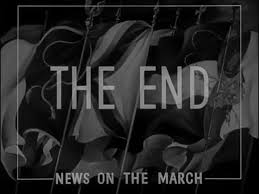
news on the march

Welcome to Monday’s News on the March – The week that was in my digital world.

Plato’s Philosophy – From Socrates to Sartre (1978)
Video presentation at Philosophy Overdose

I was fascinated listening to this powerhouse of a presentation. I will be revisiting it over not only the coming days, but years I suspect.
Thelma Z. Lavine delivers the following lectures on Plato as part of a televised lecture series called ‘From Socrates to Sartre, A Historical Introduction to Philosophy‘:

1. Shadow and Substance,
2. Opinion vs Knowledge,
3. The Three Part Man, and
4. The Ideal State

My Night At P Diddy’s Freak Off – Tanea
Video interview at Soft White Underbelly

The name P Diddy has appeared a lot in the news lately. Here Soft White Underbelly interview and portrait of Tanea, who shares her disturbing story of going to one of P Diddy’s Freak Off parties in 2018.


The Asteroid that Killed the Dinosaurs was not Alone
Science article at BBC News

The huge asteroid that hit Earth and wiped out the dinosaurs 66 million years ago was not alone, scientists have confirmed.

A second, smaller space rock smashed into the sea off the coast of West Africa creating a large crater during the same era.

It would have been a “catastrophic event”, the scientists say, causing a tsunami at least 800m high to tear across the Atlantic ocean…‘ (read entire article here)

The Truth about Communism, Gulags and the Left with Giles Udy
Video interview at Triggernometry

This interview should be made mandatory viewing at Schools and Universities everywhere. Giles Udy is an English historian and the author of Labour and the Gulag: Russia and the Seduction of the British Left.

That is all. Thank you for reading.

news on the march the end
Tagged with: , , , , , , , , , ,
Posted in News, politics, Reflections, Science

So long, Marianne (1967) – Leonard Cohen

Now we are getting to the cream of Cohen’s crop. Marianne and Leonard stayed in touch until the very end, almost literally. He sent her a letter on her death bed in 2016. “I’m just a little behind you, close enough to take your hand. […] I’ve never forgotten your love and your beauty. But you know that. […] Safe travels old friend. See you down the road. Love and gratitude.” He died just over three months later, on November 7.

Even though they weren’t together over the decades, they always seemed together in spirit, an unassailable team. I mean this song is so monumental even if you dismiss the aforementioned; this is more 60’s than Breakfast at Tiffanys and Puff the Magic Dragon. This song is it. This is the Zeitgeist 60’s song in all of its majestic and enigmatic form at least to my senses, and don’t mention how stupendously well it is written.

The song was inspired by Marianne Jensen, born Marianne Ihlen, whom Cohen met on the Greek island of Hydra in 1960. She had recently been left by her husband. The two hit it off, and Cohen ultimately took her from Hydra back to her home in Oslo, Norway. He later invited her and her son to live with him in Montreal, an offer which she accepted. The two lived together throughout the 1960s, traveling between New York, Montreal, and Hydra. Here is an excerpt from a recent documentary about the two when Leonard’s career eventually took off.

Marianne Ihlen herself said that the original words were not “So long, Marianne“, but “Come on, Marianne“, indicating that in an early version of the song, it was not meant as a goodbye. Cohen dedicated his third volume of poetry, Flowers for Hitler, to her and she directly inspired many of his other songs and poems. 

[Verse 1]
Come over to the window, my little darling
I’d like to try to read your palm
I used to think I was some kind of Gypsy boy
Before I let you take me home

[Chorus]
Now so long, Marianne, it’s time that we began
To laugh and cry and cry and laugh about it all again

[Verse 2]
Well you know that I love to live with you
But you make me forget so very much
I forget to pray for the angels
And then the angels forget to pray for us

[Verse 3]
We met when we were almost young
Deep in the green lilac park
You held on to me like I was a crucifix
As we went kneeling through the dark

[Verse 4]
Your letters they all say that you’re beside me now
Then why do I feel alone?
I’m standing on a ledge and your fine spider web
Is fastening my ankle to a stone

[Verse 5]
For now I need your hidden love
I’m cold as a new razor blade
You left when I told you I was curious
I never said that I was brave

[Verse 6]
Oh, you are really such a pretty one
I see you’ve gone and changed your name again
And just when I climbed this whole mountainside
To wash my eyelids in the rain

Reference:
1. So Long, Marianne – Leonard Cohen

Posted in Uncategorized

So Far Away (1985) – Dire Straits

So Far Away is the opening track on British rock band Dire Straits‘ 5th studio album Brothers in Arms. It is one of the world’s best-selling albums, having sold more than 30 million copies. So Far Away became the band’s fourth top 20 hit, peaking at number 19 in the US and 20 in the UK. Knopfler did a duet version with American country-folk singer Emmylou Harris for his 2006 album, Real Live Roadrunning.

So Far Away is a restrained and mellow number which has only improved to my ears over the years. I love the bass in it. The song taps into themes of loneliness and longing, centering on the feeling of being physically and emotionally distant from a loved one. This sense of isolation is heightened by Knopfler’s distinctive guitar work, which, like many Dire Straits songs, is both soulful and intricate. The song avoids ovet sentimentality but still conveys the aching sadness of separation, making it a powerful ballad.

[Verse 1]
Here I am again in this mean old town
And you’re so far away from me
And where are you when the sun go down?
You’re so far away from me

[Chorus]
You’re so far away from me
You’re so far, I just can’t see
You’re so far away from me
You’re so far away from me, alright

[Verse 2]
I’m tired of being in love and being all alone
When you’re so far away from me
I’m tired of making out on the telephone
‘Cause you’re so far away from me

[Chorus]

[Verse 3]
And I get so tired when I have to explain
When you’re so far away from me
See, you’ve been in the sun, and I’ve been in the rain
And you’re so far away from me

Money For Nothing was a megahit from that album and may have done more harm than good retrospectively as it was criticized of reeking of mega bucks and sell out stadium concerts.  Knophler himself concluded “the old rockschool restraints and the undeniably attractive smell of the winning formula seem to block out any such experimental work and what you end up with is something very like the same old story.” He said this just after exploring different creative directions with his work on Bob Dylan’s Infidels.

References:
1. So Far Away (Dire Straits song) – Wikipedia

Tagged with: , ,
Posted in Music

Slow (2014) – Leonard Cohen

Slow is from Leonard Cohen’s penultimate and 13th studio album Popular Problems (2014). It is the fourth song to be presented here from the record after his previous entry – Samson in New Orleans. Slow is one of those tracks where the Canadian poet and songwriter uses his deep signature voice and wit to meet a languid blues groove. Released just a day after Cohen’s 80th birthday, this song feels like a testament to his unapologetic slowness—both in life and in art. With its laid-back rhythm and playful lyrics, Cohen subtly reflects on time, ageing, and perhaps a bit more, with his characteristic traits enveloped in humor.

At its core, the song seems to be a tongue-in-cheek meditation on taking things slowly. “You want to get there soon / I want to get there last,” he sings, hinting at the philosophical idea that the journey, not the destination, is what matters. With respect to this, how can one be remiss of his ‘chance’ meeting with Bob Dylan.
Adam Cohen (Leonard Cohen’s son) tells the following story of an amusing moment between Cohen and perhaps his closest creative peer, Bob Dylan:

“A lot of people have made the comparison between Bob Dylan and Leonard Cohen over the years and there’s some hilarious stories.”
“Like the two of them are sitting in a cafe in Paris and Dylan says to him, ‘How long did it take you to write Hallelujah?”
“And my father completely lied to Dylan and said, ‘Oh you know couple of years.’ “
“I think it was [actually] seven years”, says Adam.
“And then my father returned the favour and said, you know, ‘How long did it take you to write Just Like a Woman?’ and Dylan said ‘Fifteen minutes’.
“And that’s very much about process I think. Dylan had this quality where he would ‘from the hip’, you know spit and polish, spit and vinegar and then this old man of mine was much more like chiseling marble.
– BBC Scotland

Cohen’s approach to Slow reveals his fascination with time. The artist has often explored existential themes throughout his career, and in this track, he juxtaposes urgency and patience. He seems to poke fun at the modern world’s obsession with speed and efficiency, while also embracing the wisdom of age.

I’m slowing down the tune
I’ve never liked it fast
You wanna get there soon
I wanna get there last
It’s not because I’m old
It’s not the life I led
I always liked it slow
That’s what my mamma said

I’m lacing up my shoes
But I don’t want to run
I’ll get there when I do
Don’t need no starting gun
It’s not because I’m old
And it’s not what dying does
I’ve always liked it slow
Slow is in my blood

I’ve always liked it slow
I never liked it fast
With you it’s “got to go”
With me it’s got to last
It’s not because I’m old
It’s not because I’m dead
I’ve always liked it slow
That’s what my mama said

All your moves are swift
All your turns are tight
Let me catch my breath
I thought we had all night
I like to take my time
I like to linger as it flies
A weekend on your lips
A lifetime in your eyes

(Chorus x2)

Popular Problems received uniformly positive reviews from critics. The album peaked at number one on the Canadian Albums Chart, selling 20,000 copies in its first week. Personally, I wouldn’t bracket Slow as a top-tier Leonard song, like I would the masterpiece You Got Me Singing off the same record, which I dedicated to my daughter Katherine after her baptism as I did Hallelujah when my son Jesus celebrated his third birthday, but even-so a mid-tier Cohen output (like I would categorise a mid-tier Woody Allen film) is better than 90% of the stuff out there.

References:
1. Popular Problems – Wikipedia

Tagged with: , ,
Posted in Music

Better Off Dead (1985) – Savage Steve Holland (Friday’s Finest)

Better off Dead is the first of three 1980’s teenage romantic comedies starring John Cusack that I watched a lot in my youth. The second as Cameron Crowe’s Say Anything which I mentioned in my article on Steely Dan’s Rikki Don’t Lose that Number and finally Rob Reiner’s The Sure Thing. Today’s movie is the darker and more absurdist of the three, but it contains so many endlessly quotable scenes and outrageous gags some which made me howl, yelp and shriek as a young teenager. I watched this movie a bucket load, an almost unhealthy amount; and even though four decades have passed since it came out, I still vouch for it. I was just watching scenes from it on You Tube again and found myself laughing silly which goes to show you how much growing up I’ve still got to do.

IMDB Storyline:
After his girlfriend Beth Truss ditches him for boorish ski jock Roy Stalin, sad-sack high-school student Lane Meyer decides that suicide is the only answer, but his inept attempts bring him nothing but agony and embarrassment.

Better off Dead is spectacularly manic but it really works. Amidst the zany comedy (inc. the maths formula jokes in a spellbound class and the monster child Scooter Stevens who wields newspapers as weapons and to whom two dollars means the world) and plentiful sight gags (the cereal boxes with all the giveaways cut out / clueless stay-at-home mom who makes slime-ridden meals that seem somehow sentient and slide off the plate by themselves) Holland throws in some amusing cel animation, a stop-motion fantasy sequence, and a cameo from Barney Rubble. Curtis Armstrong ostensibly reprising his role from Revenge of the Nerds gets the lion’s share of one-liners and he delivers them with so much aplomb. Yet despite all the mania, the film’s comedy has a level of discipline and restraint that ensures all the jokes land and humorous plot points established early on are satisfyingly resolved.

Better off Dead may not be for everyone and perhaps best enjoyed by those who lived through the 80s and understand its cultural peccadilloes. What I would like to know is if you have watched your fair share of 80s comedies like me; do you think this movie stands the test of time and could be enjoyed by teenagers these days?

The following are extracts from IMDB Trivia:

  • According to director Savage Steve Holland, the film is mostly autobiographical. Holland was suicidal when his high school girlfriend left him for captain of the ski team. A paperboy named Johnny Gasparini would harass him for two dollars. According to Holland, the ex-girlfriend contacted him to apologize when the film came out.
  • Savage Steve Holland said in an interview that John Cusack hated this movie, and walked out of the film after twenty minutes during a special screening. Holland said “The next morning he basically walked up to me and was like, ‘You know, you tricked me. Better Off Dead was the worst thing I have ever seen. I will never trust you as a director ever again, so don’t speak to me‘.
  • Henry Winkler (The Fonz from Happy Days) was instrumental in getting the film made. In the early 1980s, Savage Steve Holland’s short film, My 11-Year-Old Birthday Party, played at the Los Angeles Film Festival. Winkler saw the film and took a liking to Holland. At Winkler’s suggestion, Holland checked out John Cusack in The Sure Thing (1985), which Winkler executive produced. Holland thought that Cusack was perfect for the lead role. 

References:
1. Better off Dead – IMDB
2. Better off Dead – Wikipedia

Tagged with: , , , ,
Posted in Movies and TV

‘A Complete Unknown’ (Bob Dylan ft. Timothée Chalamet) – The Latest Trailer

Below is the new trailer. I wrote in the article of Bob Dylan’s Saving Grace on August 15 the following:

In case you haven’t seen it already, I would like to present the new trailer for the Dylan biopic due out this Christmas called A Complete Unknown. It stars the magnificent Timothée Chalamet from the Dune movies and Edward Norton. Speaking of the latter, it was fascinating to watch Norton give his perspective on the young Bob Dylan from his interview with Joe Rogan in October, 2019. Now another preview instalment:

Tagged with: , , ,
Posted in Music

Sloop John B (1966) – the Beach Boys

Brian was at the piano. I asked him if I could sit down and show him something. I laid out the chord pattern for ‘Sloop John B.’ I said, ‘Remember this song?’ I played it. He said, ‘I’m not a big fan of the Kingston Trio.’ He wasn’t into folk music. But I didn’t give up on the idea. So what I did was to sit down and play it for him in the Beach Boys idiom. I figured if I gave it to him in the right light, he might end up believing in it. So I modified the chord changes so it would be a little more interesting. The original song is basically a three-chord song, and I knew that wouldn’t fly.
Al Jardine from the Beach Boys

Sloop John B is the seventh track on the Beach Boys‘ Pet Sounds album and the sixth Beach Boys song to appear here so far after their previous entry – Good Vibrations. Sloop John B has that classic Beach Boys sound, and I was surprised to learn that Brian Wilson didn’t write it. Released around the time of the “folk boom,” (or perhaps just thereafter) it makes sense why it was such a big hit. With its water and sailing theme, it fits perfectly with the Beach Boys usual style. Back then, Sloop John B also became a popular campfire sing-along. It was arranged and produced by Brian Wilson. And, as always, the harmonies are simply amazing.

The following contain extracts from the Wikipedia article below:

The verses end on the amusing “This is the worst trip I’ve ever been on” which Brian had changed from the original: “this is the worst trip since I’ve been born“.  The change has been suggested by some to be a subtle nod to the 1960s psychedelia subculture.

Sloop John B was originally a traditional West Indies folk song from Nassau called “The John B. Sails,” where its almost given the dignity of a national anthem. A transcription was published in 1916 by Richard Le Gallienne, and Carl Sandburg included a version in his The American Songbag in 1927. It was released as the single single from the album reaching No 3 in the US and No 2 in the UK. It was innovative for containing an elaborate a cappella vocal section not found in other pop music of the era, and it remains one of the group’s biggest hits.

We come on the sloop John B
My grandfather and me
Around Nassau town we did roam
Drinkin’ all night
Got into a fight
Well, I feel so broke up
I wanna go home

So hoist up the John B’s sail
See how the mainsail sets
Call for the captain ashore, let me go home
Let me go home
I wanna go home, yeah, yeah
Well, I feel so broke up
I wanna go home

The first mate, he got drunk
And broke in the captain’s trunk
The constable had to come and take him away
Sheriff John Stone
Why don’t you leave me alone? Yeah, yeah
Well, I feel so broke up
I wanna go home

So hoist up the John B’s sail (Hoist up the John B’s sail)
See how the mainsail sets (See how the mainsail sets)
Call for the captain ashore, let me go home
Let me go home, I wanna go home
Let me go home (Hoist up the John B’s sail)
Hoist up the John B (Hoist up the John B)
I feel so broke up
I wanna go home, let me go home

The poor cook, he caught the fits
And threw away all my grits
And then he took and he ate up all of my corn
Let me go home
Why don’t they let me go home?
This is the worst trip I’ve ever been on

References:
1. Sloop John B – Wikipedia

Tagged with: , ,
Posted in Music

Sisters of Mercy (1967) – Leonard Cohen

Sisters of Mercy is a gentle, poetic ballad from Cohen’s 1967 debut album Songs of Leonard Cohen. It’s the second song to feature here from the record after his previous entry – Hey, That’s No Way to Say Goodbye. Cohen has described the song as being about two women he met in Edmonton, Canada, who took him in when he needed shelter, providing him with solace.

Sisters of Mercy is an ode to the great bastions and redeemers in society who through ‘good deed’ and grace provide comfort to others in their hour of need. There are also philosophical aspects of atonement in the idea of surrendering the ‘ego’ to the will of the Holy and the devine. Cohen infers that until one relinquishes this heavy burden they will remain ‘pinned’, lonely and weighed down by sin.

When you’re not feeling holy, your loneliness says that you’ve sinned

The sisters come to those who have become brittle and torn. Like in Greek mythology the sisters represent Perspephone – the feminine in nature through Spring and Vegetation – rebirth.

They will bind you with love that is graceful and green as a stem

The closing lines: “We weren’t lovers like that / And besides it would still be all right” underscores the non-romantic nature of the relationship between Cohen and the women in the song. It indicates a clear boundary between physical love and the emotional or spiritual connection they shared. It also carries a sense of acceptance and gratitude.

[Verse 1]
Oh the sisters of mercy, they are not departed or gone
They were waitin’ for me when I thought that I just can’t go on
And they brought me their comfort and later they brought me this song
Oh I hope you run into them, you who’ve been travelling so long

[Verse 2]
Yes you who must leave everything that you cannot control
It begins with your family, but soon it comes round to your soul
Well I’ve been where you’re hanging, I think I can see how you’re pinned:
When you’re not feeling holy, your loneliness says that you’ve sinned

[Verse 3]
Well they lay down beside me, I made my confession to them
They touched both my eyes and I touched the dew on their hem
If your life is a leaf that the seasons tear off and condemn
They will bind you with love that is graceful and green as a stem

[Verse 4]
When I left they were sleeping, I hope you run into them soon
Don’t turn on the lights, you can read their address by the moon
And you won’t make me jealous if I hear that they sweetened your night
We weren’t lovers like that and besides it would still be all right

More successful in Europe than in North America, Songs of Leonard Cohen foreshadowed the kind of chart success Cohen would go on to achieve. It peaked at number 13 in the UK, spending nearly a year and a half on it. In the US, it reached number 83. Critics have been far kinder to the album since its release, with many considering it a highlight in the Cohen canon. I have presented below the original studio release and a live version with Spanish subtitles.

References:
1. Songs of Leonard Cohen – Leonard Cohen

Tagged with: , ,
Posted in Music

Follow Blog via Email

Enter your email address to follow this blog and receive notifications of new posts by email.

Join 767 other subscribers

← Back

Thank you for your response. ✨