Running on Love (1989) – Kenny Marks

I was runnin’ on loneliness
And now I’m runnin’ on love

I became familiar with the Christian singer Kenny Marks when a friend of mine ‘Eric’ lent me his cassette tapes in school. In no time I consumed a lot of Kenny’s music and even bought his greatest hits collection years later called ‘Absolutely Positively‘. I could reminisce the music I grew up with which included today’s featured track Running on Love. All of his songs had very strong and uplifting messages. I was baptised in the Uniting Church as a youngster, but the only time I went to church was with my Grandmother Dorothy Walton on holidays. Kenny comes from the Evangelical and Charismatic branches of the Christian tree having played for fellowship groups and at Billy Graham events.

I have made it no secret on this blog that I have a proclivity for ‘outreach’ Christian music and Kenny Marks is the first source I can remember listening to in a long line of Christian artists who have come along since and featured here including Hillsong, Michael W Smith, Elenyi and Marcela Gandara.

Today’s song ‘Running on Love‘ which comes from his Another Friday Night album (considered by many as his most enduring album) is an inspiring contemplation piece about the ineffable effect of being ‘reborn’ or ‘renewed’; letting go of self pity and unshackling oneself from the rim of the ‘wheel of life‘ by living in the centre, where according to Christians – Christ is said to be. ‘Christ is Love and the eternity of it’.

I was runnin’ on empty
I was runnin’ on fumes
I was runnin’ on desperately
‘Neath the cold dark moon
Now I’m runnin’ on tenderness
Thankin’ God above
I was runnin’ on loneliness
And now I’m running on love
I was runnin’ on loneliness
And now I’m runnin’ on love

I was runnin’ on heartache
I was runnin’ on pain
I was runnin’ on borderlines
In the cold hard rain
Now I’m runnin’ on happiness
Sunny skies above
I was runnin’ on loneliness
And now I’m runnin’ on love

Chorus…

Runnin’ on love
And love’s around me
In everything that I do
Runnin’ on love
And love surrounds me
‘Cause I ran into You, hey!

I was runnin’ on trouble
I was runnin’ on steam
I was runnin’ on bitternеss
Like you would not dream
Now I am runnin’ on faithfulness
Runnin’ hand in glovе
I was runnin’ on loneliness
And now I’m runnin’ on love

Chorus

Now I’m runnin’ on tenderness
Thankin’ God above
I was runnin’ on loneliness
And now I’m runnin’ on love
Runnin’ on love, hey!

Runnin’ on love, runnin’ on love x 4

Kenny’s bio reads: Kenny Marks, born Kenneth Michael Marks, November 6, 1950, Detroit, Michigan, has performed on 6 of the 7 continents world-wide over his music career. His family came from Yugoslavia with the surname Makrovich, but his parents changed to the name Marks when he was born.

Growing up in Detroit, Marks studied classical piano as a kid and learnt to play guitar when he was 15. He tried a group with some guys in high school, then went away to a university on the East Coast. Kenny Marks was one of the mainstay artists in Christian music from his debut album in 1982 ’til the end of the decade. Many of his songs were regularly in circulation on Christian radio and are still considered by many today to be CCM classics.

There is more music from Kenny Marks’ to come so we will dive a little deeper into his background and legacy in subsequent posts. Thanks for reading as always.

References:
1. Kenny Marks – Wikipedia
2. Kenny Marks Dies at 67 – GMA
3. Kenny Marks: Remembering the CCM star of the ’80s and ’90s – Cross Rhythms

Tagged with: , ,
Posted in Music

Runaway Train (2002) – Kasey Chambers

Runaway Train is the tenth song to appear here so far from Australian country music star Kasey Chambers. It casts my mind back to 2002 when I first heard her music. It was a hot summer day way back then and I was driving my car through Crib Point on my way to Hastings in South East Victoria, Australia and I turned on the ABC radio (which always hosted great non-commercial music like the Go-Betweens etc) and I heard….Am I not pretty enough from her classic Australian record – Barricades and Brickwalls. Today’s song Runaway Train also resides on that record which remains one of my favourite Australian albums.

Runaway Train in similar mode to the album’s title track has a steeped blues-country sound coursing through it. It’s a striking blend of raw emotion and country prowess. Below is a ‘no-nonsense’, but still fantastic version performed at the Telluride Bluegrass Festival (Colorado) in 2003. The way Kasey just stands there almost motionless and serves this gritty number up is hypnotic. Oh, and by the way, the guy on the left playing the red guitar is her father Bill Chambers. I saw Kasey a number of times in Melbourne after the release of what would become the highest selling Australian album in 2002. She was warm, loquacious and intimate with the audience.

I’ma gonna take you down to the railway line
I’ma gonna take you where your heart won’t brake you
And the water tastes like wine
I’ma gonna take you down to the railway line

We won’t take money, we won’t take the long way round
We won’t take money, we’ll live off the honey
When the train goes underground
We won’t take money, we won’t take the long way round

I’ll drive faster, you hold tighter
I’ll get wild, you get wilder
I’ll make thunder, you make rain
We’ll go down to the runaway train

We’ll clear that track, we’re coming on down the line
Yeah clear that track, we’re coming on down the line
Yeah clear that track, they won’t take us back
Well they can stick it where the sun don’t shine
Clear that track, we’re coming on down the lin
e

Runaway Train is one of the singles from the album, along with Not Pretty Enough, On a Bad Day, Million Tears, and If I Were You. The music video for Runaway Train was released in 2009 and the song has also been performed live on various television programs, including the Australian variety television program “Rove [Live]” in 2001.

Tagged with: , ,
Posted in Music

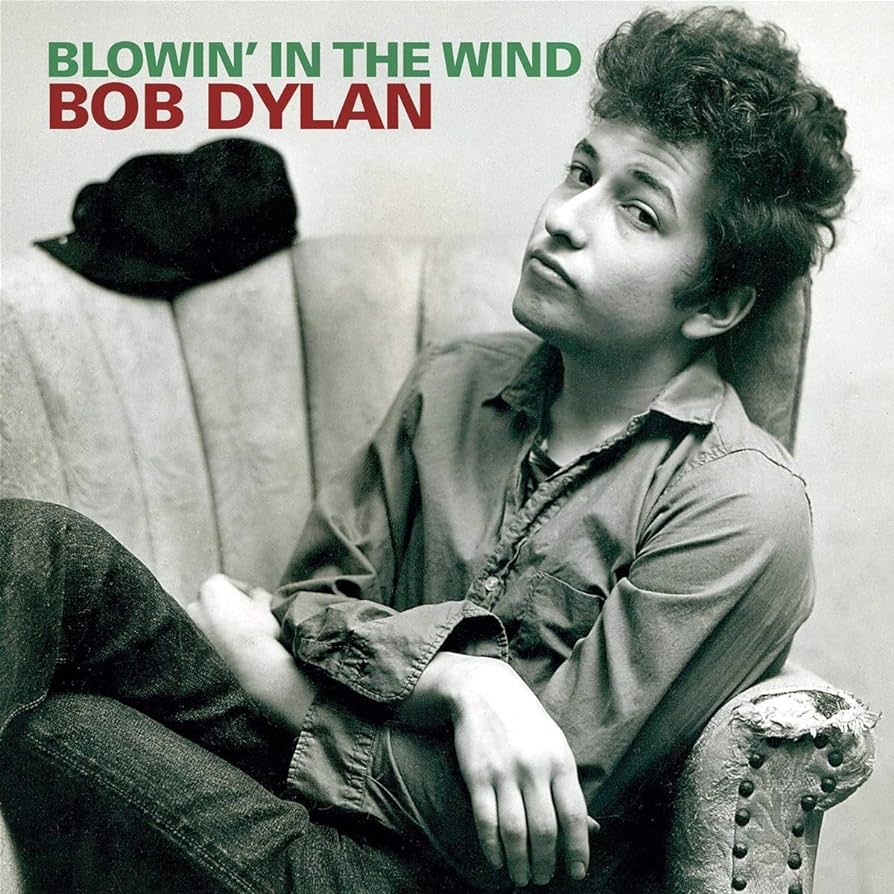
Blowin’ in the Wind (1963) – Bob Dylan

It (Blowin’) has been described as a protest song and poses a series of rhetorical questions about peace, war, and freedom. The refrain “The answer, my friend, is blowin’ in the wind” has been described as “impenetrably ambiguous: either the answer is so obvious it is right in your face, or the answer is as intangible as the wind”
– Mick Gold in “Life and Life Only: Dylan at 60” – Judas! magazine April 2002. p. 43.

Blowin’ in the Wind was the first song I remember hearing by Bob Dylan. I mistakenly found it thinking it was Donovan’s Catch the Wind which I had been searching after seeing the Wonder Years episode in which it appeared. You can read more about my ‘beautiful error’ in this article. I listen a lot less to Blowin’ now than I did in my formative years. The same could be said for a lot of Dylan’s early music, but songs such as these which I couldn’t listen enough to in my early teens instilled in me a certain a ‘world-view’ and enabled me to find meaning about my identity and existence and understand more clearly how the world ‘actually’ ticked.

Blowin’ is one of Bob Dylan’s crowning achievements as far as folk-protest music and spiritual anthems are concerned. It is also renowned as one of the greatest songs of all time in contemporary music; listed as No 14 on Rolling Stone magazine’s list of the “500 Greatest Songs of All Time“. Similar to what occurred with other significant songs created by Dylan in the 60’s, other groups including Peter, Paul and Mary would achieve considerably more commercial success with his material than he did.

Dylan originally wrote and performed a two-verse version of the song; its first public performance, at Gerde’s Folk City on April 16, 1962, was recorded and circulated among Dylan collectors. Shortly after this performance, he added the middle verse to the song. Some published versions of the lyrics reverse the order of the second and third verses, apparently because Dylan simply appended the middle verse to his original manuscript, rather than writing out a new copy with the verses in proper order.

[Verse 1]
How many roads must a man walk down
Before you call him a man?
How many seas must the white dove sail
Before she sleeps in the sand?
Yes, and how many times must the cannonballs fly
Before they’re forever banned?

[Refrain]
The answer, my friend
Is blowin’ in the wind
The answer is blowin’ in the wind

[Verse 2]
Yes, and how many years can a mountain exist
Before it is washed to the sea?
Yes, and how many years can some people exist
Before they’re allowed to be free?
Yes, and how many times can a man turn his head
And pretend that he just doesn’t see?

[Refrain]

[Verse 3]
Yes, and how many times must a man look up
Before he can see the sky?
Yes, and how many ears must one man have
Before he can hear people cry?
Yes, and how many deaths will it take till he knows
That too many people have died?

[Refrain]

In June 1962, the song was published in Sing Out!, accompanied by Dylan’s comments:

There ain’t too much I can say about this song except that the answer is blowing in the wind. It ain’t in no book or movie or TV show or discussion group. Man, it’s in the wind – and it’s blowing in the wind. Too many of these hip people are telling me where the answer is but oh I won’t believe that. I still say it’s in the wind and just like a restless piece of paper it’s got to come down some … But the only trouble is that no one picks up the answer when it comes down so not too many people get to see and know … and then it flies away. I still say that some of the biggest criminals are those that turn their heads away when they see wrong and know it’s wrong. I’m only 21 years old and I know that there’s been too many wars … You people over 21, you’re older and smarter.

References:
1. Blowin’ in the Wind – Wikipedia

Tagged with: , ,
Posted in Music

Runaway (2010) – The National

Runaway is classic restraint music from The National. It’s the 8th song on their 5th album High Violet. Ever since I first heard Runaway, I got swept away in it’s atmospheric soundscapes and sparse instrumentals. I often find myself putting it on repeat such is the lure of its slow melodic burn. It always calms me. The way the music rises quietly throughout…. It is as if the facts of the situation have not changed and everything is still awful, but you find some reason to hope for a better future despite everything. You have to persevere.

There are two distinct ‘camps’ of interpretation of this song. One is that writers Matt Berninger (singer) and Aaron Dessner (guitar, piano) are lamenting the future of society due to catastrophic consequences of global warming. I contend that it can mean whatever it means to you.
So for me it’s always been a haunting song about being in a relationship that is apparently doomed. If read like a poem it could only be interpreted as a tragedy: What makes you think I’m enjoying being led to the flood? / We got another thing comin’ undone / And it’s takin’ us over.

He clearly loves this person dearly and even though it will inevitably fall apart – There’s no saving anything, but he can’t bring himself to leave: I won’t be no runaway, cause I won’t run.

You see things are not always bad between them unless they start arguing: We don’t bleed, when we don’t fight / Go ahead, go ahead / Throw your arms in the air tonight.

[Verse 1]
There’s no savin’ anything
Now we’re swallowing the shine of the summer
There’s no savin’ anything
How we swallow the sun

[Pre-Chorus]
But I won’t be no runaway
‘Cause I won’t run
No, I won’t be no runaway
What makes you think I’m enjoyin’ bein’ led to the flood?
We got another thing comin’ undone
And it’s takin’ us over

[Chorus]
We don’t bleed, when we don’t fight
Go ahead, go ahead
Throw your arms in the air tonight
We don’t bleed, when we don’t fight
Go ahead, go ahead
Lose our shirts in the fire tonight
What makes you think I’m enjoyin’ bein’ led to the flood?
We got another thing comin’ undone

[Pre-Chorus]
[Chorus]

[Verse 2]
I’ll go bravin’ everything
With you swallowin’ the shine of the summer
I’ll go bravin’ everything
Through the shine of the sun

[Pre-Chorus]
[Chorus]
[Outro]
And it’s takin’ forever

The National is an American rock band from Cincinnati, Ohio, formed in Brooklyn, New York City, in 1999. High Violet the album which Runaway resides sold 51,000 copies in its first week of sales, charting at number three on the Billboard 200. This marked the National’s highest charting effort at the time. Also, High Violet was released to widespread critical acclaim. At Metacritic, the album received a score of 85 out of 100 based on 36 reviews. The overall success of this record solidified The National‘s reputation as one of the most important indie rock bands of their generation.
The track Runaway was used in the 2013 film Warm Bodies.

References:
1. High Violet – Wikipedia

Tagged with: , ,
Posted in Music

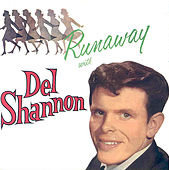
Runaway (1961) – Del Shannon

It’s no surprise Runaway topped the chart for 4 consecutive weeks, selling as many as 80,000 singles per day at the peak of its popularity and No 5 song of all of 1961. It’s just so darn ‘cool’! At a time when rock ‘n’ roll was still finding its groove, and radio waves were filled with the infectious sounds of young rebels with guitars. One such iconic tune that managed to transcend its era is Runaway by Del Shannon.

From the infectious country guitar intro to the high rollicking piano which accompanies it, then Shannon sings As I walk along I wonder…the baritone sax kicks in acting like a bass. Then keyboardist Max Crook’s Musitron solo. Just a fantastic music arrangement. From the get-go we are all feeling this guy’s pain of not love ‘lost’, rather love which ‘ran away’. That’s got to hurt.

The birth of Runaway is a tale of serendipity. Del Shannon, born Charles Westover, was a struggling musician playing in small-time bands in Michigan. He teamed up with keyboardist Max Crook, who had a penchant for tinkering with electronics. Together, they created a unique sound using Crook’s custom-built instrument called the Musitron, a precursor to the synthesizer. Legend has it that one night in 1960, Shannon and Crook were performing at the Hi-Lo Club in Battle Creek, Michigan. During a break, they decided to jam on a tune Shannon had been playing around with. Crook’s Musitron solo added a futuristic touch, and just like that, Runaway was born.

[Verse 1]
As I walk along I wonder
A-what went wrong with our love
A love that was so strong
And as I still walk on
I think of the things we’ve done together
A-while our hearts were young

[Chorus]
I’m a-walkin’ in the rain
Tears are fallin’ and I feel the pain
Wishin’ you were here by me
To end this misery
And I wonder
I wah-wah-wah-wah-wonder
Why
Why, why, why, why, why she ran away
And I wonder
A-where she will stay-ay
My little runaway
A-run, run, run, run, runaway

References:
1. Runaway (Del Shannon song) – Wikipedia

Tagged with: , ,
Posted in Music

Run Like the Wind (1979) – Mike Batt and friends (ft. Roger Chapman)

Run Like the Wind is a fitting finale to the scantily known concept album Tarot Suite that was played so often in our house during my youth. My father adored this album like no other. When my parents entertained new friends, my father was insistent this record be played at some point in the evening. I’ve been listening to this album for more than 40 years. It’s been with me through thick and thin and we remain best mates. Run Like the Wind is the 4th song to appear here from Mike Batt’s Tarot Suite. To me the album feels like an epic medieval storytelling trip, but Run Like the Wind acts like an airstrip to return us to some semblance of a conventional grounding; to go back to our lives with a reinvigorated and courageous outlook that we can go anywhere and be anything.

Based on feedback from my previous posts of songs from the album, Tarot Suite does have a small legion of avid followers:

  • A mate’s girlfriend introduced me to Tarot Suite in 1981. I immediately loved it. I’ll admit to a general liking for mixed genres. Mike Batt really combined orchestral and rock well on this album. 
    – Cloth Ears
  • I adore this album and play it constantly, even now. And I am just as mystified as you as to why Mike Batt is such an under-rated composer. Not to mention arranger and producer! However, I look at it this way: I know something that the rest of the world does not….
    -Niki
  • This album … got me started on the road to becoming a tarot reader, lol. I was 12, and loved the music (most of it) but also the cards depicted.
    – Tarot with Kerstin
  • Mike Batt is a pure genius and he will be played long after he is gone !
    Roger Chapman is top notch performing…This album is still fresh after more then 40 years!

    – Diederik

Run Like the Wind stands out not just for its compelling melody but also for its rich narrative and theatrical presentation, a hallmark of Mike Batt’s eclectic career. Batt, a prolific British songwriter and composer, sought to explore themes of fate, destiny, and the human condition through this album. Each track represents a different tarot card, with Run Like the Wind symbolizing the Chariot – a card associated with victory, control, and a journey toward success.

The song’s energetic tempo and dynamic arrangement mirror the card’s meaning, embodying a sense of relentless pursuit and unstoppable momentum. Roger Chapman’s distinctively gritty vocals add a raw, impassioned dimension to the track, reinforcing the urgency and determination that the Chariot symbolizes. Batt’s orchestration, known for its lush and dramatic flair, elevates the song into a powerful anthem of perseverance and triumph.

There’s an eagle in the eastern sky, turning in the wind
Out across the evening, resting on the wing
If I had the wings of an eagle
There’d be no holding me
I’d be free, sailing free

(Chorus)
One day soon I’m gonna run like the wind
One day soon
Gonna break away from everything
One day soon
Nothing in the world’s gonna pull me back
And nothing’s gonna keep me in
Gonna run like the wind

And if you should tell me you want to hold me down
Before the glow of morning, I’ll be gone without a sound
The more you try to keep me in
The less you will succeed
Sailing free, sailing free


(Chorus)
(Chorus)

Tagged with: , , ,
Posted in Music

Rumble (1958) – Link Wray & His Wray Men

Certain folks warned us not to go and see this show but I’m going anyway, are you kidding? Anything that sounds this nasty is right in my wheelhouse. Link Wray was playing this back in the 50’s. Can you imagine? It scared so many people it got banned. Anything this good was going to get heard and it was. Man am I glad about that.
Link Wray Live! – Rumble – Cincinnati Babyhead

This raw and untamed ‘iconic’ instrumental was rejogged to my memory from a recent article by blogger colleague Cincinnati Babyhead. Upon hearing the live version he posted I immediately recognised the tune from the Pulp Fiction soundtrack. It appears in the Uncomfortable Silence scene at Jack Rabbit Slim’s and is tucked away in Collector’s edition bonus tracks. I always thought it was just a grandiose reverb sound that sounded way-cool, and that was that. Heck, I didn’t even know it had a title. So when I read CB‘s article I was surprised to learn a little about the legacy of Runaway.

Most of the remaining information was extracted or paraphrased from various Wikipedia articles:
Rumble is an instrumental by American group Link Wray & His Wray Men. Released in the United States on March 31, 1958, as a single (with “The Swag” as a B-side), Rumble utilized the techniques of distortion and tremolo, then largely unexplored in rock and roll. In 2018, the song was inducted into the Rock and Roll Hall of Fame in a new category for singles and inducted to National Recording Registry by Library of Congress.

It’s remarkable to consider that such a brazened and indelible tune was born in 1958, during an era when rock ‘n’ roll was still in its infancy. Fred Lincoln “Link” Wray Jr. (1929 – 2005). a Native American guitarist known for his innovative playing style, composed the song almost by accident. The track was conceived during a live performance at a dance in Fredericksburg, Virginia. Wray’s band was playing a cover of “The Stroll” by The Diamonds when a spontaneous instrumental break led to the creation of a gritty, blues-infused riff that captivated the audience. The song’s title, Rumble, was suggested by a member of the audience, who noted that the music evoked the feeling of a gang fight. Wray’s manager, Fred Lincoln “Link” Wray Sr., recognized the potential of this raw, powerful sound and urged the band to record it.

Rumble became a massive success. It climbed to number 16 on the Billboard chart, an impressive feat for an instrumental track. It was banned from several radio stations across the United States for its perceived association with juvenile delinquency and gang violence, even though it had no lyrics. This ban, ironically, only fueled the song’s mystique and popularity among rebellious teenagers. The innovative use of power chords and distortion, made it a forerunner of the heavy metal and punk rock genres.

References:
1. Link Wray Live! – Rumble – Cincinnati Babyhead
2. Rumble (instrumental) – Wikipedia
3. Link Wray – Wikipedia

Tagged with: , ,
Posted in Music

Romeo And Juliet Theme (1968) – Nino Roto

This classic and memorable romantic theme from the film Franco Zefferelli’s Romeo and Juliet score was composed and conducted by the Italian composer Nino Rota. I don’t know how I came into possession of this music, but I imagine it was after downloading a mega-compilation of classical music. I’m sure grateful I am able to hear this exquisite piece in my collection. I don’t believe I have seen this movie version of the Shakespearean play, but at least the music reflects the tragic passion of the famous story. The movie has a very high audience score of 7.6 on IMDB.

Nino Roto (image left) has a remarkable film score acumen. Apart from his two Shakespeare screen adaptions, he is known for the music for films of Federico Fellini and for the first two installments of Francis Ford Coppola’s The Godfather trilogy, earning the Academy Award for Best Original Score for The Godfather Part II (1974). He wrote more than 150 scores for Italian and international productions from the 1930s until his death in 1979 — an average of three scores each year over a 46-year period.

Alongside this great body of film work, he composed ten operas, five ballets and dozens of other orchestral, choral and chamber works, the best known being his string concerto. Rota was born Giovanni Rota Rinaldi on 3 December 1911, into a musical family in Milan, Italy. Rota was a renowned child prodigy — his first oratorioL’infanzia di San Giovanni Battista, was written at age 11 and performed in Milan and Paris as early as 1923; his three-act lyrical comedy after Hans Christian Andersen, Il Principe Porcaro, was composed when he was just 13 and published in 1926.

References:
1. Romeo and Juliet (1968 film soundtrack) – Wikipedia

Tagged with: , ,
Posted in Music

Romance in Durango (Live November 1975) – Bob Dylan

This is a fantastic Dylan performance of the ‘Mexican feel’ Romance in Durango; the seventh song (or the second song on Side 2 of the vinyl) on Bob Dylan’s 1976 album Desire. It has everything, a song with a cinematic story (similar to a cowboy movie scenario) and Dylan is fully locked into this performance with his facial expressions and his singing style and phrasing changing on different words/verses. Also, is there a more evocative opening of any Dylan song than this?

Hot chili peppers in the blistering sun
Dust on my face and my cape
.

The first-person narrator tells of an adventure in Durango, Mexico, where Sam Peckinpah’s Pat Garrett and Billy the Kid, which Dylan both scored and acted in, had been filmed in 1972 and 1973.

Wikipedia states:
It was written by Dylan and Jacques Levy, who collaborated with Dylan on most of the songs on the album. The chorus contains several lines sung in Spanish, resulting in the song being released as a single in Spain in 1977….The song is performed in the key of D major and its arrangement has, according to Dylan scholar Tony Attwood, “a Mexican feel” imparted through the instrumentation (“the trumpet calls”) and percussion (“the rhythms associated with Central American music”)…The studio version features twenty musicians and backup singers, including Eric Clapton on guitar, the only recording from the earliest sessions of Desire that ended up on the album (before Dylan decided to shift to a more “small-band approach

[Verse 1]
Hot chili peppers in the blistering sun
Dust on my face and my cape
Me and Magdalena on the run
I think this time we shall escape

Sold my guitar to the baker’s son
For a few crumbs and a place to hide
But I can get another one
And I’ll play for Magdalena as we ride

[Chorus]
No Ilores, mi querida (Do not cry my darling)
Dios nos vigila (God is watching over us)
Soon the horse will take us to Durango
Agarrame, mi vida (hold me, my love, my life)
Soon the desert will be gone
Soon you will be dancing the fandango

[Verse 2]
Past the Aztec ruins and the ghosts of our people
Hoof beats like castanets on stone
At night I dream of bells in the village steeple
Then I see the bloody face of Ramon

Was it me that shot him down in the Cantina
Was it my hand that held the gun?
Come, let us fly, my Magdalena
The dogs are barking and what’s done is done

[Chorus]

[Verse 3]
In the corrida we’ll sit in the shade
And watch the young torero stand alone
We’ll drink tequila where our grandfathers stayed
When they rode with Villa into Torreón

Then the padre will recite the prayers of old
In the little church this side of town
I will wear new boots and an earring of gold
You’ll shine with diamonds in your wedding gown

The way is long but the end is near
Already the fiesta has begun
The face of God will appear
With His serpent eyes of obsidian

[Chorus]

[Verse 4]
Was that the thunder that I heard?
My head is vibrating, I feel a sharp pain
Come sit by me, don’t say a word
Oh, can it be that I am slain?

[Chorus]

Further information from Wikipedia:
“Romance in Durango” placed 79th on a Rolling Stone list of the “100 Greatest Bob Dylan Songs”. In an article accompanying the list, Scott Avett of The Avett Brothers praised the song’s melody and lyrics: “The melody of ‘Romance in Durango’ makes the whole song work; it’s so serious and driven. And like most of Desire and Blood on the Tracks, it is relatively repetitive, but it’s so good it can kind of just keep going and going. That’s really much harder to do than I think anybody who isn’t trying to make music knows. As far as the lyrics go, it’s an amazing endeavor; Dylan was able to put his mind and heart into a specific scene – of being a lone renegade in the desert, up to all these trying and dangerous things. You’re buying all the masculinities and going right along with it. It’s convincing

References:
1. Romance in Durango – Wikipedia
2. Romance in Durango; a brilliant end to a singular period in Dylan’s work – Untold Dylan

Tagged with: , ,
Posted in Music

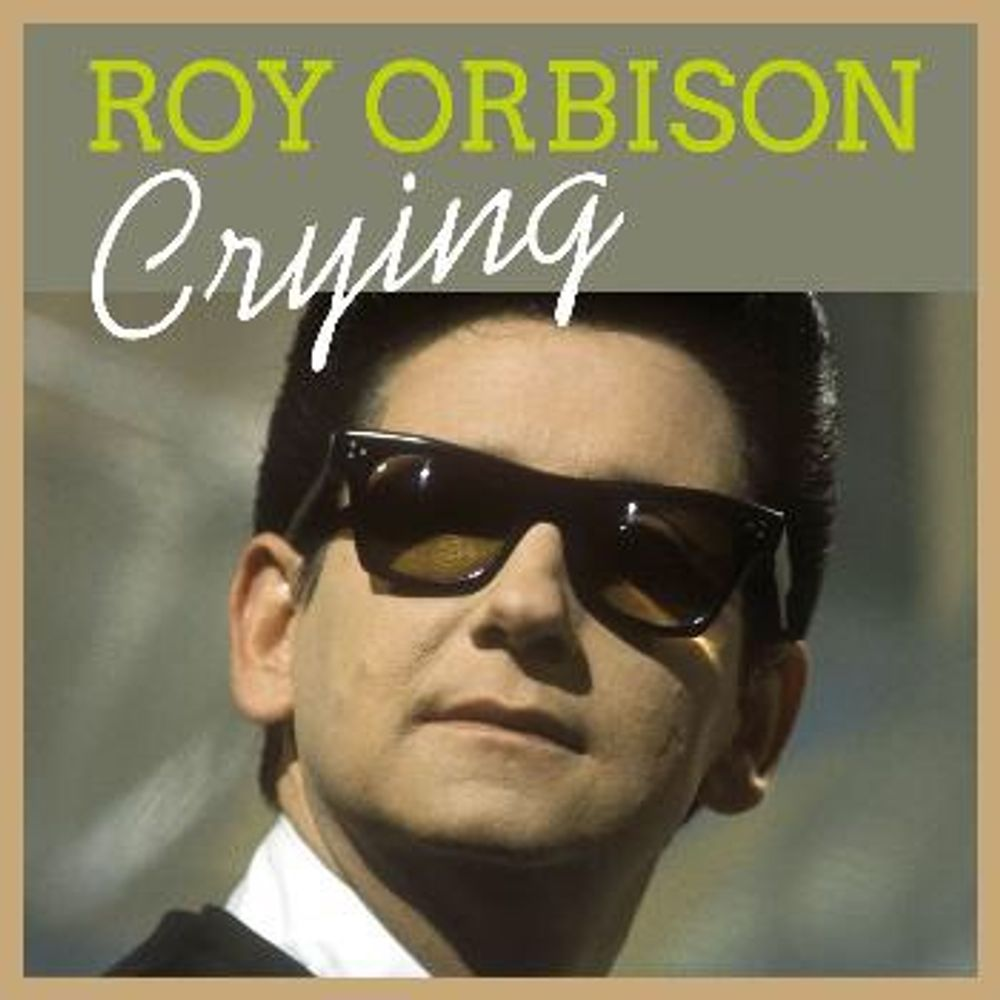
Crying (1961) – Roy Orbison

I listened to Roy Orbison’s music a lot in my youth. I believe I wore out the Essential Roy Orbison compilation record especially today’s featured track Crying. I imagine Crying is one of the most recognisable love ballads in contemporary music. Up to now all of the music that has featured Roy here was part of his time at The Traveling Wilburys. I’m afraid I let his other big hits Only the Lonely and Pretty Woman fall by the wayside, but I’ll make up for it and present them at a later date amongst others. Roy’s operatic vocal style and range has always been monumental and it is no better showcased than in this classic signature song, although Not Alone Anymore to my ears gives it stiff competition.

Crying is a song written by Roy Orbison and Joe Melson for Orbison’s third studio album of the same name (1962). Released in 1961, it was a number 2 hit in the US for Orbison. I also like Llorando, the Spanish version of this song in the David Lynch masterpiece Mulholland Drive which I reviewed back in July 2021. In 2002, Crying was honoured with a Grammy Hall of Fame Award. In 2010, Rolling Stone ranked it 69th on their list of the 500 greatest songs of all time.

Crying emerged during a period when Orbison was already enjoying considerable success, but he sought to explore deeper, more poignant themes in his music. It was a departure from the more upbeat rockabilly style that characterized much of Orbison’s early work. Instead, it delved into the raw, unfiltered pain of heartache and loss.

[Verse 1]
I was alright for a while
I could smile for a while
But I saw you last night
You held my hand so tight
As you stopped to say, “Hello”

[Chorus]
Oh, you wished me well
You couldn’t tell
That I’d been crying over you
Crying over you
When you said, “So long”
Left me standing all alone
Alone and crying, crying
Crying, crying

[Post-Chorus]
It’s hard to understand
But the touch of your hand
Can start me crying

[Verse 2]
I thought that I was over you
But it’s true, so true
I love you even more
Than I did before
But, darling, what can I do?
(read the remainder here)

References:
1. Crying (Roy Orbison song) – Wikipedia

Tagged with: ,
Posted in Music

Follow Blog via Email

Enter your email address to follow this blog and receive notifications of new posts by email.

Join 780 other subscribers

← Back

Thank you for your response. ✨