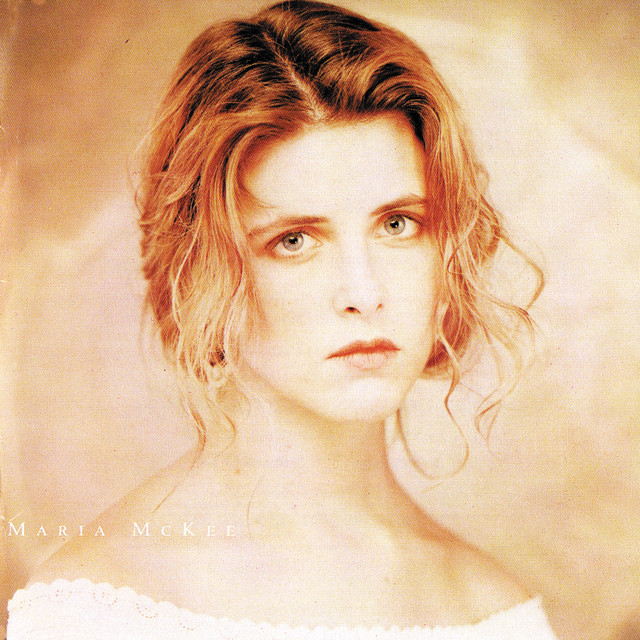
Talk about blood, sweat and tears; it feels Maria McKee conveys it all here in voice and sound: ‘then so goodbye to Panic Beach‘. Someone recommended this to me, but I can’t recall whom. This is where the chorus kick’s arse. Give this song time to unfold. It’s a musical – art form made like origami. Panic Beach appears as the 5th song on Maria McKee’s debut album by American released in 1989. The songwriting was inspired in part by books about the history of vaudeville, as well as by Tennessee Williams plays.
[Verse 1] Well, the dog act got drunk again last night The king and queen of the waltz clog team had another fight The king was careless with his tango grip Nearly lost his queen in a dip Yeah, she righted herself Straightened out her slip and kicked him in the shin Miss Billy Begonia thinks she’s hit the big time She wants a thick red rug from the dressing room door To the front-line of the footlights She’s got a sky blue swan’s down powder puff And a corset to keep her spirits up Yeah, she don’t sweat She sours and melts like ice cream in the sun She’ll be out of a job at the end of this three-week run
[Chorus] We’re having fun out here on Panic Beach All the vaudeville bums are here out on Panic Beach I hear them talk about the palace but it’s so far out of reach So I’ll do my time, then say goodbye to Panic Beach, yeah Goodbye, goodbye, goodbye
Panic Beach has a bitter-sweet carnival-esque feel to it since it deals with down-and-out vaudeville performers living and working in obscurity. Each word paints a picture. The song abounds with color, characters and melancholy. My favourite lines: ‘she don’t sweat, she sours and melts like ice cream in the sun‘ and “a sky blue swans down powder puff and a corset to keep her spirits up“.
Maria Luisa McKee (born August 17, 1964) is an American singer-songwriter. She is best known for her work with Lone Justice, her 1990 song Show Me Heaven which I’m sure most of the readers here will be familiar and her song If Love Is a Red Dress (Hang Me in Rags) from the film Pulp Fiction.
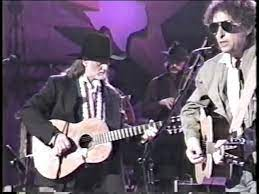
I first became familiar with Pancho and Lefty from the duet below by Willie Nelson & Bob Dylan. I liked it a lot from first listen. It’s reassuring to know Townes was alive to see these two honour him by playing a medley of his hit. Pancho and Lefty, originally Poncho and Lefty, is a song written by American country music singer-songwriter Townes Van Zandt. Perhaps his most well-known song. For more information about his version I point you to my friend Max’s Pancho and Lefty post below:
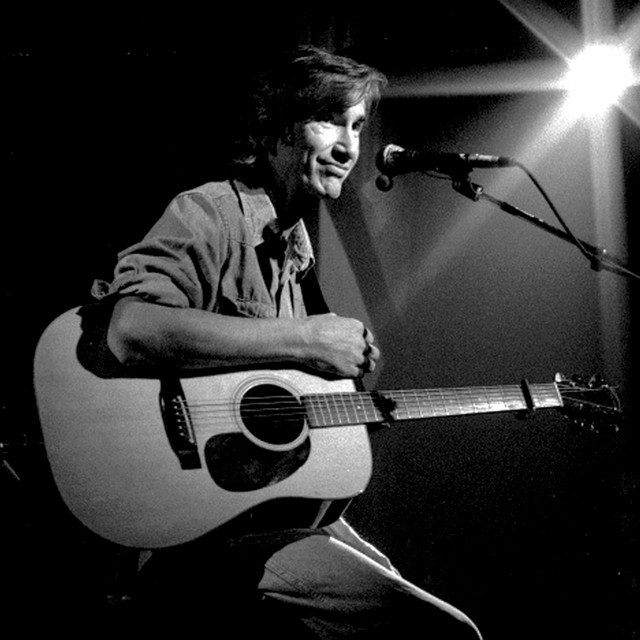
Townes Van Zandt
The royalties from this song helped Van Zandt through the years. He told a story of getting pulled over by a couple of policemen. His car sticker was out of date so he got into the police car and they asked him what he does for a living. He said he was a songwriter and the policemen shook their heads. He then told them that he wrote “Pancho and Lefty” and their eyes lit up and they started to grin. Pancho and Lefty were the policemen’s police radio code names. They let Townes go after that.
Van Zandt did not like fame or what came attached to it. It’s been reported that he turned down opportunities to write with Bob Dylan. He respected Dylan a great deal but it was the celebrity part he didn’t want. He never ended up on a major label through his career…by choice.
Living on the road, my friend Was gonna keep you free and clean And now you wear your skin like iron Your breath as hard as kerosene You weren’t your momma’s only boy But her favorite one, it seems She began to cry when you said goodbye And sank into your dreams
Pancho was a bandit boy His horse was fast as polished steel He wore his gun outside his pants For all the honest world to feel Pancho met his match, you know On the deserts down in Mexico Nobody heard his dying words But that’s the way it goes
All the Federales say They could’ve had him any day They only let him slip away Out of kindness, I suppose
As alluded to above in Max’s post; Pancho and Lefty has been recorded by several artists since its composition and performance by Van Zandt, with the Willie Nelson and Merle Haggard version selling the most copies and reaching number one on the Billboard country chart.
In an interview, Townes Van Zandt recalled, “I realize that I wrote it, but it’s hard to take credit for the writing, because it came from out of the blue. It came through me and it’s a real nice song, and I think, I’ve finally found out what it’s about. I’ve always wondered what it’s about. I kinda always knew it wasn’t about Pancho Villa, and then somebody told me that Pancho Villa had a buddy whose name in Spanish meant ‘Lefty.’ But in the song, my song, Pancho gets hung. ‘They only let him hang around out of kindness I suppose’ and the real Pancho Villa was assassinated.”
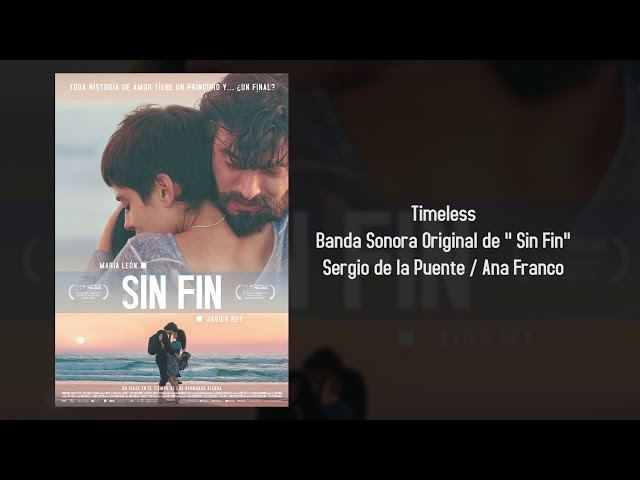
I was in a bit of a quandary wondering how I would take charge of my morning before I had to go out and do errands. I had this appetite to clean the fridge. Believe you me that doesn’t happen often. Anyhows, I had the above Spanish movie (Europa Channel) on in the background and I just kept hearing this stupendous music which made cleaning the fridge feel heavenly. So I took a ‘time-out’ to search the movie and the music composer. Eventually I found it and it took a bit of searching mind you. So here it is: Sin Fin (Not The End) by Sergio de la Puente. I’ve been listening to it all day.
Sergio de la Puente
It’s a marvellous composition for a special movie in at least the few scenes I saw. If you want just a glimpse into how good this music works with the movie then view this movie trailer. The combination of the soundtrack and photography felt magic. I listen to these pieces and I get goosebumps. There are few moments in life when music just captures your soul in the most unlikely contexts upon first listen and Wham! This is what it felt like to me – a blessing in disguise; like the angels have appeared from nowhere.
At what point did you (Sergio de la Puente) discover that you wanted to become a composer for the audiovisual media?
I knew it all my life, practically. My father came from the world of the image, he was a filmmaker and he loved orchestral music. My mother had worked in classical music as an amateur. The first time I heard “Star Wars” in my house with 5 years… from that moment I said “this is my thing”. I started playing that kind of melodies with the piano. I started studying at the conservatory at the age of 12 and over time it became clear to me that I either dedicated myself to film or to music, so film music united those two passions.
Below are three pieces from the movie which made me take time out from cleaning to search what the heck I was listening to. I’m glad I did. I hope you like them.
The following was sourced from the Wikipedia article below:
Max Bruch’s Violin Concerto No. 1 in G minor, Op. 26, is one of the most popular violin concertos in solo violin repertoire and, along with the Scottish Fantasy, the composer’s most famous work. The concerto was then considerably revised with help from celebrated violinist Joseph Joachim and completed in its present form in 1867.
Bruch sold the score to the publisher N. Simrock outright for a small lump sum — but he kept a copy of his own. At the end of World War I, he was destitute, having been unable to enforce the payment of royalties for his other works because of chaotic world-wide economic conditions. He sent his autograph to the duo-pianists Rose and Ottilie Sutro so that they could sell it in the United States and send him the money. Bruch died in October 1920, without ever receiving any money.
Bruch also composed two more violin concertos, but neither has gained as much fame as his first, which continues to be very popular in both repertoire and audience terms. This was a source of great frustration for Bruch, who wrote to Simrock:
“Nothing compares to the laziness, stupidity and dullness of many German violinists. Every fortnight another one comes to me wanting to play the first concerto. I have now become rude; and have told them: ‘I cannot listen to this concerto any more – did I perhaps write just this one? Go away and once and for all play the other concertos, which are just as good, if not better.”
In 1996, Violin Concerto No 1 was voted the number one work in the Classic FM (UK) Hall of Fame by the station’s listeners.
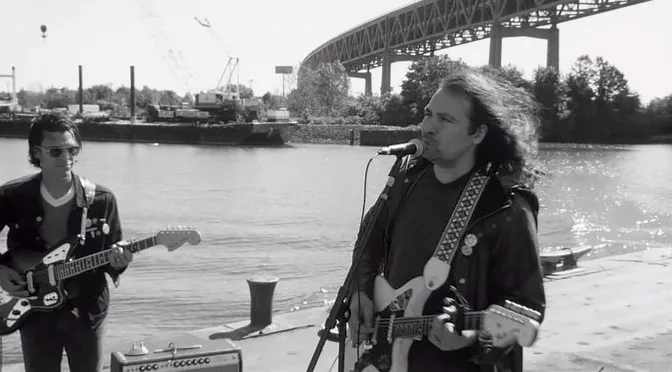
It’s befitting this song heads the ‘P’s in the Music Library Project. If you want to see why The War on Drugs is one of the biggest things to happen in the last decade in ‘Music Americana’ or contemporary music in general then look no further than their timeless song Pain. I feel the War on Drugs have produced a sound that no other band have over the last decade. Their music is so relatable and with touchstones in middle America it can’t be overstated. This song is pure fire but they have so many others including those which have featured here. This song was recommended to me by Jeff at eclecticmusicblogger and I haven’t looked back.
[Verse 1] Go to bed now, I can tell Pain is on the way out now Look away, a domino falls away I know it’s hard lookin’ in Knowin’ that tomorrow you’ll be back again Hang your head and let me in, I’ve been waitin’ So long
[Verse 2] I was staring into the light When I saw you in the distance and knew that you’d be mine Am I moving back in time? Just standin’ still? I met a man with a broken back He had a fear in his eyes that I could understand I can’t even shake the hand without breakin’ it
[Chorus] I’ve been pullin’ on a wire, but it just won’t break I’ve been turnin’ up the dial, but I hear no sound I resist what I cannot change And I wanna find what can’t be found
Pain is from their record A Deeper Understanding. The album won Best Rock Album at the 60th Annual Grammy Awards. Frontman Adam Granduciel told Q Magazine this anxiety-ridden tale of physical agony was inspired by an operation on his ruptured disc. It is one of several A Deeper Understanding tracks where he touches on the excruciating experience. “I couldn’t sit to work and I couldn’t stand up to play guitar,” he said. “The idea of chronic pain and what it does to the mind is scattered throughout the songs.” I can first-hand attest to the severity of this pain which I suffered 2 years ago when I was operated on for a ruptured disc.
According to AllMusic: A Deeper Understanding “reclaims and explores the distinctive soundscapes, vastness, and haunted psyche of Lost in the Dream, and that in itself is significant.” On the same site, in a readers’ poll by users it was ranked as the #1 album of 2017.
If you want to see how good The War on Drugs are as a band in a small studio than look no further than this Tiny Desk (Home) Concert. Their ownership, chemistry and pure artistry of their instruments are arguably second to none in the current era.
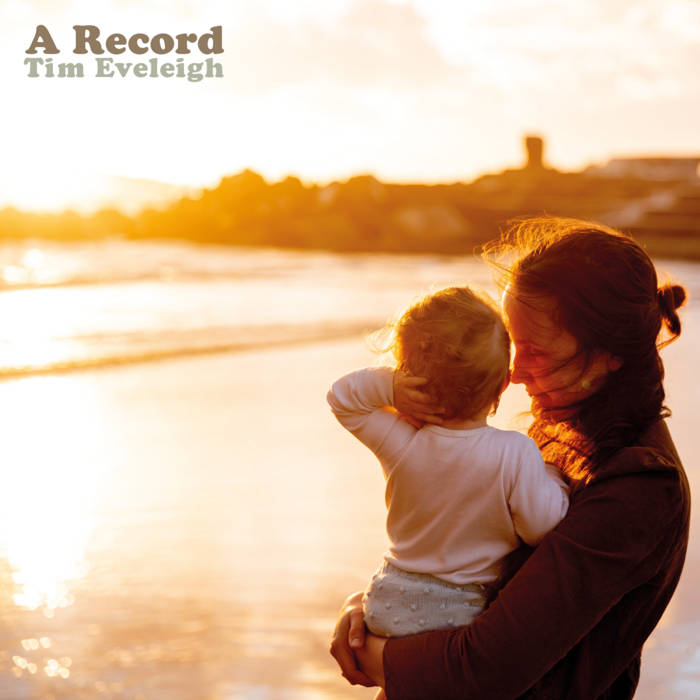
This is another song I had the pleasure of listening to from my favourite blogger of new independent music Jeff at eclecticmusic lover. The video below of Overture by Tim Eveleigh has just 12 views at the time of writing this post despite the song being released a year ago. Most of those views are probably from me (and perhaps Jeff), since I really like this.
I like Overture as a meditative piece. My following interpretation may be down to my own romantic-pessimist tendencies, but this is my opinion: Overture paradoxically seems to heed the danger of negating your own suffering to the rest of the world and yourself or at least not telling the truth of where you are. Because everyone has to ‘wake-up’. To me the song is a challenge of sorts to ‘wake up’ when nothing is alright but you may have convinced and deluded yourself and others. It’s easier to find the comfort of your pillow and just bear the pain and tell yourself and others everything is alright. This is at the microcosm level; the macrocosm is even more deluded and unremitting as we are witnessing. Now over to Jeff:
The album opens with “Overture“, a lovely, almost gospel-like song with a bit of a Celtic folk vibe. The inspiring lyrics “tell the world you’re alright, tell the world you sleep tight, and nothing can wake you up” set an overall tone of love and optimism for A Record. Tim’s been involved with music since his childhood, and in a wonderful interview with the webzine Croydonist, he discussed how he began studying piano at a young age, eventually working his way up to violin and then viola in secondary school, where he also played in the orchestra. He began writing songs when he was 10, and ended up playing in two bands, which he cheekily remarked “rather worryingly, evidence of this still exists“. By his early 30s he’d written what he described as a solid collection of songs, but “after playing these for a few years I scrapped them all and started again, and I’ve written enough songs to record a couple of albums.”
She really had reinvented this standard, adding a strong jazz influence. To my ears, she cleaned up some prominent melodic embarrassments. For example, she sings both syllables of the first word “Somewhere” on the same high A flat, rather than the octave jump of the Judy Garland version. I read somewhere that Harold Arlen was trying to achieve a “symphonic” effect by the octave jump. That effect may have worked in the context of the movie and 1939 audience expectations; IMO it’s hackneyed today, which I believe is a big reason for numerous poster claims that they didn’t like OTR until they heard Eva’s version.
“Closetcomposer” from the Yahoo discussion group
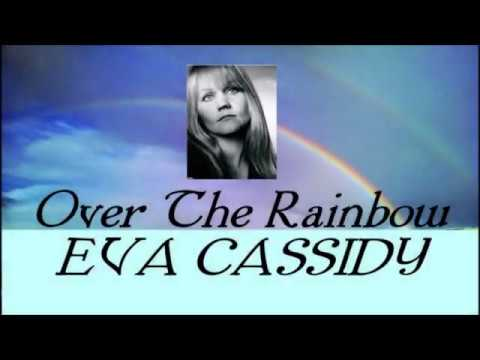
I can’t believe 4 years has already passed since I last posted an Eva Cassidy track. We speak of ‘what – ifs’ in the music world like for example, if Buddy Holly and John Lennon’s lives weren’t cut short and they went onto develop their careers. At least those former greats got rousing receptions, recognition and fame. Eva Cassidy was on the precipice of taking the music world by storm when she died at 33 of melanoma virtually an unknown music artist outside Washington circles. Like her previous rendition of Autumn Leaves which featured here, Over the Rainbow transcends genre and has been covered hundreds of times in the decades since.
Eva Cassidy has one of the most astounding female voices I’ve ever heard in contemporary music, yet she tragically passed away without finding commercial success in her lifetime. I find her voice ‘angelic’ and richly soul driven. Fortunately we are blessed to have many live and studio recordings of her songs.
Wikipedia – Two years after her death, Cassidy’s music was brought to the attention of British audiences, when her versions of “Fields of Gold” and “Over the Rainbow” were played by Mike Harding and Terry Wogan on BBC Radio 2. Following the overwhelming response, a camcorder recording of “Over the Rainbow“, taken at Blues Alley in Washington by her friend Bryan McCulley, was shown on BBC Two’s Top of the Pops 2. Shortly afterwards, the compilation album Songbird climbed to the top of the UK Albums Chart, almost three years after its initial release. The chart success in the United Kingdom and Ireland led to increased recognition worldwide. Her posthumously released recordings, including three number-one albums and one number-one single in the UK, have sold more than ten million copies. Her music has also charted within the top 10 in Australia, Germany, Norway, Sweden and Switzerland.
I couldn’t recommend more highly Eva Cassidy’s web site which includes specifics about her recording of Over The Rainbow where it mentions:
It was “Over the Rainbow” that made Eva Cassidy a star, but it didn’t happen until five years after her death….It all started, of course, with “The Wizard of Oz.” Like most children in the pre-video days, Eva looked forward to the annual television broadcast of the MGM musical “The Wizard of Oz,” with Judy Garland’s classic performance of “Over the Rainbow.” Intrigued by the fantasy world depicted in the movie, Eva and her sisters and cousins eagerly read the complete series of “Oz” books by L. Frank Baum.
Eva’s brother Dan Cassidy heard secondhand (via Ned Judy) that Eva was motivated to sing “Over the Rainbow” after watching a television talent show. ‘Eva used to watch a show in the 80´s called “Star Search” which sometimes had some really good singers competing for national attention…After Eva’s dazzling introduction to the Washington music community, her special version of “Over the Rainbow” was ever-more-often demanded by her fans at her live performances. Usually she didn’t put it on the set list without a special request. Eva’s friend Celia Murphy recalls, “We were always under orders NOT to request that song, but we always did, and she always obliged!” According to Chris Biondo, “The hard part for her wasn’t singing it, it was playing the guitar part all the way through without making any mistakes. There were a couple of difficult parts for her during the little instrumental break, there was a slide where sometimes she wouldn’t quite slide up to where she was heading, she had problems making that slide work. Sometimes she played it better than others.”
[Verse 1] Somewhere over the rainbow Way up high In the land that I heard of once Once in a lullaby
[Verse 2] Somewhere over the rainbow Skies are blue And the dreams that you dare to dream Really do come true
[Bridge] Someday I’ll wish upon a star And wake up where the clouds are far Behind me Where troubles melt like lemon drops Away above the chimney tops That’s where you’ll find me
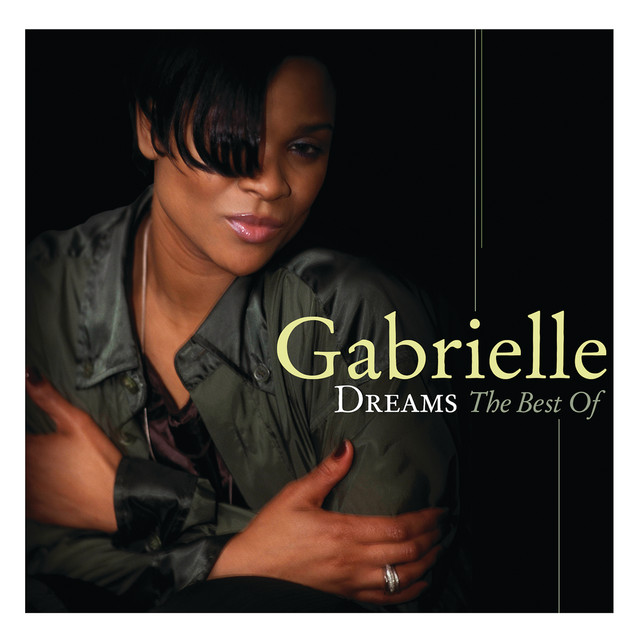
I’m such a big fan of this song Out of Reach from English singer Gabrielle that it currently heads my blog. I can’t recall where I first heard it, but I knew it was a keeper. Gabrielle’s silky voice is pure therapy for the soul. It reminds me of two other songs, namely No One by Alicia Keys which featured here back in September and Life by Des’ree which should have already been here, but I’ll will make amends for that. All these tracks never get old.
Out of Reach was written by Gabrielle and frequent collaborator Jonathan Shorten for the soundtrack of Sharon Maguire’s 2001 romantic comedy film Bridget Jones’s Diary. The London Session Orchestra provides the string instruments on the track.
[Verse 1] Knew the signs, wasn’t right I was stupid for a while Swept away by you And now I feel like a fool
[Pre-Chorus] So confused My heart’s bruised Was I ever loved by you?
[Chorus] Out of reach, so far I never had your heart Out of reach, couldn’t see We were never meant to be
[Verse 2] Catch myself from despair I could drown if I stay here Keeping busy every day I know I will be okay
The following was from sourced from the Wikipedia references below: Released as the soundtrack’s lead single on 9 April 2001, Out of Reach peaked at number one in Portugal, number two in New Zealand, and number four on the UK Singles Chart. As of March 2021, the song had sold 645,000 copies in the UK as stated by the Official Charts Company, and became the 10th-most-successful single of 2001 in New Zealand.
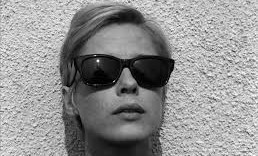
Louise Gabrielle Bobb was born in Hackney, London on 19 July 1969 to parents from Dominica. Gabrielle credited her mother for her love of soul and reggae music. Gabrielle has had ptosis, the drooping of one eyelid, since childhood; in public, she covers her eye with sunglasses, an eyepatch, a hat or hair. In school, she suffered from depression and was sometimes suicidal. After finishing her A-levels, she abandoned an idea to study law and began singing in nightclubs. The rest they say is history.
Mark Knopfler has featured here a bunch not only as founder of Dire Straits, but as a solo artist. I think his track Going Home which ends the movie soundtrack Local Hero is one of the most powerful instrumental songs I’ve heard composed by any contemporary music artist. I remember back in the early nineties my guitarist friend Malcolm telling me when we were listening to this song – ‘Listen to Knopflers’ guitar zinging when the Saxophone is prancing‘. That’s a good ear.
Now onto to a softer and mellower later day track Our Shangri-La. I have been watching a lot of surfing videos of late and this song seems in harmony with my morbose fascination of big surf. This song just gives off a great vibe even more so after repeated listens.
Also how could I not think of the Frank Capra film Lost Horizon (1937) which I reviewed here where British diplomat Robert Conway and a small group of civilians crash land in the Himalayas, and are rescued by the people of the mysterious, Eden-like valley of Shangri-la. Protected by the mountains from the world outside, where the clouds of World War II are gathering, Shangri-la provides a seductive escape for the world-weary Conway. But is it the miraculous utopia it appears to be?
[Verse 1] It’s the end of a perfect day For all surfer boys and girls The sun’s dropping down in the bay And fallin’ off the world
[Chorus] There’s a diamond in the sky Our evening star In our Shangri-La, oh
[Verse 2] Get that fire burnin’ strong Right here and right now It’s here and then it’s gone There’s no secret anyhow
[Chorus] We may never love again To the music of guitars In our Shangri-La
Shangri-La is the fourth solo studio album by British singer-songwriter and guitarist Mark Knopfler, released on 28 September 2004 by Mercury Records. In March 2003, Knopfler was involved in a motorbike crash in Grosvenor Road, Belgravia, and suffered a broken collarbone, broken shoulder blade, and seven broken ribs. Knopfler spent seven months away from the guitar in physiotherapy, but eventually recovered and was able to return to the studio in 2004 for his fourth album and supporting tour the following year. Knopfler supported the release of Shangri-La with the Shangri-La Tour, which consisted of three legs: South Africa, Asia, Australia, and New Zealand; Europe; and North America.
The video below is Mark Knopfler performing “Our Shangri-La” from his solo album Shangri-La at the AVO Session in Basel, Switzerland on the 12th November, 2007.




 Observation Blogger