At My Window Sad and Lonely (1998) – Billy Bragg & Wilco (written by Woody Guthrie)

Billy Bragg and Wilco’s Jeff Tweedy

Billy Bragg and Wilco’s Jeff Tweedy alternated lead vocals on Mermaid Avenue; the iconic album of previously unheard lyrics written by American folk singer Woody Guthrie. Today’s song At My Window Sad and Lonely was sung by Jeff Tweedy and it comes a year after I wrote about my favourite song from Mermaid AvenueCalifornia Stars. More information about the album can be found in my previous articles inc. Birds and Ships (feat. Natalie Merchant). Guthrie’s recording career was more or less over by 1947, but his estate approached Billy Bragg in 1995 to set Woody’s handwritten, unrecorded lyrics to music.

As I write about today’s song At My Window Sad and Lonely, I draw parallels with my current disposition. I let the devil in the room yesterday; only momentarily but I’ve been paying for it since, and it has affected my sleep tonight. It was a nano second temptation, and it crossed my mind to entertain it which I was part way to fulfilling. Thankfully it didn’t come to fruition.
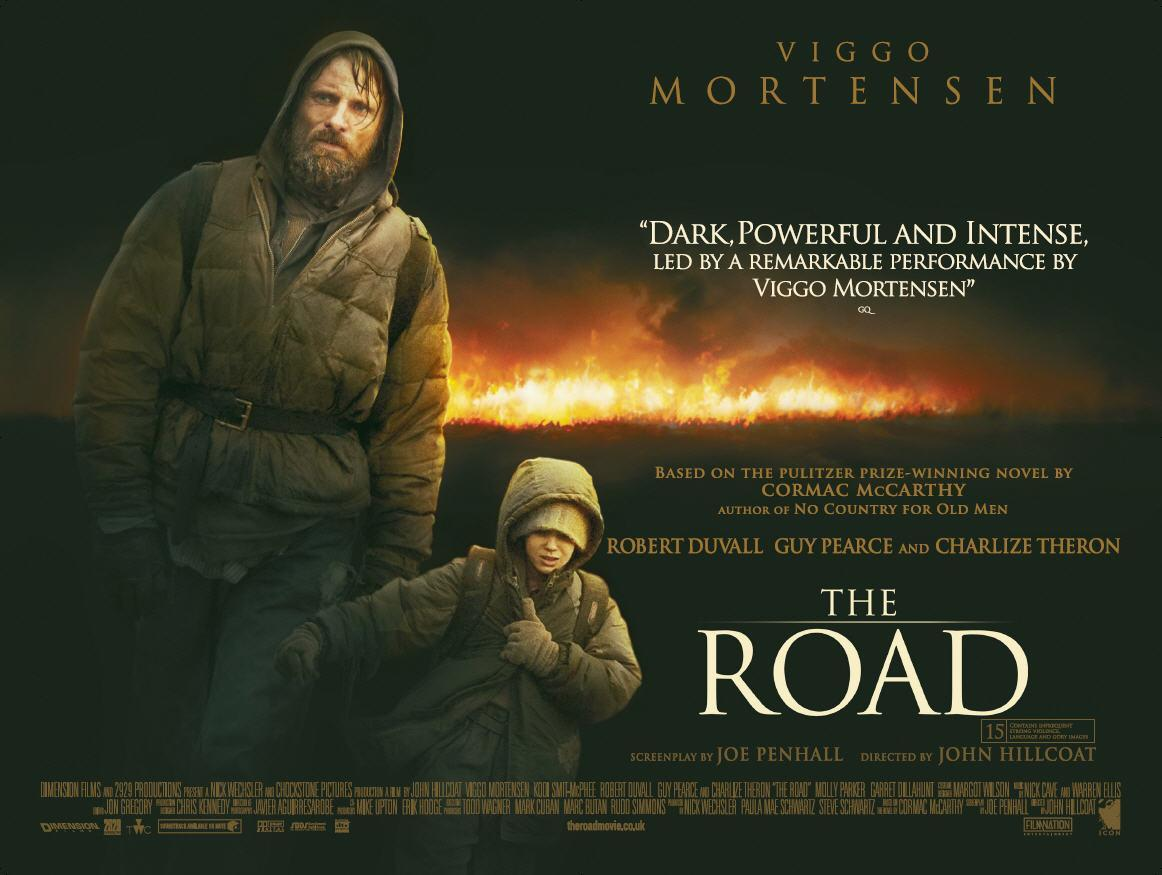
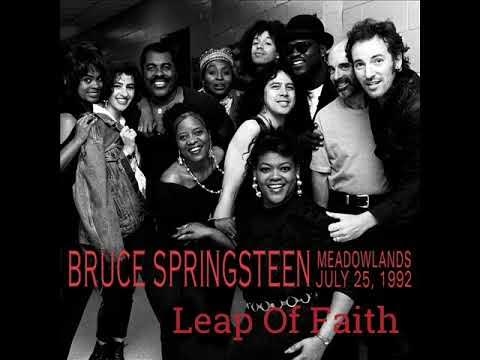
There’s a scantily known ballad by Springsteen called ‘With Every Wish‘ (comes a Curse). The older I get, the more this truism rings true. I’m wallowing in my Sad and Lonely state and wondering how the puppeteer (The Logos) can take charge again and empty me of these harmful desires. 

At my window, sad and lonely
Oft times do I think of thee
Sad and lonely and I wonder
Do you ever think of me?

Every day is sad and lonely
And every night is sad and blue
Do you ever think of me, my darling
As you sail that ocean blue?

Will you find another sweetheart
In some far and distant land?
Sad and lonely, now I wonder
If our boat will ever land


Ships may ply the stormy oceans
And planes may fly the stormy sky
I’m sad and lonely, but remember
Oh I’ll love you till I die

Since the success of Mermaid Avenue (1998), a second and third volume of recordings were released, in 2000 and 2012 respectively. It culminated in Mermaid Avenue: The Complete Sessions. A DVD containing the documentary Man in the Sand (1999), that functions as both a biography of Guthrie and a chronicle of the creation of Billy Bragg & Wilco’s Mermaid Avenue is included as a fourth disc. You can view the trailer of it here.
Throughout the film, Nora Lee Guthrie – the daughter of the legendary American folk musician narrates the story of her father’s life, while Bragg is seen traveling to various locations relevant to Woody Guthrie’s life, such as Okemah, Oklahoma (his hometown), Pampa, Texas (where he met his first wife), and New York City (where he made his home after leaving California). 

Reference:
1. Mermaid Avenue – Wikipedia
2. Man in the Sand – Wikipedia

Tagged with: , , , , , ,
Posted in Music

Amor de Loca Juventud (1997) – Buena Vista Social Club (written by Rafael Ortiz)

Amor de Loca Juventud (The Love of Crazy Youth) is the second song to feature here from the music documentary Buena Vista Social Club. Director Wim Wenders and guitarist Ry Cooder teamed up again (after Paris, Texas) to celebrate Cuba’s “musical golden age” between the 1930s and 1950s.
Today’s track is traditional music of Cuba called ‘Bolero‘ which possesses a romantic cadence and sophisticated lyrics dealing with love. Bolero music was born as a form of romantic folk poetry cultivated by a new breed of troubadour from Santiago de Cuba, the trovadoresPepe Sánchez is considered the father of this movement and the author of the first bolero, Tristezas (sadnesses), written in 1883.

Below is a crude English translation (first two verses) of Amor de Loca Juventud (The Love of Crazy Youth):

The illusions of yesterday are already dying
That I satisfied with lustful love
And they also die with their cruel promises
The inspiration that one day I gave her

With candor I gave my entire soul
Thinking about our idyll consecrating
Without thinking what she was looking for was in me
It was the love of crazy youth

Amor de Loca Juventud was written by Cuban guitarist and composer Rafael Ortiz Rodríguez (image inset) in 1975. He transcended Cuban music because of his excellent quality as a composer.

Anyone who is even remotely interested in musical heritage should find Buena Vista captivating. In 2020, the film was selected for preservation in the United States National Film Registry by the Library of Congress. The group Buena Vista Social Club was named after the homonymous members’ club in the Buenavista quarter of Havana, a popular music venue in the 1940s. To showcase the popular styles of the time, such as sonbolero (aforementioned) and danzón; they recruited a dozen veteran musicians, some of whom had been retired for many years.

References:
1. Buena Vista Social Club – Wikipedia
2. Bolero – Wikipedia
3. Rafael Ortiz Rodríguez – Cubanos Famosos

Tagged with: , , , , , ,
Posted in Music

Dragon: The Bruce Lee Story (1993) – Rob Cohen (Friday’s Finest)

My first encounter with the phenomenon that is Bruce Lee was when I was in my early-teens visiting my cousins in Sydney back in the mid-eighties. My older cousin Anthony was a Rugby league prospect for the North Sydney Bears and his father Fred was a former Judo champion in his homeland Germany. They both had a penchant for watching Bruce Lee movies. I didn’t share their enthusiasm glimpsing at the grainy-grindhouse footage on their VHS tapes but years later I eventually came ’round. Today’s movie Dragon: The Bruce Lee Story is a solid and enjoyable introduction for those unfamiliar with the history of martial arts in Western cinema and Bruce Lee’s impact on it and his legacy towards popularising Martial arts.

IMDB Storyline:

Based on the life and career of Martial Arts superstar, Bruce Lee. Haunted by demons. Bruce was taught Martial arts at childhood. Bruce then was told by his father to flee to the United States. There, he opened up a Martial Arts school, then was chosen to be the Green Hornet’s sidekick, Kato. Then, his big movie career that included “The Big Boss” and “Enter the Dragon”. Fighting many enemies along the way, including his childhood demon.

The brief but eventful life of actor and martial arts trailblazer Bruce Lee is portrayed in this drama, based on the biography written by his widow Linda Lee Caldwell. The film still causes some consternation with some Bruce Lee fans because in true Hollywood style it tinkers with facts, misses out other notable points and has some timeline issues. Yet if you can accept it as a “painted always in a positive light” homage piece more than a definitive biography then you can find some semblance of the man and his short life. The story follows the principal events in Bruce Lee’s life and shows us the man behind the martial arts, covering his inner turmoils and personal struggles as well as his famous physical ability.

The scene I have presented below is one of my favourites from the film. It entails Bruce Lee’s comeback from a debilitating back injury where during a martial arts tournament run by Ed Parker he challenges anyone in the vicinity to disprove his martial arts method and philosophy (Jeet Kune Do) by lasting more than 1 minute in the ring against him.

The core of Jeet Kune Do is the interception of the opponent, making corresponding responses or counterattacks that strike at incoming attacks. JKD also incorporates a set of principles to help practitioners make instant decisions and improve the physical and mental self, being intended to have practical applications in life without the traditional routines and metaphysics of conventional martial arts.

Tao of Jeet Kune Do – Wikipedia

Interesting Trivia from IMDB:

  • In this film, when Linda tells Bruce that she’s pregnant, a musical band is visible in the background. The lead singer of this band is played by Shannon Lee, Bruce Lee’s real-life daughter.
  • Dedicated to the memory of Bruce Lee’s son Brandon Lee, who died (March 31, 1993) due to an accidental shooting on the set while filming The Crow (1994). Filming was completed and the Dragon was less than two months away from opening when Brandon Lee died.
  • When Bruce Lee is preparing to fight the martial artist chosen to stop him from teaching the “Guai Lo”, their warmup is obviously derived from Way of the Dragon (1972): Lee is exercising his flexibility, while his opponent, like Chuck Norris, is instead practicing a series of “rehearsed routines.”
  • This film was released during the 20th anniversary of Bruce Lee’s death on July 20, 1973.
  • When Jerome Sprout knocks on the door to Bruce’s school, you can see the name of the school is Jun Fan Gung Fu Institute. Lee Jun Fan is Bruce’s given name.
  • Rob Cohen learnt that for the first two years of Bruce Lee’s life, his parents had dressed and passed him off as a girl to protect him from a superstitious Chinese belief that demons target first-born sons. When Rob Cohen first met Linda Lee Cadwell after giving her the screenplay, she asked how Cohen had learnt about Bruce’s demon. Cadwell said Bruce told her he felt as though a demon was trying to drag him away when he collapsed ten weeks before his death.
  • None of the custom-made sound effects in the fight scenes were used twice.

References:
1. Dragon: The Bruce Lee Story – Wikipedia
2. Dragon: The Bruce Lee Story

Tagged with: , ,
Posted in Movies and TV

Bright Eyes (1978) – Art Garfunkle (written by Mike Batt)

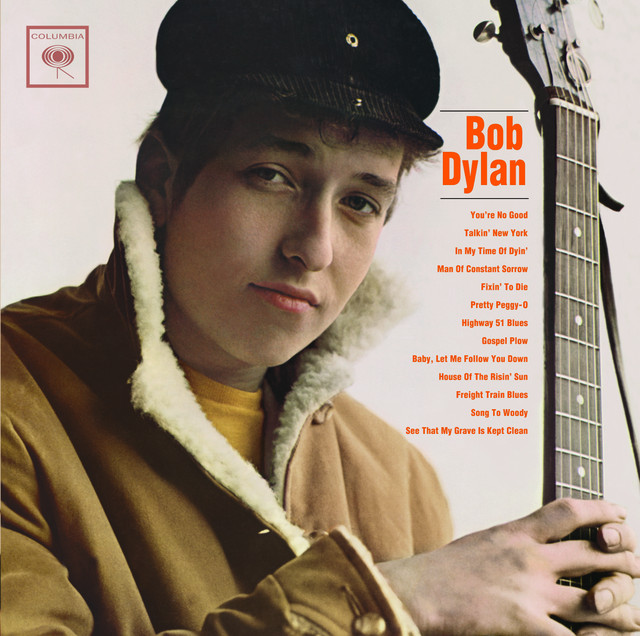
I am still elated by the video-call my kids and I had with my brother last night. Like Dylan sang in Long and Wasted Years: ‘It’s been such a long, long time‘. Any-hows, today’s featured track Bright Eyes couldn’t be more apt and timelier because it embodies the spirit of our childhood bond. Bright Eyes will forever be etched into our memories.

Bright Eyes was written (and performed) by English singer-songwriter Mike Batt. The music from his criminally underrated record Tarot Suite remains as much a part of our upbringing as any other. Bright Eyes was magnificently sung by Art Garfunkel and became a huge hit around the World except in the US where it barely made a ripple.

Is it a kind of a dream?
Floating out on the tide
Following the river of death downstream
Oh, is it a dream?

There’s a fog along the horizon
A strange glow in the sky
And nobody seems to know where it goes
And what does it mean?
Oh, is it a dream?

Bright eyes, burning like fire
Bright eyes, how can you close and fail?
How can the light that burned so brightly
Suddenly burn so pale?
Bright eyes

Bright Eyes was rearranged as a pop song from its original form in the 1978 British animated adventure drama film Watership Down. It topped the UK Singles Chart for six weeks (No. 2 in Australia) and became Britain’s biggest-selling single of 1979, selling over a million copies. In the United States, it failed to reach the Billboard Hot 100. Richard Adams, author of the original novel, is reported to have hated the song. The original director of Watership John Hubley requested the song be about death. Batt described recording the song as “one of the most difficult sessions” of his career (due to different musical opinions).

Both Art Garfunkel and Mike Batt’s version are presented below. I hope you enjoy them and thanks for reading.

References:
1. Bright Eyes (Art Garfunkel song) – Wikipedia

Tagged with: , , , ,
Posted in Music

Narrative, Metaphor and Hyper-Novelty (Special Edition)

Entropy, Energy & The 4th Frontier: Chris Martenson on DarkHorse

We are a fish out of water perpetually – flopping from boat to boat.

The following is paraphrased from 34:15 in the above discussion:

Chris Martenson:
We (us humans) are narrative machines. We used to sit around the campfire and tell stories. Stories are so immensely powerful to the point that thousands of years later they are still encoded deep into our psyche and provide valuable lessons and moral frameworks. So, narratives are one layer about the story.

I stumbled across a book by George Lakoff and it’s about metaphors (Metaphors We Live By (1980) by George Lakoff and Mark Johnson). It’s that we operate at the level of metaphors and the narratives are a verbal-cognitive layer on top of that. The metaphor is an embodied concept. The concept is vague, but really powerful and drives a lot. So, one of the pieces that they put in there is the metaphor for an argument. In western discourse the metaphor for an argument is ‘War’. We are going to have a battle of the minds. A lot of people are going to shy away from it because they don’t like conflict. An argument is conflict; winners and losers; there’s blood. And he said, what if there are cultures out there where the metaphor for argument is a ‘dance’. And the idea of the dance is that the two parties will try to come up with the best possible choreography given the tempo, the music and the air that night. It’s a whole different metaphor.

The sole sickness we are facing, is that our core metaphors, we have lived by for thousands of years are now broken. ‘Be fruitful and multiply’, ‘have dominion over the earth’ – these are all good things until you reach about 6, 7 billion people…. It’s clear that we have problems. In order to get ourselves cognitively organised and rallied around them we have to have a way of articulating them without it tripping all of our amygdala brain stem land mines – where you can’t do that because it’s too challenging. This is one of the prime tensions we have right now.

Then there’s an overlay on top of all of that. We have people ‘monkeying’ around with our cognitive landscape conducting 5th generation warfare specifically to target our ability to make sense of things. (see Abuse of Language). So, we are already at a sensemaking bottleneck. We have important decisions to make yet we have people trying to hobble us.

Brett Weinstein at 43:00:
The idea of Hyper-novelty is that our speciality as human beings is dealing with novel circumstances and coming up with mechanisms to profit in the midst of them. It’s what we do. Our evolving content is not housed in our genomes, it is housed in our cognitive layer which is passed along as ‘culture’ which is innovated through ‘consciousness’. The creature that adapts really well to new stuff that its ancestors never saw, that’s us – human beings..that’s our specialty. But…our rate of change is so high that we cannot keep up with it. Even our amazing capacity to adapt is outstripped by the rate of technological change and so we are constantly using tools that are inappropriate for the environment we find ourselves in. We are a fish out of water perpetually – flopping from boat to boat.

I love the idea you borrow from Lakoff that ‘war’ (and not dance) is a metaphor that is deeply rooted in our discussions where we have conflicting interests. Dance is not always the right metaphor, but sometimes it’s exactly the right one. Why? Because ‘Dance’ does contain the ability to explore the tension between the cooperative and the competitive. Who are the ultimate dance partners? They are romantic partners and have potentially tremendously overlapping interests, but never perfectly. One of the greater insights of evolutionary biology that we picked up on in the latter half of the 20th century was about these places where we see to creatures that have great alignment, but not perfect alignment and it predicts all kind of things.

I love your point. Are we missing a metaphor that allows us to even think about the puzzle properly? My sense is because of Hyper-novelty we have a language that is hobbling us in our ability to even articulate what it is that we face.

Tagged with: , , , , ,
Posted in News, politics, Reflections

Old Pine (2012) – Ben Howard

I am at loss how I came across Old Pine by Ben Howard, but I’m sure glad I did. It’s as though it could have belonged on the movie soundtrack Leave no Trace (2018) or co-joined a Richie Valens acoustic number at Woodstock. It did feature on the Sky1 TV series Starlings.
Old Pine is from British singer-songwriter Ben Howard’s debut studio album Every Kingdom. It feels pure, spiritual and a little bit hidden; like the morning light creeping through the stillness.

[Verse 1]
Hot sand on toes, cold sand in sleeping bags
I’ve come to know that memories
Were the best things you ever had
The summer shone, beat down on bony backs
So far from home, where the ocean stood
Down dust and pine cone tracks
We slept like dogs down by the fire side
Awoke to the fog where all around us
The boom of summertime

[Chorus]
We stood
Steady as the stars in the woods
So happy-hearted and the warmth
Rang true inside these bones
And as the old pine fell we sang
Just to bless the morning

Similar to the ending song of Leave No TraceMoon Boat which featured here July 6, 2023: Old Pine crafts emotions about life, the choices we’ve made, good and bad. It’s a mixed feeling of nostalgia, sadness and happiness. His debut studio album Every Kingdom which Old Pine appears reached number four on the UK Albums Chart and was certified triple platinum.

Howard began writing songs when he was eleven. In an interview with American Songwriter, he stated that when he was a kid he started playing guitar because he liked to put words together and make stuff up. “I was quite an imaginative little kid I guess. So your standard little love songs turned into your standard adolescent love songs. I think you start getting your own take on things when you’re a late teen. That’s when everything changes’.

Reference:
1. Old Pine (song) – Ben Howard
2. Ben Howard – Wikipedia

Tagged with: , ,
Posted in Music

16/10 – 22/10/23 Dating Advice, Fediverse & ‘Jacked’ Kangaroo

Welcome to Monday’s News on the March – The week that was in my digital world.

Matthew McConaughey gives dating advice to Lex Fridman
Video interview extract at Lex Clips

I love Matthew’s honesty about finding love late in life, accepting yourself, and letting that guide you, instead of forcing a relationship that might not work out in the end.

This was a beautiful convo and amazing palette cleanser for all the horrible men vs women podcasts I see. Nothing about how a woman or a man should act to attract a mate etc….just two people talking about love and what transpired for them in their life.

Hello Fediverse!
Blog article by Mike Smith at Self Aware Patterns

This week, WordPress.com announced that all of their blogs would now have the option to join the Fediverse. The announcement included instructions on how to enable it.

As Twitter, now X, has become increasingly less usable, a number of other platforms have been vying to be its replacement: Mastodon, Bluesky, Threads, and several others. Unfortunately, choosing a social media platform has historically been more about who was on that platform than its feature set.

But one trend offers the chance of upending that calculation: interoperability. If someone on service A can follow and interact with people on service B or any other service, then, similar to using email or the straight web, everyone can be free to choose the platform of their choice. The biggest new factor in the calculation might be whether a particular service participates in that interoperability.

WordPress.com’s announcement means they’ll be part of that broad federation. 
Read more by Mike Smith at Self Aware Patterns here.

Mildura man fights off ‘jacked’ kangaroo to save his dog from drowning
News article at ABC News Australia

View video at bottom of post.

A Mildura man’s story has gone viral, after he got into a “tussle” with a kangaroo that had his dog trapped in a headlock. 

news on the march the end
Tagged with: , , , , , , ,
Posted in News, Reflections, Sport and Adventure

A Thousand Stars (1960) – Kathy Young & The Innocents

I found A Thousand Stars at Max’s blog – PowerPop. I would encourage you to read his article in the link below:

I don’t know how many people know this song but it took me twenty years to find it. I heard it in 1986 on an oldies station. I just caught the middle to the end and it intrigued me. It was haunting to me at the time the few times I heard it.

Every time they would play it (and it wasn’t much) I wouldn’t catch who it was…it never dawned on me to call the station and ask. It took me till around 2008 to remember enough of the song to track it down…

Kathy Young was only 15 years old in 1960 when this song hit. It (A Thousand Stars) peaked at No. 3 in the Billboard 100. This was their one and only top ten hit. It was written by Eugene Pearson.

Kathy Young made a return to music in the mid-1990s and has since then continued to perform to the present day. 

Max at PowerPop

A Thousand Stars

A thousand stars in the sky like the stars in your eyes
They say to me that there’ll never be
No other love like you-oo for me-e-e
A thousand stars in the sky make me realize
You are the one love that I
ll adore
Tell me you love me
Tell me you’re mine once more (once more, once mo-o-ore)
Each night I count the stars in the sky
Hoping that you aren’t telling me lies
you’re with me tonight, I’m captured by your charms
Oh, pretty baby, won’t you hold me in your arms?
A thousand stars in the sky make me realize
You are the one love that I
ll adore
Tell me you love me
Tell me you’re mine once more (once more, once mo-o-ore)
Each night I count the stars in the sky
Hoping that you aren’t telling me lies
you’re with me tonight, I’m captured by your charms
Oh, pretty baby, won’t you hold me in your arms?
A thousand stars in the sky make me realize
You are the one love that I
ll adore
Tell me you love me
Tell me you’re mine once mo-o-re (I-I-I’m yours)

Kathy Young with The Earth Angels performing Kathy’s hit “A Thousand Stars” during the festival of this genre celebrated at the Benedum Center for the Performing Arts in Pittsburgh, Pennsylvania in May 2010.

References:
1. A Thousand Stars – Wikipedia
2. Kathy Young – Wikipedia

Tagged with: , , ,
Posted in Music

[Just Like] Starting Over (1980) – John Lennon

[Just Like] Starting Over was released 45 days before John Lennon was murdered on the 8th of December 1980. It was Lennon’s final single released in his lifetime. As my blogger friend Max mentioned in a recent post: Lennon has been dead longer than he was alive, which puts things into perspective..too much bloody perspective.

[Just Like] Starting Over was the first new release from Lennon after a 5-year absence from the music industry. It was chosen by Lennon not because he felt it was the best track on the album, but because it was the most appropriate following his five-year absence from the recording industry. He referred to it during production as the “Elvis/Orbison” track, as he “tongue in cheek” impersonated their vocal styles. 

I was fascinated by Starting Over growing up since it appeared on his posthumous compilation The John Lennon Collection. I don’t know how many times I put the needle down on this record (see image left), but it was a lot. We had one of those old wooden turntables which look like a dresser, and I remember sitting at the front of the fireplace and listening to it and starting over (reminiscent of the song). It was between Elton John, Don Williams, Abba and John Lennon in my early youth who I heard the most from.

[Intro]
Our life together is so precious together
We have grown – we have grown
Although our love is still special
Let’s take a chance and fly away somewhere alone

[Verse 1]
It’s been too long since we took the time
No-one’s to blame, I know time flies so quickly
But when I see you darling
It’s like we both are falling in love again
It’ll be just like starting over (over)
Starting over (over)

[Outro]
Our life together is so precious together
We have grown – we have grown
Although our love is still special
Let’s take a chance and fly away somewhere…
(Over and over and over)
Starting over

“All through the taping of “Starting Over,” I was calling what I was doing “Elvis Orbison”: “I want you I need only the lonely.” I’m a born-again rocker, I feel that refreshed, and I’m going right back to my roots.”

– John Lennon

Composition (from the Wikipedia article below):

Although its origins were in unfinished demo compositions like “Don’t Be Crazy” and “My Life”, it was one of the last songs to be completed in time for the Double Fantasy sessions. “We didn’t hear it until the last day of rehearsal,” producer Jack Douglas said in 2005. Lennon finished the song while on holiday in Bermuda, and recorded it at The Hit Factory in New York City just weeks later. The song was originally titled “Starting Over”; however, “(Just Like)” was added prior to its release because of its similarity to Dolly Parton’s “Starting Over Again” which had topped the US Country Charts earlier in the year. The chiming bell that opens the song was a deliberate allusion to the heavy tolling church bell that opens Lennon’s 1970 song “Mother”, illustrating how far Lennon had come in ten years.

Reference:
1. (Just Like) Starting Over – Wikipedia

Tagged with: , , ,
Posted in Music

History of Violence (2005) – David Cronenberg (Friday’s Finest)

In the first 15 minutes, History of Violence presents the scenes and events of any town USA: a small-town diner, a baseball game, and a sneering, varsity high school bully. It’s a facade of sorts; the calm before the storm. It soon gets blurry and icky when our protagonist Tom Stalls (Viggo Mortenson) the owner of the diner single-handedly foils a robbery and saves a few lives (as presented at the bottom of this post). Sometimes as an audience member coming into a movie, knowing less is more and that’s certainly the case for History of Violence. I’ll leave the rest of the plot I’m willing to disclose in the IMDB Storyline below.

What I like most about History of Violence is how its fond of feinting toward familiar territory, only to veer away. Just when we think we’ve seen if before, in Natural Born Killers, Cape Fear, and the “just when I think I’m out, they pull me back in” tropes of countless crime flicks, it shifts its focus. The contemplation of violence, both pre and post-facto, rather than the acts themselves, drive the film. A History of Violence doesn’t force itself with preaching or moralizing, but simply unfolds.

IMDB Storyline:

Leading a happy and quiet life with his lawyer wife and their two children in the small town of Millbrook, Indiana, mild-mannered Tom Stall cherishes his simple, uneventful existence. However, their idyllic lifestyle is shattered when, one night, Tom saves his customers and friends in self-defence, foiling a vicious attempted robbery in his diner by two violent wanted criminals. Now, heralded as a local hero, Tom’s life is changed overnight, attracting unwanted attention, and a national media feeding frenzy. Uncomfortable with his newfound celebrity, Tom tries to return to normalcy, only to find himself confronted by a mysterious man who arrives in town believing Tom is the man who wronged him in the past. More and more, as Tom and his family struggle to cope with their new reality and this case of mistaken identity, they have no other choice but to fight back and protect all that they hold dear. But, is there more to Tom than meets the eye? Does he have, indeed, a history of violence?

The following are extracts from the Wikipedia reference below:

A History of Violence is a 2005 action thriller film directed by David Cronenberg and written by Josh Olson. It is an adaptation of the 1997 graphic novel of the same title by John Wagner and Vince Locke. It was in the main competition for the 2005 Palme d’Or. It has been described as one of the greatest films of the 2000s and praised for its performances, screenwriting and atmosphere. It is also notable as being one of the last major Hollywood films to be released on VHS.
On Rotten Tomatoes, 88% of 216 critics’ reviews are positive, with an average rating of 7.90/10 and Metacritic assigned the film a score of 82 out of 100, based on 37 critics, indicating “universal acclaim“.

Interesting Trivia from IMDB:

  • For the sex scene on the stairs, David Cronenberg was concerned about the two actors getting hurt on the hard wooden steps. He asked his stunt man whether or not he had any stunt pads for the sex scene. Pads were not used for most of the scene however, and in the shot when Edie is naked on the bed with bruises visible on her back, make-up was used to hide the amount of bruises that Maria Bello received from the scene.
  • William Hurt received an Oscar nomination for this film for Best Supporting Actor despite only being in one scene which lasted less than 10 minutes.
  • The first four minutes and 28 seconds of the movie at the seedy roadside hotel is a single, uninterrupted take without a single cut until Billy enters the motel office.
  • Actor Viggo Mortensen praised the film as “one of the best movies [he’s] ever been in, if not the best“, also declaring it was a “perfect film noir” or “close to perfect“.

References:
1. A History of Violence – Wikipedia
2. A History of Violence – IMDB

Tagged with: , ,
Posted in Movies and TV

Follow Blog via Email

Enter your email address to follow this blog and receive notifications of new posts by email.

Join 753 other subscribers

← Back

Thank you for your response. ✨