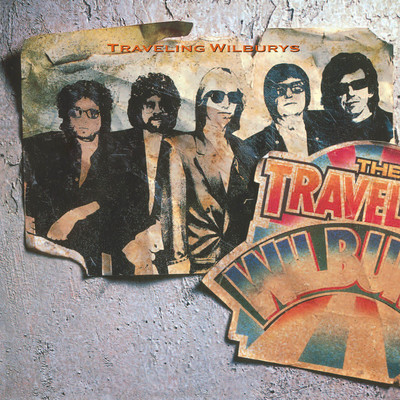
Margarita (1988) – The Traveling Wilburys

This is the ninth song to be presented here from The Traveling Wilburys. I don’t know what else I can say about one of the greatest supergroups that I’ve ever heard. They could also be described as the Rolling Stone Press book editors did – They were “the antithesis of a supergroup”, due to the musicians’ adoption of fraternal alter egos and the humour inherent in the project.

I love this song Margarita just like I do all their other ones. It’s regrettable that they never toured even for a one night only. The Traveling Wilburys only managed to record one album with the original line-up before the death of Orbison, but a second arrived almost exactly two years later. And since then, two more of the Wilbury family have departed (Beatle George Harrison in 2001 and Petty in 2017).

It was in Pittsburgh, late one night
I lost my head, got into a fight
I rolled and tumbled till I saw the light
Went to the Big Apple, took a bite

Ah, ah, ah, ah

Still the sun went down your way
Down from the blue into the gray
Where I stood, I saw you walk away
(Margarita) You danced away

Ah, ah, ah, ah

I asked her what we’re gonna do tonight
She said, “Cahuenga Langa-Langa Shoe Box Soup”
We better keep tryin’ till we get it right
Tala mala sheela jaipur dhoop

She wrote a long letter on a short piece of paper
Oh Margarita

“I was never afraid of Bob [Dylan], he was always nice to me. I have never been in awe of anyone and I think it’s worked in my favour. Dylan comes from folk music where if you wanted to play an extra bar you could, so he might play five bars instead of four and think nothing of it. There is an air of spontaneity about him; if things get too well rehearsed he doesn’t seem to like it. Although he never said it to me, I think he likes to keep things a little bit edgy.” 

Tom Petty

Here is Tom Petty talking about the formation of The Traveling Wilburys.

The Traveling Wilburys: “Nelson Wilbury” – George Harrison “Otis Wilbury” – Jeff Lynne “Lefty Wilbury” – Roy Orbison “Charlie T. Wilbury, Jr.” – Tom Petty “Lucky Wilbury” – Bob Dylan.

Referring to Roy Orbison Tom Petty said:

“He never took the glasses off,” Petty said, per the book Conversations With Tom Petty by Paul Zollo. “But he was very jovial. Very funny. One of the funniest guys I’ve ever met. A sweetheart. You couldn’t help but love him. He always had some jokes, and he had the most infectious laugh. That’s one thing I remember about him a lot, his laugh, for some reason, was really infectious. Like when you heard him laugh, you couldn’t help but laugh with him.”

Petty explained that Orbison seemed a bit wiser than him.

“He was a bit older than us, and he seemed maybe a little wiser,” Petty said. “But I liked him a lot. That’s who I was hanging with, that year, that Christmas. And the time after that. We were all pals.”

Reference:
1. Traveling Wilburys – Wikipedia
Tagged with: ,
Posted in Music

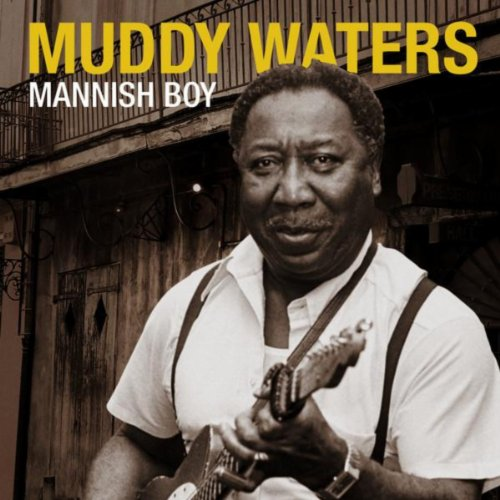
Mannish Boy (1955) – Muddy Waters (The Last Waltz)

Muddy Waters’ performance of Mannish Boy in The Last Waltz concert is spectacular. The Last Waltz is the best rock film I’ve ever seen, and Martin Scorsese deserves so many plaudits for his dedication to capture this monumental concert. Muddy’s voice is so powerful, and he makes it all look so effortless. Mannish Boy as presented here seems a paramount moment in the history of Blues. It oozes soul. I’ve watched this concert so many times and it never gets old.

SirStrongBad wrote on YT: When working on The Last Waltz, camera operators were instructed to turn their cameras off on different intervals, in order to save battery life. One of these instances was during Muddy Waters’s set, but Waters’s outstanding performance led director Martin Scorsese to spontaneously change his mind and ordered all cameras to be turned on. Because the cameras took several minutes to fully warm up, most caught only the last few bars of Waters’s performance. Laszlo Kovacs, however, either did not hear or disregarded orders to shut down his camera and was the only cameraperson on set who managed to film Waters’s entire performance.

Now when I was a young boy
At the age of five
My mother said I was gonna be
The greatest man alive
But now I’m a man
I’m past twenty-one
I want you to believe me baby
I had lot’s of fun

I’m a man
I spell M
A child
N
That represents “man”
No B
O child
Y

That means “mannish boy”.

The following is from the Wikipedia article below:

Mannish Boy (or “Manish Boy” as it was first labeled) is a blues standard written by Muddy Waters, Mel London, and Bo Diddley (with Waters and Diddley being credited under their birth names). First recorded in 1955 by Waters, it serves as an “answer song” to Bo Diddley’s “I’m a Man“. Waters had recently left the South for Chicago. “Growing up in the South, African-Americans [would] never be referred to as a man – but as ‘boy’. In this context, the song [is] an assertion of black manhood.”

The song reached number five during a stay of six weeks in the Billboard R&B chart. The song was Muddy Waters’ only chart appearance on the UK Singles Chart, peaking at number 51 in 1988. In 1986, Muddy Waters’ original “Mannish Boy” was inducted into the Blues Hall of Fame “Classics of Blues Recordings” category. It was also included in the Rock and Roll Hall of Fame’s list of the “500 Songs that Shaped Rock and Roll”. “Mannish Boy” is ranked number 425 in Rolling Stone magazine’s list of the “500 Greatest Songs of All Time“.

References:
1. Mannish Boy – Wikipedia

Tagged with: , , ,
Posted in Music

Making Love Out of Nothing At All (1983) – Air Supply

The Bristish / Australian rock duo Air Supply had huge success in 1980’s mostly by their ballad releases. Many times, I would get the music of Air Supply and Chicago confused. Somehow their songs made it all the way over here to Colombia including today’s song Making Love Out of Nothing At All. When I heard the rendition of Making Love Out of Nothing At All sung here, they sang it but with Spanish words. So, when sung in English this is how the pronunciation sounds in Spanish:

Out of nothing at all
Making love 

They sing:

Hay un moco en el arroz
Comelo

This translates as:

There is mucus in the rice
Eat it

I suppose this song didn’t deserve this treatment, but these interpretive translations are made all the time with Western music here:

So, when John Travolta and Olivia Newton John sing:

You’re the one that I want
Ooh Ooh Ooh

They sing:

Yo no voy a lavar
no, no, no

This translates as:

I’m not going to wash
No, No, No

I don’t think these translations will win me many Air Supply fans. Any-hows onwards and upwards!
Making Love Out of Nothing At All is a power ballad, like a power ranger, but in song. It was composed by Jim Steinman and released on their 1983 compilation album Greatest Hits. It reached number 2 on the U.S. Billboard Hot 100 for three weeks (behind “Total Eclipse of the Heart” by Bonnie Tyler, giving Steinman a consecutive peak of two songs).

I like the following verse:

[Verse 5]
I can make the runner stumble
I can make the final block
And I can make every tackle at the sound of the whistle
I can make all the stadiums rock
I can make tonight forever
Or I can make it disappear by the dawn
And I can make you every promise that has ever been made
And I can make all your demons be gone

The following is from Wikipedia:

Steinman offered Making Love Out of Nothing At All, along with Total Eclipse of the Heart, to Meat Loaf for his Midnight at the Lost and Found album; however, Meat Loaf’s record company refused to pay Steinman for the material so Meat Loaf ended up writing compositions for the album himself. 
By 1983, Air Supply had changed much of its classic musician line-up, both in the recording studio and on tour. But Steinman, known for his lavish, rock-opera-ish type productions, used Bruce Springsteen’s E-Street Band members Roy Bittan on keyboards and Max Weinberg on drums, to musically underscore the recording with like energies.

Rick Derringer, who was previously the guitarist for the McCoys and Johnny Winter, provided the electric guitar solo that made the sound of Making Love Out of Nothing at All stand so drastically apart from most other Air Supply songs. In an interview, Hitchcock and Russell confirmed Hitchcock did his vocals in one take. When Steinman asked “What do we do next?” Russell replied “We go home“.

References:
1. Making Love Out of Nothing at All – Wikipedia

Posted in Uncategorized

Magic In The Air (2014) – Magic System feat. Chawki

Wednesday Rachmaninoff and today Chawki. That’s quite a leap. Who is Chawki? Your guess is better than mine. Let’s find out…. I heard this song when my kids played it, and I thought maybe ‘I should add it to the collection‘ to appease the crew. I must have been in a jocular mood at the time, but now having second thoughts. What the heck, let’s run with it.

Magic in the Air is a 2014 single by Ivorian musical group Magic System, featuring Moroccan singer Chawki. This was an association football themed song focusing on African football and released in March 2014 to coincide with preparations for the 2014 FIFA World Cup. As I write this, Australia and Argentina are set to play a friendly tomorrow morning (my time). Yay! Here’s Messi and his sons playing football in his living room. Very cool.

Magic in the Air reminds me a little of Shakira’s South African football anthem – Waka Waka (This Time for Africa) (The Official 2010 FIFA World Cup™ Song). I think Shakira’s version is the better celebratory song. But anyways we are going with Magic in the Air today which was earning significant airplay in stadiums during football matches. Interestingly, it was played every time France scored a goal at the 2018 FIFA World Cup, which saw them win the whole tournament.

Wikipedia: Ahmed Chawki (Arabic: أحمد شوقي; born 31 May 1982), known professionally by his stage name Chawki, is a Moroccan singer, songwriter and producer. Chawki began his career in the early 2000s. He had a music band named La Paloma which mainly focused on Arabic and Moroccan music. On occasion of the 2014 World Cup, he was featured in a football-themed song Magic in the Air by Magic System, a hit in France and Belgium.

Magic System is an Ivorian coupé-décalé band from Abidjan. It was founded in 1996 and comprises Asalfo, Goude, Tino, and Manadja. It is the largest city and the economic capital of the Ivory Coast.

Lyrics and their translation

On t’invite à la magie, y a pas de raccourci,/ We invite you to the magic, and there are no shortcuts
Oublie tes soucis, viens faire la folie / Forget your worries, and come and join the madness
Feel the magic in the air, allez allez allez,/ Feel the magic in the air, go on, go on, go on
Levez les mains en l’air, allez allez allez.
/ Raise your hands in the air, go on, go on,

References:
1. Magic in the Air – Wikipedia

Tagged with: , , , , ,
Posted in Uncategorized

Main Title Theme (Billy) (1973) – Bob Dylan

“Pat Garrett and Billy The Kid”

Few Dylan fans know of the music that Dylan wrote and performed for the Pat Garrett movie. The instrumental Main Title Theme (Billy) which opens this soundtrack album ‘Pat Garrett & Billy The Kid‘ is my favourite track from the record. Most people will be familiar with the second song on side 2 of the album – Knocking on Heaven’s Door which is renowned as one of Bob Dylan’s greatest songs, however I have always been more drawn to listen to the Main Title Theme (Billy) and it’s off-shoots Billy 1, Billy 4, and Billy 7.

I go way back with Main Title Theme (Billy). I was so attached to it that I wrote my own lyrics to it as a teenager. Even when I hear the song now, I still sing the words I wrote for it which I will not relay here to avoid inevitable embarrassment. I also learnt to play part of this on guitar. I adore this album and like the Sam Peckinpah film a lot.
When Pat Garrett and Billy the Kid was released, it received mixed reviews, but in later years after critical re-evaluation the film has led many to regard it as one of Peckinpah’s finest achievements. Bob Dylan makes a brief appearance in the film, and you can watch it here.

Wikipedia: Pat Garrett & Billy the Kid is the twelfth studio album and first soundtrack album by American singer-songwriter Bob Dylan, released on July 13, 1973 by Columbia Records for the Sam Peckinpah film, Pat Garrett and Billy the Kid. Pat Garrett & Billy the Kid reached No.  16 US and No.  29 UK.

Pat Garrett and Billy the Kid scriptwriter Rudy Wurlitzer was a previous acquaintance of Dylan’s, and asked him to provide a couple of songs for the movie. Dylan performed “Billy” for director Peckinpah, who found the performance very moving and offered Dylan an acting part on the spot…..Dylan and his family moved to Durango, Mexico, where filming took place.

At Untold Dylan:

The Main Title Theme is an instrumental which relies on an acoustic guitar and a melody improvised by a second acoustic.    Plus, although there are only three chords used, there is variation which, after the first minute when the second guitar begins to play a more fulsome melody, gives a deeper sense of the music having a meaning of its own.

Later a bass guitar enters and instead of just emphasising the chord sequence takes on a melodic line of its own.  It is played by Booker T Jones – of Booker T and the MGs.  It’s worth hearing just for that; there ain’t many people who could do what Booker T does.

I have seen comments about Main Title Theme ranging from talk about having had it played while walking down the aisle at a wedding to being the music played over and over again after a tragic death.  Somehow despite the fact that it is clearly improvised and very simple it seems to have a deep, deep impact.  Even if you never listen to anything else from this album, do take in this song in peace and quiet.  Just play it, sit there and close your eyes.  The work demands nothing less.

References:
1. Billy 1 4 and 7 and the Main Title theme from Pat Garrett. Forgotten moments of genius. – Untold Dylan

Tagged with: , ,
Posted in Music

Majesty (2008) – Michael W Smith

Majesty is the fifth song here from Michael W Smith and was released on his 2008 album A New Hallelujah. I wrote articles about ‘Grace‘ which is the focal point of this song: I Won’t Forget and Every Passing Minute is Another Chance to Turn it all Around.
A New Hallelujah is Smith’s third live praise collection. He and a conglomerate of musicians, singers, and stagehands took to one of America’s biggest megachurches, Joel Osteen’s Lakewood Church in Houston, to sing praise choruses, an assemblage of covers and Smith originals that, in one way or another, attempt to replicate the tone and tenor of his mega-sellers Worship and Worship Again

[Chorus 1]
Singin’ Majesty
Majesty
Your grace has found me just as I am
Empty handed but alive in Your hands
We’re singing, Majesty
Forever, forever I am changed by Your love
In the presence of Your Majesty

[Chorus 2]
We’re singing Majesty, Majesty
Your grace, Your grace has found me just as I am
Empty handed but alive in Your hands
We’re singing Majesty, Majesty
Forever I am changed by Your love
In the presence of Your Majesty

I am a huge fan of Christian music in particular Hillsong, Marcela Gandara and Michael W Smith. I was baptised in 2003 by the Mornington Baptist church in Victoria, Australia. I was introduced to a plethora of Christian artists and groups whose music I still hold very dear. Michael W Smith was one such figure who stood out. I am no longer a firm believer in any one theistic doctrine, but I do hold high regard for the Judaeo-Christian concept of The Logos, moral-truths and archetypes / meta-heroes.

Ben Shapiro raised a point in his discussion at 3.20 with Russell Brand which I wrote about here in April this year about how Christians and Jews act out their faiths. Shapiro even admits before he goes on, that this is his Jewish interpretation. Personally, I feel so attuned with what he said and yet I imagine few people are cognizant of it. I’ll quote parts of Ben’s message below:

What Judaism says, you are a human being with a capacity for great good and great evil….These things a battling in you literally at all times. And what your job is to do, regardless of what you believe, you do the thing. The thing that is front of you is the thing that you do. So, we have these arcane set of rules to reify (?) the presence of God in your life. Even if you don’t recognise that is what it’s doing, by you doing these things over and over you are cultivating virtue through action. So it’s like you reach God by doing the thing.

I think Christianity comes at it from the other way. There’s reward in it and a risk in it. Christianity says you believe the thing, then you do the thing. Judaism says you do the thing therefore you believe the thing…. The access point for Christianity is a lot easier..you experience a transcendent moment and the moment is supposed to animate your life. The danger is transcendent moments disappear real fast…5 minutes from now you are not feeling God. That’s the book of Exodus. They receive the ten commandments and five minutes later they are building a golden cow.

But I think the gap has been sort of closed in the sense Christianity re-ritualised a lot of things. Christians still go to church even if they are not feeling it that day. They are still going to give charity even if they are not feeling it that day…all discipline is this.

Reference:
1. A New Hallelujah – All Music.com

Tagged with: , ,
Posted in Music

Piano Concerto No. 2 Mov. 2 (1901) – Sergei Vasilyevich Rachmaninoff

Image result for Piano Concerto No. 2 Mov. 2 - Rachmaninov

I presented Movement 1 of this Piano Concerto masterpiece in October 2019, now I am excited to present to you Rachmaninoff’s Piano Concerto No. 2 Mov. 2. This and Mozart’s Requiem are my 2 favourite classical pieces. This article because it is of the same ‘Concerto’ will be a repeat of my previous article:

Piano Concerto 2 in C Minor Op 18 premiered on November 9, 1901 and is one of his most enduring and popular pieces.  It is said this piece established his fame as a concerto composer and saved his career. Its premiere was given to great acclaim in Moscow with the composer himself as piano soloist. I was a relative latecomer to appreciating Rachmaninoff, but I now listen to his music all the time. I first heard of Rachmaninoff and his music when academy award winner Geoffrey Rush wowed audiences playing David Helfgott in the Australian movie – Shine.

According to the Britannica.com web site: This piano concerto contains themes that, throughout the 20th century, which would be reborn as the melodies of several popular songs, including Frank Sinatra’s 1945 “Full Moon and Empty Arms” and Eric Carmen’s 1975 “All by Myself.” It was made most famous when set as the haunting motif of David Lean’s 1945 film Brief Encounter.

To get some sense why this Piano Concerto is so highly regarded one need only look at how it reshaped Rachmaninoff’s life. After the premiere of Rachmaninoff’s first symphony in 1897 he went into a deep depression. Although that symphony is now considered a significant achievement, the contemporary critics derided the Symphony. As wikipedia states: His second piano concerto confirmed his recovery from clinical depression and writer’s block, cured by courses of hypnotherapy and psychotherapy and helped by support from his family and friends. The concerto was dedicated to Nikolai Dahl, the physician who had done much to restore Rachmaninoff’s self-confidence.

The movie Shine seems to allude to what the Britanica article has to say regarding Rachmaninoff’s music not being for the faint of heart at least for the pianist:
As a virtuoso pianist, Rachmaninoff composed for the instrument not only according to his own tastes but to his own strengths as well. He was, for example, a tall and lanky man with an astonishing reach to his hands. Pianists of small proportions need not apply, and even those of average size will find his work challenging. The great pianist Vladimir Ashkenazy observed in an interview with England’s Gramophone magazine that for playing Rachmaninoff, he wishes his fingers were a centimeter longer. Moreover, as Rachmaninoff could play both lightning-fast runs and powerful chords with equal mastery, he includes both in his piano parts, requiring a highly varied technique.

The above article also contains a very detailed and illuminating breakdown of the Concerto which is well worth reading.

Listen below to Rachmaninoff play his beloved Piano Concerto 2, Mov. 2:

Tagged with: ,
Posted in Music

Lullaby (2012) – Leonard Cohen

This is the fourth song to be presented from Leonard Cohen’s 2012 album Old Ideas. Leonard Norman Cohen CC GOQ was a Canadian singer-songwriter, poet, and novelist and is back to entertain us again. This becalmed meditation of surrender is built around a simple guitar arpeggio and a lonely harmonica. While the recording of Old Ideas began in earnest in January 2011, an early version of Lullaby was demoed in 2007, and the song was performed live during Cohen’s 2008-10 world tour.

Sleep, baby, sleep
The day’s on the run
The wind in the trees
Is talking in tongues

(If your heart is torn)
I don’t wonder why
If the night is long (if the night is long)
Here’s my lullaby
Here’s my lullaby

Well, the mouse ate the crumb
Then the cat ate the crust
Now they’ve fallen in love
And they’re talking in tongues

Interestingly on the tour mentioned above, some older songs made their way into the set, most notably the song Alexandra LeavingIt was performed in every show entirely by Sharon Robinson after a short introduction by Cohen. In my last article of Love Itself, I sent a version of Sharon’s sublime performance. The tour received universal praise from media and fans alike. Guido Lauwaert (Knack) wrote about opening night “The 78-year-old poet and singer seems 50 years younger for the duration of the concert. What strikes me is a total lack of false feelings…”

Especially Cohen’s appearance on stage found praise by many reviewers. Craig Jones of eGigs (UK) states of the concert at the Wembley Arena:

“He may refer to himself on the self-deprecating Going Home as “a lazy bastard living in a suit”, but Cohen is in fact quite the opposite. Just two weeks away from his 78th birthday, the fact that he is still able to deliver a three and a half hour set of intense beauty, melancholy and drama is quite a feat. He may be promoting ‘Old Ideas’, but still after all this time, those ideas remain the very best.”

For more information about the album itself you can find my previous entries from Old Ideas.

References:
1. Old Ideas – Wikipedia

Tagged with: , ,
Posted in Music

5/6 – 11/6/23 – Original ‘The Office’, How to Get Pitt and Dicaprio to be Friends & Old Hungarian Women

Welcome to Monday’s News on the March – The week that was in my digital world.

Best of Meetings | The Office

There are three principal performances that I’ll outline below by Ricky Gervais that raised my appreciation of him, but first – off I want to allude to his courage by just telling the truth in the face of the ‘virtue signaling and moral exhibitionist’ movement so pervasive in modern culture. Now onto his performances:

  • The original The Office series (British version!). This video will give you a good idea about it if you haven’t already seen it. The Gervias character leads into this wanting to play a practical joke on his receptionist to impress his new employee..After that, the discussion of small people… ‘So, what’s an elf‘?
  • The Golden Globes Speeches. Of course, these are now considered legendary, but let’s take a look back for ol’ time sake of just some of the highlights. Each Golden Globes performance by him is worth viewing in their entirety.
  • Gervais on Larry David’s Curb Your Enthusiasm‘s episode called The Hero in Season 8. The irony is Gervais plays a pretentious pr%ck but he is loved by all and sundry except Larry. Here is when Ricky met Larry in the show. ‘Three and a half hours‘ Haha.

Quentin Tarantino. How to get Pitt and DiCaprio to be friends? (Documentary Volume 3)

Any love for Quentin Tarantino’s latest film ‘Once Upon a Time in Hollywood‘? Well if so, then this is the place to be. This documentary hooked me after about 10 minutes and I found myself absorbed throughout. Once Upon a Time in Hollywood is not nearly one of my favourite films by him, but I enjoyed watching the connections of Quentin’s ensemble and events and performances in movie history.

Old Hungarian Women

Theodora Goss (born September 30, 1968) is a Hungarian-American fiction writer and poet. Her writing has been nominated for major awards, including the Nebula, Locus, Mythopoeic, World Fantasy, and Seiun Awards. I don’t know what most of that means, but my blogger friend Sharon and I sure indeed love reading her poetry! Her short fiction and poetry have appeared in numerous magazines and anthologies, including Year’s Best volumes.

Old Hungarian Women
by Theodora Goss

I see them sometimes, walking
along the street, pulling
wheeled shopping baskets behind them,
or standing in the doorways
of apartment houses, talking
to one another. They wear scarves
on their heads, or hats they have knitted
themselves. They wear sensible shoes.

I see them, the old women,
and I am convinced
that they are witches, every one of them.
That they know (maybe they are
the only ones who know)
what’s going on — with the weather,
the war, the political situation.
They don’t interfere — they just watch,
knowing, having seen it all before,
having lived through a war already,
through assorted revolutions,
through socialism, capitalism, all the other
isms you can think of. They have striped cats
that lie blinking on their windowsills
behind lace curtains, and flower boxes
filled with red geraniums. They make jam
from plums and syrup from elderberries.
They have magic in the tips of their fingers,
which they embroider into pillows,
doilies. They make strudel
with dough folded out of thin, flaky air,
bread rolls like clouds, paprikás
for which angels sin and fall from heaven.
They can turn into crows, gray and black,
parading around the city parks,
holding conventions.

I myself am a little scared
of the old women. I am convinced
they can see into my soul. I am not at all
sure that I have been good or clever
or polite enough to avoid their curses —
or disapproving glances, which,
to be honest, might be even worse.

Maybe someday they will let me
join them — but I would have to become
a great deal wiser, practice
how to make jam, transform myself
into a crow, the magical art
of endurance.

news on the march the end
Tagged with: , , , , , , ,
Posted in News

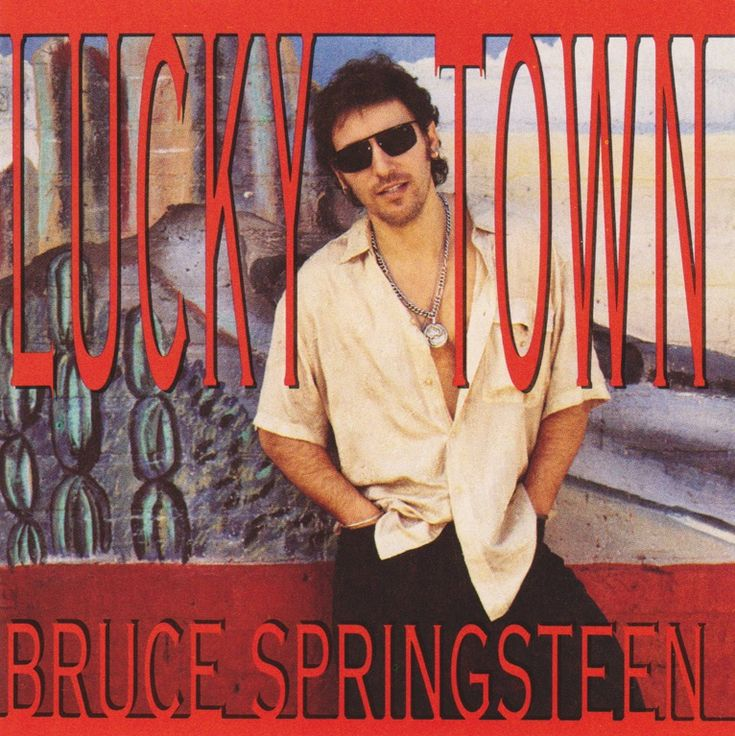
Lucky Town (1992) – Bruce Springsteen


If it is down and haggard Bruce you are looking for, then you have come to the right place. This is the title track from Bruce’s second of the double release albums Human Touch / Lucky Town. The more stripped down, folk-based sound on the Lucky Town record is my preferred of the two and contains many excellent songs including today’s. The song Lucky Town is the second song on the record after Better Days and the fourth song from the record presented here.

When this song was released, it failed to chart, which surprised me to read that, but I think Lucky Town (The song) captures Bruce at his rudimentary best. I like his worn voice and no-nonsense approach. It’s not a dolled-up Bruce, let’s just say that. I think time will treat it kindly. I have heard this song for more than 30 years and I never grow tired of it. It’s really good stuff and even though I was apprehensive and condescending of these records when they came out, I’m not now.

[Verse 1]
House got too crowded, clothes got too tight
And I don’t know just where I’m going tonight
Out where the sky’s been cleared by a good hard rain
There’s somebody callin’ my secret name

[Chorus]
I’m going down to Lucky Town
Going down to Lucky Town
I wanna lose these blues I’ve found
Down in Lucky Town
Baby, down in Lucky Town

[Verse 2]
Had a coat of fine leather and snakeskin boots
But that coat always had a thread hangin’ too loose
Well, I pulled it one night and to my surprise
It led me right past your house and on over the rise

Lucky Town is the tenth studio album by Bruce Springsteen. The album was released on March 31, 1992, the same day as Springsteen’s Human Touch album. I agree with the The Chicago Tribune who wrote that Lucky Town was “highly underrated…containing some of the strongest songwriting of Springsteen’s career and ranks as one of his most completely realized albums.” I even underestimated it going into this music project. I have realised over time there are just so many great songs on it, including my personal favourites:

  • Better Days
  • Lucky Town
  • If I Should Fall Behind
  • Leap of Faith
  • Living Proof
  • Beautiful Reward

Lucky Town focuses on more specific events in Springsteen’s life. It is an ambitious collection addressing many of Springsteen’s major concerns and moving on forward. He discussed in this interview about making Lucky Town and Human Touch.

Bill Wyman of The Chicago Reader compared it favorably to Human Touch, calling Lucky Town “obviously the superior work” and “a much more interesting beast, primarily because of the potency of the first three numbers [which] could have made a respectable anchor to a strong album.

Reference:
1. Lucky Town – Wikipedia
2. Lucky Town (Song) – Wikipedia

Tagged with: ,
Posted in Music

Follow Blog via Email

Enter your email address to follow this blog and receive notifications of new posts by email.

Join 780 other subscribers

← Back

Thank you for your response. ✨