My father listened a lot to the Sydney’s talkback radio broadcaster John Laws. Today’s song – Less of Me by Roger Miller was John Laws theme song. Suffice to say my father was a fan of it. It is such a beautiful song… It could easily be a prayer. The lyrics and melody are on another level. Less of Me evokes such strong memories not only because I heard it so often growing up, but I think about my Dad and how he tirelessly devoted himself to us. I wrote a tribute to him in my article – ANZAC Day in Australia and Memories of my Father. Let me be a little kinder let me be a little blinder To the faults of those about me let me praise a little more Let me be when I am weary just a little bit more cheery Think a little more of others and a little less of me [ Mhm mhm mhm ]
Let me be a little braver when temptation bits me waver Let me try a little harder to be all that I should be Let me be a little meeker with the brother that is weaker Let me think more of my neighbor and a little less of me [ Mhm mhm mhm ]
Let me be when I am weary just a little bit more cheery Let me serve a little better those that I am striving for Let me be a little meeker with the brother that is weaker Think a little more of others and a little less of me
If I had to safekeep just 10 songs of sentimental value, then Less of Me would be high up on that list. This song always gives me goosebumps and puts things into immediate perspective. Someone wrote in the comments below:
This is the Ten Commandments ‘in song’. Truly inspirational. If the human race lived by this basic credo, we’d have no more war or dispute. Happiness and peace would be ours.
Roger Dean Miller Sr. (1936 – 1992) was an American singer-songwriter, widely known for his honky-tonk-influenced novelty songs and his chart-topping country and pop hits King of the Road, Dang Me, and England Swings, all from the mid-1960s Nashville sound era. Today’s featured song Less of me was released on his 1968 record – A Tender Look at Love.
Bob Dylan is obsessed with his ‘honey’s’ Leopard-Skin Pill Box Hat. So much so he asks her: Honey, can I jump on it sometime? Yes, I just wanna see If it’s really the expensive kind. If I had a gal who owned a Leopard-Skin Pill Box Hat (like a dreamy Audrey); I too would be obsessed and fancy jumping on it, to the point where a doctor might suggest Audrey (‘that lass in your dreams‘) is bad for your health. It goes without saying: ‘I wouldn’t act on his advice’.
Leopard-Skin Pill Box Hat is the third song to appear here from from the legendary Manchester Free Trade Hall 1966 concert. I wrote about Edward Norton’s comments of Dylan’s impact on the music scene and the immensity of this concert.
Oh, you like what I’m doing? I’m gone..I’m over here..’enjoy’…You’re not gonna like it because you liked what I just did and now where I’m going you are going to be discombobulated and upset and eventually, you’re going to catch up and when you catch up, I’m going to move onto something else.
How many people do you know, in any of the things we all do, who get a taste of a thing and don’t lean into it for a while? Who don’t think…’well this feels good’. May be I’ll just hang-out right here.
Leopard-Skin Pill Box Hat was first recorded here, one month prior to its official release on the mercurial new-rock record Blonde on Blonde.
[Verse 1] Well, I see you got your Brand new leopard-skin pillbox hat Yes, I see you got your Brand new leopard-skin pillbox hat Well, you must tell me, baby How your head feels under something like that Under your brand-new leopard-skin pillbox hat
[Verse 2] Well, you look so pretty in it Honey, can I jump on it sometime? Yes, I just wanna see If it’s really the expensive kind You know it balances on your head Just like a mattress balances On a bottle of wine Your brand new leopard-skin pillbox hat
Leopard-Skin Pill-Box Hat peaked at number 81 on the American Billboard Top 100 chart.
According to Dylan’s lyrics, Wikipedia states that he affectionately ridicules a female “fashion victim“who wears a leopard-skin pillbox hat. The pillbox hat was a fashionable ladies’ hat in the United States in the early to mid-1960s, most famously worn by Jacqueline Kennedy. Dylan satirically crosses this accessory’s high-fashion image with leopard-skin material, perceived as more downmarket and vulgar. The song was also written and released after pillbox hats had been at the height of fashion.
Some journalists and Dylan biographers have speculated that the song was inspired by Edie Sedgwick, an actress and model associated with Andy Warhol. It has been suggested that Sedgwick was an inspiration for other Dylan songs of the time as well, particularly some from Blonde on Blonde. Following her estrangement from Warhol’s inner circle, Sedgwick began living at the Chelsea Hotel, where she became close to Bob Dylan. Dylan and his friends eventually convinced Sedgwick to sign up with Albert Grossman, Dylan’s manager.
I’m going to go the long and winding road to get to this song so please excuse its wordiness. In January 2014, I wrote an article – Comedy and the Ages. Lenny Bruce, Charles Bukowski and Hunter S Thompson. It led to a brief but constructive discussion about whether ‘comedy’ is only truly savored in the era it was performed. I argued that comedy in general doesn’t seem to age well unless there is a personal connection to the artist and era it was communicated.
For example, Stanley Kubrick’s classic, Dr Strangelove is considered one of the greatest comedies / satires about the cold war, yet if you didn’t live with the threat of nuclear war in the 60s it may be difficult to appreciate its ingenuity.
Lance at Texan Tales countered my point based on his personal experiences:
I ‘discovered’ Lenny Bruce in 2004. I was born in ’57; too young of course to have known anything of Lenny. I disagree with your view that one must live in the era of the comedian. I have found great joy in Lenny. (And also Brother Dave Gardner: Same era) His philosophy and wisdom are timeless. Yes, it does help to know some cultural history, but it is not required, as some things reach across generations very nicely.
Bob Dylan was born 16 years before Lance, and he sung the following about Lenny Bruce’s impact on him:
Lenny Bruce is dead but he didn’t commit any crime He just had the insight to rip off the lid before its time I rode with him in a taxi once Only for a mile and a half, seemed like it took a couple of months Lenny Bruce moved on and the ones that killed him are gone
They said that he was sick ’cause he didn’t play by the rules He just showed the wise men of his day to be nothing more than fools They stamped him and they labeled him like they do with pants and shirts He fought a war on a battlefield where every victory hurts Lenny Bruce was bad, he was the brother that you never had
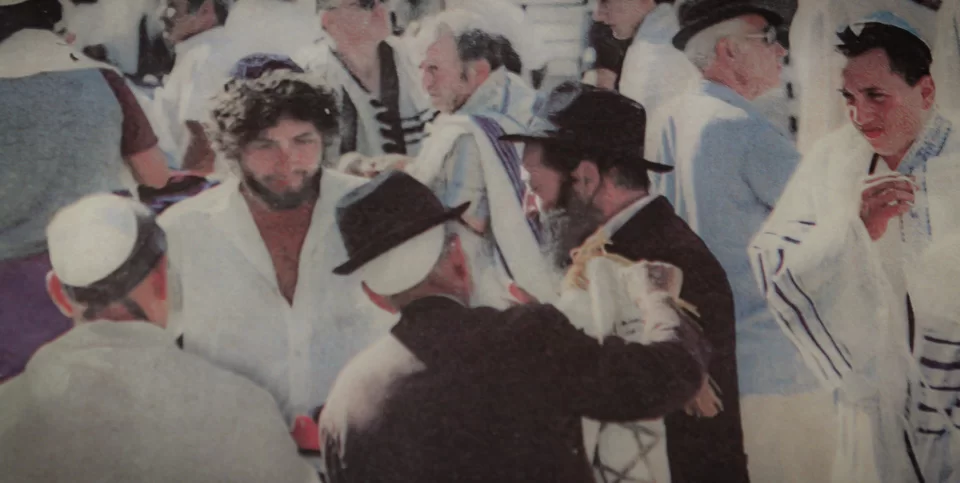
Sometimes Dylan delivers a ‘nasty’ curl ball on his albums such as Lenny Bruce on the Christian record Shot of Love. From conversing with a wide array of Dylan fans, Lenny Bruce seems to conjure contrasting opinions. It’s not dissimilar to what his political curl ball – Neighborhood Bully did on the 1983 Infidels record. That song was from the point of view of someone using sarcasm to defend Israel’s right to exist; the title bemoans Israel’s and the Jewish people’s historic treatment in the popular press. I happen to like both aforementioned songs for very different reasons; the latter is my preferred of the two in terms of unapologetic listening enjoyment.
Wikipedia states:
The fourth track, “Lenny Bruce”, is about the subversive Jewish comedian of that name. An influential entertainer whose use of provocative language led to a famous obscenity trial, Bruce died of a drug overdose in 1966. Despite the secular tone of the lyrics, the music is “anchored in the resolute cadences of piano gospel”, according to music critic Tim Riley. Often regarded as a bizarre tribute, the song portrays Bruce as some kind of martyr, even though its characterizations of Bruce have been described as peculiar and almost non-descript.
When Dave Herman asked why, after so many years, Dylan chose to write a song about Lenny Bruce (July 2, 1981 interview), he answered, “You know, I have no idea! I wrote that song in five minutes! I found it was a little strange after he died, that people made such a hero out of him. When he was alive he couldn’t even get a break. And certainly now, comedy is rank, dirty and vulgar and very unfunny and stupid, wishy-washy and the whole thing. … But he was doing this same sort of thing many years ago and maybe some people aren’t realizing that there was Lenny Bruce, who did this before and that is what happened to him. So these people can *do* what they’re doing now. I don’t know.”
The first verse might, in fact, be seen to offer a subtle cut to Bruce’s imitators for whom the use of profanity is a cheap “shock” gimmick, while for Bruce it was a strike for free speech: “He was an outlaw, that’s for sure / More of an outlaw than you ever were.”
Scarface is one of those crime- drama films I was reluctant to rewatch because it contains scenes which I find so disturbing, especially the one above. I watched The Godfather (Part 1) with the family about a month ago and soon after Scarface. Al Pacino appears in both films, but his Michael Corleone and Tony Montana portrayals couldn’t be more distinct apart from both movies being steeped in the crime genre. As Tony Montana; he is this angry young man who takes hasty decisions and throws a tantrum every other minute! He is not the calm Michael Corleone here. I can’t imagine the preparation Pacino did to pull off playing so convincingly a hyper-aggressive, tacky and uneducated Cuban refugee.
Tony Montana manages to leave Cuba during the Mariel exodus of 1980. He finds himself in a Florida refugee camp but his friend Manny has a way out for them: undertake a contract killing and arrangements will be made to get a green card. He’s soon working for drug dealer Frank Lopez and shows his mettle when a deal with Colombian drug dealers goes bad. He also brings a new level of violence to Miami. Tony is protective of his younger sister but his mother knows what he does for a living and disowns him. Tony is impatient and wants it all however, including Frank’s empire and his mistress Elvira Hancock. Once at the top however, Tony’s outrageous actions make him a target and everything comes crumbling down.
The following is mainly lifted from the Wikipedia and IMDB page references below:
Scarface is a 1983 American film directed by Brian De Palma and written by Oliver Stone. Loosely based on the 1929 novel of the same name and serving as a loose remake of the 1932 film. Pacino became interested in a remake of the 1932 version after seeing it, and he and producer Martin Bregman began to develop it. Sidney Lumet was initially hired to direct the film but was replaced by De Palma, who hired Stone to write the script. Oliver Stone named Tony Montana after his favourite American football player, Joe Montana. De Palma liked the script so much that he dropped out of directing Flashdance (1983) to direct this film. Oliver Stone was paid $300,000 to write the screenplay which made him the highest paid screenwriter ever up to that point.
Initial critical reception was negative due to its excessive violence, profanity, and graphic drug usage. According to the Family Media Guide, which monitors profanity, sexual content, and violence in movies, Scarface features 207 uses of the “F” word, which works out to about 1.21 F-bombs per minute. At the time of the film’s release, this was the most of any movie in history. Some Cuban expatriates in Miami objected to the film’s portrayal of Cubans as criminals and drug traffickers. Less than two months before the film’s release, Scarface was given an X rating by the MPAA for “excessive and cumulative violence and for language“. De Palma had already re-cut the film three times by that point; and he stated: “I said I’ve had it with these people, I’m not taking any more out“In the years that followed, critics have reappraised it, and it is now considered one of the greatest gangster films ever made.
Stone researched the script while battling his own cocaine addiction. He and Bregman performed their own research, traveling to Miami, Florida, where they were given access to records from the U.S. Attorney’s Office and the Organized Crime Bureau. Stone moved to Paris to write the script, believing he could not break his addiction while in the United States, stating in a 2003 interview that he was completely off drugs at the time “because I don’t think cocaine helps writing. It’s very destructive to the brain cells“…
Pacino insisted on taking the lead role as Tony Montana, although Robert De Niro had been offered it and had turned it down…. Pacino worked with experts in knife combat, trainers, and boxer Roberto Durán to attain the body type that he wanted for the role. Durán also helped inspire the character, who had “a certain lion in him“, according to Pacino. Meryl Streep’s immigrant character in Sophie’s Choice (1982) also influenced Pacino’s portrayal of Tony Montana. Bauer and a dialect coach helped him learn aspects of the Cuban Spanish language and pronunciation. Also, to help stay in character, Al Pacino asked director of photography John A. Alonzo to speak to him only in Spanish. Pfeiffer was an unknown actress at the time, known primarily for her role in Grease 2; both Pacino and De Palma had argued against her casting, but Bregman fought for her inclusion. Al Pacino wanted Glenn Close to play Elvira, but the producers didn’t think she was sexy enough.
During the scene where Tony and Elvira are sitting in the Cadillac at the car dealership, Al Pacino surreptitiously slips on the hat that Michelle Pfeiffer was wearing while she was looking away, which was not scripted. When she turns back and sees him wearing it, her amused reaction was genuine and to her credit, she stayed in character and ad-libbed a line. Brian De Palma decided to keep that unscripted exchange in the movie to show Elvira’s gradual warming up to Montana.
When Scarface (1983) was re-released in cinemas in 2003, the studio wanted Brian De Palma to change the soundtrack so that rap songs inspired by the film could be used. De Palma refused.
Though there has long been a myth that Pacino snorted real cocaine on camera, the “cocaine” used in the film was supposedly powdered milk (even if De Palma has never officially stated what the crew used as a drug stand-in). But whatever it was, it created problems for Pacino’s nasal passages. “For years after, I have had things up in there,” Pacino said in 2015. “I don’t know what happened to my nose, but it’s changed.”
Steven Spielberg and De Palma had been friends since the two began making studio films in the mid-1970s, and they made a habit of visiting each other’s sets. Spielberg was on hand for one of the days of shooting the Colombians’ initial attack on Tony Montana’s house at the end of the film, so De Palma let Spielberg direct the low-angle shot where the attackers first enter the house. Spielberg ultimately chose to be uncredited as he wanted Scarface to be solely De Palma’s vision.
A majority of the film was shot in Los Angeles, California, standing in for Miami, Florida. This was done because production would have been endangered by protests from angry Cuban-Americans over the film’s reported subject matter. Streets and buildings used for shooting were redressed by the art directors to have the “feel” of Miami.
Scarface was actually a nickname of Al Capone, who was an Italian-American gangster.
The entertainment industry initially hated the film, with Liza Minnelli asking Al Pacino what he had done to leave the insiders subdued at a post-screening meal. (Minnelli had not seen the film at the time.) However, during the meal, Eddie Murphy told Pacino that he loved the film.
Who’s up for a sip of Vintage Penfold’s Grange Wine? The computer says ‘no’. Alrighty then. What a relief, because I haven’t got any in any wine cellar. But I have got one of the greatest ‘vintage’ singer-songwriters in contemporary music history. I listened to today’s featured song ‘Leaving the Table‘ before putting finger to keyboard and by golly did it make my eyes water. Leonard Cohen is one of the few artists who you think will always be around; will always be the person to whisper in your ear and then when you hear this ‘departure‘ track, it puts a lot into perspective. To quote that famous phrase from Spinal Tap – ‘Too much f&%king perspective‘.
[Verse 1] I’m leaving the table I’m out of the game I don’t know the people In your picture frame If I ever loved you or no, no It’s a crying shame if I ever loved you If I knew your name
[Verse 2] You don’t need a lawyer I’m not making a claim You don’t need to surrender I’m not taking aim I don’t need a lover, no, no, no The wretched beast is tame I don’t need a lover So blow out the flame
Soon after Leonard Cohen’s passing, I wrote an analysis of almost every song from his last record ‘You Want It Darker‘ (2016) at the Bob Dylan fan site: Expecting Rain. I wish I could access those posts. You can imagine many Dylan homies are down for Cohen and that certainly was the case at that site. I agree with writer Daniel Kushner at Huff Post (see more below); ‘And as I struggle to come to terms with the world’s loss of Cohen, his lyrics appear now as the most prescient wisdom, the most pressing truth.’ And more below:
I was comforted by his insatiable search for spiritual truth wherever he might find it–from Judaism and a brief flirtation with Scientology to Zen Buddhism and Hinduism. I intrinsically understood his lifelong struggle with depression. His hopeless Romanticism and unending role as love’s great, forlorn nomad provided encouragement as I explored similar themes in my own poetry and opera libretto.
Leaving the Table is the second song to feature here after If I Didn’t Have Your Love from his final album You Want It Darker. I wrote in that article:
Today’s song If I Didn’t Have Your Love is analogous to a recent post I wrote – Some Observations about Space – Time which hypothesised if the earth stood still at midnight as well as everything else in the Universe then there would be no time to observe. Leonard seems to superimpose ‘Love‘ as the 5th dimensional vantage point of Space -Time in our current reality. The song seems to be in some form a reconciliation process between Science and Faith.
I listen in awe from 2:40 in the audio below and I have to declare – ‘I miss you Leonard as countless millions do‘.
Ankidroid additions related to Science, History and Philosophy. More information about Anki can be found in this article.
Etymology
Etymology is the history of linguistic form (such as a word) and tracing its earliest recorded meaning and its use over time. The English language is living and growing. New words are added all the time. For words: interesting histories and origins will provide a context. For example, a hippopotamus is a ‘river horse’. From the Greek ‘hippos‘ which means horse and potamus‘ meaning ‘river‘.
Hobson’s Choice
Portrait of Thomas Hobson in the National Portrait Gallery, London
If you were offered a Hobson’s choice, would you know what was meant? Thomas Hobson (1544–1631) owned a livery stable in seventeenth-century England. He loved his horses, and to prevent any one horse from being overworked, he hired them out in turn, beginning with stall number one. Customers had to take the horses they were given. Thus Hobson’s choice means no choice at all.
Hooker
Fighting Joe
A synonym for prostitute. The term became popular during the Civil War. The women involved were camp followers. General “Fighting Joe” Hooker approved their presence in order to boost the morale of his men.
Learning to Fly is my joint favourite Pink Floyd song and the second to appear after Comfortably Numb. I never grow tired of hearing it because it always expands my senses. To me the experience is cognizant to a magical trip that can take you anywhere in the world. You don’t need (insert drug of choice here) to fly; you can fly with this song. They could have bludgeoned the listener with the magnificent chorus, instead they chose a minimalist route. This is atmospheric rock at its finest.
Learning to Fly was the first single from the band’s thirteenth studio album A Momentary Lapse of Reason. It reached number 70 on the U.S. Billboard Hot 100 chart and number 1 on the Billboard Album Rock Tracks chart in 1987.
[Verse 1] Into the distance, a ribbon of black Stretched to the point of no turning back A flight of fancy on a windswept field Standing alone, my senses reel A fatal attraction is holding me fast How can I escape this irresistible grasp?
[Chorus] Can’t keep my eyes from the circling sky Tongue-tied and twisted Just an earthbound misfit, I
[Verse 2] Ice is forming on the tips of my wings Unheeded warnings, I thought, I thought of everything No navigator to find my way home Unladen, empty and turned to stone
[Pre-Chorus 1] A soul in tension that’s learning to fly Condition grounded, but determined to try
I always heard ‘A soul in tension that’s learning to fly‘ as ‘My sole intention is learning to fly‘. Lucky, I have Genius Lyrics just a click away. The song was primarily written by David Gilmour, who developed the music from a 1986 demo by Jon Carin, while the lyrics were written by Anthony Moore. The inspiration for the lyrics came about as Gilmour was learning to fly airplanes at the time of the recording, often spending time in the air during the mornings before arriving at the studio in the afternoon.
This song is about Gilmour “learning to fly” in the band by himself. “Ribbon of black stretched to the point of no turning back” is all the past animosity, and recordings they made together on a ribbon of recording tape. “Standing alone all my senses reeled” is again Gilmour recording on a reel of tape. And “stretched to the point of no turning back” is also ALL the music David helped Waters write and perform. He’s not going to give that all up now. There’s no turning back. He wants to keep going and performing under Pink Floyd.
Master time, I entreat you give me more time to steady my breath, to calm the beating of my heart as you weave your way between heaven and earth give me the time to admire the bright yellow brilliance of yet another sunrise and later, gaze at the orange globe as it descends upon a cooling earth. Oh master time, slow down your hurry grant me more time to admire the big bold moon in all its mystery for my head is spinning as you rock my world a little bit more. Bestow me with your favour, as my feet have not touched the ground. Calm down your pace, shower me with more moments before I disappear without leaving the faintest trace – I implore you!
I wish teenagers and young adults learnt more of the history about Mao Dezong and Stalin. As despicable was Hitler’s genocide of the Jews and those opposed to him; it doesn’t compare in the slightest with what happened under Stalin and Mao. Where did the educators of 20th Century history go in our educational institutions?
Mao led as founder and chairman of the People’s Republic of China (PRC) starting with the taking of Beijing in 1949. In 1958 he launched a program aimed to rapidly transform China’s economy from agrarian to industrial. It was called the ‘Great Leap forward‘. Agricultural land was distributed from private ownership to collective plots, and it caused violent class struggle and an unprecedented famine leading to the death of 45 million. (View video documentary here)
I remember in the weeks following Tom Petty’s sudden departure from this great play we call life; I heard Bob Dylan paying tribute to Petty singing today’s featured song Learning to Fly. This song follows the same basic 4 chord structure throughout, but it is deceptively meaningful. If Bob hadn’t covered it just this once on October 21, 2017 (setlist) in Broomfield, Colorado, this song most likely would have flown under my radar. Petty and Bob were close companions since they toured together in the 80’s and were part of the wildly successful, but short-lived supergroup – The Traveling Wilburys.
Learning to Fly was written in 1991 by Tom Petty and his writing partner Jeff Lynne – another member of the Wilburys. The song was released on The Heartbreakers eighth studio album, Into the Great Wide Open. Learning to Fly became a top hit for Petty and the Heartbreakers, topping the US Album Rock Tracks chart and peaking at number 28 on the Billboard Hot 100.
[Verse 3] Well, some say life will beat you down Break your heart, steal your crown So I’ve started out for God knows where I guess I’ll know when I get there
[Chorus] I’m learning to fly around the clouds But what goes up (Learning to fly) Must come down
This is the second Tom Petty song to feature here, after his Free Fallin‘ classic. It’s interesting to read in the comments below how people have reflected on Learning to Fly and / or applied it to their lives. Some pilots recalled how this song throws them back to when they literally learn’t to fly. Others have mentioned how the song’s meaning seems appropriate to learning to live life sober. Whatever the significance of the song, it is evident presents feelings of nostalgia or more directly to current circumstances people find themselves.
On October 1st, 2019 I wrote an article to celebrate my beloved Richmond Tigers win of the AFL Premiership 2019. I quoted today’s song ‘Leaps and Bounds‘ to express my exhilaration. Going to the footy at the Melbourne Cricket Ground (MCG) with my best friend John and other companions was my favourite pastime as a young adult. It was not just about seeing the footy, but also about the occasions surrounding the event – including the walk-through Melbourne to the game with the many thousands of supporters, all like me bouncing up and down in anticipation. The Paul Kelly song Leaps and Bounds seamlessly captures the fever felt by the average fan going to the footy.
[Verse 1] I’m high on the hill, looking over the bridge to the MCG And way up on high, the clock on the silo says eleven degrees
[Chorus] I remember I remember
[Verse 2] I’m breathing today, the month of May, all the burning leaves I’m not hearing a sound, my feet don’t even touch the ground
[Verse 3] I’m high on the hill, looking over the bridge to the MCG I’m stumbling around, my feet don’t even touch the ground
[Outro] I remember, I remember I remember, I remember I go leaps and bounds, I go leaps and bounds
In 1997, Kelly was inducted into the ARIA Hall of Fame; at the ceremony Crowded House paid tribute to Kelly and performed Leaps and Bounds. The song originated in 1978 when Paul Kelly and Chris Langman “started an exuberant song about nothing in particular called ‘Leaps and Bounds’ but didn’t finish it“. By 1981 Langman had left to work as an assistant director for Crawford Productions and Kelly rediscovered a cassette tape of the song, he continued to work on it with Langman.
According to Kelly, Steve Connolly of the Coloured Girls “wrote the riff” and the group filmed a music video atop the Punt Road silos. The video as seen below observed “The grand themes of Paul Kelly’s work are all there – Melbourne, football, transcendence and memory… [he] is a detail man – the temperature, the location, foliage“.
Below the official music video is Paul Kelly performing Leaps and Bounds at the 2019 Australian Football Grand Final which I saw with my family here in Colombia live on TV.
I migrated to Colombia in 2009 and having watched all of this season’s games here in Colombia with the ‘watchafl’ subscription and the preliminary game and grand final live with my kids. I still feel over the moon about Richmond’s recent supremacy in the competition and that grandiose win we just all witnessed. To quote Paul Kelly ‘I go Leaps and Bounds’ and to share it with my kids who are relatively new to Tiger territory is something I won’t ever forget.