The Man Comes Around (2002) – Johnny Cash

If there’s one artist I’ve shortchanged in my Music Library Project, it would have to be Johnny Cash. I’ll be doing some necessary backtracking in the coming years with respect to the alphabetical listing of songs, to include more of his music that I regrettably overlooked the first time. That said, today’s song isn’t one of those late additions – it comes to us as if predestined, right on schedule. Fittingly, it follows not too long after another modern classic from the same album, American IV: The Man Comes Around (2002) – the brilliant Hurt. Today’s featured song is, in fact, the album’s title track from his 67th studio album (yes, you read that number correctly).

Other than his duet with Bob Dylan on Girl from the North Country from Dylan’s 1969 album Nashville Skyline, Johnny Cash wasn’t someone I grew up listening to. That might help explain the sparse presence of his music on this blog so far. Aside from dabbling in some Woody Guthrie and reading his semi-fictional autobiography Bound For Glory, I wasn’t exactly immersed in the rootsy country music tradition from which Cash and his wife, June Carter, emerged – a wellspring that also produced the likes of Hank Williams. My appreciation for Cash came to me gradually, through literature and film – especially his role in influencing and shaping Dylan’s career mid-to-late ’60s, through Cash: The Autobiography (1997), and later, the 2005 biopic Walk The Line. His music would also appear with some frequency in other colleagues’ music blogs here at WordPress.

Considering how scarce Cash’s music is represented here (so far), should tell you how highly I regard The Man Comes Around. The song is a sermon-like forewarning of religious apocalypse, laced with references from the Book of Revelation. And yet, what makes it remarkable is how non-preachy it feels – more illuminating and introspective than dogmatic. Though the song was originally penned years before the album’s release, Cash revisited and updated it, making it one of the last original compositions he completed before his death. Throughout his career, Cash made no secret of how deeply religion shaped his life.

According to Wikipedia: The Man Comes Around was inspired by a dream Cash had about Queen Elizabeth II in which the Queen compared Cash to “a thorn tree in a whirlwind.” Haunted by the dream, Cash became curious if the phrase was a biblical reference and eventually found a similar phrase in the Book of Job.
The song has become a staple in its use in popular culture with ten’s of instances mentioned in the reference below.

[Intro]
“And I heard, as it were, the noise of thunder
One of the four beasts saying, ‘Come and see’
And I saw, and behold a white horse”

[Verse 1]
There’s a man goin’ ’round takin’ names
And he decides who to free and who to blame
Everybody won’t be treated all the same
There’ll be a golden ladder reachin’ down
When the man comes around

[Verse 2]
The hairs on your arm will stand up
At the terror in each sip and in each sup
Will you partake of that last offered cup
Or disappear into the potter’s ground?
When the man comes around

[Chorus]
Hear the trumpets, hear the pipers
One hundred million angels singin’
Multitudes are marchin’ to the big kettledrum
Voices callin’, voices cryin’
Some are born and some are dyin’
It’s Alpha and Omega’s kingdom come
And the whirlwind is in the thorn tree
The virgins are all trimming their wicks
The whirlwind is in the thorn tree
It’s hard for thee to kick against the pricks

[Verse 3]
Till Armageddon, no shalam, no shalom
Then the father hen will call his chickens home
The wise men will bow down before the throne
And at his feet, they’ll cast their golden crowns
When the man comes around

[Verse 4]
Whoever is unjust, let him be unjust still
Whoever is righteous, let him be righteous still
Whoever is filthy, let him be filthy still
Listen to the words long written down
When the man comes around

[Chorus]
Hear the trumpets, hear the pipers
One hundred million angels singin’
Multitudes are marchin’ to the big kettledrum

Voices callin’, voices cryin’
Some are born and some are dyin’
It’s Alpha and Omega’s kingdom come
And the whirlwind is in the thorn tree
The virgins are all trimming their wicks
The whirlwind is in the thorn tree
It’s hard for thee to kick against the pricks
In measured hundredweight and penny pound
When the man comes around

[Outro]
“And I heard a voice in the midst of the four beasts […]
And I looked, and behold a pale horse:
And his name that sat on him was Death
And Hell followed with him”

References:
1. The Man Comes Around – Johnny Cash
Tagged with: , ,
Posted in Music

The Look (1989) – Roxette

It’s uncanny that in yesterday’s article I mentioned seeing Billy Joel in Sydney on his Stormfront tour in 1991 – because, as it happens, I also saw the Swedish group Roxette at the same venue (the Sydney Entertainment Centre) that very same year. Looking back, today’s featured song, The Look, always struck me as similar in feel and sound to All That She Wants by another successful Swedish group, Ace of Base, who rose to prominence shortly after Roxette. That song was featured here last year.

The Look became an international hit, and was one of the most successful singles of 1989. It topped the charts in 25 countries, and was the first of their four number ones on the Billboard. You might remember some of their other mega-hit singles Dressed For Success, Listen To Your Heart and Joyride. Roxette is Sweden’s best-selling music act after ABBA and have sold between 75 and 80 million records worldwide. They have had nineteen top 40 hits.

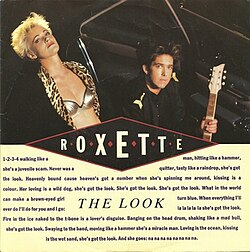
The Look was written by Per Gessle one half of the rock duo, with the other being Marie Fredriksson (both pictured above). The two were already established musicians in Sweden prior to the band’s formation. Fredriksson had released a number of successful solo albums, while Gessle had been the lead singer and songwriter of Gyllene Tider, a band which had three number one albums in Sweden. I was saddened to read that Fredriksson died on 9 December 2019 at the age of 61, having had cancer for 17 years since her 2002 brain tumour diagnosis. Roxette were reformed by Per Gessle in 2024 with Lena Philipsson taking over on lead vocals, and the band will tour Australia and South Africa in February 2025.

Per Gessle wrote The Look as an exercise while learning how to operate the Ensoniq ESQ-1 synthesizer he had recently purchased. The first two verses are composed of guide lyrics, with Gessle explaining he “scribbled [them] down instantly just to remember the rhythm. But they stuck in my head. ‘Walking like a man, hitting like a hammer…‘ He found it “impossible” to replace the lyrics when trying to rewrite them later, and said he sought to balance the lyrical content by making the “rest of the lyrics intelligent in some way.” The original title was “He’s Got the Look“, with the lyrics using male pronouns. Gessle said this was done because he initially wanted Marie Fredriksson to sing the track.

Walking like a man, hitting like a hammer
She’s a juvenile scam
Never was a quitter, tasted like a raindrop
She’s got the look

Heavenly bound, ’cause heaven’s got her number
When she’s spinnin’ me around
Kissin’ is a color, her lovin’ is a wild dog
She’s got the look

She’s got the look (She’s got the look!)
What in the world can make a brown-eyed girl turn blue?
When everything I’ll ever do, I’ll do for you
And I go la-la-la-la-la
She’s got the look!

Fire in the ice, naked to the T-bone
Is a lover’s disguise
Bangin’ on the head drum, shakin’ like a mad bull
She’s got the look

Swayin’ to the band, movin’ like a hammer
She’s a miracle man
Lovin’ is the ocean, and kissin’ is the wet sand
She’s got the look

References:
1. The Look – Roxette

Tagged with: , ,
Posted in Music

The Longest Time (1984) – Billy Joel

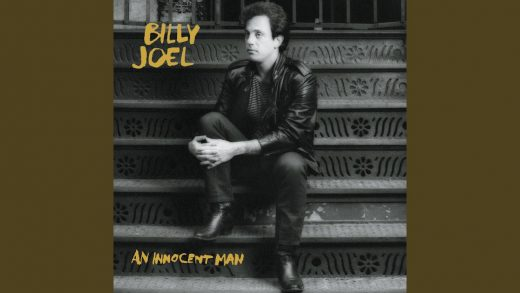
Today’s featured song comes with the very recent news of Billy Joel’s brain condition diagnosis where he had to cancel tours. The 76 year-old singer-songwriter is said to be receiving ‘excellent care’ and is ‘fully committed to prioritising his health’. The Longest Time is the third song to appear here from Billy Joel, with his last entry – The Downeaster Alexa in April.  Apart from his well-known early major classics, my listening appreciation of him was born out of songs like today’s entry from his 1983 ‘An Innocent Man’, ‘The Bridge’, and ‘Storm Front’.

I have recounted the personal story below on a few occasions, but it remains one of my favourites; so bare with me those already familiar with it:

I saw Billy Joel’s Stormfront tour in ’91 in Sydney with my schoolmate Gary. He’s actually the one who drew that caricature of my family – the one featured in the ‘Reflection’ menu. Anyway, Gary was a massive Billy Joel fan. We used to go back and forth over music because, while he was all about Billy, I leaned more towards Elton John.

I still remember when Elton’s Kiss the Bride came out – Gary would mock me by belting out, “I want to kiss the bride……groom!” Classic Gary with his injection of ‘Groom‘ in place of John’s ‘Yeh!’ A clever jab, just like his caricature work.

So yeah, I went to the concert mostly to appease him, though I did (and still do) dig a lot of Joel’s music – including today’s featured track: The Longest Time.

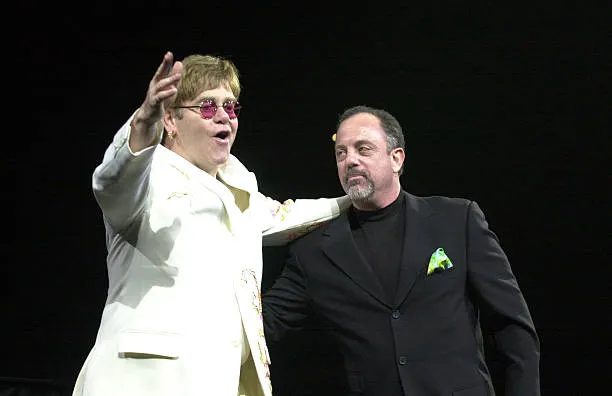
This all reminds me, I have had in my movie collection for years now, the DVD of Billy Joel and Elton John collaboration of the 1994 “Face to Face tours“. I’m dusting off that baby this morning and my daughter and I will enjoy it over breakfast and the rest of our lazy Saturday morning.

The following was extracted and abridged from the Wikipedia reference below:

The Longest Time is a doo-wop song released in 1984 as the fourth single from the 1983 album An Innocent Man. Following the theme of the album in paying tribute to Joel’s musical influences, the song is presented in the style of Frankie Lymon and the Teenagers. It reached number 14 on the Billboard Hot 100 and number 25 on the UK Singles Chart.

The song features Joel on lead vocals, all backing vocals, and percussive sounds such as finger snaps and hand claps. Joel had intended to feature a vocal group but Joel recorded each of the parts himself.

[Intro]
Dum dum dum

[Chorus]
Woah, oh, oh, oh (For the longest)
For the longest time
Woah, oh, oh (For the longest)
For the longest time

[Verse 1]
If you said goodbye to me tonight
There would still be music left to write
What else could I do?
I’m so inspired by you
That hasn’t happened for the longest time
Once I thought my innocence was gone
Now I know that happiness goes on
That’s where you found me
When you put your arms around me
I haven’t been there for the longest time

[Chorus]

[Verse 2]
I’m that voice you’re hearing in the hall
And the greatest miracle of all
Is how I need you
And how you needed me too
That hasn’t happened for the longest time

[Bridge]
Maybe this won’t last very long
But you feel so right and I could be wrong
Maybe I’ve been hoping too hard
But I’ve gone this far, and it’s more than I hoped for

[Verse 3]
Who knows how much further we’ll go on?
Maybe I’ll be sorry when you’re gone
I’ll take my chances
I forgot how nice romance is
I haven’t been there for the longest time

[Bridge]
I had second thoughts at the start
I said to myself, “Hold on to your heart”
Now I know the woman that you are
You’re wonderful so far, and it’s more than I hoped for

[Verse 4]
I don’t care what consequence it brings
I have been a fool for lesser things
I want you so bad
I think you ought to know that
I intend to hold you for the longest time

[Outro]
Woah, oh, oh, oh (For the longest)
For the longest time
(Repeat)

References:
1. The Longest Time – Wikipedia

Tagged with: , ,
Posted in Music

The Phoenician Scheme (2025) – Wes Anderson (Friday’s Finest)

Although The Phoenician Scheme is the third Wes Anderson film to feature in my Friday’s Finest segment, it wasn’t one I had high hopes for going in. My hesitation was two-fold: first, I’d come across a wave of negative reviews beforehand (more on that below), and second, just as the previews began to roll, my son called me with a grievance. As I tried to talk, I was promptly shushed by those around me, and I couldn’t properly deal with the issue until after the film. Needless to say, I was anxious as the opening scenes began – not a good headspace to be in for a Wes Anderson film.

But alas, this story has a happy ending. Apart from my son’s issue being resolved thereafter – by the time the credits rolled, I was licking my chops at the thought of watching it again. I felt so affected and enlightened by what I’d seen – there’s just so much to unpack, especially at the breakneck pace of Anderson’s signature absurdity. That said, I saw it at a nearby cinema with, frankly, rubbish video and audio quality, so next time I’ll be heading to a higher-end complex and sitting closer to the screen (there’s a lot of on-screen text to catch). One thing’s for sure: this film now rounds out my personal trilogy of favourite Wes Anderson works – The Royal Tenenbaums, The Grand Budapest Hotel, and (drumroll please… da-dah!) The Phoenician Scheme. I also enjoyed, but to a lesser extent – Rushmore, The Life Aquatic with Steve Zissou and Moonrise Kingdom.

IMDB Storyline – The Phoenician Scheme:

Wealthy businessman Zsa-zsa Korda appoints his only daughter, a nun, as sole heir to his estate. As Korda embarks on a new enterprise, they soon become the target of scheming tycoons, foreign terrorists, and determined assassins.

Warning: There are spoilers below of larger plot and character deviations in the film

Some viewers have dismissed The Phoenician Scheme as something akin to ‘pretty as a picture, but emotionally vacant like an empty parking lot‘ or that Wes Anderson has become a caricature of himself, more interested in the ‘Wes Anderson style‘ than powerful story telling.. I beg to differ. For me, this is one of Anderson’s most emotionally resonant works. Beneath its ensemble cast and intricate plotting lies a poignant exploration of a father-daughter bond, brought to life with sensitivity by Benicio del Toro and Mia Threapleton (Kate Winslet’s daughter). The film also charts the existential awakening of a powerful industrialist who, in the midst of executing an ambitious infrastructure project, experiences a profound internal shift – an almost spiritual reckoning reminiscent of a more self-aware Citizen Kane. He starts to embrace religion, personal relationships and demonstrate benevolence towards those less fortunate.

That’s not to infer The Phoenician Scheme doesn’t have its ha-ha comedy moments, it does and I laughed out loud many times to the detriment of those in attendance. Anderson’s unmistakable touch is everywhere, from the elaborate set design and stylised pacing to the frenetic narrative stuffed with duels, escapes, and dramatic turns. Yet for all its eccentricities, The Phoenician Scheme feels more grounded than much of his recent work. It offers a focused character journey rather than nesting tales within tales, and what it reveals is a surprisingly heartfelt meditation on faith, forgiveness, and what really matters when the facade falls away.

All the cast are great especially Benicio Del Toro as the lead as Zsa-zsa Korda. It’s my favourite performance by him although special mentions to his work in Sicario, Traffic and The Usual Suspects. I would like to give shout-outs to Michael Cera ( of ‘Juno‘ fame) in his superb supporting role and the surprise, but hilarious appearance of Benedict Cumberbatch as the villainous brother Uncle Nubar.

Wes Anderson’s films have always been hit-or-miss for many viewers, though his 2014 feature The Grand Budapest Hotel arguably stands as his most widely acclaimed, earning a slew of Academy Award nominations. While the Anderson trademarks are certainly present here, I believe The Phoenician Scheme deserves recognition in its own right. That said, I’ll likely need a second viewing to determine whether my initial excitement truly holds up – his films often take time to absorb and fully appreciate, but I’m confident that my appreciation for the film will only grow with future viewings, especially given the wealth of fascinating material on offer here.

Below is an official clip from the film, called ‘Human Rights‘. It shows Benicio del Toro as Zsa-zsa Korda, one of the richest men in Europe; Mia Threapleton as Liesl, his daughter/a nun and Michael Cera as Bjorn, their tutor. And below that is Wes Anderson discussing his new film and his unique style.

References:
1. The Phoenician Scheme – Wikipedia
2. The Phoenician Scheme – IMDB

Tagged with: ,
Posted in Movies and TV

La Presa (2024) – Nathy Peluso

‘In Grasa there definitely had to be a Salsa song. People were asking for it and it’s part of my job. So in Miami we got down to work and ‘La Presa’ was born…I consume Salsa everyday of my life. When I wake up – it’s like my engine. I consume a lot. Tony Vega, Willie Colón, Hector Lavoe. The classics Frankie Ruiz. And I feel that this school of Salsa is the one that defines me. That’s the sound I’m after. Also how we recorded it with microphones from the 70’s, with the recording techniques that were used in the 70’s, with musicians playing for these artists at the time. And on top of that we had the backing vocals recorded by El Gran Combo de Puerto Rico which is the greatest blessing I could have in Salsa for me.’

Nathy Peluso – Notas sobre GRASA

Here is some lavish salsa from one of my favourite modern music artists – Nathy Peluso who is truly at the cutting edge of Latina Music. I was putting off writing about La Presa (The Prisoner) because over the last year she has inundated this blog with a plethora of songs from different genres. But when I was at the gym yesterday and I found myself intuitively bopping away to this song in between sets I decided enough is enough – ‘let this baby rip’. I’m so enamoured with it, as I am with all of her music showcased here. Presa comes from Nathy’s 2024 album Grasa (Fat) for which she won 3 Grammy awards.

I’ve been following the Argentine-Spanish Diva Nathy Peluso for quite some time now, and I continue to track her evolution with keen interest – much like I do with all my favourite contemporary singer-songwriters. What captivates me most is how boldly and authentically she has reshaped the Latin music scene, fusing genres like hip-hop, salsa, trap, and neo-soul with theatrical flair and intellectual depth.

‘There were three pillars in my career that defined me as a musician, which is my hip-hop content, then my soulful, jazzy side and finally my salsa, bolero, latin and all other roots’.

Her artistic transformation has been nothing short of electric, blending raw intensity with conceptual sophistication. Today’s featured track, Presa, is a striking showcase of her fiery, unapologetic talent.

La Presa is a salsa-infused anthem that reimagines love as both a crime and a prison. She confesses to “killing” her lover – not with weapons, but by denying him affection – embracing incarceration over emotional submission. Through this metaphor Peluso critiques possessive relationships and asserts female autonomy, blending humor and defiance with lines like “I’d rather be behind bars than with him” which heads this blog.

‘I like to approach Salsa from a place that isn’t so traditionally feminine considering how women have navigated Salsa throughout history which has always been more romantic, more idyllic, more soap opera-like. I like to take it to the tough side, a more masculine angle as it has been throughout the history of Salsa.’

I have included two versions of La Presa below, both of which I enjoy viewing. The first is the more ‘bare bones’ live session for Vevo control and the second is the oficial video release.
P.S You may need to open the chosen video in You tube to see the English subtitles.

A loose English translation follows:

[Intro]
Police, take her away

[Verse 1]
Police, open the bars
I’m going to confess if you let me (Let me)
I’d rather be a criminal than an idiot
And for that, you have to have courage
Police (Uh-uh), take me to jail
If it’s life, I don’t care
Yes, it’s true that I killed that man
But I killed him, I killed him with love
It wasn’t with a gun, nor with a knife
It was because I denied him my kisses and that’s why he died
Because I didn’t want to give them to him

[Chorus]
Here’s a moral for you
To be with him, I’d rather be behind bars
Relax, police, I won’t be short
Whoever gives me a visit, a conjugal visit
Here’s a moral for you (Cuckoo, cuckoo!)
To be with him, I’d rather be behind bars (Salsa!)

[Verse 2]
Police, take her to jail
From the tip of her shoe to the top of her head
I’ve already left through your door, I’m not coming back through that one
Police, take her to jail
Because of my noble humanity, they call me “criminal”
Police, take her to jail
That’s why I don’t care if they put me in shackles
Let them bail me out, I have money to spare
Police, take her to jail
That man isn’t breathing
Call the police

[Interlude]
Tell him, tell him!
Cuckoo, cuckoo
!

[Outro]
When love doesn’t give you freedom
It’s a prison, a disease
When love doesn’t give you freedom
You have to kill it coldly

Tagged with: , ,
Posted in Music

Is There a Ghost (2007) – Band of Horses

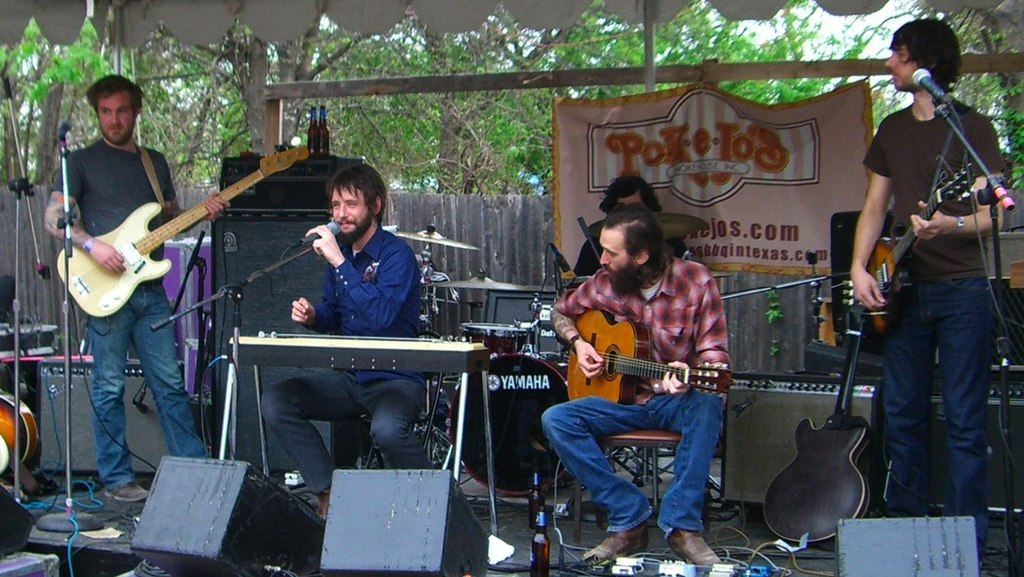
Band of Horses at the 2006 SXSW festival. Second from left is founder and sole original member, Ben Bridwell

Band of Horses certainly has a passion to them—the kind of singing and strumming that sounds like crying….
 (Is There A Ghost) – not much lyrically, but it paints a picture of nostalgia, the supernatural, and isolation.

– Bernie in response to my last post on the Band of HorsesThe Funeral.

My cinephile friend Bernie (of Reely Bernie) mentioned that today’s featured track – Is There a Ghost – is his favourite by the American rock band Band of Horses, who hail from the indie-grunge haven of Seattle. That was all the encouragement I needed to seek it out. From the very first listen, I was caught hook, line, and sinker. The lyrics consist of just two lines, repeated throughout the song: “I could sleep, I could sleep. When I lived alone, is there a ghost in my house?” I particularly enjoy how the understated finger-picking melody gives way to an exhilarating burst of guitar just after the one-minute mark – Giddy-up, you Band of Horses! The indie vibes in this track are undeniably strong. One reviewer claimed, ‘Is There A Ghost‘ is the catchiest song with only 14 words to its credit since Pearl Jam’s Smile.

The band initially received attention after opening up for Iron & Wine cerca 2005 during Seattle area shows. Iron & Wine are also no stranger to this blog – featuring here twice already with their latest entry – The Desert Babbler. Is There a Ghost is the first single taken from Band of Horses‘ second album Cease to Begin, released on August 28, 2007. It reached No. 34 on the US Alternative Songs chart. It’s said that Cease to Begin has a more Southern rock, less indie sound than Band of Horses’ debut album Everything All the Time. However, Is There a Ghost has a strong indie feel, in contrast to the rest of Cease to Begin. To date, the band has released six studio albums; the last one Things Are Great (2022).

Bernie also wrote that he heard that most of the band lived homeless before they started scoring gigs. And lookee here (well at least according to Bridwell’s account):

You know, it’s funny,” Bridwell said by phone. “I get here (Seattle) and I’m staying at this fancy hotel and it’s two blocks away from this parking lot, now a vacant parking lot, that they used to have Ryder trucks on — a rental place. And I used to actually sleep on those trucks. I’d get thrown out of the truck at 6 a.m. in my sleeping bag. It’s just funny. It’s two blocks away and I’m now on the balcony of this big hotel. I’m a bit reflective.
Read more at the Oregon Live article.

I could sleep, I could sleep
When I lived alone
Is there a ghost in my house?
When I lived alone
Is there a ghost in my house?
My house

References:
1. Is There a Ghost – Wikipedia
2. Band of Horses frontman Ben Bridwell went from homeless in Seattle to rock star – Oregon Live

Tagged with: , ,
Posted in Music

Only the Lonely (Know the Way I Feel) 1960 – Roy Orbison

I’ve always been very content when I wrote all those songs. By this I’m saying that a lot of people think you have to live through something before you can write it, and that’s true in some cases, but I remember the times that I was unhappy or discontent, and I couldn’t eat, I couldn’t sleep, I couldn’t communicate, and I certainly couldn’t write a song, no way.
– Roy Orbison speaking about the song Only the Lonely in 1980.

Only the Lonely was the first song I heard by Roy Orbison as a young’un and it remains my Desert Island track by him. It might not hit the powerful heights of Crying or compare to the infectious groove of Oh, Pretty Woman, but Only The Lonely is nuts and bolts – Roy Orbison. He had this ability to convey both vulnerability and strength at the same time. His singing style was unique of course and his vocal range was beyond impressive. He was often referred to as “The Caruso of Rock”. His emotional ballads set him apart from other male rock-and-roll performers of his time.

The doo-wop backed Only the Lonely marked a breakthrough at the start of Roy Orbison’s illustrious music career, establishing the emotional vulnerability and soaring vocal style that became his signature. The recording features an irresistible falsetto note hit by Orbison that showcased a surprisingly powerful voice. Decades later, Not Alone Anymore, recorded with the Traveling Wilburys in 1988, poignantly bookended his career. While Orbison’s voice had matured, the same melancholy was present, now tinged with the wisdom of experience. I consider ‘Not Alone Anymore‘ not only one of the most underrated tracks across the Wilburys’ two volumes, but one of the most affecting performances of his entire career, at least from what I have heard.

Now onto Only the Lonely. Most of the following was extracted / abridged from the Wikipedia article below:

Only the Lonely (Know the Way I Feel) is a 1960 song written by Roy Orbison and Joe Melson. It was the first major hit for the singer. It went to No. 2 in the US (blocked by Brenda Lee’s I’m Sorry). Only The Lonely reached number one in the UK and stayed there for two weeks (out of a total of 24 weeks spent in the chart) – the longest charting single of Orbison’s career. In 1999, the 1960 recording of “Only the Lonely” was inducted into the Grammy Hall of Fame.

After several years without much success in the music business, and sharing a tiny apartment with his wife and new baby, Roy Orbison had taken to sitting in his car to write songs when, in 1958, his acquaintance Joe Melson tapped on the car window and suggested they collaborate. In early 1960, they wrote “Only the Lonely“, which they tried to sell to Elvis Presley and the Everly Brothers, who turned it down. So they recorded it themselves.

Dum dum dum, dummy doo wah
Ooh yay, yay, yay, yeah
Oh oh oh oh wah
Only the lonely, only the lonely

Only the lonely
(Dum dum dum, dummy doo wah)
Know the way I feel tonight
(Ooh yay, yay, yay, yeah)
Only the lonely
(Dum dum dum, dummy doo wah)
Know this feeling ain’t right
(Dum dum dum, dummy doo wah)
There goes my baby, there goes my heart
They’re gone forever, so far apart
But only the lonely know why I cry
Only the lonely

Only the lonely
(Dum dum dum, dummy doo wah)
Know the heartaches I’ve been through
(Ooh yay, yay, yay, yeah)
Only the lonely
(Dum dum dum, dummy doo wah)
Know I cry and cry for you
(Dum dum dum, dummy doo wah)
Maybe tomorrow, a new romance
No more sorrow but that’s the chance
You’ve gotta take, if your lonely heart breaks
Only the lonely
(Dum dum dum, dummy doo wah)

References:
1. Only The Lonely – Wikipedia

Tagged with: ,
Posted in Music

19/5/25 – 25/5/25 – Universe, Trump & Complete Unknown

news on the march

Welcome to Monday’s News on the March – The week that was in my digital world.

Scientists in a race to discover why our Universe exists
Article at BBC News

A vast cavern in South Dakota shielded from the outside world will house sensitive equipment to detect tiny changes in sub-atomic particles

Scientists are searching for the answer to one of science’s biggest questions: why does our Universe exist?

I added the following information to my Ankidroid as a result of this BBC article:

What came into existence from the Universe’s creation, but cannot be explained. What should have theoretically occurred?

Matter – from which stars, planets and everything around us (including us) are made – and in equal amounts antimatter – matters’ exact opposite. Theoretically they should have cancelled each other out and left nothing except a big burst of energy. And yet, here we – as matter – are.

Explain the Dune particle detector (created to determine how we are here as ‘matter’):
a. what it stands for b. location c. process d. objective

a. Deep Underground Neutrino Experiment (Dune),
b. 1,500 metre below surface in South Dakota,
c. Firing Neutrinos and anti Neutrinos particles from Illinois 800 miles away. These particles change ever so slightly as they travel, and
d. Detect if changes are different for the two particles. If they are different it could tell them why matter and anti matter don’t cancel each out.

Ben Shapiro: I voted Trump. Here’s what I regret
Video Interview at Unherd

This was the first time Ben Shapiro and Freddy Sayers appeared together and it sure didn’t disappoint. It’s a wide-ranging conversation and they discuss what Trump has got right – and wrong – in his current tenure, Shapiro’s public criticisms of the president, and his feud with Tucker Carlson amongst other topics.

Like how Brett Weinstein and Heather Heying’s Darkhorse podcast was a beacon of sanity for me during the craziness of the Pandemic and the phenomenon of Mass Formation, I have found both Sayers (Unherd more broadly) and Shapiro, as alternative news outlets, beacons of reasoning in the Post-Pandemic and nascent A.I. age.

I couldn’t fault here – Shapiro’s surgeon-like dissection of Trump’s incumbency so far (as well as everything else he discussed), and I’m not even a conservative per se. In fact here are my political compass test results (2019), which is not to insinuate they are definitive or that my world-view hasn’t shifted radically since the onset of the following:
– Pandemic,
– Corporate Stakeholdership (ie The Great Reset orchestrated by the World Economic Forum), and
– The Woke Movement.

My favourite part of this interview came towards the end (at 48:20 to be exact) where Shapiro used the analogy of Plumbers to Politicians. It made me yelp with laughter and still makes me chuckle when I recall it. He said:

My overall perspective on every politician is that politicians are plumbers. If the politician is overall fixing the toilet I’ll be generally happy and if the plumber is actually throwing cherry-bombs down the toilet then I will be upset. And that remains true regardless of who the President is.’

A Complete Unknown | Bob Dylan and the Biopic Formula
Video movie review by Elliot Roberts

So is ‘A Complete Unknown’ just another formulaic music biopic or does it offer something more? And how does it compare to Todd Hayne’s more cerebral 2007 Dylan biopic ‘I’m Not There’?

You may all be done and dusted with the Complete Unknown movie craze – as well as the aftermath and analysis phase – but I wouldn’t be posting this video here unless I thought it was well worth it. Or, not to put too fine a point on it, head and shoulders above the rest.

I shared my own thoughts on Complete Unknown in a previous News on the March segment, where I also highlighted an engaging written review over at Recliner Notes. But it would be entirely remiss of me to endeth the trilogy of the ultimate Complete Unknown opinion without including Elliot Roberts’ expert breakdown of the film. Such is the intricate level of detail and nuanced analysis, it left me gasping in appreciation of the knowledge, effort, and passion Roberts poured into it. In my humble estimation, it’s the definitive review I’ve seen so far on the biopic.

Elliot Roberts is an Australian YouTuber and actor who makes commentary videos on music and film, though his videos on The Beatles and its members have became his most well-known in his repertoire.

That is all. Thank you for reading.

Tagged with: , , , , , , , , , , ,
Posted in Movies and TV, Music, News, politics, Science

The Lonesome Death of Hattie Carroll (1964) – Bob Dylan

Here’s Bob at the apex of his protest music beginnings. The Lonesome Death of Hattie Carroll was one of the first songs I heard in my youth where I truly paid attention to the lyrics. It’s a song where every other aspect of the music takes a back seat – only the words seem to matter. Even the chorus feels like a brief respite in a sermon of grave injustice. What struck me wasn’t just the prominence of the lyrics, but how the story itself drove the song – as if the events were being reported and exposed right before my ears. And then to discover it all happened to a real person named Hattie Carroll – that just blew my mind while incensing me. There are people who have written about the actual incident and trial and recall with striking clarity the day the verdict made the headlines and their aghast reaction to it.

Such was my immersion into Dylan’s material as an early teen, I could tell his music and lyric were not just shaping me, but forming in large part my values system outside of the family microcosm. No one I knew liked Bob, or seemingly knew what he was about. It was only when my next door neighbour who happened to be my Geography teacher and table tennis coach at high school played the Traveling Wilburys Vol. 1 record on repeat in his van driving us on long trips to tournaments, did I realise my idol’s music wasn’t just confined to my bedroom. Trying to emulate my favourite artist, I started to write poems and lyrics about all the stuff happening in my life. Afraid I might be embarrassed and lead a terminal bullied life at school, I kept these written notes a secret. If they got out on the street or, much worse, into a school newspaper to join the bona fide list of school try-hards, the game was up. 


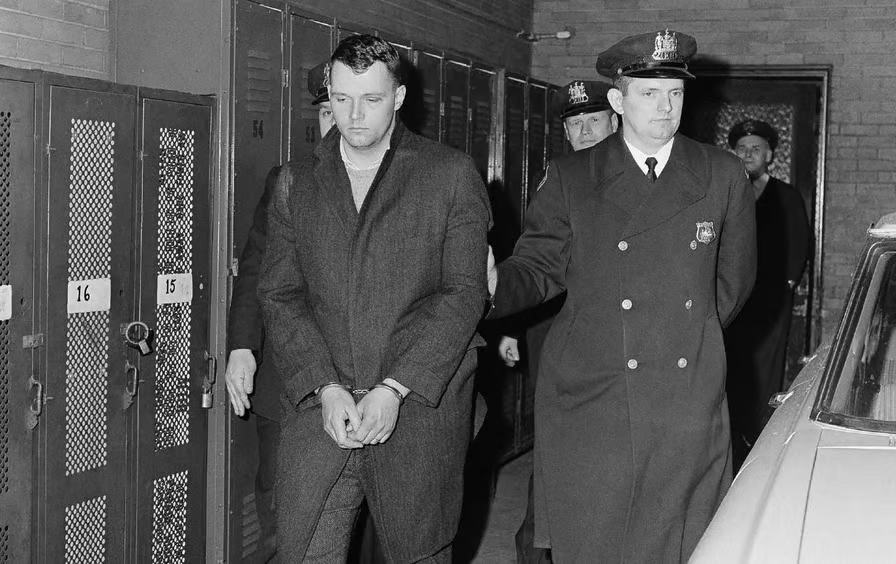
William Zantzinger, shown here in police custody, was sentenced to six months for the manslaughter and assault of Hattie Carroll.

William Zanzinger killed poor Hattie Carroll
With a cane that he twirled round his diamond ring finger
At a Baltimore hotel society gath’rin’…

These are the opening lines of Bob Dylan’s song The Lonesome Death of Hattie Carroll, written in 1963 to pay homage to this 51-year-old mother of 10 children and purported to be killed by a wealthy plantation owner at the Emerson Hotel in downtown Baltimore.

Until researching more about the case for this article, I assumed (for decades mind you) that William Zantzinger had bludgeoned Hattie Carroll to death with his cane (Murder in the first-degree, if you will). Dylan’s song contains at least two inaccuracies (according to the Wikipedia reference below) Zantzinger was not booked for first degree murder, but for second degree murder. Dylan also misspells and mispronounces Zantzinger’s surname as “Zanzinger”. Below is what happened according to the Nation article reference. If you are unfamiliar with Dylan’s lyrics, then I would recommend you read them below prior to the following:

Carroll was serving drinks at the Spinster’s Ball, an annual event attended by Maryland’s white old-family elites, when one of the party’s drunken revelers, Billy Zantzinger, decided she was being disrespectful. He called her a racial epithet then struck her with his cane. Zantzinger also hit two other Black employees that night—a bellhop named George Gessell, whom he hit on the arm, and waitress Ethel Hill, whom he hit on the buttocks when she argued with him over his mistreatment.

Carroll died the next day at Baltimore’s Mercy Hospital, from a stroke brought on by the attack.

William Zantzinger was convicted of the manslaughter and assault of Hattie Carroll and not for first-degree murder. The court ruled that Hattie Carroll had died from a stroke possibly brought on by the stress of the attack, reducing the charge from murder to manslaughter and assault. According to the Wikipedia article below it was a ‘25-cent toy cane‘ in which Zantzinger drunkenly assaulted at least three of the Emerson Hotel workers.

Wikipedia:
In the words of the court notes: “He asked for a drink and called her ‘a black bitch’, and ‘black s.o.b’. She replied, ‘Just a moment’ and started to prepare his drink. After a delay of perhaps a minute, he complained about her being slow and struck her a hard blow on her shoulder about half-way between the point of her shoulder and her neck.” She handed him his drink. After striking Carroll, he attacked his own wife, knocking her to the ground and hitting her with his shoe.

Within five minutes from the time of the blow, Carroll leaned heavily against the barmaid next to her and complained of feeling ill. Carroll told co-workers, “I feel deathly ill, that man has upset me so.” The barmaid and another employee helped Carroll to the kitchen. Her arm became numb, her speech thick. She collapsed and was hospitalized. Carroll died eight hours after the assault.

At the time of incident, Charles County was still strictly segregated by race in public facilities such as restaurants, churches, theaters, doctor’s offices, buses and the county fair. The schools of Charles County were not integrated until 1967.

Now, onto the song itself. Most of the following was extracted from the Wikipedia article below:

The Lonesome Death of Hattie Carroll was released on Dylan’s 1964 album – The Times They Are a-Changin’. My previous entry here from the album was One Too Many Mornings, although that article’s focus was on the Live Free Trade Hall 1966 version. The melody of ‘The Lonesome..’ chorus is largely taken from a folk song called Mary Hamilton, and you can listen to the Joan Baez version here.  

According to a 1991 Washington Post report, Dylan wrote the song in Manhattan, sitting in an all-night cafe. A radio documentary on the song said rather that he wrote it both in New York and at the home of his then-lover, Joan Baez, in Carmel… He (Dylan) recorded it on October 23, 1963, when the trial was still relatively fresh news, and incorporated it into his live repertoire immediately, before releasing the studio version on February 10, 1964. 

[Verse 1]
William Zanzinger killed poor Hattie Carroll
With a cane that he twirled around his diamond ring finger
At a Baltimore hotel society gatherin’
And the cops was called in and his weapon took from him
As they rode him in custody down to the station
And booked William Zanzinger for first-degree murder

[Chorus]
But you who philosophize disgrace
And criticize all fears
Take the rag away from your face
Now ain’t the time for your tears

[Verse 2]
William Zanzinger, who at twenty-four years
Owns a tobacco farm of six hundred acres
With rich wealthy parents who provide and protect him
And high office relations in the politics of Maryland
Reacted to his deed with a shrug of his shoulders
And swear words and sneering, and his tongue, it was a-snarling
And in a matter of minutes, on bail was out walking

[Verse 3]
Hattie Carroll was a maid in the kitchen
She was fifty-one years old and gave birth to ten children
Who carried the dishes and took out the garbage
And never sat once at the head of the table
And didn’t even talk to the people at the table
Who just cleaned up all the food from the table
And emptied the ashtrays on a whole other level
Got killed by a blow, lay slain by a cane
That sailed through the air and came down through the room
Doomed and determined to destroy all the gentle
And she never done nothin’ to William Zanzinger

[Verse 4]
In the courtroom of honor, the judge pounded his gavel
To show that all’s equal and that the courts are on the level
And that the strings in the books ain’t pulled and persuaded
And that even the nobles get properly handled
Once that the cops have chased after and caught ’em
And that the ladder of law has no top and no bottom
Stared at the person who killed for no reason
Who just happened to be feelin’ that way without warnin’
And he spoke through his cloak, most deep and distinguished
And handed out strongly, for penalty and repentance
William Zanzinger with a six-month sentence

References:
1. The Lonesome Death of Hattie Carroll – Wikipedia
2. The Lonesome Death of Hattie Carroll Took Place 60 Years Ago Today – The Nation

Tagged with: , , , ,
Posted in Music

Chicago / Keinen Zentimeter (Live Summer Tour 2024) – Clueso (Double Feature Special)

Such is my fascination with the Clueso Summer Tour 2024 concert in Berlin (presented below) and my preference of the live versions over the originals, I’m going to do something I have never done before, which is present a double feature. The two songs – Chicago and Keinen Zentimeter (Eng. Not a centimetre) respectively just happen to be the first two which open this monumental performance. The third song from 13:40 in the video called Sag Mir Was Du Willst (Tell Me What You Want) featured here back in March this year.

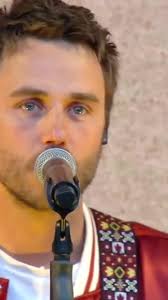
For the launch of my Music Library Project on July 25, 2019, I wanted to present a single song that could encapsulate the breadth and depth of the music I planned to feature. I ultimately chose the track Wenn Du Liebst (When You Love) by the German pop singer and rapper Clueso (pronounced [klyˈzo]) (image left). A friend, who shares a deep appreciation for German culture and language, introduced me to the song in 2019 and so started my slow, but gradual uptake and appreciation of the music from Clueso (born Thomas Hübner (9 April 1980).

The concert begins with a ‘lush’ and slow electric guitar strumming unveiling the song Chicago at tortoise pace. That’s fine, I don’t have anywhere to be – so lets see where our star Clueso goes here as he gets accustomed with his audience. Then the curtain backdrop suddenly drops away and ‘Boom’! – the band accompaniment jumps in and with great gusto! I would suggest – then we are treated to perhaps some of the best of modern music has to offer and it seriously rocks, but not in a untucked flannelette way smelling of cheap bourbon, but a chilled, crisp, and humble manner – just letting the music do the talking.

The extent of my knowledge of the German language is confined to a semester of German in grade 5, which means I understand ‘diddly squat’, but that doesn’t deter me from enjoying these rich melodies, rhythmic groove and polished instrumentals. The powerful drumming and infectious guitar playing is marvellously complemented by an effervescent, dynamic horn section. Also the transition from Chicago into this slamming guitar riff intro of Keinen Zentimeter is something to behold.

Now, lets not forget the setting – a breathtaking amphitheatre at dusk, adding to the magic and allure. Not to put too fine a point on it, I am truly enamoured with the first 17 minutes of this spectacle and I doubt I’ll ever grow tired of it.

Chicago

Chicago was first released as a single on April 21, 2006 as part of Clueso’s third studio album, “Weit weg,” from which it is the first single. The lyrics address drug use among teenagers and young adults. The chorus sings about being high on drugs in Chicago, where no one knows you. It’s about, among other things, “Chicago” and “The Last Supper.” about a female person who meets with a few people at an unspecified location and lets “fresh stuff” flow through her veins and passes the “spoonful” on to her friends.

Sometimes she meets up with a few people
In an undetermined place
And when fresh stuff flows through her veins
You kick the bucket to your friends
Only this time she didn’t come
Maybe she didn’t make it

Unfortunately, I couldn’t find content on Keinen Zentimeter (Eng. Not a centimetre) other than the translated lyrics here.

References:
1. Clueso – Wikipedia

Tagged with: , , ,
Posted in Music

Follow Blog via Email

Enter your email address to follow this blog and receive notifications of new posts by email.

Join 780 other subscribers

← Back

Thank you for your response. ✨