Sir Anthony Hopkins, as a guest on Inside the Actors Studio (1994), said that he got tips on how to play a butler from real-life butler Cyril Dickman, who served for fifty years at Buckingham Palace. The butler said there was nothing to being a butler, really, when you’re in the room, it should be even more empty.
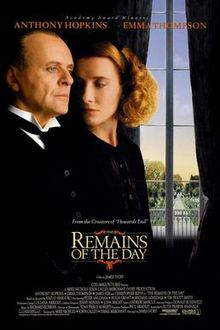
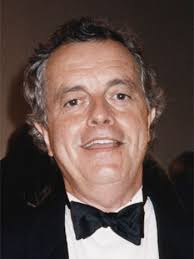
In a recent post on Bedřich Smetana’s – Má vlast (Fatherland) No. 2, Vltava I mentioned how much the commencement of the piece reminded me of the soundtrack during the end credits in the movie The Remains of the Day. So today we turn to two pieces from the movie, specifically for the opening and closing credits. Whenever I hear this stirring music, I’m instantly transported back to scenes from this hauntingly beautiful film about unrequited love. The original score was composed by Richard Robbins (image inset). It was nominated for the Academy Award for Best Original Score, but lost to Schindler’s List.
IMDB Storyline: Rule bound head butler Stevens’ (Sir Anthony Hopkins’) world of manners and decorum in the household he maintains is tested by the arrival of housekeeper Miss Kenton (Dame Emma Thompson), who falls in love with him in pre-World War II Britain. The possibility of romance and his master’s cultivation of ties with the Nazi cause challenge his carefully maintained veneer of servitude.
The Remains of the Day is an unforgettable tragedy of a man who pays the terrible price of denying his own feelings. It’s a masterpiece of understated emotion and the music captures the solemness and quaint beauty of love lingering so near yet so far. As someone described the music in the comments: Sensitive, melancholic, lovely, magical, emotional and touching movie score , heartfeltly composed with longing and conflict. Another person added: Immersive, motoric, melancholy: brilliantly pulls the audience in and keeps them there, conveying the relentless rhythms of a well-run household resonating in the memory.
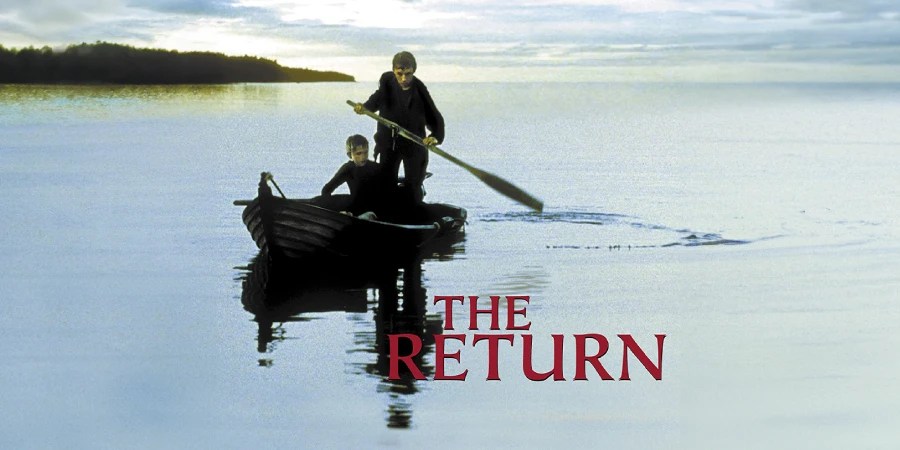
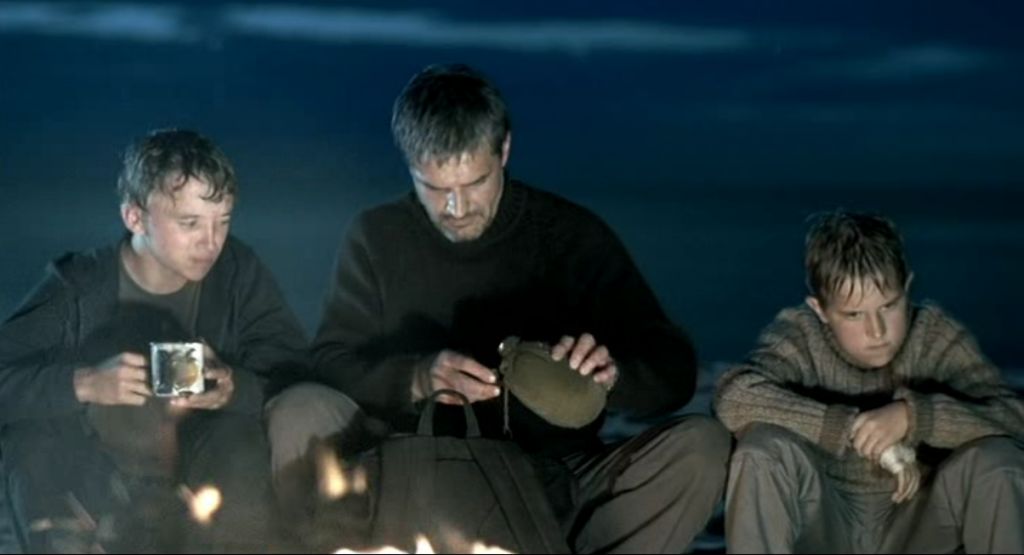
The other night, while browsing my movie folder looking for something to watch, I thought about revisiting Paul Thomas Anderson’s The Master, which featured at Friday’s Finest back in 2019. In my search for it, I noticed today’s film from Russia, The Return (Возвращение), which I hadn’t seen before. For some reason I had assumed it didn’t work, but I tried it anyway – and thankfully it played just fine. From the opening scene to the final moments, I was completely glued to the screen.
IMDB Storyline: The events of the film unfold over six days and tell about the mysterious journey of a strange man and his two teenage sons who had never seen him before. Vanya and Andrey, for how long they remember, lived with their mother, who once told them that their father was a pilot. But one ordinary Monday, dad appears in their house and takes the brothers on a hike to a small island in the middle of a forest lake.
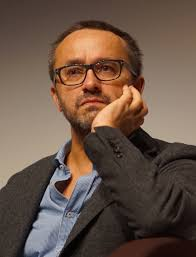
Coincidentally, only after watching The Return did I realise I had already featured another film here in 2019 by the same director, Andrey Zvyagintsev (image inset), called Loveless. I could use the same description I used for that one to capture my thoughts on both:
It’s the kind of film you’re unlikely to forget. It stays with you long after it ends. There’s something unsettling yet compelling about it. If a film is made well, even a bleak one can leave you feeling strangely uplifted – and this is one of those films.
The Return is a coming-of-age film, but unlike any other I’ve seen. You see it from the innocence of the two children – nothing else – it’s immense. It makes the child acting in Stand By Me look amateurish by comparison – and I love that film. The Return deals with masculinity, and really it feels like a definitive take on the subject. It focuses on the relationship between two young boys and their father, but the director handles this with great care and restraint. Everything feels honest and real. You simply don’t see films like this in Western cinema. To centre children so strongly, and for it to feel this convincing, is an achievement in itself. I haven’t seen better child performances since Alfonso Cuarón’s Roma (2018).
In terms of cinematography, The Return captures the bleak, desolate Russian landscape beautifully. The idea of a remote place – a kind of “zone” meant to restore and reset people away from the real world – reminded me strongly of Andrei Tarkovsky’s Stalker. The film was shot around Lake Ladoga and the Gulf of Finland. If you haven’t seen The Return and plan to watch it, stay as far away from spoilers as possible, as they will completely ruin the experience. Once you’ve seen it, though, there’s no shortage of things to unpack – such as in this excellent review at Pigeon Verite.
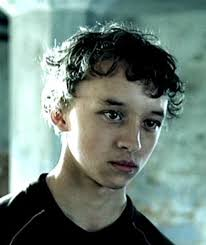
One detail I learned from that review, which completely reframed the film for me, is that Vladimir Garin – the eldest son, (image inset) – tragically drowned shortly after filming, just two months before the movie’s release. He was only 16 years old. It’s devastating, especially given how water and the fear of drowning hang over the film from start to finish. It’s unsettling how real life and art can sometimes collide so closely. In the film, his character is also the more open and forgiving of the two sons toward their father, which makes his performance feel even more tender in hindsight.
The following was abridged from Wikipedia: The budget of the film remains a secret, though in an interview the director and the producer hinted that it was well below $500,000. The director also mentioned that the producers made their money back even before it was screened at the Venice Film Festival. It grossed $4,429,093 worldwide. The film was also selected as the Russian entry for the Best International Feature Film at the 76th Academy Awards, but it didn’t make the final shortlist. It has since been regarded as one of the greatest films of the 21st century.
I want to take a moment to wish you and your loved ones a truly joyful and Merry Christmas. This blogging journey wouldn’t be the same without you – that’s for sure!
To celebrate this year’s Christmas Day, I decided to do something different from my customary Christmas Day post – The Small One – A Christmas Story by Charles Tazewell (Narrated by Bing Crosby). Today’s post collates my Christmas Countdown of ten favourite Christmas songs and hymns which I originally presented as individual posts last year. Cheers everybody.
A happy quirk of the alphabetical sequence: we’ve just had my favourite female country voice in Alison Krauss, and now we arrive at my favourite male country voice, Don Williams. I’ve written before about how Don’s music played incessantly in our household while growing up west of Sydney, Australia. My father was a huge fan, and over the years I’ve become a keen follower as well.
Suffice to say, the man from Nashville – affectionately known as The Gentle Giant – has featured prominently here, although it’s been over a year since Don’s last appearance with Merle Haggard’s classic – Sing Me Back Home. Williams earned his nickname for his lanky frame, his calming voice – one that sounds as if he’s singing directly to the listener – and his modest demeanour. Fittingly, Alison Krauss once described his voice as “somewhere between Santa and the Almighty.”
The following is taken from a brilliant article by Arden Lambert at Country Thang Daily – an all-encompassing, everything-you-want-to-know piece on Till the Rivers All Run Dry:
During his prolific career, which started in the early 1970s, Williams parlayed that voice to 17 No. 1 hits, including Till The Rivers All Run Dry. The song was released in 1975 as the first single from his album Harmony. It became his fourth No. 1 on the country chart, and it stayed in that position for one week, spending a total of twelve weeks on the country charts.
Written by Don William along with Wayland Holyfield, the song sings about eternal love, and it’s described through the lyrics. “Till the rivers all run dry. Till the sun falls from the sky. Till life on earth is through, I’ll be needing you,” the song begins.
And though he makes her wonder sometimes, through the things he says or does, one thing is for sure – he needs her. After all, whether your life is falling into place or spinning out of your control, if you love someone, you’d definitely need her by your side.
With “Till The Rivers All Run Dry,” we’ve fully understood how Don Williams became a crowd favorite during his radio days, not only in the United States but also overseas. He has fans all over the world, from Ireland to England to Africa until he retired from touring in 2006.
Garth Fundis, his longtime producer, revealed that Williams has an uncanny judgment when it comes to picking hit songs. Fundis told Billboard that Williams “never let himself stray from what he felt about music. I think that’s where the consistency comes from. It had to work for him in a simple way.
He added, “Sometimes, we do orchestrations and get a lot of instruments going, but it was usually pretty simple. He always was the rudder that kept the bowel pointed in the right direction, to use a sailing term. It was wonderful how he could always take different kinds of songs, and by the time he was done with them, they all kind of fit together in a really wonderful way.”
Till the rivers all run dry Till the sun falls from the sky Till life on earth is through I’ll be needing you
I know sometimes you may wonder From little things I say and do But there’s no need for you to wonder If I need you, ’cause I’ll need you
Till the rivers all run dry Till the sun falls from the sky Till life on earth is through I’ll be needing you
Too many times I don’t tell you Too many things get in the way And even though sometimes I hurt you Still you show me, in every way
Till the rivers all run dry Till the sun falls from the sky Till life on earth is through I’ll be needing you
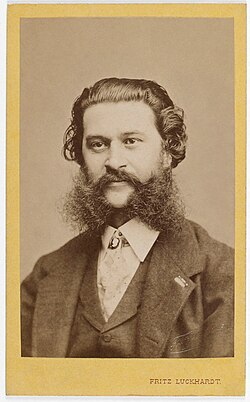
That man you see above – Austrian Johann Strauss II was arguably the biggest music star of his era in the 1870s. He was widely recognised as the undisputed king of the Viennese waltz. His portraits were sold in bookshops; jewellery stores stocked rings and brooches bearing his image; and even florists named bouquets after his waltzes. He was also laughing all the way to the bank – able to charge fees for single appearances that, in today’s terms, rival those of major pop stars.
But success didn’t come easily. Strauss worked relentlessly and struggled with bouts of exhaustion, anxiety, and recurring health problems throughout his life. Legend has it that while composing today’s featured music – Die Fledermaus, he worked for 43 days almost nonstop barely eating or sleeping – until the operetta was finished.
Die Fledermaus (The Bat), a classic operetta (or light opera), is built on a witty tale of intrigue, romance, and theatrical disguise, first cooked up by a pair of well-known French opera librettists. At its heart is a minor nobleman sentenced to eight days in prison for insulting a government official. Desperate to delay his punishment, he hatches a plan to postpone jail for just one night – long enough to enjoy an extravagant New Year’s celebration. When Johann Strauss II encountered the story, he asked his librettists Karl Haffner and Richard Genée to swap the dinner party for a lavish Viennese ball.
The operetta premiered on 5 April 1874 at the Theater an der Wien in Vienna and soon played in Berlin and was then brought back to Vienna. Since then it has never left the active repertory and many different arrangements have been produced, including a fiery take by the Ayoub Sisters.
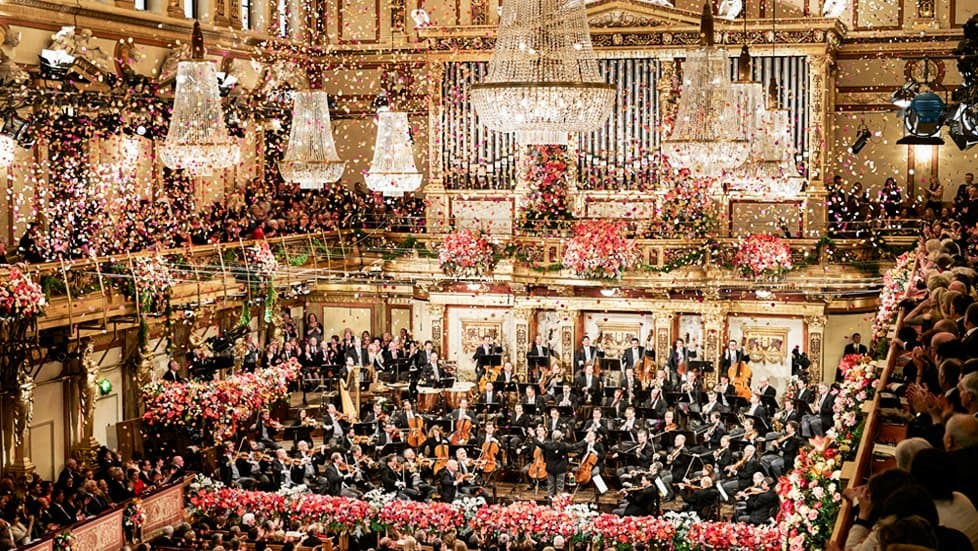
In the article below, Hermione Laifrom Hong Kong recalls how her parents made her watch the Vienna Philharmonic’s New Year’s Concert every year (see image left). Over time, she noticed that certain selections by the undisputed king of the Viennese waltz, Johann Strauss Jr., appeared on the program year after year.
I loved to watch the golden hall, the beautifully dressed musicians, and specifically the ballet dancers. It was a world far removed from everyday Kowloon in Hong Kong, a fantasy world of dreams, really. And the music is simply out of this world; it is dancing and singing, celebrating and partying, and being completely carefree.
The following was abridged from the Wikipedia reference below: Strauss was born into a Catholic family near Vienna, Austria, on 25 October 1825, to the composer Johann Strauss I and his first wife, Maria Anna Streim. His paternal great-grandfather was a Hungarian Jew – a fact which the Nazis, who lionised Strauss’s music as “so German”, later tried to conceal.
He composed over 500 waltzes, polkas, quadrilles, and other types of dance music, as well as several operettas and a ballet. composed over 500 waltzes, polkas, quadrilles, and other types of dance music, as well as several operettas and a ballet.
Strauss came to the United States in 1872, where he took part in the World’s Peace Jubilee and International Musical Festival in Boston at the invitation of bandmaster Patrick Gilmore and was the lead conductor in a “Monster Concert” of over 1000 performers.
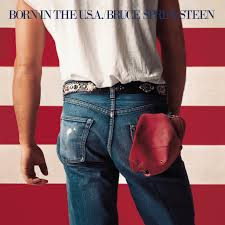
The whole Born in the USA album is choc-block full of rhetoric and romantic ideals of the carefree abandon and exhilaration of youth, but few are more pressure-cooked in just one song than No Surrender. Anyone who has tried their hand in a garage band, or just hung around at school listening to music, or been locked in a lover’s arms, or sprawled out in a field with friends, can relate to this song. Every line is a zinger, infectious drum beat, jangling guitar and The Boss belting it out. What a tune! This is how rock and roll is supposed to be.
Also consider these now-legendary lines that encapsulate perhaps better than any other on the whole record why it BITUSA became so popular and made Bruce a global mega-star (it a monster: Seven top 10 singles):
We learned more from a three-minute record, baby Than we ever learned in school
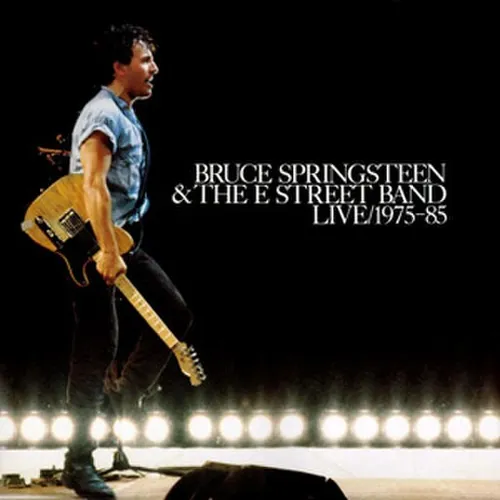
What’s mindboggling is No Surrender was only included on the album at the insistence of Steven Van Zandt, but eventually became a concert staple. Many people might know it best from the slower acoustic version acoustic performance (Live at Meadowlands Arena, E. Rutherford, NJ – August 1984) released on his Live/1975–85 is a live compilation box set. Fast or slow, the song works. The slower version, which many prefer, turns it into something more reflective, almost like it belongs on Nebraska. Those harmonica breaks in the acoustic take carry a deep sense of memory and longing, giving the song an entirely different weight.
The following was abridged from the Wikipedia reference below:
Though it was not one of the seven top ten hits of the album, No Surrender nevertheless charted on the Mainstream Rock chart, peaking at No. 29. During the 2004 United States presidential election John Kerry, the Democratic candidate and a fan of Springsteen, used the song as the main theme song for his campaign.
The song was played less and less towards the end of the Born in the USA tour. Springsteen wrote years later: “It was a song I was uncomfortable with. You don’t hold out and triumph all the time in life. You compromise, you suffer defeat; you slip into life’s gray areas.”
As of 14 April 2024, the song has been performed at 71 of 74 shows (96%) on the 2023-2024 International Tour. It was played at each of the tour’s initial 70 shows
[Verse 1] Well, we busted out of class Had to get away from those fools We learned more from a three-minute record, baby Than we ever learned in school Tonight, I hear the neighborhood drummer sound I can feel my heart begin to pound You say you’re tired and you just want to close your eyes And follow your dreams down
[Chorus] Well, we made a promise we swore we’d always remember No retreat, baby, no surrender Like soldiers in the winter’s night with a vow to defend No retreat, baby, no surrender
[Verse 2] Well, now young faces grow sad and old And hearts of fire grow cold We swore blood brothers against the wind I’m ready to grow young again And hear your sister’s voice calling us home Across the open yards Well, maybe we’ll cut someplace of our own With these drums and these guitars
[Verse 3] Now, on the street tonight, the lights grow dim The walls of my room are closing in There’s a war outside still raging You say it ain’t ours anymore to win I want to sleep beneath peaceful skies In my lover’s bed With a wide open country in my eyes And these romantic dreams in my head
Today’s featured track is another stunning contribution by Alison Krauss. Her voice holds an ethereal beauty that is simply unparalleled. She possesses quite simply my favourite female country singer voice – there’s not even a close second. She also has that wholesome, girl-next-door beauty, can play a mean fiddle, and has picked up 27 Grammy Awards along the way. The whole package, really. I regret to admit I only came familiar with her music in recent years.
There are more versions of today’s song, Till I Gain Control Again, than you can poke a stick at, but it won’t surprise you that my favourite is Alison’s. I forwarded below her live performance at The Life & Songs of Emmylou Harris concert in 2016. The song is most known (according to Wikipedia) by the No. 1 single version recorded by Crystal Gayle on her 1982 album, True Love. Although Alison’s live version has 2.2 million views on You Tube compared to Crystal’s 203 thousand and Emmylou’s 792 thousand. I highly recommend the 1993 version from Canadian country rock band Blue Rodeo (2 million views), which I’ll put at the end of this post.
Most of the following was abridged from the Wikipedia below:
‘Till I Gain Control Again was written by Rodney Crowell and originally recorded by Emmylou Harris in 1975. Crowell was hanging out with noted songwriters Townes Van Zandt, Guy Clark, and Steve Runkle, and wanted to show his own songwriting skill. In retrospect, Crowell expresses regret at rhyming “been” with “can” in the lyric “What you’ve seen is what I’ve been/There is nothing I could hide from you/You see me better than I can.” Had he written the song later in his career, Crowell says he would have spent time to find a hard rhyme. Crowell marvels when people tell him this song is their favorite of his. Crowell’s version was released on his third (self titled) album in 1981.
[Verse 1] Just like the sun over the mountain tops You know I’ll always come again You know I love to spend my morning times Like sunlight dancing on your skin
[Verse 2] I’ve never gone so wrong as for telling lies to you What you’ve seen is what I’ve been There is nothing I could hide from you You see me better than I can
[Chorus] Out on the road that lies before me now There are some turns where I will spin I only hope that you can hold me now Till I can gain control again
[Verse 3] Like a lighthouse, you must stand alone Landmark a sailor’s journey’s end No matter what seas I have been sailing on I’ll always roll this way again
[Chorus] Out on the road that lies before me now There are some turns where I will spin I only hope that you can hold me now Till I can gain control again
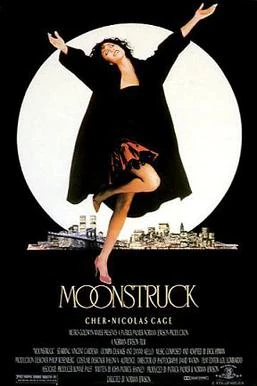
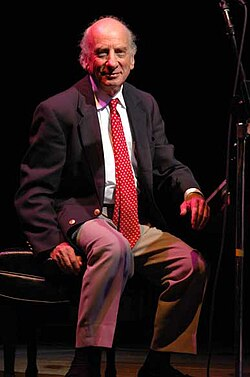
A lot of music from the Moonstruck soundtrack has featured here, but today’s short piece is the first one written directly for the movie by jazz pianist and composer Dick Hyman (image inset), with Moe Koffman on alto saxophone. Once upon a time, if you had asked me what was so special about this 1:46 piece, I might have said it was just cocktail-lounge filler from an otherwise magnificent soundtrack. But over the decades my appreciation of it has only grown. I won’t pretend nostalgia hasn’t played a part in that.
As the title suggests, [In Loretta’s Bedroom] Gettin’ Ready plays during the scene where Loretta (Cher), a widowed Italian-American woman, is getting ready to go out to see La bohème (the opera by Giacomo Puccini) with her fiancé’s hot-tempered, estranged younger brother, played by Nicolas Cage. Make no bones about it – this piece is very much a product of its time and place. You can hear New York’s 1980s cocktail-bar nightlife running right through it, with a smooth, sensual jazz feel typical of what you might have heard heading out in that era. It also sends me back to another stylish New York film made just a few years earlier – Tootsie, of course.
Moe Koffamn
Not just a neat snapshot of time and place, the sensual, slightly mysterious alto saxophone (played by Moe Koffman) tells you almost everything you need to know about Loretta’s sassy, sultry, and brash character. You can feel her anticipation building as she gets ready for the night ahead and the opera to come. This short, distilled piece probably won’t still be played in a hundred years like La bohème, but it works perfectly as a small time capsule – sharply capturing a character, a moment, and a very specific New York mood.
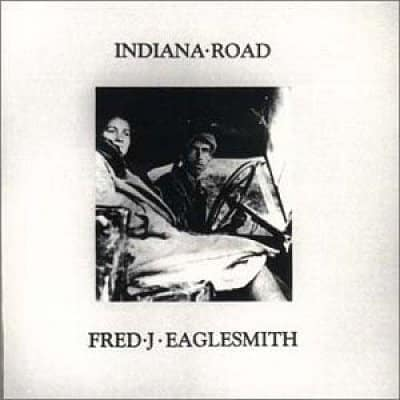
I first heard Indiana Road through Christian’s post The Sunday Six in February 2025. It stopped me in my tracks. This is pure country-rock storytelling – long, slow-burning, and unapologetically rough around the edges.
The song tells the story of a Canadian farmer and his partner living through hard times. A government official turns up and tells them they must leave their land so it can be turned into a holiday park. The narrator pushes back, threatening to meet the man with a gun in his hand out on Indiana Road. But the confrontation never happens. The official backs away, saying he won’t sink that low. What’s left is the fallout: the farmer’s partner heads back to Calgary to be with her family, and in time she disappears from his life altogether. The narrator ends up alone, drifting into a kind of self-imposed exile.
Indiana Road reminds me of the long-form songs Neil Young would later return to – Ramada Inn and Clementine come to mind – especially in the vocal delivery, the story-telling and melody. What’s striking is that Eaglesmith did this years earlier. The music in Indiana Road is raw and biting and the instruments grind and scrape along with the story, matching the anger and frustration in the lyrics.
Eaglesmith is described as an alternative country songwriter, and that label fits here. Indiana Road, the title track of his third album, touches on many themes he returns to again and again: rural life, old vehicles, people on the fringe, love that slips away, and lives shaped by bad luck and hard choices. Eaglesmith, one of nine children, was raised by a farming family near Guelph in rural Southern Ontario. He began playing the guitar at age 12.
Well me and the girl we had a little farm south of the river road A little single shack and some cattle in the barn and we grew our own food Didn’t have any money, but it never crossed our minds We grew to share and we were happy there just watching the years go by Until one day I come home there was a big black car parked out by my backdoor And a government man with a fat cigar said we couldn’t live there anymore Said they’d pay us for the land but never for the work we did And they were gonna turn it in to a holiday park and a drag-strip for the kids
I told him, I would meet him on the Indiana road with a gun in my hand but he never showed Said he couldn’t bring himself to sink himself that low I told him, I would meet him on the Indiana road with a gun in my hand but he never showed He went back to Ottawa or Toronto or wherever it is they go
Well we wired ahead and the girl’s family said to come back to Calgary We decided that she would go on back there without me And I’ll never forget those tears in her eyes as I held her face in my hand I turned around and I headed for town and I never looked back again
I told him, I would meet him on the Indiana road with a gun in my hand but he never showed Said he couldn’t bring himself to sink himself that low I told him, I would meet him on the Indiana road with a gun in my hand but he never showed He went back to Ottawa or Toronto or wherever it is they go
Now I live in an old Ford van at the end of a dead end road And the girl she stopped sending letters must be seven years or more Me, I, spend a lot of time down on the Indiana ya know And I draw a bead but there ain’t no need I don’t shoot anymore
I told him, I would meet him on the Indiana road with a gun in my hand but he never showed Said he couldn’t bring himself to sink himself that low I told him, I would meet him on the Indiana road with a gun in my hand but he never showed He went back to Ottawa or Toronto or wherever it is they go He went back to Ottawa or Toronto or wherever it is they go He went back to Ottawa or Toronto or wherever it is they go
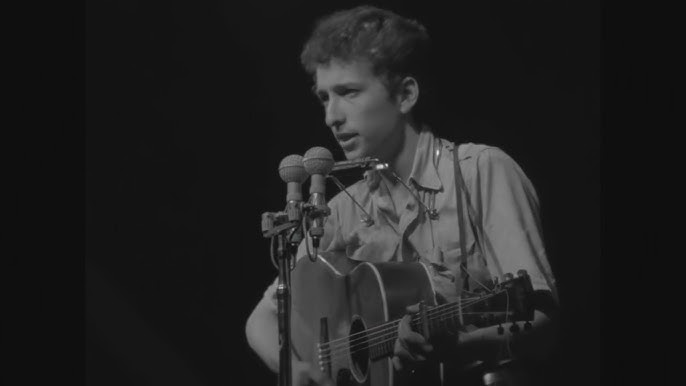
We return to one of Bob Dylan’s most impactful political songs, Only a Pawn in Their Game. You could be forgiven for thinking you’re listening to the gravelly voice of a world-weary old man, but Dylan was just 22 years old when he wrote it, calmly dissecting racism, class, and political blame.
The song was written in the summer of 1963, following the assassination of civil rights leader Medgar Evers on June 12, 1963. Its first major performance came at the Newport Folk Festival, July 26, 1963. Two other notable live performances are worth mentioning: its first public performance on July 6, 1963, when Dylan appeared at a voter registration rally in Greenwood, Mississippi, and later at the March on Washington on August 28, 1963.
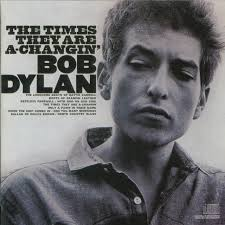
Dylan included the song on The Times They Are A-Changin’, released in February 1964. There it sits alongside its thematic companion on Side Two, The Lonesome Death of Hattie Carroll, which Dylan wrote a few months later in October 1963. Together, the songs form the album’s moral backbone.
As a teenager, I was deeply immersed in Dylan’s music, and I could sense it shaping my outlook and values beyond the family bubble. These two songs stood out because they felt as real as music could get: they dealt with real people and real news, exposing injustice without softening the blow. This was Dylan openly aligning himself with African Americans during the Civil Rights Movement.
When he sang these songs, he sounded angry and affected. He wasn’t just performing lyrics; he was bearing witness. At times it felt closer to a eulogy or a sermon than a folk song. The music became secondary, almost spare by design, allowing the words to sit front and centre while everything else quietly fell into the background.
Lyrics (Wikipedia)
The lyrics attribute blame for the killing and other racial violence to the rich white politicians and authorities who manipulated poor whites into directing their anger and hatred at black people. The song suggests that Evers’s killer does not deserve to be remembered by name in the annals of history, unlike the man he murdered (“They lowered him down as a king”), because he was “only a pawn in their game.”.
The lyrics actually reiterate the claim that the murderer “can’t be blamed. He’s only a pawn in their game.” In fact, the state twice prosecuted the murderer in 1964, but each time the all white jury failed to reach a verdict. Dylan no longer played the song after October 1964. In 1969 the murderer had the original indictment dismissed. However, when these first trials were shown to be held unfairly and with new evidence available the murderer was eventually found guilty on February 5, 1994.
[Verse 1] A bullet from the back of a bush took Medgar Evers’ blood A finger fired the trigger to his name A handle hid out in the dark A hand set the spark Two eyes took the aim Behind a man’s brain But he can’t be blamed He’s only a pawn in their game
[Verse 2] A south politician preaches to the poor white man “You got more than the blacks, don’t complain You’re better than them, you been born with white skin,” they explain And the Negro’s name Is used, it is plain For the politician’s gain As he rises to fame And the poor white remains On the caboose of the train But it ain’t him to blame He’s only a pawn in their game
[Verse 3] The deputy sheriffs, the soldiers, the governors get paid And the marshals and cops get the same But the poor white man’s used in the hands of them all like a tool He’s taught in his school From the start by the rule That the laws are with him To protect his white skin To keep up his hate So he never thinks straight ‘Bout the shape that he’s in But it ain’t him to blame He’s only a pawn in their game
[Verse 4] From the poverty shacks, he looks from the cracks to the tracks And the hoof beats pound in his brain And he’s taught how to walk in a pack Shoot in the back, with his fist in a clinch To hang and to lynch To hide ‘neath the hood To kill with no pain Like a dog on a chain He ain’t a-got no name But it ain’t him to blame He’s only a pawn in their game
[Verse 5] Today, Medgar Evers was buried from the bullet he caught They lowered him down as a king But when the shadowy sun sets on the one that fired the gun He’ll see by his grave On the stone that remains Carved next to his name His epitaph plain Only a pawn in their game