Two tracks in quick succession from one of my favourite singer-songwriters, David Bridie, in my Music Library Project – a happy quirk of the alphabetical sequence that sometimes throws up these fortuitous double features. Curiously, both songs hail from Bridie’s hauntingly atmospheric debut solo album Act of Free Choice (2000), which I discussed just two days ago in the post The Koran, the Ghan and a Yarn.
To give some measure of the impact this Australian artist has had on my musical journey since I first encountered his work at the turn of the millennium: including today’s entry, Bridie has featured here a remarkable 24 times (so far) – whether in his evocative solo projects or through his bands which he founded. That’s a tally rivalled only by my posts on the likes of Springsteen, Cohen, Elton John and Christina Perri – but not by Dylan who remains in a league of his own.
David Bridie stands among the stalwarts of my listening pleasure. Given his relatively modest, if nearly non-existent profile on the global stage, I’d argue he is the most underrated singer-songwriter I’ve had the privilege to write about, although latter-day Perri might also be in that mix. And today’s featured song – Bridie’s beautifully penned – The Last Great Magician only reaffirms my adoration for the guy’s artistry.
The Last Great Magician waves his final sparkler Seven times seven times into the grave Neath cracks of sheet lightning, the red sky rolls Forever, The family and followers all gather around Calm down your troubles, lay down with me Mulukuwausi, good witch of the sea The dead man’s last party, loud stories and ceremony They dance on his embers, they drink to his soul
It’s delightful, disgraceful, exhibition of reverence Seven times seven times into the grave His feet soft and dusty, fine spasms of dancing, By the wide man with red eyes, teeth crooked as match Sticks And he mightn’t look much but he’s as wise as the lizard, The owl and the fire
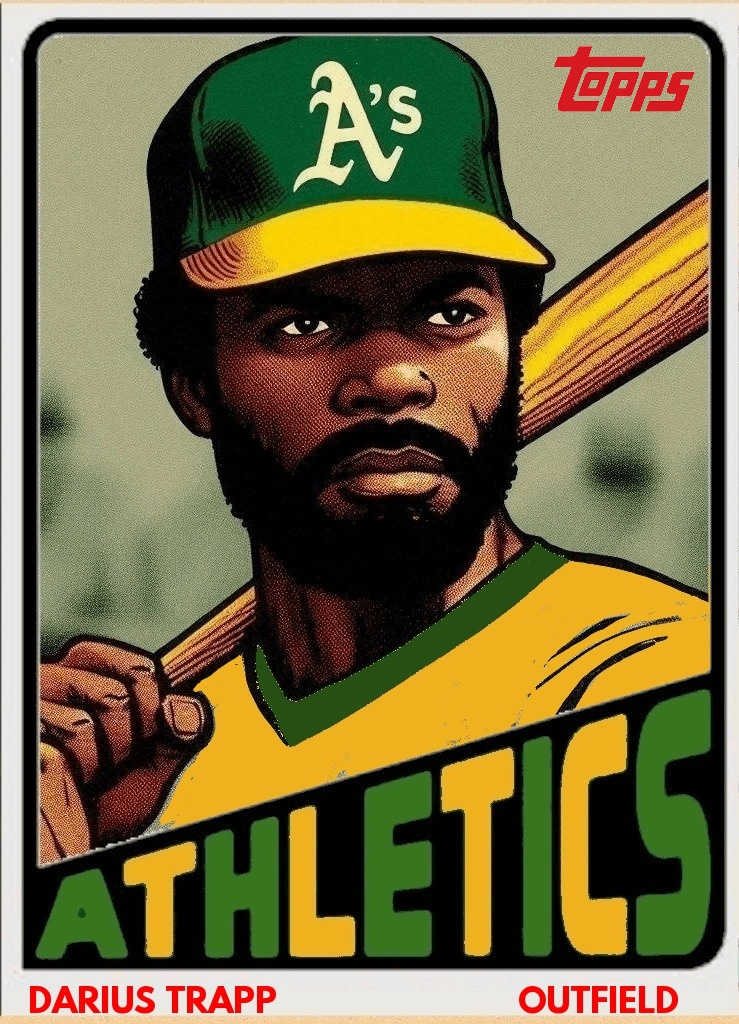
My only foray into the Oakland A’s baseball team was in the movie – Moneyball where Billy Beane’s ‘no nonsense’ approach to sending people down (from the Major league to the Minors) was on full display; seemingly reflective of how Gary Trujillo described Darius Trapp’s experience in his article. As a non American and a relative newcomer to Baseball, I have to hand it to this sport – it has great romantic sports history. I’m so grateful to have stumbled upon Gary’s blog which is described as ‘A baseball publication that embraces the absurdity of life, the 8-1 putout, and the history of the OAKLAND Athletics. He’s a terrific writer and story teller and below are two extracts from his article to set the scene:
I recently met Darius Trapp at a sports bar in Waco, Texas, to chat about his baseball career with the Oakland A’s in the early 1980s. He wanted to watch the March Madness games, maybe have a few cocktails, so we decided to rendezvous at his local watering hole…Hooters. A shrine to tackiness, titties, waitresses with feigned interest and a certain kind of desolation that refuses to die in suburban ‘Merika.
When I arrived, Trapp was already there, slouched in a booth beneath a flickering Coors Light sign, his drink—something brown, bottom shelf—half gone. He looked the way most ex-athletes do: thick around the middle but with shoulders that suggested menace, or at least the ability to recall menace with some degree of accuracy. His style said that this day had no greater sense of importance—sweat pants and a Baylor Bears t-shirt.
“You’re late,” he muttered, eyes on the screen. “And you owe me a drink.”
I flagged down the waitress, a blonde in orange hot pants with the blank expression of someone who had heard every joke twice. “Another for him,” I said. “And a beer for me.” Read the whole article here.
So you’re damned if you do, or damned if you don’t This article is about the effect of wind turbines on an indigenous community in a remote north-east region called La Guajira of my adopted-home country – Colombia. In January this year, I referred to a video interview with an energy specialist who discussed the effect of renewable energy on the efficacy of the UK electricity grid. On April 28, 2025, Spain and parts of Portugal and southern France suffered widespread blackouts. The exact cause of the outage is still under investigation, but it has sparked a debate over the role of renewable energy in grid stability when these countries rely heavily on renewable energy.
In this ‘Colombia Winds‘ BBC article, we see the impact of renewable energy from another perspective. It highlights not only the complex balance between advancing renewable energy initiatives and respecting Indigenous rights and traditions, but the impact on communal tranquillity, aesthetics and the existing environment. “You wake up and suddenly you no longer see the trees. Instead, you see and hear the turbines. At night, the noise from the turbines disturbs our dreams. For us, dreams are sacred,” Mr Iguarán added. The development has also led to internal divisions within the Wayuu community, with some members accepting financial assistance from energy companies, while others view this as inadequate compensation for the disruption caused. (Read the article here)
Video description: According to legend, in 1993, Bob Dylan traveled to England to visit a friend of his, Eurythmics member Dave Stewart. But due to some mis-steps, he ended up meeting a different Dave instead.
As a Dylanholic, I’ve seen my fair share of Dylan parodies over the years, and many rely on pretty shallow stereotypes – usually something about marijuana and / or his nasal voice. But the other day, this sketch called Urban Myths – Knocking on Dave’s Door popped up in my YouTube feed, and I hit play. I’m so glad I did. I’ve now watched the 22-minute video three times, and each time I find myself chuckling throughout and full of glee at the marvellous ending. It’s more or less how you’d imagine Bob behaving and others reacting; and it’s easy to picture him getting up to those kinds of quirky adventures. For example, I referred here to an article in the Tampa Bay Times where Dylan was encountered by a 24-year-old cop in New Jersey which is comparable to the scenario in the ‘Urban Myths‘ sketch presented today.
The Koran, the Ghan and a Yarn is from David Bridie’s debut solo album Act of Free Choice. He is by far the most prominent Australian singer-songwriter to feature here and comes from the northern suburbs of Melbourne where I resided in the early 2000’s. He founded in the 1980’s the World Music band – Not Drowning Waving and in the 90’s – the chamber pop group My Friend the Chocolate Cake; both six-piece member groups. Later he embarked on a solo career (but still retaining the Cake on the side) where he delved into his first project – Act of Free Choice (2000). This album was released shortly before I was first introduced to David’s music, when he performed with Archie Roach in Melbourne in 2002
Bridie said in this interview he was craving the means to explore more of his artistic side – and make decisions and follow them through from beginning to end. The principal inspiration for the album (at least its title – Act of Free Choice) was from having spent time in the Pacific in particular Papua New Guinea (just Nth of Australia) and working with George Telek. It relates to the ongoing conflict in Western New Guinea (Papua) between Indonesia and the Free Papua Movement. The Act of Free Choice refers to the controversial plebiscite held in 1969 in which 1,025 people selected by the Indonesian military in Western New Guinea voted unanimously in favor of Indonesian control.
Bridie says (or words to the effect) that Act of Free Choice is a melancholic record that might seem simple at first, but on closer listen, you start to notice the subtle placement of sounds and textures – each rhythm is actually quite layered. There are always these little sonic details tucked in beneath the piano, electric guitars, and cellos. He approached the album as one long, cohesive statement rather than just ten separate songs, aiming to create a sense of space that echoed the vastness and ancient feel of the Australian landscape. Bridie also recalls writing the record during a big road trip through the outback.
The more I listen to The Koran, the Ghan and a Yarn, the more it draws me in. The piano doesn’t just accompany – it lingers, suspended in the soundscape, almost like its own vocalist. Within the broader ambient textures of Act of Free Choice, it becomes both pronounced and mysterious. The harmonies work contextually well together, and as Bridie has suggested, the layering of sound here is intricate and deeply considered. Each sonic element weaves into the next with such subtlety that the piece feels less like a conventional song and more like an atmospheric composition, an evolving painting where everything finds its place in the whole.
Two other songs I highly recommend from Act of Free Choice are Breath and Kerosense, both of which have previously appeared here in this blog. I hope you enjoy today’s featured track – The Koran, the Ghan and a Yarn. Thanks for reading.
camel dust, foot tracks, flea bitten trains of the desert sit underneath the palm tree, a fine resting place arab pioneer bones, Islam remains in the cemetery a different kind of air, it’s a strange meeting place, strange meeting place down amongst the ochre all colours and shades a pit for a painting place deep in the ground up the Oodnadatta, well you know it’s just a matter of time up the Oodnadatta, well you know it’s just a matter of time ’til the sky ends The Koran, The Ghan and a Yarn The Koran, The Ghan and a Yarn some sorry place true, some sorry place true some sorry place true, some sorry place true the King Black Crow, sweeping low, wind it blows on the gibber plain massacre a carcass, feasting on the bones and veins up the Oodnadatta, well you know it’s just a matter of time up the Oodnadatta, well you know it’s just a matter of time til the sky ends The Koran, The Ghan and a Yarn The Koran, The Ghan and a Yarn
Today’s featured track is yet another song to come from a live music concert which I keep coming back to – The Bee Gees Las Vegas, 1997 – One Night Only. When I watch the show I find myself in awe of their massive talent, which you can tell came from years of hard work and dedication. This is mainstream pop at its finest, with the Bee Gees seemingly at the peak of their musicianship and harmonic delivery. Though no longer spring chickens, a comparison between their original studio recording and this 1997 Las Vegas concert reveals how they’ve refined their vocal techniques. They’ve adjusted their voices in a way that highlights each member’s strengths – arguably surpassing the quality of their younger performances.
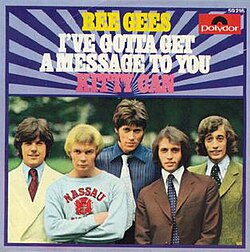
I’ve Gotta Get A Message To You was the Bee Gees‘s second number 1 single in the UK singles chart and their first US Top 10 hit. They initially hit the big time in Brisbane, Australia (1963) as kids. There is a great video ‘Melody‘ of one of their earliest performances in Brisbane. For that reason, we like to say the Bee Gees are Aussies, when really they are English-born. The song – Message is about a man who, awaiting his execution in the electric chair, begs the prison chaplain to pass a final message on to his wife. Robin Gibb, who wrote the lyrics, said that the man’s crime was the murder of his wife’s lover, though the lyrics do not explicitly allude to the identity of the victim.
Barry Gibb explained about the studio process: ‘that I know for a fact, we didn’t sing the choruses in harmony. Robert called us back to the studio at 11 o’clock at night and said, ‘I want the choruses in harmony, I don’t want them in just melody. I want three-part harmony choruses.’ So we went in and attempted that ’round about midnight. Everyone drove back to the studio, and that’s what we did.” Barry further explained about the bass guitar by Maurice Gibb “He had a lot of intensity in his bass, Mo was a real McCartney bass freak, as a lot of us were. He would pick up on all the things that McCartney would [do]. Maurice was very good on different instruments, you know. Good lead guitarist, good bass player, good keyboard player. He was versatile. He loved playing bass more than anything else, I think, at that time.”
The preacher talked with me and he smiled Said, “Come and walk with me, come and walk one more mile Now, for once in your life, you’re alone But you ain’t got a dime, there’s no time for the phone” I’ve just gotta get a message to you Hold on, hold on One more hour and my life will be through Hold on, hold on I told him I’m in no hurry But if I broke her heart then won’t you tell her I’m sorry? And for once in my life I’m alone And I got to let her know just in time before I go I’ve just gotta get a message to you Hold on, hold on One more hour and my life will be through Hold on, hold on Well, I laughed but that didn’t hurt And it’s only her love that keeps me wearing this dirt Now, I’m crying but deep down inside Well, I did it to him, now, it’s my turn to die I’ve just gotta get a message to you Hold on, hold on One more hour and my life will be through Hold on, hold on Hold on I’ve just gotta get a message to her Hold on, hold on One more hour and my life will be through
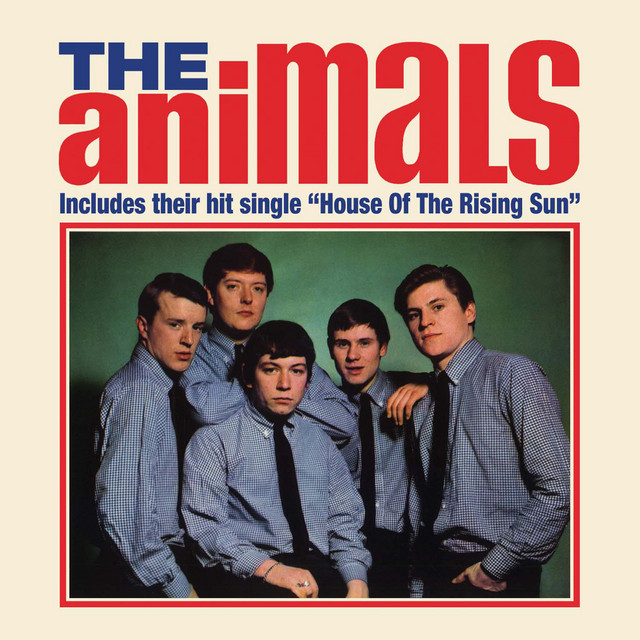
The House of the Rising Sun by The Animals is one of the most recognisable tunes in the canon of Western popular music. The first few bars of the haunting intro sends chills down the spine and the guitar riff paired with the organ is nothing short of iconic. It does feel like you’re taking a step down the alleyways of folk, blues, and rock history. Released in 1964, The Animals’ version stormed the charts, reaching No.1 in the UK, Canada, and the US. Its melody and lyrics trace back to a traditional English ballad, which crossed the Atlantic and found a home in the American South, especially among African-American folk musicians.
Some of the earliest known recordings include Texas Alexander in the 1920s, Leadbelly, Woody Guthrie and Josh White. Nina Simone recorded her version at the Village Gate in 1962. The Animals heard it and lead singer Eric Burdon and band transformed it into their gritty Newcastle-born blues-rock style. And because the song exists in the public domain, anyone – from buskers to Bob Dylan – has been free to reinterpret it without worrying about royalties.
So what exactly is the House of the Rising Sun? The most accepted theory is that it’s a metaphorical or literal place of ruin – a brothel, a prison, or even a gambling den. In some versions, it’s a women’s prison in New Orleans, nicknamed the Rising Sun for the emblem above the entrance. In others, the house is a brothel run by a madam called “Rising Sun,” and it’s the ruin of “many a poor girl.” The Animals, aiming for radio appeal reimagined the narrator as a wayward male gambler.
Bob Dylan sang the female-narrated version on his 1962 debut album, using an arrangement he got it from folk revivalist Dave Van Ronk (who was not pleased when Dylan recorded it first). When The Animals released their electrified version, Dylan’s understood that folk songs could have rock arrangement. Shortly after, Dylan plugged in at the 1965 Newport Folk Festival.
[Chorus] There is a house in New Orleans They call the Rising Sun And it’s been the ruin of many a poor boy And, God, I know I’m one
[Verse 1] My mother was a tailor She sewed my new blue jeans My father was a gamblin’ man Down in New Orleans
[Verse 2] Now the only thing a gambler needs Is a suitcase and a trunk And the only time he’s satisfied Is when he’s on a drum
[Verse 3] Oh, mothers, tell your children Not to do what I have done Spend your lives in sin and misery In the House of the Rising Sun
[Verse 4] Well, I got one foot on the platform The other foot on the train I’m goin’ back to New Orleans To wear that ball and chain
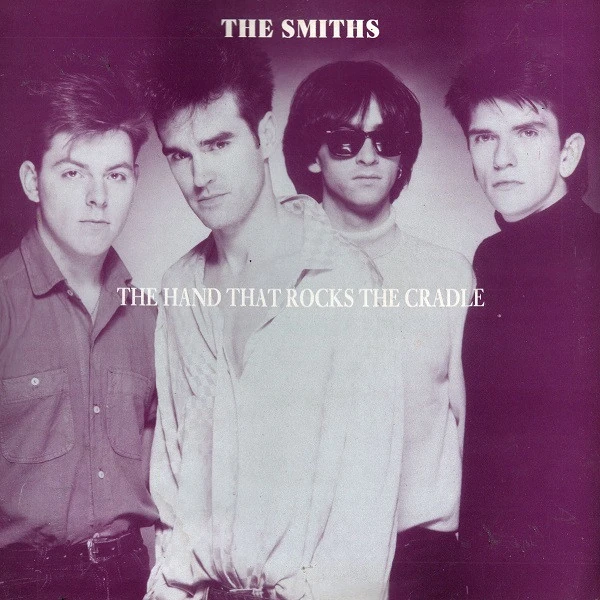
Here is a Smiths’ lullaby of love and unease. It showcases the eerie tenderness and poetic ambiguity that would come to define The Smiths. The Hand That Rocks the Cradle is said to be their first musical collaboration – Morrissey’s lyricism paired with Johnny Marr’s budding music composition – born in the confines of Marr’s attic in 1982. Though it never received the commercial attention of later tracks, it remains one of their most enigmatic and emotionally loaded songs. With no conventional chorus the song breathes the rhythm of a long monologue.
When I first heard The Hand That Rocks the Cradle I was stuck by the beauty of the lyrics (Ceiling shadows shimmy by/And when the wardrobe towers like a beast of prey/There’s sadness in your beautiful eyes), his delivery and Marr’s arrangement. Lyrically, the song is unrushed, ambiguous, and emotionally open. The song has been subject to a plethora of interpretations, which you can read in the SongMeanings reference below. Here are some of those perspectives:
The Hand That Rocks the Cradle on the surface is a passionate declaration of parental love. The narrator’s voice feels steeped in a yearning to protect a child from a threatening world. This is love is assured: “There never need be longing in your eyes / As long as the hand that rocks the cradle is mine.” It suggests not only love, but a need to shield, a fierce paternal (or maternal) instinct that manifests as a solemn promise. The lines, “Although you’re only three, sonny boy / You’re mine,” echoing old songs like Al Jolson’s Sonny Boy from which Morrissey borrows.
A more somber take sees the narrator as a single parent trying to comfort a child who has recently lost their mother. The imagery of looming wardrobes and “ceiling shadows” may reflect the child’s anxiety or trauma in a world now reckoned by absence. The parent’s words are gentle affirmations of presence and safety and holding space for a child’s grief while offering them the gift of ongoing love. Some listeners are unsettled by the song’s intensity, reading it not just as protective but as potentially overbearing.
Morrissey once said the song stemmed from “a relationship I had that didn’t really involve romance.” – (Morrissey, Melody Maker, March 16, 1985). So it could be a synthesis of Morrissey’s emotional themes: the longing to protect innocence, the melancholy of childhood, and perhaps even the frustrations of his own identity and unfulfilled familial roles. This ties in with other early Smiths songs like Suffer Little Children, about the Moors murders – dark memories rooted in Morrissey’s Manchester childhood that manifest as moral anxiety and grief.
Finally, there are those who would prefer not to over-analyse (like it about child abuse). They hear, like I do in this song the echoes of a traditional love song – albeit skewed and strange. In the end, what remains most clear is this: the child at the centre of the song is not to be done wrong. They are to be cherished.
Please don’t cry For the ghost and the storm outside Will not invade this sacred shrine Nor infiltrate your mind My life down I shall lie If the bogey man should try To play tricks on your sacred mind To tease, torment, and tantalize
Wavering shadows loom A piano plays in an empty room There’ll be blood on the cleaver tonight And when darkness lifts and the room is bright I’ll still be by your side For you are all that matters And I’ll love you till the day I die There never need be longing in your eyes As long as the hand that rocks the cradle is mine
Ceiling shadows shimmy by And when the wardrobe towers like a beast of prey There’s sadness in your beautiful eyes Oh, your untouched, unsoiled, wondrous eyes My life down I shall lie Should restless spirits try To play tricks on your sacred mind I once had a child, and it saved my life And I never even asked his name I just looked into his wondrous eyes And said, “Never, never, never again”
And all too soon I did return Just like a moth to a flame So rattle my bones all over the stones I’m only a beggar man whom nobody owns Oh, see how words as old as sin Fit me like a glove I’m here and here I’ll stay Together we lie, together we pray There never need be longing in your eyes As long as the hand that rocks the cradle is mine As long as the hand that rocks the cradle is mine, mine
Climb up on my knee, sonny boy Although you’re only three, sonny boy Oh, you’re mine And your mother, she just never knew, oh, your m— Long as there’s love As long as there’s love I did my best for her I did my best for her As long as there’s love As long as there’s love I did my best for her I did my best for her Mother, mother Mine
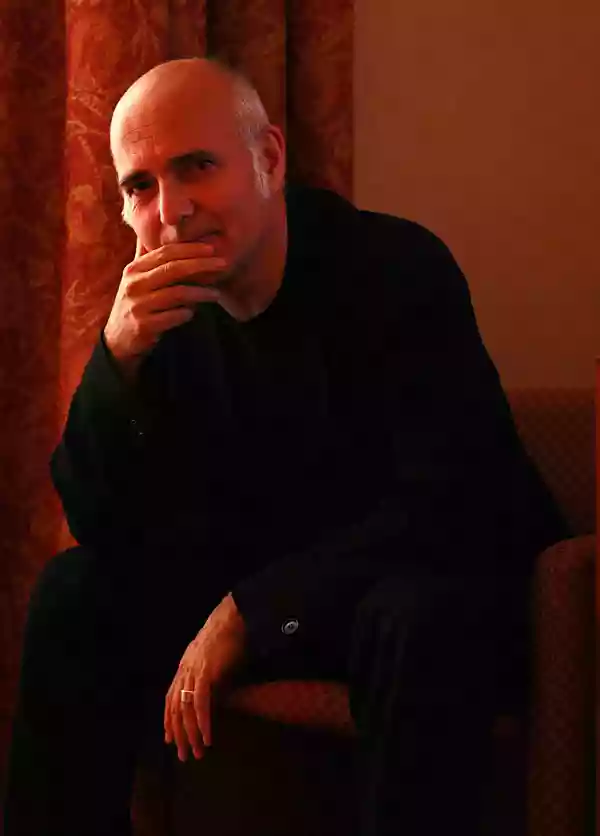
I saw recently on the ‘Film and Arts‘ channel a documentary on minimalism and neoclassical music composers. A segment of it was dedicated to the Italian artist LudovicoEinaudi in which today’s featured piece Fuori Dal Mondo (Eng. Out of this World) appeared. It’s a solemn and contemplative track which I found myself immediately immersed and struck by, evoking memories so deep. There is a certain melancholy I feel in it, but it is so beautiful. Simple and strong. The piano and cello melt together so gracefully. I hadn’t realised it appeared in a movie I had locked-in to see again called – This is England and will perhaps present here soon in my Friday’s Finest movie segment.
Fuori Dal Mondo was first written for an Italian film of the same name back in 2000, directed by Giuseppe Piccioni. It was one of the earlier moments where Einaudi’s music started getting serious attention in the film world. The piece fits in well with the movie’s introspective mood of solitude, identity, and searching for meaning. The track didn’t just stay tied to that one film. It’s popped up in others over the years with This is England aforementioned – and it’s now a go-to for playlists that lean into calm, emotional, or reflective vibes.
Einaudi himself has a fascinating background. He’s from a distinguished Italian family – his grandfather was actually Italy’s president, and his dad was a big-time publisher. But Ludovico carved out his own unique space. He trained as a classical pianist, studied under the avant-garde composer Luciano Berio, and started out writing more traditional music. Then in the ’90s, he took a bit of a turn, simplifying things and creating these beautifully sparse, emotional pieces that struck a chord with a much wider crowd. Albums like Le Onde and I Giorni really took off, and Fuori Dal Mondo fits right in with that same haunting, cinematic sound that makes you stop and feel something.
For the devoted religious folk reading this, you may want to give today’s featured track Fiesta Pagana (Pagan Festival) by Mago de Oz a wide berth. Ok, that was a bit of banter. Anyhows, musically, this song begins with an insistent and instantly alluring Celtic arrangement and then coalesces into a metal – Rock’n roll anthem. The Celtics had a rich pagan tradition before converting to Christianity, however their music mainly thrives within the folk traditions of Christianized Celtic communities. It is a broad grouping of music genres that evolved out of the folk music traditions of the Celtic people of Northwestern Europe. But today’s music is brought to you from the group Mago de Oz residing in Spain.
Mägo de Oz is a folk metal band formed in 1988 by drummer Txus di Fellatio. The band is known for its strong Celtic influence, incorporating elements like the violin and flute into their music such as seen here in Fiesta Pagana. Initially, they struggled to gain recognition, but their breakthrough came with the release of the rock opera album “Jesús de Chamberí” in 1994, which significantly increased their popularity in Spain. I first heard this song when I was travelling south in Bogota, Colombia on the commuter bus called the TransMilenio. There I heard a busker play Fiesta Pagana as I was closing on arrival and I immediately was captivated by it and asked him for the song and here it comes to you today.
The official video release is too unsavoury for my tastes to present below, so I went with a shorter version of the song with an English translation below which I hope does the trick.
A crude English translation follows:
[Verse 1] When you wake up one day and feel like you can’t take it anymore That in the name of the One above they’re going to rule your life If you feel fear sticking to your skin For being a commoner and wanting justice If you give up, brother, you’ll never think about yourself
[Verse 2] When they come to ask you for your tithes at the end of the month And the Holy Inquisition “invites” you to confess That’s why, my friend, you raise your voice Say you never asked for an opinion If it’s true that there is a god who works from dawn to dusk
[Chorus] Stand up, raise your fist, and come To the pagan feast, there’s something to drink at the bonfire The people and the lord are not of the same condition They have the clergy, and we have our sweat
[Verse 3] If there’s no bread for your people and you see the abbot is very fat If his virgin dresses in gold, strip her How can they silence the goldfinch or canary? If there is no prison or grave for libertarian song
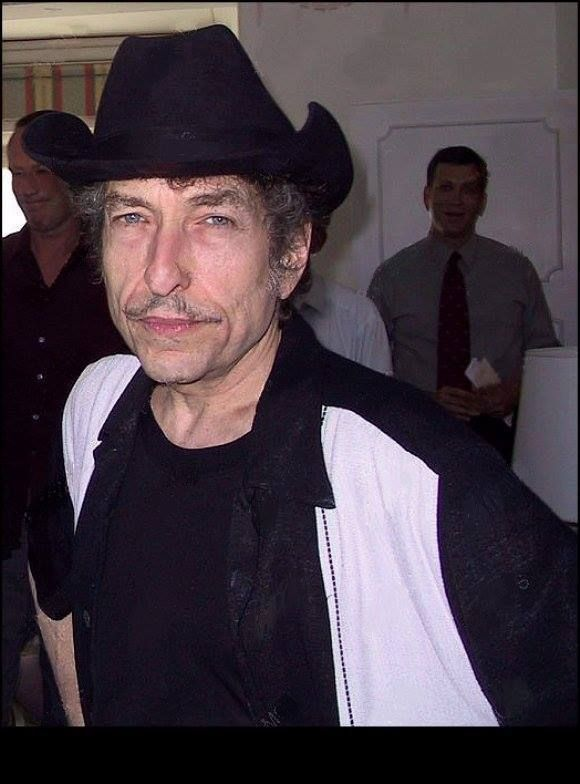
At the blessed age of 60, Bob Dylan released Moonlight – a tender and tranquil song on his 31st studio album record – Love and Theft. This song is often overlooked on the record in lieu of other showier songs like the country rock classic Mississippi and the ‘bursting at the seams’ rockabilly tune Summer Days. But the restrained and romantic Moonlight deserves its own pedestal on his 2001 album. The Hawaiian-like hula instrumentals in Moonlight evoke a balmy twilight scene like something from an old Elvis Presley film and then you have Dylan’s voice – intimate, warm, and unusually tender. He doesn’t sing so much as croon, channelling the romantic aura of a bygone era. A prelude perhaps to his Frank Sinatra tribute record – Shadows in the Night in 2015. He’s playing the role in Moonlight of the wistful romantic, the graceful seducer- albeit with his own weathered drawl and lyrical greatness.
But Moonlight is far more than a pastiche or homage. It stands as its own majestic beast, radiant in its quiet beauty. The lyrics are nothing short of luminous. Dylan paints nature not with grand brushstrokes but with soft touches of moonlight and mist. “The seasons, they are turnin’ and my sad heart is yearnin’ / To hear again the songbird’s sweet melodious tone.” The song doesn’t describe love in clichés – it lets it unfold in rivers, stars, and garden paths. It’s Dylan as a twilight poet, to observe, to notice, and to offer something quietly eternal.
The following was extracted from the Wikipedia reference below:
Like most of Dylan’s 21st century output, he produced the song himself under the pseudonym Jack Frost.
The song’s refrain, “Won’t you meet me out in the moonlight alone?” was likely inspired by the Carter Family’s 1928 recording of Joseph Augustine Wade’s song “Meet Me By the Moonlight“, although the rest of the lyrics and the melody are Dylan’s own. According to Dylan scholar Tony Attwood, the song sees Dylan “playing with chords that he rarely if ever used before – chords of the type we might well find in the American popular songs of the 1920s and 1930s“
Engineer/mixer Chris Shaw recalled that the song was recorded entirely live in the studio: “It’s really gorgeous, and I think the take that’s on the record is the second take, the whole thing is completely live, vocals and all, not a single overdub, no editing, it all just flowed together at once, and it was a really beautiful moment“.
In a 2015 USA Today article that ranked “all of Bob Dylan’s songs”, “Moonlight” placed 28th (out of 359). It was the second highest rated song from Love and Theft on the list (behind only Mississippi, which placed first)…Between 2001 and 2008 Dylan played the song 101 times on the Never Ending Tour. A live version performed in Chicago on March 7, 2004 was made available to stream on Dylan’s official website in March 2004. The live debut occurred at Key Arena in Seattle, Washington on October 6, 2001 and the last performance (to date) took place at Brady Theater in Tulsa, Oklahoma on August 27, 2008.
[Verse 1] The seasons they are turnin’ And my sad heart is yearnin’ To hear again the songbird’s sweet melodious tone Won’t you meet me out in the moonlight alone?
[Verse 2] The dusky light, the day is losing Orchids, poppies, black-eyed Susan The earth and sky that melts with flesh and bone Won’t you meet me out in the moonlight alone?
[Verse 3] The air is thick and heavy All along the levy Where the geese into the countryside have flown Won’t you meet me out in the moonlight alone?
[Bridge] Well, I’m preaching peace and harmony The blessings of tranquility Yet I know when the time is right to strike I’ll take you ‘cross the river dear You’ve no need to linger here I know the kinds of things you like
[Verse 4] The clouds are turning crimson The leaves fall from the limbs and The branches cast their shadows over stone Won’t you meet me out in the moonlight alone?
[Verse 5] The boulevards of cypress trees The masquerade of birds and bees The petals, pink and white, the wind has blown Won’t you meet me out in the moonlight alone?
[Bridge] The trailing moss and mystic glow The purple blossoms soft as snow My tears keep flowing to the sea Doctor, lawyer, Indian chief It takes a thief to catch a thief For whom does the bell toll for, love? It tolls for you and me
[Verse 6] My pulse is running through my palm The sharp hills are rising from Yellow fields with twisted oaks that groan Won’t you meet me out in the moonlight alone?
“Life is whittled, life’s a riddle, Man’s a fiddle that life plays on, when the day breaks and the earth quakes, life’s a mistake all day long”
Washing the dishes ranks high on my list of domestic drudgeries – but everything changed when Starving in the Belly of a Whale came through the speakers. Suddenly, the kitchen transformed into a stage, and I was joyfully bopping along to the song’s wild concoction of clanging percussion, off-kilter rhythms, and Waits’ unmistakable gravelly howl. The track is a carnival of sound – just after the opening church-bell sounds out it becomes a fine platter of harpsichords, violins, tubas and all sorts of instruments I can’t name. Proper intimidating arty noise. It’s chaotic, yes, but also liberating. Try it yourself next time when you’re knee-deep in an undesirable chore: crank up Starving in the Belly of a Whale and let it drown out the dullness. I’d previously overlooked this track in my Music Library Project, but after this unexpected moment of euphoria, it’s getting the recognition it deserves.
Blood Money is the record that gifted us Starving In The Belly Of A Whale. Basically the Jonah fable all over again. Only this time it’s Tom inside the belly of the beast. It’s said, there is more earth and gravel and grit in his voice on this album than on his 80’s releases. In his own words, “Blood Money is flesh and bone, earthbound. The songs are rooted in reality: jealousy, rage, the human meat wheel”. On the very same day that he released Blood Money, Tom Waits also released the album Alice. He described it as being made up of “adult songs for children, or children’s songs for adults”.
[Verse 1] Life is whittled, life’s a riddle Man’s a fiddle that life plays on When the day breaks and the earth quakes Life’s a mistake all day long
[Pre-Chorus] You tell me who gives a good goddamn You’ll never get out alive Don’t go dreaming Don’t go scheming A man must test his mettle In the crooked old world
[Chorus] Starving in the belly, starving in the belly Starving in the belly of a whale Oh, you’re starving in the belly, starving in the belly Starving in the belly of a whale
[Verse 2] Don’t take my word, just look skyward They that dance must pay the fiddler Sky is darkening, dogs are barking But the caravan moves on
[Verse 3] As the crow flies, it’s there the truth lies At the bottom of the well E-O-eleven goes to Heaven Bless the dead here as the rain falls Don’t trust a bull’s horn, a Doberman’s tooth A runaway horse or me Don’t be greedy Don’t be needy If you live in hope, you’re dancing To a terrible tune
For more information about the album Blood Money and this song in particular, I point you to Steve For the Deaf’s excellent article – Starving In The Belly Of A Whale
Wait a minute. This song isn’t actually about a whale at all. It’s about hopelessness. He’s talking about bull’s horns, doberman teeth and runaway horses while repeating the song title over and over but there are no boats, no penitent whalers and no oars snapped by the teeth of mighty beasts. There’s no dingy resting on the guts of a titanic beast. There’s just lousy hopeless luck. Life like a torrid ocean. I doubt this character has ever even hoisted a main brace. He’s a bar room drunk with a bad case of the pity meeeeees.







 Observation Blogger