Dance Crip (2021) – Trueno

And if we pay attention (in the video), we can see graffiti that says: “Is he the most stuck-up guy?” He (Trueno) definitely is!

Megastar article

My son introduced me to the Latino urban style hip-hop / rap song Dance Crip a while back. I was immediately hooked on the dance beat and melody. I remained dubious about presenting it here because of some ‘unseemly’ aspects of the video especially towards the end but they are offset by some entertaining moments with his family no less. Trueno takes a tour of the La Boca neighborhood, where we can see the artist riding his bicycle and meeting important figures who are part of his life: his grandmothers, his father, and his friends from Comuna 4 in the City of Buenos Aires, who appear behind him, accompanying him while he raps.

Dance Crip came on my earphones at the gym the other day and I found myself dancing to the rhythm during my warm-up. That was when I decided – ‘let this baby rip’. So here we are today. At the end of this post, you’ll find the original video release, followed by a live concert version that genuinely took me by surprise – thanks to its superb sound quality, backing vocals, and overall presentation. You’ll also see another track from the same album, performed with fellow Argentine artist Nathy Peluso – a name that regular readers of this blog will surely recognize. The song is titled Argentina.

The famous rapper Mateo Palacios, better known as Trueno, released Dance Crip on his second studio album Bien o Mal (Good or Bad) in 2021. It encourages one to move their body to the rhythm of the crip walk which, in case you’re unfamiliar with it, is a dance style originating from and related to gangsta rap from the West Coast of the United States. Trueno presents this Dance Crip as an anthem of his own personality, an invocation of the spirit of founding trap (a subgenre of hip-hop music that originated in the Southern United States in the 1990s), in an Argentine and neighbourhood adaptation.

Below is a crude English translation of the lyrics:

Ayy, hehe
Ayy, what’s happening?
You know who, you know who
What a good song, my friend, “DANCE CRIP”
You know who, you know who
Ayy, what’s happening?
You know who, you know who (Yeah, yeah, yeah)
Help me with this, my friend

[Chorus: Trueno]
On the street, they know me as hip-hop, the hippie, the real dance crip
The face of the youth in the country
Is he the hottest guy? What the fuck is this?
And your county number? Ñeri, four-four-four-four

[Verse 1]
Oh, you already, oh, know, oh, how, mmm, know, oh
Playing in the bare bones, what do you think about it?
Let the label know so they can get ready (Okay)
Because the street is crying out for salsa
Compás with peace, comparsa
A little good and a little bad on the scale
Millionaires want to buy my hope?
Ha! Not even fifty million is enough, uh (Uh)
ATR-vid, gangsta (Uh)
The promise like Leo Messi at Barça
The only one who listened to rap from his belly, dude

[Refrain]
Mommy, I’m the spokesperson
You know who, you know who
The whole world heard me
You know who, you know who
Four-four-four-four in the ghetto, it’s me
Shake ’em up, shake ’em up, shake ’em up, shake ’em
Who’s a rapper but me?
What, what, what? Haha

[Verse 2: Trueno & Ayelen Zuker]
And now they all want fame, they want money
TR1, a roof and a bed, and a kiss from their mom, mmm-mmm
At the top it’s not cold, no drama (Yeah yeah yeah yeah)
These are the labels that call me and that I leave for tomorrow, okay
Shake ’em up, shake ’em up, shake ’em up, shake ’em
I come from the Puna, I brought bread for my friend, okay
Shake ’em up, shake ’em up, shake ’em up, shake ’em
Ah, yoh, poor competition, Trueno wins without winning (Uh-uh)
I travel through America on the Pan-American Highway (Uh-uh)
Shake ’em up, shake ’em up, my bae, hey (Shake ’em up, shake ’em)

References:
1. Trueno lanza su nuevo temazo “Dance Crip”, un himno al pop con challenge de TikTok incluido – Megastar
2. Trueno (rapper) – Wikipedia
Tagged with: , , ,
Posted in Music

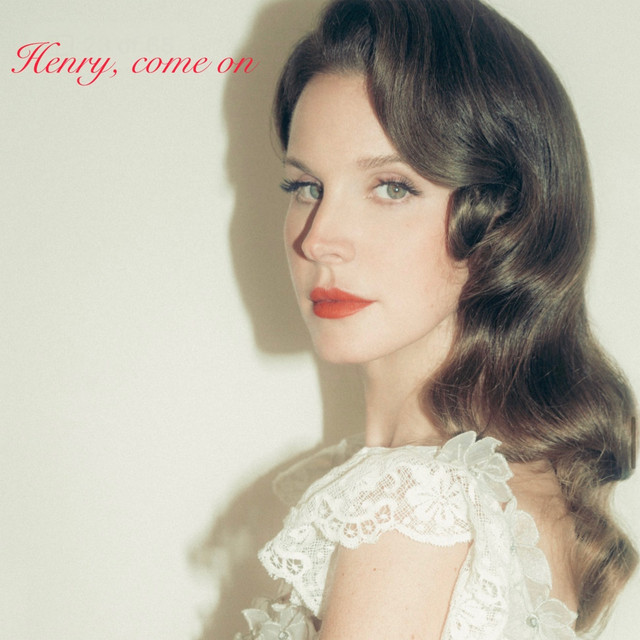
Henry, Come On (2025) – Lana Del Rey

Lana Del Rey, the post 2010’s American icon of pop culture and music Americana is back again with a fantastic new single – Henry, Come On. Released on Friday, April 11, it has nearly broken the Internet with views and discussion as millions of fans await her new album – The Right Person Will Stay. The album is believed to be a romantic, country album. Her 2021 album Chemtrails over the Country Club (which has about the coolest album cover I have ever seen) was also steeped in country folk and music Americana; see Wild at Heart and Yosemite. In keeping with her repertoire of romantic melancholy and mythologized Americana, Henry, come on is a break-up lament wrapped in the ‘country – western’ imagery like – cowboys and cowgirls and soft leather and blue jeans.

In Henry, Lana is the eternal dreamer and doomed damsel, who reckons with a man who “plays with fire”. Her invocation of God warning her that she’s “dangerous” adds a twist of fated tragedy, as if the cosmos itself cautioned her against loving a man too wild to hold. The song also references the archetype of the rambling musician – possibly her former beau – who is more enamoured with the road than the woman waiting at home. Then there’s the resignation in her voice, yet also a plea: “Henry, come on”. I love the stillness here and the lethargic rhythm which matches watching a relationship unravel in slow motion. Del Rey’s vocals, as usual are mournful and seductive, like she’s caught between holding on and letting go.

Henry, Come On is the lead single without prior promotion of her tenth studio album – The Right Person Will Stay. If this magnificent tease single and her follow – up gem Bluebird is anything to go by, then we will be in for a real treat come album release time, thought to be May 21, 2025. Coincidentally it is now the third time, one of my favourite female artists post 2000’s has released a song titled Bluebird. The other two were from Kasey Chambers and Christina Perri whose respective Bluebirds have already been presented here.

Lana just performed as the headline act on April 25th at the Stagecoach Festival in Indio, California. Do yourself a favour and check out her elaborate country set from her concert here. Later in June, Lana will embark on her stadium tour in the United Kingdom and Ireland. Oh and if she was performing somewhere near me, I wouldn’t hesitate securing tickets for my family and I to see her – such is my high regard for her music and immense talent.

[Verse 1]
I mean, Henry, come on
Do you think I’d really choose it?
All this off and on
Henry, come on
I mean, baby, come on
Do you think I’d really lose it on ya
If you did nothing wrong?
Henry, come on

[Pre-Chorus]
Last call, ”Hey, y’all”
Hang his hat up on the wall
Tell him that his cowgirl is gone
Go on and giddy up
Soft leather, blue jeans
Call us into void’s dreams
Return it but say it was fun

[Chorus]
And it’s not because of you
That I turned out so dangerous
Yesterday, I heard God say, “It’s in your blood”
And it struck me just like lightning
I’ve been fighting, I’ve been striving
Yesterday, I heard God say, “You were born to be the one
To hold thе hand of the man
Who flies too close to thе sun”

[Verse 2]
I’ll still be nice to your mom
It’s not her fault you’re leaving
Some people come and they’re gone
They just fly away
Take your ass to the house
Don’t even bother explaining
There’s no working it out
No way

[Pre-Chorus]
It’s last call, “Hey, y’all”
Hang his hat up on the wall
Tell him that his cowgirl is gone
Come on and giddy up
Soft leather, blue jeans
Don’t you get it? That’s the thing
You can’t chase a ghost when it’s gone

[Bridge]
All these country singers
And their lonely rides to Houston
Doesn’t really make for the best
You know, settle-down type

References:
1. Henry, Come On – Wikipedia

Tagged with: , ,
Posted in Music

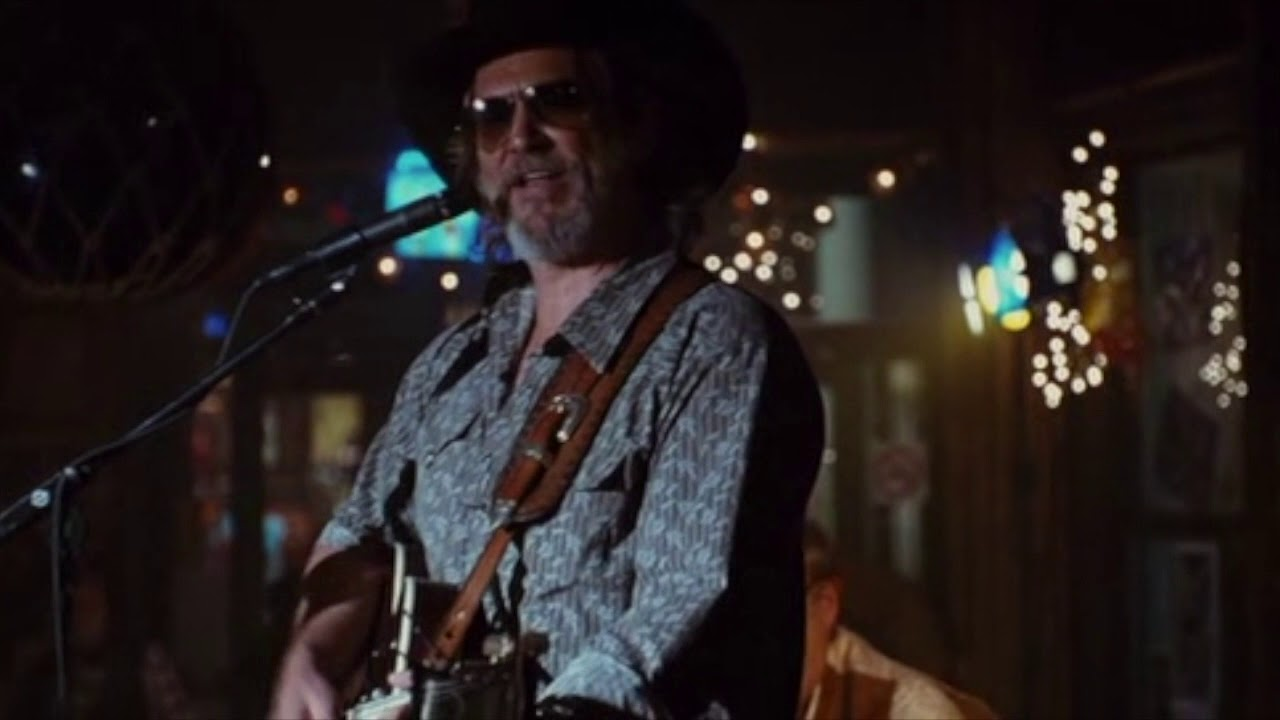
Fallin’ & Flyin’ (Crazy Heart Soundtrack) – Stephen Bruton & Gary Nicholson (Ft. Jeff Bridges)

Over the weekend I saw the movie Crazy Heart again. It featured here in my Friday’s Finest movie segment back in 2021. The movie earned ‘the Dude’ – Jeff Bridges his first Academy award after seven nominations. For movie buffs I point you to this brief interview of how Jeff nearly turned down the role. Aside from The Big Lebowski, Crazy Heart stands out as one of my favourite Jeff Bridges performances. He strikes me as one of the most effortlessly natural and least self-conscious actors I’ve seen on screen

The principal song from Crazy Heart called The Weary Kind also won the Academy Award for Best Original Song and will be featured here in the not too distant future. The whole soundtrack is great (thanks in large part to T-Bone Burnett), but there’s another song which stood out for me and is the feature of today’s article – Fallin’ & Flyin’. The scene I wanted to forward below is the first presentation of the song in the bowling alley, but it is unavailable in its entirety. So below, you will find the studio recording and the final live duet performance featuring Jeff Bridges and Colin Farrell.

Crazy Heart tells the story of a once famous country music artist who suffers from alcoholism and tries to turn his life around after beginning a relationship with a young journalist. For most of my adult life I too have succumbed to alcoholism and I could engage a lot with this story.
The ingenuity of the lyrics Fallin’ & Flyin’ is how relatable they are to the addict – capturing the paradox of addiction with raw, relatable simplicity. It speaks to that internal conflict: the high that once felt like freedom, and the quiet voice that always warned it would come at a cost. This tug-of-war between euphoria and reckoning is wonderfully mirrored in Bad Blake’s story arc in Crazy Heart. This song also has a fantastic melody to bring home this point.

I was goin’ where I shouldn’t go
Seein’ who I shouldn’t see
Doin’ what I shouldn’t do
And bein’ who I shouldn’t be

A little voice told me it’s all wrong
Another voice told me it’s alright
I used to think that I was strong
But lately I just lost the fight

Funny how fallin’ feels like flyin’
For a little while
Funny how fallin’ feels like flyin’
For a little while

I got tired of bein’ good
Started missing that old feeling free
Stop actin’ like I thought I should
And went on back to bein’ me

I never meant to hurt no one
I just had to have my way
If there is such a thing as too much fun
This must be the price you pay

[Bridge]
You never see it comin’ till it’s gone
It all happens for a reason
Even when it’s wrong
Especially when it’s wrong

References:
1. Crazy Heart (soundtrack) – Wikipedia

Tagged with: , , , , , ,
Posted in Music

Green Fields Of France (1981) – The Fureys and Davey Arthur

On my ‘Friday’s Finest‘ movie segment, I’ve spotlighted two powerful films depicting what was once called “the war to end all wars” – Gallipoli (1981) and Testament of Youth (2014). Today, however, we shift tracks from cinema to song, turning to the legendary Fureys and their haunting version of Eric Bogle’s WWI lament, The Green Fields of France. The song’s epic storytelling rivals the immersive emotional pull of a great war film. In fact, there’s little to separate the vivid imagery conjured through its lyrics from the experience of watching a poignant cinematic portrayal of war.

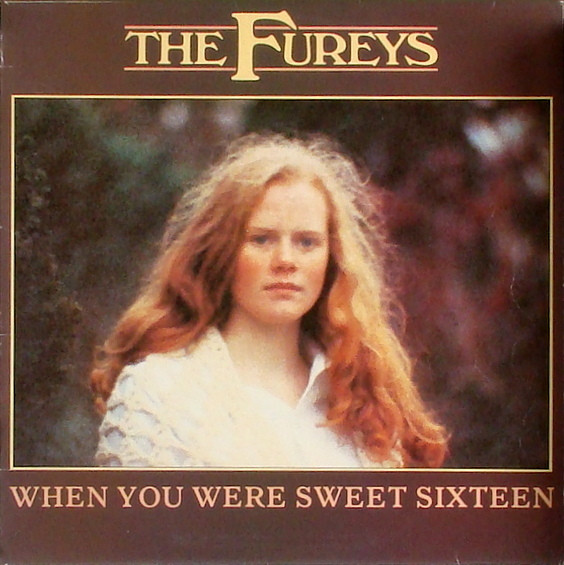
This song and I go way back – it left a big impression on me when I was just a young’un and truth be told, it still does despite listening to this song for more than 40 years. I bought my first Furey’s album (see image left) as a preadolescent on a whim based on the cover (umm, let me think why?) and ended up being charmed by these traditional Irish folk songs. It was a good investment of the little money I had going. Anyhows, Green Fields of France remains one of The Fureys’ most cherished songs. It gave them an Irish No. 1, remaining in the single charts for twenty-eight weeks. In fact, along with When You Were Sweet Sixteen, it was one of the Irish folk group’s only charting singles.

The following was extracted from the Wikipedia reference below:
The Green Fields of France, otherwise known as No Man’s Land or Willie McBride was written by Scottish-born Australian folk singer-songwriter Eric Bogle in 1976. It reflectis on the grave of a young man who died in World War I. Its chorus refers to two famous pieces of military music, “Last Post” and the “Flowers of the Forest“. In 2009, Bogle told an audience in Weymouth that he had read about a girl who had been presented with a copy of the song by then prime minister Tony Blair, who called it “his favourite anti-war poem“. According to Bogle, the framed copy of the poem credited him, but stated that he had been killed in World War I. He said: “It’s a song that was written about the military cemeteries in Flanders and Northern France. In 1976, my wife and I went to three or four of these military cemeteries and saw all the young soldiers buried there.”

The song (as “The Green Fields of France“) was a huge success for The Furey Brothers and Davey Arthur in the 1980s in Ireland and beyond. The melody and words vary somewhat from the Bogle original with some of the Scots phrases replaced (e.g., Did the rifles fire o’er ye? is often replaced by Did they play the death march?).

[Verse 1]
Well how do you do, young Willie McBride
Do you mind if I sit here down by your graveside?
And rest for a while ‘neath the warm summer sun
I’ve been walking all day and I’m nearly done
I see by your gravestone, you were only nineteen
When you joined the great fallen in 1916.
I hope you died well and I hope you died clean
Or young Willie McBride, was it slow and obscene?

[Chorus]
Did they beat the drum slowly, did they play the fife lowly?
Did they sound the death march as they lowered you down?
And did the band play the Last Post and Chorus?
Did the pipes play ‘The Flowers of the Forest’?

[Verse 3]
Did you leave ‘ere a wife or a sweetheart behind?
In some faithful heart is your memory enshrined?
Although you died back in 1916
In that faithful heart are you forever nineteen?
Or are you a stranger without even a name
Enclosed in forever, behind a glass frame?
In an old photograph, torn, battered and stained
And faded to yellow in a brown leather frame

[Verse 4]
The sun, now it shines on the green fields of France
There’s a warm summer breeze; it makes the red poppies dance
And look how the sun shines from under the clouds
There’s no gas, no barbed wire, there’s no gun firing now
But here in this graveyard, it’s still no man’s land
The countless white crosses stand mute in the sand
To man’s blind indifference to his fellow man
To a whole generation that were butchered and damned

[Verse 5]
Ah, young Willie McBride, I can’t help wonder why:
Do those that lie here know, why did they die?
And did they believe when they answered the call
Did they really believe that this war would end wars?
Well, the sorrow, the suffering, the glory, the pain
The killing and dying were all done in vain
For young Willie McBride, it all happened again
And again and again and again and again

References:
1. No Man’s Land (Eric Bogle song) – Wikipedia

Tagged with: , , ,
Posted in Music

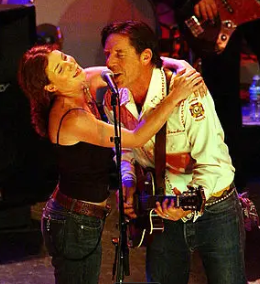
The Golden State (2007) – John Doe (Ft. Kathleen Edwards)

The Golden State (John Doe – The Golden State) Max @ Powerpop

In February this year, Max at PowerPop published an article (see above) about this wonderful duet from John Doe and Kathleen Edwards. It’s exuberant country rock where their voices entwine with great chemistry, as they describe each other – as a “symptom”, “body part” or “feeling” of the other – capturing how deeply intertwined and dependent they are. It’s a very cool lyrical device that underlines the vulnerability at the heart of the song. As the track progresses, I like when they both deliver the line – “when you walk away,” the melody shifts, with a new openness like the heart cracking open – almost feels like another song completely.

Biography
John Doe, born John Nommensen Duchac in 1953, is a figure in American punk and roots music. Best known as the co-founder and bassist of the influential Los Angeles punk band X, Doe helped shape the raw, poetic sound of the late ’70s West Coast scene. His creative spirit, however, refused to be caged by genre – over the decades, he has built an impressive solo career blending punk, country, folk, and rock, while also establishing himself as a respected actor in film and television (Great Balls of Fire!, Road House, Law & Order).

Doe recorded The Golden State in 2007 on his solo album A Year in the Wilderness, with Canadian Kathleen Edwards on the original album. Another version features here with Eddie Vedder and Corin Tucker.

You are the hole in my head
I am the pain in your neck
you are the lump in my throat
I am the aching in your heart
we are tangled
we are stolen
we are living
where things are hidden
you are something in my eye
I am the shiver down your spine
you are the lick of my lips
I am on the tip of your tongue
we are tangled
we are stolen
we are buried up to our necks in sand
we are luck
we are fate
we the feeling you get in the golden state
we are love
we are hate
we are the feeling I get when you walk away
you are the dream in my nightmare
I am that falling sensation
you are my needles & pins
I am your hangover mo
rning

Tagged with: , , ,
Posted in Music

So Cruel (1991) – U2

I was recently reacquainted with So Cruel after years of not hearing it. During my late adolescence, it ranked among my favourite U2 songs, at a time when I enjoyed much of their work up until the Achtung Baby era. So Cruel is a searing, embittered love song, delving into themes of marital discord, betrayal, and emotional desolation. What always resonated with me and still does is its pulsating orchestration, steadily building to a restrained yet powerful crescendo. The song manages to feel both epic and intimate – with Bono’s plaintive vocals laid bare against a deceptively simple arrangement. Even within an album known for its sonic reinvention, So Cruel stands out for its raw vulnerability.

The following was extracted from the Wikipedia reference below:

The Edge separated from his wife during the recording of Achtung Baby. Their painful emotions were channelled in the lyrics. Bono said, “We’re a really tight community. This is not like somebody’s, you know, girlfriend’s left. We’ve grown up with these people, this our family, our community. This was really hard for us… It was like the first cracks on the beautiful porcelain jug with those beautiful flowers in it that was our music and our community, starting to go ‘crack‘.” Thematically the song is about unrequited love, jealousy, obsession, and possessiveness. Hot Press editor Niall Stokes described it as “the desolate complaint of a lover who has been spurned but who remains in love with his tormentor.

Višnja Cogan wrote “Women… never get treated badly in U2 songs… Women are put on a pedestal by Bono, his mother’s untimely death being undoubtedly one of the reasons. If anything, in some of the songs on Achtung Baby, it is the man who gets the raw deal. On ‘So Cruel’, it is the man who is the victim of a woman. It is the reverse of the classical torch song

So Cruel is the sixth track on U2’s seventh studio album Achtung Baby (1991), concluding side one of the album. The song was written at Elsinore in Dalkey. While audio engineer Flood changed reels to listen to a demo of another song, lead singer Bono began to improvise a song on guitar. The rest of the band quickly joined in, creating the first take of the song.

It was developed as an acoustic track but it was further developed by Flood “did a couple of treatments to the track that utterly transformed it.” He keyed Clayton’s bass with the bodhrán, which “gave it a much more bubbly, off-beat feel”. Clayton explained that while the original acoustic version “wasn’t something one could imagine being on the record“, it “was lifted up by studio trickery.” Flood believes that the use of technology was crucial in making the final mix. U2 performed So Cruel only three full times live on the Zoo TV Tour.

[Verse 1]
We crossed the line
Who pushed who over?
It doesn’t matter to you
It matters to me
We’re cut adrift
But still floating
I’m only hanging on
To watch you go down, my love

[Verse 2]
I disappeared in you
You disappeared from me
I gave you everything you ever wanted
It wasn’t what you wanted
The men who love you, you hate the most
They pass right through you like a ghost
They look for you, but your spirit is in the air
Baby, you’re nowhere

[Chorus]
Oh, love
You say in love, there are no rules
Oh, love
Sweetheart, you’re so cruel

[Verse 3]
Desperation is a tender trap
It gets you every time
You put your lips to her lips
To stop the lie
Her skin is pale like God’s only dove
Screams like an angel for your love
Then she makes you watch her from above
And you need her like a drug

[Bridge]
She wears my love like a see-through dress
Her lips say one thing, her movements, something else
Oh, love, like a screaming flower
Love, dying every hour

[Verse 4]
Ah, you don’t know if it’s fear or desire
Danger, the drug that takes you higher
Head of heaven
Fingers in the mire
Her heart is racing, you can’t keep up
The night is bleeding like a cut
Between the horses of love and lust, we are trampled
Underfoot

References:
1. So Cruel – Wikipedia

Tagged with: , ,
Posted in Music

The Girl from Ipanema (1964) – Astrud Gilberto, João Gilberto and Stan Getz

The Girl from Ipanema is so kitsch and cool. It embodies the 1960’s breezy elegance perhaps more than any other song. With its languid rhythm and innocent vocals by Astrud Gilberto, it captures the aura of city café society; the same stylish world inhabited by Petula Clark’s Downtown, Breakfast at Tiffany’s Sally’s Tomato or The Seekers’ Georgy Girl. But this track brought a Brazilian twist to the cocktail: a samba swaying through jazz’s smoky lounges. The Girl from Ipanema bridged continents, introduced Brazilian Bossa Nova music to the global mainstream, and became a symbol of cosmopolitan sophistication.

The following was extracted, rearranged and condensed from Scott Frampton’s excellent article linked at the bottom of this page:

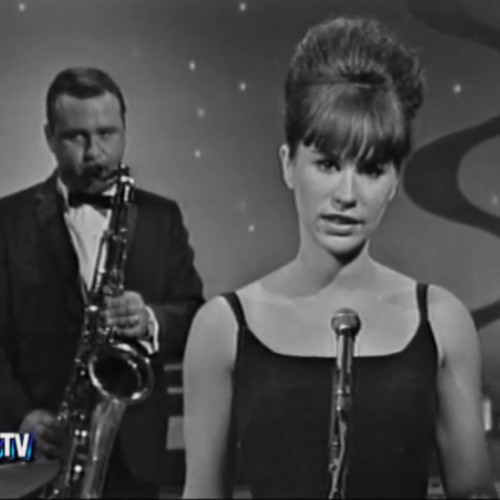
How you hear The Girl from Ipanema says a lot about where you’re from. American versions, ones that made the song an elevator music cliché of easy-listening, are in the key of F. Brazilian musicians all know the song should be in D♭. The song became an international sensation thanks to Astrud Gilberto (pictured above). She wasn’t meant to sing on the sessions her husband João and Antônio Carlos “Tom” Jobim were cutting in New York with jazz saxophonist Stan Getz, but new English lyrics had been commissioned for the song, and her command of the language was the strongest of the Brazilians in the studio.

The shortened version of the song on the Getz/Gilberto album, in the key of  D♭, would be a top-5 US pop hit in 1964, introducing Bossa Nova to Stateside audiences. The Portuguese lyrics to The Girl from Ipanema were written by Vinicius de Moraes, a poet and playwright best known for the film Black Orpheus. It’s a scene drawn from his own life, where he observed a 17 year-old girl passing by the Veloso bar-café on daily walks through the neighborhood, sometimes stopping in to buy cigarettes for her mother. The song was such a sensation in Brazil that the inspiration for the song, the titular “Girl,” a 17 year-old named Helô Pinheiro, would become famous in her own right. 

Astrud Gilberto was an untrained singer, but her naïve vocals is said to have restored some of the melancholy from Moraes’s original lyrics. Moraes’s lyrics are laden with what he called the “gift of life in its beautiful and melancholic constant ebb and flow.” Astrud’s matter-of-fact vocals brush away the leering and exoticism from the tanned and lovely on Brazil’s beaches; it’s just a neighborhood scene. Her dispassionate near-whisper, in all its languorousness, also makes plain the truth that the U.S. version may have otherwise elided: The young beauty who passes you by is doing exactly that. 

João Gilberto is known as the Father of Bossa Nova, which translates from Portuguese as “new trend” or “new wave.” Bossa Nova incorporated jazz and Tin Pan Alley songwriting into Samba, the Afro-Brazilian music that remains a national symbol of Brazil. This was not always a welcome development since it was initially seen as a whitewashing of this essential element of Brazilian culture.

In 2000, the 1964 release of the song by Stan Getz & Astrud Gilberto on Verve Records was inducted into the Grammy Hall of Fame.

Tall and tan and young and lovely
The girl from Ipanema goes walking
And when she passes, each one she passes goes “ah!”
When she walks she’s like a samba that
Swings so cool and sways so gently
That when she passes, each one she passes goes “ah!”

Oh, but he watches her sadly
How can he tell her he loves her?
Yes, he would give his heart gladly
But each day when she walks to the sea
She looks straight ahead not at he

Tall and tan and young and lovely
The girl from Ipanema goes walking
And when she passes he smiles
But she doesn’t see

References:
1. “The Girl from Ipanema” by Stan Getz, Astrud Gilberto, Joao Gilberto, and Antonio Carlos Jobim – Scott Frampton
2. The Girl from Ipanema – Wikipedia

Tagged with: , , , , , ,
Posted in Music

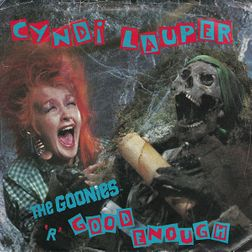
The Goonies ‘R’ Good Enough (1985) – Cyndi Lauper

We are upping the tempo today with some fun and frivolity from one of the most colourful and dazzling 80’s performing artists – Cyndi Lauper. The Goonies ‘R’ Good Enough is her second entry here after her signature hit Girls Just Want to Have Fun (1983). The Goonies was released in support of the 1985 film of the same name which I enjoyed as a kid, you know the whole treasure maps, booby traps, pirate ships thing. The movie was accompanied by an equally zany two-part music video (see below) directed by Richard Donner himself.

The song was initially titled ‘Good enough‘, but was re-titled to “The Goonies ‘R’ Good Enough” by Warner Bros. for marketing purposes. Lauper originally didn’t want to write a theme song. In interviews, she admitted to feeling creatively boxed in by being asked to conform to the film’s requirements. She said also how she hated the song. Ouch! So much so that she didn’t perform it live for over 15 years. She even left it off her greatest hits album, much to fans’ dismay.
That’s a shame to learn that and caught me by surprise since The Goonies is my favourite song by her. I always liked Lauper’s high energy performance, its quirky charm and the catchy melody never grew tired on me.

The Goonies ‘R’ Good Enough became a bona fide hit of course reaching No. 10 on the Billboard Hot 100 and peaked within the top-ten in Australia and Canada. It was Lauper’s fifth top ten single but only spent 15 weeks in total. While it wasn’t as big as Lauper’s earlier hits like Girls Just Want to Have Fun or Time After Time, it held its own in the constellation of mid-’80s pop. As aforementioned despite Lauper growing to dislike the song, due to nostalgia (and fan pressure) she brought it back to her concert setlists y the 2000s. Phew!

[Verse 1]
Here we are, hanging onto strains of greed and blues
Break the chain, then we break down
Oh, it’s not real if you don’t feel it

[Pre-Chorus]
Unspoken expectations
Ideals you used to play with
They’ve finally taken shape

[Chorus]
What’s good enough (Good enough)
For you, it’s good enough (Good enough)
For me, it’s good enough (Good enough)
It’s good enough for me
Yeah, yeah, yeah, yeah, yeah

[Verse 2]
Now you’ll say you’re startin’ to feel the push and pull
Of what could be and never can
You mirror me, stumblin’ through those

[Pre-Chorus]
Old fashioned superstitions
I find it too hard to break
Oh, maybe you’re out of place

[Chorus]
What’s good enough (Good enough)
For you, it’s good enough (Good enough)
For me, it’s good enough (Good enough)
It’s good enough for me
Yeah, yeah, yeah, yeah, yeah
Good enough (good enough)
For you, it’s good enough (Good enough)
For me, it’s good enough (Good enough)
It’s good enough for me
Yeah, yeah, yeah, yeah, yeah

References:
1. The Goonies ‘R’ Good Enough – Wikipedia

Tagged with: ,
Posted in Music

Opus 23 (2004) – Dustin O’Halloran

In music and art I’m interested in minimalism, space and subtlety – creating a lot with a little. I’m interested to find big emotions by using minimal techniques which is maybe more direct…I’m attracted to things that makes you want to be drawn in, pull you in slowly, rather than being bombarded with something.

Dustin O’Halloran (interview at 200%.com)

There’s really nothing more satisfying than stumbling upon beautiful music at the exact moment your senses are yearning for it. I first heard today’s featured piece Opus 23 during a cool-down Pilates class at the gym a month ago. You see timing is everything, since it lofted in just as my body was easing into stillness and my mind was calm and settled. As soon as the first few bars of Opus 23 played, I shot my arm up to ask what it was – and funny enough, the lady next to me was just as curious. Thankfully, the instructor shared the title with us and it went straight into my quick memo app.

What’s curious is how my connection to Opus 23 seems to shift depending on how tuned in I am. If my mind’s racing or I’m caught up in distractions, it barely lands. But when I’m in a peaceful, open state – like early in the morning, my favourite time to listen to music it hits completely differently. That’s when it truly sinks in and I find myself swept up in it.

The following was mostly extracted from the Wikipedia article below:

The composer is American pianist Dustin O’Halloran. Aside from releasing music as a recording artist, O’Halloran is a film and TV composer. He is as well as one half of ambient act A Winged Victory for the Sullen which is an American ambient music duo composed of himself and Adam Wiltzie. O’Halloran was born in Phoenix, Arizona, and spent most of his childhood in Hawaii and Los Angeles. While studying art at Santa Monica College, he met singer Sara Lov, with whom he founded indie rock band Dévics in 1998. When the group signed with Bella Union in 2001, they relocated to Romagna, Italy, where O’Halloran lived for seven years.

Today’s featured piece Opus 23 was first released on his Piano Solos Volume 2 (2004) and appeared on the soundtrack of Sofia Coppola’s 2006 film Marie Antoinette. O’Halloran discusses in the 200% interview below his penchant for playing the lower register of the piano and the emergence of neo-classical ambient music. For more information on O’Halloran’s extensive musical career, I point you the references below.

The video for Opus 23 below was beautifully animated by Italian director Marco Morandi.

References:
1. Dustin O’Halloran – Wikipedia
2. Music Dustin O’Halloran interview – 200%.com

Tagged with: , , ,
Posted in Music

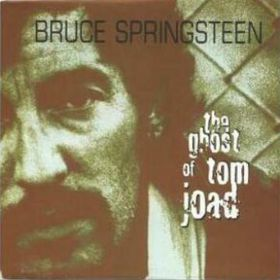
The Ghost Of Tom Joad (1995) – Bruce Springsteen

The Ghost Of Tom Joad is a folk rock song by Bruce Springsteen and is the title track from his eleventh studio album released in 1995. It is the second song to feature here from the sessions after Dead Man Walkin’ although that song was not used on the album. The Ghost Of Tom Joad is a haunting and desolate track that grapples with the fractures of American capitalism and the human toll of economic displacement. It shines a light on America’s “rust belt,” regions once pulsing with industrial prosperity now left hollow by deindustrialization, joblessness, and social abandonment.

The song uses the character of Tom Joad from John Steinbeck’s The Grapes of Wrath as a symbol of resilience amid decay. Yet the speaker is trapped between crippling poverty and a crushing realization that they have no place in this changing America however The Ghost Of Tom Joad ultimately ends not in despair but in defiance: Wherever somebody’s struggling to be free / Look in their eyes, Ma, and you’ll see me”.

The following was extracted from the Wikipedia reference below:
The song also takes inspiration from The Ballad of Tom Joad by Woody Guthrie, which in turn was inspired by John Ford’s film adaptation of Steinbeck’s novel. Springsteen had in fact read the book, watched the film, and listened to the song, before writing The Ghost of Tom Joad. Springsteen identified with 1930s-style social activism, and sought to give voice to the invisible and unheard, the destitute and the disenfranchised. Like the rest of the album, The Ghost of Tom Joad is set in the early-to-mid-1990s, with contemporary times being likened to Dust Bowl images.

Originally a quiet folk song, has also been covered by Rage Against the Machine and Junip. Springsteen himself has performed the song in a variety of arrangements, including with the E Street Band, and a live recording featuring Rage Against the Machine’s Tom Morello as guest. In 2013, Springsteen re-recorded the track with Morello for his eighteenth studio album, High Hopes.

The Ghost of Tom Joad album was recorded between April and June 1995, at Springsteen’s Los Angeles home studio. The title track was given limited release as a single in The Netherlands and the UK, wherein the latter it reached number 26 on the UK Singles Chart. It was not released as a single in the U.S., and radio airplay on album-oriented rock stations was practically non-existent.

[Verse 1]
Men walking along the railroad tracks
Going someplace and there’s no going back
Highway patrol choppers coming up over the ridge
Hot soup on a campfire under the bridge

[Verse 2]
Shelter line stretching around the corner
Welcome to the new world order
Families sleeping in the cars in the southwest
No home, no job, no peace, no rest

[Chorus]
Well, the highway is alive tonight
But nobody’s kidding nobody about where it goes
I’m sitting down here in the campfire light
Searching for the ghost of Tom Joad

[Verse 3]
He pulls a prayer book out of his sleeping bag
Preacher lights up a butt and he takes a drag
Waiting for when the last shall be first and the first shall be last
In a cardboard box ‘neath the underpass

[Verse 4]
Got a one-way ticket to the promised land
You got a hole in your belly and a gun in your hand
Sleeping on a pillow of solid rock
Bathing in the city aqueduct

[Verse 5]
Now Tom said, “Mom, wherever there’s a cop beating a guy
Wherever a hungry newborn baby cries
Where there’s a fight against the blood and hatred in the air
Look for me, Mom, I’ll be there

[Verse 6]
Wherever somebody’s fighting for a place to stand
Or a decent job or a helping hand
Wherever somebody’s struggling to be free
Look in their eyes, Ma, and you’ll see me”

References:
1. The Ghost of Tom Joad (song) – Wikipedia

Tagged with: , , , , ,
Posted in Music

Follow Blog via Email

Enter your email address to follow this blog and receive notifications of new posts by email.

Join 780 other subscribers

← Back

Thank you for your response. ✨