Scar (2004) – Missy Higgins

Scar immediately grabbed the attention of listeners and critics alike becoming a huge hit in Australia entering the Australian ARIA Singles Chart at number one and going platinum. The song was released as the debut single from Missy Higgins’ first studio album, The Sound of White. It was refreshing to hear this wildly successful Melbourne pop artist sing in a heavy Australian accent which many of her peer music artists were reluctant to do for fear of alienating international audiences and jeopardising wider commercial success.

Appearances can be deceiving since Scar seems just a sprightly ‘indie’ sounding pop song on the surface but there is a lot going on beneath where its waves overlap. It is a thought provoking song about influences and particularly about two people attempting to influence and shape the narrator (we’ll assume its ‘Missy’) to their own selfish end. Missy finds she has been manipulated almost beyond her past self, and that she was ‘not herself’ all this time. She fixes this, but is still changed by the Scars that are now part of her as she learns from past experiences.

Higgins wrote Scar during a tumultuous period in her life after returning to Australia after a year in Europe, where she was grappling with feelings of dislocation, identity, and heartbreak. The song has been rumoured to give a hint to Higgins’s bisexuality, although she has not openly commented on the song’s meaning.

[Verse 1]
He left a card, a bar of soap
And a scrubbing brush next to a note
That said, “Use these down to your bones”
And before I knew I had shiny skin
And it felt easy being clean like him
I thought “This one knows better than I do”

[Pre-Chorus]
A triangle
Tryna squeeze through a circle
He tried to cut me so I’d fit

[Chorus]
And doesn’t that sound familiar?
Doesn’t that hit too close to home?
Doesn’t that make you shiver;
The way things coulda gone?
And doesn’t it feel peculiar
When everyone wants a little more?
And so that I do remember
To never go that far
Could you leave me with a scar?

[Verse 2]
So the next one came with a bag of treats
She smelled like sugar and spoke like the sea
And she told me, “Don’t trust them, trust me”
Then she pulled at my stitches one by one
Looked at my insides, clicking her tongue
And said, “This will all have to come undone”

[Pre-Chorus]
A triangle
Tryna squeeze through a circle
She tried to blunt me so I’d fit

[Chorus]

[Bridge]
I think I realised just in time
Although my old self was hard to find
You can bathe me in your finest wine
But I’ll never give you mine
‘Cause I’m a little bit tired of fearing that I’ll be
The bad fruit nobody buys
Tell me, did you think we’d all dream the same?

[Chorus]

[Post-Chorus]

Melissa Morrison Higgins was born in Melbourne on 19 August 1983. Higgins learned to play classical piano from age six, following in the footsteps of Christopher and her older David, but realised she wanted to be a singer at about 12, when she appeared in Andrew Lloyd Webber’s musical Joseph and the Amazing Technicolor Dreamcoat.  Introverted by nature, Higgins found that piano practice helped her cope with living at boarding school. In 2001, Missy’s sister Nicola entered “All for Believing” on her behalf in Unearthed, radio station Triple J’s competition for unsigned artists. The song won the competition and was added to the station’s play list. Two record companies showed an interest in her.

References:
1. Scar (song) – Wikipedia

Tagged with: , ,
Posted in Music

Saviour (2022) – Art Block

Saviour is the second song to feature here from London, England-based singer-songwriter and multi-instrumentalist Art Block. I learnt about Art Block and his White Horses EP at Jeff’s blog: Eclectic Music Lover. His blog is dedicated to mostly new music releases and on occasion has personal connections with the artists he features. I agree with Jeff that Art Block has deeply affecting vocals and his music is a ‘haunting brand of alternative folk, characterized by stirring melodies, captivating arrangements and gorgeous instrumentation built around his poetic, deeply moving lyrics‘. Today’s featured track Saviour is no exception. Over to Jeff:

….The first track “Saviour” speaks of a relationship that saved him at first, but ultimately ended because of the hurt and pain they inflicted on each other: “It was a travesty. Unjust unliberty. Hurting those around you. Building walls between ourselves. We knocked our brains out cold. Drank from the cup untold. Floored by passion and the drink. Makes us do what we don’t think. You were a precious stone. Now I am all alone. I’m fading, yeah I’m fading. We dug our grave too soon.” It’s a melancholy but lovely song, highlighted by Art Block’s stunning piano and Sandra Brus’ mournful violin.

Jeff has reviewed Art Block‘s music at least four times, so I point y’all to his outstanding blog if you would like to learn and hear more by Art Block including his breathtaking single The Basement which Jeff recalls is his most successful single having streamed over 350,000 times on Spotify alone. Rest assured that song will feature here when we get to the ‘T”s in the music library project.

Reference:
1. ART BLOCK – “White Horses EP” – Eclectic Music Lover

Tagged with: , , ,
Posted in Music

Say Hello, Wave Goodbye (1998) – David Gray

Say Hello, Wave Goodbye is the sixth song to feature here so far from British singer – songwriter David Gray. It also happens to be my Desert Island song from him, despite it being a ‘world’s-apart’ haunting rendition of Soft Cell‘s 1982 big hit which reached No 3 on the UK charts. Gray’s version was released on his successful 1998 album White Ladder and was the album’s fifth proper and final single and reached No 26 on the UK Singles Chart. His version, like his live performances, features additional lines at the end from the Van Morrison songs Madame George and Into the Mystic

I can’t blame Gray milking the heartbreaking beautiful melody for all its worth with a runtime of 9 minutes which is just under four minutes longer than the original; as such, the single featured a shorter radio edit (below the studio version). To me the song just wooshes by. I often find myself setting this song on repeat after first-listen such is my infatuation with it. Gray seems to have stripped the song down to its emotional core, transforming the upbeat synthpop number into a slow-burning, piano-driven ballad. The production is intimate, with Gray’s gravelly voice carrying the weight of the song’s sorrow.

Gray’s cover was recorded during the White Ladder sessions, a self-financed project that Gray undertook after years of limited commercial success. The album was produced in his London apartment, where he utilized minimal equipment, a four-track recorder, and his signature blend of folk, electronica, and alternative rock. White Ladder spent almost three full years on the UK top 100, consistently charting between May 2000 and March 2003. Its total charting time as of 2020 was 176 weeks, making it one of the longest-charting albums in UK chart history.

Gray believes that the success of White Ladder paved the way for “soul-baring” artists such as James BluntEd Sheeran, George Ezra, James Bay, and Tom Walker. In an interview with the Daily Star, he said: “When I started out, a man with a guitar baring his soul wasn’t in vogue at all. Suddenly, it’s everywhere! [The album’s] success came from nowhere, and it changed how the business thought about what music should be. Since then, there have been lots of artists who’ve taken it on and done their own thing.”

[Verse 1]
Standin’ at the door of the pink Flamingo cryin’ in the rain
It was a kind of so-so love and I’m gonna make sure it doesn’t happen again
You and I had to be the standing joke of the year
You were a run-around, a lost and found, and not for me I feel

[Chorus]
Take your hands off me, hey
I don’t belong to you, you see
And take a look in my face for the last time
I never knew you, you never knew me, say hello, goodbye
Say hello and wave goodbye

[Verse 2]
We tried to make it work, you in a cocktail skirt and me in a suit,
but it just wasn’t me
You’re used to wearing less and now your life’s a mess,
so insecure, you see
Well, I put up with all the scenes and this is one scene that’s goin’ to be
played my way

[Chorus]

[Verse 3]
Under the deep red light I can see the make-up slidin’ down
Well hey, little girl, you will always make up, so take off that unbecoming frown
As for me, well, I’ll find someone who’s not goin’ cheap in the sales
A nice little housewife, who’ll give me a steady life and not keep going off the rails

[Chorus]

[Bridge]

[Instrumental Break]

[Outro]
We were born before the wind
Who are we to understand?
We were born before the wind
Say goodbye
Through the rain, hail, sleet and snow
Say goodbye
Get on the train, train, train
Say goodbye
Say goodbye
Say goodbye
Say goodbye
In the wind and the rain now, darling
Say goodbye
In the wind and the rain now, darling

References:
1. Say Hello, Wave Goodbye – Wikipedia
2. White Ladder – David Gray

Tagged with: , ,
Posted in Music

Murmullo (1997) – Electo Rosell (Ft. Ibrahim Ferrer – Buena Vista Social Club)

Hay un suave murmulloThere is a gentle whisper
En el silencio de una noche azul – In the silence of a blue night
Son dos enamorados – There are two lovers
Que, encantados, gozan del amor  – Who enchanted, enjoy love

Y ríe la vida y que dice asíAnd life laughs and says: Ahh, ahh, ahh…
Y ríe la luna y que dice así – And the moon laughs and says: Uhmm, uhmm , ummm…

The above Spanish lyrics of the song Murmullo meaning “whispers” or “gentle murmurs” are the only words you are going to find in this soothing and blissful romantic song. It paints a vivid picture of a serene night, where two lovers bask in the beauty of their relationship, surrounded by the gentle whispers of love.
Murmullo is part of the traditional music of Cuba called ‘Bolero‘ which possesses a romantic cadence and lyrics dealing with love. Bolero music was born as a form of romantic folk poetry cultivated by a new breed of troubadour from Santiago de Cuba, the trovadoresPepe Sánchez is considered the father of this movement and the author of the first bolero, Tristezas (sadnesses), written in 1883.

All this heritage music which celebrates Cuba’s “musical golden age” between the 1930s and 1950s was renewed by Director Wim Wenders and guitarist Ry Cooder who teamed up again after their ‘indie’ movie masterpiece Paris, Texas. Murmullo comes from their music documentary Buena Vista Social Club named after a group formed in 1996 dedicated to the the members’ club of the same name in the Buenavista quarter of Havana; a popular music venue in the 1940s. They recruited a dozen veteran musicians, some of whom had been retired for many years to showcase the popular styles of the time.

Murmullo was born from the compositor Electo Rosell (see image inset). He was a Cuban composer, violinist, and conductor (1907-1984) and Murmullo is one of his notable compositions. On the Buena Vista soundtrack it was sung by Ibrahim Ferrer (image at the top of this post), who used to be the lead vocalist in Rosell’s ensemble Orquesta Chepín-Chovén.

References:
1. Buena Vista Social Club (album) – Wikipedia

Tagged with: , , ,
Posted in Music

Saving Grace (1980) – Bob Dylan

‘Saving Grace’ from Toronto- 1980-04-20 – Bob Dylan (see video below)

To begin this article; in case you haven’t seen it already, I would like to present the new trailer for the Dylan biopic due out this Christmas called A Complete Unknown. It stars the magnificent Timothée Chalamet from the Dune movies and Edward Norton. Speaking of the latter, it was fascinating to watch Norton give his perspective on the young Bob Dylan from his interview with Joe Rogan in October, 2019. Now onto today’s song….

I’ve escaped death so many times, I know I’m only living
By the saving grace that’s over me

By this time I’d-a thought I would be sleeping
In a pine box for all eternity

Saving Grace by Bob Dylan is a christian song of praise for the redemption bestowed on him by the redeemer. I can relate a lot to Dylan’s testimony here, since I have also written in various ‘reflection’ articles about my infinite gratitude for this Saving Grace including here: The Last Words – “Every Passing Minute is Another Chance to Turn it all Around.”

In 2015 I initiated a project on the Bob Dylan Expecting Rain forum called Dylan’s Desert Island Revue compiling Bob Dylan’s greatest live recordings, which were felt by members as superseding their original studio release. One live version I nominated is today’s featured track Saving Grace from Bob Dylan’s 1980 Toronto show seen at the end of this post. Don’t let the poor video quality turn you off. You can also find the original studio version below that.

Dylan released Saving Grace on his second album Saved (see image inset) from his Christian Trilogy and his twentieth studio album overall. Saved expanded on themes explored on its predecessor Slow Train Coming, with gospel arrangements and lyrics extolling the importance of a strong personal faith. The album was not well received by critics and fans alike, but it does include other stand-outs like Covenant Woman and Pressing On. Dylan obviously liked Saving Grace a lot since he performed it 103 times from 1 November 79 to 29 August 2012.

[Verse 1]
If you find it in Your heart, can I be forgiven?
Guess I owe You some kind of apology
I’ve escaped death so many times, I know I’m only living
By the saving grace that’s over me

[Verse 2]
By this time I’d-a thought I would be sleeping
In a pine box for all eternity
My faith keeps me alive, but I still be weeping
For the saving grace that’s over me

[Verse 3]
Well, the death of life, then come the resurrection
Wherever I am welcome is where I’ll be
I put all my confidence in Him, my sole protection
Is the saving grace that’s over me

[Verse 4]
Well, the devil’s shining light, it can be most blinding
But to search for love, that ain’t no more than vanity
As I look around this world all that I’m finding
Is the saving grace that’s over me

[Verse 5]
The wicked know no peace and you just can’t fake it
There’s only one road and it leads to Calvary
It gets discouraging at times, but I know I’ll make it
By the saving grace that’s over me

References:
1. Saving Grace: the origins and meanings within Bob Dylan’s song – Untold Dylan
2. Saved (Bob Dylan album) – Wikipedia

Tagged with: , ,
Posted in Music

A Certain Romance (2006) – Arctic Monkeys

Kicking things off today are British indie rock band Arctic Monkeys, founded in Sheffield, England in 2002 by three 16-year-old friends: Alex Turner (lead vocals, guitar), Andy Nicholson (bass) and Matt Helders (drums, backing vocals), together with Jamie Cook (guitar, keyboards). After starting out as an instrumental band, Turner became their lead singer and frontman. Arctic Monkeys are regarded as one of the first bands who effectively used social media to boost their popularity. They also hold the distinction to have released the fastest-selling debut album in UK chart history, Whatever People Say I Am, That’s What I’m Not. Off that January 2006 album, here’s the great closer A Certain Romance, credited to all members of the band.
Chris & Max Pick …songs from 2006 – Christian’s Music Musings

A Certain Romance is a fun and brash alternative song with elements of punk and grunge. I first heard it at blogger friend Christian’s Music Musings web site. The song contains some cool wordplay and language-craftings as it starts out scorning local townies then appears to absolve them at the end of the song. At first he is scornful, though he eventually feels sympathy and sorrow for them, and accepts that “there isn’t no romance around there.” A Certain Romance is akin to music one might expect to hear on a This is England or Billy Elliot soundtrack. Also front man Alex Turner’s voice reminds me of an English version of American Green Day’s Billie Joe Armstrong. What’s not to like about it? – so eclectic and versatile in its sound and production. A Certain Romance was not released as a standalone single.

According to Wikipedia the song was conceived by Turner in his teens, and follows his observation of the activities and romance—and lack thereof—among youth. A Certain Romance was acclaimed by music critics, who praised its composition, lyrics, and themes. It is considered the standout track of the album and one of the band’s best songs. In an interview with NME, Alex Turner said that when the song was first recorded, “we were all like, “Woah, woah, woah…What have we done here?’ Pushing the music that far out from what we’d done before initially felt contentious, to say the least.” He later described the song as a showcase of the band having ambitions “beyond what we once thought we were capable of”.

[Intro]
(Shall I keep rolling?)

[Verse 1]
Well, oh, they might wear classic Reeboks
Or knackered Converse, or tracky bottoms tucked in socks
But all of that’s what the point is not
The point’s that there in’t no romance around there
And there’s the truth that they can’t see
They’d probably like to throw a punch at me
And if you could only see ’em then you would agree
Agree that there in’t no romance around there

[Chorus]
You know? Oh, it’s a funny thing, you know
We’ll tell ’em if you like, we’ll tell ’em all tonight
They’ll never listen, because their minds are made up
And course it’s all okay to carry on that way

[Verse 2]
‘Cause over there there’s broken bones
There’s only music so that there’s new ringtones
And it don’t take no Sherlock Holmes
To see it’s a little different around here
Don’t get me wrong though, there’s boys in bands
And kids who like to scrap with pool cues in their hands
And just ’cause he’s had a couple of cans
He thinks it’s all right to act like a dickhead

[Chorus]

[Bridge]
But I said no, oh no
Well, you won’t get me to go
Not anywhere, not anywhere
No, I won’t go, oh, no, no

[Instrumental Break]

[Verse 3]
But over there, there’s friends of mine
What can I say? I’ve known ’em for a long long time
And they might overstep the line
But you just cannot get angry in the same way
No, not in the same way
Said, not in the same way
Oh no, oh no, no

[Instrumental Outro]

Reference:
1. A Certain Romance – Wikipedia

Tagged with: , ,
Posted in Music

Big Iron – Marty Robbins (1959) (Josh Turner Guitar Cover feat. Carson McKee)

I have been listening to Josh Turner’s music (pictured right above) on his You tube channel for years. His take 2 of Wagon Wheel, a song originally sketched by Bob Dylan was the clincher for me and will be discussed here when we reach the ‘W’s in the alphabetical listing.
Josh and long time collaborator Carson McKee’s musicianship and harmonies in their cover version of Marty Robbin’s Big Iron – today’s featured track is something to behold. And just like in Wagon Wheel they ooze this great chemistry together.

According to Josh Turner’s ‘About‘ page:

Turner is a multi-instrumentalist (acoustic guitar and electric guitar), singer, songwriter, and producer based in Brooklyn, New York. Joshua Lee Turner posts eclectic cover songs and original music since he started the channel in 2007 at age 15. His guitar covers range from rock, R&B, bluegrass, folk, jazz, classical, pop, indie, blues, etc.

Josh now tours internationally in support of his own original music, as well as with long-time collaborator Carson McKee, as the folk duo The Other Favorites. In 2020, Josh released Public Life, his second full-length album of original music.

Josh and Carson’s cover version of Big Iron, a song written by Marty Robbins in 1959 is a country ballad about an unnamed Arizona Ranger who has a fateful duel with the notorious outlaw Texas Red. It’s like a whole western movie (ala High Noon) in one song.

While the encounter itself is likely fiction, the titular “Big Iron” is a real gun, based on one that Robbins saw in a gun shop in Hollywood. It was a one-off custom piece, described as a Great Western copy of the famed Colt Single Action army pistol featuring several unique features, including the backstrap from a Colt 1860 Army and a barrel made from a sawed-down Marlin Rifle.

In the 21st century, the song has once again become popular due to its use in the 2010 post apocalypse/Western RPG Fallout: New Vegas.

[Verse 1]
To the town of Agua Fria
Rode a stranger one fine day
Hardly spoke to folks around him
Didn’t have too much to say
No one dared to ask his business
No one dared to make a slip
The stranger there among them
Had a big iron on his hip
Big iron on his hip

[Verse 2]
It was early in the morning
When he rode into the town
He came riding from the south side
Slowly looking all around
“He’s an outlaw loose and running”
Came the whisper from each lip
“And he’s here to do some business
With the big iron on his hip”
Big iron on his hip

[Verse 3]
In this town there lived an outlaw
By the name of Texas Red
Many men had tried to take him
And that many men were dead
He was vicious and a killer
Though a youth of twenty-four
And the notches on his pistol
Numbered one and nineteen more
One and nineteen more

[Verse 4]
Now the stranger started talking
Made it plain to folks around
Was an Arizona Ranger
Wouldn’t be too long in town
He came here to take an outlaw
Back alive, or maybe dead
And he said it didn’t matter
He was after Texas Red
After Texas Red

[Verse 5]
Wasn’t long before the story
Was relayed to Texas Red
But the outlaw didn’t worry
Men that tried before were dead
Twenty men had tried to take him
Twenty men had made a slip
Twenty-one would be the Ranger
With the big iron on his hip
Big iron on his hip

[Verse 6]
The morning passed so quickly
It was time for them to meet
It was twenty past eleven
When they walked out in the street
Folks were watching from the windows
Everybody held their breath
They knew this handsome Ranger
Was about to meet his death
‘Bout to meet his death

[Verse 7]
There was forty feet between them
When they stopped to make their play
And the swiftness of the Ranger
Is still talked about today
Texas Red had not cleared leather
‘Fore a bullet fairly ripped
And the Ranger’s aim was deadly
With the big iron on his hip
Big iron on his hip

[Verse 8]
It was over in a moment
And the folks had gathered round
There before them lay the body
Of the outlaw on the ground
Oh, he might have went on livin’
But he made one fatal slip
When he tried to match the Ranger
With the big iron on his hip
Big iron on his hip

[Outro]
Big iron, big iron
When he tried to match the Ranger
With the big iron on his hip
Big iron on his hip

References:
1. Josh Turner – You Tube Channel
2. Big Iron – Wikipedia

Tagged with: , , ,
Posted in Music

Saturday Nights Alright For Fighting (1973) – Elton John

A couple of the sounds that I really like
Are the sounds of a switchblade and a motorbike
I’m a juvenile product of the working class
Whose best friend floats in the bottom of a glass

My music library project wouldn’t be nearly complete without this Elton John classic rock – Saturday Nights Alright (For Fighting). It’s a shame this rowdy anthem for the weekend falls on a Monday here, but at least it will propel us in the right direction for the week ahead. This might be Elton John’s most lauded ‘rock’ song, carrying Crocodile Rock just one step further. It is a lively throwback to early rock and roll with a glam edge. Released in 1973 on his masterpiece (and best – selling) album Goodbye Yellow Brick Road, Saturday… became a staple for those looking to kick off their weekends with a bang.

The song was inspired by Bernie Taupin’s memories of his teenage years in particular, the fistfights in his local pub, the Aston Arms in Market Rasen. Taupin has said that the song was meant to be an American rock and roll song set in Britain. Taupin, known for his evocative and often introspective lyrics, took a different approach with this song. He recalled that a Saturday night out often meant more than just dancing—it meant a bit of chaos and, perhaps, a barroom brawl.

[Verse 1]
It’s getting late, have you seen my mates?
Ma, tell me when the boys get here
It’s seven o’clock and I wanna rock
Wanna get a belly full of beer
My old man’s drunker than a barrel full of monkeys
And my old lady, she don’t care
My sister looks cute in her braces and boots
A handful of grease in her hair

[Chorus]
Oh, don’t give us none of your aggravation
We had it with your discipline
Oh, Saturday night’s alright for fighting
Get a little action in
Get about as oiled as a diesel train
Gonna set this dance alight
‘Cause Saturday night’s the night I like
Saturday night’s alright, alright, alright, ooh

[Verse 2]
Well, they’re packed pretty tight in here tonight
I’m looking for a dolly who’ll see me right
I may use a little muscle to get what I need
I may sink a little drink and shout out, “She’s with me”
A couple of the sounds that I really like
Are the sounds of a switchblade and a motorbike
I’m a juvenile product of the working class
Whose best friend floats in the bottom of a glass

[Chorus]

[Guitar break]

[Chorus]

[Outro]

Elton John’s melody matched Taupin’s rough-and-tumble lyrics perfectly. It’s fast-paced, full of energy, and loud. The song kicks off with Davey Johnstone’s distorted guitar riff, immediately setting the tone for what’s to come—a no-holds-barred, rock ‘n’ roll party. Recorded in the Château d’Hérouville, the same French studio where Elton recorded several of his classic albums, the production captures the raw energy of the band. The track also features Elton’s signature piano playing, though it’s more percussive and driving here reminiscent of Jerry Lee Lewis perfectly blending with the rock-heavy arrangement.

The song quickly became a fan favorite during concerts, often appearing as a high-energy highlight in the setlist. Over the years, Saturday Night’s Alright (For Fighting) has been a constant in Elton’s live performances, proving its staying power. I have presented below the original studio release version, a fantastic live version of Elton and Anastasia at Madison Square Garden in 2000. My family and I wore out watching this DVD “Elton John One Night Only – The Greatest Hits“.

In the UK, the song entered the Music Week Top 50 the week of 7 July 1973, rose to No. 7, and stayed in the charts for 9 weeks and is one of John’s most critically and commercially successful singles in that country. In the US, the song entered the Billboard Top 40 the week of 11 August 1973, rose to No. 12.

Reference:
1. Saturday Night’s Alright for Fighting – Wikipedia

Tagged with: , ,
Posted in Music

Piano Concerto No.1 in E minor, Op.11 – 2. Romance-Larghetto (1830) – Frédéric Chopin

Painting of Chopin by Ambroży Mieroszewski in 1829

Frédéric Chopin’s Movement 2 – Romance-Larghetto from his Piano Concerto No. 1 is the perfect piece for a drizzly Sunday morning here in Bogota, Colombia. I find it stunning and my eyes well with tears as I listen to it again now. I can see why Chopin was renowned as the ‘Prince of Pianists‘. It’s astonishing to me he wrote such a beautiful concerto when he was only 20 years old. I believe the first time I heard parts of it was in the soundtrack of Peter Weir’s The Truman Show.

His Piano Concerto No. 1 was first performed on 12 October, 1830, at the Teatr Narodowy (the National Theatre) in Warsaw, Poland, with the composer as soloist, during one of his “farewell” concerts before leaving Poland for Paris. It was “a success…. a full house and received thunderous applause‘ according to the daily newspaper Warsaw Courier. Seven weeks later when he first played it in Paris, the Belgian musicologist François-Joseph Fétis wrote in La Revue musicale that “There is spirit in these melodies, there is fantasy in these passages, and everywhere there is originality“.

It was the first of Chopin’s two piano concertos to be published, and was therefore given the designation of Piano Concerto “No. 1” at the time of publication, even though it was actually written immediately after the premiere of what was later published as Piano Concerto No. 2 which I wrote about in April this year.

Chopin wrote the following about the Romance-Larghetto to his friend Tytus Woyciechowski:
It is not meant to create a powerful effect; it is rather a Romance, calm and melancholy, giving the impression of someone looking gently towards a spot that calls to mind a thousand happy memories. It is a kind of reverie in the moonlight on a beautiful spring evening“.

A quick Bio

The following extract I translated from my daughter’s book on Chopin (see image inset):
Son of a Frenchman and Polish woman, Chopin was born 22 de February, 1810. Before he could learn to read he wanted to compose melodies. When he was 8-years old he played for large audiences and at 15 he was considered the finest pianist in Warsaw. Chopin wanted tranquility but in Warsaw large marching bands and the yells from angry people annoyed him. So, he decided to move to Paris where he discovered fame, luxury and high fashion. In Paris everyone celebrated the arrival of Chopin. He was renowned as the ‘Prince of Pianists‘. Chopin died in Paris at age 39. His last wishes were that they play Mozart at his funeral and let his heart rest forever in the Warsaw Cathedral.

References:
1. Piano Concerto No. 1 (Chopin) – Wikipedia

Tagged with: ,
Posted in Music

Satellite of Love (1972) – Lou Reed

I want to dedicate this post to my blogger friend Tom (ala dylan6111) who reminded me of this song not long ago as he was very fond of Lou Reed. I became familiar with Satellite Of Love in my adolescence listening to the version by Martin Plaza from Mental As Anything.
Sadly, Tom has been missing in action since 27 June 2024. One of his last posts read:
I’m quiet, words few…can’t concentrate, is this real…doctors words, echoing…is this my day of reckoning
Tom was a great confidante as we were in contact most days and often disclosed about vices we toiled and acted as patrons towards the other. I hope by some miracle he returns, but until such time his absence will be sorely missed.

Satellite Of Love is the fourth song to be presented here from Lou Reed and the second after Perfect Day from his landmark ‘glam rock’ genre album Transformers. The song’s origins trace back to Reed’s time with The Velvet Underground, though it was never fully developed until his solo career took off. At the time of its release (second single from the album after his signature song Walk on the Wild Side), it achieved minor US chart success (No. 119), though it later became a staple of his concerts and compilation albums.

Satellite of Love was recorded during the Transformer sessions, produced by David Bowie and Mick Ronson. Reed’s collaboration with Bowie was a turning point in his career, bringing a new level of polish and sophistication to his sound. The production of Satellite of Love is a testament to this, with Bowie’s background vocals and Ronson’s orchestral arrangement elevating the track beyond Reed’s earlier, rawer work. Bowie had been an early fan of Reed’s former band and used his fame to promote Reed, who had not yet achieved mainstream success.

[Verse 1]
Satellite’s gone up to the skies
Things like that drive me out of my mind
I watched it for a little while
I like to watch things on TV

[Chorus]
(Bom, bom, bom) Satellite of love
Satellite of—

[Verse 2]
Satellite’s gone way up to Mars
Soon it’ll be filled with parking cars
I watched it for a little while
I love to watch things on TV

[Chorus]

[Bridge]
I’ve been told that you’ve been bold
With Harry, Mark, and John
Monday and Tuesday, Wednesday through Thursday
With Harry, Mark, and John

[Verse 1 repeat]
[Chorus]
[Outro]

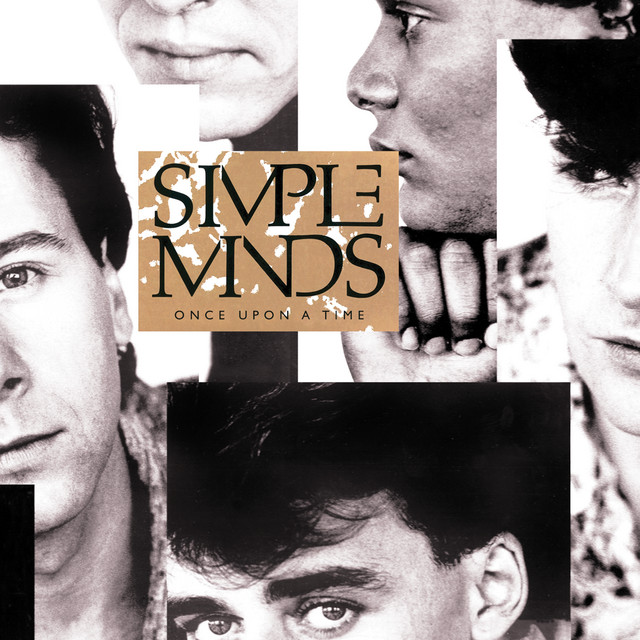
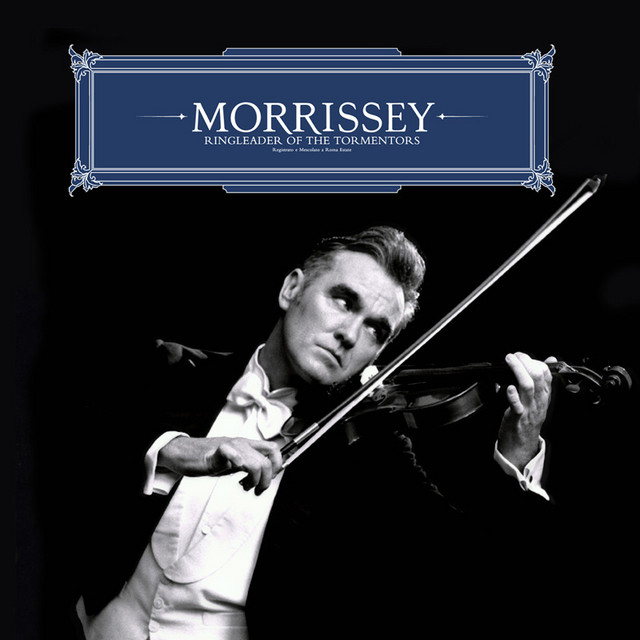
Artists ranging from Morrissey to U2 have performed Satellite of Love each bringing their unique interpretation to the track. Morrissey’s cover of the song was digitally released on 2 December 2013 as a tribute to Reed, following his death in 2013. 

Reference:
1. Satellite of Love – Wikipedia
2. Transformer (Lou Reed album) – Wikipedia

Tagged with: , , , ,
Posted in Music

Follow Blog via Email

Enter your email address to follow this blog and receive notifications of new posts by email.

Join 753 other subscribers

← Back

Thank you for your response. ✨