I just finished watching on cable this very intriguing and enjoyable Argentine movie called The Heist of the Century (ESP. El Robo del Siglo). Typical police thrillers aren’t usually my cup of tea, but I have to make an exception for this one. Its unique blend of quirkiness, sharp humor, and the undeniable chemistry between these iconic actors of Argentine cinema make it a standout. It’s based on real events of a bank heist which occurred in Buenos Aires in 2006 and appears a faithful and consistent retelling of the actual incident. Three of the principal protagonists in The Heist of the Century also featured in one of my favourite Latin American movies – The Secret in Their Eyes (2009) which I reviewed in 2019.
Storyline:
The film is based on a true story, the robbery of the Banco Río branch in the Buenos Aires town of Acassuso on Friday, January 13, 2006, which was robbed by a gang of six robbers armed with replicas of real weapons. They took 23 hostages and took approximately 19 million dollars from 147 safe deposit boxes.
This is undoubtedly one of those movies that’s best experienced with minimal prior knowledge of its coordination, events, and outcomes – just as I had the privilege of doing. It’s simply a funny way of representing what is considered one of the most ingenious robberies in the history of Argentina. I was certainly impressed by their ‘smarts’, attention to detail and laborious creativity to achieve near as possible the perfect large scale robbery.
The characters felt authentic, cunning but also likeable despite their despicable objective. Really imagine if your mad but smart left-field uncle decided to concoct a crazy plan with his mates to rob a bank and that is pretty much what this is, except ‘real’. I’m sure those who have been effected by a bank robbery don’t see the funny side at all. But there is one scene during their heist where a sequestered mobile phone from one of the hostages keeps ringing and the elderly owner declares its her mobile phone and the attention is due to it being her birthday. The priceless reaction of the robbers to this news and how the leader scolds one of the hostages for not singing ‘Happy Birthday’ with more gusto is one for the movie annals. I relayed it at the end of the post, but unfortunately I couldn’t find a translated version, but gather you’ll get the gist and find it worth your while.
This film is a throwback to films I can remember stemming from the 70s & 80s, of a bank heist including Pacino’s Dog Day Afternoon. The Heist of the Century does comedy and crime so well together. It’s a very fine movie, and I loved the actors as much as the comedy and it’s one you’ll enjoy although may leave an unsavoury taste in the mouth. If you can get past that, then you might enjoy it as much as I did.
I’ve since learnt that it takes skill and often a little bit of courage to keep things bare, leaving things so exposed and raw. There’s an honesty to that that I love. – Luke Sital-Singh
I believe I found today’s featured song Strange Weather when I presented a song cowritten by Luke Sital-Singh and Christina Perri in May this year called Rather Be. When I heard the lyrics, I thought Strange Weather was a reflection on the Pandemic and sure enough Sital-Singh stated ‘…everything was strange after the Pandemic. ‘Strange Weather’ was a summary of the EP and how I felt in general.
This gentle song is a restrained and sombre number. It was the lead single and title track from L.A. based singer-songwriter, producer Luke Sital-Singh’s 2023 EP. The arrangement effectively enhances the song’s mood and energy with a soothing percussive quality and growing intensity, guitar rhythms, subtle drumming, and layers of sound building that pairs well with Luke’s gentle, melodic vocals.
[Verse 1] The moon is letting go Of everything I know tonight The hours turn to days The sky is out of phase Are we alright?
[Pre-Chorus] Overcrowded ghost town Sun behind a dark cloud All my favourite spots have closed down Nowhere to go now
[Chorus] Strange weather Strange weather
[Verse 2] It seems like yesterday I could simply drift away from all this Now I’m not so sure About anything anymore If I’m honest
[Pre-Chorus] Am I out of my mind? Is it a matter of time?
[Chorus] Strange weather Strange weather Oh, strange weather Is it gonna go on and on forever?
Bob Dylan visiting Rubin Carter in prison in December 1975
Hurricane was the tag given to the middleweight boxer Rubin Carter (image left) and is the subject of one of Dylan’s most recognisable post 60’s songs. It is also his fourth most successful single of the 70’s, reaching No. 33 on the Billboard. To this day Dylan’s protest song Hurricane remains one of, if not his most controversial. The song compiles acts of racism and profiling against Carter, which Dylan describes as leading to a false trial and conviction. All charges were eventually dropped against Carter.
Author Clinton Heylin said that “Dylan had written topical ballads such as The Lonesome Death of Hattie Carroll. But really, the beginning of the song is like stage directions, like what you would read in a script: ‘Pistol shots ring out in a barroom night…. Here comes the story of the Hurricane.’ Boom! Titles“.
Fun fact: There is a noticeable mistake in the 8-minute recording at 4:02 where the backing singer (Blakley) gets her line wrong. She sings: “Remember you saw (said) you saw the getaway car.”) The final version of the song, which runs over eight minutes, was spliced together from two separate takes completed on October 24, 1975.
Dylan & Carter 2013
Circumstances surrounding that fateful night which led to Rubin Carter’s conviction, his legal plight and maintenance of innocence was also made the subject of a movie called TheHurricanestarring Denzel Washington playing Rubin Carter.
I do not play Dylan’s Hurricane now like I used to, but I sure as heck admire the teasing and biting instrumentation in this, particularly Scarlet Rivera’s marvellous violin playing. Also I like to sometimes hear Dylan’s ‘pissed-off-ness’ in a song. I can see why some ardent 60’s Dylan fans were relieved they had got their old Dylan back again.
Pistol shots ring out in the barroom night Enter Patty Valentine from the upper hall She sees the bartender in a pool of blood Cries out, “My God, they killed them all!”
Here comes the story of the Hurricane The man the authorities came to blame For something that he never done Put in a prison cell, but one time he could-a been The champion of the world
Three bodies lyin’ there, does Patty see And another man named Bello, moving around mysteriously “I didn’t do it,” he says, and he throws up his hands “I was only robbin’ the register, I hope you understand
I saw them leaving,” he says, and he stops “One of us had better call up the cops” And so Patty calls the cops, and they arrive on the scene With their red lights flashin’ in the hot New Jersey night
Meanwhile, far away in another part of town Rubin Carter and a couple of friends are drivin’ around Number one contender for the middleweight crown Had no idea what kinda shit was about to go down
When a cop pulled him over to the side of the road Just like the time before and the time before that In Paterson that’s just the way things go If you’re black, you might as well not show up on the street Unless you want to draw the heat
Alfred Bello had a partner and he had a rap for the cops Him and Arthur Dexter Bradley were just out prowling around He said, “I saw two men running out, they looked like middleweights They jumped into a white car with out-of-state plates”
And Miss Patty Valentine just nodded her head Cop said, “Wait a minute, boys, this one’s not dead” So they took him to the infirmary And though this man could hardly see They told him he could identify the guilty men
Four in the morning and they haul Rubin in They take him to the hospital and they brought him upstairs The wounded man looks up through his one dying eye Say, “Why did you bring him in here for? He ain’t the guy!”
Four months later, the ghettos are in flame Rubin’s in South America, fighting for his name While Arthur Dexter Bradley’s still in the robbery game And the cops are putting the screws to him Lookin’ for somebody to blame
“Remember that murder that happened in a bar?” “Remember you said you saw the getaway car?” “You think you’d like to play ball with the law?” “Think it might-a been that fighter that you saw Running that night?” “Don’t forget that you are white”
Arthur Dexter Bradley said, “I’m really not sure” The cops said, “A poor boy like you could use a break We got you for the motel job, and we’re talking to your friend Bello Now you don’t want to have to go back to jail, be a nice fellow
You’ll be doing society a favor That son of a bitch is brave and gettin’ braver We want to put his ass in stir We want to pin this triple murder On him He ain’t no Gentleman Jim”
Rubin could take a man out with just one punch But he never did like to talk about it all that much “It’s my work”, he’d say, “and I do it for pay” “And when it’s over I’d just as soon go on my way”
Up to some paradise Where the trout streams flow and the air is nice And ride a horse along a trail But then they took him to the jailhouse Where they try to turn a man into a mouse
All of Rubin’s cards were marked in advance The trial was a pig-circus, he never had a chance The judge made Rubin’s witnesses drunkards from the slums To the white folks who watched he was a revolutionary bum
And to the black folks he was just a crazy ni%$a No one doubted that he pulled the trigger And though they could not produce the gun The D.A. said he was the one who did the deed And the all-white jury agreed
Rubin Carter was falsely tried The crime was murder “one”, guess who testified? Bello and Bradley and they both baldly lied And the newspapers, they all went along for the ride
How can the life of such a man Be in the palm of some fool’s hand? To see him obviously framed Couldn’t help but make me feel ashamed To live in a land where justice is a game
Now all the criminals in their coats and their ties Are free to drink Martinis, and watch the sun rise While Rubin sits like Buddha in a ten-foot cell An innocent man in a living hell
Yes that’s the story of the Hurricane But it won’t be over till they clear his name And give him back the time he’s done Put in a prison cell, but one time he could-a been The champion of the world
Romeo and Juliet is an epic love tale adapted for two clandestine star crossed lovers brought up on ‘streets of shame‘. Juliet who once had a genuine thing for Romeo has fallen out with him, and Romeo feels jilted that she let him go as if he was just another one of her ‘deals’ after having promised him ‘thick and thin’. Romeo and Juliet is Romeo’s plea to Juliet that she take him back despite his modest talents as a serenador. Because his endless love for her is set in the bars of a rhyme.
From Wikipedia: The song itself, written by Knopfler, was inspired by his failed romance with Holly Vincent, lead singer of the short-lived band Holly and the Italians. The song speaks of a Romeo who is still very much in love with his Juliet, but she now treats him like “just another one of [her] deals”. Knopfler has both stated and implied that he believes Vincent was using him to boost her career.
Romeo and Juliet is an iconic Dire Straits tune, but my appreciation now is not as strong as it once was. It once pulled at the old heart strings, but not so much anymore. I hold a higher estimation of some of their other tracks including Brothers in Arms and Tunnel of Love than I do R&J, even so I would never dismiss it from my collection because of its nostalgic significance.
The following information was extracted from Wikipedia: Romeo and Juliet first appeared on the 1980 album Making Movies and was released as a single in 1981, and attained No. 8 in the UK and 5 in Ireland. It subsequently appeared on their Greatest Hits records and various live versions on other albums. Interestingly the piano lick by Roy Bittan is borrowed from his own lick on the song Jungleland, of the 1975 Bruce Springsteen album Born to Run.
[Verse 1] A love-struck Romeo sings a streetsuss serenade Laying everybody low with a love song that he made Finds a streetlight, steps out of the shade Says something like, “You and me babe, how about it?” Juliet says, “Hey, it’s Romeo You nearly gave me a heart attack” He’s underneath the window She’s singing, “Hey la, my boyfriend’s back You shouldn’t come around here Singing up to people like that Anyway, what ya gonna do about it?”
[Chorus] “Juliet, the dice was loaded from the start And I bet, when you exploded into my heart And I forget, I forget the movie song When you gonna realize It was just that the time was wrong, Juliet?”
[Verse 2] Come up on different streets They both were streets of shame Both dirty, both mean Yes, and the dream was just the same And I dreamed your dream for you And now your dream is real How can you look at me As I was just another one of your deals? Well you can fall for chains of silver You can fall for chains of gold You can fall for pretty strangers And the promises they hold You promised me everything You promised me thick and thin, yeah Now you just say, “Oh Romeo, yeah You know I used to have a scene with him”
[Chorus] “Juliet, when we made love you used to cry You said I love you like the stars above, I’ll love you ‘til I die There’s a place for us, you know the movie song When you gonna realize It was just that the time was wrong, Juliet?”
[Verse 3] “I can’t do the talks like they talk on the TV And I can’t do a love song like the way it’s meant to be I can’t do everything, but I’d do anything for you I can’t do anything except be in love with you And all I do is miss you and the way we used to be All I do is keep the beat to bad company And all I do is kiss you through the bars of a rhyme Juliet, I’d do the stars with you anytime”
Straight to You is the second song to appear here from Nick Cave in the last week. It is my favourite song from his seventh studio album Henry’s Dream and one of the first Bad Seeds tunes that really caught my attention. This tragic-romance has an apocalyptic atmosphere and biblical undertones. It is one of his most anthemic pieces along with his masterpiece The Ship Song from his previous album – The Good Son. Straight to You unfolds against a backdrop of looming catastrophe – be it spiritual, or global. It was when Cave was going through a Gothic folk and romantic balladry career phase. The lyrics describe a love so consuming that it drives the narrator to defy impending disaster, traversing chaos and destruction to reunite with the beloved. Straight to You seems one of his most accessible and deeply emotional tracks.
Straight to You was released as a single in 1992 (see image inset) and charted at no. 68 in the UK and No 7 in the UK indie chart and no. 96 in Australia. According to Wikipedia it gained both contemporary and retrospective critical acclaim. Nick Cave and the Bad Seeds promoted the album Henry’s Dream with an initial tour across Europe, North America, Japan and Australia in 1992; a tour consisted of five legs and fifty-five concerts.
[Verse 1] All the towers of ivory are crumbling And the swallows have sharpened their beaks This is the time of our great undoing This is the time that I’ll come running
[Chorus 1] Straight to you, for I am captured Straight to you, for I am captured One more time
[Verse 2] Now the light in our window is fading The candle gutters on the ledge Well now, sorrow, it comes a-stealing And I’ll cry, girl, but I’ll come a-running
[Verse 3] Gone are the days of rainbows And gone are the nights of swinging from the stars For the sea will swallow up the mountains And the sky will throw thunder-bolts and sparks
[Verse 4] Now heaven has denied us its kingdom And the saints, they’re all drunk, howling at the moon And the chariots of angels are colliding Well, I’ll run, babe, but I’ll come running
On September 29 this year, I wrote an article about Nathy Peluso’s magnificent song Envidia (eng. Envious) and how she had been nominated for 3 Latin Grammy awards for the following: Best Rap/Hip Hop Song with Aprender a Amar, Best Alternative Song with El Día Que Perdí Mi Juventud and Best Long Form Music Video – Grasa. I described how much heat I received in individual circles when I started circulating her music in particular her rap songs Nasty Girl and Sana Sana.
On Thursday, November 14, 2024, the 25th edition of the Latin Grammys were presented in Miami to recognise the work achieved in the Latin music industry. Well, low and behold Nathy Peluso took home all 3 statuettes in which she was nominated. “Art is about that, about putting your heart into it, putting your faith into it and giving yourself,” she said in her first appearance on stage. Excuse my obtuseness, but do I feel vindicated (not the least of all her)? – Yes, too right I (we) do!
Those who have followed underground Spanish music like ‘yours truly’ have known the name Nathy Peluso for quite a while as my previous articles demonstrate. In 2020 the Argentine-Spanish artist came to the attention of a broader audience. That year, the rapper and singer released her official debut album Calambre, which won a Latin Grammy for Best Alternative Album and received a Grammy nomination for Best Latin Rock or Alternative Album in 2021. Both visually and aurally, Nathy Peluso is part cinematic diva and part underworld kingpin. Her tough, independent persona was on full display on her now-multimillion streamed 2020 sessions as I aforementioned.
I’ll continue to follow Nathy Peluso’s development as an artist with much attentiveness as I do all my favourite singer-songwriters. I have especially admired watching how she has transfigured her artistry and changed the music landscape as we speak with such brashness and authenticity.
‘Nathy Peluso is a genuine Latin Pop polymath in the modern Latina music world; a sort of Jekyll and Hyde figure battling between herself and her bold pop star persona. She opens her latest album Grasa (Eng: Fat) with a lyric suggesting her ambition is killing her, but the scope and execution of the whole album suggest an artist who is very much alive.‘
Watch below Nathy Peluso getting her ‘look’ prepared for the 2024 Grammys. You could do worse. They got this right.
Tom Waits assumes the voice of a carnival barker in this polemic about advertising and commercialism. “Step right up” is a phrase these hucksters would often use to lure crowds into attractions, promising a life-altering viewing that would inevitably disappoint. Most of us learn early that what’s promised never lives up to the hype, but some people just keep handing over their money, hoping the Fiji Mermaid will be a glorious creature, only to find it’s a stuffed monkey with a fishtail sewed on.
Step Right Up is a clever novelty song that Tom released during his beatnik phase. Through the improvisational nature of the lyrics, the song showcases Waits’ unique delivery and sense of humor. You could perform it at a comedy festival and it would fit right in. Step Right Up is the second song to appear here from his 1976 album Small Change after his previous entry Pasties and a G-String (At The Two O’Clock Club). That song also has a lyrical style that owed influence to Charles Bukowski as well as a vocal delivery influenced by Louis Armstrong, Dr. John and Howlin’ Wolf.
The following was extracted from the Wikipedia reference below: Small Change received critical reviews equal to or better than Waits’ previous three albums, and was at first a surprise commercial success, rising to No 89 on the Billboard chart.
When asked in an interview with Mojo in 1999 if he shared many fans’ view that Small Change was the crowning moment of his “beatnik-glory-meets-Hollywood-noir period” (i.e. from 1973 to 1980), Waits replied:
Well, gee. I’d say there’s probably more songs off that record that I continued to play on the road, and that endured. Some songs you may write and record but you never sing them again. Others you sing em every night and try and figure out what they mean. “Tom Traubert’s Blues” was certainly one of those songs I continued to sing, and in fact, close my show with
In 1995 a tribute album to Tom Waits was released called Step Right Up: The Songs of Tom Waits. The songs are performed by various artists.
Step right up, step right up, step right up Everyone’s a winner, bargains galore That’s right, you too can be the proud owner Of the quality goes in before the name goes on One-tenth of a dollar, one-tenth of a dollar We got service after sales How about perfume? We got perfume How about an engagement ring? Something for the little lady Something for the little lady Something for the little lady hmm Three for a dollar We got a year-end clearance, we got our white sale And smoke-damaged furniture, you can drive it away today Act now, act now, and receive as our gift, our gift to you They come in all colors, one size fits all No muss, no fuss, no spills, you’re tired of kitchen drudgery Everything must go Going out of business, going out of business, going out of business sale Fifty percent off original retail price Skip the middle man Don’t settle for less How do we do it? How do we do it? Volume, volume, turn up the volume Now you’ve heard it advertised, don’t hesitate Don’t be caught with your drawers down Don’t be caught with your drawers down You can step right up, step right up That’s right, it filets, it chops, it dices, slices Never stops, lasts a lifetime, mows your lawn And it mows your lawn and it picks up the kids from school It gets rid of unwanted facial hair It gets rid of embarrassing age spots It delivers a pizza and it lengthens and it strengthens And it finds that slipper that’s been at large Under the chaise lounge for several weeks And it plays a mean Rhythm Master It makes excuses for unwanted lipstick on your collar And it’s only a dollar, step right up It’s only a dollar, step right up And its forging your signature If not completely satisfied, mail back unused portion of product For complete refund of price of purchase Step right up Please allow thirty days for delivery Don’t be fooled by cheap imitations You can live in it, live in it, laugh in it, love in it Swim in it, sleep in it, live in it, swim in it, laugh in it, love in it Removes embarrassing stains from contour sheets, that’s right And it entertains visiting relatives It turns a sandwich into a banquet Tired of being the life of the party? Change your shorts, change your life, change your life Change into a nine-year-old Hindu boy Get rid of your wife and it walks your dog And it doubles on sax, doubles on sax You can jump back, Jack See you later, alligator, see you later, alligator And it steals your car It gets rid of your gambling debts. it quits smoking It’s a friend and it’s a companion And it’s the only product you will ever need Follow these easy assembly instructions, it never needs ironing Well it takes weights off hips, bust thighs, chin, midriff Gives you dandruff and it finds you a job, it is a job And it strips the phone company, free, take ten for five exchange And it gives you denture breath And you know it’s a friend and it’s a companion And it gets rid of your traveler’s checks It’s new, it’s improved, it’s old-fashioned Well it takes care of business Never needs winding, never needs winding, never needs winding Gets rid of blackheads, the heartbreak of psoriasis Christ you don’t know the meaning of heartbreak, buddy C’mon c’mon c’mon c’mon ‘Cause it’s effective, it’s defective, it creates household odors It disinfects, it sanitizes for your protection It gives you an erection, it wins the election Why put up with painful corns any longer? It’s a redeemable coupon, no obligation No salesman will visit your home We got a jackpot jackpot jackpot Prizes prizes prizes, all work guaranteed How do we do it? How do we do it? How do we do it? How do we do it? We need your business We’re going out of business We’ll give you the business Get on the business end of our going-out-of-business sale Receive our free brochure, free brochure Read the easy-to-follow assembly instructions Batteries not included Send before midnight tomorrow, terms available Step right up, step right up, step right up You got it, buddy, the large print giveth and the small print taketh away Step right up, you can step right up You can step right up, c’mon step right up Get away from me, kid, you bother me Step right up, step right up, step right up C’mon c’mon c’mon c’mon c’mon Step right up, you can step right up C’mon and step right up C’mon and step right up
In 1988, Frito-Lay hired a Tom Waits imitator named Stephen Carter to voice a radio commercial for SalsaRio Doritos in the style of this song. Waits was furious when he heard it. The commercial really did sound like him and gave the impression that he endorsed it, which would be a complete reversal of what he stands for and espouses in “Step Right Up.” He filed suit for false endorsement and misappropriation, and won a $2.6 million judgment. Frito-Lay appealed, but in 1992 the verdict was upheld. Carter, the man who impersonated Waits in the commercial, testified on Tom’s behalf.
I remember in my young adulthood enthralled watching Billy Connolly’s World Tour of Scotland over and over again. My family ancestry partly originates from Scotland, so I have always had a penchant for anything Scottish especially Amy Macdonald’s rendition of Flower of Scotland. The World Tour of Scotland (image inset) is a six-part television series – the first of Scottish comedian Billy Connolly’s “world tours” – originally broadcast by the BBC in 1994.
The closing titles features an excerpt of Connolly’s performing his cover of Van Morrison’s Irish Heartbeat, live at Edinburgh’s Usher Hall, over landscape views of the areas visited in the respective episodes. It would always give me goosebumps and it still does. Billy does this just so well and with such feeling. Oh – and when the bagpipes start from the College of Piping pipe band. Of course Billy Connolly is renowned more as a comedian than a singer – musician, but he shines here and you can tell he has musical history. I wrote recently in the article on Gerry Rafferty song Shipyard Town that he became a member of a folk-pop group, the Humblebums, along with comedian Billy Connolly.
I don’t think you can achieve a song more attuned to the heritage of Scotland if you tried, yet it’s called ‘Irish Heartbeat’ by the great Van.
[Verse 1] Oh won’t you stay Stay awhile with your own ones Don’t ever stray Stray so far from your own ones For the world is so cold Don’t care nothing for your soul You share with your own ones
[Verse 2] Don’t rush away Rush away from your own ones One more day One more day with your own ones Yes the world is so cold Don’t care nothing for your soul You share with your own ones
[Bridge] There’s a stranger and he’s standing at your door Might be your best friend, might be your brother You may never know
[Verse 3] I’m going back Going back to my own ones Back to talk Talk awhile with my own ones This old world is so cold Don’t care nothing for your soul You share with your own ones
The following was extracted from the second Wikipedia reference below:
Irish Heartbeat is a popular song that was first recorded on Northern Irish singer-songwriter Van Morrison’s 1983 album Inarticulate Speech of the Heart. A remake with the Chieftains was also included on Morrison’s 1988 album, Irish Heartbeat.
‘We gained exclusive access to the world’s biggest and toughest prison in El Salvador. Fifteen thousand prisoners are locked up here, most of whom will never leave alive. The prison is the symbol of a relentless crackdown on gangs by the 42-year-old president of El Salvador, Nayib Bukele. With more than 3,000 homicides per year for a population of six million, El Salvador has long held the record of being the most dangerous country in the world. This insecurity was caused by gang warfare between MS13 and Barrio 18. To combat this violence, El Salvador’s young president, Nayib Bukele, declared a ruthless war on gangs….‘
Who can forget this pivotal inning in game 5 from this years World Series between the Los Angeles Dodgers and New York Yankees? In my short history following baseball, I have not seen a stranger inning which contain 3 of the oddest calamities one is likely to see in this sport, let alone a ‘do or die’ match of the World Series where the Yankees lost a 5 run lead to allow 5 unearned runs and eventually lose the last game of the MLB year. It was extraordinary to witness live, well live on TV at least. That 5th inning is broken down with careful precision in this video, but beware it seems to have been done in some jest to mock the Yankees who still have won more World Series than any other team and won 4 times more World Series than the Dodgers.
As I wrote in last week’s News on the March episode I have been devouring high-end adventure videos about ultra-marathon running and mountain climbing. Last week was on the latter, this week we look at the former:
I found this presentation of the Backyard Ultra Marathon fascinating. About the Backyard format:
A backyard ultra event is a unique ultramarathon race that typically takes place on a looped course, usually in a backyard or other small, contained space. The race format involves runners completing a loop of a set distance, often a mile or a kilometre, within a certain time limit, usually one hour. At the end of each loop, runners must be ready to start the next loop again when the clock starts for the next hour. This means the runners must manage their pace and energy levels carefully to ensure they have enough time to complete each loop within the time limit. The event continues in this format until only one runner remains, or until no runner can complete a full loop within the time limit. This format makes the backyard ultra event unique in that it is not a race against other runners but rather a race against the clock and oneself.
Warning: Features explicit language and offensive content.
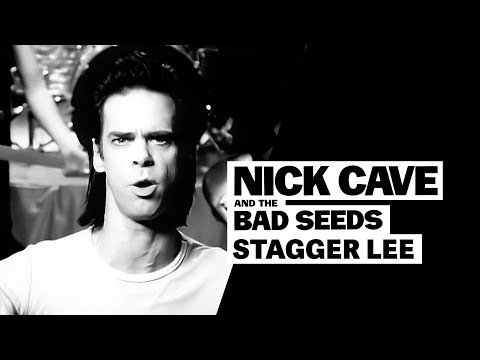
Nick Cave and the Bad Seeds’ Stagger Lee is a take on a traditional folk song; a dark and violent tale, told from the perspective of Stagger Lee, a notorious figure in American folklore. His entire character is created from his appearance in different songs by different bands over the years. It is said that Stagger Lee is one of the most frequently written-about characters who was never originally conceived in a novel, short story, film, or other traditional narrative form. In a recent interview with UnHerd, Nick Cave explained that his version is “highly problematic” and “offensive on many, many levels.” He cited the song as an example of his earlier work that he now regrets, stating that he would not write such lyrics today.
Despite its polemic nature, I always liked Stagger Lee‘s driving rhythm and haunting melody. Nick Cave’s distinctive baritone vocals are so brash and impactful delivering the song’s dark and twisted narrative. I can’t get enough of it. Face the evil up close and get a taste of it. It’s an expose on this malevolent being that rarely is captured in Song. Stagger Lee appears to remain a fan favourite and a standout track in Nick Cave and the Bad Seeds’ discography. The video below is the ants pants as far as I’m concerned. There are various recordings and spellings (stackolee, stagolee, stagger lee, stack a lee) of this song going back decades. Cave’s version draws most of the lyrics from a 1967 transcription published in the 1976 book The Life: The Lore and Folk Poetry of the Black Hustler.
[Verse 1] It was back in ’32 when times were hard He had a Colt .45 and a deck of cards Stagger Lee He wore rat-drawn shoes and an old Stetson hat Had a ’28 Ford, he had payments on that Stagger Lee His woman threw him out in the ice and snow And told him, “Never ever come back no more Stagger Lee” So he walked through the rain and he walked through the mud Till he came to a place called The Bucket Of Blood Stagger Lee He said “Mr Motherfucker, you know who I am” The barkeeper said, “No, and I don’t give a good goddamn” To Stagger Lee He said, “Well bartender, it’s so plain to see I’m the bad motherfucker called Stagger Lee Mr. Stagger Lee” Barkeep said, “Yeah, I’ve heard your name down the way And I kick motherfucking asses like you every day Mr Stagger Lee” Well ah, those were the last words that the barkeep said Cause Stag put four holes in his motherfucking head
[Verse 2] Just then in came a broad called Nellie Brown Known to make more money than any bitch in town She struts across the bar, hitching up her skirt Over to Stagger Lee, she startin’ to flirt Oh, Stagger Lee She saw the barkeep, said, “O God, he can’t be dead!” Stag said, “Well, just count the holes in the motherfucker’s head!” She said, “You ain’t look like you scored in quite a time Why not come to my pad? It won’t cost you a dime Mr. Stagger Lee!” “But there’s something I have to say before you begin You’ll have to be gone before my man Billy Dilly comes in Mr. Stagger Lee” “I’ll stay here till Billy Dilly comes in, till time comes to pass And furthermore I’ll fuck Billy Dilly in his motherfucking ass” Said Stagger Lee “I’m a bad motherfucker, don’t you know And I’ll crawl over fifty good pussies just to get to one fat boy’s asshole!” Said Stagger Lee Just then Billy Dilly rolls in and he says, “You must be The mad motherfucker called Stagger Lee” “I’m Stagger Lee Yeah, I’m Stagger Lee and you better get down on your knees And suck my dick, because If you don’t you’re gonna be dead” Said Stagger Lee Well, Billy Dilly dropped down and slobbered on his head And Stag filled him full of lead *gunshots* Oh yeah [Outro] *screaming*
The following was extracted from the Wikipedia reference below: The track was released on Nick Cave and the Bad Seeds’ 1996 album Murder Ballads. As the name suggests, the album consists of new and traditional murder ballads, a genre of songs that relays the details (and often consequences) of crimes of passion. Murder Ballads was the band’s biggest commercial success to date, most likely helped by the unexpected repeated airplay of the “Where the Wild Roses Grow” video on MTV. Cave later said: “I was kind of aware that people would go and buy the Murder Ballads album and listen to it and wonder ‘What the fuck have I bought this for?’ because the Kylie song wasn’t any true indication of what the record was actually like.” In December 2021, the album was ranked at no. 13 in Rolling Stone Australia’s “200 Greatest Australian Albums of All Time” list.