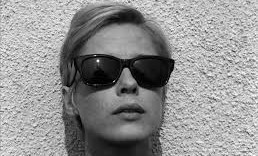
I’ve always liked the understated album cover of Darkness on the Edge of Town. It seems like Bruce wasn’t interested in the usual pomp and spectacle—no elaborate “Bringing It All Back Home” setup here. Instead, it’s as if he just threw on a black jacket after rolling out of bed, got the shot, and moved on. That straightforward approach leads us neatly into today’s featured track, ‘Something in the Night.’ This is Bruce stripped down to the essentials, with raw ache in his voice, laying it all out there. What’s not to love?
Something in the Night is the third song from his fourth studio album Darkness on the Edge of Town presented here after his previous entry Racing in the Street. Both songs are about cars and yearning for something better, something that’s just out of reach. I love the simplicity of his lines about being born with nothing and being better off that way; otherwise, they’ll just take it all away. The exuberance of the idealism and escapism of youth was captured in his magnum opus – Born to Run, but there is something darker here on display. It may be that credulity portrayed earlier ends up coming to a screaming halt (And left us running burned and blind) as the responsibility of adulthood and reality of life comes a calling.
Also consider that musically, Darkness on the Edge of Town strips the Wall of Sound production of its predecessor, Born to Run for a rawer sound emphasizing the band as a whole and where Bruce was going with more sombre and personal undertakings such as The River and Nebraska. Here in ‘Something..’ the lyrics are stripped back and like the rest of the album focus on ill-fortuned characters including his father in Factory.
Well, I’m riding down Kingsley Figuring I’ll get a drink Well, I turn the radio up loud So I don’t have to think
And I take her to the floor Looking for a moment when the world seems right And I tear into the guts, mmm Of something in the night
Well, you’re born with nothing And better off that way Soon as you’ve got something, they send Someone to try and take it away
Well, you can ride this road till dawn Without another human being in sight Yeah, just kids wasted on, mmm Something in the night
[Bridge] Well, nothing is forgotten or forgiven When it’s your last time around And I got stuff running ’round my head That I just can’t live down
Well, we found the things we loved They were crushed and dying in the dirt We tried to pick up the pieces And get away without getting hurt
But they caught us at the state line Burned our cars in one last fight And left us running burned and blind, mmm Chasing something in the night
The album Tarot Suite (shown inset), which features Lady of the Dawn was a treasured presence in our household as I grew up on Sydney’s western outskirts. Despite the limited information available about it—even lacking a dedicated Wikipedia page—Tarot Suite, recorded with the London Symphony Orchestra, holds an enigmatic quality that mirrors its tarot-inspired theme. The album presents a distinctive fusion of rock, pop, and classical music, inspired by the 22 major arcana tarot cards. Its concept is elaborated in the inner sleeve, which includes notes on the tarot, card motifs, track titles, credits, and lyrics.
The fourth track on the album, Lady of the Dawn, is a love ballad deeply rooted in ancient, mystical, and archetypal feminine folklore. The song explores the allure and magnetism of the feminine figure and the way the masculine is drawn to her purity, symbolizing new beginnings and rebirth. The Lady emerges as a symbolic embodiment of the protagonist’s aspirations and deepest desires, even if these desires remain just out of reach. Musically, Lady of the Dawn veers away from the medieval rock stylings of preceding tracks like Journey of a Fool and Imbecile, which also incorporate mythology and tarot themes.
Lady of the dawn You opened up my sleeping eyes I never knew That I was born
But I like you for your body And I love you ’cause you’re wise I am your prisoner You’re my lady of the dawn
You are the dealer In this strange uncertain game Take my cards and deal again I can feel my life is changing
Woman, now you’ve taught my how to learn Teach me to earn The love you give to me The love you give to me
Lady of the dawn You opened up my sleeping eyes I never knew That I was born
But I like you for your body And I love you ’cause you’re wise I am your prisoner You’re my lady of the dawn
I was waiting In the darkness of the night Only now, I see the light Softly shining in the side lids
Woman, if you really hold the key Turn it for me And help me understand Help me understand
Lady of the dawn You opened up my sleeping eyes I never knew That I was born
But I like you for your body And I love you ’cause you’re wise I am your prisoner And you’re my lady of the dawn
Despite Tarot Suite‘s relative obscurity it has retained somewhat of a dedicated fan base based on feedback from my previous posts especially my first from the album – Imbecile. And lets not forget how Journey of a Fool was used as the theme for the Sydney radio station Triple M; from its first broadcast in 1980 until the 1990s. Over the course of May 2010, this theme tune was re-recorded by Slash, former Guns N’ Roses guitarist, as a new theme to mark the 30th anniversary of Triple M in Sydney. A fellow blogger friend Christian at Christian’s Music Musingsstated in my June post of Run Like the Wind which is the finale of the album that Lady of the Dawn ‘received a good amount of air time on my go-to German pop radio station at the time‘.
Michael Philip Batt, LVO (born 6 February 1949) is an English singer-songwriter, musician, arranger, record producer, director, and conductor. Having attained international recognition as a solo artist, his notable contributions in the UK include creating The Wombles pop act, writing hits including the chart-topping Bright Eyes (also ft. Art Garfunkle), and introducing Katie Melua to the music scene.
He has conducted many orchestras, including the London Symphony, Royal Philharmonic, London Philharmonic, Sydney Symphony and Stuttgart Philharmonic in both classical and pop recordings and performances.
I too got swept-up in the Robbie Williams’ craze when he was churning out hit out of hit both sides of the turn of the century. On this still fresh yet sunny Saturday morning in Bogotá, I gave today’s featured track a spin for the first time in a long time and found myself singing it with full gusto. I had forgotten how much I liked it and still do. This is the third Williams song to appear here after his other stand-outs Angels and Feel. Given the amount of airplay these tunes have received in the Western World, even here in Colombia, it is almost certain you would be familiar with them.
Something Beautiful is a song co-written by Guy Chambers and Robbie Williams. Originally offered to Welsh singer Tom Jones (After his team passed on the song, Williams decided to keep it for himself), it was released as the third single from Williams’ fifth studio album Escapology (2002). According to Songfacts, Williams explained on his website he wasn’t in a good place when he wrote the song, describing it as being about “sitting in bed at night thinking ‘I wish I wasn’t here by myself.'” Nevertheless, the song ends on a positive note, with Williams singing in the chorus: “You won’t be lost, hurt, tired, and lonely, something beautiful will come your way.”
[Verse 1] You can’t manufacture a miracle The silence was pitiful that day And love is getting too cynical Passion’s just physical these days
[Pre-Chorus] You analyse everyone you meet But get no sign, loving kind Every night you admit defeat And cry yourself blind
[Chorus] If you can’t wake up in the morning ‘Cause your bed lies vacant at night If you’re lost, hurt, tired or lonely Can’t control it, try as you might May you find that love that won’t leave you May you find it by the end of the day You won’t be lost, hurt, tired and lonely Something beautiful will come your way
[Verse 2] The DJ said on the radio Life should be stereo each day And the past that cast the unsuitable Instead of some kind of beautiful You just couldn’t wait
[Pre-Chorus] All your friends think you’re satisfied But they can’t see your soul, no, no, no Forgot the time feeling petrified When they lived alone
The music video below, entitled Manufactured Miracles, is a parody of reality television shows such as Pop Idol, which were hugely dominant in the media at the time. It depicts people auditioning to appear in the video, with Williams’ dad Pete Conway among the judges. At the end of the video, British contestant Peter Caruna is revealed as the winner of the competition. Caruna went on to work as both a Williams and Simon Cowell look-alike, and feature in commercials for the frozen pizza brand Chicago Town.
Robbie is just one month shy younger than me born on February 13, 1974 which makes him an Aquarius. We could have been good friends..I get along very well with Water Bearers.
Ken Miles: You’re gonna build a car to beat Ferrari with… a Ford.
Carroll Shelby: Correct.
Ken Miles: And how long did they tell you that they need it? Two, three hundred years?
Carroll Shelby: Ninety days.
[Ken laughs hysterically]
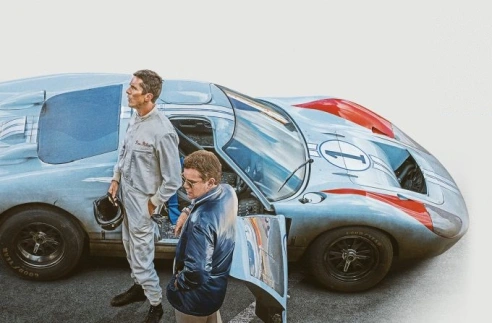
I change channels after watching 30 seconds of a F1 or Motor GP race. I’ve never watched a car race in my life. I have absolutely no knowledge of the historic events surrounding the Ford and Ferrari motor companies. I’m the least bit ‘grease monkey’man I know. I have a hard enough time opening a bonnet let alone rummaging under it. I am Larry David in this clip with a flat tyre. So to say I was expecting much diversion or connection with today’s featured film Ford v Ferrari would be stretching it.
IMDB Storyline: American car designer Carroll Shelby and driver Ken Miles battle corporate interference and the laws of physics to build a revolutionary race car for Ford in order to defeat Ferrari at the 24 Hours of Le Mans in 1966.
I watched the film at the local cinema when it first came out. As expected, it didn’t blow me away, but I found it solid and engaging. Since then, I’ve caught it a few times on cable, and with each viewing, my appreciation and enjoyment have grown. It allows the viewer (as ignorant about cars as I am) to come into it from an empty slate, and inform and provide plenty of entertainment on almost every front. There is so much overall fun in Ford v Ferrari. It never takes itself too seriously, and it isn’t a comedy although there are some chuckles to be had like when Shelby and Miles have it out in the park. This movie above all is about a ‘Bromance’ – It’s a friendship story.
Christian Bale and Matt Damon both deliver excellent performances, with Damon especially surprising me. I had confidence in Bale’s ability to nail his role of a unique, quirky, but likeable racing driver and mechanic, but I didn’t expect Damon to embody the rugged, Southern-accented Carroll Shelby so convincingly. Shelby, an iconic American car designer, had retired after winning the gruelling 1959 ’24 Hours of Le Mans’ endurance race. Damon really impressed me here, and I’ve shared a clip below featuring my favourite part, where Shelby takes Henry Ford II for a ride. The reactions at the end? Absolutely priceless.
To prepare for his role, Christian Bale took race driving lessons at the Bondurant High Performance Driving School. Bale got to hear stories of the 1960s racing scene. Robert Nagle, Bale’s instructor and the film’s stunt coordinator, called Bale “hands down the best actor I’ve ever trained.”
Matt Damon said that the number one reason he wanted to do the movie was to work with Christian Bale.
According to Matt Damon, Christian Bale had to lose 70 pounds before filming began. Bale had previously gained a lot of weight for his role in Vice (2018) and had about seven months to lose it all to play the lean race car driver. Damon asked Bale how he managed to lose all the weight, and Bale replied that he simply didn’t eat. Damon said he was impressed by Bale’s monk-like discipline.
[Shelby sees Enzo Ferrari arguing with his team] Carroll Shelby: I don’t speak Italian, but he ain’t happy.
Why does it not surprise me to learn Something is a George penned track. Along with Here Comes the Sun from the same record Abbey Road, music historians marked Something as his ascendancy as a composer and foreshadowing the sparse and luscious sounds of his immediate offerings as a solo artist subsequent to The Beatles demise although he had written many of the songs beforehand. Something is a striking outpouring to the loved ones in our lives. I was initially so-so with this song, but over time I have come to recognise it as a beautiful love song. I like how it’s without metaphors, direct, that goes deep into the heart, without asking permission; so subtle that you only know it is there when it is already deep inside. Heck, it was even hailed by Frank Sinatra as the greatest love song of the past 50 years. It was him also who mistakenly introduced it in live performance as a Lennon-McCartney song. My favourite part of Something is its magnificent Bridge which projects it into the stratosphere.
There seems some conjecture about who the song was penned for. Presumably given the images in the video below it was about Pattie Boyd – Harrison’s then-wife (who would go on to get involved with numerous other rockstars, most notably Eric Clapton).
George later denied that the song was about her:
Well no, I didn’t [write it about her]. I just wrote it, and then somebody put together a video. And what they did was they went out and got some footage of me and Pattie, Paul and Linda, Ringo and Maureen, it was at that time, and John and Yoko and they just made up a little video to go with it. So then, everybody presumed I wrote it about Pattie, but actually, when I wrote it, I was thinking of Ray Charles.
[Verse 1] Something in the way she moves Attracts me like no other lover Something in the way she woos me
[Chorus] I don’t want to leave her now You know I believe and how
[Verse 2] Somewhere in her smile, she knows That I don’t need no other lover Something in her style that shows me
[Chorus] I don’t want to leave her now You know I believe and how
[Bridge] You’re asking me, will my love grow? I don’t know, I don’t know You stick around, now, it may show I don’t know, I don’t know
[Verse 3] Something in the way she knows And all I have to do is think of her Something in the things she shows me
[Chorus] I don’t want to leave her now You know I believe and how
Something began to be composed in 1968, during the recording and production sessions of the White Album. Songs were starting to be written by each of the members separately as if four individuals are each going their own way. George Harrison’s original idea was to compose the song for another artist. Names like Jackie Lomax and Joe Cocker for instance, the latter recording a demo and release after The Beatles‘. Yet Lennon and McCartney saw Something as the best composition yet of their partner – selecting it as the first single from the album Abbey Road, which was the last album The Beatles recorded.
Although George Harrison was giving shape to Something; it was still not ready for the White Album so it was put on the back burner for a few months then worked on again and recorded during the sessions of the Abbey Road album. Two weeks after the album’s release, the song was issued on a double A-side single, coupled with Come Together, making it the first Harrison composition to become a Beatles A-side peaking at No4 in the UK and No1 in the US.
Bob Dylan’s 1983 resurgence album Infidels includes some fantastic outtakes like Blind Willie McTell, Foot of Pride and today’s featured song Someone’s Got a Hold of My Heart. It boggles the mind how he could leave these gems off the record. I find listening to ‘Someone..’ a pure delight that enriches my senses and always leaves me with a spring in my step. It holds an intimate, raw charm which I can’t get enough of. If I devised a list of what I considered Bob Dylan’s most overlooked or underrated songs, then Someone’s Got a Hold of My Heart would assuredly be in my top 10. The lyrics here are spectacular conveying a palpable tension between desire and detachment, as if he’s caught in a whirlwind of emotional uncertainty. The images he evokes just in these 4 lines are something else:
I can hear that hot-blooded singer On the bandstand croon Poisoned Love, Red Roses for a Blue Lady and Memphis in June While they’re beating the devil out of a guy who’s wearing a powder blue wig
This outtake was rebooted for Dylan’s subsequent album Empire Burlesque titled Tight Connection to My Heart (Has Anybody Seen My Love) which I regard as the inferior version. Dylan used the basic track from one of the “Someone…” takes from 1983, and added vocal overdubs in January 1985, including vocals by female backup singers. Also in the Burlesque version he replaced blazingly original lines from Someone’s Got a Hold of My Heart with excerpts from Humphrey Bogart movie scripts which biographer Clinton Heylin complained of: “reliance on the dialogue of Hollywood scriptwriters for any lyrical gaps“. Also Jonathan Lethem, contributor to The Cambridge Companion to Bob Dylan, was disappointed that the rewrite “replaces the original’s vulnerable tone with a Bogartishly hardboiled one“.
Infidels was produced by Mark Knopfler and Dylan himself and is seen as his return to secular music, following a conversion to Christianity and a subsequent return to a less religious lifestyle. Knopfler played guitar on the Infidels’ album including Someone’s Got a Hold of My Heart as he did on Dylan’s Slow Train Coming in 1979. Knopfler’s playing was paired with that of Mick Taylor, a former lead guitarist of the Rolling Stones. Dylan initially wanted to produce the album himself, but feeling that technology had passed him by, he approached a number of contemporary artists who were more at home in a modern recording studio. David Bowie, Frank Zappa and Elvis Costello were all approached before Dylan hired Knopfler.
[Verse 1] They say, “Eat, drink and be merry Take the bull by the horns” I keep seeing visions of you, a lily among thorns Everything looks a little far away to me
[Verse 2] Getting harder and harder to recognize the trap Too much information about nothing Too much educated rap It’s just like you told me, just like you said it would be
[Verse 3] The moon rising like wildfire I feel the breath of a storm Something I got to do tonight You go inside and stay warm
[Chorus] Someone’s got a hold of my heart Someone’s got a hold of my heart Someone’s got a hold of my heart You Yeah, you got a hold of my heart
[Verse 4] Just got back from a city of flaming red skies Everybody thinks with their stomach There’s plenty of spies Every street is crooked, they just wind around till they disappear
[Verse 5] Madame Butterfly, she lulled me to sleep Like an ancient river So wide and deep She said, “Be easy, baby, ain’t nothin’ worth stealing in here”
[Verse 6] You’re the one I’ve been waiting for You’re the one I desire But you must first realize I’m not another man for hire
[Chorus]
[Verse 7] I can hear that hot-blooded singer On the bandstand croon Poisoned Love, Red Roses for a Blue Lady and Memphis in June While they’re beating the devil out of a guy who’s wearing a powder blue wig
[Verse 8] I been to Babylon I gotta confess I could still hear the voice crying in the wilderness What looks large from a distance, close up is never that big Never could learn to drink that blood and call it wine Never could learn to look at your face and call it mine
Nearly every song in the 2016 musical La La Land is a showstopper which would explain why Someone in the Crowd is the 6th music piece to appear from the movie after the previous entry – Planetarium. The only other movie soundtrack which has featured here more is Amadeus by Milos Forman which tops my 100 favourite movies list and La La Land falling in close behind at number 7.
My least favourite genre in cinema was the musical, that is until I saw La la Land. It holds my cinema attendance record of 5 viewings. It is a superb film about the exuberance of and dedication to artistry and how romantic love, yes, even the emergence of a soul mate can intrude on that exuberance and dedication. May be I was part of a lost generation in the appreciation of the ‘musical’ and La La land acted like a portal to woosh me back to a time when cinema was grandiose. La la land represented that kind of movie they just don’t make anymore. It’s a montage of sorts of all that was great about cinema in particular 50’s Hollywood musicals. The songs are fantastic from beginning to end. It’s a wonderful family movie as well, at least for this family. My kids are as crazy for it as their Mum and Dad.
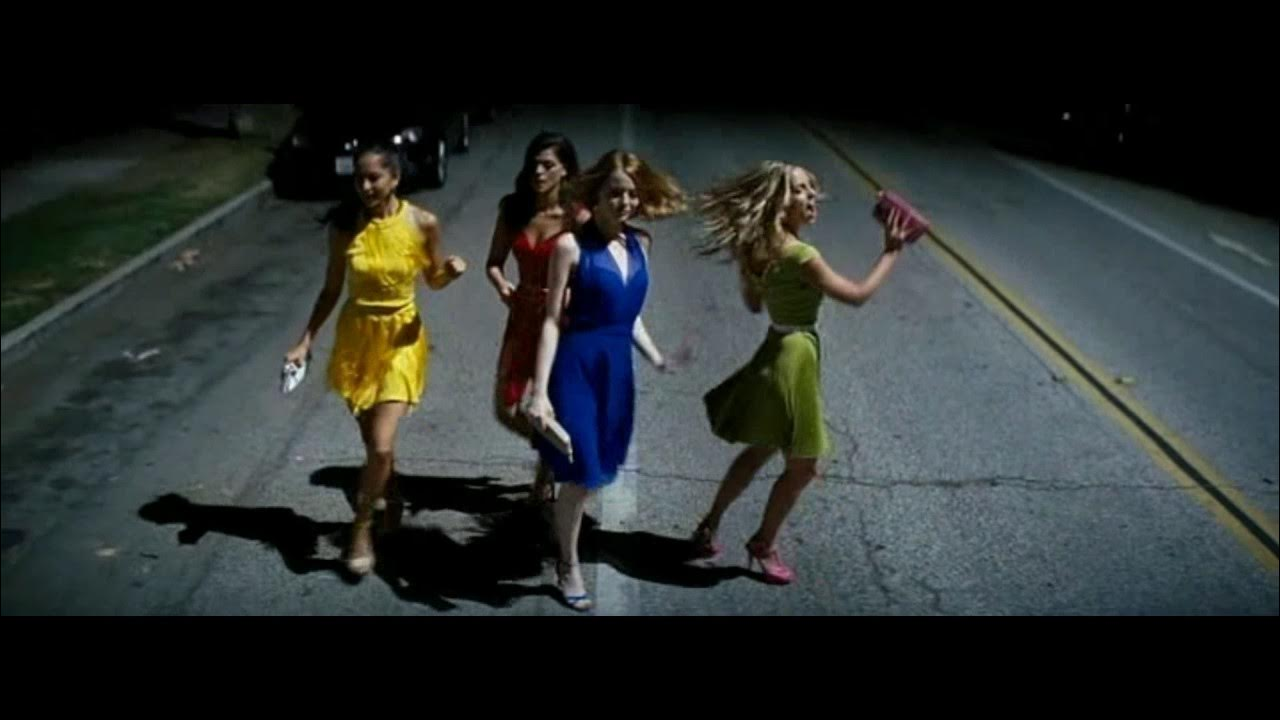
Someone In The Crowd is performed by Mia (Emma Stone) along with her flatmates, all aspiring actresses, living together hoping to make it big in Los Angeles. The girls are encouraging Mia to join them for a party they’re going to, even though she’s had a bad audition. The climax moments in this song are the pool scenes which are so wonderfully choreographed. It really is such an exhilarating production number.
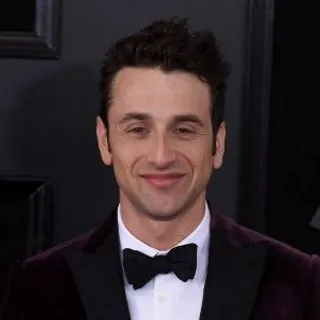
Justin Hurwitz
This is where director Damien Chazelle and composer Justin Hurwitz (image inset) bring in the concept of musical foreshadowing – bringing in several references into what is about to happen, from serendipitous meetings to magic under the stars, all through a premonitory fate of events about to occur. Justin Hurwitz said the following about the songwriting process of Someone In The Crowd:
“‘Someone in the Crowd’ is a big, fun production number. It’s like ‘Another Day of Sun’ in that there’s a lot going on. It’s a big orchestration. There’s a dense vocal arrangement, because all of Mia’s roommates. As I was making that vocal arrangement, I was talking to Damien about the blocking of the scene and trying to find moments between the three girls and how those lines are divided up. I say three girls because Mia is mostly a spectator of the song until she gets her own verse later on. I was thinking about where they were geographically, both in a blocking sense and a musical sense, and how you find those little pockets where their harmonies or countermelodies can come to the surface. And the orchestration, it’s just fun and jazzy. The song has a somewhat tongue-in-cheek tone to it because they’re singing about the games you have to play in Hollywood. I don’t think those girls totally believe what they’re singing but they’re also game for the process of the whole Hollywood world. The song was trying to straddle this somewhat cheeky but also nostalgic tone at the same time. It’s jazzy and it’s fully orchestral and it’s romantic, and then certainly in the second act of the song when we catch up with Mia, that’s where it becomes a more emotionally honest song. It goes from being kind of silly, like, “Let’s just put on sexy dresses and go to a party,” to a more emotional thing of Mia in the bathroom thinking about her dreams and the realities of the industry. And that’s where the arrangement collapses into just piano with some very, very light strings. The melody — which, when used as the chorus of the song, is up-tempo, exciting — becomes very sad when played slow and kind of rubato and free time. We wanted to have a song that can go from so happy, silly, excited, to so introspective and then back at the end of the song to a full-blown production number again”.
[TRACY] You got the invitation
[ALEXIS] You got the right address
[TRACY] You need some medication?
[CAITLIN] The answer’s always “yes”
[TRACY] A little chance encounter Could be the one you’ve waited for
[ALEXIS, CAITLIN & TRACY] Just squeeze a bit more
[ALEXIS] Tonight we’re on a mission Tonight’s the casting call
[CAITLIN] If this is the real audition [MIA] Oh, God, help us all
[TRACY] You make the right impression Then everybody knows your name
[AlEXIS & CAITLIN] We’re in the fast lane
[ALEXIS] Someone in the crowd Could be the one you need to know The one to finally lift you off the ground
[TRACY] Someone in the crowd could Take you where you wanna go If you’re the someone ready to be found
[ALEXIS] The someone ready to be found
[CAITLIN & TRACY] Do what you need to do ‘Til they discover you
[ALEXIS, CAITLIN & TRACY] And make you more than who You’re seeing now So with the stars aligned
[MIA] I think I’ll stay behind
[ALEXIS, CAITLIN & TRACY] You’ve got to go and find
[CAITLIN] That someone in the crowd
[ALL] That someone in the crowd
[MIA] Is someone in the crowd the only thing you really see? Watching while the world keeps spinning ’round? Somewhere there’s a place where I find who I’m gonna be A somewhere that’s just waiting to be found
[ALL] Someone in the crowd could be the one you need to know The someone who could lift you off the ground Someone in the crowd could take you where you wanna go Someone in the crowd could make you Someone in the crowd could take you Flying off the ground If you’re the someone ready to be found
The moral clarity Douglas Murray has, is unmatched in my estimation and a national treasure in the UK and the world. He shines a light on the most important subjects in the world, and does so, as seen in this interview; in a deeply caring and enlightening manner juxtaposed with a wicked sense of humour.
This conversation between Murray and Bari Weiss was released on the one year anniversary of October 7th. I found it a privilege to listen to. They look back at a year of war and discuss the moral urgency of these moments and the stakes of the war.
In reference to this topic I would like to point readers to the following article I published on December 3, 2023 Prof Conf on Sexual Violence Aspects of October 7th, 2023 in Israel: I warn you this is highly distressing listening / viewing, but it needs to be forwarded so that people are aware of what happened and what we are faced with. People need to wake up to this terror threat right now. Our Governments need to head this straight on. At 59:00 minute is something that no one could forget. And most people shouldn’t hear it.
This documentary (or as Dylan called it ‘an anti-documentary’) explores Bob Dylan and The Hawks (aka The Band) on their infamous 1966 “Judas” tour of the UK. It’s a great couplet to Pennebaker’s Don’t Look Back. I remember seeing Eat the Document on a grainy VHS tape back in the day and when I saw this version the other day on my living room TV I was more than impressed by the quality. Also just to hear those monumental ‘Play it Loud!’ second set songs from the tour again, transported me back to when I first heard them and left me gobsmacked all over again. The whole Bob Dylan Live 1966 Bootleg from the legendary Manchester Free Trade Hall concert is the beacon of rock defining moments in my music collection.
‘Maria’ is the third in a trilogy of films about high-profile, complex women from director Pablo Larraín, following his movies about Jacqueline Kennedy and Princess Diana. (You can find a trailer for Maria here or an alternate one here)… Written by Peaky Blinders creator Steven Knight, the film focuses on Callas’s final years, in the 1970s, when she was living in Paris.
With Jolie taking on acting roles relatively rarely in recent years, the film has provided something of a comeback narrative for her and could lead to an Oscar nomination for best actress.’
Irish indie rock band Pillow Queens were formed in Dublin in 2016. Their members are Pamela Connolly (vocals, guitar), Sarah Corcoran (bass, backing vocals, pump organ), Cathy McGuinness (guitar, backing vocals) and Rachel Lyons (drums, backing vocals). After a series of singles, they released their debut album In Waiting in September 2020. Off their third and new album Name Your Sorrow, here’s Like a Lesson.
From the first moment I heard Like a Lesson at Christian’s Music Musings it yelled ‘cool’ to me. And don’t get me started when Pamela Connolly sings the word ‘wrapped’ during the choruses, especially ‘And now I’m wrapped around your legs‘. There are so many great lines in this song. The chorus “I don’t wanna ruin my life/But I wanna go home with you” in Connolly’s voice is going to stick in your head. It seems to explore the thin line between being scared and desiring someone. This is modern music I want to hear. With its crafty musicianship (the guitar riffs and strong drum beats) and the lyrics which feel whimsical, but deep at the same time; Like a Lesson tickles the senses and leaves me wanting more.
“It (Like a Lesson) began as a song we felt had a strong country music influence and morphed into something that referenced a wide range of our musical tastes. It’s the 90s soft rock song on the album”
– Pillow Queens
As usual you can find the official video at the end of this article, but I’ll point you to this very fine acoustic version at Hopeless Botanics Dublin.
[Verse 1] I’ve been more than myself now, I tried to talk to God But He said sort yourself out Growing up gets good when you’re clawing your life back Just focus on yourself, but I don’t really like that
[Chorus] You treat me like a lesson, you treat me like a test I thank my lucky stars you don’t treat me like the rest And I wrapped it around my fingers Wrapped it around my head Wrapped it around and ’round And now I’m wrapped around your legs
[Refrain] You said, you said, you said you’re sorry You’re not enough to keep me happy It’s just a cliff, no one can stop me We’re so predictable
[Chorus x 2]
[Bridge] I don’t wanna ruin my life, but I wanna go home with you I don’t wanna ruin my life, but I wanna go home with you It’s the shapes that you make and your body is safe It’s the shapes that you make and your body is safe
[Verse 2] Good grief, give me a reason, an hour of your time A kiss every season Leander in the blue swims up for a greeting I really do love you, but nobody believes me
[Refrain]
As Christian stated, the Irish quartet released Like a Lesson, from their album Name Your Sorrow (see album inset) in April this year. Pillow Queens started their musical career back in 2016 and released their first album, “In Waiting” in 2020. After signing with Canada’s Royal Mountain Records, they toured around the UK, Europe and North America when releasing “Leave the Light On” (2022).
Guitarist Cathy McGuinness explained that they would work every day, from 9 to 5, in a windowless Dublin room to just “play, swap instruments and experiment”. So they could work on “Name Your Sorrow”, they decided to do a rural retreat in County Clare. “We got on this very non-verbal kind of wavelength, where you just kind of picked up your instruments. It was very instinctive and the most communal experience we’d ever had of working.”
(Light of my Life) It’s a very meaningful song to me written about my wife
– Joe (singer – songwriter) of Asgard Raven
The 26th of January, 2024 saw the release of today’s featured song Light of My Life from UK Indie Rock band Asgard Raven. It was the first of five tracks you can check out here on Soundcloud or listen to on You Tube at the end of this article.
On the third of this month, Joe sent me a message asking if I could review his music. While I do not do reviews per se I told him it would a pleasure to listen to a song he had in mind. So upon listening to the Soundcloud listing, I told him how I would like to feature Light of My Life since it jumped at me immediately; reminding me of two immense ballads from my favourite Australian band My Friend the Chocolate Cake, namely: It’s All in the Way and More Heart Than Me. Joe was very forthcoming with links (inc. the Asgard Raven web site) and bio information, which included the following:
Producing songs born from his experiences during deployments in the Army and influenced by his love of extreme sports, Joe (singer and songwriter) has taken the next step towards bringing them to life and releasing them to the public. Drawing on many musical influences including punk, rock, blues and indie music, he produces a unique landscape of sound reminiscent of early 90s Brit pop and rock records.
Asgard Ravens’ music is recorded at Sunrise Sound Studio in Hampshire, produced by Marc Burford of Echotape and mixed by Mat Leppanen at the Animal Farm’s studio in London.
In case you wondered as I did about the origin of the name ‘Asgard Raven‘, Joe told me it is linked to Valhalla and Odin from Norse mythology around fallen warriors – and his first song Until Another Day is a tribute to a close friend who died in Afghanistan. I highly recommend watching the aforementioned song-video to get not only a musical sense of who Joe is (Asgard Raven), but a visual one as it features him during the recording process.
Before I sign off, I would like to point you to my esteemed fellow blogger – Jeff’s review at Eclectic Music Lover of another Asgard Raven single released in March this year called For Us All.
And not only does the music seem to channel Oasis, Raven’s vocals even sound a bit like Liam Gallagher’s here, his strong British accent shining through as he offers support to a friend who’s struggling: “The world can be a lonely place sometimes. And no one can see the pain behind your smile. Come on my friend, lean on me. Take my hand, let it all be.“
Thank you for reading as always. I hope you enjoy Light of My life from Asgard Raven.
Light of my Life
I had to think hard to find the words I want to say to you,
So many reasons not to do what you do, for me.
It’s not so easy to be there the way you are but you are, every day.
You pick me up when I’m broken, give me strength when I’ve just woken, and breath the air into my wings to help me fly.
You talk me round when I am doubting, you’re by my side when times’re hard, and you take away the pain that makes me wanna cry.
Thank you, light of my life.
My guiding light when I’m lost and lonely, bring me home to you.
And when I feel like I am drowning you tell me it’ll be ok.
It’s not so easy to be there the way you are but you are, every day.
You pick me up when I’m broken, give me strength when I’ve just woken, and breath the air into my wings to help me fly.
You talk me round when I’m doubting, stand by my side when times’er hard, and take away the pain that makes me wanna cry.