Don’t Give Up – Peter Gabriel (Feat. Kate Bush)

One of the best bridges that I have heard in all of modern music is in this song – Don’t Give Up. And it’s short and may not provide you with all the music goodies, but it sure did me when I was a youngen’. I think the album ‘So‘ is the first cassette tape I can ever remember procuring. The song Sledgehammer was a big hit and its video clip received great honours for its stop motion animation in the MTV Golden era. Now back to Don’t Give Up at 2:55 in the video below where Gabriel transforms the song in this bridge:

Got to walk out of here, I can’t take any more
Gonna stand on that bridge, keep my eyes down below
Whatever may come and whatever may go
That river’s flowing, that river’s flowing

There is only one other song with a bridge as captivating to my ears and that is Bruce Springsteen’s Countin’ on a Miracle at 1:47 in this video of his concert in Barcelona.

[Bridge]
Sleeping beauty awakes from her dream
With her lover’s kiss on her lips
Your kiss was taken from me
Now all I have is this
Your kiss, your kiss, your touch, your touch
Your heart, your heart, your strength, your strength
Your hope, your hope, your faith, your faith
Your face, your face, your love, your love
Your dream, your dream, your life, your life

Mind you, I’m just thinking off the top of my head and I imagine there are loads better ‘bridges’, but it’s just these two which come to mind now.

Don’t Give Up is a song written by English musician Peter Gabriel and recorded as a duet with Kate Bush for Gabriel’s fifth solo studio album So (1986). The single version was released as the second single from the album in the UK in 1986 and as the fifth single in the US in 1987. ‘So‘ is Gabriel’s best-selling album, having been certified fivefold platinum by the (RIAA).

The song was inspired by the Depression-era photographs of Dorothea Lange, showing poverty-stricken Americans in Dust Bowl conditions. Gabriel saw Lange’s images in a 1973 book titled In This Proud Land. He felt that a song based on this was wholly appropriate to difficult economic conditions in England under the premiership of Margaret Thatcher. But let’s put this thing into perspective here and I relay this extract from my article January 4 this year:

In 1980 where 4 people in 10 lived on less than 2 dollars a day (adjusted for inflation), now it is 1 in 10. This is the greatest alleviation of poverty in human history.

In a survey of college educated adults in the UK about extreme poverty only 12 percent of participants thought extreme poverty had been alleviated in this time period.

Gabriel originally wrote the song from a reference point of American roots music and he approached country singer Dolly Parton to sing it with him. However, Parton turned it down, so his friend Kate Bush took her place. Dolly Parton seems a popular go – to choice and British sing-songwriter David Gray in my article Kathleen also chose her and wrote a letter with a demo of his song. Parton turned down the offer as she was busy.

Reference:
1. Don’t Give Up (Peter Gabriel and Kate Bush song) – Wikipedia

Tagged with: , ,
Posted in Music

Come Monday (1974) – Jimmy Buffett

If there is anything to take away from this, it is this: Jimmy Buffett had his Hush Puppies on. Now I assumed that line was a keeper. But the single version replaced the line, “I’ve got my Hush Puppies on” with “I’ve got my hiking shoes on.” Dang! Buffett wrote the song to his wife while he was on tour. At a live performance in 1974, Buffett mentioned that he had written the song heading out to California the previous year.

Come Monday is a song first released on his 1974 album Living & Dying in ¾ Time. It was one of Buffett’s more popular songs that he has played at almost all of his concerts, typically changing the line “I just can’t wait to see you again” to “It’s so nice to be in…(location of show)…again“. Trying to appease the audiences. Why would you want to do that?

[Intro]
Houston Texas, Yeah
I remember back to Liberty Hall, the late show

[Verse 1]
Headin’ up to San Francisco
For the Labor Day weekend show
I got my Hush Puppies on
I guess I never was meant for
Glitter rock and roll

[Pre-Chorus 1]
Honey I didn’t know
That I’d be missin’ you so

[Chorus]
Come Monday it’ll be all right
Come Monday I’ll be holding you tight
I spent four lonely days in a brown L.A. haze
And I just want you back by my side

Come Monday was Buffett’s first Top 40 hit single, reaching No. 30 on the Billboard Hot 100 as well as No. 3 Easy Listening and No. 58 Country. I like this song and I got it most likely from one of you good folk. I could have imagined Don Williams singing this, and he got close singing Come Early Morning. I like what one listener said about listening to Come Monday: ‘I’m listening to this song on Tuesday‘.

I’m listening to this song on a Friday morn and I hope the authorities don’t come a knockin’. Speaking of appeasing audiences, this article will be released on a Saturday so all of you reading this are in deep guano.

It’s so nice to be in…(location of where you are reading)…again

References:
1. Come Monday – Wikipedia

Tagged with: , ,
Posted in Music

Burning Gold (2014) – Christina Perri

Now to the cream of the crop. What I always admire about seeing Christina Perri in her videos are the little imperfections which for me makes her seem more ‘Human‘. Speaking of which, if you haven’t heard her song Human then you are just letting all of the best in life pass you by. That song is commensurate with Nathy Peluso’s Sana Sana and Puro Veneno and demonstrates how just one person; alone can deliver exceptional song-artistry in a sole performance. No back-up sexy dancers to cajole anyone.

Onto the imperfections…When I first watched this Burning Gold video I was hung up on the lazy chorus, the cringy Cleopatra opening and her crappy Supremes wobble which doesn’t compare to the fluency of the dancers either side of her. But it’s Perri and when she sings ‘I’ve had enough, I’m standing up‘, all of my aforementioned concerns fall by the wayside. Like how she sung in Time of our Lives – the Mendihuaca Beach song – ‘I’d do it again and again and again‘.

Looking for an exit in this world of fear
I can see the path that leads the way
Mama never left, and daddy needs me here
I wish the wind would carry a change

Looking through the window to a world of dreams
I can see my future slip away
Honey, you won’t get there if you don’t believe
I wish the wind would carry a change

I’ve had enough
I’m standing up
I need, I need a change
I’ve had enough of chasing luck
I need, I need a change

I adore watching the Perri scenes in the bar. Note her intonations and inflections of voice, which so few can do like her. Also, her looks and expressions are priceless. Burning Gold was recorded for her second studio album, Head or Heart (2014). The song was used on seventh episode of second season of the American TV series, The Fosters. Burning Gold debuted at number 39 on the Billboard Adult Pop Songs chart. As with her previous mentioned single, Human, the song’s instrumentation consists primarily of piano, but it also incorporates a ukulele and drums.

Even how I imagined it, Perri seemed burnt out in this and this is reflected in Song Facts:

(She) didn’t want to be dealing with another potential single. “I hit this gnarly point where I stopped having good experiences,” she told Billboard magazine. “As a writer, I know you have to write sh—y songs to write good songs too...But the night before my last day, it was 4 AM and I was in a place where I just didn’t like music anymore, and I didn’t want to go,” Perri continued. “My manager said, ‘Can you, for me, go up in your pajamas and at least show up?’ So I go and I sit down and I said, ‘If I hear the word ‘single’ one more time, I’m going to throw up.” After taking the tired songstress for pizza, Kid Harpoon convinced her to return to his studio, and the song was birthed in just twenty minutes. Perri said: “We stayed up all night that night finishing it“.

Reference:
1. Burning Gold (song) – Wikipedia

Tagged with: , ,
Posted in Music

Love Itself (2001) – Leonard Cohen

Love Itself is the fourth song to appear here from Leonard Cohen’s tenth studio album Ten New Songs. It staggers me the sheer quantity of excellent music Leonard realised post 2000s. Of the 21 songs already posted here by Cohen, 9 of them were released since 2000. That’s extraordinary when you consider he was 66 years old in 2000. I have so much adoration for today’s featured song. It’s a slow, meditative piece, but feels as enduring and meaningful as any of his most alluring music. Sharon Robinson who features on the cover, produced and cowrote the album. It was produced in Cohen’s and Robinson’s home studios in Los Angeles. It was also Leonard’s first album in nearly 10 years.

The light came through the window
Straight from the sun above
And so inside my little room
There plunged the rays of love

In streams of light I clearly saw
The dust you seldom see
Out of which the nameless makes
A name for one like me

I’ll try to say a little more
Love went on and on
Until it reached an open door
Then love itself, love itself was gone

The following is paraphrased from some of the more insightful interpretations from Song Meanings:
A stream of light, meaningless in itself, seems to be in the context of a life charged by a relationship of love. Sometimes you can’t recognise it with the sun in your eyes. That relationship is now over, and his capacity “to see and feel” in a way that had been previously empowered by his relationship of love is now lost and extinguished. It’s about how we are created by the hand or the will of the Nameless from dust, and then have a trip through formless circumstances. And finally return to the same room where there is no difference between the nameless and the name or between being ever created or never being exists.

Before I present the following thoughts from Sharon Robinson below, I want to highlight just how incredible her voice is. She remarks how Alexandra Leaving is one of her favourites from Leonard Cohen. Watch her sing this song from 1:05 in this live version.

For his 80th birthday, in this BBC interview Sharon Robinson recollected her time with Leonard:

When we did Ten New Songs from 2001 we tried doing some different things and started singing in a lower register and I think that style of singing has evolved and just improved and gotten really amazing…Mostly Leonard had been studying Zen before that and writing all during that time and presented me with these amazing lyrics he had been working on. These very thoughtful and deep lyrics and I would mostly take the lyrics home and work on the music….I love Alexandra Leaving – that lyric is just a gift, I love Everybody Knows. There’s a song on Ten New Songs that isn’t as well known. It’s just magical. It’s a song called Love Itself..I feel very fortunate to have participated in those songs.

References:
1. Ten New Songs – Wikipedia
2. Song Meanings – Love Itself

Tagged with: , , ,
Posted in Music

Candle in the Wind (1973) – Elton John

Candle in the Wind is one of those songs that feels to me like it’s been around forever. Elton John and Bernie Taupin wrote it in 1973 as a tribute to Marilyn Monroe, though it always reached beyond her story. Taupin later said it was really about the way fame can swallow someone whole and how the public chooses to remember its icons. Elton’s early-70s voice, still warm and elastic, gives the song a kind of open-hearted sincerity that’s almost unmatched in contemporary music.

Everyone remembers where they were in 1997 when the song returned in its rewritten form: Goodbye England’s Rose, Elton’s tribute to Princess Diana. He performed it at her funeral in Westminster Abbey, and that single moment became one of the most-watched broadcasts in history. The new lyrics were built for a nation in grief. It went on to become the best-selling physical single of all time.

Musically, Candle in the Wind is simple – piano, soft percussion, and a melody that lifts just enough in the chorus to draw you in. But its legacy lives in how people connect to it. Many of us have a memory tied to this song: for me, it was hearing it on my parents’ vinyl, and later being enamoured by the Diana version, where Elton nudges his voice up a register in the final moments (around 3:45). It’s a small shift, but an undeniably moving one.

If Elton has many showman masterpieces, Candle in the Wind is his quiet one – the song where he steps back and lets the tribute speak for itself. And maybe that’s why it endures.

References:
1. Candle in the Wind – Wikipedia

Tagged with: , ,
Posted in Music

Love Is Just A Four-Letter Word (1968) – Joan Baez

I first heard Joan Baez perform Bob Dylan’s song Love Is Just A Four-Letter Word in the 1967 documentary of Bob Dylan’s 1965 tour of England – Don’t Look Back. From 3:00 minutes in the second video you can hear Joan sing a short version of this song after her excellent performance of another Dylan song – Percy’s Song. I always preferred how Love Is Just A Four-Letter Word sounded in her raw delivery on the tour over the released version. Whoever went for the sitar-guitar on the released version should have been strongly advised against it. Joan Baez performed the song numerous times throughout her career.

Dylan, it seemed was giving out songs like candy. So many artists were achieving fame and making a fortune off his lyrics and tunes. Baez is shown in the scene where she tells Dylan, “If you finish it, I’ll sing it on a record“. Baez first included the song on Any Day Now, her 1968 album of Dylan covers; and she has since recorded it three additional times. Dylan never released a version of his song, and never performed it live.

For back story about Joan Baez’s relationship with Bob Dylan, I point you to my article about Diamonds and Rust. That song is regarded by a number of critics and fans as one of her best compositions and it is my favourite song from her.

[Verse 1]
Seems like only yesterday I left my mind behind
Down in the gypsy café with a friend of a friend of mine
Who sat with a baby heavy on her knee
Yet spoke of life most free from slavery
With eyes that showed no trace of misery
A phrase in connection first with she occurred
That love is just a four-letter word

[Verse 2]
Outside a rattling store-front window, cats meowed to the break of day
Me, I kept my mouth shut, to you, I had no words to say
My experience was limited and underfed
You were talking while I hid
To the one who was the father of your kid
You probably didn’t think I did, but I heard
You say that love is just a four-letter word

Baez was born on Staten Island, New York, on January 9, 1941. Her father was Mexican and her mother Scottish. The Baez family converted to Quakerism during Joan’s early childhood, and she has continued to identify with the tradition, particularly in her commitment to pacifism and social issues. While growing up, Baez was subjected to racial slurs and discrimination because of her Mexican heritage. Consequently, she became involved with a variety of social causes early in her career. She declined to play in any white student venues that were segregated, which meant that when she toured the Southern states, she would play only at black colleges.

Based on my limited observations, the music of Joan is more popular here in South America than Bob Dylan. Baez emerged at the forefront of the American roots revival, where she introduced her audiences to the then-unknown Bob Dylan. Baez’s distinctive vocal style and political activism had a significant impact on American popular music. She was one of the first musicians to use her popularity as a vehicle for social protest, singing and marching for human rights and peace.

Dylan didn’t share her political aims and Joan even mentioned in this interview: ‘I was just trying to shove him into a mould…I wanted him to be a political spokesperson. That was my hang-up. And it wasn’t until years later that I realised he didn’t need to be on the team. He wrote the songs‘.

References:
1. Love Is Just A Four-Letter Word – Wikipedia
2. Joan Baez – Wikipedia

Tagged with: , , ,
Posted in Music

Love Dream (Liebesträume No. 3) – Franz Liszt

Image result for Franz Liszt

Liebestraum No. 3 in A-flat major (Liebestraum – German for Dreams of Love) is the second piece to feature here from the Hungarian composer Franz Liszt. Liebestraum is a set of three solo piano works published in 1850 by Liszt based on poems by Ludwig Uhland and Ferdinand Freiligrath. In Western classical music tradition this is called ‘lieder‘ which is a term for setting poetry to classical music to create a piece of polyphonic music. Freiligrath’s poem for today’s piece is the third nocturne about unconditional mature love (“Love as long as you can!“, “O lieb, so lang du lieben kannst“). Below is the translated English version:

O love, as long as love you can,
O love, as long as love you may,
The time will come, the time will come
When you will stand at the grave and mourn!

Be sure that your heart burns,
And holds and keeps love
As long as another heart beats warmly
With its love for you

And if someone bears his soul to you
Love him back as best you can
Give his every hour joy,
Let him pass none in sorrow!

And guard your words with care,
Lest harm flow from your lips!
Dear God, I meant no harm,
But the loved one recoils and mourns.

O love, love as long as you can!
O love, love as long as you may!
The time will come, the time will come,
When you will stand at the grave and mourn.

You will kneel alongside the grave
And your eyes will be sorrowful and moist,
– Never will you see the beloved again –
Only the churchyard’s tall, wet grass.

You will say: Look at me from below,
I who mourn here alongside your grave!
Forgive my slights!
Dear God, I meant no harm!

Yet the beloved does not see or hear you,
He lies beyond your comfort;
The lips you kissed so often speak
Not again: I forgave you long ago!

Indeed, he did forgive you,
But tears he would freely shed,
Over you and on your unthinking word –
Quiet now! – he rests, he has passed.

O love, love as long as you can!
O love, love as long as you may!
The time will come, the time will come,
When you will stand at the grave and mourn.

Liebestraum No. 3 in A-flat major is the last of the three that Liszt wrote and the most popular. It can be considered as split into three sections, each divided by a fast cadenza requiring dexterous finger work and a very high degree of technical ability. The same melody is used throughout the piece, each time varied, especially near the middle of the work, where the climax is reached.

The three Liebesträume were inspired on two poems by Ludwig Uhland (1787-1862) and one by Ferdinand Freiligrath (1810-1876), that describe, respectively, three types of love: love as religious ecstasy, love as erotic desire and love as total surrender.

https://sheetmusiclibrary.website/2022/11/08/liebestraum-easy-piano-3/

Reference:
1. Liebesträume – Wkipedia

Tagged with: , , ,
Posted in Music

22/5 – 28/5/23 – The Grievance Studies Affair Special Edition

Welcome to Monday’s News on the March – The week that was in my digital world.

Our goal is to publish as many papers as we can that are unbelievably sophisticated parodies, and we are going to publish these in Tier 1 Journals‘ – Peter Boghossian

We are trying to go right to the source and say the whole enterprise is bogus… we’re hoping if we can get to the source and show that the scholarship everything is coming out of, is itself a fraud nobody has to listen to these people anymore‘ – James Lindsay

Joe Rogan – Exposing Social Justice with Peter Boghossian & James Lindsay
Video excerpt at JRE clips

In this video James Lindsay and Peter Boghossian break down what comprised the Grievance Studies hoax.

Pam Baker in the comments of this clip wrote: ‘As a person who relies on scientific, peer-reviewed, published studies to guide my actual practice as a healthcare professional I have to tell you that this is not only astonishing but makes me question every single thing about the world that we currently inhabit’. (View entire video interview extract here)

The Reformers (2023) – Part One
Video documentary at Michael Nayna

The Reformers explores the execution of the Grievance Studies hoax and aftermath for those involved. The hoax, orchestrated by a group of scholars (Peter Boghossian, James Lindsay, Helen Pluckrose) who submitted deliberately absurd and ideologically biased articles to prominent academic journals, made worldwide headlines and sparked intense debate about the influence of ideology and the erosion of critical thinking in academia. Nayna was embedded with the scholars from the hoax’s infancy. (View documentary here).

The Reformers (deleted scene) – Peter Boghossian’s Thought Experiment
Video excerpt at Wisdom for Life

This scene was shot around the time Helen Pluckrose, Peter Boghossian, and James Lindsay had started writing their hoax papers.

The conversation here in Peter Boghossian’s class is about the subject of Phrenology – The process that involves observing and/or feeling the skull to determine an individual’s psychological attributes.

From 2:00 minutes in the video:

Student: ‘Well, I guess the scientific method is pretty universal right? Regardless of what science you study, I mean if you use the scientific method ..’

Peter Boghossian – ‘Said from the dude with the small skull. I mean that’s the kind of argument that people who have warped skulls make’. (Watch video excerpt here)

The Evolution of Postmodern Thought | Helen Pluckrose
Video presentation at New Discourses

Helen Pluckrose develops the definition of “Social Justice” as it is used in the academic literature in this tradition, explains its connections to identity politics and the political correctness movement, and then shows the relevance of the original postmodernists to this Theory in some detail. She does this to elegantly describe the progression of these ideas from Theory to activism to the streets by describing how these ideas originated, evolved, and were built upon by successive generations of Theorists leading up to those who have become famous names even outside of the scholarly world today: for examples, Peggy McIntosh, Barbara Applebaum, and Robin DiAngelo. (Watch video presentation here)

news on the march the end
Tagged with: , , ,
Posted in News, politics

Love Buzz (1969) – Shocking Blue


I was telling Bernie at his blog article on the (2015) Steve Jobs movie that California Dreamin’ as seen in Dragon ‘The Bruce Lee Story’ is the ants’ pants, because it demonstrates how delicate and fraught the whole notion ‘a dream state’ and opportunity is. What has that got to do with todays’ song or even Bernie’s article? Your guess is better than mine.

Any-hows, today’s song comes from a Dutch group and leads us nicely into the following clip that mentions the Dutch, Netherlands and Holland.

Today’s song has a similar sound and vibe to the psychedelic rock style of the Mamas and Papas. Love Buzz was covered by Nirvana, released as their debut single in 1988. I just read that someone paid 600,000 dollars for a smashed Kurt Cobain guitar. Are you f$%king kidding me?! You would have to pay me that to repair it and keep it in my living space along with my sole plant that I am compelled to spray and water once a week.

Would you believe me when I tell you
You are the king of my dreams?
Please don’t deceive me when I hurt you
It just ain’t the way it seems

Can’t you hear my love buzz?

I need you like a desert needs rain
I would rather like to die
Darling, oh when I don’t see you
So spread your wings and fly

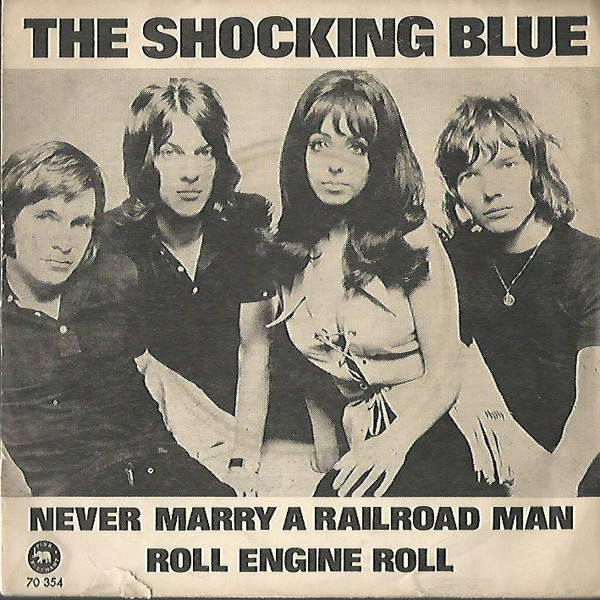
Max mentioned at his blog PowerPop about the group Shocking BlueThe band was founded in 1967 and after recruiting vocalist Mariska Veres they soon became huge. With their single “Venus” they became the first Dutch band ever to reach the first spot on the American Billboard Hot 100.

The group were formed in Hague who are Dutch from the Netherlands and Holland. They were part of the Nederbeat movement in the Netherlands. I had little interest to look up Nederbeat, but for the story I thought I should go and look it up.
It says, ‘it is a genre of rock music that began with the Dutch rock boom in the mid-1960s influenced by British beat groups and rock bands such as the Beatles and the Rolling Stones.’ Gee whiz, I would never have guessed that!

Reference:
1. Love Buzz – Shocking Blue

Tagged with: , , ,
Posted in Music

Love and Mercy (1988) – Brian Wilson

The biographical Brian Wilson – Beach Boys movie by the same name brought me to this song. The original 80’s drenched synth recording of Love and Mercy left me cold, but his later renditions such as the one below I like a lot. It has been his closing number at his solo live concerts. The song was released as a single on July 1, 1988, but failed to chart. Brian Wilson is no stranger to this blog as his music has featured here prominently in the form of the Beach Boys.

I was sittin’ in a crummy movie
With my hands on my chin
All the violence that occurs
Seems like we never win

Love and mercy, that’s what you need tonight
So love and mercy to you and your friends tonight

I was lying in my room
And the news came on TV
A lotta people out there hurtin’
And it really scares me

Love and mercy, that’s what you need tonight
Love and mercy to you and your friends tonight

I respect and understand how this song is a recession in complexity for him. Sometimes in life you just need to go back to basics. Wilson noted the song as “probably the most spiritual song I’ve ever written“.

Brian Wilson is widely acknowledged as one of the most innovative and significant songwriters of the 20th century. His best-known work is distinguished for its high production values, complex harmonies and orchestrations, layered vocals, and introspective or ingenuous themes. Wilson is also known for his formerly high-ranged singing and for his lifelong struggles with mental illness.

“I would think love is a gentle thing and mercy would be more desperate, ultimately more desperately needed, thing in life. Mercy–a little break here and there for somebody who’s having trouble….I was going for a spiritual, semi-Beach Boy kind of background sound, but more of a Brian Wilson lead vocal thing”.

References:
1. Love and Mercy – Wikipedia

Tagged with: , ,
Posted in Music

Follow Blog via Email

Enter your email address to follow this blog and receive notifications of new posts by email.

Join 770 other subscribers

← Back

Thank you for your response. ✨