Finlandia Op. 26 (1900) – Jean Sibelius

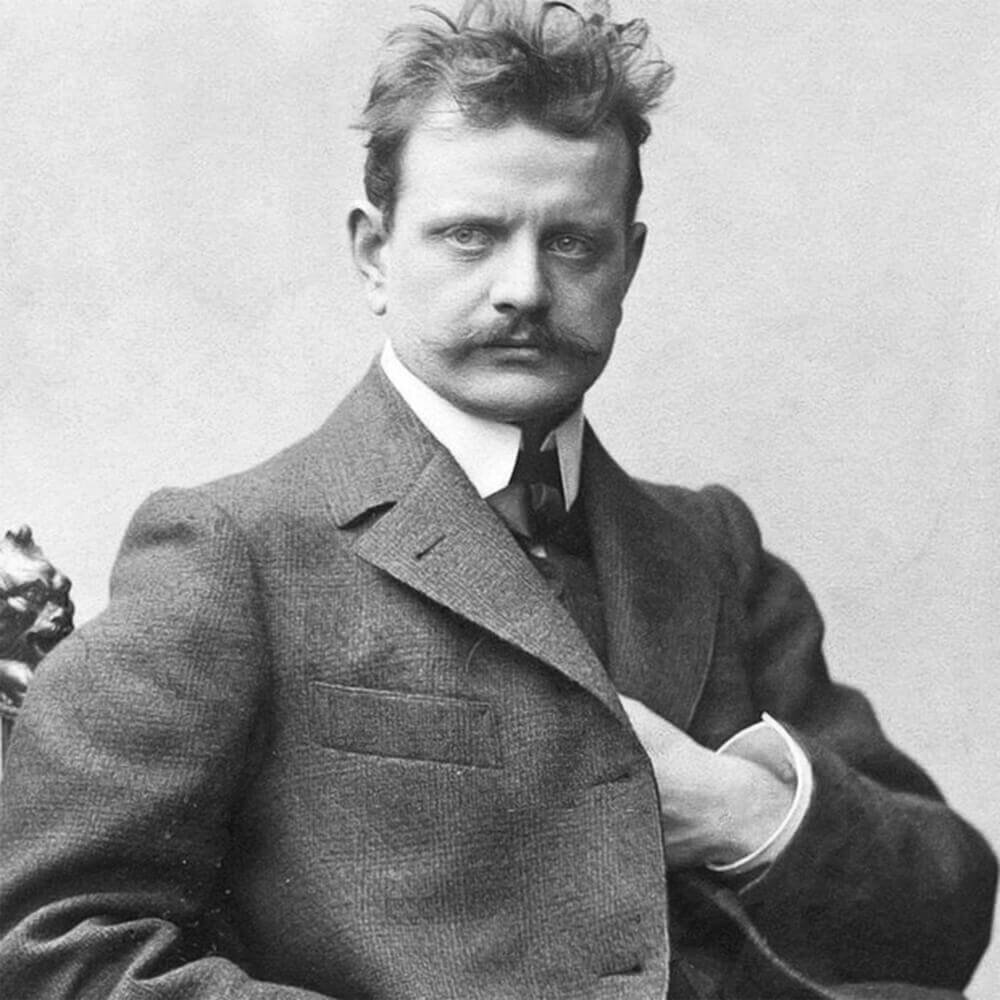
Jean Sibelius is a Finnish composer and violinist and recognised as his country’s greatest. Today’s piece Finlandia was composed for the Press Celebrations of 1899, a covert protest against increasing censorship from the Russian Empire, and was the last of seven pieces performed as an accompaniment to a tableau depicting episodes from Finnish history. Jean Sibelius’ music is often credited with having helped Finland develop a national identity during its struggle for independence from Russia.

To avoid Russian censorship, Finlandia had to be performed under alternative names at various musical concerts. Titles under which the piece masqueraded were numerous and often confusing —famous examples include Happy Feelings at the awakening of Finnish Spring, and A Scandinavian Choral March.

Sibelius composed prolifically until the mid-1920s, but after completing his Seventh Symphony (1924), the incidental music for The Tempest (1926) and the tone poem Tapiola (1926), he stopped producing major works in his last thirty years, a stunning and perplexing decline commonly referred to as the “silence of Järvenpää”, the location of his home.

Finlandia is an extraordinary piece of music. It’s difficult not to be in awe of its beauty and worth. I know next to nothing about Finland, but this music alone (along with the video images below) makes me want to visit. My favourite part of the piece is from 6:20 below when it slows down and turns into something entirely new. It then has one of the most satisfying endings to a classical piece I have heard.

References:
1. Finlandia – wikipedia
2. Jean Sibelius – wikipedia

Tagged with: ,
Posted in Music

The AnkiDroid Collection (Part 11) – Homogenous, Machiavellianism & Theosis

Ankidroid additions related to Science, History and Philosophy.

Homogenous

Corresponding in structure because of a common origen, common ethincity. When a group talks, looks and acts the same.

Machiavellianism

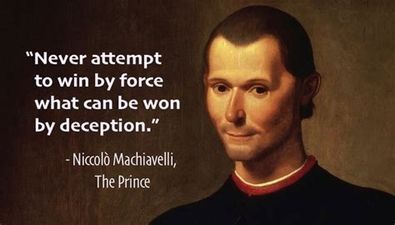
Cunning, scheming and unscrupulous especially in Politics. The term Machiavellianism was dervied from the Italian author and philosopher Nicholas Machiavel (1469 –1527) who claimed that his experience and reading of history showed him that politics have always been played with deception, treachery, and crime. He is best known for his political treatise The Prince (Il Principe). He has often been called the father of modern political philosophy and political science.

Theosis

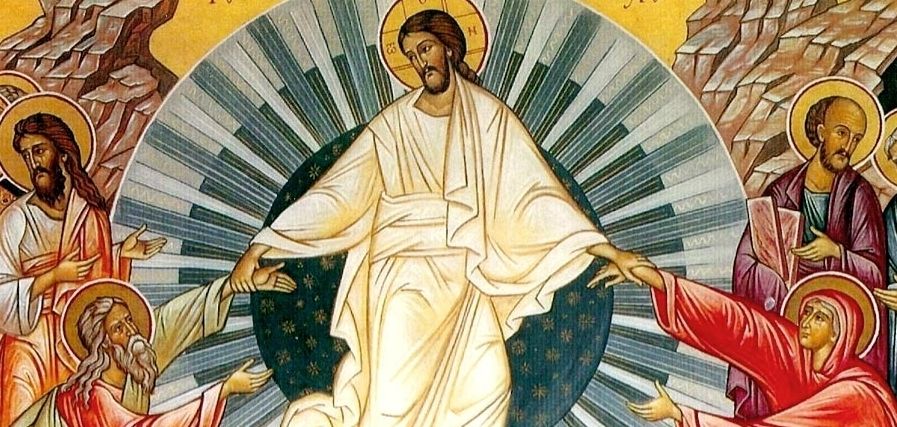
Deification: The transformative process whose aim is likeness to or or union with God as taught by the Eastern orthodix church and eastern Catholic Church. As a process of transformation, theosis is brought about by the effects of catharsis (purification of mind and body) and theoria (‘illumination’ with the ‘vision’ of God). According to Eastern Christian teachings, theosis is very much the purpose of human life.

I found Theosis discussed by Jonathan Pageau in an interview by Jordan Peterson called ‘The Perfect Mode of Being‘. Jonathan Pageau is an Orthodox Christian, professional carver, writer, and public speaker. He specializes in symbolism and traditional Christian art.

Tagged with: , ,
Posted in politics, Reading

Finding You (2005) – The Go-Betweens

This is the third song to appear here from this quintessential indie-Australian music group’s 2005 album Oceans Apart. Finding You is one of my favourite songs from this group. The video below has got just 25,000 views. Now compare that to the Robbie Williams or the ABBA video I recently posted, Finding You is untamed and unspoilt; like an Oasis in the Australian desert. I cherish this song. The worst part about this song is that it has to end!!

Finding You peaked at Number 17 on the Australian music charts. Robert Forster co-founder of The Go-Betweens in an interview described it a song he loved, “I really like the powerful build-up, it hits the line about lightning and then it’s like a crescendo. It’s written by Grant and he wrote it probably two years or something before he died, and I think it’s one of the best five to 10 songs he ever did. Magnificent song“. I couldn’t agree with Robert Forster more; Finding You is easily in my top 20 Australian songs.

What would you do if you turned around
And saw me beside you
Not in a dream but in a song?
Would you float like a phantom
Or would you sing along?

Don’t know where I’m going
Don’t know where it’s flowing
But I know it’s finding you

Tagged with: , ,
Posted in Music

Filipino Box Spring Hog (1999) – Tom Waits

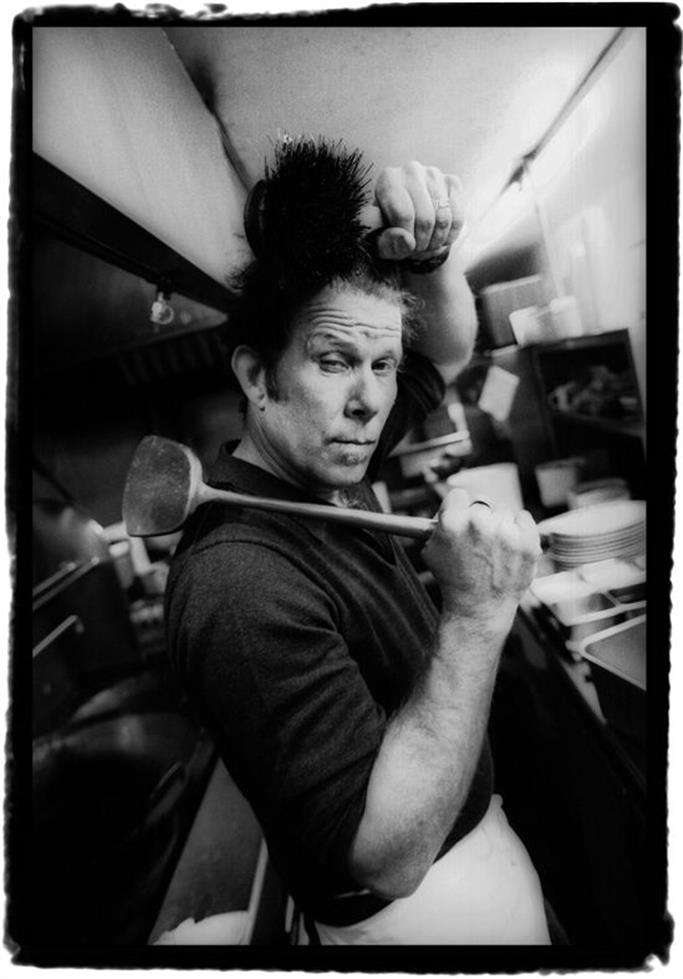
This is a lot of fun to listen to a bit dishevelled and frivolous. I find with Tom Waits you have to be in the mood and if not, he will soon put you in the mood. When listening to multiple songs I get swept up in the charm of his music. Right now hearing Filipino Box Spring Hog in the state I’m in, suits me just fine. This is the second song to appear after Big in Japan from his 1999 record Mule Variations which received a Grammy for Best Contemporary Folk Album.

Even for Tom Waits, Filipino Box Spring Hog is a truly weird song:

Well I hung on to Mary’s stump
I danced with a soldier’s glee
With a rum-soaked crook and a big fat laugh
I spent my last dollar on thee
I saw Bill Bones, I gave him a yell
Kehoe spiked the nog
With a chainlink fence
And a scrap-iron jaw


Cookin’ up a Filipino Box Spring Hog

From Songfacts:

It seems to be about a bunch of wild characters cooking up a dinner in a junkyard, with a hog cooked over a box spring as the main course. We even get some instructions on how to prepare such a feast:

Gotta roll em over twice
Baste him with a sweeping broom
You gotta swat them flies
And chain up the dogs

The funny thing is, for all the weirdness, there’s actually a lot in the song that was taken from the real world. For one, this is the first song where Waits ever mentions his wife Kathleen by name:

Kathleen was sittin’ down
In Little Red’s Recovery Room
In her criminal underwear bra

We know Waits’ wife and collaborator Kathleen actually was the reference in the song, too, because in a 1999 interview with Exclaim, he was asked if it was indeed the first time he used her name in a song. Waits answered, “Yeah. She said, ‘Gee, thanks a lot! You finally stick me in a song, and I’m sitting in a bar in my bra. And you’re there with the dog tied to the stool.’ It’s a nice family portrait. I had to do some explaining, but she got a kick out of it.”

Tagged with: , ,
Posted in Music

El Olvido Que Seremos (Colombia 2020) – Fernando Trueba (Friday’s Finest)

El Olvido Que Seremos is translated in English as Forgotten We’ll Be, but was released in English-speaking countries as Memories of my Father. It was the 2020 Colombian entry to the Academy Awards, but wasn’t nominated. It’s disappointing that this movie nor the previous Colombian 2019 entry Monos didn’t make the short-list for Best International Feature Film, but I understand the massive competition in this category. I was describing El Olvido this morning to someone as the Colombian equivalent of Mexico’s Roma film in terms of encapsulating the cultural and interpersonal passion and vibe so inherent in Latin America and specifically here – Colombia.

El Olvido Que Seremos is based on the true story of Héctor Abad Gómez, a Colombian university professor who challenges the country’s establishment. In 1980’s Colombia, Dr Hector Abad Gomez fights to lift the people of Medellin out of poverty. Despite the threats to his safety he refuses to remain silent. The fate of this dedicated doctor and devoted family man is shown through the gentle and admiring eyes of his son.

This moving film is based on the book by the same name written by his son Hector Abad Faciolince which is considered one of the most important works of 21st-Century Hispanic literature. I read this book a few years ago and was delighted that it had been made into a film. The director remarked the following on the film:

‘El Olvido Que Seremos needed to be adapted for cinema. The values the book defends have a profound effect on us. Nobody is left feeling indifferent because it affects us all. This story has to be told again and again. Whether the aim is just to make the world a better place, or more simply, to make thousands more people want to read it.’

References:
1. Cannes Film Festival – Forgotten We’ll Be

Below are more comments from director Fernando Trueba and his tribute to Colombian doctor Hector Abad Gomez including some scenes from the movie:

Tagged with: , , ,
Posted in Movies and TV

Fields of Gold (1993) – Sting

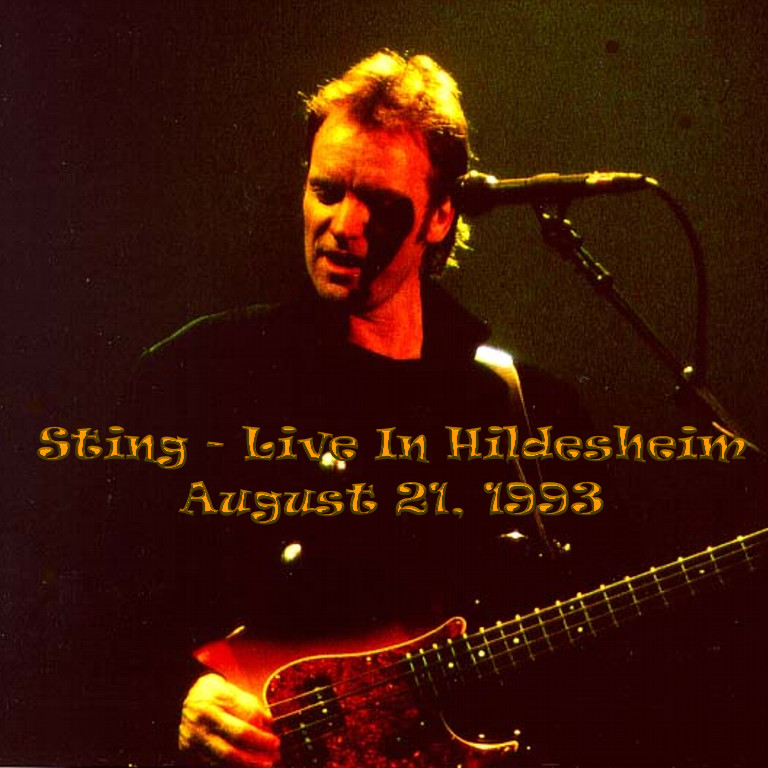
Apart from Every Breath You Take, this is my favourite track from Sting. By the way if you haven’t seen the duet of Sting and Bruce Springsteen’s performance of Every Breath (at the 1988 Human Rights concert).. then you’re just letting the best pass you by. Now back to Fields of Gold which was one of Stings most famous songs in the 90’s. I also enjoy hearing Eva Cassidy’s version of this.

Sting said: ‘In England, our house is surrounded by barley fields, and in the summer it’s fascinating to watch the wind moving over the shimmering surface, like waves on an ocean of gold. There’s something inherently sexy about the sight, something primal, as if the wind were making love to the barley. Lovers have made promises here, I’m sure, their bonds strengthened by the comforting cycle of the seasons’.

I just love the sound layout and tranquility of this song. It just flows and the imagery propels me to a foreign land I haven’t seen. It’s wonderfully mellow and Stings intimate vocals are excellent. Paul McCartney even said that “Fields of Gold” was a song he wished he’d written himself. I am not across much of Sting’s discography, but Fields of Gold is a glorious peaceful ballad. It appeared on his fourth studio album, Ten Summoner’s Tales (1993) and reached No. 16 on the UK Singles Chart and No. 23 on the US Billboard:

You’ll remember me when the west wind moves
Upon the fields of barley
You’ll forget the sun in his jealous sky
As we walk in fields of gold

So she took her love
For to gaze a while
Upon the fields of barley
In his arms she fell as her hair came down
Among the fields of gold

Tagged with: , ,
Posted in Music

12 Rules For Life: An Antidote to Chaos (2018) – Jordan Peterson

This Wednesday literature piece has been a long time coming. I have written extensively here about Canadian clinical psychologist Jordan Peterson including one of his biggest literary influences – Fyodor Dostoevesky who was the subject of the last few weeks’ literature pieces. I have watched most of Jordan Peterson’s Maps of Meaning lectures at the University of Toronto as well as his Bible Studies: Genesis Lecture Series and his major interviews and debates. Since he first appeared on Sam Harris Making Sense podcast – ‘What is True‘ which I still consider one of the most provocative yet necessary philosophical debates of our time I found myself windswept in the phenomenon – that is Jordan Peterson.

My focus on Wednesday literature pieces has primarily been on presenting extracts from great Classical literature, but today we move into the Self-Help genre which you could classify Jordan Peterson’s book 12 Rules For Life: An Antidote to Chaos. This genre of reading is one of my least favourite although in my youth I was rivetted by M, Scott Peck’s – The Road Less Travelled. I thought when I procured Jordan’s book that it was unlikely I would read anything anew; challenging and engaging since I’d already heard hundreds of hours from him. But alas I have found myself pleasantly surprised like when reading today’s extract which explores a part of his upbringing; the town he came from – Fairview, Alberta – Canada.

I found this part a fascinating read since I was brought up in a totally distinct natural ambience – the rural outskirts of Western Sydney, Australia. I have written about that a lot here too, but today is about Jordan’s town – so without further ado I present to you – The Old Hometown:

The town I grew up in had been scraped only 50 years earlier out of the endless flat Northern prairie. Fairview, Alberta, was part of the frontier, and had the cowboy bars to prove it. The Hudson’s Bay Co. department store on Main Street still bought beaver, wolf and coyote furs directly from the local trappers. Three thousand people lived there, four hundred miles away from the nearest city. Cable TV, video games and internet did not exist. It was no easy matter to stay innocently amused in Fairview, particularly during the five months of Winter, when long stretches of forty-below days and even colder nights were the norm.

The world is a different place when it’s cold like that. The drunks in our town ended their sad lives early. They passed out in snowbanks at three in the morning and froze to death. You don’t go outside casually when it’s forty below. On first breath, the arid desert air constricts your lungs. Ice forms on your eyelashes and they stick together. Long hair, wet from the shower, freezes solid and then stands on end wraith-like of its own accord later in a warm house, when it thaws bone dry, charged with electricity. Children only put their tongues on steel playground equipment once. Smoke from house chimneys doesn’t rise. Defeated by the cold, it drifts downwards, and collects like fog on snow-covered rooftops and yards. Cars must be plugged at night, their engines warmed by block heaters, or oil will not flow through them in the morning, and they won’t start. Sometimes they won’t anyway. Then you turn the engine over pointlessly until the starter clatters and falls silent. Then you remove the frozen battery from the car, loosening the bolts with stiffening fingers in the intense cold, and bring it into the house. It sits there, sweating for hours, until it warms enough to hold a decent charge. You are not going to see out of the back window of your car, either. It frosts over in November and stays that way until May. Scraping it off just dampens the upholstery. Then it’s frozen too. Late one night going to visit a friend I sat for two hours on the edge of the passenger seat in a Dodge Challenger, jammed up against the stick-shift, using a vodka-soaked rag to keep the inside of the front windshield clear in front of the driver because the car heater had quit. Stopping wasn’t an option. There was nowhere to stop.

And it was hell on house cats. Felines in Fairview had short ears and tails because they had lost the tips of both to frostbite. They came to resemble arctic foxes, which evolved those features to deal proactively with the intense cold. One day our cat go outside and no one noticed. We found him, later, fur frozen fast to the cold hard backdoor cement steps where he sat. We carefully separated cat from concrete, with no lasting damage – except to his pride. Fairview cats were also at great risk in the winter from cars, but not for the reasons you think. It wasn’t automobiles sliding on icy roads and running them over. Only loser cats died that way. It was cars parked immediately after being driven that were dangerous. A frigid cat might think highly of climbing up under such a vehicle and sitting on its still-warm engine block. But what if the driver decided to use the car again, before the engine cooled down and cat departed? Let’s just say that heat-seeking house-pets and rapidly rotating radiator fans do not coexist happily.

Because we were so far north, the bitterly cold winters were also very dark. By December, the sun didn’t rise until 9:30 am. We trudged to school in the pitchblack. It wasn’t much lighter when we walked home, just before the sunset. There wasn’t much for young people to do in Fairview, even in the summer. But the winters were worse. Then your friends mattered. More than anything.
Tagged with: ,
Posted in Reading

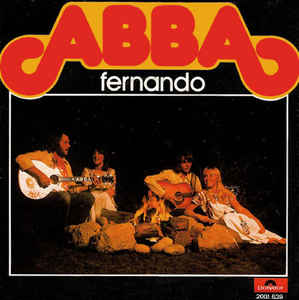
Fernando (1976) – ABBA

I was weighing up whether to include this song here, since the Dancing Queen article didn’t conjure any interest – woe is me. What the heck, I’ll continue down this nostalgic track, despite how little you might want to hear this track for perhaps the hundredth time. If anything I like to imagine a young child listening to it for the first time like when my kids did.

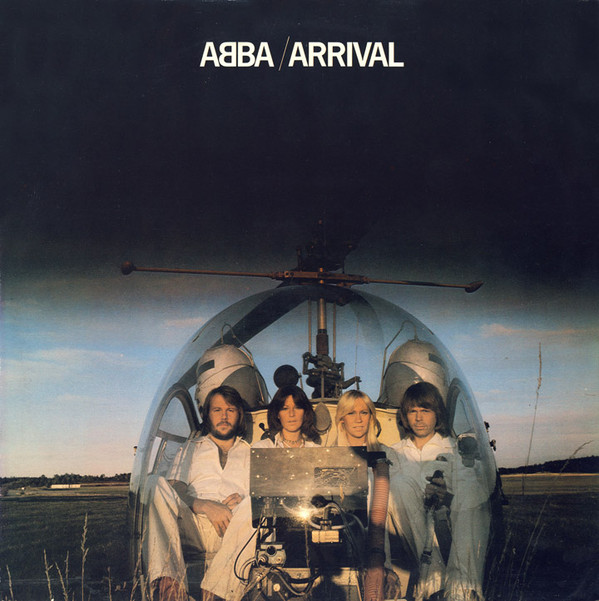
I remember as a boy sitting in front of the fireplace and holding the 1976 Arrival album in my hands and I was besotted by it. The helicopter looked just like the one used in the Skippy: The Bush Kangaroo episode called ‘Many Happy Returns‘ where Sonny has to fly Jerry’s helo on his own. Those were the days!
The track Fernando, which had been recently released as a single in March 1976, was included on the Australian and New Zealand versions of the Arrival album.

Fernando is one of ABBA’s highest selling singles with six million selling in 1976 alone. It is one of fewer than forty all-time singles to have sold 10 million (or more) physical copies worldwide, making it one of the best-selling singles of all time. Prior to 1997, it was Australia’s highest-selling single. The song originally carried the working title ‘Tango‘, but changed in the last minutes prior to recording. The name “Fernando” was inspired by a bartender of that name who worked at a club the band frequented in Stockholm, Sweden.

Interestingly, based on my observations ABBA unlike Michael Jackson and Queen are not very popular in Latin America. Although a Spanish version of the song exists on ABBA’s Spanish album, Gracias Por La Música (Thank you for the Music).

Can you hear the drums Fernando
I remember long ago another starry night like this
In the firelight Fernando
You were humming to yourself and softly strumming your guitar
I could hear the distant drums
And sounds of bugle calls were coming from afar

They were closer now Fernando
Every hour every minute seemed to last eternally
I was so afraid Fernando
We were young and full of life and none of us prepared to die
And I’m not ashamed to say
The roar of guns and cannons almost made me cry

Tagged with: , ,
Posted in Music

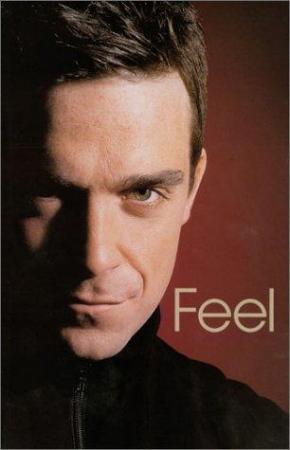
Feel (2002) – Robbie Williams

Feel is the second song to appear here from Robbie Williams. Like the previous entry Angels this was a worldwide commercial hit and still widely played. It peaked at number one in many countries and in the top five of many more. Feel was the lead single on his fifth studio album Escapology. Most of the vocals are from the original demo recording from 1999, as Williams felt unsatisfied with the re-recorded vocals. He commented, “I just couldn’t sing it as well as I did on that day.“.

Come and hold my hand
I wanna contact the living
Not sure I understand
This role I’ve been given
I sit and talk to God
And he just laughs at my plans
My head speaks a language
I don’t understand

I just wanna feel
Real love feel the home that I live in
‘Cause I got too much life
Running through my veins
Going to waste

Robert Williams was a former member of the group Take That. I really liked their song ‘Back For Good‘ because it reminded me of a Yorkshire lass who flew back to her homeland carrying my heart with her. Williams was just 16 years old when he joined the group, but wasn’t happy as he felt his musical ideas weren’t being taken seriously. Williams of course had a lot more success as a solo act. He lived many years in Los Angeles, but moved back to England.
According to wikipedia: His next door neighbour in London is Led Zeppelin guitarist Jimmy Page.. Page delayed Williams’ plans for an underground swimming pool in 2018, stating construction work would damage The Tower House, Page’s home since 1972: a listed Victorian-era town-house.

Like Angels, these days I am not as enamoured with Feel as when I first heard it, but it’s still a damn good song. The original black and white video below showing Robbie in a cowboy like lifestyle gained attention in the United States thanks to Daryl Hannah’s appearance as Williams’s love interest. The other video I liked is the slightly lesser known live version at Knebworth in 2003.

Tagged with: , ,
Posted in Music

Farewell (1963) – Bob Dylan

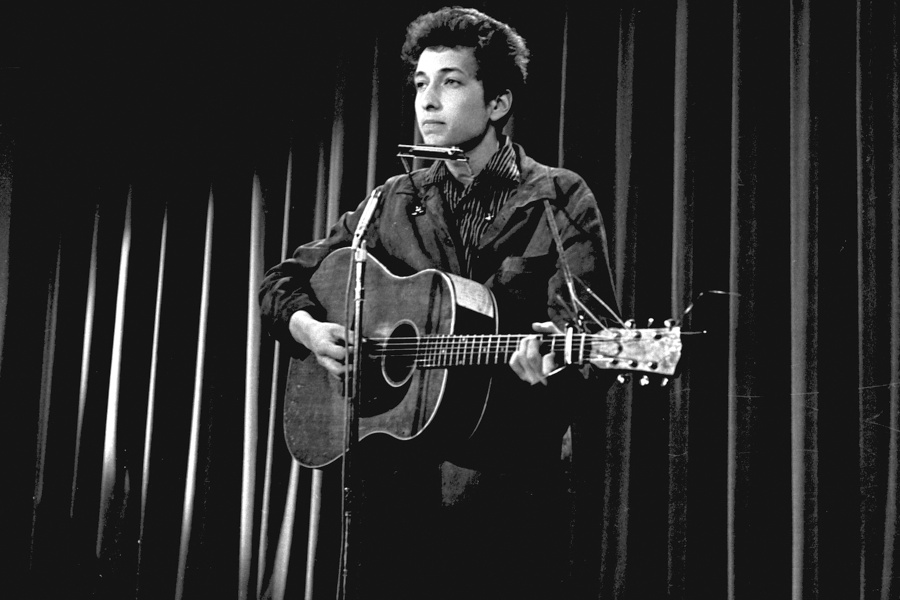
As mentioned in the last song article of Fare Thee Well (Dink’s Song), the song which concludes the Inside Llewyn Davis soundtrack and movie is Bob Dylan’s Farewell. The version below which appears in the movie was released from the Witmark Demos Bootleg Series Vol 9. So I have presented the Witmark Demo from the authorised Dylan channel and the scene from the movie in which a young Dylan appears.

Farewell“, also known as “Fare Thee Well” was considered for his third album The Times They Are a-Changin’, but Dylan only attempted a few takes during the album’s first studio session. Their are other versions which exist online believed to have taken place in Greenwich Village venues like the basement of either Gerde’s Folk City or the Gaslight Cafe. His friend Happy Traum backed him on vocals and banjo. This bootleg is known as the banjo tape.

According to wikipedia: Dylan based the song on the traditional British folk ballad “Leaving of Liverpool”. He first played it for friends in Greenwich Village after returning from a two-week trip to London in early January 1963. In “Leaving of Liverpool”, the ballad’s first verse and chorus tell the tale of someone sailing from Liverpool to California, bound to miss the loved one left behind.

Farewell to you, my own true love;
I am going far away.
I am bound for Californ-i-a,
And I know that I’ll return someday.

So fare thee well, my own true love,
And when I return, united we will be.
It’s not the leavin’ of Liverpool that grieves me,
But, my darling, when I think of thee

Tagged with: ,
Posted in Music

Follow Blog via Email

Enter your email address to follow this blog and receive notifications of new posts by email.

Join 753 other subscribers

← Back

Thank you for your response. ✨