Carrying a Torch is the second song to feature from Van Morrison in this Music Library Project, but it is my favourite song I’ve heard from him. What entails the ‘Music Library Project’? It’s one for the ages at least as far as I would rate it because it is an epic and anthemic track. The slow build up and climatic closing and its strong emotive tune and serious feeling floors me every-time I hear it. I regret I don’t know how I came across it, and I came to it late as a listener probably from hearing it featured from one of you good folks I follow here.
Carrying a Torch is from Morrison’s Hymns to the Silence album as captured above. Rolling Stone magazine reviewer Elysa Gardner thought similarly to me; praising the song, describing it better than I ever could: “has the makings of a classic, with a stately chorus and shining verses that tie the flesh to the spirit”:
‘You’re the keeper of the flame And you burn so bright Baby why don’t we re-connect Move into the light’.
The song didn’t feature on the charts except as a duet with Tom Jones. Their version of the song was released as a single and charted at No. 57 in 1991 in the UK. This collaboration came about when Morrison showed his newly written song “Carrying a Torch” to Jones, who was “so impressed that he invited Morrison to play on his new record”.
I’m afraid I am unfamiliar with a lot of Morrison’s catalogue of music but I can’t help but admire his talent especially as a somewhat ‘Born to Kill’ singer. You can’t teach what he has. Much of his music is structured around the conventions of soul music and R&B. He was knighted in Northern Ireland for his services to the music industry. The young Morrison grew up listening to artists such as Jelly Roll Morton, Ray Charles, Lead Belly, Sonny Terry and Brownie McGhee and Solomon Burke;of whom he later said, “If it weren’t for guys like Ray and Solomon, I wouldn’t be where I am today. Those guys were the inspiration that got me going. If it wasn’t for that kind of music, I couldn’t do what I’m doing now.”
I always liked watching Morrison and Bob Dylan jamming on their acoustics looking over famous Greek monuments in Athens where the ancients believed the muses lived. Also his inclusion on The Band’sLast Waltz was a master-stroke decision and its great we have that live event of Morrison ‘killing it’ to cherish. Oh and by the way – how this song Carrying a Torch has just 500k clicks below is anyone’s guess:
This week in Wednesday’s literature piece we continue our exploration of one the 20th Century’s great Dystopian novels Brave New World (BNW). This week’s excerpt comes from the same philosophical argument John and Mustapha Mond were having the last time we visited this book, but this time the topic is the role of God in the ‘controlled’ society. The previous extract examined a worldview I argued was congruous with what the new ethics movement seemingly has in store for us.
Huxley’s comments on religion in his numerous works have drawn much criticism basically because his attempts to reconcile religion with philosophy, aesthetics, ethics, and government were difficult to grasp. It could be said he was an agnostic, but it may be more accurate to describe him as a sceptic. He saw the potential value of the arts, education, government, love, nature, and science as ways to a better life, but he criticized those who regarded these means as ends in themselves. But like John (the Savage) in his ensuing argument with Mustapha Mond in BNW, he too is left despondent about how to argue God’s place in the society:
Mustapha Mond – “…you know all about God, I suppose.” John: “Well …” The Savage hesitated. He would have liked to say something about solitude, about night, about the mesa lying pale under the moon, about the precipice, the plunge into shadowy darkness, about death. He would have liked to speak; but there were no words. Not even in Shakespeare.
What is evident from their argument below is the danger of ceasing with the notion and knowledge of God in society and developing ‘pure secularism’. The German philosopher Friedrich Nietzsche (God is Dead) and his student Swiss Psychologist Carl Jung also forewarned that societies striving for ‘Utopian’ secularism based on political ideology or rational-materialist values and morals could lead to unrivalled destruction and mayhem. And that’s precisely what occurred in the 20th century under Stalin in the Soviet Union and Maoist China, not to mention the other numerous countries where this experiment was introduced with horrendous consequences most notably in Latin America.
Once again this excerpt like most of the book’s contents (including the previous excerpt on this blog) seems to be Huxley’s forewarning about the consequences of a controlled ‘Utopian’ society having its way including doing away with archetypes, history, religious faith, art and independent science. Personally it is disturbing to see how much content in this book seems analogous to what is happening right now in the Western World as the postmodern – ethics movement driven by the Press, Hollywood, Major Corporations, Government and Education institutions is reformulating society as we know it under the guise of the COVID-19 pandemic and this thing called ‘The Great Reset‘ driven by the globalists. I wish it were just a crazy conspiracy theory, but its not.
So below is today’s excerpt from Brave New World which I titled here ‘God’s Place in Our future‘ because the discussion seems to align with how our secular societies are headed and how they dismiss the role of God and religious faith in their narratives and future aspirations. Interestingly you can see Huxley wrestling with his own understanding of God throughout – comparative to Dostoevsky in Crime and Punishment. Huxley makes his antagonists as powerful and convincing as his protagonists and that couldn’t be better demonstrated than it is here. This excerpt is long and goes to places rarely encroached. So I would recommend you brew the coffee and set yourself nicely up for a wild philosophical ride.
ART, SCIENCE–you seem to have paid a fairly high price for your happiness,” said the Savage, when they were alone.“Anything else?”
“Well, religion, of course,” replied the Controller. “There used to be something called God–before the Nine Years’ War. But I was forgetting; you know all about God, I suppose.”
“Well …” The Savage hesitated. He would have liked to say something about solitude, about night, about the mesa lying pale under the moon, about the precipice, the plunge into shadowy darkness, about death. He would have liked to speak; but there were no words. Not even in Shakespeare…..
Mustapha Mond – “God in the safe and Ford on the shelves.” He pointed with a laugh to his avowed library–to the shelves of books, the rack full of reading-machine bobbins and sound-trackrolls.
“But if you know about God, why don’t you tell them?” asked the Savage indignantly. “Why don’t you give them these books about God?”
“For the same reason as we don’t give them Othello: they’re old; they’re about God hundreds of years ago. Not about God now.”
“But God doesn’t change.”“Men do, though.”“What difference does that make?”
“All the difference in the world,” said Mustapha Mond…..
Mustapha Mond – “There was a man called Cardinal Newman,” he said. “A cardinal,” he exclaimed parenthetically, “was a kind of Arch-Community-Songster.”
“‘I Pandulph, of fair Milan, cardinal.’ I’ve read about them in Shakespeare.”
“Of course you have. Well, as I was saying, there was a man called Cardinal Newman. Ah, here’s the book.” He pulled it out. “And while I’m about it I’ll take this one too. It’s by a man called Maine de Biran. He was a philosopher, if you know what that was.”
“A man who dreams of fewer things than there are in heaven and earth,” said the Savage promptly.
“Quite so. I’ll read you one of the things he did dream of in a moment. Meanwhile, listen to what this old Arch-Com-munity-Songster said.” He opened the book at the placemarked by a slip of paper and began to read. “‘We are not our own any more than what we possess is our own. We did not make ourselves, we cannot be supreme over ourselves. We are not our own masters. We are God’s property. Is it not our happiness thus to view the matter? Is it any happiness or any comfort, to consider that we are our own? It may be thought so by the young and prosperous. These may think it a great thing to have everything, as they suppose, their own way–to depend on no one–to have to think of nothing out of sight, to be without the irksomeness of continual acknowledgment,continual prayer, continual reference of what they do to the will of another. But as time goes on, they, as all men, will find that independence was not made for man–that it is an un-natural state–will do for a while, but will not carry us on safely to the end …’” Mustapha Mond paused…..
Mustapha Mond – “‘A man grows old; he feels in himself that radical sense of weakness, of listlessness, of discomfort,which accompanies the advance of age; and, feeling thus,imagines himself merely sick, lulling his fears with the notion that this distressing condition is due to some particular cause,from which, as from an illness, he hopes to recover. Vain imaginings! That sickness is old age; and a horrible disease itis. They say that it is the fear of death and of what comes afterdeath that makes men turn to religion as they advance in years.But my own experience has given me the conviction that,quite apart from any such terrors or imaginings, the religious sentiment tends to develop as we grow older; to develop be-cause, as the passions grow calm, as the fancy and sensibilities are less excited and less excitable, our reason becomes less troubled in its working, less obscured by the images, desires and distractions, in which it used to be absorbed; where upon God emerges as from behind a cloud; our soul feels, sees,turns towards the source of all light; turns naturally and inevitably; for now that all that gave to the world of sensations its life and charms has begun to leak away from us…
“But all the same,” insisted the Savage, “it is natural to believe in God when you’re alone–quite alone, in the night, thinking about death …”
“But people never are alone now,” said Mustapha Mond. “We make them hate solitude; and we arrange their lives so that it’s almost impossible for them ever to have it.”
The Savage nodded gloomily. At Malpais he had suffered because they had shut him out from the communal activities of the pueblo, in civilized London he was suffering because he could never escape from those communal activities, never be quietly alone.
“Do you remember that bit in King Lear?” said the Savage at last. “‘The gods are just and of our pleasant vices make instruments to plague us; the dark and vicious place where thee he got cost him his eyes,’ and Edmund answers–you re-member, he’s wounded, he’s dying–’Thou hast spoken right;’ tis true. The wheel has come full circle; I am here.’ What about that now? Doesn’t there seem to be a God managing things, punishing, rewarding?”
“Well, does there?” questioned the Controller in his turn. “You can indulge in any number of pleasant vices with afree martin and run no risks of having your eyes put out by your son’s mistress. ‘The wheel has come full circle; I am here.’ But where would Edmund be nowadays? Sitting in a pneumatic chair, with his arm round a girl’s waist, sucking away at his sex-hormone chewing-gum and looking at the feelies. The gods are just. No doubt. But their code of law is dictated, in the last resort, by the people who organize society; Providence takes its cue from men.”
“Are you sure?” asked the Savage. “Are you quite sure that the Edmund in that pneumatic chair hasn’t been just as heavily punished as the Edmund who’s wounded and bleeding to death? The gods are just. Haven’t they used his pleasant vices as an instrument to degrade him?”
“Degrade him from what position? As a happy, hard-working, goods-consuming citizen he’s perfect. Of course, if you choose some other standard than ours, then perhaps you might say he was degraded. But you’ve got to stick to one set of postulates. You can’t play Electro-magnetic Golf according to the rules of Centrifugal Bumble-puppy.”
“But value dwells not in particular will,” said the Savage. “It holds his estimate and dignity as well wherein ’tis precious of itself as in the prizer.”
“Come, come,” protested Mustapha Mond, “that’s going rather far, isn’t it?”“If you allowed yourselves to think of God, you wouldn’t allow yourselves to be degraded by pleasant vices. You’d have a reason for bearing things patiently, for doing things with courage. I’ve seen it with the Indians.”
“l’m sure you have,” said Mustapha Mond. “But then we aren’t Indians. There isn’t any need for a civilized man to bear anything that’s seriously unpleasant.
And as for doing things – Ford forbid that he should get the idea into his head. It would upset the whole social order if men started doing things on their own.”
“What about self-denial, then? If you had a God, you’d have a reason for self-denial.”
“But industrial civilization is only possible when there’s no self-denial. Self-indulgence up to the very limits imposed by hygiene and economics. Otherwise the wheels stop turning.”
“You’d have a reason for chastity!” said the Savage, blushing a little as he spoke the words.“But chastity means passion, chastity means neurasthenia. And passion and neurasthenia mean instability. And instability means the end of civilization. You can’t have a lasting civilization without plenty of pleasant vices.”
“But God’s the reason for everything noble and fine and heroic. If you had a God …”
“My dear young friend,” said Mustapha Mond, “civilization has absolutely no need of nobility or heroism. These things are symptoms of political inefficiency. In a properly organized society like ours, nobody has any opportunities for being noble or heroic. Conditions have got to be thoroughly unstable before the occasion can arise. Where there are wars,where there are divided allegiances, where there are temptations to be resisted, objects of love to be fought for or de-fended–there, obviously, nobility and heroism have some sense.
This is the second song to feature in this music library from James Blunt. As I detailed in an earlier post I have always had a penchant for James because he’s an ex military officer like me. Unlike James I didn’t see actual war-time, but this song seems to encapsulate what it must have been like to lose someone close in war-time, but its speculative if that is what the song is about. I always assumed it was about a woman lost in his group. As others have said from seeing an interview with James, ‘It was concerning a female US soldier he personally knew that died in Kosovo and he became quite emotive about it when pressed and wouldn’t elaborate further….’
As already alluded, it would appear based on the song it was his friend, a female soldier. And she was dying, he wept over her dying body that he promised to take her back to New York to her Parents, and he did. It could also be interpreted as the story of a girl dying from cancer. “Trouble” would be cancer, back again. “Makes her body older” because she gets weaker. “She says its high time she went away”, she know she’s going to die. The only way is down. Or it could be about someone suffering from depression. The list is endless.
There is very little written about this song’s origins from the songwriters perspective. If the video is anything to go by, the video for the song is shot entirely in black and white and shows the story of a man travelling to return personal belongings of a dead soldier to the soldier’s wife. The combat scene in the music video below was shot at Bovington Camp, where Blunt had been stationed during his service in the British Army, and features soldiers from the camp.
Despite its unknown origins, the song above all captures a great deal which is relatable to many knowns of suffering and the loss incurred.
The DarkHorse podcast remains one of the few comfort information sources I have used since the commencement of the Pandemic. Comfort, I mean it doesn’t seem to be tainted with ideologically tinted glasses rather it seems be epistemologically engaged above all else. I have followed this inspiring couple since their controversial departure from Evergreen college.
This podcast I paid particular close attention since it focuses on information concerning the COVID19 vaccine from their unique evolutionary lens perspective. Are they safe? Are they effective? If you survive COVID-19, what are the long-term health effects? They discuss what an mRNA vaccine is and does, and how the immune system functions (and fails to function). ….…What we have got is a technology that in principle is extremely promising and for some reason the risks that are beig taken are smaller than inactivated viruses. What we have is an unproven technology that on paper sounds like it should be safe, but the problem is on paper is not he same as a complex system espcially when you are facing the adaptive immunity of the host. Adaptive immunity is the most amazing process -if u think the eye is marvllous check out the immune sustem which is even more marvellous. .
Just imagine … no delete key! To be typing away with no way of erasing one’s words. Where force is needed on each letter, the loud clickety-clack echoing around the room.
Some will have learnt to type on the old-fashioned ribbon typewriters, whilst for others they are an alien concept. How can one manage without autocorrect, cut, copy and paste!?
Forget the modern contraptions and imagine an antique typewriter set on a lone table. In a bookshop. Paper rolled into place. People approach and can write a sentence or two on it. What would this be?
Just such a scenario developed as part of a community project in a bookshop which opened in 2013 in Michigan and the results are beautifully collated in the book ‘Notes from a Public Typewriter’.…(Read entire book review)
When discussing eternalism and the block universe, the concept of “now” always ends up getting relegated to an aspect of our consciousness, not something “out there”. “Now” seems to be the boundary between what we can remember and what we can only anticipate. But if, aside from entropy, the laws of physics are reversible and we live in a block universe, why are our memories only of the past? Matt O’Dowd gives an interesting answer…(Read entire article)
Unlike much of the world today, and most people who have ever lived, WEIRD people are highly individualistic, self-obsessed, control-oriented, nonconformist, and analytical. They focus on themselves — their attributes, accomplishments, and aspirations — over their relationships and social roles. How did WEIRD populations become so psychologically distinct? What role did these psychological differences play in the industrial revolution and the global expansion of Europe during the last few centuries? To answer these questions Joseph Henrich draws on anthropology, psychology, economics, and evolutionary biology. He illuminates the origins and evolution of family structures, marriage, and religion, and the profound impact these cultural transformations had on human psychology.…(Watch podcast)
If I was a snake charmer I’d try to charm something else they strike the warm-blooded and happy they slither in the dark where I can’t see them.…(Read entire poem)
Thankfully the wet season has passed in Bogotá, Colombia. We are now blessed with beautiful Sun-filled days. I took the Sun for granted when I lived in Australia. I really did, until I lived in a tropical climate. The months October, November, April and May experience twice the usual monthly precipitation here in Bogotá. The constant deluges, overcast weather and thunderstorms can get you down after a while. So it came as a great relief when the 1st of December arrived and the clouds parted and the Sun shone in all of its glory and continues to do so…. This reminds me of a great bit from George Carlin called ‘The Sun Worshipper‘.
Any-hows, the other day I was out with my family here in Bogotá basking in this miraculous ball of gas at the centre of our solar system. Truth be known a Sun-shower did momentarily fall while the kids were playing in the park, but I liked how the droplets just brushed against us – ‘don’t mind me’. After the park we found a flea market and low and behold – as we entered I felt the force was strong with this one. It was reminiscent of that tractor beam which pulled Han’s and the whole crew into the Death Star in a ‘A New Hope’.
With the grand majority of artesian-Flea Markets I have no intention of buying, but I felt different this day. I wanted to let my wallet do the talking. At the first stall I bought a packet of grounded coffee cultivated in the Sierra Nevada. Thereafter the tractor beam pulled me further along to a large stall which displayed ‘old LP records’ that had been cut and designed to feature grandiose musical artists and movie icons. I knew this was it and where the tractor beam originated. I regret not having taken a photo with the effervescent vendor and her stall.
I asked the lady if she had a disc of Bob Dylan and she said she did! As she scrummaged through her disks I wondered if this disc was where the force-field had emanated. She found the LP disc which featured two silhouette figures of Dylan made out of his ‘Infidels‘ record. I gazed upon it with a certain unease since the nose of Dylan seemed disfigured and I didn’t feel it was an accurate depiction. What a shame since I was enamoured with the idea of having an original Bob Dylan record cut-out to feature him. The effervescent lady said she would go to work on making a better disk. There’s no doubt I admired her gusto.
So the source of the tractor beam which pulled me to this stall remained elusive. Normally I would have moved onto another stall in light of seeing Dylan’s nose disfigured, but I persisted to scan the large array of discs. I noticed Pearl Jam’s disc, which was cool and I gazed further to the right and then…I found it, finally! What had brought me here. Time really seemed to stand still as I pierced into the epicentre of what drew me here. Da Dadaa!
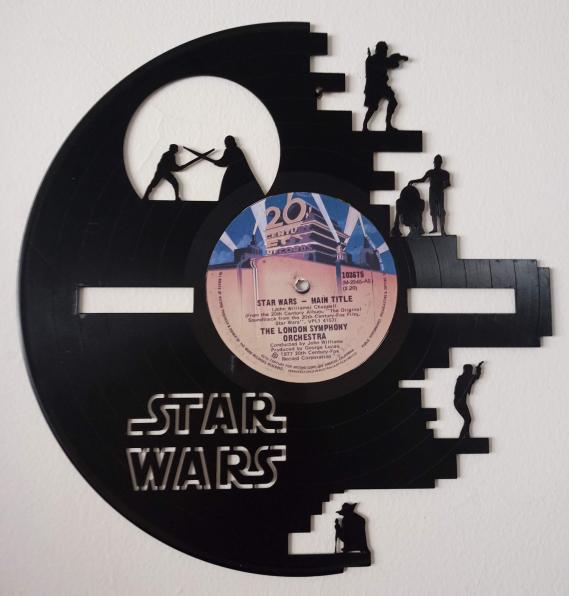
Truly, I was astounded how someone had thought of the idea of converting an old John Williams – Star Wars soundtrack into a ‘not fully operational Death Star’ as seen in ‘Return of the Jedi’. Not only that, but to have silhouettes of key personages and moments on the ledges and parts in between. I mean…the artist who came up with this …is a f/&ing genius in my book! Hence, this obscenely GREAT montage stands proudly in my living room above my book library. Unbeknownst to me the lady added to the packaging something I wasn’t expecting which also adorns my library. After I entered my apartment, naturally I wanted to unveil the ‘still not fully operational death star’. As I did so. I realised she had packaged this disc inside a LP cover that features wondrous figures from Colombia. Christmas had arrived early for me and I was in seventh heaven.
Above is the LP cover which contained the Star Wars Disc. Sometimes I wonder which I like seeing more – the disc or the LP cover ‘Salpicon‘. Salpicon in English means a splash of things, like a mix of salads or tropical fruits. The album as the title suggests is a splash of reggaeton music which is very popular in Latin America. Whichever way I see it, I feel blessed to be the owner of these artefacts and I hope you enjoyed reading about one of the few times in my life I felt the pull of the tractor beam and reaped great rewards.
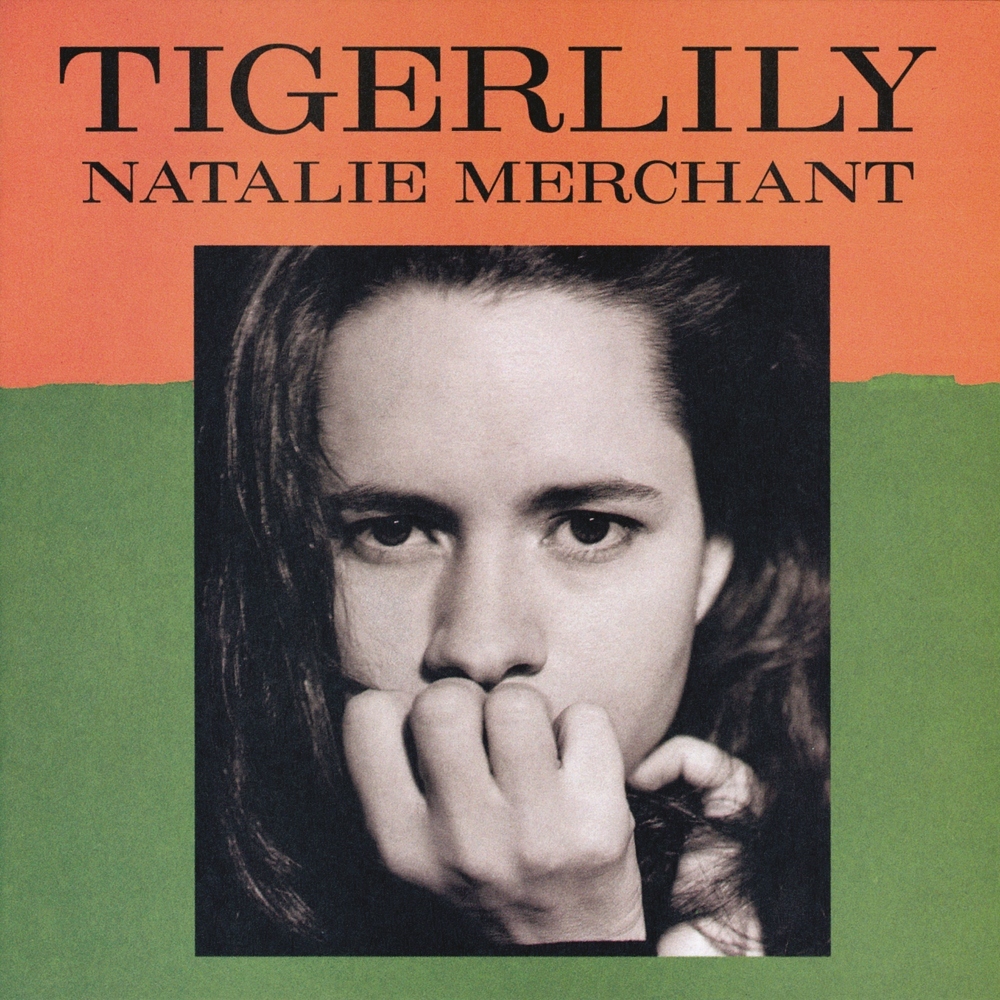
This understated song from Natalie Merchant’s debut album Tigerlily was inspired by her first trip to New York as a 16 year old. She compares the sights and sounds of New York to a carnival. She claimed she was fascinated by the the residents’ unusual lifestyles, as she had grown up in the country.
Well, I’ve walked these streets In a spectacle of wealth and poverty In the diamond markets the scarlet welcome carpet That they just rolled out for me
And I’ve walked these streets In the madhouse asylum they can be Where a wild-eyed misfit prophet On a traffic island stopped and he raved of saving me
This 1995 song reached No 10 on the US billboard and 24 in Australia on the ARIA singles chart. I admire her lyrics here. The song is unassuming and meandering, and her modest disposition seems to only add to this quirky and unique atmosphere and effectively captures what it must been like for her to see NY as a kid for the first time.
Natalie grew up in rural Jamestown south of Buffalo in NY. She stated also about her first experience to NY that ‘I’d never seen people walking down the street eating before – that was a bizarre experience. Something else I’d never seen before were the gentlemen with the two-sided placards that hand out invitations to peep shows, but I never seemed to get one – they always picked the guys around me…. It’s not a car culture here. I like that: people have to rub against each other. I like to take the subway, I like to study people’s faces, try to imagine their stories.’ Natalie also recalled of her youth that “I was taken to the symphony a lot because my mother loved classical music….I never really had friends who sat around and listened to the stereo and said ‘hey, listen to this one’, so I’d never even heard of who Bob Dylan was until I was 18′.
Natalie Merchant has since release 7 solo albums since Tigerlily, but her biggest single success was with Carnival. Merchant was lead singer and primary lyricist for 10,000 Maniacs, joining in its infancy in 1981. In 1993 she announced that she was leaving the group, citing a lack of creative control over the music. Her last recording with the band, a cover of Bruce Springsteen’s and Patti Smith’s “Because the Night” at the 10,000 Maniacs MTV Unplugged performance. Interestingly In 1998, Merchant collaborated on the making of the Woody Guthrie tribute album Mermaid Avenue with Billy Bragg and Wilco. This was one of my favourite albums of the 90s and it will feature in this Music Library Project. What entails the ‘Music Library Project’?
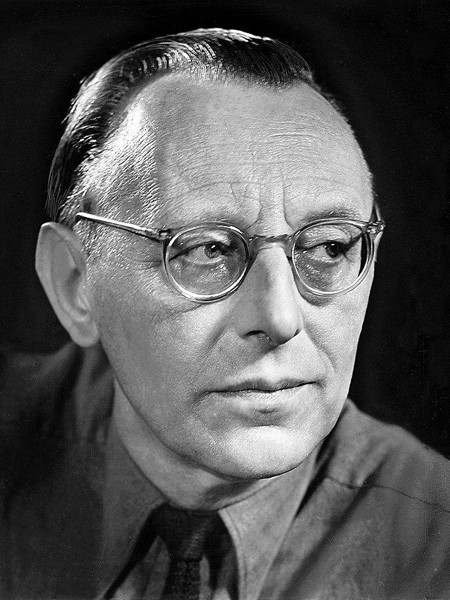
Today’s musical piece ‘O Fortuna‘ by Carl Orff (see image above) you have no doubt heard of because it has become so embedded in popular culture. It is derived from the 13th Century medieval Latin Goliardic poem of the same name. The Goliards, in case you were wondering, were young clergy of the Middle Ages who studied at universities spread out over Europe and wrote satirical Latin Poetry. They protested against the growing contradictions within the church through song, poetry, and performance. O Fortuna is a complaint about Fortuna, the inexorable fate that rules both gods and mortals in Roman and Greek mythology.
O Fortune, like the moon you are changeable, ever waxing ever waning; hateful life first oppresses and then soothes playing with mental clarity; poverty and power it melts them like ice.
Carl Orff (10 July 1895 – 29 March 1982) was a German composer. His family was Bavarian and was active in the Imperial German Army. He too served in the German Army during World War I, when he was severely injured and nearly killed when a trench caved in. Afterward, he returned to Munich to pursue his music studies. Orff founded the Günther School for gymnastics, music, and dance in Munich. Orff was there as the head of a department from 1925 until the end of his life, and he worked with musical beginners. There he developed his theories of music education, having constant contact with children. In 1930, Orff published a manual titled Schulwerk, in which he shares his method of conducting. The concepts of his Schulwerk were influential for children’s music education.
Orff’s relationship with German national-socialism and the Nazi Party has been a matter of considerable debate and analysis. His Carmina Burana was hugely popular in Nazi Germany after its premiere in Frankfurt in 1937. O Fortuna” was the opening and closing movement of his cantata Carmina Burana. Orff’s assertion that he had been anti-Nazi during the war was accepted by the American denazification authorities, who changed his previous category of “gray unacceptable” to “gray acceptable”, enabling him to continue to compose for public presentation and to enjoy the royalties that the popularity of Carmina Burana had earned for him.
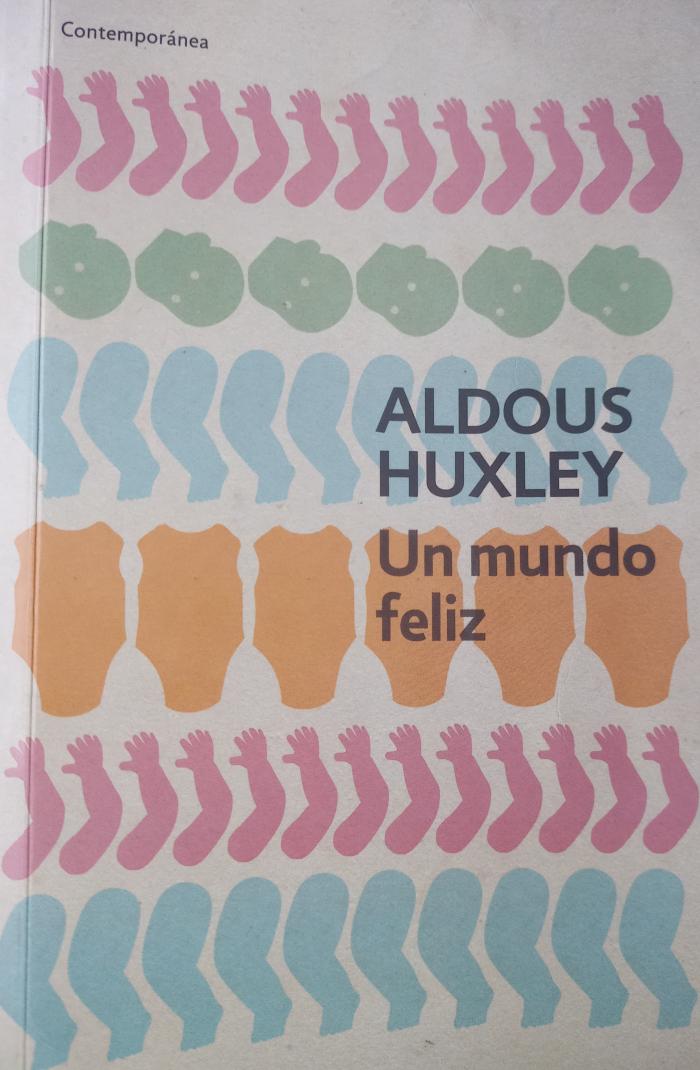
This week in Wednesday’s literature piece we are taking a peak at one of the all-time great novels about the dehumanising aspects of scientific progress. We were assigned to read Brave New World in High School and I’m willing to admit there was a lot I couldn’t grasp back then. I have just revisited it again, but this time in Spanish (see image inset).
The following extract from Brave New World I found congruous to what kind of worldview the new ethics movement has in store for us if not enough people have the ‘will’ to speak up for those aspects of freedom which intellectuals have outlined in my previous posts.
At a speech given in 1961 at the California Medical School in San Francisco, the author of Brave New World Aldous Huxley said: “There will be in the next generation or so a pharmacological method of making people love their servitude and producing dictatorship without tears, so to speak, producing a kind of painless concentration camp for entire societies so that people will in fact have their liberties taken away from them but will rather enjoy it.”
Could Huxley’s forewarning be analogous to the affects social media platforms, big tech and AI (including those wretched algorithms), The Great Reset initiative by The World Economic Forum and Eugenics development have had on shaping our society’s destiny?
To set up today’s book excerpt from Chapter 16, I will give you a brief character description and some background so you can follow along:
John (The Savage) is the only major character to have grown up outside of the World State. The consummate outsider, he has spent his life alienated from his village on the New Mexico Savage Reservation, and he finds himself similarly unable to fit in to World State society. His entire world-view is based on his knowledge of Shakespeare’s plays, which he can quote with great facility. So Mond arrives at his office and says to John, “So you don’t much like civilization, Mr. Savage.” John concedes, but admits that he does like some things, such as the constant sound of music. Mond responds with a quote from Shakespeare’s The Tempest: “Sometimes a thousand twangling instruments will hum about my ears and sometimes voices.” John is pleasantly surprised to find that Mond has read Shakespeare’s Othello.
So Ladies and gentlemen, without further or do I present to you this illuminating snippet from Brave New World:
The Savage’s face lit up with a sudden pleasure. “Have you read it too?” he asked. “I thought nobody knew about that book here, in England.”
“Almost nobody. I’m one of the very few. It’s prohibited, you see. But as I make the laws here, I can also break them. With impunity, Mr. Marx,” he added, turning to Bernard.“Which I’m afraid you can’t do.”
Bernard sank into a yet more hopeless misery.
“But why is it prohibited?” asked the Savage. In the excitement of meeting a man who had read Shakespeare he had momentarily forgotten everything else.
The Controller shrugged his shoulders. “Because it’s old; that’s the chief reason. We haven’t any use for old things here.”
“Even when they’re beautiful?”
“Particularly when they’re beautiful. Beauty’s attractive, and we don’t want people to be attracted by old things. We want them to like the new ones.”
“But the new ones are so stupid and horrible. Those plays, where there’s nothing but helicopters flying about and you feel the people kissing.” He made a grimace. “Goats and monkeys!” Only in Othello’s word could he find an adequate vehicle for his contempt and hatred.
“Nice tame animals, anyhow,” the Controller murmured parenthetically.
“Why don’t you let them see Othello instead?”
“I’ve told you; it’s old. Besides, they couldn’t understand it.”
Yes, that was true. He remembered how Helmholtz had laughed at Romeo and Juliet. “Well then,” he said, after a pause, “something new that’s like Othello, and that they could understand.”
“That’s what we’ve all been wanting to write,” said Helmholtz, breaking a long silence.
“And it’s what you never will write,” said the Controller. “Because, if it were really like Othello nobody could understand it, however new it might be. And if were new, it couldn’t possibly be like Othello.”
“Why not?”
“Yes, why not?” Helmholtz repeated. He too was forgetting the unpleasant realities of the situation. Green with anxiety and apprehension, only Bernard remembered them; the others ignored him.“Why not?”
“Because our world is not the same as Othello’s world. You can’t make flivvers without steel and you can’t make tragedies without social instability. The world’s stable now. People are happy; they get what they want, and they never want what they can’t get. They’re well off; they’re safe; they’re never ill; they’re not afraid of death; they’re blissfully ignorant of passion and old age; they’re plagued with no mothers or fathers; they’ve got no wives, or children, or lovers to feel strongly about; they’re so conditioned that they practically can’t help behaving as they ought to behave. And if anything should go wrong, there’s soma. Which you go and chuck out of the window in the name of liberty, Mr. Savage. Liberty!” He laughed. “Expecting Deltas to know what liberty is! And now expecting them to understand Othello! My good boy!”
The Savage was silent for a little. “All the same,” he insisted obstinately, “Othello’s good, Othello’s better than those feelies.”
“Of course it is,” the Controller agreed. “But that’s the price we have to pay for stability. You’ve got to choose between happiness and what people used to call high art. We’ve sacrificed the high art. We have the feelies and the scent organ instead.”
“But they don’t mean anything.”
“They mean themselves; they mean a lot of agreeable sensations to the audience.”
“But they’re … they’re told by an idiot.”
The Controller laughed. “You’re not being very polite to your friend, Mr. Watson. One of our most distinguished Emotional Engineers …”
“But he’s right,” said Helmholtz gloomily. “Because it idiotic. Writing when there’s nothing to say …”
“Precisely. But that require the most enormous ingenuity. You’re making fiivvers out of the absolute minimum of steelworks of art out of practically nothing but pure sensation.”
The Savage shook his head. “It all seems to me quite horrible.”
“Of course it does. Actual happiness always looks pretty squalid in comparison with the over-compensations for misery. And, of course, stability isn’t nearly so spectacular as instability. And being contented has none of the glamour of a good fight against misfortune, none of the picturesqueness of a struggle with temptation, or a fatal overthrow by passion or doubt. Happiness is never grand.¨
When I mean ‘Democratic’ I don’t infer the Democratic Party rather the Democratic system as we know it; including its foundations and the values it represent. Today is the first time in my life time that I can recall a current sitting Democratic elected President being censured by the majority of major mainstream Media outlets. The US media by and large cut away from Donald Trump’s White House speech citing ‘false statements’ and ‘unfounded conspiracies’. The ABC, CBS and NBC all cut away.
‘Cancel Culture’ has now weaved its way into the mainstram press denying the US President his say at this most crucial time in modern US Political history. Whether you like Trump or not, every election deserves transparency and correct results. How can Florida count 5 million votes in a day, and Nevada and Arizona can’t count fractions of that within four days?
If the US President is denied the right to freedom of speech and expression by large segments of the Press, not to mention the pulling of his Tweets in Twitter and Lord only knows where else, then Ladies and Gentlemen I think its clear we are embarking on unprecented and dystopian – like territory of Big Brother control – akin to George Orwell’s 1984. And it’s uncanny the timing given the recent expulsion of Jordan Peterson and Brett Weinstein from Facebook in the lead up to the election.
Like Brett Weinstein, I personally despised both US Presidential candidates, so I pity the US voters for having to choose their poison. But the poison eminating from the pathetically ‘woke’ DNC (Democratic National Committee) is one I would be less willing to swallow given its endorsement of this Socialist (anti meta-narrative) BLM (Black Lives Matter) which possesses all the hallmarks of a regime hellbent on assuming Totalitarian control and doing away with not only ‘History’ as its understood, (see my recent article about Douglas Murray concerning that and the 1619 project discussed by Glenn Loury & John McWhorter) but the Judeo-Christian foundation which our Western cultures are built and the ensuing enlightenment our societies have thrived. It’s worth mentioning the founders of BLM are declared ‘Marxists’ according to their web site.
Since I live in a land ravaged by Socialist insurgency, I couldn’t help but think about Ben Shapiro’s recent comments or words to the effect: ‘Nearly everyone who has lived in a Socialist country doesn’t like Socialism, but mainly suburban white-left leaning ideologues living in a free-democratic country love socialism’.
I wrote in an earlier podcast how I thought Douglas had done his finest in that, but here he exceeds in this most recent podcast as he tours the US for the elections.
In the beginning he begins to tell how the youth have been indoctrinated and enraptured by this new religion of left wokedness and moral virtue to fill the God-like gaping hole of meaning in their lives.
His message here about how the ‘silent majority’ must find their voice ‘right-now’ is extremely important given the caos and how the cogs of change are being so hardly driven by anarchists and those fuelled to do away with the enlightenment.
This was just such an illuminating presentation. I couldn’t recommend it more highly.