Inflatable pool, sipping’ Dad’s ice cold beer
kissed my Godmother’s daughter
‘How cute!’, Dad took a photo
Later on, my best friend snatched it
and it would do the school rounds
I’ve had better days, lets leave it at that
Another girl, frizzy- haired Cathy told me
‘This Gold nugget is yours’
‘But you have to kiss me’
We smooched behind the decrepit toilet block
She tossed me my beautiful reward
I wish I had kept that gold-painted bitumen.
Virginia Woolf’s final letter was found by her husband Leonard on the day she disappeared in 1941. Her body was found some weeks later in the River Ouse, dressed in an overcoat with pockets filled with stones.
In August last year, I described my reaction to just having read To The Lighthouse by Virginia Wolf .
‘It’s as though someone with an advanced intellect from another world has written something totally impartial, yet supremely intuitive about how the human mind processes experiences. It’s just so superior to anything else written.’
As this Virginia Wolf documentary explains ‘Virginia had undoubtedly drawn a lot upon her annual family pilgrimages to St Ives in Cornwell from her early childhood to when she was fourteen. They had given her it seems, her happiest moments. Virginia’s sister Vanessa, recognised in To The Lighthouse an almost perfect recreation of their parents. Her father dominant, but insecure. The mother extraordinarily good and almost too accepting of him’.
Good Reads reviewer Stephen M described the experience of reading this classic better than I could ever hope to:
I’ve never dwelt over a set of 200 bound pages with as much joy and relish as I have with To the Lighthouse. I can say without reservation, that this is some of the most incredible writing I’ve ever come across and I’m absolutely baffled as to how Woolf pulled it off. So much of the prose was redolent of an abstract surrealist film, such were the clarity and preciseness of its images. At a certain point Woolf describes an idea entering a character’s mind as a drop of ink diffusing in a beaker of water. I left several exclamation points and expressions of pure joy among the marginalia of my copy. I have never experienced such a strange brew of images and ideas that whirl around mere words of a novel, all of which has incited such excitement in me, as if some beautiful and aching aspect of human experience has been solidified on paper that will never be as perfect as it is here.
Let’s read some excerpts from To the Lighthouse, which helps illustrate Stephen M’s review:
“For now she need not think of anybody. She could be herself, by herself. And that was what now she often felt the need of – to think; well not even to think. To be silent; to be alone. All the being and the doing, expansive, glittering, vocal, evaporated; and one shrunk, with a sense of solemnity, to being oneself, a wedge-shaped core of darkness, something invisible to others… and this self having shed its attachments was free for the strangest adventures.”
“She had known happiness, exquisite happiness, intense happiness, and it silvered the rough waves a little more brightly, as daylight faded, and the blue went out of the sea and it rolled in waves of pure lemon which curved and swelled and broke upon the beach and the ecstasy burst in her eyes and waves of pure delight raced over the floor of her mind and she felt, It is enough! It is enough!”
“Was there no safety? No learning by heart of the ways of the world? No guide, no shelter, but all was miracle, and leaping from the pinnacle of a tower into the air? Could it be, even for elderly people, that this was life?–startling, unexpected, unknown?”
You can read more quotes from Viginia Woolf’s To The Lighthouse at the Goodreads web site. Also you can listen to this, the only surviving recording of Virginia Woolf’s voice. This recording comes from an essay published in a collection—The Death of the Moth and Other Essays—the year after Woolf’s death. The talk was called “Craftsmanship,” part of a BBC radio broadcast from 1937.
“[words are] the wildest, freest most irresponsible most unteachable of all. Of course you can catch them and sort them and place them in alphabetical order in dictionaries but words do not live in dictionaries, they live in the mind…” – Virginia Woolf
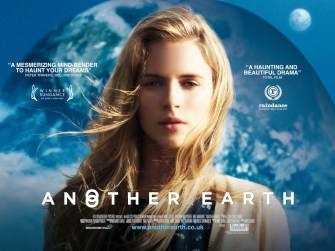
On the night of the discovery of a duplicate Earth in the Solar system, an ambitious young student and an accomplished composer cross paths in a tragic accident. IMDB (Another Earth)
Another Earth is a highly original and thought provoking film traversing the science-fiction realm, but also steeped in the drama genre. I saw Mike Cahill’s other movie I Origins and I thought it had a lot of merit as well. They both remind me of the cult SciFi film The Man From Earth which I highly recommend for those who like those propositional scientific ‘what if’ scenarios that seek to challenge how we view of our very existence.
Below is what I think Another Earth was inferring by the strange course of events which take place towards the end of the movie. How we perceive the ending is critical to understanding what the director and co-writers were wanting us to take away from the movie. Mind you, if you haven’t seen Another Earth, what you are about to read will make virtually no sense.
So lets start backwards as it were.
My understanding is Rhoda appeared to herself on Earth 1 because she also won the very same competition on Earth 2. However unlike her Earth 1 self, Earth 2 Rhoda traveled to the other earth. She did on earth 2 what the husband did on earth 1 which was to travel to the ‘other’ earth. This is speculative of course, but that is my take on why she appears to herself.
I don’t think she killed anyone on Earth 2 because she was dressed like a successful University graduate. So the moment the two earths appeared to one another the altering consequences on Earth 2 were such that she did not collide or kill anyone. Changes will have occurred on the two earths separate to one another from the moment Rhoda appears to look up out of the car or possibly even at an earlier moment. She appears to herself at the end; which implies ‘the husband’ could appear to his own-self and family on Earth 2 knowing that ‘his other self’ is content and he could eventually resume living on Earth 2. To take it one step further, he could just transfigure into his own-self on earth 2 and Rhoda into her own-self on Earth 1.
While this may seem scientifically preposterous, the quantum mechanical ‘Many-Worlds’ theory could offer a shred of scientific validity for entertaining these strange possible notions.
Exactly what the director and co-writers had in mind is of course only known by them. But the parallel selves we see in the movie are all used as metaphors to engage us in asking those big questions about our existence and more specifically which of our ‘selves’ we really ought to be. Each individual is of course one of the same ‘physical-self’, but we live with our potential different selves inside our minds. And depending on how we manage our inner selves and the decisions we make; our behaviors and actions have consequences which determine our destiny. To use the ‘Many-Worlds’ theory analogy essentially we determine where the wave function collapses and hence where our world branches off.
Self locating uncertainty: You know the wave function of the universe, but not where you are within it. Among other things; you branch, and I branch. There are two copies of me, two future-selves and neither one of them know which branch they are on. There will necessarily be a short period of time when the branching has already happened. – Sean Carroll from The Many Worlds Theory by Sean Carroll
IMDB – ‘After Ben and George get married, George is fired from his teaching post, forcing them to stay with friends separately while they sell their place and look for cheaper housing — a situation that weighs heavily on all involved.‘
Just finished watching this beautiful movie tonight. It’s so refreshing to see a movie conveying a heck of a lot without trying to shove it down the viewer’s throat. Music was sublime, cinematography outstanding and acting – all top notch. Unlikely to see better movies than this – in the Oscar year just gone – besides perhaps Birdman, Ida, Boyhood, Hotal Budapest and Whiplash. Love is Strange should be counted amongst these greats. I think time will treat this movie quite kindly.
The film’s use of Chopin’s Berceuse and other Chopin pieces was absolutely magical.
I think the music enhanced the action in the film enormously. And the scene in which Molina’s piano student played Chopin’s Raindrop Etude was incredible. It told us so much about Molina’s character and it was exquisite to watch.
– IMDB user Pyotr3
Larry David is the co-creator of Seinfeld and sole-creator of the in-famous unscripted self-mockumentary Curb Your Enthusiasm. I have watched many interviews with Larry David but this one tops the lot. He would hate me for writing this, but LOL Larry.. LOL.
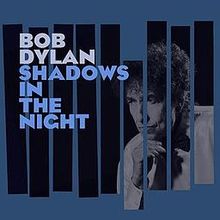
Bob Dylan stated in a press release about his upcoming Shadows in the Night….’I don’t see myself as covering these songs in any way. They’ve been covered enough. Buried, as a matter a fact. What me and my band are basically doing is uncovering them. Lifting them out of the grave and bringing them into the light of day‘.
The way I see it, it’s all the same Dylan, but using different techniques of communication. He touches on this in his recent interview (from AARP). The technique here is an intimate, almost whispering in your ear delivery, where every intake and outtake of breath makes us think he is singing to us individually.
I think Dylan is consciously involved in the technique of singing now more than ever. I don’t think it was something that would have bothered him so much when his voice was younger, but when so little remains of his vocal range, technique is now everything if he is to communicate.
In many ways, Shadows in the Night is an exercise in technique. It’s about the skill of the singer more than any other Bob Dylan record.
Dylan is now singing with the voice of the last man standing. It’s a voice that accepts what life has become and moves nimbly and reverently within the grace of the intonation that God has left him with. Louis Armstrong is the only other American singer who has ever communicated as much soul, such complex weather worn textures and colors within such a limited range. But, the appeal of Dylan’s voice isn’t simply that it has a lot of miles on it. Weathered voices are a dime a dozen. Anybody can beat hell out of their vocal chords if they set their minds to it. To be able to sing like Bob Dylan sings on Shadows In The Night is no accident of lifestyle. You have to have something far deeper than that going on to sing like he does here.
Those who complain that Dylan can’t sing are treated to a masterclass in timing, phrasing, nuance and interpretation. Even the cracks in his voice leave a poignant trail.
On January 19th 2015 Bob Dylan released his second single ‘Stay With Me’ from his much anticipated Sinatra covers album.
Some songs can take months for an artist to find its true essence and Dylan managed to do that with ‘Stay With Me’ as his final encore song on tour. Bob’s version below from The Beacon at NYC is truly on another level. It well surpasses the fairly static original release on Shadows.
Stumbled across this highly original, enriching, almost other-worldly performance by Tom Waits on Letterman. Stick around for the interview too. It’s a hoot!
 Inflatable pool, sipping’ Dad’s ice cold beer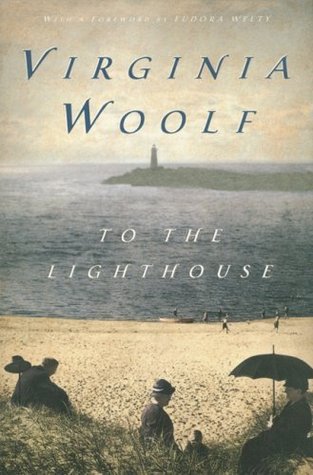



 Observation Blogger