Masters of War (1963) – Bob Dylan

“I’ve never written anything like that before. I don’t sing songs which hope people will die, but I couldn’t help it with this one. The song is a sort of striking out… a feeling of what can you do?”

– In the album notes to The Freewheelin’ Bob Dylan

Masters of War stands as one of contemporary music’s most austere, bitter, and incisive anti-war anthems. Rarely has Dylan sounded so direct and merciless in his phrasing. Gone are the surrealism and poetic flourishes – here, the words spill out raw and unfiltered. Unlike his more prophetic works such as A Hard Rain’s a-Gonna Fall and Blowing in the Wind, where Dylan seems mature beyond his years, Masters of War contains youthful indignation and fury. That vulnerability – his age, his sarcasm, his anger – amplifies the power of the song against those who profit from conflict. It’s a cross generational outpouring which he would later revisit, but to a more nuanced degree in The Times They Are A-Changin.

Dylan wrote Masters of War over the winter of 1962–63 during the height of Cold War paranoia and the escalating arms race between the United States and the Soviet Union. He released it on the album The Freewheelin’ Bob Dylan in the spring of 1963. It was set to the traditional melody of the folk song Nottamun Town, the arrangement by veteran folksinger Jean Ritchie. Unknown to Dylan, the song had been in Ritchie’s family for generations, and she wanted a writing credit for her arrangement. In a legal settlement, Dylan’s lawyers paid Ritchie $5,000 against any further claims.

Some of Dylan’s notable performances of Masters of War include:
–  At New York City’s Town Hall on April 12, 1963
– During the 1991 Grammy Awards ceremony where he received a Lifetime Achievement Award, and
– At his Hiroshima concert in Japan in 1994.

American folk revival musician Pete Seeger covered the song on his 1965 album Strangers and Cousins. Recorded live in Japan, the cover features Seeger playing an acoustic guitar, with each lyric followed by a spoken translation of the lyric by a Japanese translator. Seeger and Dylan had a close personal and professional relationship, with Dylan citing Seeger as a source of inspiration in both musical and political spheres. Additionally, Seeger shared many of the pacifist values expressed by Dylan in Masters of War.

Another noteworthy cover was Eddie Vedder (Pearl Jam) performing Masters of War at Bob Dylan’s 30th anniversary concert in Madison Square Garden, 1992. Just to think that less than 2 years previously Vedder was working as a security guard for a petroleum company in San Diego, California.  

In 2025, Rolling Stone ranked Masters of War as the 6th greatest protest song of all time.

[Verse 1]
Come, you masters of war, you that build the big guns
You that build the death planes, you that build all the bombs
You that hide behind walls, you that hide behind desks
I just want you to know I can see through your masks

[Verse 2]
You that never done nothing but build to destroy
You play with my world like it’s your little toy
You put a gun in my hand and you hide from my eyes
And you turn and run farther when the fast bullets fly

[Verse 3]
Like Judas of old, you lie and deceive
A world war can be won you want me to believe
But I see through your eyes and I see through your brain
Like I see through the water that runs down my drain

[Verse 4]
You fasten all the triggers for the others to fire
Then you set back and watch while the death count gets higher
You hide in your mansion while the young people’s blood
Flows out of their bodies and is buried in the mud

[Verse 5]
You’ve thrown the worst fear that can ever be hurled
Fear to bring children into the world
For threatening my baby, unborn and unnamed
You ain’t worth the blood that runs in your veins

[Verse 6]
How much do I know to talk out of turn?
You might say that I’m young, you might say I’m unlearned
But there’s one thing I know, though I’m younger than you
That even Jesus would never forgive what you do

[Verse 7]
Let me ask you one question is your money that good?
Will it buy you forgiveness? Do you think that it could?
I think you will find, when your death takes its toll
All the money you made will never buy back your soul

[Verse 8]
And I hope that you die and your death will come soon
I will follow your casket by the pale afternoon
And I’ll watch while you’re lowered down to your deathbed
And I’ll stand over your grave ’til I’m sure that you’re dead

References:
1. Masters of War – Wikipedia

Tagged with: , , , ,
Posted in Music

The One (1992) – Elton John

I think apart from Elton’s contributions on the 1994 Lion King soundtrack with Can You Feel The Love Tonight and Circle of Life, today’s featured song – The One – stands as one of Elton John’s finest achievements in his mid to late career. Everything aligns effortlessly here: Bernie Taupin’s lyrics weave the raw vulnerability of love with the grandeur of nature, painting an almost mythic emotional landscape. Elton’s voice – calm, resolute, and utterly in its element – glides through the piece with a quiet intensity. His voice is an instrument much like his piano and he has mastered them both.

Also the lush instrumentation elevates the track, enveloping the listener in a dreamlike soundscape that evokes nature at its elemental pristine beauty. These piano riffs and solos are unforgettable and quite dazzling. It’s quite the feat by Elton, Bernie and the musicians.

John stated that he felt an intense connection to Bernie Taupin’s lyrics for the song, in light of his personal circumstances around the time of making the album, in particular the line “for each man in his time is Cain until he walks along the beach“. Speaking of ‘walks on the beach’ I have to refer here to an extract I presented from James Joyce’s A Portrait of the Artist which I found mesmerising.
The One reached No. 9 on the US Billboard  and No. 1 on the Billboard Adult Contemporary chart. It was nominated for Best Male Pop Vocal Performance at the 1993 Grammy Awards.

So here endeth the double feature of Elton from The One record. It’s said Gianni Versace designed the sets and costumes and of course the cover art. This was Elton’s first recording done completely sober. He has remained so ever since. Elton John remains one of my favourite music artists of the 20th century which is demonstrated by the plethora of music I have presented so far by him in the Music Library Project. He is one of the best melodists I have heard and his voice to my listening senses is almost second to none in contemporary music history. The One is a true masterpiece of songwriting. Thank you Bernie!

[Verse 1]
I saw you dancin’ out the ocean
Runnin’ fast along the sand
A spirit born of earth and water
Fire flyin’ from your hands
In the instant that you love someone
In the second that the hammer hits
Reality runs up your spine
And the pieces finally fit

[Chorus]
And all I ever needed was the one
Like freedom fields, where wild horses run
When stars collide like you and I
No shadows block the sun
You’re all I’ve ever needed
Baby, you’re the one

[Verse 2]
There are caravans we follow
Drunken nights in dark hotels
When chances breathe between the silence
Where sex and love no longer gel, oh
For each man, in his time, is Cain
Until he walks along the beach
And sees his future in the water
A long, lost heart within his reach

References:
1. The One (Elton John song) – Wikipedia

Tagged with: ,
Posted in Music

The North (1992) – Elton John

Elton John Monaco 1992

Today we have the first of an Elton John double billing – a happy quirk of the alphabetical sequence that sometimes throws up these fortuitous double features.

We’re dialing things right down with this lesser known song from Elton John’s 1992 album The One (image inset). Elton has a talent for capturing emotional chill – just as he did on tracks like Too Low for Zero and Cold As Christmas. The North carries on in that same desolate, bleak and despondent way painting a stark emotional landscape. The music kind of meanders as well like a man trudging along disoriented and numb searching for a beacon of hope.

Lyrically, the song explores themes of personal reckoning and the struggle to move beyond a haunted past. Elton sees a faint light on the horizon as he turns away from the cold, oppressive burden of “the North” – a metaphorical steel cloud trailing behind him. In shedding that emotional weight, he begins to rediscover the younger, more hopeful self within, now turning his gaze toward the symbolic warmth of the South.

It’s worth noting that The One marked Elton’s first studio album following his recovery from drug and alcohol addiction and bulimia in 1990. That context makes the song’s journey from heaviness to clarity feel all the more poignant.

The One is Elton John’s 21st studio album and the last record I procured by him. I wore it out such was my fascination with the record. Its cover artwork was designed by Gianni Versace. The One spent three consecutive weeks at No. 2 without reaching No. 1 on the UK Albums Chart, being kept off the top spot by the Lionel Richie compilation Back to Front. However, it was John’s biggest-selling album in the US since 1976. All songs composed by Elton John and Bernie Taupin, except Runaway Train, co-written by Olle Romö.

[Verse 1]
Have you seen the North
That cold grey place
Don’t want its shadow anymore
On my face
A man grows bitter

We’re a bitter race
Some of us never get to see
A better place
In the Northern Skies
There was a steel cloud
It used to follow me around
But I don’t see it now
There’s a farm in the rain
And a little farmhouse
There were a young man’s eyes
Looking south

[Chorus 1]
The North was my mother
But I no longer need her
You trade your roots and your dust
For a face in the river

[Chorus 2]
And a driven rain that washes you
To a different shore
There’s a North in us all
But my North can’t hold me anymore

References
1. The One (Elton John album) – Wikipedia

Tagged with: , ,
Posted in Music

The Night They Drove Old Dixie Down (1976) – The Band (The Last Waltz)

The Night They Drove Old Dixie Down is drawn from the final concert by The BandThe Last Waltz – held on Thanksgiving Day, 1976, at San Francisco’s Winterland Ballroom. Superlatives are scarcely suffice when describing The Band’s performance that evening. You know you’re in the presence of true artistic greatness when your only honest response is: How on God’s earth did they do that? I remain in awe of this spellbinding concert, and of how one of America’s finest directors, Martin Scorsese, managed to capture and preserve its full majesty on film.

Today’s featured song stands as one of the evening’s crowning achievements – and that’s no small feat considering the brilliance on display throughout the show. Old Dixie is already the ninth performance to appear here from The Last Waltz.

It’s hard to find a song more steeped in the roots of old Americana, and Levon Helm’s rugged, time-worn voice feels inseparable from its soul and story. It has that ring of truth and the whole aura of authenticity. In fact the performance in The Last Waltz below is last time the song was performed by Helm. He refused to play the song afterwards.

The lyrics of the song discuss the destruction of the Richmond and Danville Railroad that carried supplies for the Confederate Army at Petersburg

The Night They Drove Old Dixie Down was written in 1969 by Robbie Robertson. Through the voice of Virgil Caine, a destitute Southern farmer, the song chronicles the harrowing toll of the Civil War – marked by shattered livelihoods, hunger, and heartbreaking personal loss. It is set during the last days of the American Civil War, when George Stoneman was raiding southwest Virginia. Dixie is the historical nickname for the states making up the Confederate States of America.

Creation (from Wikipedia)

Robbie Robertson spent about eight months working on the song. He said he had the music to the song in his head and would play the chords over and over on the piano but had no idea what the song was to be about. Then the concept came to him and he researched the subject with help from the Band’s drummer Levon Helm, a native of Arkansas. In his 1993 autobiography, This Wheel’s on Fire, Helm wrote, “Robbie and I worked on ‘The Night They Drove Old Dixie Down’ up in Woodstock. I remember taking him to the library so he could research the history and geography of the era and make General Robert E. Lee come out with all due respect.”

The Night They Drove Old Dixie Down is considered one of the highlights of The Band, the group’s second album, which was released in the fall of 1969. The album has been viewed as a concept album, with the songs focusing on the peoples, places and traditions associated with an older version of Americana. The Band have frequently performed the song in concert, and it is included on the group’s live albums Rock of Ages (1972) and Before the Flood (1974) featuring Bob Dylan and was the first record I procured of him or The Band

Although it has long been believed that the reason for Helm’s refusal to play the song after The Last Waltz was a dispute with Robertson over songwriting credits, according to Garth Hudson the refusal was due to Helm’s dislike for Joan Baez’s version.
Joan’ Baez’s version peaked at No. 3 on the Hot 100 on October 2, 1971. Baez later said she initially learned the song by listening to the recording on the Band’s album, and had never seen the printed lyrics at the time she recorded it, and thus sang the lyrics as she had (mis)heard them. In more recent years in her concerts, Baez has performed the song as originally written by Robertson.

[Verse 1]:
Virgil Caine is the name and I served on the Danville train
‘Til Stoneman’s cavalry came and tore up the tracks again
In the winter of ’65, we were hungry, just barely alive
By May the tenth, Richmond had fell
It’s a time I remember, oh so well

[Chorus]:
The night they drove old Dixie down
And the bells were ringing
The night they drove old Dixie down
And the people were singing
They went, “La, la, la”

[Verse 2]:
Back with my wife in Tennessee
When one day she called to me
“Virgil, quick, come see, there goes Robert E.Lee”
Now I don’t mind choppin’ wood
And I don’t care if the money’s no good
Ya take what ya need and ya leave the rest
But they should never have taken the very best

[Verse 3]
Like my father before me, I will work the land
And like my brother above me, who took a rebel stand
He was just eighteen, proud and brave
But a Yankee laid him in his grave
I swear by the mud below my feet
You can’t raise a Caine back up when he’s in defeat

References:
1. The Night They Drove Old Dixie Down – Wikipedia

Tagged with: , , , , ,
Posted in Music

The Next Time You See Johnny (1990) – Kenny Marks

I was first introduced to the music of 1980s Christian rock artist Kenny Marks by my school friend Eric during our early high school years. At that impressionable age, I was deeply moved by it – and clearly, that impact has endured, as this marks the third song of his to feature here.

The Next Time You See Johnny stands out as an emotionally resonant portrayal of a single-parent family. What distinguishes it from the typical Christian outreach song (and I’ve encountered many over the years) is its highly relevant subject matter for today’s world and the extraordinary guitar solo that closes the track – starting at 4:20 in the video below.

When I first heard it, I was floored. Even now, I never want the song to end. I genuinely consider that solo one of the finest guitar passages I’ve ever heard to wrap up a song.

This is how developmental the story line is. Johnny is the ultimate in a series where Kenny Marks first wrote about a fictional couple Jeannie and Johnny from Franklin High School couple and appeared on his albums Attitude (1985) and Make It Right (1987). In the song, Growing Up Too Fast they are two individual kids dealing separately with emotions and impulses. In The Party’s Over they meet at a party and get together in the back seat of Johnny’s car, resulting in a pregnancy which robs them of their carefree teenage lifestyle.

Now onto the album Another Friday Night featuring today’s song, Johnny has left Jeannie with their son, who has become old enough to miss his father’s absence, yet innocent enough to hold forgiveness in his heart. The son’s prayer to Jesus becomes one his mother perseverates when She feels the presence of someone unseen and from the forgiveness which she also feels in that presence and expresses the following:

And the next time You see Johnny
Tell him it’s all right

There’s still never a dry eye in this house when this song comes to a close. To my senses it’s quite masterful songwriting and by golly that guitar throughout elevates it to a whole other level. His songs could be considered too religious, sanguine, sentimental and ‘rote by numbers’ by modern tastes, but I won’t shy away from it. Although Kenny Marx’s name may not be known to a younger generation of Christian music aficionados but at his height in the ’80s and ’90s he was a true CCM (Contemporary Christian Music) star with a string of US Christian radio hits. 

Bedtime
She sees her son on his knees
And the prayer that she hears
Through the door makes her ill at ease
“Jesus”
She hears a young boy pray
“Could You bring back my daddy?
I know that You’ll find a way”

“And the next time You see daddy
Tell him I’m all right
And there’s a fire in my heart for him
That’s always burning bright
Tell him that I pray for him
Each and every night”

Bedtime
Where she taught him to pray
“Now I lay me down to sleep”
Were the words he would say
“Jesus”
She hears him again
And she faces thе faith of a child
That’s no longer pretend

“And thе next time You see daddy
Tell him I’m all right
And there’s a fire in my heart for him
That’s always burning bright
Tell him that I pray for him
Each and every night”

Bedtime
In her room all alone
She feels the presence of someone unseen
Someone unknown
“Jesus”
She hears herself start
“Let the fire of forgiveness burn bright
In this broken-down heart”

And the next time You see Johnny
Tell him it’s all right
There’s a fire of forgiveness
That’s always burning bright
There’s Someone he can pray to
Each and every night”

Jesus

References:
1. Kenny Marks – Wikipedia
2. Kenny Marks Dies at 67 – GMA
3. Kenny Marks: Remembering the CCM star of the ’80s and ’90s – Cross Rhythms

Tagged with: , ,
Posted in Music

The Moment (1996) – Kenny G

My other post on Kenny G was in March last year. It was about his 1992 mega-hit single Forever in Love and remains by far the most visited article on my blog according to the WordPress statistics. Why that is, I have no idea although it’s one of the few articles I wrote partly in jest – mocking elevator music. That’s not to take anything away from his prestigious talent or obfuscate my listening enjoyment of these featured songs. I even owned his most successful record Breathless (1992) which contains – Forever. I was in a silly mood – that’s all.

The Moment may not have been successful as Forever, but it was Kenny G’s first hit on the Billboard in three years reaching number 63. It is the title track on his eighth studio album The Moment released in 1996 which reached No 2 on the Billboard album charts. The single was released alongside another artist and song you may be familiar – Toni Braxton – Un-Break My Heart.

Kenny G is an American Smooth jazz saxophonist and the best selling instrumentalist of all time with over 75 million record sales, and 1.5 billion streams. You can find him here talking about his journey from not making the high school band to global music superstardom. He even discusses parodies which is interesting since my friend Nancy at The Elephant’s Trunk in my last Kenny post mentioned a spoof video of him and Michael Bolton performing How Am I Supposed To Live Without You. I can’t say it didn’t have me in stitches and still makes me chuckle whenever I see it. To corroborate Nancy – you’ve been warned.

From Wikipedia:

Kenny was born Kenneth Bruce Gorelick (June 5, 1956). He started playing the saxophone at the age of ten, inspired by a performance on The Ed Sullivan Show. During high school, he took private saxophone lessons and played in the school jazz band. Kenny G’s fourth solo album, Duotones (1986), marked the start of his most commercially successful period, featuring the hit single Songbird.  His 1992 album, Breathless, became the best-selling instrumental album ever. He has worked on soundtracks for films such as The Bodyguard and collaborated with artists, including Andrea Bocelli and Frank Sinatra.

The music video (below) of the song starts with Kenny G coming in a Seaplane and playing his Soprano saxophone. Then, the scene breaks to him flying in the plane to downtown Seattle, where Kenny G hails from. Then performing again in variety of locations, song production house, a sunset scene, in front of Pike Place Market, a crowd watching him performing and finally in the waterfront of Seattle.

It appears Kenny G is still touring according the events calendar in the video below (Asia in July and then US in Sept and Brazil in Oct and back to the US after).
Here endeth the post, you can find the lyrics in your dreams. Thanks as always for reading.

References:
1. The Moment (Kenny G composition) – Wikipedia
2. Kenny G – Wikipedia

Tagged with: ,
Posted in Music

The Mighty Quinn (Quinn, the Eskimo) 1969 – Bob Dylan

Dylan’s live rendition of The Mighty Quinn (Quinn, the Eskimo) was released on Self Portrait and later Bob Dylan’s Greatest Hits Vol. II which was where I first heard it. I always dug it’s upbeat tempo and playful lyrics. It’s so fresh and spirited. It showcases Dylan’s ability to reinterpret his own work in a way that feels both authentic and engaging. The Mighty Quinn (Quinn, the Eskimo) is yet another Dylan penned song where the cover artist – in this case the British band Manfred Mann made into a huge hit. It was originally written during the Basement Tapes sessions in 1967, but the song’s first release was in January 1968 by Manfred Mann becoming a chart-topping hit in the UK.

One fascinating detail about this song is its connection to actor Anthony Quinn, who played an Eskimo in the 1960 film The Savage Innocents (image inset). Dylan reportedly drew inspiration from this character when crafting the song.

The version you hear below was recorded live at the Isle of Wight Festival in 1969. The Band was backing Dylan during his performance and I think its Rick Danko who can be heard contributing wonderful back-up vocals which add so much punch to the song. Four performances from this concert including today’s featured song were included on Dylan’s album Self Portrait (1970). The others were Like a Rolling Stone, Minstrel Boy and She Belongs to Me. Thanks to rumours that one or all of the Beatles would be joining him on stage, Dylan’s comeback show had become, in the words of music journalist John Harris, “inflated into the gig of the decade“. On 31 August, Dylan arrived on stage in a cream suit recalling Hank Williams.

Isle of Wight Festival (From Wikipedia article)

The 1969 Isle of Wight Festival was held on 29–31 August 1969 at Wootton Creek, on the Isle of Wight, England. The festival attracted an audience of approximately 150,000 to see acts including Bob Dylan, the Band, the Who, Free, Joe Cocker, the Bonzo Dog Band and the Moody Blues.

The 1969 festival was considerably larger and more popular than the previous year’s. Dylan had been little heard of since his allegedly near-fatal motorcycle accident in July 1966. Shunning the Woodstock Festival, held near his home in upstate New York, Dylan was initially reluctant to perform his comeback show on the little-known Isle of Wight. After weeks of negotiations, the Foulk brothers showed him a short film of the island’s cultural and literary heritage; this appealed to Dylan’s artistic sensibilities, as he was enthusiastic about combining a family holiday with a live performance in Tennyson country. The family was scheduled to travel to Britain on the Queen Elizabeth 2 and nearly missed the gig because Dylan’s son Jesse had been hit by a ship cabin door and needed to be hospitalised. Dylan travelled to the site by plane at the last minute.

Before the festival, Dylan and his fellow Woodstock residents, the Band, rehearsed at Forelands Farm in Bembridge, and were joined there by George Harrison, the only “outsider” to have visited him in his enclave in the Catskill Mountains. On Saturday, 30 August, the day before Dylan was to take the stage, Harrison’s fellow Beatles John Lennon and Ringo Starr arrived on the island, along with Keith Richards of the Rolling Stones, Eric Clapton and Elton John. Also seated in the sealed-off VIP area in front of the stage would be Beatle wives Pattie Harrison, Yoko Ono and Maureen Starkey.

[Verse 1]
Everybody’s building the big ships and the boats
Some are building monuments
Others, jotting down notes
Ev’rybody’s in despair
Every girl and boy
But when Quinn the Eskimo gets here
Ev’rybody’s gonna jump for joy
Come all without, come all within
You’ll not see nothing like the mighty Quinn

[Verse 2]
I like to do just like the rest, I like my sugar sweet
But guarding fumes and making haste
It ain’t my cup of meat
Everybody’s neath the trees
Feeding pigeons on a limb
But when Quinn the Eskimo gets here
All the pigeons gonna run to him
Come all without, come all within
You’ll not see nothing like the mighty Quinn

[Verse 3]
A cat’s meow and a cow’s moo, I can recite them all
Just tell me where it hurts yuh, honey
And I’ll tell you who to call
Nobody can get no sleep
There’s someone on ev’ryone’s toes
But when Quinn the Eskimo gets here
Ev’rybody’s gonna wanna doze
Come all without, come all within
You’ll not see nothing like the mighty Quinn

References:
1. Quinn the Eskimo (Mighty Quinn) – Wikipedia
2. Isle of Wight Festival 1969 – Wikipedia

Tagged with: , , ,
Posted in Music

Pentecostal Girl (2007) – My Friend the Chocolate Cake

Pentecostal Girl is already the fifth song to appear here from The Cake this year. Regular followers will know what a huge fan I am of the Australian pop chamber group and of the solo work by its founder, vocalist, pianist and songwriter – David Bridie. This Melbourne band could also be described as a baroque and gypsy-like romp and ballad group and goes without saying they almost always hit the sweet spot in my musical taste-buds.

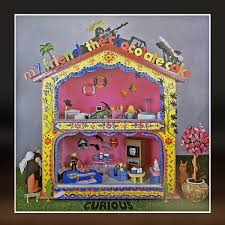
Today’s featured track is from the band’s sixth studio album – Home Improvements (image inset). I presented its title track back in 2022 which includes their humorous video aptly filmed at a Melbourne Flea market. You see, that song is all about consumer distractions – the trappings stopping many of us from taking time out to indulge in life’s simple pleasures. The band have done “salvation through song” before. In their 1994 hit I Got a Plan, Bridie sang, “Let’s take off in the blue station wagon and find the open road to salvation, away from here.” I couldn’t recommend those aforementioned two songs anymore highly if you have a penchant for their music.

Pentecostal Girl follows the tongue in cheek tone of the title track but radically shifts in subject matter. Here Bridie recalls his boyhood crush on his friend’s 15 year-old sister who happens to be a Pentecostal. It is as though you are reading the frenetic and meandering thoughts of a 12 year-old and Bridie sings it with such a heavy Australian accent, something his contemporary’s have tended to shy away from. Pentecostal Girl is the Cakes’ equivalent of a teenager’s story ala J.D. Salinger’s The Catcher in the Rye with respect to its candid portrayal of teenager’s thoughts. You can hear in Bridie’s voice he is enjoying his carefree life of a musician here.

Being able to lose yourself in music is a wonderful thing. When the world’s giving you the shits, there’s nothing better than sitting in a room and losing yourself in the rhythm, melody and texture of music.

Bridie states in his lyrics – ‘I stay over at the Ringwood house‘ which is the same eastern Melbourne suburb I stayed with my best friend’s family and coincidentally was dating his cousin – A Yorkshire lass called Louise who was a temporary resident in their household visiting from England. Pentecostal Girl (and despite Louise being Catholic) and another by Bridie, but as a solo artist – Come Around brings back such profound memories. Writing blogs can be cathartic, cant they? The nostalgia is strong with this one although it’s far from icing on the cake from the Cake, it still brings a wry smile to my face. And the lyrics certainly drive the song.

Since there was so much time between the Cake’s previous album Curious (2002) and Home Improvements (2007), in an interview with The Sydney Morning Herald Bridie said “We never broke upWe’d sort of taken our foot off the pedal a bit.”

[Verse 1]
My friend’s Pentecostal sister
She’s three years older than me
At fifteen she’s got a lot of things that strangely kind of interest me
I sleep over at the Ringwood house
And help with his paper round
It’s twice as big on Saturdays when its cars and lost and found

[Chorus]
What chance have I got?
A snowflake’s chance in Hell
But, believe it or not
I’m in love with a Pentecostal girl

[Verse 2]
Smitten by her heart-shaped face, her clogs and her big brown eyes
The bumps beneath her jumper, to me they kinda tantalise
Her clothes smell of sweet perfume
A Sherbet poster on the wall
I daydream that one day she’ll marry me and not God water [?]

[Bridge 1]
The family bothering God on Sundays in the mud-tin basketball shed
It’s got keyboards, drums, and trumpets and preachers
Veins pop out from his head
And this woman seated in front, she throws her hands up in the air
She’s on direct phone line to Jesus and she screams like she just doesn’t care

[Verse 3]
Peter can’t believe that I’ve got the hots for his dumb older sister
And her pencil case it is covered with the name of a boy who lives in Callister
She don’t know that I exist
She thinks I’m just a little pest
What chance have I got? – I got no hair on my balls or my chest

References:
1. Sydney Morning Herald – My Friend the Chocolate Cake
2. My Friend The Chocolate Cake – Wikipedia

Tagged with: , ,
Posted in Music

Teach Your Children (1970) – Crosby, Stills, Nash & Young

No tv show pounded more at my adolescent heartstrings than the 80’s big tv hit –The Wonder Years. I wore out the soundtrack to the show which contains today’s featured song – Teach Your Children. I always had a soft spot for it since I enjoyed the melody and country flavoured sound complemented with the soft harmonies. Also the lyrics resonated with me as a youngster and the cyclical nature of Teach Your Children to become Teach Your Parents in the latter chorus. As if the baby boom generation must teach their parents about the way the world should be ie the new left from the Vietnam war. Anyway, it’s a lesson for parents and for their children.

Most of the following was extracted and abridged from the Wikipedia reference below:

Graham Nash (image inset) wrote it in 1968 when he was still with the Hollies although they performed it as a group in the studio. Nash left the group in 1968 to co-form Crosby, Stills & Nash, though he has reunited with the Hollies on occasion. Teach Your Children was initially recorded for the album Crosby, Stills & Nash in 1969, but a much more enhanced version of the song was recorded for their album Déjà Vu released in 1970 (see below). The song peaked at No. 16 on the Billboard.

Nash, who is also an accomplished photographer associated the song’s message with a famous 1962 photo by Diane ArbusChild with Toy Hand Grenade in Central Park, shortly after writing the song. The image, which depicts a child with an angry expression holding the toy weapon, prompted Nash to reflect on the societal implications of messages given to children about war and other issues.

‘…The kid was only about nine or ten years old, but his expression bristled with intense anger. He had a plastic grenade clenched in a fist, but it seemed to me that if it were real the kid would have thrown it. The consequences it implied startled me. I thought, ‘If we don’t start teaching our kids a better way of dealing with each other, humanity will never succeed.’

The recording features Jerry Garcia (Grateful Dead) on pedal steel guitar. Garcia taught himself how to play the instrument during his tenure with the New Riders of the Purple Sage. He said in an interview that he recorded a series of pieces on the steel guitar and spliced them together in the studio to create the backing and solo. Garcia had made a deal that in return for his playing steel guitar on “Teach Your Children” CSNY would help members of the Grateful Dead improve their vocal harmony for their upcoming albums, Workingman’s Dead and American Beauty.

[Verse 1]
You, who are on the road
Must have a code that you can live by
And so, become yourself
Because the past, is just a goodbye

[Chorus]
Teach, your children well
Your father’s hell, did slowly go by
And feed, them on your dreams
The one they pick’s, the one you’ll know by

[Post-Chorus]
Don’t you ever ask them why
If they told you you would cry
So just look at them and sigh
And know they love you

[Verse 2]
And you of tender years (Can you hear and do you care?)
Can’t know the fears (And can you see?)
That your elders grew by (We must be free)
And so please help (To teach your children)
Them with your youth (What you believe in)
They seek the truth (Make a world)
Before they can die (That we can live in)

[Chorus]
Teach, your parents well
Their children’s hell, will slowly go by
And feed, them on your dreams
The one they pick’s, the one you’ll know by

References:
1. Teach Your Children – Wikipedia

Tagged with: , , , , ,
Posted in Music

Ruslan and Lyudmila (Overture) 1842 – Mikhail Glinka

Glinka composing Ruslan and Lyudmila, by Ilya Repin

The Overture to Ruslan and Lyudmila bursts forth as a rousing, vibrant ensemble that lifted me into a jovial and animated headspace this morning. The frenetic shimmer of the violins evoked the image of a ballroom filled with dancers spinning wildly, yet somehow in perfect harmony. It’s a piece both exhilarating and electric.
Beyond its immediate energy, Ruslan and Lyudmila stands as a landmark in Russian musical history. This opera signaled the dawn of a new era in Russian composition – one that would eventually ripple through the West. By the 20th century, it had become one of the most frequently performed and admired Russian operas in Western opera houses, influencing the global perception of Russian classical music and paving the way for later giants like Tchaikovsky, Mussorgsky, and Rimsky-Korsakov.

Most of the following was extracted and abridged from the Wikipedia reference below:
Ruslan and Lyudmila (Russian: Руслан и Людмила) is an opera in five acts composed by Mikhail Glinka between 1837 and 1842. The libretto was written by Valerian Shirkov based on the 1820 narrative poem of the same name by Alexander Pushkin. Pushkin had planned to write the libretto himself but died in a duel before he could do so. Today, the best-known music from the opera is its overture which is today’s featured piece.

The premiere took place in Saint Petersburg on 27 November 1842 at the Bolshoi Kamenniy Teatr. The opera has been a mainstay of the Bolshoi, having staged over 700 performances in 9 different productions over the past 165 years. The opera was first performed in the UK on 4 June 1931 at the Lyceum Theatre in London and in the US by Sarah Caldwell’s Opera Company of Boston on 5 March 1977.

Synopsis:
The story begins with the beautiful Lyudmila, daughter of Prince Vladimir, being kidnapped by an evil wizard named Chernomor on her wedding night. Her brave fiancé, Ruslan, sets out on a dangerous journey to rescue her. Along the way, he faces magical challenges, strange lands, and rival suitors who also want to save (or win) Lyudmila. With the help of a good wizard and his own courage, Ruslan defeats Chernomor, rescues Lyudmila, and returns home to marry her. The opera is filled with fantasy, adventure, and Russian folk themes.

 Ruslan employs some aspects of Russian folk music; it is also noted for imaginative use of dissonance, chromaticism, and Eastern elements. Of particular consequence is the use of the whole tone scale for the first time in Russian music. The rollicking overture below is one of the best known orchestral showpieces in the West and known for being a nightmare for bassists. Along with its counterpart A Life for the Tsar, this second opera by Glinka confirmed a Russian national operatic foundation that was to be built upon by the next generation of Russian composers. In particular, Ruslan served as the model for Russian operatic fairy tales.

References:
1. Ruslan and Lyudmila (opera) – Wikipedia

Tagged with: , ,
Posted in Music

Follow Blog via Email

Enter your email address to follow this blog and receive notifications of new posts by email.

Join 779 other subscribers

← Back

Thank you for your response. ✨