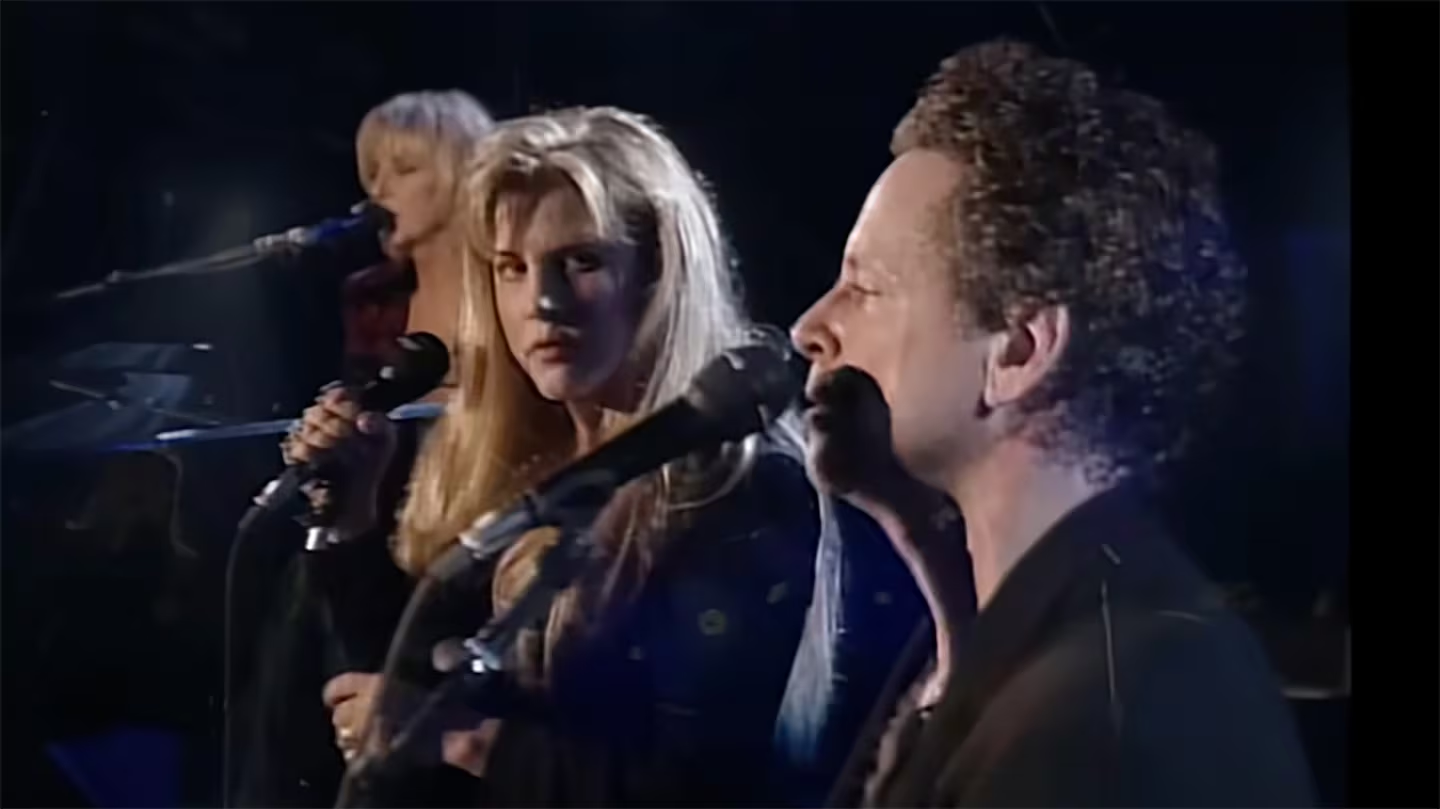

To Love Somebody is one of my favourite love ballads by the Bee Gees. I’m particularly fond of the live version from Las Vegas, 1997, as I am with the rest of their One Night Only show. That concert DVD is one of the most revisited in our household. It’s especially moving now, given that all of Barry Gibb’s younger brothers – Andy, Maurice, and Robin – are no longer with us. That’s an enormous loss of talent right there.
Whenever I hear To Love Somebody, it strikes me as a very mature love song. You could easily imagine it being written by someone wise about love, someone who’s been around the block a few times – much like the ages the brothers were at the time of the Las Vegas concert. Yet this was only the Bee Gees’ second international hit. Barry and Robin Gibb were just 22 and 19 years old respectively when they wrote it.
The chorus is clever too. The line “you don’t know what it’s like” could sound demeaning, especially when repeated. But then it’s turned on its head with “to love somebody / the way I love you.” It’s a simple but powerful emotional switch, and one of the more romantic moments in popular music – at least to my ears.
Barry was asked in a 2017 interview “of all the songs that you’ve ever written, which song would you choose?” Barry said that “To Love Somebody” was the song that he’d choose as it has “a clear, emotional message“.
I’ve included both the original 1967 studio version and the live performance from One Night Only in Las Vegas (1997) below. My preference, unsurprisingly, is the live version. It strips the song back to its essentials – a smooth, easy ballad – while sounding more modern and more affecting, carried by the confidence and mastery that only decades of singing can bring.
The song was written at the request of the Bee Gee’s manager who wanted a soulful ballad in the style of of Sam & Dave or The Rascals, for Otis Redding. Redding came to see Barry at the Plaza in New York City one night. Robin claimed that “Otis Redding said he loved our material and would Barry write him a song“. The Bee Gees recorded To Love Somebody at IBC Studios, London with Gilbert Green and End of My Song in April 1967 and released it as a single in mid-June. Redding died in a plane crash later that year, before having a chance to record the song.
The single didn’t exactly create shockwaves: it reached No. 17 in the United States and No. 41 in the United Kingdom. Interestingly, in Australia – where the Bee Gees had migrated, grown up, and first found success – To Love Somebody climbed to No. 6. The B-side of the single was Close Another Door.
Robin said of To Love Somebody and its commercial reception, “Everyone told us what a great record they thought it was, Other groups all raved about it but for some reason people in Britain just did not seem to like it.” Barry said, “I think the reason it didn’t do well here was because it’s a soul number, Americans loved it, but it just wasn’t right for this country.”
There’s a light
A certain kind of light
That never shone on me
I want my life to be lived with you
Lived with you
There’s a way everybody say
To do each and every little thing
But what does it bring
If I ain’t got you, ain’t got you? Hey babe
[Chorus]
You don’t know what it’s like, baby
You don’t know what it’s like
To love somebody
To love somebody
The way I love you
In my brain
I see your face again
I know my frame of mind
You ain’t got to be so blind
And I’m blind, so so sorrily blind
I’m a man, can’t you see
What I am
I live and I breathe for you
But what good does it do
If I ain’t got you, ain’t got? Hey babe
You don’t know what it’s like, baby
You don’t know what it’s like
To love somebody
To love somebody
The way I love you
(Noo noo no-no nooo nooooo)
[Outro]
You don’t know what it’s like, baby
You don’t know what it’s like
To love somebody
To love somebody
The way I love you
References:
1. To Love Somebody (song) – Wikipedia