Peggy Day (1969) – Bob Dylan

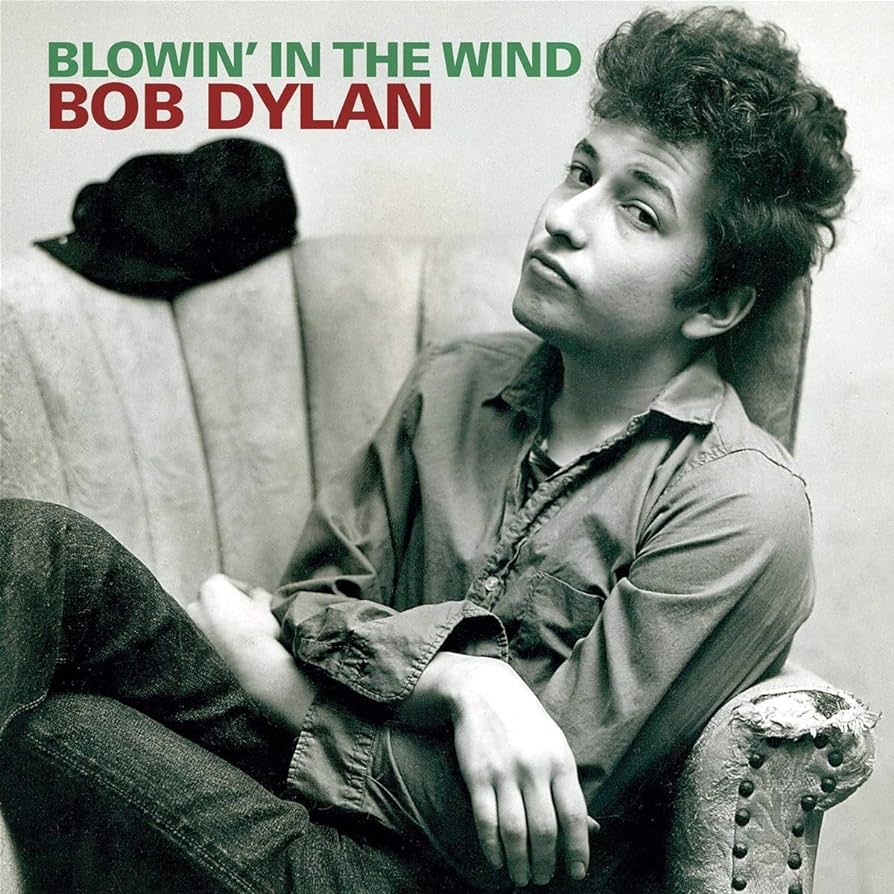
Peggy Day is the second song to appear from Bob Dylan’s 1969 record – Nashville Skyline after the previous entry I Through It All Away. Building on the rustic style he experimented with on John Wesley HardingNashville Skyline displayed a complete immersion into country music. In fact the working title for the album was John Wesley Harding Vol. 2. The album was recorded in a mere four days.

It contains songs like today’s track Peggy Day which possess a charming domestic feel and introduced audiences to a radically new singing voice from Dylan, who had temporarily quit smoking – a soft, affected country croon. Nashville Skyline is arguably the most laid back album of Dylan’s career.

Dylan said he thought about The Mills Brothers while writing Peggy Day. The Mills Brothers were a successful Ohio-based African American vocal quartet active from 1928 to 1982. Dylan never performed Peggy Day live. The song is almost a pastiche of the Thirties – its rhythms recall “swing” and Dylan sings with the kind of light-hearted showmanship that used to come from college bandstands. Dylan makes it abundantly clear he’d like to spend the night with ‘Peggy Day’. Eminently hummable, and probably the ‘Ob-La-Di Ob-La-Da’ of ‘Nashville Skyline’. The guitars chatter away, a pedal guitar break, and a rousing blues climax.

[Verse 1]
Peggy Day stole my poor heart away
By golly, what more can I say?
Love to spend the night with Peggy Day

[Verse 2]
Peggy Night makes my future look so bright
Man, that girl is out of sight
Love to spend the day with Peggy Night

[Bridge]
Well, ya’ know that even before I learned her name
Ya’ know I loved her just the same
And I tell ’em all, wherever I may go
Just so they’ll know, that she my little lady
And I love her so

[Verse 3]
Peggy Day stole my poor heart away
Turned my skies to blue from gray
Love to spend the night with Peggy Day

The concept of recording a country album in Nashville was first discussed with Dylan in 1965 by Johnny Cash, who expressed interest in producing such an album. “I’ve got my own ideas about that Nashville sound and I’d like to try it with Bob,” Cash said in a 1965 interview. Despite the dramatic, commercial shift in direction, the fans, press and critics gave Nashville Skyline a warm reception. It reaching No. 3 in the U.S., the album also scored Dylan his fourth UK No. 1 album.

References:
1. Song of the Day #4,391: ‘Peggy Day’ – Bob Dylan – Meet Me In Montauk
2. Nashville Skyline – Wikipedia
3. Peggy Day (1969) part 1: The head of the snake – Untold Dylan
4. Bob Dylan’s ‘Nashville Skyline’: 10 Things You Didn’t Know – Rolling Stone

Tagged with: , , ,
Posted in Music

The Phantom Thread’s New Year’s Eve Party

‘Phantom Thread’ Is The Perfect New Year’s Movie For A Cynical Year

Slash Film

To share and celebrate making more cherished memories in 2024, I hereby inaugúrate what will become a New Year’s Eve tradition at Observation Blogger by presenting the New Year’s Eve party scene from Phantom Thread which currently sits at No. 22 on my all time favourite movie list at IMDB. If you would like to read my review of The Phantom Thread (2017) by Paul Thomas Anderson you can do so by clicking the reference at the end of this post.

Perhaps you would like to share your own ‘time capsule’ New Year’s Eve movie or favourite scene which encapsulates the anticipation and romanticism of ‘new beginnings’ that so many treasure about the New Year’s arrival.
Apart from The Phantom Thread scene below, three notable mentions for me are the following auld lang syne scenes:

I always felt that Paul Thomas Anderson’s There Will be Blood was a homage of sorts to Orson Welles and Citizen Kane and The Phantom Thread an attempt to honor and pay tribute to Ingmar Bergman. Regarding the latter, I think the New Years event below captures perfectly the awkwardness and melancholic nature of Reynolds Woodcock. It’s an insanely romantic scene although Reynolds and Alma don’t kiss at the stroke of midnight and he scorns at her for making him go out of his way and pulls her out of the ballroom. But, the fact remains that he is there with her. Is that what Alma finds charming about him? Is this is what being in love is like? I think Reynolds realises that finding himself being there is a revelation and reinforces how much he needs Alma and dare I say, truly loves her.

I’m so grateful my friends are here to celebrate the New Year and coming in good cheer! To quote Bob Dylan at his Oscar acceptance speech in 2001:

God bless y’all with peace, tranquillity and goodwill.

Related Articles:
1. The Phantom Thread (2017) – Paul Thomas Anderson (Friday’s Finest)

Tagged with: , , , , , , ,
Posted in Movies and TV

Pay in Blood (2012) – Bob Dylan

Pay in Blood Hamburg – 19 October 2013

Pay in Blood is the second song to appear here from Bob Dylan’s 2012 album Tempest after my previous entry Long and Wasted Years. I always loved this song as I do the whole first half of the Tempest album. Like much of Dylan’s 21st-century output, he produced the song himself using the pseudonym Jack Frost. Rolling Stone ranked Pay in Blood as the ninth best song of 2012 and placed it sixth on a 2020 list of “The 25 Best Bob Dylan Songs of the 21st Century“.

Dylan’s friend and fellow songwriter Elvis Costello recalled in an interview with The Guardian that Dylan had read him the lyrics at the West Coast Blues & Roots Festival in Fremantle, Australia where both men were performing in April 2011: “Dylan pulled out a narrow roll of paper from his jacket (‘not unlike a London bus ticket’), unfurled it and proceeded to recite a new song scrawled upon it, ‘Pay In Blood’. Each time the chorus line came around (‘I pay in blood, but not my own’) ‘it was delivered with a different flourish: a swashbuckler’s panache, a black comical riposte, held with a steady gaze, tossed away with a wicked laugh or a ghost of a smile‘”.

I wrote about my own interpretation of the song here, back in 2014:

A Wise Ol’ Man’s ‘Masters of War’

Dylan is using his voice in Pay in Blood to project a dialogue between four distinct protagonists in this protest song. The first half entails a fierce exchange between ‘slave’ and ‘slaveowner’ but then the song transfigures into a comparably merciless showdown between ‘soldier’ and ‘politician’. I’ve always considered it in some sense Dylan’s omniscient update of his own early period piece – Masters of War.

I was translating Pay in Blood into Spanish for a friend when I realised a clear division between the first four lines of the verse and the subsequent four. Then it became apparent to me which characters he was representing in each 4 line stanza. Also, his voice changes markedly and the instrumentals shift to reflect the alteration.

To demonstrate this dialogue exchange I have presented the lyrics below and segmented each 4 line stanza to highlight the distinction between characters. I should preface by adding that my interpretation of the ‘identity’ of the characters should not be regarded as literal givens rather it is a broad-brush hypothesis of how one might interpret the song. Also there does seem to be some conjecture over who says what particularly in the last 4 verses.
Each character seems to use biblical rhetoric throughout which gives this world-view showdown a timeless quality and spiritual substrate.

Pay in Blood

Well I’m grinding my life out, steady and sure
Nothing more wretched than what I must endure
I’m drenched in the light that shines from the sun
I could stone you to death for the wrongs that you done

– slave

Sooner or later you make a mistake,
I’ll put you in a chain that you never will break
Legs and arms and body and bone
I pay in blood, but not my own.

– slaveowner/master

Night after night, day after day
They strip your useless hopes away
The more I take, the more I give
The more I die, the more I live

– slave

I got something in my pocket make your eyeballs swim
I got dogs could tear you limb from limb
I’m circlin’ around the Southern Zone
I pay in blood, but not my own.

-slaveowner/master

Low cards are what I’ve got
I’ll play this hand whether I like it or not
I’m sworn to uphold the laws of God
You can put me out in front of a firing squad

– soldier (the soldier is being court-martialed?)

I’ve been out and around with the rowdy men
Just like you my handsome friend
My head’s so hard, must be made of stone
I pay in blood, but not my own.

– politician

Another politician pumpin’ out the piss
Another ragged beggar blowin’ you a kiss
You’ve got the same eyes that your mother does
If only you could prove who your father was

– soldier

Someone must’ve slipped a drug in your wine
You gulped it down and you crossed the line
Man can’t live by bread alone
I pay in blood, but not my own.

– politician

How I made it back home, nobody knows
Or how I survived so many blows
I’ve been through hell, what good did it do?
You bastard! I’m supposed to respect you?

– soldier

I’ll give you justice, I’ll fatten your purse
Show me your moral virtue first
Hear me holler and hear me moan
I pay in blood but not my own.

– politician

You pet your lover in the bed
Come here, I’ll break your lousy head
Our nation must be saved and freed
You’ve been accused of murder, how do you plead?

– soldier

This is how I spend my days
I came to bury, not to praise
I’ll drink my fill and sleep alone
I play in blood, but not my own.

– Politician

References:
1. Pay in Blood – Wikipedia

Tagged with: , , ,
Posted in Music

The Father (2020) – Florian Zeller (Friday’s Finest)

  • Anthony: I feel as if I’m losing all my leaves.
  • The Woman: Your leaves?
  • Anthony: Yeah.
  • The Woman: What do you mean?
  • Anthony: The branches and the wind and the rain. I don’t know what’s happening anymore. Do you know what’s happening?

I thought I would never witness Anthony Hopkins broach upon or eclipse his remarkable performance in Remains of the Day, but what he accomplished in The Father has to be included in his Holy Trinity of crowning achievements; namely the aforementioned two movies and Silence of the Lambs. When I first heard about all the accolades and the subject matter in 2020 I don’t know why I wasn’t chomping at the bit to see today’s featured movie. I should have been and regret not having seen it in the cinema. I think The Father is one of the most finely crafted and executed dramas made post-2000.

Apart from the performances, it was the psychological aspect of this complex drama that drew me in. The movie casts the audience member into the very mind of the Father suffering from dementia. Like him, you have to try to distil reality from illusion. Do you remember those ‘choose your own adventure’ books where you assume the role of the protagonist and make choices determining the main character’s actions and the plot’s outcome? To me, The Father feels like that experience in cinematic form. You often hear people plead after their excitement of having had a great movie experience: ‘Oh you must see this‘; well I would just like to up the ante. If you want to know why The Father has been cited as one of the best films of the 2020s and the 21st century then do yourself a favour – drop all tools…watch this movie.

IMDB Storyline:
Having scared off his latest caregiver, Anthony, an ailing octogenarian Londoner gradually succumbing to dementia, feels abandoned when his concerned daughter, Anne, tells him she’s moving to Paris. Confused and upset, debilitated by his rapid mental decline and warped perspective, Anthony loses his grip on reality as he struggles to navigate the opaque landscape of the present and past. As a result, fading memories and glimpses of lucidity trigger sudden mood swings, distorting Anthony’s surroundings, loved ones, and even time. But why has his younger daughter stopped visiting? And who are the strangers that burst in on Anthony?

The director Florian Zeller co-wrote the screenplay with fellow playwright Christopher Hampton on the basis of Zeller’s 2012 play Le Père. The Father premiered at the Sundance Film Festival on 27 January 2020. After its wide release was delayed by the Covid-19 pandemic, it was released in France and the UK in May and June respectively in 2021. The film grossed $34 million worldwide on a $6 million budget and was acclaimed by critics, who lauded the performances of Hopkins and Colman. At the 93rd Academy Awards, The Father received six nominations, including Best Picture; Hopkins won Best Actor and Zeller and Hampton won Best Adapted Screenplay.

I’m normally reticent to present a trailer or scenes from a movie reviewed here at ‘Friday’s Finest‘ so as not to spoil the plot and such; but for someone unfamiliar or teetering on the fence of whether they want to commit to watching for 97 minutes a man gradually ‘lose his marbles’, then I think the trailer below only enhances one’s intrigue and anticipation in finding out – what the hell is going on.

References:
1. The Father (2020 film) – Wikipedia
2. The Father – IMDB

Tagged with: , , ,
Posted in Movies and TV

Pasties and a G-String (At The Two O’Clock Club) (1976) – Tom Waits

This song and lyric is so Charles Bukowski-esque. I know Waits adored Bukowski’s writing and narrated a number of his poems including Nirvana which I posted on. Tom Waits’ reading comes closest to the world-weary Bukowski voice and the grizzled sighs convey the dreary grit of the real world. It’s stated in the Wikipedia article below: (The album – Small Change) has a lyrical style that owed influence to Raymond Chandler and Charles Bukowski as well as a vocal delivery influenced by Louis ArmstrongDr. John and Howlin’ Wolf.

Usually when I post on a song I add an excerpt of the song’s lyrics, but below I have copied the entirety of Pasties and a G-String because it’s just so darn good.

crawlin on her belly shakin like jelly
and I’m gettin harder than
Chinese algebraziers


As an aside, in my last Tom Waits’ post Hold On I recalled in the comments section how a New York taxi driver would would put Tom’s music on to calm down unruly drunk passengers. I think today’s featured track Pasties and a G-String might well be the perfect antidote to curb such rowdy behaviour.

Smellin like a brewery
lookin like a tramp
ain’t got a quarter
got a postage stamp
and a five o’clock shadow boxing
all around the town
talking with the old men
sleeping on the ground

Bazanti bootin
al zootin al hoot
and Al Cohn
sharin this apartment
with a telephone pole
and it’s a fish net stockings
spike heel shoes
strip tease, prick tease
car kease blues
and the porno floor show
live nude girls
dreamy and creamy
and the brunette curls
chesty Morgan, and a
Watermelon Rose
raise my rent and take off
all your clothes
with the trench coats
magazines bottle full a rum
she’s so good, it make
a dead man cum, with
pasties and a g-string
beer and a shot
Portland through a shot glass
and a Buffalo squeeze
wrinkles and cherry
and twinky and pinky
and Fefe live from Gay Paree
fanfares rim shots
backstage who cares
all this hot burlesque for me

cleavage cleavage thighs and hips
from the nape of her neck
to the lips tick lips
chopped and channeled
and lowered and louvered
and a cheater slicks
and baby moons
she’s hot and ready
and creamy and sugared
and the band is awful
and so are the tunes

crawlin on her belly shakin like jelly
and I’m gettin harder than
Chinese algebraziers and cheers
from the compendium here
hey sweet heart they’re yellin for more
squashin out your cigarette butts
on the floor
and I like Shelly
you like Jane
what was the girl with the snake skins name
it’s an early bird matinee’
come back any day
getcha little sompin
that cha can’t get at home
getcha little sompin
that cha can’t get at home
pasties and a g-string
beer and a shot
Portland through a shot glass
and a Buffalo squeeze
popcorn front row
higher than a kite
and I’ll be back tomorrow night

Pasties and a G-String is the second song on side 2 of Tom Waits 4th studio album – Small Change. It was successful commercially and outsold his previous albums. This resulted in Waits putting together a touring band – The Nocturnal Emissions. At the time of the recording of Small Change Waits was drinking more and more heavily, and life on the road was starting to take its toll on him. Waits, looking back at the period said:

I was sick through that whole period […] It was starting to wear on me, all the touring. I’d been travelling quite a bit, living in hotels, eating bad food, drinking a lot – too much. There’s a lifestyle that’s there before you arrive and you’re introduced to it. It’s unavoidable.

More from the Wikipedia article below:

Waits recorded the album in reaction to these hardships. This is evident in the pessimism and cynicism that pervade the record, with many songs, such as “The Piano Has Been Drinking” and “Bad Liver and a Broken Heart” presenting a bare and honest portrayal of alcoholism, while also cementing Waits’ hard-living reputation in the eyes of many fans. The album’s themes include those of desolation, deprivation, and, above all else, alcoholism. The cast of characters, which includes hookers, strippers and small-time losers, are, for the most part, night-owls and drunks; people lost in a cold, urban world‘.

References:
1. Small Change (Tom Waits album) – Wikipedia

Tagged with: , , ,
Posted in Music

The AnkiDroid Collection (Part 49) – Evangelical, Lost Gospels & Asceticism (The Judeo-Christian Edition)

Ankidroid additions related to Science, History and Philosophy. More information about Anki can be found in this article.

Evangelical

An evangelical is one who takes the bible seriously and believes in Jesus Christ as saviour. It comes from the Greek word meaning ‘the Good News’ or the Gospel. Evangelical Christianity or evangelical Protestantism, is a worldwide interdenominational movement within Protestant Christianity that emphasises the centrality of being “born again“, in which an individual experiences personal conversion; the authority of the Bible as God’s revelation to humanity; and spreading the Christian message.

Lost Gospels of the Hebrews

As with many lost texts, the Gospel of the Hebrews is known only by quotation from Proto-Orthodox writers. A 9th century source states that the text was 2,200 lines long (a bit shorter than Matthew). Only about 7 fragments survive. Below is a quote from the 4th fragment of the Lost Gospels of the Hebrews:

He that seeks will not rest till he finds; and he that has found shall marvel; and he that has marvelled shall reign; and he that has reigned shall rest‘ – Clement, Stromateis 5.14.96.3

Jesus’ teaching in this fragment has parallels with the Book of Wisdom by Solomon 6:20: ‘The desire for wisdom leads to ruling‘.

You can find more information about the Lost Gospels of the Hebrews at this Centre Place presentation.

Asceticism

Asceticism (not to be confused with Aesthetics or Aestheticism) is severe self discipline and avoidance of all forms of indulgence typically for religious reasons. It comes from the Greek meaningexercise‘, ‘training‘. Ascetics may withdraw from the world for their practices or continue to be part of their society, but typically adopt a frugal lifestyle, characterised by the renunciation of material possessions and physical pleasures, and also spend time fasting while concentrating on the practice of religion or reflection upon spiritual matters. Some individuals including ‘yours truly’ currently, attempt an ascetic lifestyle to free themselves from addictions such as alcohol, tobacco, drugs, entertainment, sex, food, etc.

Tagged with: , , , ,
Posted in Reading

Pa´ Ti No Estoy (2001) – Rosana

Pa´ ti no Estoy – Rosana (Viña del Mar, Chile 2012)

Pa´ ti no estoy (I’m Not For You) is a song by Spanish artist Rosana Arbelo Gopar released in September, 2001. It’s the second song to feature here from Rosana after her previous entry Llegaremos a Tiempo (We’ll Arrive on Time). Rosana Arbelo was born in Lanzarote in the Spanish Canary Islands off the northwestern coast of Africa. At age 20, she moved to Madrid where she studied music and guitar. In 1994, a song she composed won first prize at the Festival de Benidorm.

Rosana broke three years of recording silence, during which she continued composing for other singers, and then her third album Rosana was launched and sold 900,000 copies. Rosana explains the choice of the title: “It is the best title that reflects my personality.”
Pa´ ti no estoy was the first single off the album and quickly became popular with the public, thanks to its positive message and upbeat style.

A crude English translation of Pa ti no estoy (I’m Not For You) follows:

[Verse 1]
Have a nice day, my best wishes
May you reap in life what you sow good
May it go well for you, may it not go badly for you
And in time you are left where you need to be

[Pre-Chorus]
You wanted to be universal, eclipsing a thousand dreams
May God protect you in the cell of your loneliness

[Chorus]
I’m going to go to the field
Or to the shore, the tide
I wish everything goes well for you
I’m leaving, there you stay
I’m going to live in peace
Without pause but without hurry
I wish everything goes well for you
I don’t expect a visit, so don’t go
I’m not there for you, I’m not there for you

[Verse 2]
Health, love and fortune, I have everything in order
Health to see, love to be, fortune to forget your name
I leave with the moons where the sun does not hide
He shelters me in winter and she lights up my nights

The album Rosana was recorded entirely between Los Angeles and Spain, accompanied by musicians who collaborated with her on her previous works.
It was the first time that Rosana participated as a musician and arranger in the production of an album. With a style more akin to Pop/Rock, the singer gives the listener a more cosmopolitan flavour as clearly heard here with Pa´ ti no estoy. With this album, Rosana entered number 1 on the sales charts for the 3rd time not only in Spain but also in Latin America.

References:
1. Rosana – Wikipedia
2. Rosana (álbum de Rosana) – Wikpedia

Tagged with: ,
Posted in Music

18/12 – 24/12/23 – Hampster, Palestinian-Israeli Conflict, Video Console and AI Warning

news on the march

Merry Christmas. Welcome to Monday’s News on the March – The week that was in my digital world.
Warning: Content may be offensive or disturbing to some.

Best Hampster
Prose by A Girl Gone

There once was a hamster named Frederick. 
Frederick lived in a cage where he would spend all day doing his favorite thing which was
running on his little hamster wheel. 
He would run and run and run sometimes all day and night.
Sometimes though Frederick would just sit and stare out of the big window his
cage sat next to.
Off into the distance until his eyes glazed over and his little hamster heart would break. 


What Frederick wanted to do, what he really wanted to do, was fuck something.

Oh and here’s a Christmas message from A Girl Gone titled ‘The Gift That Keeps On Taking‘:

I got up from a one night stand once in the middle of the night and put the guy’s pants on. I ended up just keeping them and leaving mine after I caught the mistake. They were nice. $20 in the back pocket. What I’m saying is, Merry Christmas, everybody! 

Origins of the Palestinian-Israeli Conflict Part I: to 1949
Video presentation by Henry Abrams

This condensed presentation is easily the most accessible, informative and impartial (less tunnel-visioned) I have seen about the history of this complex struggle. It’s masterfully done and an excellent example of effective presentation. I couldn’t recommend it more highly for people interested in expanding (or refining) their knowledge about the origins of the Palestinian-Israeli Conflict.

In History: The First Ever Video Game Console, 50 years on
Article at BBC Culture

Fifty years ago today (18th December, 2023), an episode of the BBC’s Tomorrow’s World introduced the Magnavox Odyssey, the world’s first ever home video games console. It was a basic but visionary design, and led to today’s multi-billion-pound industry.

The invention was the brainchild of Ralph Baer, a German-American engineer, who had been tinkering with the idea of interactive television games since the 1960s. With a small team he had developed multiple prototype consoles, before unleashing the Odyssey on an unsuspecting American public in 1972, the year before the BBC broadcast. (Read more here)

Tech Ethics Expert Warns of AI’s Potentially Dangerous Capabilities
Podcast excerpt at Powerful JRE

Tristan Harris and Aza Raskin run the Center for Humane Technology, a group dedicated initially to exposing the social and cultural horrors of social media. They produced the very popular (and still worth watching) documentary titled “The Social Dilemma” which showed how social media became, as Tristan quipped, “A race to the bottom of the brain stem.” Now they are also working on the dangers of AI as well. Both formerly involved in the early stages of building social media, so they have substantial insider and technical expertise.

news on the march the end
Tagged with: , , , , ,
Posted in News, politics, Science

The Small One – A Christmas Story (Bing Crosby)

The Small One

Happy Christmas all! Here it has become a ‘festive tradition’ to present on Christmas Day Bing Crosby’s moving Christmas story called The Small One. I loved listening to this as a child around Christmas time. It was on the same LP (image above) as Oscar Wilde’s The Happy Prince which I posted about 4 years ago.

According to Wikipedia: The Small One is a Charles Tazewell story with musical accompaniment from Victor Young and his Orchestra. Charles Tazewell was a radio playwright and children’s book author, whose work has been adapted multiple times for film…..

I have a very small, but loyal readership here at Observation Blogger. To you kind folk who interact with me, some nearly daily, weekly or however frequently I would like to take this opportunity to wish you and your family’s a VERY Merry Christmas. Without your poignant reflections and interaction I would have left this caper a long time ago. So thank you and ‘Salud’ my dear friends.

Tagged with: , , ,
Posted in Reading, Reflections

Party Police (2014) – Alvvays

[Verse 1]
Walking through the trees, I never really know what’s on your mind
Is it ever me, or just someone you’ve left behind?
Floating through a dream, I never could make out the words you said
Sentences are bouncing back and forth inside my head

[Chorus]
You don’t have to leave, you could just stay here with me
Forget all the party police, we can find comfort in debauchery

[Verse 2]
Fighting through the fog, I can’t believe it rained all summer long
When every day’s a hurricane, you know there’s something wrong
I see you every day, it’s hard to figure out what happens next
I cannot decipher conversation in your head

Party Police is the second song presented here inside a month by the Canadian Indie pop group Alvvays (pronounced Always) and the 4th song overall from their fantastic self-titled debut album. There isn’t a mediocre song on it. Also, I really like to watch / listen to that live performance they did on KEXP. They are no nonsense, no frills, chill-out band with great melodies and clean-cut guitar playing. Their music has been described as ‘jangle – pop‘. Their song Archie, Marry Me was included at No 98 in the Rolling Stones 100 greatest songs of this century (So far). But I like so many other songs from their record including today’s Party Police.

The following was not written or said by any one human rather the meaning interpretation of Party Police was provided by AI Help:

The song “Party Police” by Alvvays is about finding peace and solace in a person, despite the world and its watchful eyes. It speaks to the idea that life can be chaotic, yet we can still find reprieve and comfort in the company of a special someone. The song talks about not feeling the pressure to conform to society’s expectations and instead focusing on the connection found between two people and the freedom it gives them. The chorus refers to the “party police” as a metaphor for authority figures or conventions that threaten to take away the joy and happiness we can find with someone else. The bridge emphasizes that this connection is worth defying convention for and will last.

I digress, stay tuned for Monday’s News on the March which includes ‘AI warnings‘. Oh and check out this from Hook Theory about today’s song:

In terms of chords and melody, Party Police has complexity on par with the typical song, having near-average scores in Chord-Bass Melody and below-average scores in Chord Complexity, Melodic Complexity, Chord-Melody Tension and Chord Progression Novelty.

Do you remember that ‘Rip It Out‘ scene in Dead Poets Society? If not I’ll refresh your memory:

References:
1. Meaning of Party Police by Alvvays – Songtell
2. Party Police by Alvvays Chords and Melody -Hooktheory

Tagged with: , ,
Posted in Music

Follow Blog via Email

Enter your email address to follow this blog and receive notifications of new posts by email.

Join 753 other subscribers

← Back

Thank you for your response. ✨