Hi! Here’s our new cover of wonderful song I Had a Dream by Priscilla Ahn. This song means so much to us and holds special place in our hearts. When we listen to it we always come back to nostalgic childhood memories of being carefree and young. It reminds us of silly dreams that we thought would come true, when we thought we could be anything in the world before world told us what we have to be. Sometimes adulthood restrict us from using our imagination that we had when we were little, we sometimes forget that it’s okay to go back to that special place and dream a little more 🙂 It perfectly sums up the way we feel about a lot of things. Hope you like our cover of this masterpiece!
Serbian twins Alex (Alexandra) and Jo (Joanna) are no strangers to this music blog. Today’s featured track Dream by Priscilla Ahn (pictured inset) is their 5th music cover to appear here after:
I am enchanted by all their versions and in awe of their harmony. Also they have been kind enough to communicate with me on their videos. Alex and Jo released over Christmas (2023) their remarkable version of I’ll Be Home For Christmas which you can rest assured will make an appearance here next Christmas (2024).
[Verse 1] I was a little girl alone in my little world Who dreamed of a little home for me I played pretend between the trees And fed my houseguests, bark and leaves And laughed in my pretty bed of green
[Pre-Chorus] I had a dream That I could fly from the highest swing I had a dream
[Verse 2] Long walks in the dark Through woods grown behind the park I asked God who I’m supposed to be The stars smiled down on me God answered in silent reverie I said a prayer and fell asleep
Priscilla Ahn (born Priscilla Natalie Hartranft; March 9, 1984) is an American singer -songwriter (image inset). She released her single Dream from her debut album, A Good Day. After growing up in Pennsylvania and graduating from high school, Ahn moved to Los Angeles, California, adopted her mother’s Korean maiden name, and began to pursue a music career.
Ahn’s songs have appeared on television shows including Grey’s Anatomy, Knight Rider and Ghost Whisperer. Ahn married actor Michael Weston in May 2010. They have 3 children. Below are presented Alex & Jo’s cover of Dream and the original by Priscilla Ahn.
For inspiration for the a cappella pieces and the harmonies, says Barber, she reached into the past. “I looked at the earliest melodies that came over from Plymouth. I thought of that trauma of starting over — how do you start over? I wanted to tap into what was really old and timeless in what they are exploring [which is] a classic starting over in a tough state.
Plymouth Chorale was written and performed by Lesley Barber for Kenneth Lonergan’s Oscar winning film Manchester by the Sea which featured here at ‘Friday’s Finest‘ on Sept 1, 2023. Its sister piece Manchester by the Sea Chorale appeared here shortly after.
Early in the scoring process, Barber took inspiration from New England church music from the 1700s, including Calvinist hymns and other music of the Pilgrims and Colonial era, with its emphasis on a cappella vocals. Barber developed the music to complement her understanding of the essence of the film’s scenes based conversations with director Kenneth Lonergan. Barber says she and Lonergan share a theater background which has given their collaboration “a lovely shorthand.”
To score scenes that reflect Lee’s “interior landscape”, she (Lesley Barber) sent the music to her daughter Jacoba Barber-Rozema, an opera major, then recorded her singing in her dorm room via Skype. Barber said the confined space made for a “perfect sound“…. Caitlin Warren of Spindle Magazine said the score adds perfectly “to the raw emotion of the film without ever overwhelming it to the point of feeling contrived or cheesy.”
“I think all the music I composed and that we chose to put in the film has a sense of inevitability. It never quite lands as repose; it never quite settles and never quite lands,” she says. “There’s the sense with the vocal and the instrumental pieces that I composed that these could actually keep going and it would not bother you, somehow, the repetition. It’s like time and fate.”
Lesley Barber, who lives in Toronto, has earned international acclaim over the past two decades for her film scores, starting with her composition for Patricia Rozema’s When Night Is Fallingin 1995.
I was more than likely rekindled with this song from Max; a huge Beatles fan; at his PowerPop blog page. I admire so many of the earlier hits of the Beatles including today’s featured track – Please Please Me. It is the title track from their debut album and their second single released in Britain—following October 1962’s Love Me Do. The Beatles had accomplished a modest debut success with Love Me Do, but outside of Liverpool and Hamburg they were still practically unknown.
It is said the song Please Please Me encapsulates the band’s original sound during that era.
“It was my attempt at writing a Roy Orbison song,” Lennon said of “Please Please Me.” He originally penned a yearning ballad while listening to Orbison in a bedroom at his aunt’s house, but Martin suggested it would sound better sped up. Said Lennon, “By the time the session came around, we were so happy with the result, we couldn’t get it recorded fast enough.”
[Verse 1] Last night, I said these words to my girl “I know you never even try, girl”
[Chorus] Come on (Come on), come on (Come on) Come on (Come on), come on (Come on) Please, please me, whoa, yeah, like I please you
[Verse 2] You don’t need me to show the way, love Why do I always have to say, love
[Bridge] I don’t want to sound complaining But you know there’s always rain in my heart (In my heart) I do all the pleasing with you, it’s so hard to reason With you, woah, yeah, why do you make me blue?
It took 18 takes to record what George Martin immediately predicted would be their first major hit. Lennon’s harmonica playing features prominently on Please Please Me and similar to other early Beatles’ compositions such as Love Me Do and From Me to You, opens the song. Ringo Starr asserted himself, exorcising any lingering doubts from the Love Me Do sessions regarding his ability. Where Love Me Do had been arguably parochial, relying to a large extent on their existing home fans for support Please Please Me would be groundbreaking, especially as the Beatles were now back in the UK and able to appear on influential national television shows.
The new single was released in the UK on 11 January 1963 during one of the worst winters in British history. On 19 January much of the population was snowed-in at home watching the Beatles perform the song on the Saturday night TV show, Thank Your Lucky Stars. The national exposure of the song, as well as the band’s unusual appearance and hair style, generated a lot of attention.
The album Please Please Me was ‘beyond’ well-received in Britain, where it remained in the Top 10 for over a year, a record for a debut album that stood for half a century.
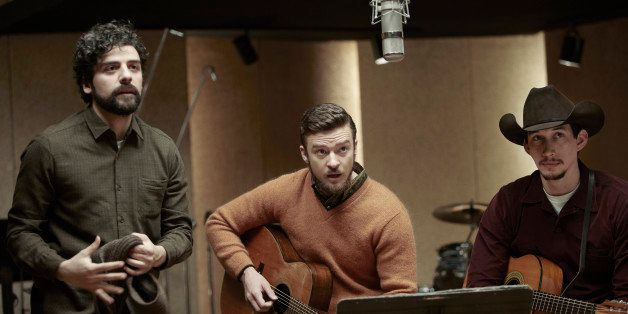
Please Mr. Kennedy is the fourth song to be presented here from the Inside Llewyn Davis soundtrack. In the scene below, Llewyn Davis (Oscar Isaac) is roped into performing on a recording session with fellow folksingers played by Justin Timberlake and Adam Driver. The Hollywood Foreign Press Association calls it an original song, but Please Mr. Kennedy is part of a long folk tradition of borrowing and rewriting. It was not an original song in the eyes of the Academy’s Music Branch. The songwriting credits listed on its Globe nomination was Ed Rush, George Cromarty, T Bone Burnett, Justin Timberlake, Joel Coen and Ethan Coen.
Rush and the late Cromarty were a folk duo called the Goldcoast Singers, who in 1961 recorded a song called Please Mr. Kennedy that was about not wanting to go to Vietnam. The Llewyn Davis version takes the Goldcoast Singers version, changes the subject matter and the lyrics, and fiddles with the arrangement and the melody – but it’s clearly based on the earlier song. Having said that, I still love what they have done in the Llewyn Davis version. This scene a masterpiece of editing – the cuts really build the excitement of performing the song. The scene would be fun no matter what, but the way it’s cut really makes it worth watching again and again.
10…9…8…7.6.5…4…3…2… One second please!
[Chorus] Please Mr. Kennedy (Uh oh!) I don’t wanna go (please don’t shoot me into outer space) P-P-Please Mr. Kennedy (Uh oh!) I don’t wanna go (please don’t shoot me into outer space)
[Verse 1] I sweat when they stuff me in the pressure suits Bubble helmet, Flash Gordon boots Nowhere up there in gravity zero (outer…space) I need to breathe, don’t need to be a hero (outer…space) Are you reading me loud and clear? Oh!
[Verse 2] I’m six-foot two, and so perhaps you’ll Tell me how to fit into a five foot capsule I won’t be known as man of the century If I burn up upon reentry Gotta red-blooded wife with a healthy libido (outer…space) You’ll lose her vote if you make her a widow (outer…space) And who’ll play catch out in the back with our kid? Oh!
Funny thing about music: When you intentionally write something that lacks substance, you run the risk of writing something catchy. We like to think we’re creatures that crave meaning. In reality, some of the best music connects on a purely textural level–It means nothing to our conscious minds…That’s where the subconscious mind takes over…The subconscious has questionable musical taste, but it sure knows how to have fun. I like this song. It’s fun and doesn’t demand too much of me. There are many songs that connect in a similar way. It’s not a stretch to call Please Mr. Kennedy one of the highlights of the movie – and a song that might not be so bad it’s good, but it is certainly so bad-good it’s entertaining.
“It is supposed to be a bad song according to Llewyn Davis,” Burnett said at the Q&A following a recent Wrap screening of the film. “The thing is, if you put music in a movie, it has to be good, even if it’s [supposed to be] bad.
“If a character says that the music is bad, then the audience will go along with it and be happy to be in on the joke. But if you just play bad music, the movie’s just bad for the amount of time that that music’s playing.”
Ricky Fitts: It was one of those days when it’s a minute away from snowing and there’s this electricity in the air, you can almost hear it. Right? And this bag was just dancing with me. Like a little kid begging me to play with it. For fifteen minutes. That’s the day I realized that there was this entire life behind things, and this incredibly benevolent force that wanted me to know there was no reason to be afraid, ever. Video’s a poor excuse, I know. But it helps me remember… I need to remember… Sometimes there’s so much beauty in the world, I feel like I can’t take it, and my heart is just going to cave in.
I remember reading parts of the script of American Beauty before the film was even released which heightening my anticipation of seeing it. Then I saw it repeatedly after it came out because I was so enamoured by the movie experience. American Beauty currently sits at No 42 on my Favourite Movies List, but having revisited it just two weeks ago with my kids after a long spell, I realised I should have had American Beauty in my top 30. My top 100 movie list requires an overhaul and that’s putting it mildly.
Kevin Spacey stars as Lester Burnham, an advertising executive who has a midlife crisis when he becomes infatuated with his teenage daughter’s best friend. Academics have described the film as satirizing how beauty and personal satisfaction are perceived by the American middle class; further analysis has focused on the film’s explorations of romantic and paternal love, sexuality, materialism, self-liberation, and sexual grooming. After being filmed in California from December 1998 to February 1999, American Beauty was released in North America on September 17, 1999, receiving widespread critical and popular acclaim. It was the second-best-reviewed American film of the year behind Being John Malkovich (which I reviewed at Friday’s Finest in 2021) and grossed over $350 million worldwide against its $15-million budget. At the 72nd Academy Awards, the film won five Oscars, including Best Picture, along with Best Director for Mendes, Best Actor for Spacey, Best Original Screenplay and Best Cinematography.
To me American Beauty is as close to perfection as movie-making gets. It’s strongest attribute is that there isn’t a dull moment. Everything is so well honed. Every scene, look and line in the movie is ‘cool’ and necessary. It’s hugely entertaining and humorous despite it being a dark and occult depiction of suburban life. It leaves the viewer to think long and hard about their own life as well as the lives of people around them. The movie spells out the social disillusionment phenomenon everyone experiences but can’t really grasp.
American Beauty reminds us that, like Lester, we really have no idea what we really want. We’re not rational creatures as economists assume we are. Our instinct might lead us to perform one action, yet our brains might tell us to perform the complete opposite. We may lust after material belongings, yet how do we know we will still treasure those material belongings once we obtain them? Lester may lust after Angela, yet once he feels her in his hands and finds out the truth about her sexuality, an entirely different feeling comes over him. In relation to this, I would like to recall an AnkDroid addition I published in 2022:
How Freud viewed the Main Conflicts of Man
He viewed the primary conflicts in mental-life as the Ego tortured by the ‘Id’ – underlying biological forces such as impulsive actions and urges, but also severely limited and repressed by the Super-Ego (Civilization and Society). Neurotic people (people who are more susceptible to psychological challenges) are more likely to see the Social World versus them and the harsh repressive as the Super-Ego.
We are embedded in our animal-selves and there’s a strong connection between his theories and that of evolutionist’s ‘natural selection’. We are driven more by our innate and natural aggression instincts and sexual urges. The rationalist conscious over-pinning barely just tinkers.
When Lester throws the asparagus, he was supposed to throw it on the floor. The reactions of Annette Bening and Thora Birch are genuine.
According to his Oscar speech, screenwriter Alan Ball was sitting at the World Trade Center plaza when he saw a paper bag floating in the wind and was inspired by it to write the film, which was originally conceived as a stage play.
When a friend in Melbourne introduced me to the music of David Gray, I was puzzled why I’d never heard of him before. It was music that struck me right off the bat which would explain why Please Forgive Me is the fifth song to appear here so far from Gray. This song is a good appetiser of his music in general. He’s simply just a guy trying hard to say what’s going on in his heart and the world around him. There’s real passion in his voice; the sense that David is compelled to open up his soul and shout, to declare something.
David Gray is a British singer songwriter who came to world-wide prominence after the release of his White Ladder in which today’s featured track Please Forgive Me appeared. The album spent a whopping 2 years and 5 months in the UK albums chart. Also, the 2000 re-issue of Please Forgive Me peaked at No. 18 on the UK singles chart.
[Verse 1] Please forgive me If I act a little strange For I know not what I do Feels like lightning running through my veins Every time I look at you Every time I look at you
[Verse 2] Help me out here All my words are falling short And there’s so much I want to say Wanna tell you just how good it feels When you look at me that way When you look at me that way
[Verse 3] Throw a stone and watch the ripples flow Moving out across the bay Like a stone I fall into your eyes Deep into that mystery Deep into some mystery
[Verse 4] I got half a mind to scream out loud I got half a mind to die So I won’t ever have to lose you, girl Won’t ever have to say goodbye I won’t ever have to lie Won’t ever have to say goodbye
His 3 three albums before White Ladder comprised of mainly folk-rock music. Starting with the release of White Ladder, Gray began to make significant use of computer-generated music (folktronic) to accompany his voice and acoustic instrumentation. He has been dismissed by some as making middle-of-the-road soft rock, but that’s ultimately a matter of taste. I can understand that criticism but there’s no denying he is a talented singer-songwriter.
I would like to relay below a heartrending account of the meaning of this song by ‘uajcgable‘ at Song Meanings:
These lyrics have so many memories for me. I only created a membership here so I could share my story. Years ago, right as I was starting college, I met someone who changed my life forever. I ended up attending college in the same city that I grew up in, so naturally I knew a lot of people when i went to orientation at the beginning of the summer. There were two girls that I really didn’t care for very much, but there was this boy with them that absolutely took my breath away. He was from Chicago, didn’t have any friends here yet, and was kind of “stuck” with them.
The moment I saw him it was completely electric. I am a very pragmatic individual, and don’t really believe in Love at First Sight, but I can honestly say I fell for him the moment I saw him. That night I showed him around town, drove him to my favorite restaurant, and oriented him to his new home. We spent a huge amount of time together from that point on, calling and seeing each other every day. It wasn’t long before we started admitting we were both in love. I can honestly say that never in my life had I been so blissful. Our romance lasted for several months, but slowly things began to change. He just became emptier and emptier.
Just before the Summer ended, he broke up with me abruptly, and as we went through college things became bitter and stale. We weren’t on very good terms, and acted as such. The crazy thing was, the reason why I argued with him so often was because I never quite fell out of love with him. I dated other men, experienced many other types of relationships, but none were exactly the same. From a distance I could see him slowly wither away, making poor choices left and right, becoming skinnier and skinnier, and growing more and more depressed. I wanted to reach out, but I didn’t-out of pride. Shortly thereafter, he committed suicide. His death has marked my life more than anything else ever has.
Why am I posting all of this here? Because Please Forgive Me was our song. Anytime we wrote anything to each other (an email, facebook, etc.) we always ended it with “Please Forgive Me If I Act A Little Strange, For I Know Not What I Do. Feels Like Lightning Running Through My Veins, Every Time I Look At You.” I honestly cannot listen to this song without bursting into tears (years later). What makes this song even more powerful for me is that the last three words of his suicide note were, “Please Forgive Me.” I don’t know if it was for me or if it was coincidence, but I honestly don’t care. I could drive myself crazy over it, but I choose not to.
Regardless, this song has changed my life, and I hope you take my sharing something this personal as a lesson to rise above immaturity and pettiness, and just be honest about your feelings to those you care about. At the risk of being cliche, “resentment is fleeting, but true love lasts a lifetime” I don’t know if he ever knew how much he meant to me; To this day that is still my deepest regret. If you are in that position, take my lesson and tell that person that despite of it all, you still care about them.
Ankidroid additions related to Science, History and Philosophy. More information about Anki can be found in this article.
Tenochtitlan
Buried beneath what is now Mexico City, lie the ruins of the greatest city of the Aztec empire—Tenochtitlan (ten-och-tee-TLAN).
In 1325, after years of searching, the Aztecs chose a site in the middle of Lake Texcoco for their new capital. Within two centuries, this island in a swampy, shallow lake had become the center of an empire of over 5 million people that covered most of central and southern Mexico. By the early 1500s, Tenochtitlan was one of the world’s largest cities. More people lived there than in London or Paris at that time. How did a mighty empire rise from an island in a lake? What did its people believe? How long did the empire last, and why did it fall? Let’s unlock the mysteries of the Aztecs. (see video below)
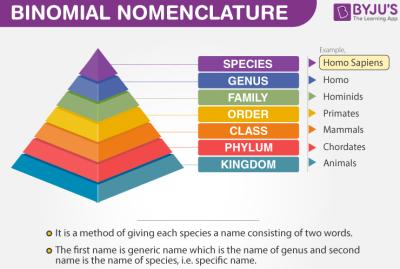
Nomenclature
– A system of names used in an art or science. – The system or procedure of assigning names to groups of organisms as part of a taxonomic classification.
Gehenna
Gehenna is ‘Hell’ as it is translated in the new testament. Gehenna is a valley in the south – east of Jerusalem (see above) that symbolised death and destruction. It was here that child sacrifices to Moloch were performed. See the book of Kings in the old testament (2 Kings 16:3 and 21:6).
The valley accounts for the prophecy of Jeremiah that it would be called the Valley of Slaughter under judgement of God (Jer. 7:32-33). This combination of abominable fires and divine judgement led to the association of the valley with a place of perpetual judgement (see Isa. 66:24) and later with a place of judgement by fire without any special connection to Jerusalem.
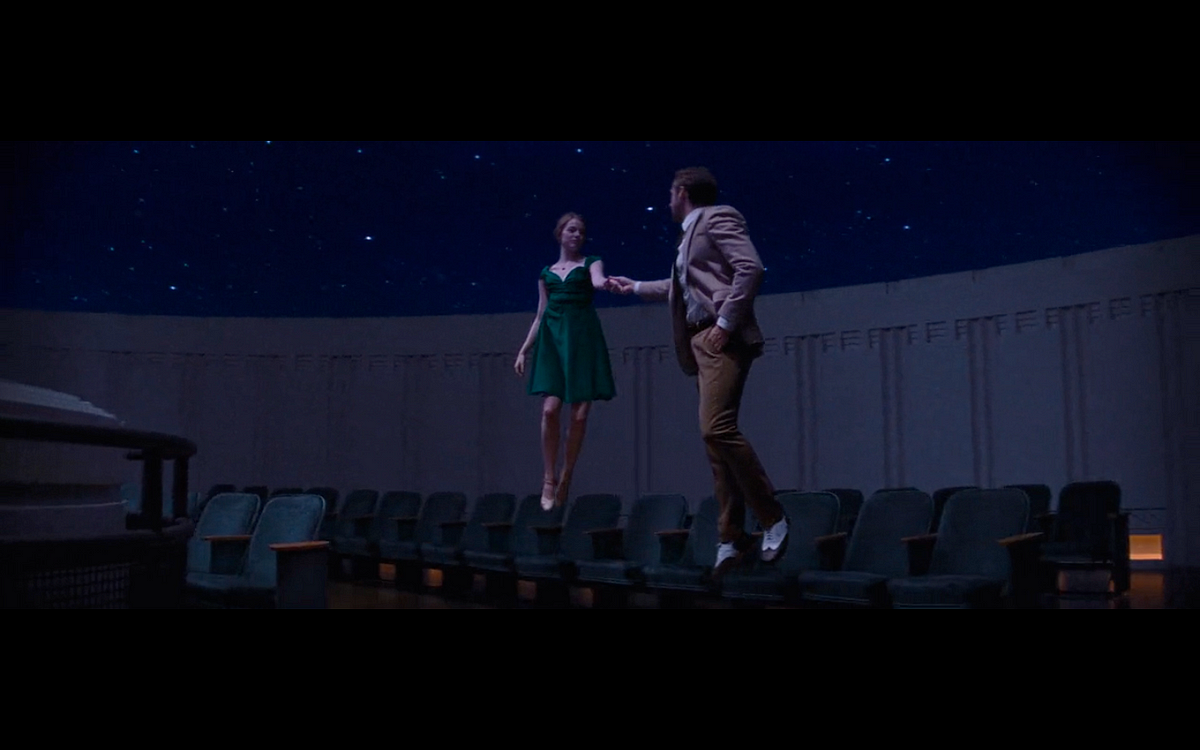
What I love most about this scene (and you could say the whole movie) is that you can’t really tell where reality ends and fantasy begins. The Planetarium scene from La La Land is one of my favourite scenes in the movie although I have many favourites including some which have already featured here including Another Day of Sun (opening car jam sequence), A Lovely Night (the roughly six minute uninterrupted Griffith park dance) and the Epilogue.
ThePlanetarium scenesequence is as follows: After the film breaks during Mia & Sebastian’s viewing of the movie “Rebel Without a Cause” (during the scene where James Dean is driving up to the observatory), Mia suggests that they visit the actual observatory where the movie was filmed. So they go there. The romantic dance which ensues sees them rising and waltzing in mid-air, among the stars, in one of the most memorable, magical moments in the movie not to mention their first kiss. The scene symbolizes their blossoming love, as well as their shared dreams and aspirations. The captivating visuals, combined with the enchanting score, create an otherworldly atmosphere that conveys the magic of their connection.
May be I was part of a lost generation in the appreciation of the ‘musical’ and La La land acted like a portal to transport me back to a time when cinema was grandiose. La La land represented that kind of movie they just don’t make anymore. It’s a montage of sorts of all that was great about cinema in particular 50’s Hollywood musicals. It’s a wonderful family movie as well, at least for this family. My kids are crazy for it like their Dad. It currently sits 8th on my all time favourite movie list. Oh, and when it lost to Moonlight at the 2017 Oscars I was pissed. Just like when Roma lost in 2018 to the Green Book.
Apart from Remains of the Day (1993), I have never seen another movie where two main protagonists had so much chemistry. Due to its originality, flamboyance and bizarre parallel universe ending I think La La Land will age well and be regarded a musical masterpiece. It’s Damien’s Chazelle’s ‘Citizen Kane’. It was his passion project which he was able to make after Whiplash became such a big success. The composer of the music Justin Hurwitz was a friend of director Damien’s Chazelle at Harvard University. Damien won best director for La La Land at 32 years old, making him the youngest to win the award.
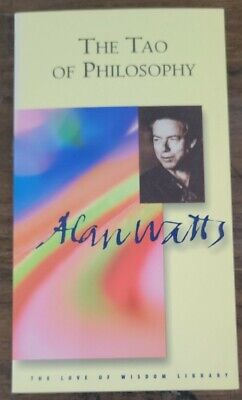
Alan Watts talks about meditation, silence, and other concepts of reality and life.
Unified Field
At 1:18:27: If I may start by insulting your intelligence with the most elementary lesson. The thing we should have learnt before 1,2,3 and A, B,C, but somehow was overlooked. Any experience we have through our senses whether of sound or of light or touch is a vibration. A vibration has two aspects. The one called ‘on’ and the one called ‘off’. Vibration seems to be propagated in waves and every wave system has crests and it has troughs. So life is a system of ‘now you see it and now you don’t’. These two examples always go together, for example sound is not pure sound, it is a rapid alternation of sound and silence. That simply is the way things are. Only you must remember the crest and trough of the wave are inseparable. Nobody ever saw crests without troughs or troughs without crests. Just as you don’t encounter in life, peoples’ fronts and no backs. Just as you don’t encounter a coin with a ‘head’ and no ‘tails’. Although the head and the tails, the front and the back, the positive and the negatives are different, they’re at the same time ‘one’. One has to get used fundamentally to the notion that different things can be inseparable… The human species has a very odd mechanism that is to say that we have as a species specialised in a certain kind of awareness which we call conscious attention. By this we have the faculty of examining the details of life very closely…the price we pay for specialisation in conscious attention is ignorance of everything outside its field…. In fact our physical world is a system of inseparable differences. Everything exists with everything else, but we try not to notice that. Because what we notice is what is noteworthy; numbers, words, images – what appears to us to be significant and the rest is ignored as insignificant. As a result of that we select from the total input that goes to our senses only a very small fraction and this causes us to believe that we are separate beings, isolated by the boundary of the epidermis of the rest of the world..But what goes inside your skin is what goes on outside your skin. In the science of ecology one learns that a human being is part of a unified field of behaviour. If you describe the behaviour of any organism, you cannot do so without at the same time describing the behaviour of the environment and by that you know you are describing the behaviour of a unified field. You must be very careful indeed to not fall into old ‘Newtonian’ assumptions about the billiard ball nature of the Universe. The organism is not the puppet of the environment, being pushed around by it, nor on the other hand is the environment the puppet of the organism. The relationship between them is transactional.
At 1:30:34: The basis of it all is this: if we say, you must survive or I must survive..I’ve got to go on. Then your life is a drag and not a game…This is my basic metaphysical axiom – that existence.. the physical universe is playful…there is no necessity for a physical universe whatsoever. It isn’t going anywhere. It doesn’t have some destination that it ought to arrive at. But it is best understood by the analogy of music. Because music as an art-form is essentially playful. We say you ‘play’ the piano – you don’t ‘work’ the piano. Music differs from say ‘travel’. When you travel you are trying to get somewhere and we as a compulsive and purposeful culture are busy getting everywhere faster and faster until we eliminate the distance between places. What happens as a result of that is the two ends of your journey become the same place; so you eliminate the distance and you eliminate the journey. Because the fun of the journey is to travel, not to obliterate travel. In music, one doesn’t make the end of a composition – the point of the composition. If that were so, the best conductors would be those who played faster and there would be composers who wrote only finales. People would go to concerts to hear just one crashing chord. That’s the end. Say when you are dancing, you don’t aim for a particular spot in the room where you should arrive. The whole point is the dancing is the dance…We’ve got a system of schooling which gives a completely different impression…all the time the thing is coming; the success you are working for. Then when you wake up one day 40 years old, you say ‘My God, I’ve arrived! I’m there.’ And you don’t feel very different from what you’ve always felt and there’s a let down because you feel it’s a hoax. And there was a hoax. They made you miss everything.. We have cheated ourselves all the way down the line. We thought of life by analogy of a journey, with a pilgrimage which had a serious purpose at the end. The thing was to get to that end. Success, or whatever it is, may be heaven after you’re dead. But we missed the point all the way along. It was a musical and you were supposed to sing…In this way the human being sometimes becomes an organism for self-frustration. If you see that existence is musical in nature, that is to say it is not serious; it is the play of all kinds of patterns and different rhythms. Spontaneous by nature.
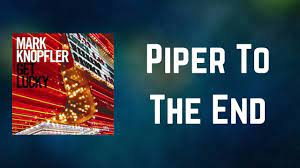
Anyone up for a bit of Celtic music? I know I am, especially if it is from the masterful guitarist and singer-songwriter Mark Knopfler. A lot of his solo music (post Straits) is unassuming and restrained, but I find it very soothing to the ear. Mark’s raw material seems pure feeling love. Piper To The End is the final track on Knopfler’s solo album Get Lucky.
The song is about Knopfler’s uncle Freddie who was a piper of the 1st Battalion, Tyneside Scottish, the Black Watch, Royal Highland Regiment. Freddie carried his pipes into action in World War II and was killed with fellow fighters at Ficheux, near Arras in the north of France in May 1940. He was just 20 years old.
Knopfler describes the moment of Freddie’s death in the latter’s own words:
This has been a day to die on Now the day is almost done Here the pipes will lay beside me Silent with the battle drum
Knopfler explains that he never knew Freddie personally, his mother’s brother, but that he was very close to his uncle Kingsley, Freddie’s older brother. Kingsley taught Knopfler to play the boogie-woogie piano.
[Verse 1] When I leave this world behind me To another I will go And if there are no pipes in heaven I’ll be going down below If friends in time be severed Someday we will meet again I’ll return to leave you never Be a piper to the end
[Verse 2] This has been a day to die for Now the day is almost done Up above a quiet seabird Turns to face the setting sun Now the evening dove is calling And all the hills are burning red And before the night comes falling Clouds are lined with golden thread
[Bridge] We watched the fires together Shared our quarters for a while Walked the dusty roads together Came so many miles
Knopfler explained in an interview:
The pipes always made sense to me, and growing up in Glasgow as well as Newcastle, in my grandmother’s home, there were Jimmy Shand records, so the sound of Celtic music always seems familiar to me.
Mark has no problem sharing the stage with other players (as seen below in Cologne in 2015), and he has no problem backing them up like he’s doing here. He doesn’t overplay like others, and maintains/controls his volume just right to complement the song and his band. It’s easier said than done. A pro’s pro.