Thunderstruck opens with one of the most recognisable riffs in hard rock history. It’s impossible to confuse with anything else. Add the chant – that tribal “ah-ah, ah-ah-ah” – and the song feels less like a track and more like a ritual. The video leans into that idea too, looking like a gathering at a heavy-metal temple. When it landed in 1990, it hit hard – winning over metal fans and casual listeners alike (yours truly included). Thunderstruck also brings my AC/DC trilogy in the music library project to a close, alongside Highway to Hell and It’s a Long Way to the Top.
Released as the lead single from The Razors Edge, Thunderstruck quickly became one of AC/DC’s signature songs. It remains the only song the band recorded in the 1990s that stayed permanently in their live setlists. On the charts, Thunderstruck reached the Top 30 in multiple countries and peaked at No. 5 in Australia. It is one of the best-selling singles of all time with over 15 million units sold. In Triple M’s Ozzest 100, celebrating the “most Australian” songs of all time, Thunderstruck was ranked at No. 8.
The song’s origin is tied to a real jolt of fear. During the 1988 Blow Up Your Video tour, Angus Young flew from Holland to Germany to rejoin the band for a Berlin show. Mid-flight, the small plane was struck by lightning. Young later said he thought he was going to die – and when he didn’t, the idea for “Thunderstruck” stuck with him.
Musically, it began with a guitar idea Angus had been working on. When he played it to Malcolm Young, Malcolm locked in a rhythm part that grounded the song. From there, the “thunder” theme took shape. As Angus later put it, the concept was simple: AC/DC equals power. In the studio, several takes were recorded, but the final version features Angus playing the famous lead part in one complete take – start to finish – according to longtime mixer Mike Fraser.
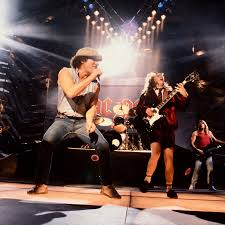
The music video, directed by David Mallet, was filmed live at London’s Brixton Academy on 17 August 1990. Fans were given free T-shirts reading “AC/DC – I Was Thunderstruck” on the front, with the date printed on the back. Every person in the crowd wore one, turning the performance into a unified wall of noise, sweat, and voltage – exactly what the song promised.
[Verse 1] I was caught in the middle of a railroad track (Thunder) I looked ’round and I knew there was no turnin’ back (Thunder) My mind raced and I thought, “What could I do?” (Thunder) And I knew there was no help, no help from you (Thunder) Sound of the drums beatin’ in my heart The thunder of guns, yeah, tore me apart
[Refrain] You’ve been Thunderstruck
[Verse 2] Went down the highway, broke the limit, we hit the town Went through to Texas, yeah, Texas, and we had some fun We met some girls, some dancers who gave a good time Broke all the rules, played all the fools Yeah, yeah, they, they, they blew our minds
[Pre-Chorus] And I was shakin’ at the knees Could I come again, please? Yeah, the ladies were too kind
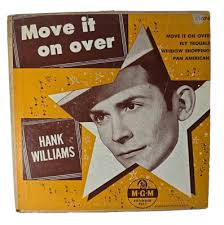
This cheeky little song from Hank is meant to get a chuckle. The writing is just so relatable, easy to just gel with, and if you pair it with the gospel number I Saw the Light, recorded at the same 1947 session, you get the full spread of Hank’s “good and bad” sides. You can also hear where Johnny Cash found a lot of his early inspiration. Hank’s voice is raw, direct country with a clear hillbilly edge.
The song follows a man who is forced to sleep in the doghouse after coming home late at night and not being allowed into his house by his wife. In many respects, the song typified Williams’ uncanny ability to express in a humorous way the aspects of everyday life that listeners could relate to – and rarely heard on the radio
Hank Williams and fellow country artist – Woody Guthrie (aiming more towards social-injustice) were huge influences on what came after, and it’s hard to overstate how much they shaped American music. On one side you had Johnny and Hank, and on the other Bob Dylan and Woody. By the mid-’60s Cash and Dylan had become so close and even worked together, each drawn to the other’s music and background.
But the groundwork had already been laid by those early giants – Hank Williams and Woody Guthrie. Their impact helped create not only the artists that followed but also the rise of musica Americana and the later folk-rock sound that groups like The Band (with Bob of course) carried forward.
The following is abridged from the Wikipedia article below:
Move It On Over was recorded on April 21, 1947 at Castle Studio in Nashville, Williams’ first session for MGM and the same session that produced “I Saw the Light,” “(Last Night) I Heard You Crying in Your Sleep,” and “Six More Miles to the Graveyard.” Nashville had no session men during this period, so producer Fred Rose hired Red Foley’s backing band, one of the sharpest around, to back Williams.
The song is considered one of the earliest examples of rock and roll music. Though many claim the song “Rock Around the Clock,” released in 1954 by Bill Haley & His Comets, was the first rock and roll single, it resembles “Move it On Over“, as both feature the same twelve-bar blues arrangement with a melody starting with three repetitions of an ascending arpeggio of the tonic chord, which Williams had partially derived from an old Mardi Gras riff, “Second Line.”
Move It on Over was Williams’ first major hit, reaching No. 4 on the Billboard Most Played Juke Box Folk Records chart and got him a write up in The Alabama Journal. The revenue generated by the song was the first serious money the singer had ever seen in his life.
[Verse 1] Came in last night at a half past ten That baby of mine wouldn’t let me in So move it on over (Move it on over) Move it on over (Move it on over) Move over, little dog, ’cause the big dog’s movin in
[Verse 2] She’s changed the lock on our front door My door key don’t fit no more So get it on over (Move it on over) Scoot it on over (Move it on over) Move over, skinny dog, ’cause the fat dog’s moving in
[Verse 3] This doghouse here is mighty small But it’s better than no house at all So ease it on over (Move it on over) Drag it on over (Move it on over) Move over, old dog ’cause a new dog’s moving in
[Verse 4] She told me not to play around But I done let the deal go down So pack it on over (Move it on over) Tote it on over (Move it on over) Move over, nice dog, ’cause a mad dog’s moving in
[Verse 5] She warned me once, she warned me twice But I don’t take no one’s advice So scratch it on over (Move it on over) Shake it on over (Move it on over) Move over, short dog, ’cause a tall dog’s moving in
[Verse 6] She’ll crawl back to me on her knees I’ll be busy scratching fleas So slide it on over (Move it on over) Sneak it on over (Move it on over) Move over, good dog, ’cause a mad dog’s moving in
[Verse 7] Remember pup, before you whine That side’s yours and this side’s mine So shove it on over (Move it on over) Sweep it on over (Move it on over) Move over, cold dog ’cause a hot dog’s moving in
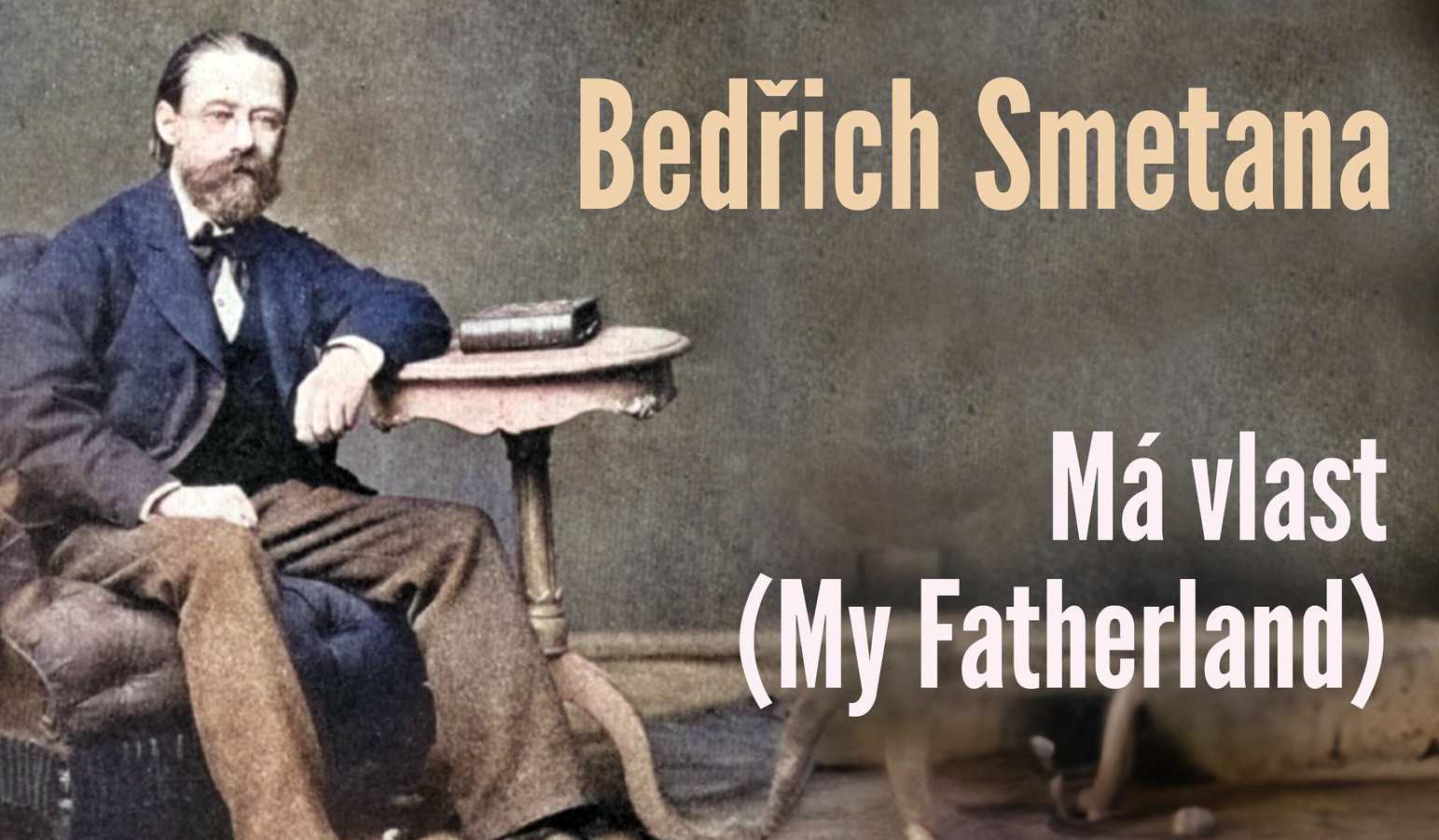
Not long ago, we explored Jean Sibelius’s Finlandia. Now we turn to another work strongly tied to national identity – Má vlast (My Fatherland) by Czech composer Bedřich Smetana. He wrote the six symphonic poems that form this cycle between 1874 and 1879, during the years he was gradually losing his hearing. The six pieces each show something different about the Czech lands.
Today’s piece is No. 2, Vltava (The Moldau), the best-known of the bunch. When I first played it, the opening minute gave me a real jolt of recognition – I could have sworn I was hearing the end credits of The Remains of the Day (1993), which happens to sit at No. 2 on my 100 Favourite Movies list. The similarity is striking; try listening to both and see if you hear it too.
The following was abridged from the Wikipedia reference below:
The six pieces, conceived as individual works, are often presented and recorded as a single work in six movements. They premiered separately between 1875 and 1880. The complete set premiered on 5 November 1882 in Žofín Palace, Prague, under Adolf Čech.
Vltava, also known by its English title The Moldau, and the German Die Moldau, was composed between 20 November and 8 December 1874 and was premiered on 4 April 1875 under Adolf Čech. It is about 13 minutes long, and is in the key of E minor. It is the best known of the poems, often performed separately from the full work.
In this piece, Smetana uses tone painting to evoke the sounds of one of Bohemia’s great rivers. In his own words:
Vltava
The composition describes the course of the Vltava, starting from the two small springs, the Studená and Teplá Vltava, to the unification of both streams into a single current, the course of the Vltava through woods and meadows, through landscapes where a farmer’s wedding is celebrated, the round dance of the mermaids in the night’s moonshine: on the nearby rocks loom proud castles, palaces and ruins aloft. The Vltava swirls into the St John’s Rapids; then it widens and flows toward Prague, past the Vyšehrad, and then majestically vanishes into the distance, ending at the Elbe.
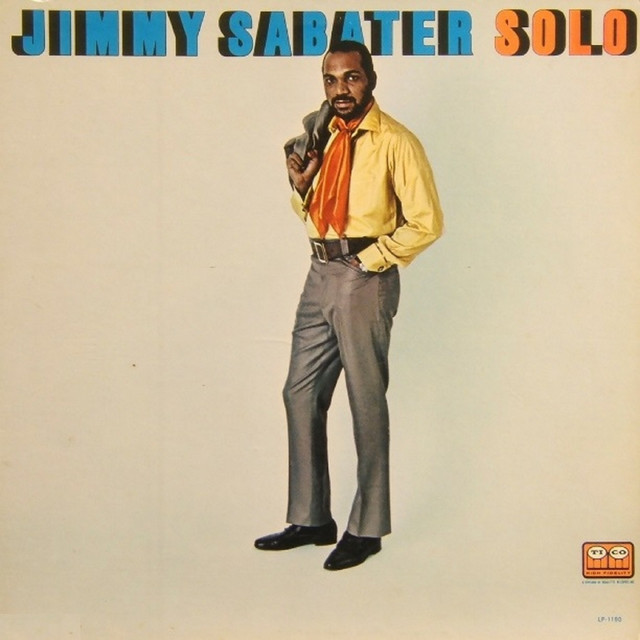
Salchichas y Huevos (Eng: Sausages and Eggs) by Jimmy Sabater doesn’t exactly hide what it’s cooking. It’s risqué, audacious, and can easily be read as chauvinistic – or worse. Much of that comes down to the wordplay and the stack of double meanings the lyric leans on, and it’s understandable that some listeners might find it offensive. The innuendo is everywhere. Salsa has always been the most sensual of the tropical genres, and if there’s one track that pushes right up to the line of what’s considered suitable for public airwaves, it’s Salchichas y Huevos.
From the title onward, the song leans unapologetically into sexual suggestion, using food as an almost laughably transparent substitute. The story on the face of it seems simple enough (though if you read the saucy lyrics below, the wink-wink, nudge-nudge version is anything but straightforward): he meets a woman, she looks him up and down (with interest), he takes her dancing at the Pozo Club, and later they head back to his place. At dawn she asks for “sausages and eggs,” and by that point the metaphor has all but slapped you across the face. The longer it goes on, the hotter the frying pan gets – if you catch the drift.
I hesitated longer than I care to admit before including it here, but eventually the music won the argument. The percussion and rhythm are simply too good to ignore because of a polemical sexual suggestion. And truth be told, the song is a curious specimen – a time-capsule snapshot of early salsa clásica, back when the genre was still raw, streetwise, and proudly irreverent, before it splintered into countless subgenres and softened into what critics later called salsa rosa – polished, romantic, and decidedly less fiery than salsa brava or the original New York–Puerto Rican school from which Sabater emerged.
Musically, Salchichas y Huevos shows what Sabater and the New York salsa scene did best. The percussion is front and centre, with congas, bongos, and timbales driving a steady, irresistible rhythm. The horns cut in with sharp, lively lines, and the piano keeps everything moving with a clean, catchy montuno. There’s even a light touch of jazz in the way the horns and rhythm play off each other. Overall, it has that unmistakable late-night club feel – sweaty, playful, and made for dancers who know exactly what’s going on in the lyrics.
Jimmy Sabater, born in Puerto Rico, was a singer, percussionist, and entertainer who played a key role in New York’s Latin music scene in the 1960s and 70s. He worked with groups like the Alegre All-Stars and moved within the wider Fania-era world, even if he never became one of its biggest stars. Sabater was known for mixing humor, bravado, and rhythm, and Salchichas y Huevos captures that blend well – playful, sexual, and driven by pure salsa groove.
Ay vuela paloma, paloma de Pozo / Fly, dove, dove of Pozo
No hace mucho que lluegue a conocer / Not long ago I met Una muñeca que estaba en algo / A doll who was up to something Me miro de arriba abajo / She looked me up and down La sangre se me alteraba / My blood started racing Lo que tenia ella por bembes / What she had for lips Eran petalos de rosa / Were rose petals Era una mami una mami bien hermosa / She was a hottie, a really beautiful hottie La cual se enamora cualquiera / The kind anyone could fall in love with La invite a bailar al Club de Pozo / I invited her to dance at the Pozo Club Que queda en la 102 / Which is on 102nd Street Y ella me lo acepto / And she accepted Quede muerto de la risa / I was cracking up Despues del baile nos fuimos a casa / After the dance we went home Y esto fue lo que ella me pidio / And this is what she asked me for
Coro: Salchicha con huevo / Sausage with egg Me pidio al amanecer / She asked me for at dawn
Como soy caballero / Since I’m a gentleman Le dije mami / I told her Ven a mi casa, va a mi casa / Honey, come to my house, come to my house A mi casa papear / To my house to eat
Coro: Salchicha con huevo / Sausage with egg Me pidio al amanecer / She asked me for at dawn
El que se duerme / He who falls asleep Se lo lleva la corriente / Gets carried away by the current Eso fue lo que me quiso / That’s what she was trying Dar entender el pollo / To make me understand, that girl
Coro
Me dejo con hambre / She left me hungry Se le quemo el sarten / She burned the frying pan Y ella me dijo papito / And she told me, daddy Hay fuego en el 23 / There’s fire in the 23rd Quema! / Burn Quema, quema, quema, quema, quemariqüini / Burn it, burn it, burn it, burn it, quemariqüini Eso es un trombon! / That’s a trombone!
Coro
Si te encuentras con un pollo / If you run into a chick Que su encanto es papear / Whose charm is in eating Dale salchicha con huevo / Give her sausage with eggs Para ponerla a gozar pa’ seguirla / To make her enjoy it and keep her going
She Belongs to Me is a gentle song, sung with Dylan’s relaxed phrasing and a lightly swaying accompaniment that feels easy. On the surface, it sounds warm and affectionate, almost carefree. The woman he sings about is an “artist” too, though the praise feels deliberately over the top and slightly possessive. She can paint, she can “take the dark out of the nighttime,” and she can do no wrong – at least in his version of the story. Whether this admiration is sincere, ironic, or gently poking fun at ideas of love and ownership is never made clear. Coming from Bringing It All Back Home (1965), the song perhaps gives hints of his mid-60s move toward irony and a more playful edge.
The closest song to She Belongs To Me around this time for Dylan is arguably Love Minus Zero / No Limit (1965) – a kind of emotional sibling which also appears on side 1 of Bringing It All Back Home. It has the same calm delivery, similar melodic flow and ease, and a woman portrayed as enigmatic rather than romanticized. In fact both songs had been recorded on January 13, 1965, in acoustic versions. The original title of She Belongs To Me was initially listed as “Worse Than Money” at the January 13, 1965 sessions, and then was listed as “My Girl” briefly at the January 14 sessions.
The following was abridged from the Wikipedia article below:
It’s not clear who the song is about. The lyrics may refer to Suze Rotolo, Dylan’s girlfriend from July 1961 to early 1964. Or they could refer to Dylan’s former lover, folk singer Joan Baez, particularly the line about the woman wearing an “Egyptian ring”, since Dylan had given Baez such a ring. Also the line describing her as “an artist” and a reference to being a “walking antique“, which may be a reference to Baez’ desire to keep Dylan writing protest songs but could easily be a compliment.
The woman as described in the song perhaps belongs to no one, as suggested by the lyric “She’s nobody’s child, the law can’t touch her at all.”
The line “She takes the dark out of the nighttime / And paints the daytime black,” resembles a verse of the Old Testament book of Job, verse 5:14 stating: “They meet with darkness in the daytime, / and grope in the noonday as in the night.”
John Cale of the Velvet Underground has stated that he believes the song to be about Nico, with whom Dylan spent some time around the time of the song’s composition.
A live performance from Dylan’s 1969 Isle of Wight Festival performance (Live with the band) was released on Self Portrait in 1970, in which Dylan sings in his country-crooner voice similar to the Nashville Skyline album, and the backing band plays in a country style.
She’s got everything she needs She’s an artist, she don’t look back She’s got everything she needs She’s an artist, she don’t look back She can take the dark out of the nighttime And paint the daytime black
[Verse 2] You will start out standing Proud to steal her anything she sees You will start out standing Proud to steal her anything she sees But you will wind up peeking through her keyhole Down upon your knees
[Verse 3] She never stumbles She’s got no place to fall She never stumbles She’s got no place to fall She’s nobody’s child The law can’t touch her at all
[Verse 4] She wears an Egyptian ring It sparkles before she speaks She wears an Egyptian ring It sparkles before she speaks She’s a hypnotist collector You are a walking antique
[Verse 5] Bow down to her on Sunday Salute her when her birthday comes Bow down to her on Sunday Salute her when her birthday comes For Halloween, buy her a trumpet And for Christmas, get her a drum
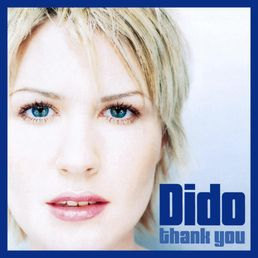
Thank You is the kind of song you can wake up to on a dreary, cloudy day and find yourself in better spirits after hearing it. It’s a hopeful song when it comes down to it, and very relatable. Dido is the everyday girl – she drank too much, has bills to pay, missed the bus, and arrives at work wondering if she’ll be fired by day’s end. But despite whatever comes, “it’s not so bad,” because she is loved, and nothing – including all of the above – is going to worry her or bring her down. This song is Dido’s thank-you letter to her lover, who – just by being there – can give her the best day of her life.
It’s such a cool, breezy song, with a melody that seems unassuming at first but stays with you. Even Eminem was so impressed he incorporated it into his song Stan, which many listeners may be more familiar with than Dido’s original. But it’s funny – Thank You is about being in love with someone, while Stan is about becoming dangerously obsessed with someone. Dido wrote the song about her boyfriend at the time, Bob Page, whom she met in 1995.
Thank You has one of the longest release journeys I can think of. It first appeared in the 1998 film Sliding Doors, was later included on Dido’s 1999 debut album No Angel, and was released as a single on 18 September 2000. That same year, American rapper Eminem sampled the track for his hit single Stan, which helped propel Thank You and No Angel into the mainstream. The song entered the US Billboard chart at number 80 on 13 January 2001 and peaked at No. 3 in April 2001 – becoming Dido’s first and only top-10 single in the United States – while also topping four other Billboard charts.
If you want to know the extreme case about sending feelers out and getting your song heard, then consider the aforementioned: Thank You was first released publicly via Sliding Doors on 26 January 1998 and reached its chart peak in April 2001 – a ridiculous span of 3 years and 2 months. Then get this – by 2001 Dido was being credited as “the world’s best-selling female music star.”
[Verse 1] My tea’s gone cold, I’m wondering why I Got out of bed at all The morning rain clouds up my window And I can’t see at all And even if I could, it’d all be grey But your picture on my wall It reminds me that it’s not so bad It’s not so bad
[Verse 2] I drank too much last night, got bills to pay My head just feels in pain I missed the bus and there’ll be hell today I’m late for work again And even if I’m there, they’ll all imply That I might not last the day And then you call me and it’s not so bad It’s not so bad
[Chorus] And I want to thank you For giving me the best day of my life And oh, just to be with you Is having the best day of my life
[Verse 3] Push the door, I’m home at last And I’m soaking through and through And then you handed me a towel And all I see is you And even if my house falls down now I wouldn’t have a clue Because you’re near me
I can’t think of another song from my youth that left such a lasting mark on me, or that captured so clearly what music and storytelling could be, as Bruce Springsteen’s Thunder Road. And is there a more vivid, grounding opening in modern music than “The screen door slams, Mary’s dress sways”? From that first line, you’re there. Add Springsteen’s nod to Roy Orbison and Only The Lonely, and you’re already in the presence of something special. Even upon first listen, you feel like you’ve known the song for years.
Mary’s innocence comes into focus alongside Roy Bittan’s gentle, tiptoe piano – delicate, almost shy, and perfectly matched to the image forming in your mind. The music and the words move together, effortlessly, from start to finish. Nothing feels forced or out of place. It’s an epic rock ’n’ roll ballad. As close to perfect as they come.
Born to Run was the final installment of Springsteen’s first record deal with Columbia. The preceding albums, Greetings from Asbury Park and The Wild, the Innocent, and the E Street Shuffle, had not been commercial successes. The third album would be critical in determining the viability of his future in music. Facing that do-or-die pressure to compose a life-defining last-ditch effort, he leads off with a song about life-defining last-ditch efforts.
As I’ve written in other pieces about Bruce, his use of bridges is among the best in contemporary music. In many songs, bridges feel like functional filler – something added to serve the structure rather than deepen the song. With Springsteen, it’s the opposite. His bridges don’t just hold things together; they lift the song to another level. Thunder Road is no exception. In fact, the song doesn’t really have a traditional chorus at all – and if it does, it’s folded right into the bridge with “Oh-oh, Thunder Road, oh Thunder Road,” nestled between the later verses. The song is driven by narrative, and nothing is allowed to interrupt that forward motion as Springsteen moves from verse to verse, building one vivid moment after another.
In his 2005 VH1 Storytellers interview, Springsteen shares that Thunder Road is more than an invitation to the album, it’s an invitation to a bigger life. In his own words, “The music sounds like an invitation. Something is opening up to you… What I hoped it would be when I wrote this song is what I got out of rock and roll music – which is a sense of a larger life, greater experience, hopefully more and better sex, a sense of fun – more fun, a sense of personal exploration, your possibilities… the idea that it is all lying somewhere inside of you… just on the edge of town.”
What follows is a highly abridged version of the excellent Rolling Stone article “How Bruce Springsteen Created ‘Thunder Road’.” I’ve left out far too much good material to fit the scope of my own piece – trimming it down feels almost sacrilegious:
Springsteen had a new band, but wasn’t quite sure what to do with it…Another new figure in Springsteen’s orbit was Jon Landau, a prominent rock critic who had a past as a record producer. He invited Landau to the empty warehouse in Neptune, New Jersey where the E Street Band was rehearsing. It would be one of the most important rehearsals of Springsteen’s career. “Jon immediately started making tremendously spot-on musical suggestions,” says Weinberg, “particularly rhythmically. It was amazing. Within a couple of hours, he had turned the rhythmic thrust of the band away from that kind of charming but scattershot approach that was on the first two records. Very charming, but very busy drumming, certainly not what Jon wanted to hear.”
“Thunder Road,” in particular, “was fantastic, but it was a little unwieldy, a little unfocused, a little more like a jam piece,” Landau told me in 2005. “I remember talking with Bruce about a few ideas about how to just reshuffle the deck a little bit, and keep the song building from the very beginning right through the end.” As Springsteen adopted Landau’s suggested shifts and edits, the song started to take shape, and with it, a new, streamlined, harder-rocking sound for the E Street Band.
“Thunder Road” was the world’s introduction to Bittan’s architectural piano style, enhanced by glockenspiel parts an octave up. “Roy had the ability to take the basic parts that Bruce created when he would write the song,” Landau told me, “and expand on them just the right amount and give them a little more structure, and really wound up anchoring the arrangements on most of that record.”
Engineer Jimmy Iovine relied heavily on Bittan when he was mixing the album, “I always had Roy’s piano in my hand,” he says, “And whenever I would get in trouble I’d push Roy out. It’s the truth – he was always doing something interesting.” “That song was interesting for me,” says Bittan, “because I created a piano part that moves – It was like staircases to me. I would move up to a section, then down. When the chords change, I would sort of step up to it musically and then I would come down from it and move around all different ways.”
Springsteen was only 24 when he recorded “Thunder Road,” which makes the line “maybe we ain’t that young anymore” all the more striking. “The songs were written immediately after the Vietnam War,” Springsteen told me in 2005. “And you forget, everybody felt like that then. It didn’t matter how old you were, everybody experienced a radical change in the image they had of their country and of themselves. The reason was, ‘you were changed.’ You were going to be a radically different type of American than the generation that immediately preceded you, so that line was just recognizing that fact”.
[Verse 1] The screen door slams, Mary’s dress sways Like a vision, she dances across the porch as the radio plays Roy Orbison singing for the lonely Hey, that’s me, and I want you only Don’t turn me home again I just can’t face myself alone again
[Verse 2] Don’t run back inside Darling, you know just what I’m here for So you’re scared, and you’re thinking That maybe we ain’t that young anymore Show a little faith, there’s magic in the night You ain’t a beauty, but hey, you’re alright Oh, and that’s alright with me
[Verse 3] You can hide ‘neath your covers and study your pain Make crosses from your lovers, throw roses in the rain Waste your summer praying in vain For a saviour to rise from these streets Well now, I’m no hero, that’s understood All the redemption I can offer, girl, is beneath this dirty hood With a chance to make it good somehow Hey, what else can we do now?
[Verse 4] Except roll down the window And let the wind blow back your hair Well, the night’s busting open These two lanes will take us anywhere We got one last chance to make it real To trade in these wings on some wheels Climb in back, heaven’s waiting down on the tracks
[Bridge] Oh-oh, come take my hand We’re riding out tonight to case the promised land Oh-oh, Thunder Road, oh Thunder Road, oh Thunder Road Lying out there like a killer in the sun Hey, I know it’s late, we can make it if we run Oh, Thunder Road, sit tight, take hold Thunder Road
[Verse 5] Well, I got this guitar, and I learned how to make it talk And my car’s out back if you’re ready to take that long walk From your front porch to my front seat The door’s open, but the ride it ain’t free And I know you’re lonely for words that I ain’t spoken But tonight we’ll be free, all the promises’ll be broken
[Verse 6] There were ghosts in the eyes of all the boys you sent away They haunt this dusty beach road In the skeleton frames of burned out Chevrolets They scream your name at night in the street Your graduation gown lies in rags at their feet And in the lonely cool before dawn You hear their engines roaring on But when you get to the porch, they’re gone on the wind So Mary, climb in It’s a town full of losers, and I’m pulling out of here to win
Morrissey sings here about how music mattered intensely to so many of us when we were young:
A sad fact widely known The most impassionate song to a lonely soul Is so easily outgrown But don’t forget the songs that made you smile And the songs that made you cry When you lay in awe on the bedroom floor And said, “Oh, oh, smother me mother”
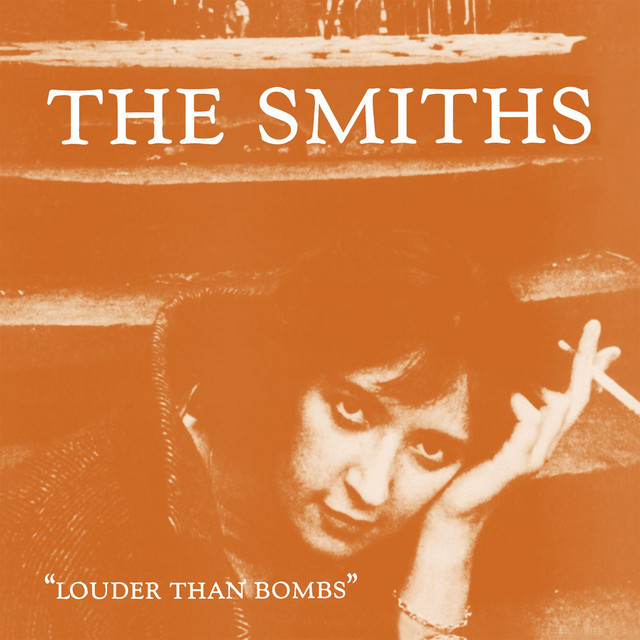
The title is both a nod to a vinyl record (as it is round and made of rubber) and to the flotation ring used to pull someone from deep water. In that sense, Smiths songs often serve the same purpose for young listeners: something to cling to when things feel overwhelming. Morrissey’s message is a reminder not to dismiss or forget the music that once carried you through difficult moments, even if adulthood has dulled its urgency or changed the way you relate to it.
Rubber Ring is well respected by Smiths fans and critics alike, deeply entrenched – and widely admired – within the band’s expansive, eclectic back catalogue. It’s yet another great Smiths B side song this time tucked away on the single The Boy With The Thorn In His Side (image inset) which reached No. 23 on the UK Singles Chart.
In fact, the single has two B-sides – Rubber Ring and Asleep – and they fit together so naturally that where Rubber Ring ends, Asleep seems to begin, like inseparable halves of the same thought.
Rubber Ring stands apart as one of the Smiths’ more off-kilter tracks, beginning with a stripped-down, lightly grooving interplay between Johnny Marr and Andy Rourke, as Mike Joyce keeps things anchored and Marr colours the sound with an odd, bowed-string effect. Over this, Morrissey reflects on the intensity music once held in youth, before the rhythm tightens and lifts, sending Marr into tangled, fast-moving guitar figures that echo the way Morrissey lets his voice dart and overlap.
In the long outro, Morrissey’s “la da da dey” returns over a grounded rhythm section, until the voice of John Gielgud appears – “everybody’s clever nowadays,” just before the creepy lady says “you are sleeping, you do not want to believe” as the wind and first note of the piano from Asleep creep in binding the two tracks together.
[Verse 1] A sad fact widely known The most impassionate song to a lonely soul Is so easily outgrown But don’t forget the songs that made you smile And the songs that made you cry When you lay in awe on the bedroom floor And said, “Oh, oh, smother me mother” Oh, la da dey, la da dey, la da dey, la da dey Oh na na na, la da dey, la da dey, la da dey Oh la day, la da da dey di la da da dey di
[Verse 2] The passing of time and all of its crimes Is making me sad again The passing of time and all of its sickening crimes Is making me sad again But don’t forget the songs that made you cry And the songs that saved your life Yes, you’re older now and you’re a clever swine But they were the only ones who ever stood by you
[Verse 3] The passing of time leaves empty lives waiting to be filled The passing of time leaves empty lives waiting to be filled I’m here with the cause, I’m holding the torch In the corner of your room (Can you hear me?) And when you’re dancing and laughing and finally living Hear my voice in your head and think of me kindly Oh, la da dey, la da dey, la da dey, la da dey Oh na na na, la da dey, la da dey, la da dey Oh la day, la da da dey di, la da da dey di
[Outro] Do you love me like you used to? Oh, la da dey, la da dey, la da dey, la da dey Oh na na na, la da dey, la da dey, la da dey Oh la day, la da da dey di, la da da dey di (You’re clever) (Everybody’s clever nowadays) (You’re clever) (Everybody’s clever nowadays)
[Segue] (You are sleeping, you do not want to believe) (You are sleeping, you do not want to believe) (You are sleeping, you do not want to believe) (You are sleeping—)
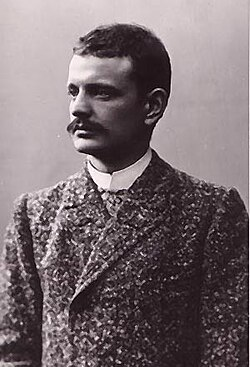
The Finnish composer and violinist – Jean Sibelius returns here with a buoyant, almost regal fanfare. The Intermezzo (Eng: Interlude) is a jaunty Allegro march-like theme, the orchestra portraying the atmosphere of marching contingents. May it set your day off in a bright, steady stride, just as it did for me when I heard it this morning.
It is just one of a subset of pieces from the longer Karelia Music (named after the region of Karelia) written by Jean Sibelius in 1893. The Intermezzo is the only original movement of the suite. Sibelius borrowed the brass theme from the middle of Tableau 3 and shaped it into its own movement. If you listen to this spectacular short piece (at the very bottom of this post), it’s easy to hear exactly where he drew his inspiration.
Jean Sibelius featured here previously with the magnificent Finlandia which was composed for the Press Celebrations of 1899, a covert protest against increasing censorship from the Russian Empire. He’s often credited with helping Finland shape a national identity during its struggle for independence from Russia. More broadly, he’s recognised as the country’s greatest composer.
Karelia Music was written in the beginning of Sibelius’s compositional career. The rough-hewn character of the Music was deliberate – the aesthetic intention was not to dazzle with technique but to capture the quality of naive, folk-based authenticity. Historical comments have noted the nationalistic character of the music.
I can’t help but think of AC/DC and the Rolling Stones when this comes on. That punchy, wide-open guitar riff feels like something straight out of their playbook – only this song actually predates AC/DC by a few years. What really hooks me is the clipped, almost percussive strumming that gives the riff its circular, jangly grit.. Listen from 0.03 to 0:08 to catch the bit I mean – it repeats through the whole track and just sounds fantastic. Lyrically, there’s no grand philosophy here: it depict a man who encounters an attractive woman on the street and initiates a sexual encounter.
Learning that this song dates back to 1970 gave me a jolt. I assumed it came after the bands it now reminds me of, but the influence kinda runs the other way. All Right Now arrived as a bridge between late-60s blues-rock and the heavier, harder-edged sound that would define the 70s – proto hard rock, even an early hint of what glam and arena rock would become. It was innovative for its moment and helped shape where countless bands later took their music. A full-throttle rocker that somehow never wears out, no matter how often you play it.
The remaining of this article was mostly comprised from the Wikipedia references below: All Right Now is a song by English rock band Free, released on their third studio album, Fire and Water (1970). It peaked at No. 2 in the UK and No. 4 on the US causing quite a splash on both sides of the big pond. In 2006, the BMI London awards included a Million Air award for 3,000,000 air plays of the song in the USA. The song remains as a staple track of classic rock radio.
Composition
According to drummer Simon Kirke, “All Right Now” was written by Free bassist Andy Fraser and singer Paul Rodgers in the Durham Students’ Union building, Dunelm House. He said: “‘All Right Now‘ was created after a bad gig in Durham. We finished our show and walked off the stage to the sound of our own footsteps. The applause had died before I had even left the drum riser. It was obvious that we needed a rocker to close our shows. All of a sudden the inspiration struck Fraser and he started bopping around singing ‘All Right Now’. He sat down and wrote it right there in the dressing room. It couldn’t have taken more than ten minutes.” Fraser has agreed largely with this history.
Legacy
Although renowned for their live performances and non-stop touring, their music did not sell well until their third studio album, Fire and Water (1970), which featured the hit “All Right Now”. The song helped secure them a performance at the 1970 Isle of Wight Festival, where they played to an audience of 600,000 people. In the early 1970s they became one of the best-selling British blues rock. By the time they disbanded, they had sold more than 20 million records worldwide and had played in more than 700 arenas and festival concerts.
[Verse 1] There she stood in the street Smiling from her head to her feet I said, “Hey, what is this, now, baby?” maybe Maybe she’s in need of a kiss I said, “Hey, what’s your name, baby? Maybe we can see things the same Now don’t you wait or hesitate Let’s move before they raise the parking rate” Ow!
[Chorus] All right now, baby, it’s all right now All right now, baby, it’s all right now
[Interlude] Let me tell you now
[Verse 2] I took her home to my place Watchin’ every move on her face She said, “Look, what’s your game, baby? Are you tryin’ to put me in shame?” I said, “Slow, don’t go so fast Don’t you think that love can last?” She said, “Love, Lord above Now you’re tryin’ to trick me in love”





 Observation Blogger