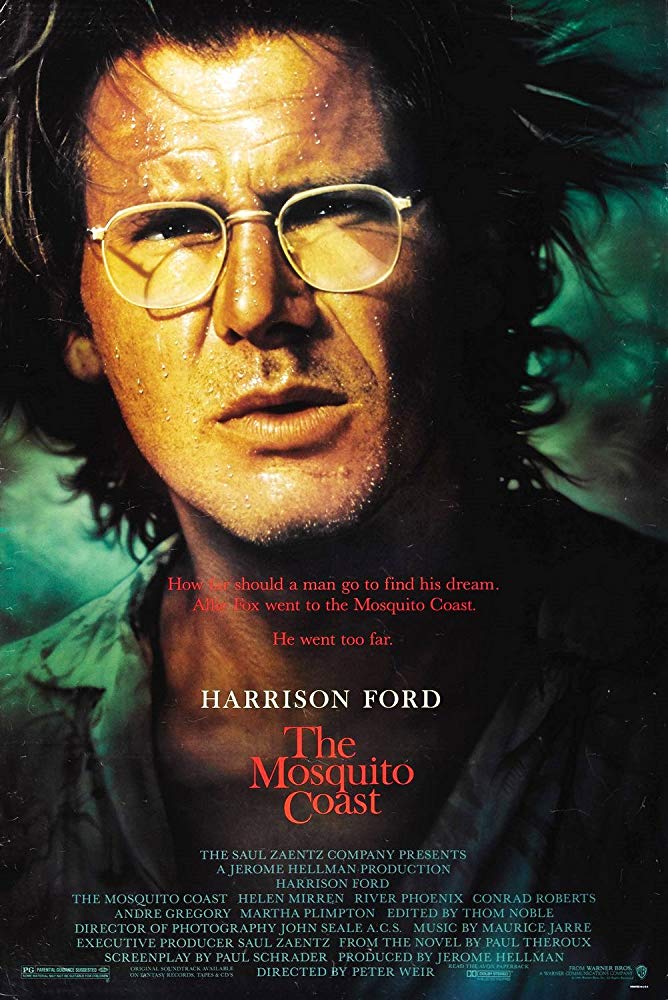
The Mosquito Coast – Peter Weir (1986)

The Mosquito Coast_


Today on ‘Friday’s Finest’ we feature another compelling yet underrated Peter Weir film about the mysteries and forces of nature. The Mosquito Coast has just 6.6 on IMDB and 76% critic rating on Rotten Tomatoes. It was also a commercial disappointment having lost money. It may well be the only Harrison Ford film that has flopped so badly. I revisited the film only recently and I was captivated by it, like I was in my youth. It currently sits at 67 in my all time favourite movies list.

The Mosquito Coast is based on the novel of the same name by Paul Theroux. The film tells the story of a family that leaves the United States and tries to find a happier and simpler life in the jungles of Central America. “Ice is civilization”, Allie fox proclaims with unctuous authority. That will be the foundation for his utopian dream.

“We eat when we’re not hungry, drink when we’re not thirsty. We buy what we don’t need and throw away everything that’s useful. Why sell a man what he wants? Sell him what he doesn’t need. Pretend he’s got eight legs and two stomachs and money to burn. It’s wrong. Wrong, wrong, wrong.”

– Allie Fox (Harrison Ford)

But Allie is so headstrong, so convinced of his infallibility that his vision blinds him to reality. Lets just say he is not prepared for the reality of nature nor the threat other desperate humans pose. His jungle paradise quickly turns into a dystopia as Allie’s behavior becomes increasingly erratic and aggressive.

Ford really goes out on a limb in this playing a character so egocentric and domineering; distinct from anything he’s done before, but nails it in my opinion. Then we have the iconic River Phoenix who was at the prime of his youth in terms of his innate acting sensibility; stealing nearly every scene he is in. According to IMDB, Ford and Phoenix had a very close bond in this film and Ford even recommended Phoenix to Spielberg for Indiana Jones based on their time together making this film.

Taking a very Robinson Crusoe-esquire piece of fiction and putting it to film would not have been an easy process. Beyond the deep themes expressed in the script, The Mosquito Coast looks good visually. The tropical scenery is spectacular. Production design and cinematography are terrific. And the film’s score, by Maurice Jarre, is wonderfully exotic and majestic.

Interesting facts about The Mosquito Coast from IMDB Trivia:

  • Jack Nicholson was originally offered the lead role, but backed out partly because he could not watch Los Angeles Lakers games in Belize, where part of the film was to be shot.
  • Of all of his films, star actor Harrison Ford considers this to be his favorite.
  • River Phoenix was raised in the Children of God cult, where he and his family had been stationed in Venezuela. River was motivated to act in the movie because he recognized the many similarities between the film and his childhood.
  • Actors Martha Plimpton and River Phoenix started a personal relationship on this movie which continued for a number of years.

Tagged with: , , ,
Posted in Movies and TV

Alive (1991) – Pearl Jam

Eddie Vedder 1990's

Eddie Vedder 1990’s

As a an impressionable young adult in the early 90s, the big music blasting our vivacious hearts and minds was ignited from Seattle. Bands like Nirvana, Pearl Jam, Alice in Chains and Sound Garden were pumping the airwaves with a vast array of steely melancholic grunge tunes. It enchanted disenfranchised students like us and we explored ways and means to experience obscure beatnik places in Canberra that embraced such music.

The song that had the biggest impact on me from the outset was Alive by Pearl Jam. It was their debut single and appeared on their debut album Ten in 1991, which I still consider one of the greatest 90’s albums. The story behind how the song came into being had circulated among us with great relish adding to our immense appreciation of this track. Even re-reading the origin of Alive now, I find myself as stirred as when I first heard it. It has to be one of Rock ‘n’ Roll‘s most remarkable stories of serendipity in the wake of sorrowfulness.

The following excerpts from wikipedia give you the low-down of this legendary rock-n-roll story which is ‘Alive’:

Origin and Recording

Guitarist Stone Gossard wrote the music for the song, which he titled “Dollar Short”, in 1990 when he was still a member of Mother Love Bone. According to Gossard Mother Love Bone frontman Andrew Wood had even sung on it. After Wood died of a heroin overdose, Gossard and his bandmate Jeff Ament started playing with guitarist Mike McCready with the hope of starting a new band. “Dollar Short” was one of five tracks compiled onto a tape called Stone Gossard Demos ’91 that Gossard, Ament, and McCready circulated in the hopes of finding a singer and drummer for the group.

The tape made its way into the hands of vocalist Eddie Vedder, who was working as a security guard for a petroleum company in San Diego, California, at the time. He listened to the tape shortly before going surfing, where lyrics came to him. “Alive” was the first song for which Vedder recorded vocals. Vedder mailed the tape back to Seattle. Upon hearing the tape, the band invited Vedder to come to Seattle and he was asked to join the band.

(Less than 2 years later Eddie Vedder would be performing Masters of War at Bob Dylan’s 30th anniversary concert in Madison Square Garden!)

The band recorded “Alive” during a demo session at London Bridge studio in January 1991. The version recorded during this session would later appear on the group’s debut album, Ten.

Lyrics

“Alive” tells the story of a young man discovering that the man he thought was his father is actually his stepfather, while his mother’s grief leads to an incestuous relationship with the son, who strongly resembles the biological father. “Alive” has been revealed by Vedder to be part autobiographical and part fiction. When Vedder was a teenager, his mother revealed to him that the man he thought was his father was actually his stepfather, and that his biological father was dead. The first and last verses detail those actual events, but the second verse is storytelling on Vedder’s part. The lyrics of the second verse read, “Oh, she walks slowly, across a young man’s room/She said I’m ready…for you/I can’t remember anything to this very day/’Cept the look, the look…/Oh, you know where, now I can’t see, I just stare…,” and Vedder revealed that “she” was the mother, and “the look” referred to was not the look on her face, but “the look is between her legs. Where do you go with that? That’s where you came from.”

I suppose that leaves us to pause and ponder how Vedder’s voice and his lyrics propelled this group to become one of the world’s most successful bands for nearly 3 decades. Even his influence as a solo artist has been impressive. His acoustic soundtrack on Into The Wild is nothing short of eerily beautiful.  Which other lead singer/s and lyricists have had such an an immediate and immense impact on their band’s success as Eddie Vedder? I’m sure some of you with a more consummate knowledge of contemporary music may be able to wield your weight on this topic.

Tagged with: , ,
Posted in Music

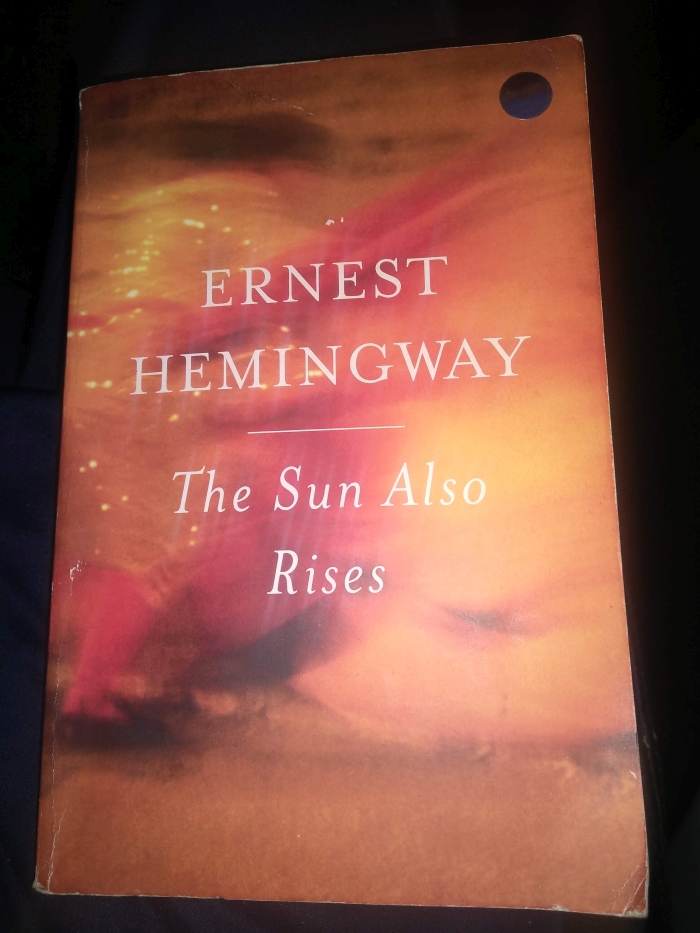
‘If In Doubt, Cut it Out’ – Reflections on Ernest Hemingway’s Writing

The Sun Also Rises


If in Doubt Cut it Out‘ is an old writer’s slogan used to remind budding writers to get rid of unnecessary noise and clutter. Cutting words remains one of the hardest, yet necessary parts of writing. Even after all these years I consider myself a novice in abiding to this KISS (Keep It Simple, Stupid!) principle. I tend to congratulate myself prematurely on an early draft and not respect the voice of the following day, telling me ‘Actually, it’s not that great‘. When a cooler head prevails I find myself relenting and either changing or deleting the text and it’s always better for it. I feel grateful for every word I can cut.

The writing style of one of the greatest American literary figures of the 20th century Ernest Hemingway is arguably the best example of the ‘If in Doubt, Cut it out‘ and ‘KISS‘ principles in practice. Hemingway revolutionized American writing with his short, declarative sentences and tense prose. I’m currently reading one of his masterpieces The Sun Also Rises for the third time. It is my favourite Hemingway book mainly because I just find it such an enjoyable read. I needed to detach myself from the sombreness and sternness of the books I discussed here previously, as magnificent as they were. Hemingway’s sparse writing style and restrained use of description allows my reading senses to de-clutter and re-calibrate. Also, I was up for another trip to Paris, France in the 1920s with a motley crue of expatriates (the lost generation).

Wednesday’s book quotes will feature further excerpts from The Sun Also Rises and I won’t bother you with a detailed description of the book today.  Instead, I would like to use this opportunity to demonstrate the no-nonsense, short prose of Hemingway which made him such a colossal figure in modern American literature. What better way to start than from page 1, Chapter 1:

Robert Cohn was once middleweight boxing champion of Princeton. Do not think that I am very much impressed by that as a boxing title, but it meant a lot to Cohn. He cared nothing for boxing, in fact he disliked it, but he learned it painfully and thoroughly to counteract the feeling of inferiority and shyness he had felt on being treated as a Jew at Princeton. There was a certain inner comfort in knowing he could knock down anybody who was snooty to him, although, being very shy and a thoroughly nice boy, he never fought except in the gym. He was Spider Kelly’s star pupil. Spider Kelly taught all his young gentlemen to box like featherweights, no matter whether they weighed one hundred and five or two hundred and five pounds. But it seemed to fit Cohn. He was really very fast. He was so good that Spider promptly overmatched him and got his nose permanently flattened. This increased Cohn’s distaste for boxing, but it gave him a certain satisfaction of some strange sort, and it certainly improved his nose. In his last year at Princeton he read too much and took to wearing spectacles. I never met any one of his class who remembered him. They did not even remember that he was middleweight boxing champion.

I mistrust all frank and simple people, especially when their stories hold together, and I always had a suspicion that perhaps Robert Cohn had never been middleweight boxing champion, and that perhaps a horse had stepped on his face, or that maybe his mother had been frightened or seen something, or that he had, maybe, bumped into something as a young child, but I finally had somebody verify the story from Spider Kelly. Spider Kelly not only remembered Cohn. He had often wondered what had become of him.

Robert Cohn was a member, through his father, of one of the richest Jewish families in New York, and through his mother of one of the oldest. At the military school where he prepped for Princeton, and played a very good end on the football team, no one had made him race-conscious. No one had ever made him feel he was a Jew, and hence any different from anybody else, until he went to Princeton. He was a nice boy, a friendly boy, and very shy, and it made him bitter. He took it out in boxing, and he came out of Princeton with painful self-consciousness and the flattened nose, and was married by the first girl who was nice to him. He was married five years, had three children, lost most of the fifty thousand dollars his father left him, the balance of the estate having gone to his mother, hardened into a rather unattractive mould under domestic unhappiness with a rich wife; and just when he had made up his mind to leave his wife she left him and went off with a miniature-painter. As he had been thinking for months about leaving his wife and had not done it because it would be too cruel to deprive her of himself, her departure was a very healthful shock.

Tagged with: , ,
Posted in Reading, Reflections

Alexandra Leaving (2001) – Leonard Cohen

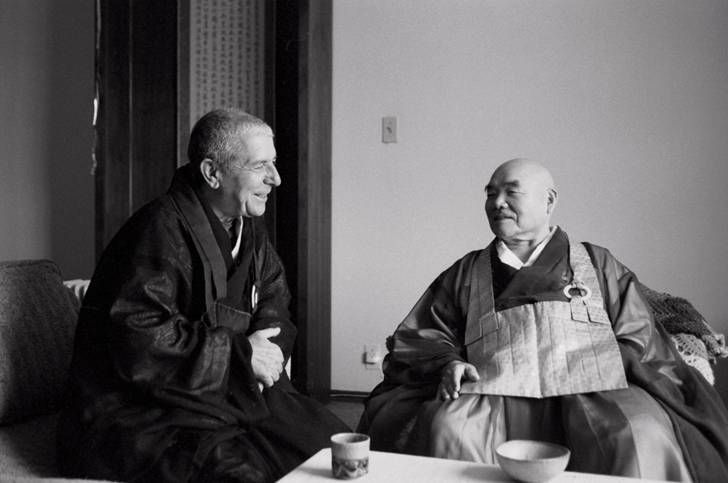
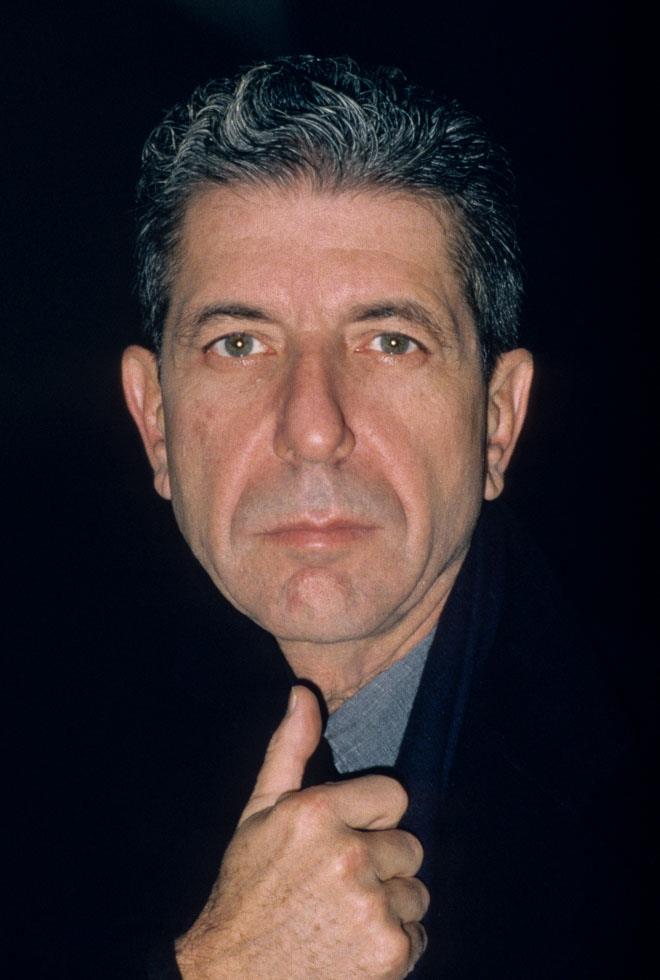
Leonard Cohen and Roshi

Alexandra Leaving is the third song from Leonard Cohen in the music library project and is the seventh song on his 2001 record Ten New Songs.  Alexandra Leaving is based on The God Abandons Antony, a poem by Constantine P. Cavafy. This is another one of his songs which just gets better the more you listen to it. It’s like drinking from a wellspring and each time you take another sip it becomes more blessed, more enriching for the soul.

In contrast to the intensely direct Aint No Cure For Love, Alexandra Leaving is a quietly understated poetic meandering about the ebbs and flows of romance and divine inspiration. Leonard Cohen beset to his spiritual axiom postulates when something so divine touches us we should not take it for granted nor should we try and grasp for it when it decides it’s leaving.

Even though she sleeps upon your satin
Even though she wakes you with a kiss
Do not say the moment was imagined
Do not stoop to strategies like this

And you who were bewildered by a meaning
Whose code was broken, crucifix uncrossed
Say goodbye to Alexandra leaving
Then say goodbye to Alexandra lost

 You can read more about the interpretations of the song at songmeanings.com which includes the following:

This song is based on Constantine Cavafy’s Poem ‘The God Abandons Antony’.  The same Antony from ‘Julius Caesar’ and ‘Antony and Cleopatra’. The original poem itself is based on Plutarch’s story that Antony heard a ghostly, musical procession the night before he lost the siege of Alexandria to Octavian. The procession – among other things, signified the desertion of his God protector, Bacchus. The departing procession could thus signify the loss of love, glory, fame, fortune, love….

Leonard Cohen changes Alexandria to Alexandra, making the loss more firmly that of love. The song, in Cohen’s hands, becomes about how to face the loss of a lover and all the accompanying promises and expectations. The warrior’s exhortation to face up to the loss of life on the eve of battle transforms into the lover’s counsel to be strong and accept the loss of a relationship.
thespianphryne songmeanings.com

Interestingly Ten New Songs is dedicated to Joshu Sasaki (see image above) a Buddhist monk and rōshi (venerable teacher) who Cohen regularly visited at Mount Baldy Zen Center in California. He served him as personal assistant during Cohen’s period of reclusion at Mount Baldy monastery in the 1990s. Leonard Cohen speaks about his life as a Buddhist monk here.

Tagged with: , ,
Posted in Music

27/8 – 2/9/19 Messiah, Individual Sovereignty, Diddly-Squat Auralians, Edinburgh Fringe & Thieves

news on the march

Welcome back to Monday’s News on the March – The week that was in my digital world. Wow, what a week huh?! If you’re reading this we made it through the other side or you may have just paid someone at technical support for the ‘life extension cryogenic experience’. Whichever I’m glad you are here.

techsupport.gif

Story by Intellectual Shaman:

“What will you have for your last meal?” The guard interrupted.

“Bread and wine,” Jones yawned.

“That would not be my first choice,” The guard said.

Jones nodded and opened his bible. (Read More)

You tube video from Jordan Peterson at the independent institute:

Not the greatest questions but Jordan answered all of them thoughtfully and took the conversation in interesting directions:

‘You weaken people if you say they are the passive victims of externals forces. Then they become the passive victims of externals forces. It’s not good’.

“Read something great. Write about it. Get your thoughts in order.”

Article by Bruce Goodman at Weave a Web:

The Diddly-Squat Auralians were the inhabitants of a distant exoplanet thousands of light years away from Planet Earth. Diddly-Squat Auralians was the term used by Earthlings to describe the aliens, as no one had a clue what the Diddlies called themselves.

BBC article

After scouring hundreds of venues and shows at the Edinburgh Festival Fringe, the panel submitted their favourite six jokes. Without naming the comics behind each one, 2,000 members of the British public were invited to choose the funniest.

Article by Encounter Soul:

In the middle of the night it hits. With a few swift, smart, agile and adept finger clicks – my entire bank account is emptied in one fell swoop. I awaken to emails & texts from my bank telling me that I’m overdrawn. I log in to see $0.00 staring back at me.

news on the march the end
Posted in News

Ain’t That Lonely Yet – Dwight Yoakam

The next song in the music library project is Dwight Yoakam’s ‘Ain’t That Lonely Yet’. I am reblogging Badfinger’s Powerpop article about it (click image below), since that is where I first heard it. I found this country song really soothing on the ears. The lyrics won’t set anyone’s world on fire, but you could sum it up as ‘a woman hurts him and now wants him to take her back’.

His sarcasm in the early stanzas makes me chuckle:

You keep calling me on the telephone
You say you’re all alone
Well that’s real sad

And you keep leavin’
Notes stuck on my door
Guess you’re hungry for some more
Girl that’s too bad

I think it’s a little bit deeper than that; he is really tempted and the whole song is him talking to himself, telling himself that she is bad for him and he needs to forget about her.

Powerpop Dwight Yoakam

Tagged with: ,
Posted in Music

Monos (2019) – Alejandro Landes (Colombian Entry for the Best International Feature Film – Oscars)

I normally reserve my movie reviews for Friday’s-Finest, but I hastily brought this one forward since I just saw Monos at the cinema and it has been selected as the Colombian entry for the Best International Feature Film at the 92nd Academy Awards. What made me run literally 5 minutes up the road to see this today was the following article from BBC:  Ten films to watch this September:

The Guardian says that (Monos -monkeys) “This overpoweringly tense and deeply mad thriller is … something between Apocalypse Now, Lord of the Flies and Embrace of the Serpent”. If that weren’t recommendation enough, Guillermo del Toro is quoted in the trailer deeming Monos “mesmerising”, and co-writer-director, Alejandro Landes, “a powerful new voice in cinema”. Released 13 September in the US.

Plot – Wikipedia: In a remote mountaintop setting somewhere in Latin America, a rebel group of teenage commandos perform military training exercises while watching over a prisoner (Julianne Nicholson) and a conscripted milk cow for a shadowy force known only as “The Organization.” After an ambush drives the squadron into the jungle, fracturing their intricate bond, the mission begins to collapse.

Monos is a very disturbing film to watch. I found it vexatious seeing adolescents conduct themselves as they do in this movie. Some might find it sexually exploitative even though it is most likely an accurate reflection of how teenagers under the same duress might react. This is Colombia and only yesterday Ivan Marquez an ex FARC rebel issued a call to arms. Kids like these; even much younger have for years been enticed and many times coerced into forming allegiance with similar renegade groups. As much as Monos at the surface level for international viewers may seem a fantasy, believe me it isn’t.

Monos is definitely a movie to be seen in the cinema since what impressed me most was the hypnotic soundtrack and spectacular cinematography. I can’t think of another recent movie where the soundtrack has played a more pivotal role and been so effective. Regarding filming..If you enjoyed Alejandro G. IñárrituThe Revenant’s ‘stream of consciousness’ cinematography then you will certainly admire this one.

Monos is a comparatively short thriller film and when the credits rolled I was left fixated on the screen trying to process that which had occurred, but indebted all the same for this jarring movie experience.

Tagged with: , ,
Posted in Movies and TV

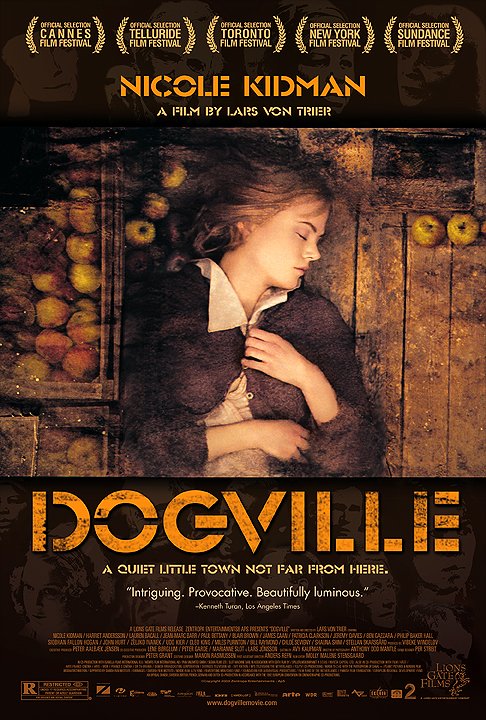
Dogville (2003) – Lars Von Trier (Friday’s Finest)

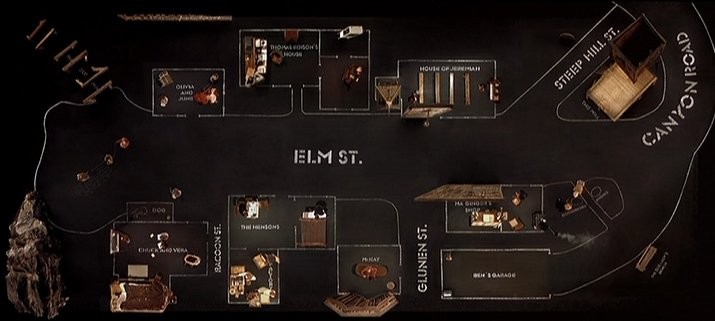
Dogville

This nearly 3 hour film which is set entirely on a sound stage and filmed like an intimate theatrical production would test just about anyone’s patience. I’m not going to lie. I bought the DVD brand new for about the equivalent of $2US in my local Panamericana store. I had been meaning to watch it since I had read some interesting things about it. The performances are led by Nicole Kidman and Paul Bettany with an imposing supporting cast including Lauren Bacall, James Caan and Philip Baker Hall. It’s also wonderfully narrated by John Hurt. Dogville is an art-house film and Kidman delivers an “A” class performance. She has definitely never lacked the courage to perform in experiential cinema.

Dogville 1

I was wondering if I even should have included it on Friday’s-finest since it’s  not exactly a movie I would recommend to anyone unless that any one wanted to rack their brains watching a slow parable being told set in a poverty stricken small town of America during the depression called Dogville. I mean the premise sounds interesting: Kidman plays a woman on the run from the mob and police and she is reluctantly accepted in this small town. In exchange, she agrees to work for them. As a search visits the town, she finds out that their support has a higher price to pay than she had foreseen. But who is this woman and why is she on the run?
Only you can’t see Dogville. The “town” and its streets, houses and vegetation are all represented by chalked lines on a flat studio floor the size of a football pitch, with bits and pieces of exterior and interior buildings.

It’s best to approach Dogville from the perspective of not expecting to be entertained by the story but instead challenged to interpret the symbolism of this tragic tale. If it’s taken too literally; its surface narrative could be interpreted as intriguing of sorts, but fatally cynical. However if it is viewed metaphorically like a parable of the gospels or even with a particular philosophical concept in mind like Stoicism or Nietzscheism then you should find plenty of meat on Lars Von Trier’s bone to chew on. What it doesn’t shy away from is exposing Humanism as a fatal flaw.

The following is a Spoiler in an allegorical sense, but don’t say I didn’t warn you if you intend on seeing Dogville:

If one considers ‘Grace’ (Kidman character) to be a Christ-like figure as I did, then one can also consider her father to be like the Old Testament’s Yahweh. There is in fact a limit to God’s love, when one considers the Christian perspective on the divine judgement of souls. The final act, where Dogville gets its just desserts, can be viewed as a metaphor for this Final Judgement and God’s wrath acted upon the wicked and evil, with the mobsters acting as the heavenly host of vengeful angels. Or you could also view the whole movie and the soundstage as the temptation of Christ where Jesus fasted for 40 days in the desert and Satan appeared to him and tried to tempt him. Grace’s father appears to Grace in the final act in her Mount of Olives Gethsemane moment where she anguishes over the fate of the people who had sinned against her.

If you have read this far into my post you will have ascertained that Dogville certainly hit all my right buttons as far as being philosophically exigent. As Will Self put it in the London even Standard: ‘The viewer is regaled with more philosophising on the meaning of social responsibility, communal values and existential angst than he might reasonably hope to witness in a lifetime’s cinema- going.’

Tagged with: , ,
Posted in Movies and TV

Ain’t No Cure For Love (1988) – Leonard Cohen

Leonard Cohen 1988
Leonard Cohen 1988

I would class Ain’t No Cure for Love as a top tier Leonard Cohen song. Unlike the first song of his presented from the library, the restrained and melancholic A Thousand Kisses Deep, I would highly recommend anyone unfamiliar with Leonard’s music to try Ain’t No Cure on for size. Probably no other song of his bottles everything which he is so damn good at. Romance, poetry and devotional music – It’s is all here, but he’s at the peak of his powers doing it. You’ll note this song escalates in intensity as it progresses, until it climaxes (much like the act of making-love) and he’s all but spent.

I see you in the subway and I see you on the bus
I see you lying down with me, I see you waking up
I see your hand, I see your hair
Your bracelets and your brush
And I call to you, I call to you
But I don’t call soft enough
There ain’t no cure
There ain’t no cure
There ain’t no cure for love

Ain’t No Cure for Love is the second track on Cohen’s 1988 studio album I’m Your Man. According to Wikipedia his eight studio album was received as follows:
I’m Your Man was hailed by critics as a return to form. It was number 1 in Norway for 16 weeks. The album is silver in the UK and gold in Canada. In the original Rolling Stone review, David Browne called it “the first Cohen album that can be listened to during the daylight hours.” Tom Waits has named it one of his favourite albums. The album was also included in the book 1001 Albums You Must Hear Before You Die.

As the title suggests the theme of the song is a common and traditional one, but there isn’t much common or traditional in the output, on the contrary, I haven’t heard another song about ‘love’ like it. He mixes metaphors like pills and doctors in not finding the cure which reinforces the desperation he finds himself in not being able to escape these memories. The poetry is exquisite and full of lovely irony and his conviction and purposefulness in the vocal delivery is jarring. You can’t help but just be totally invested in it. It also has an anthemesque-theological substrate which is present in much of his work.

I walked into this empty church, I had no place else to go
When the sweetest voice I ever heard, whispered to my soul
I don’t need to be forgiven for loving you so much
It’s written in the scriptures
It’s written there in blood
I even heard the angels declare it from above
There ain’t no cure
There ain’t no cure
There ain’t no cure for love

Tagged with: , ,
Posted in Music

Take a Walk with James Joyce Along the Beach

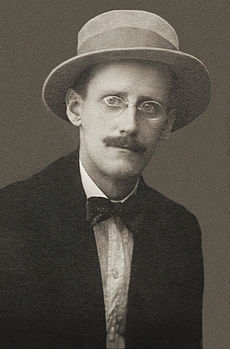
James Joyce
James Joyce

Today in Wednesday’s book quote, we revisit A Portrait of the Artist as a Young Man by James Joyce. If you remember in our previous encounter A morning inspiration we examined Joyce’s exceptional discourse about the spirit and unfettered freedom the instant upon his waking in the morning just prior to awakening wholly. Today we delve into what I consider to be his ‘artistic-soul’ transitioning from boyhood to adulthood.

Portrait - Beach 1
Portrait - Beach 2

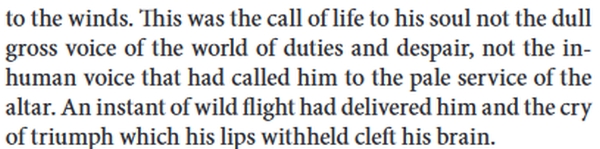
What makes this section most remarkable is he contextualizes it with simply wandering on a beach. I’ve walked on beaches before and had my encounters with waves, birds and even girls which have made me swoon, but this is a walk where Joyce finds himself transfiguring all those aforementioned images into mythological wonders that symbolise his transition from his youthful artistic-soul into the honed-in dedicated adult artist. Not only that, he has written the most illuminating description about the power and beauty of the feminine upon man:

Portrait - Beach 3.jpg
Portrait - Beach 4
Portrait - Beach 6.jpg
Tagged with: , ,
Posted in Reading

Follow Blog via Email

Enter your email address to follow this blog and receive notifications of new posts by email.

Join 753 other subscribers

← Back

Thank you for your response. ✨