Hello all! I hope you are having a merry festive season. Yesterday I was unable to post due to a electricity cut in my sector, so today I will release two Christmas songs from my Christmas Countdown in quick succession. The Christmas Countdown of 10 of my favourite Christmas songs and hymns (shared in no particular order) will carry us right up to Christmas Eve. So let’s get moving…
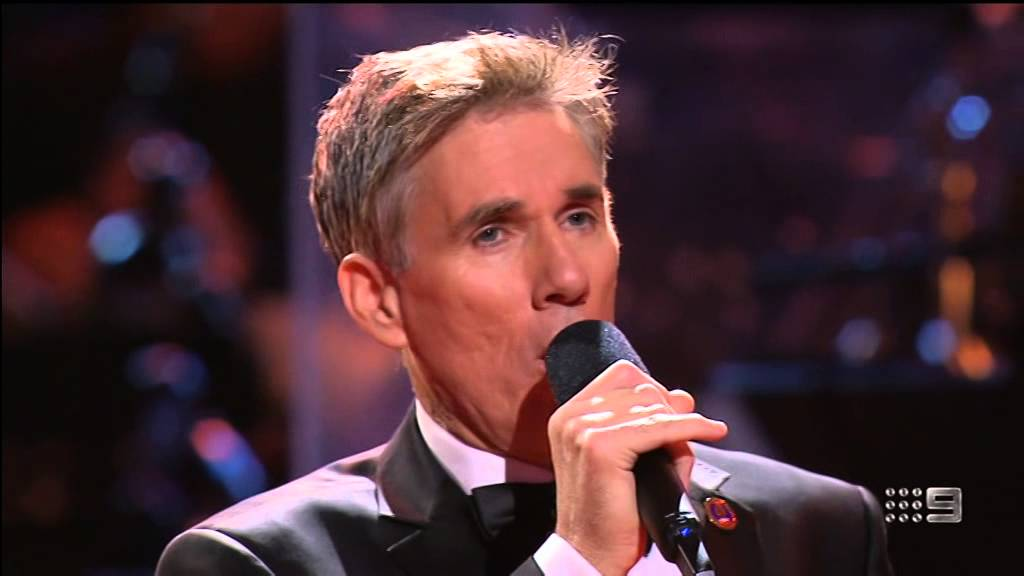
As I mentioned in a recent post, the Australian tenor David Hobson (pictured above) is hands down my favourite Christmas Carols singer. He recently appeared here at No.8 with the Australian Soprano and Marina Prior in their superb rendition of Oh Come, All Ye Faithful. David now takes on the classic religious Victorian ballad, The Holy City (Jerusalem). I’ve always found this piece resolute and uplifting. Few Christmas songs appear as demanding to perform, yet Hobson delivers it masterfully. It’s remarkable how he sustains such vocal strength and clarity throughout the performance.
There are several recordings of Hobson performing this song at Melbourne’s Carols by Candlelight, but I’ve chosen the 2014 rendition. Imagining the atmosphere of that live event is almost overwhelming – it must have been magical to witness in person. For me, this ranks as one of the greatest live performances I’ve ever encountered. I hope you find it as inspiring as I do.
Last night I lay a-sleeping There came a dream so fair, I stood in old Jerusalem Beside the temple there. I heard the children singing, And ever as they sang, Me thought the voice of angels From heaven in answer rang.
Jerusalem! Jerusalem! Lift up your gates and sing, Hosanna in the highest! Hosanna to your King!
And then me thought my dream was changed, The streets no longer rang, Hushed were the glad Hosannas The little children sang. The sun grew dark with mystery, The morn was cold and chill, As the shadow of a cross arose Upon a lonely hill.
Jerusalem! Jerusalem! Hark! How the angels sing, Hosanna in the highest! Hosanna to your King!
And once again the scene was changed; New earth there seemed to be; I saw the Holy City Beside the tideless sea; The light of God was on its streets, The gates were open wide, And all who would might enter, And no one was denied. No need of moon or stars by night, Or sun to shine by day; It was the new Jerusalem That would not pass away.
Jerusalem! Jerusalem! Sing for the night is o’er! Hosanna in the highest! Hosanna for evermore!
The following was extracted from the Wikipedia reference below:
The Holy City dates from 1892, with music by Michael Maybrick writing under the alias Stephen Adams, with lyrics by Frederic Weatherly. Its sheet music sales made it one of the most commercially successful songs in the UK and United States around the beginning of the 20th century, and also “perhaps the most pirated musical piece prior to the Internet“, according to copyright scholar Adrian Johns.
The three verses of the song describe in turn, a crowd cheering Jesus Christ’s triumphal entry into Jerusalem on Palm Sunday, Jesus’s crucifixion on Good Friday, and the eventual “New Jerusalem” (Zion) of universal peace and brotherhood, which is foretold in Isaiah 2:4 and Isaiah 11:6-9.
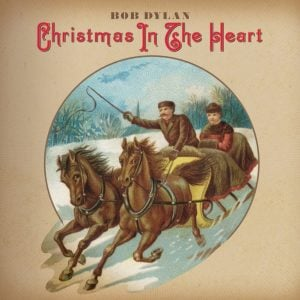
Advent marks the beginning of the Christian liturgical calendar, commencing on the fourth Sunday before Christmas and continuing until Christmas Eve. Derived from the Latin word adventus, meaning “coming” or “arrival,” Advent embodies a time of anticipation and reflection. In our household, however, the season also signifies the return of Dylan’s album Christmas in the Heart, which is lovingly dusted off and given a joyful spin on the turntable. This brings us to one of the album’s standout moments—what I consider a true highlight—Little Drummer Boy.
Little Drummer Boy has always held a cherished place in my heart, dating back to my childhood days. When news broke of Bob Dylan’s upcoming 2009 album, Christmas in the Heart, I couldn’t help but feel a wave of cynicism, even bordering on disbelief. Dylan – my musical hero, and a man of Jewish heritage, no less—was venturing into the Christian festive realm of Winter Wonderlands, Noels, Santa Claus, and Silver Bells. It felt like an unlikely fit, to say the least.
Much like my initial reservations about his Sinatra-inspired detour with Shadows in the Night – an album I eventually grew to admire – my scepticism toward Christmas in the Heart slowly melted away. Over time, what once seemed incongruous transformed into a source of amusement, comfort, and, ultimately, celebration. The album’s charm crept in unexpectedly, solidifying its place in our holiday tradition. At the end of the day, Bob has earned he right to record anything he wants.
[Verse 1] Come they told me, pa rum pum pum pum A new born King to see, pa rum pum pum pum Our finest gifts we bring, pa rum pum pum pum To lay before the King, pa rum pum pum pum Rum pum pum pum Rum pum pum pum And so to honor Him, pa rum pum pum pum When we come
[Verse 2] Little baby, pa rum pum pum pum I am a poor boy too, pa rum pum pum pum I have no gift to bring, pa rum pum pum pum That’s fit to give a King, pa rum pum pum pum Rum pum pum pum Rum pum pum pum Shall I play for you, pa rum pum pum On my drum On my drum
[Verse 3] Mary nodded, pa rum pum pum pum The ox and lamb kept time, pa rum pum pum pum I played my drum for Him, pa rum pum pum I played my best for Him, pa rum pum pum pum Rum pum pum pum Rum pum pum pum Then He smiled at me, pa rum pum pum pum Me and my drum Me and my drum
Most of the following was extracted from the Wikipedia reference below:
The Little Drummer Boy (originally known as “Carol of the Drum”) is a popular Christmas song written by American composer Katherine Kennicott Davis in 1941 and first recorded in 1951 by the Austrian Trapp Family,
In the lyrics, the singer relates how, as a poor young boy, he was summoned by the Magi to the Nativity of Jesus. Without a gift for the Infant, the little drummer boy played his drum with approval from Jesus’s mother, Mary…Despite the song’s popularity, the story of the drummer boy is not biblically accurate.
Inspiration for “The Little Drummer Boy” came to Davis in 1941. “[One day], when she was trying to take a nap, she was obsessed with this song that came into her head and it was supposed to have been inspired by a French song, “Patapan”, explained Fontijn. “And then ‘patapan’ translated in her mind to ‘pa-rum-pum-pum’, and it took on a rhythm.” The result was “The Little Drummer Boy“.
I point you to an interesting rendition by an unlikely duo, which my friend Max recently wrote about – Bing Crosby and David Bowie’s “Peace on Earth/Little Drummer Boy“. In 1982 it reached No. 3 on the UK chart.
Finally, something I’ve always dreamed of – my very first christmas special! Come along with me as we celebrate holiday cheer with my family and friends. grab some cookies and hot cocoa and settle in for some of my favourite songs off my new album ‘songs for christmas’
– Christina Perri
The music of Christina Perri has featured here more than twice as much as any other female music artist. It will come as no surprise to anyone who has followed my blog that Perri is my favourite female music artist and balladeer. Perri will always deliver a brilliant catch phrase and / or intonation of a word which just makes my heart melt. I find it impossible not to get lost in Perri land.
Last year she launched her California Christmas special which features two Christmas songs I am enamoured with. The first: her very own penned Christmas song called Christmas Dream and the second Marshmallow World written in 1949 and performed by Bing Crosby. Christina is self effacing and lighthearted as she welcomes us into her gorgeous home. Her vocals here are coolly soulful. Her ability to shape a ‘new’ sound with her instinctive inflections or raising the octave despite the overall ‘tranquil’ and resolute tone is something to behold.
The special includes playful ribbing by her husband Paul Costabile; who you may remember appeared in the last ‘merry-go-round’ scene of Perri’s legendary Evergone track with their eldest daughter Carmella Stanley. Yesterday’s XMAS launch also includes Carmella’s 1 year – old sister Pixie Rose; who was the focus of Perri’s spectacular nursery song – Pixie Dust. Once again Christina Perri’s guitarist and back-up singer Johnny Hanson is there to solidify her music sanctuary along with her other ‘favourite person’ Emily Frost on keys and backup.
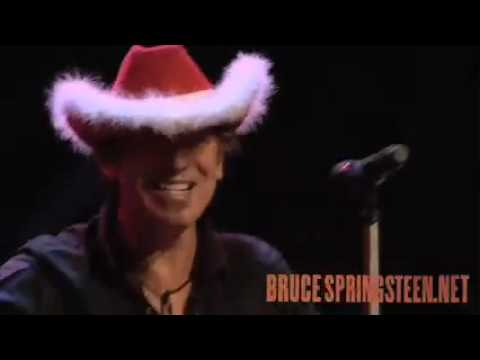
The showmanship by Bruce and the E Street Band in their version of today’s featured track – Santa Claus Is Comin’ To Town is nothing short of pulsating and rousing. It’s not Christmas time until Springsteen says it is! Just listen to the big man – Clarence Clemons hone in on his baritone Santa Claus voice with – ‘You Better Be Good For Goodness Sake‘. That alone shifted my Family’s Christmas spirit levels up another notch as we watched it yesterday morning over breakfast.
Santa Claus Is Comin’ To Town doesn’t reference Christian theology, nativity scenes, or biblical themes, which are hallmarks of religious Christmas songs. Instead, it emphasizes Santa, gift-giving, and behavior (“better watch out”), making it part of the more commercial and festive side of the holiday. Santa Claus Is Comin’ to Town is one of my favourite secular Christmas songs, and I suspect it holds a special place in my kids’ merry hearts as well. But! Wait for it (drum roll)………., it can’t top their excitement for the song ranked No. 3 in my Christmas countdown, which I’ll be sharing this Sunday.
The following contain extracts from the Wikipedia reference below: “Santa Claus Is Comin’ to Town” is a Christmas song written by J. Fred Coots and Haven Gillespie, and first recorded by Harry Reser and His Orchestra. When it was covered by Eddie Cantor on his radio show in November 1934 it became a hit; within 24 hours, 500,000 copies of sheet music and more than 30,000 records were sold.
The song has been recorded by over 200 artists. The version by Bruce Springsteen was first recorded on December 12, 1975, at C. W. Post College in Brookville, New York. This version borrows the chorus refrain from the 1963 recording by the Crystals. It was first released as a track on the 1981 Sesame Street compilation album, In Harmony 2…Springsteen’s rendition of the song has received radio airplay perennially at Christmastime for years. This version remains a Springsteen concert favorite during the months of November and December (often concluding the show), and the band is among the few that keep it in their roster of songs during the holidays.
[Spoken Intro] It’s all cold down on the beach The wind’s whipping down the boardwalk Hey Band! You guys know what time of year it is? What time, what? What? Christmastime! What? Oh, Christmastime! You guys, all, you guys all been good and practicing real hard? Yeah? Clarence, you been, you been rehearsing real hard now? So Santa’ll bring you a new saxophone? Everyone out there been good or what? Aw, that’s not many, not many you guys are in trouble out here
[Chorus, sung] You’d better watch out, you’d better not cry You’d better not pout, I’m telling you why – Santa Claus is coming to town Santa Claus is coming to town Santa Claus is coming to town
He’s making a list, he’s checking it twice He’s gonna find out whose naughty or nice Santa Claus is coming to town Santa Claus is coming to town Santa Claus is coming to town
[Verse] He sees you when you’re sleeping He knows when you’re awake He knows if you’ve been bad or good You’d better be good for goodness sake! You’d better be good for goodness sake!
[Chorus] Oh you’d better watch out, you’d better not cry You’d better not pout, I’m telling you why – Santa Claus is coming to town Santa Claus is coming to town Santa Claus is coming to town
Ho, ho, ho, ho!
[Saxophone solo]
[Verse] He sees you when you’re sleeping He knows when you’re awake He knows if you’ve been bad or good You’d better be good for goodness sake! You’d better be good for goodness sake!
[Chorus] You’d better watch out, you’d better not cry You’d better not pout, I’m telling you why – Santa Claus is coming to town Santa Claus is coming to town Santa Claus is coming to town
To bookend this post I thought it appropriate to point you to how Jordan Peterson might respond to the question – Do You Believe in Santa? (From Dr Beckerwood on Reddit)
I act as if Santa Claus exists.
People have often asked me (especially around this time of year) if I believe in Santa Claus… and I don’t like that question because it’s an attempt to box me up, to put a bow on me in a sense. It’s like, what do you mean, “believe”? We know what Santa looks like. We know what he sounds like. We know how he behaves. We put up pictures and statues of him. We even make offerings to him! Do I believe the man at the mall with the white beard is the one and only Santa? Crowds are addressing him as Santa and he is responding to the name “Santa” and answering AS Santa as such, so some extent at least, he is real. To the degree he is a “good” Santa he is transcending his material substrate to give rebirth to the neurological patterns of the eternal spirit of Santa as it has descended across time. It’s like, is that “real” enough for you? In the Jungian sense you could argue that in that moment he is more real than real.
Look, any smart 11 year old can point out the logistical problems with time zones, flying reindeer, and countless cubic tons of milk and cookies, but, you know, perhaps that’s the wrong level of analysis. When a child sits on Santa’s lap it’s an intimidating thing because Santa is a judge. It’s like, are you on the good list or the naughty list? Because you certainly don’t want to be on the naughty list, that’s for sure, so how about we avoid that; how about we avoid the coal in the stocking? So what do we tell our kids? It’s like, clean up your room! Straighten yourself out and try to be a good person. Then maybe Santa judges you favorably and you get a few decent toys out the deal, eh? I don’t know, maybe Red Dead Redemption 2 or maybe a Hatchimal. But you’re not getting anywhere by stepping up on your soap box and announcing “I’m so smart, I figured out that the physical manifestation of the spirit of giving isn’t real.” I mean, you can think that if you want, but it’s not the proper way of looking at Santa Claus. There’s way, way more to him than that.
And there are actually not a lot of people, percentage-wise, who are ok with saying out loud that they don’t believe in him. Why is that? It feels like a sin to even suggest something like that. On the contrary, people go door to door singing songs about him. So some folks might say he doesn’t exist maybe just because they’re afraid of appearing foolish, but I’m not convinced. It’s like, you know what you truly believe, eh? You’re transparent to yourself? Guess again, sunshine. We act as if Santa Claus exists. And that’s right. That’s true, and it is good. And that’s all I have to say about that.
David Hobson and Marina Prior (Carols By Candlelight 2014, Melbourne, Australia)
Ever since I was a wee boy, I was enamoured with the traditional religious carol – Oh Come, All Ye Faithful. One of my earliest memories is hearing Bing Crosby’s version which closed his The Small One narration. The other version I like includes my favourite Christmas Carol singer David Hobson (pictured above). I can assure you he will be back again as we continue on the Christmas Countdownof my 10 favourite Christmas songs and hymns (shared in no particular order) to carry us up to Christmas Eve.
The Melbourne ‘Carol’s by Candlelight’ where tenor David Hobson and soprano Marina Prior sang today’s featured carol is an annual Christmas Eve event in Australia. A lot of families tune into it after enjoying their Christmas Eve dinner and the letting off Christmas Crackers (Bonbons). Their version of Oh Come, All Ye Faithful which I have presented also features the National Boys Choir of Australia and Australian Girls Choir. And below that (at the end of this post) is the aforementioned Bing Crosby version.
The following was extracted from the Wikipedia article below:
“O Come, All Ye Faithful”, also known as “Adeste Fideles” (latin), is a Christmas carol that has been attributed to various authors, including John Francis Wade (1711–1786), John Reading (1645–1692), King John IV of Portugal (1604–1656), and anonymous Cistercian monks. The earliest printed version is in a book published by Wade. A manuscript by Wade, dating to 1751, is held by Stonyhurst College in Lancashire.
Besides John Francis Wade, the tune has been attributed to several musicians, from John Reading and his son, to Handel (who only featured here 2 days ago with his Hallelujah chorus from Messiah), and even the German composer Christoph Willibald Gluck.
This carol has served as the penultimate hymn sung at the Festival of Nine Lessons and Carols by the Choir of King’s College, Cambridge, after the last lesson from Chapter 1 of the Gospel of John. Also, Adeste Fideles is traditionally the final anthem during Midnight Mass at St. Peter’s Basilica in the Vatican.
1 O come, all ye faithful, joyful and triumphant, O come ye, O come ye to Bethlehem! Come, and behold Him, born the King of angels!
Refrain: O come, let us adore Him; O come, let us adore Him; O come, let us adore Him, Christ, the Lord!
2 God of God, Light of Light, lo, He abhors not the virgin’s womb; very God, begotten not created; [Refrain]
3 Sing, choirs of angels; sing in exultation; sing, all ye citizens of heav’n above! Glory to God, all glory in the highest![Refrain]
4 Yea, Lord, we greet Thee, born this happy morning; Jesus, to Thee be all glory giv’n! Word of the Father, now in flesh appearing! [Refrain]
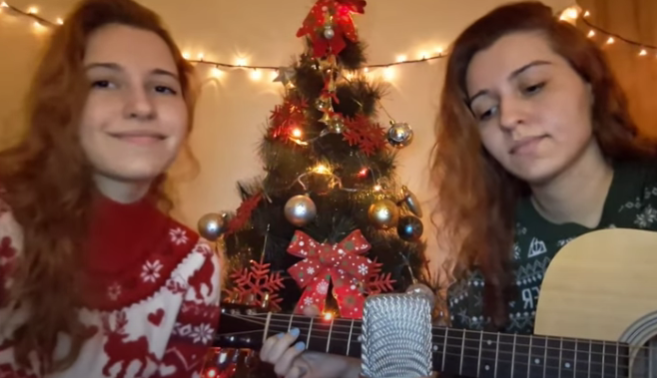
The Serbian twins Alex and Jo are back again, this time serenading us with their beautiful version of the Christmas classic ‘I’ll Be Home For Christmas‘. This is their fifth song cover to be presented here after there previous entry – Dream by Priscilla Ahn. I first heard them sing Christina Perri’s Back in Time which astounded me. I’ll Be Home For Christmas is the second song in my Christmas Countdownof 10 favourite Christmas songs and hymns (shared in no particular order) which will carry us right up to Christmas Eve.
The following was extracted from the Wikipedia page below: “I’ll Be Home for Christmas” was written by the lyricist Kim Gannon and composer Walter Kent and recorded in 1943 by Bing Crosby, who scored a top ten hit with the song. Originally written to honor soldiers overseas who longed to be home at Christmas time, “I’ll Be Home for Christmas” has since gone on to become a Christmas standard.
The song is sung from the point of view of a soldier stationed overseas during World War II, writing a letter to his family. In the message, he tells his family he will be coming home and to prepare the holiday for him, and requests snow, mistletoe, and presents “on” the tree. The song ends on a melancholy note, with the soldier saying, “I’ll be home for Christmas, if only in my dreams“. The flip side of the original recording (Decca 18570B) was “Danny Boy.”
[Verse 1] I’ll be home for Christmas You can count on me Please have snow and mistletoe And presents on the tree
[Verse 2] Christmas Eve will find me Where the lovelight gleams I’ll be home for Christmas If only in my dreams
Kicking off my Christmas Countdown of 10 favourite Christmas songs and hymns (shared in no particular order), I’m delighted to present Handel’s magnificent “Hallelujah Chorus” from Messiah. This festive journey will carry us right up to Christmas Eve.
Hallelujah has become a centrepiece of Christmas celebrations, even though Messiah was originally intended for the Lenten season. Its jubilant music, soaring choral harmonies, and triumphant message have led to its association with the holiday. There are two versions I have forwarded at the bottom of this post:
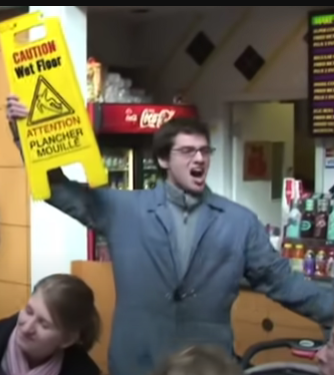
– The first one is a ‘Christmas Food Court Flash Mob‘ where on Nov.13 2010 ordinary folk were eating lunch in a bustling food court decorated for the holiday season, (situated in Seaway Mall near Niagara Falls) when all of a sudden an alto in blue jeans stands up with a cellphone to her ear: “Hallelujah,” she sings, kicking off the famous chorus of Handel’s Messiah.
– The second is a version from last year’s Melbourne ‘Carol’s by Candlelight’. This event is televised every Christmas Eve in Australia. A lot of families tune into it after enjoying their Christmas Eve dinner and letting off Christmas Crackers (Bonbons).
The Messiah by George Frideric Handel is an English-language oratorio which premiered in Dublin on 13 April 1742. In case you were wondering, an oratorio is a grand musical composition designed for orchestra, choir, and soloists. Unlike opera, which is a form of musical theater, an oratorio is purely a concert piece.
The text was compiled from the King James Bible and the Coverdale Psalter by Charles Jennens. Jennens’s text is an extended reflection on Jesus as the Messiah called Christ. The text begins in Part I with prophecies by Isaiah and others, and moves to the annunciation to the shepherds, the only “scene” taken from the Gospels. In Part II, Handel concentrates on the Passion of Jesus and ends with the Hallelujah chorus. In Part III he covers Paul’s teachings on the resurrection of the dead and Christ’s glorification in heaven.
My favourite Latina voice is back, this time with Supe Que Me Amabas (Eng. I Knew You Loved Me). You know when you have made it as a Mexican music artist, when people busk your songs on the streets of Bogota, Colombia which they did with Marcela’s songs outside my home during the Pandemic. I still hear people singing them in public here from time to time. I don’t think there is a better compliment to an artist than that, certainly not in these neck of the woods. Supe Que Me Amabas is the sixth song to be presented here so far from Marcela Gandara, the Mexican singer-songwriter of Christian music after her previous entry Pensaba en Ti (Eng. Thought of You).
Supe Que Me Amabas is the first song off Marcela’s 2006 debut album Mas Que Un Anhelo (Eng. More Than a Longing). It is a deeply spiritual song that expresses a personal encounter with divine love and grace. It narrates a transformative journey of faith, from feelings of unworthiness to being embraced by a divine presence that heals and restores. It reflects the profound realization of God’s unconditional love. Even in their raw English translation below, the lyrics remain undeniably powerful and striking. You don’t need to be a ‘practicing’ religious person – and I’m not myself – to appreciate their profound beauty and significance.
From the beginning when I needed you From the moment when I looked at you From that day, when I was alone When you looked at me
I knew you loved me, I understood it And I knew you were looking for more of me That you waited for me for a long time and I didn’t arrive I knew you loved me, even though Far from your home, I left And with a kiss and with love You gave me your forgiveness, I’m here
And when I was far away I felt you I knew that you took care of me then and I heard you Your voice was like a whisper in the silence Every day you drew me to you
I knew you loved me, I understood it And I knew you were looking for more of me That you waited for me for a long time and I didn’t arrive I knew you loved me, even though Far from your home, I left And with a kiss and with love You gave me your forgiveness…
If I had to choose a Latina artist that I knew whose music would lift me up then Marcela would be my principal choice. I learnt of Marcela’s music after I came to Colombia and by good fortune heard her music one day in a perfumier. The fragrances took a back-seat to her intoxicating voice. I had to hear her again after I got home, which I did and every song on her 1 hour music list floored me.
At 18 years Marcela devoted to serve herself as a singer of Christian music. Marcela is currently studying Bachelor of Marketing and International Business at the University of Texas at El Paso.
Good Lord, this song casts me back to my Academy days, which I recalled in another song entry by Bryan Adams – Heaven. Today’s featured track – Summer of 69 had about the biggest tractor beam pull of any song to lure me onto the dance floor in my young adulthood. I’m not nearly as attached to these songs now, but I do like to hear them on the rare occasion to reminisce about my old friends and the good times we shared.
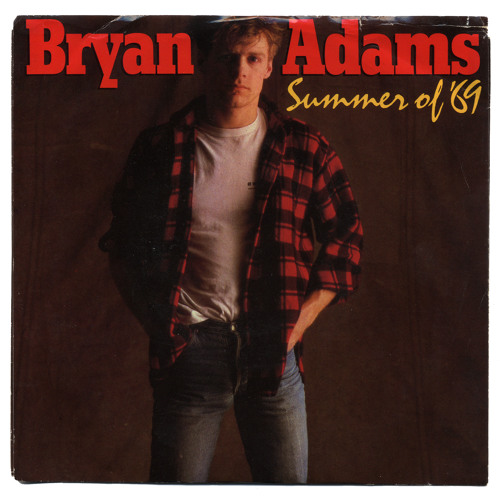
You can see Bryan above oozing the whole Springsteen ‘Born in the USA‘ vibe despite him being a Canadian singer-songwriter. It must have been popular international attire since where I come from on the far western suburbs of Sydney, we called people who donned this; not to be confused with the settled, crisp, happily country garb which reeked of ‘contented money’, rather the ‘untucked’ flannelette top – ‘westie’. But Bryan Adams would have hardly been their choice of music, rather something like ACDC. Oh and by the way, the aforementioned is an example of how you too can inadvertently offend the maximum of readers in just one paragraph.
Summer of ‘69 is the fourth single from Bryan Adam’s fourth album, Reckless. Written by Adams and Jim Vallance, the song went through a number of changes because neither Adams nor Vallance was convinced it was a strong enough song to be featured on the album. In their first draft, the lyric “summer of ’69” appeared only once and was originally titled “Best Days of My Life”. On the final draft it had been replaced by “Summer of ’69” and appeared only two times throughout the song. You can read more in the Wikipedia reference below about its conception and how The Beatles – “Strawberry Fields Forever” was the main inspiration.
While Summer of ’69 does tell a story of a young man, potentially set in 1969, it was actually written about “making love in the summertime” according to Bryan in this CBS article, hence using the number “69” as a reference to sex. But co-writer Vallance disputes this.
The song was an international hit, reaching No 5 in the US and helped push Reckless to the number one position. It remains one of Adams’ most popular songs.
Fun Facts about his song: – Singer Ryan Adams shared he “had to go into therapy” over the humiliation he’d suffered over several years of people confusing him with Bryan Adams and requesting this song at his concerts. Famously in 2002, a heckler shouted through seven straight songs requesting it, prompting Ryan to hand the man $40 and ask him to leave. – As of 2017, Summer of ’69 was, at number 115, the only song from 1995 or earlier among the 150 most streamed songs of all time in Canada by Canadian artists…It is also the most played song on Canadian radio among songs by Canadian artists originally released before 1990. – In a poll conducted by Decima Research in 2006, Summer of ’69 was voted the best driving song among Canadians who sing in their cars…In 2010, the song was voted the “hottest summer song” in Germany.
[Verse 1] I got my first real six-string Bought it at the Five and Dime Played it ’til my fingers bled Was the summer of ’69
[Verse 2] Me and some guys from school Had a band and we tried real hard Jimmy quit, Jody got married Should’ve known we’d never get far
[Chorus 1] Oh, when I look back now That summer seemed to last forever And if I had the choice Yeah, I’d always wanna be there Those were the best days of my life
Hey!
[Verse 3] Ain’t no use in complainin’ When you got a job to do Spent my evenings down at the drive-in And that’s when I met you, yeah
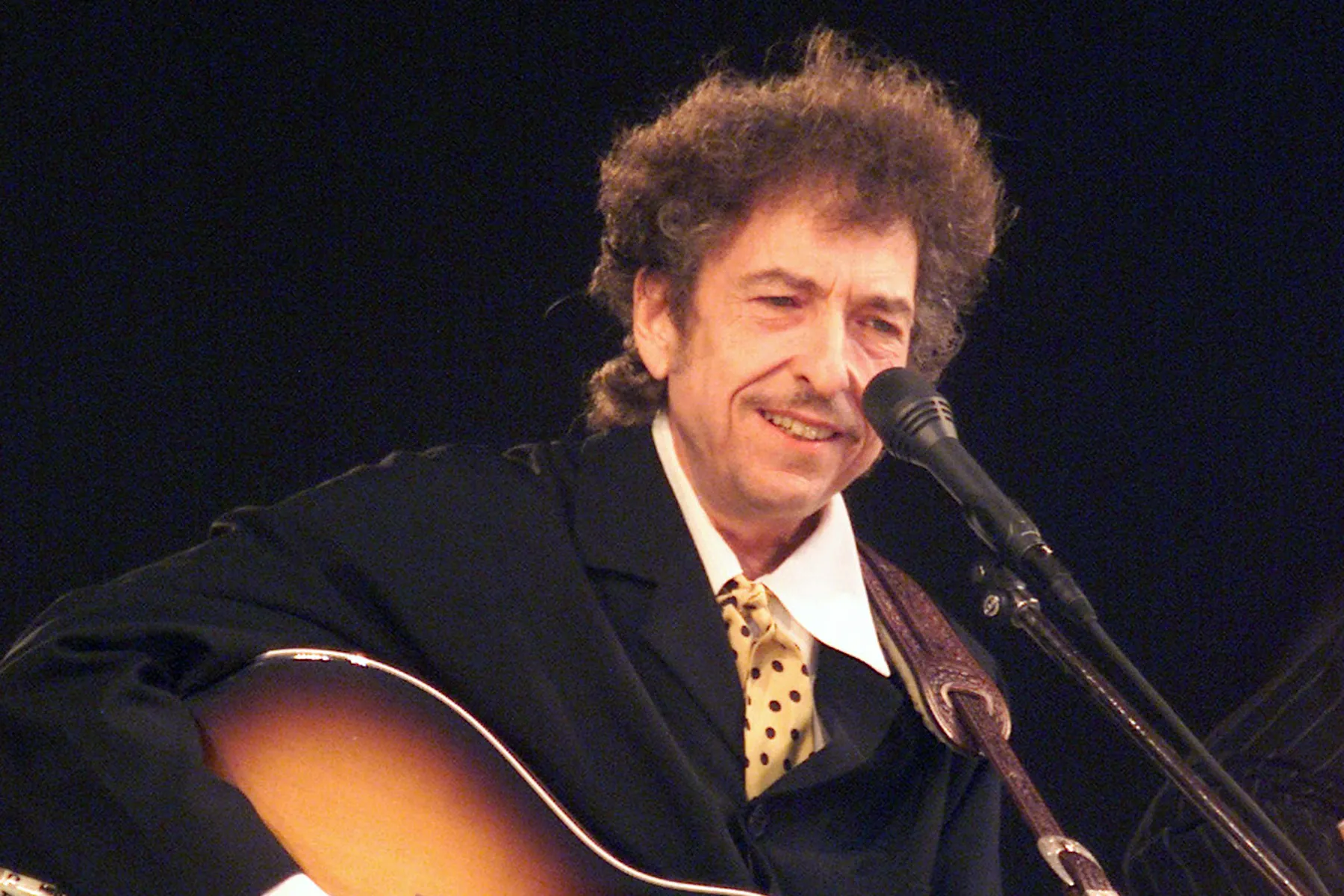
“Summer Days” is recalled as Bob Dylan’s first foray into crafting a swing-infused, vintage rockabilly tune. It takes its place as the third track on his thirty-first studio album, Love and Theft. I’ve always enjoyed the playful wit and impulsive flair in Dylan’s lyrics here; his old-timey musical charm shines through brilliantly. The song’s themes – fleeting romance, existential reflections, and a dash of absurdity—combine to create a fascinating narrative puzzle. Throughout, Dylan juxtaposes nostalgic Americana with a sharp, self-aware humor, epitomized in lines like, “The girls all say, / You’re a worn-out star.”
The album Love and Theft in general showed Dylan at a point in his career of blending traditional American music forms like blues, rockabilly, and swing. The sessions were recorded in just 12 days at Clinton Recording Studios in New York. Dylan’s touring band at the time served as his studio ensemble, lending the album a live, unpolished feel. Summer Days exemplifies this dynamic, with the musicians firing on all cylinders to capture its infectious swing energy. Known for its upbeat tempo and danceable rhythm the song often served as a high-energy highlight in Dylan’s live setlists.
David Kemper, Dylan’s drummer recalled about the recording sessions:
I didn’t realise we were actually headed somewhere. I wasn’t smart enough to realise: you are in the School of Bob. But when we went in to record Love And Theft, I realised then, because the influences were really so old on that record. It comes from really early Americana, way back at the turn of the century, and the 1920s. And not everybody in the band was familiar with that style of playing….And then when we went in and recorded Love And Theft it was like, oh my God, he’s been teaching us this music—not literally these songs, but these styles.
The enthusiastic reception of Love and Theft continued Dylan’s artistic comeback following 1997’s Time Out of Mind. It also won the Grammy Award for Best Contemporary Folk Album at the 44th Annual Grammy Awards.
[Verse 1] Summer days, summer nights are gone Summer days and the summer nights are gone I know a place where there’s still something going on I got a house on a hill, I got hogs out in the mud I got a house on a hill, I got hogs all out in the mud I got a long-haired woman, she got royal Indian blood Everybody get ready to lift up your glasses and sing Everybody get ready to lift up your glasses and sing Well, I’m standing on the table, I’m proposing a toast to the king Well I’m driving in the flats in a Cadillac car The girls all say, “You’re a worn-out star” My pockets are loaded and I’m spending every dime How can you say you love someone else when you know it’s me all the time?
[Verse 2] Well, the fog’s so thick you can’t spy the land The fog is so thick that you can’t even spy the land What good are you, anyway, if you can’t stand up to some old businessman? Wedding bells are ringing, the choir is beginning to sing Yes, the wedding bells are ringing and the choir’s beginning to sing What looked good in the day, at night is another thing She’s looking into my eyes, she’s-a holding my hand She looking into my eyes, she’s holding my hand She said, “You can’t repeat the past.” I said, “You can’t? What do you mean You can’t? Of course you can.” Where do you come from? Where do you go? Sorry, that’s nothing you would need to know Well, my back has been to the wall for so long, it seems like it’s stuck Why don’t you break my heart one more time just for good luck?
[Verse 3] I got eight carburetors, boys, I’m using ’em all Well, I got eight carburetors and, boys, I’m using ’em all I’m short on gas, my motor’s starting to stall My dogs are barking, there must be someone around My dogs are barking, there’s must be someone around I got my hammer ringing, pretty baby, but the nails ain’t going down You got something to say, speak or hold your peace Well, you got something to say, speak now or hold your peace If it’s information you want, you can get it from the police Politician’s got on his jogging shoes He must be running for office, got no time to lose He’s sucking the blood out of the genius of generosity You been rolling your eyes—you been teasing me
[Verse 4] Standing by God’s river, my soul is beginning to shake Standing by God’s river, my soul’s beginning to shake I’m counting on you, love, to give me a break Well, I’m leaving in the morning as soon as the dark clouds lift Yes, I’m leaving in the morning just as soon as the dark clouds lift Gon’ break the roof in, set fire to the place as a parting gift Summer days, summer nights are gone Summer days, summer nights are gone I know a place where there’s still something going on