I Recall a Gypsy Woman (1973) – Don Williams

Did you know that when he got bored the great country music artist Don Williams would mow the high school baseball field and the city park? He also donated heavily to charities and the local Churchs. How do I know this? Well, fellow blogger Max at Powerpop told me he interracted with Don. He lived a few miles from where Max grew up about 30 minutes from Nashville. ‘He (Don Williams) was always nice to me and the people in town knew him, but he never acted like he was anything special‘.

I Recall a Gypsy Woman is the second song to feature here from Don Williams. The first song Amanda is where Max described meeting Don (see comments section). In 2010 Don was an inductee into the Country Music Hall of Fame. He began his solo career in 1971, singing popular ballads and amassing 17 number one country hits. 
Williams has had a strong influence over a variety of recording artists of different genres. His hits have been covered by artists such as Johnny Cash, Eric Clapton, and Kenny Rogers. According to Max, curiously Don was good friends with Eric Clapton. ‘Clapton really started to admire Don in the mid to late seventies. That is when Eric started to do some country tinged songs like Lay Down Sally and Promises. He covered one of Don’s songs on Slowhand…We’re All The Way…

I Recall a Gypsy Woman

Silver coins that jingle jangle,
Fancy shoes that dance in time
Oh, the secrets of her dark eyes,
They did sing a gypsy rhyme

Yellow clover in tangled blossoms
In a meadow silky green
Where she held me to her bosom,
Just a boy of seventeen

[Chorus:]
I recall a gypsy woman
Silver spangles in her eyes
Ivory skin against the moonlight
And the taste of life’s sweet wine

I Recall a Gypsy Woman is a song written by Bob McDill and Allen Reynolds, and originally recorded by Don Williams in 1973. In 1976, at the height of the country and western boom in Britain, his version charted at number 13 on the UK Singles Chart, the best position for Williams on this chart. The song was previously the B-side of Williams’ 1973 single “Atta Way to Go”, which peaked at number 13 on the Hot Country Songs charts in 1973.

Williams had some minor roles in Burt Reynolds movies. In 1975, Williams appeared as a member of the Dixie Dancekings band in the movie W.W. and the Dixie Dancekings, alongside Reynolds. Williams also appeared as himself in the Universal Pictures movie Smokey and the Bandit II, in which he also played a number of songs

References:
1. Don Williams – Wikipedia

Tagged with: ,
Posted in Music

The Royal Tenenbaums (2001) – Wes Anderson (Friday’s Finest)

The Royal Tenenbaums is the second Wes Anderson movie to feature here. It is an epic – depressive comedy with lots of sardonic giggles and a humane and rather sad feeling at its core. I was reminded to include this movie when I explored the evocative ballad Fly by Nick Drake on Tuesday. The Royal Tenenbaums contains one of the best film soundtracks I have heard. I couldn’t help but get a kick-out-of Anderson’s quirky inclusions of Dylan’s Wigwam and Billy -Main Title.

Wikipedia Storyline

The Royal Tenenbaums follows the lives of three gifted siblings who experience great success in youth, and even greater disappointment and failure in adulthood. The children’s eccentric father Royal Tenenbaum (Hackman) leaves them in their adolescent years, then returns to them after they have grown, falsely claiming he has a terminal illness. He works on reconciling with his children and ex-wife (Huston).

The Royal Tenenbaums is by no means a perfect film. It’s not as consistently wise or amusing as it wants to be —but it has many prodigious moments. It’s an absurdist and whimsical film that ‘marked’ Wes Anderson as “imaginatively visual” and one of the most original and distinctive storytellers in film. His style was most effectively incorporated in his 2014 masterpiece – The Grand Budapest Hotel.

I haven’t seen The Royal for a long time since I wore out the DVD in the first 5 years after its release, but I’m looking forward to revisit it in the next week or so. My favourite scenes from the movie are: Richie’s tennis meltdown; Chas and his Father’s moving reconciliation “I’ve Had A Rough Year, Dad. after Chas’ dog is run-over; Bill Murray as Raleigh St. Clair analysing Dudley; and Royal Tenenbaum and his grandchildren ‘swinging’ by their late-mother’s grave. Another sequence which I included below is where Royal (Gene Hackman) is taking his grandsons out for some old fashioned fun time. To be honest there are too many great scenes to recall here.

Anderson did such a marvelous job building this odd little world. It’s just one indelible image after another. Gene Hackman is just marvelous and won a Golden Globe for best actor in this. A 2016 poll of international critics assembling BBC’s 100 Greatest Films of the 21st Century also voted it one of the 100 greatest motion pictures since 2000.

Interesting Trivia:

Wes Anderson admitted in interviews that his one regret of his career thus far, was that he could not make the experience more enjoyable for his lead Gene Hackman. Gene Hackman had signed on knowing he only had a few roles left in his career and wanted something “fun” for his last few movies. However, making The Royal Tenenbaums was proving quite grueling for Hackman, which came to a head when in the middle of filming and in front of the crew Hackman shouted out, “Hey Wes, you said this was suppose to be fun and relaxing for me…well I’m not having fun”. Wes Anderson admitted that this comment broke him and that he wished he could have done more for Hackman.

Tagged with: ,
Posted in Movies and TV

Go Wild (2019) – Friedberg

The reason I didn’t buy a second game controller for my computer is because my son and I would consume all our time playing FIFA 20 against each other. BBC just reported here that EA Sports will stop making FIFA titles. Today’s song is the second to come from the FIFA 20 soundtrack and I was in love at first listen. It’s sexy as hell and don’t mention Anna Friedberg the Austrian singer-songwriter playing tambourine in the bath. Wowee!

Pull’n up love
Full enough’s my deaf heart
Gotta be in style
You gotta go wild

Chewing up love
Oh howling inside
Like a pink leopard
You gotta go wild

Anna supported Lenny Kravitz on his tour a decade ago and achieved two gold selling solo albums. Anna was only supposed to do one show for Kravitz, but he asked her to support him for the rest of his European tour. It’s hard to blame him really. She stated: ‘It was a logistic nightmare since we had to organize everything within 2 days – a tour bus, hotels etc. including raising money for the whole trip, since of course I had to pay for everything myself’

Her new band Friedberg was formed in London.. ‘I met some really great people in the music industry who introduced me to some wonderful musicians who eventually happened to become my new band – my first all-girl bandI just knew from our first rehearsal that we have a very unique and great energy together, that just gives us all such a good feeling on stage and feels incredibly powerful‘.

And looking to the future Anna stated: ‘If I ever had a vision, it’s me with 60, alone on stage playing super dark and melancholic songs with my guitar. So yeah there might be! But you’ll have to wait for a bit‘.

She began singing in childhood, and cites the first records of her parents including Bob Dylan, Alanis Morissette and Joan Baez. That’s good musical pedigree right there.

References:
1. Cryptic Rock – Your Entertainment Odyssey – Anna Friedberg of Friedberg

Tagged with: ,
Posted in Music

The AnkiDroid Collection (Part 15) – Philodemic, Stochastic & Calumny

Ankidroid additions related to Science, History and Philosophy. More information about Anki can be found in this article.

Philodemic

Georgetown’s Philodemic Society, 1952

‘Philodemic’ is characterised by a love for the ordinary person (Love for the people). It also relates to the name of the Philodemic Society (founded 1830), a student debating organization at Georgetown University. The society’s first debate was on the topic of “Napoleon Bonaparte or General Washington: Which was the better man?

Stochastic

Stochastic is used to describe having a random probability distribution. It was originally used as an adjective with the definition “pertaining to conjecturing”, and stemming from a Greek word meaning “to aim at a mark, guess”, and the Oxford English Dictionary gives the year 1662 as its earliest occurrence.

A coherent stochastic theory of quantum mechanics was put forward by Hungarian physicist Imre Fényes who was able to show the Schrödinger equation could be understood as a kind of diffusion equation for a Markov process. Louis de Broglie felt compelled to incorporate a stochastic process underlying quantum mechanics to make particles switch from one pilot wave to another. While on the subject of quantum mechanics, I’ll point you to my favourite video – The Secret Of Quantum Physics: Einstein’s Nightmare (Jim Al-Khalili).

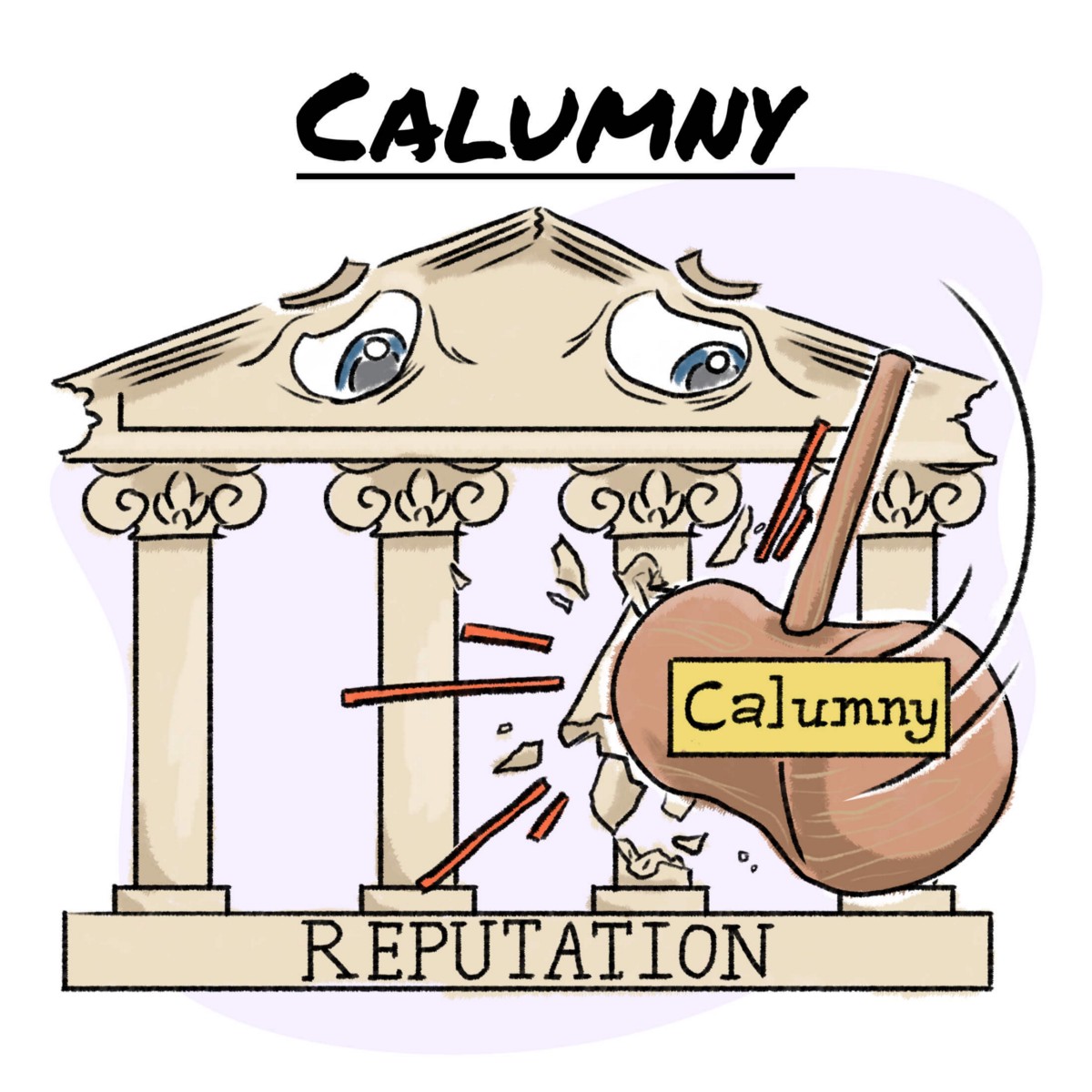
Calumny

Calumny is the making of false and defamatory statements about someone in order to damage their reputation; slander; defamation. ie ‘He was the target of calumny for his unpopular beliefs‘.
Calumny was first recorded in 1400–50; late Middle English, from Latin calumnia, equivalent to calumn-, perhaps originally a participle of calvī “to deceive”.

Tagged with: , ,
Posted in Reading

Fly (1971) – Nick Drake

Thanks Wes Anderson for putting this song in your movie! I first heard today’s featured song in The Royal Tenembaums which has one of the finest, but non-standard soundtracks I have heard. That reminds me…I must review this movie in ‘Friday’s-Finest‘.

Fly by Nick Drake is a very tender song about missed opportunities and yearning for the opportunity to get to know someone. This song reminds me of two ‘reflection’ posts I have written, respectively: The Last Words and Mornington. The former exposes ‘Grace’ and the latter is a solemn poem of yearning.

Drake writes in Fly:

Please give me a second grace, Please give me a second face” contrasted with his comprehension that it’s over – “But she won’t need to cry, For it’s really too hard for to fly“. In his third line he wrote: “And the sea she will sigh but she’ll never deny.” 

If you’ll permit me to tether this with my Mornington lines:

“I prefer to revisit one of our earliest performances / than have another day like the one I had yesterday‘ and ‘I was fairly dismissed by you by the quay / in that jumpy district after the third bottle of wine. And regarding the sea: The crooked rocks, waves lapping my legs / Must be Mornington, feels like the beach / you popped in to say ‘hi’, your echo drew me here / To await the ferry to cast me out.

Nicholas Rodney Drake (19 June 1948 – 25 November 1974) was an English singer-songwriter known for his acoustic guitar-based songs. He did not find a wide audience during his lifetime, but his work gradually achieved wider notice and recognition. His reluctance to perform live, or be interviewed, contributed to his lack of commercial success. There is no known video footage of the adult Drake; he was only ever captured in still photographs and in home footage from his childhood.

Drake ended his studies at Cambridge nine months before graduation and in late 1969 moved to London. His father remembered, “writing him long letters, pointing out the disadvantages of going away from Cambridge … a degree was a safety net, if you manage to get a degree, at least you have something to fall back on; his reply to that was that a safety net was the one thing he did not want.

I can’t help but relay here one of the messages I read in the youtube comments from Zed Cecelja about Fly:
Had this beautiful song played at my daughters funeral as I carried her out. Rest in peace my beautiful Stephanie. Love you always, forget you never‘.

References:
1. Nick Drake – Wikipedia
2. Song of the Week Blog Week 41 – Fly – Nick Drake

Tagged with: ,
Posted in Music

2/05/22 – 8/05/22 Stephen Kotkin on Stalin, Brain Waves & Richmond Tigers

news on the march

Welcome to Monday’s News on the March – The week that was in my digital world.

Stephen Kotkin, ‘Stalin: Volume 1’
Bookstore presentation at Politics and Prose

Stephen Kotkin lectures are my latest addiction online. He is one of the best Political-History lecturers I have ever heard. Stephen has of course featured here before in a special News on the March article about the Ukraine Conflict and Russian History.

Stephen is very jovial and relaxed in today’s featured speech on Stalin:
In the first volume of a planned three-volume life, Kotkin, Princeton history professor and acting director of the university’s Russian, East European, and Eurasian Studies program shows his subject’s (Stalin) evolution from one-time seminarian to ruthless dictator, linking the man’s traits—paranoia, brutality—to those of both imperial Russia and the Bolshevik power structure.
(View presentation here)

Waves and Dimensions
Blog article by James Cross at Broad Speculations

Comparable in subject to Mike Smith’s blog – Self Aware Patterns, James Cross presents the latest research on Brain and Consciousness. This article Waves and Dimensions discusses recent studies on Brain Wave activity specifically patterns of firing neutrons.

The view emerging from these studies is that the spatial organization of neural firings may be a critical component of the neural computation the brain performs. The traditional view of neural computation has been that of information passed sequentially from one neuron to other neurons as it moves through stages of processing, This new view augments the traditional view with spatial patterns and interactions carrying information. A researcher compares this difference to wave-particle duality in physics:

“The traditional view of brain function describes brain activity as an interaction of neurons. Since every neuron is confined to a specific location, this view is akin to the description of light as a particle,” says Gepshtein, director of Salk’s Collaboratory for Adaptive Sensory Technologies. “We’ve found that in some situations, brain activity is better described as interaction of waves, which is similar to the description of light as a wave. Both views are needed for understanding the brain.”

(Read entire article here)

Round 8 Australian Football League – The Richmond Tigers vs Collingwood Pies Rivalry
Forum at BigFooty

I am a big fan of Australian football and in particular my glorious team The Richmond Tigers. This Saturday afternoon (Melbourne time) they will play their arch rivals also from Melbourne – the Collingwood Pies. By the time this post is published the game will be done and dusted and I will include the game result and match highlights here. (The Richmond Tigers won relatively comfortably and I won’t relay the highlights because they aren’t the highlights)
This rivalry is rich in AFL history and it is expected this weekend the illustrious Melbourne Cricket Ground to be mostly full. I’m chomping at the bit to view this spectacle Friday night (Colombian time).
This is such an important match for us to gauge where we are at this season. I wrote at the Big Footy blog:
I think given our downslide since our formidable era; now with the team at nearly full-strength there are no excuses. If we win this well, then we have good chance at finals, if not then it’s highly unlikely. If we can’t beat Collingwood with this team, now, then we are officially (for me at least) in rebuilding for other seasons. Does our team have a tilt for another run this season? This game is the key.

There was also some discussion about the future of The Royal Hotel in Melbourne. One  person wrote: ‘I have always thought that the club should buy the Royal Hotel. Kick the strippers out and turn it into a family friendly hotel. No Pokies‘. Another replied:  ‘But what about the strippers family?

news on the march the end

Tagged with: , , , ,
Posted in News, politics, Science, Sport and Adventure

Desde el Dia en Que Te Fuiste (2015) – ChocQuib Town

Desde el dia en que te Fuiste (Since the Day you Left) was recommended to me by someone here in Colombia. Hiphop is not my preferred genre of music, but I really liked this song from first hearing. ChocQuibTown (sometimes written as Choc Quib Town) is a Colombian hip-hop group that fuses various musical genres. Although the band formed in Cali, Colombia the members are originally from the Colombian department of Chocó (Colombia’s rural Pacific coast). The music draws influence from a wide variety of modern genres including hip-hop and more recently electronica, combined with traditional Colombian genres including salsa, Latin jazz, and Afro-Latin rhythms.

En el mismo lugar estoy (I’m in the same place)
Esperando a que vuelvas (Waiting for you to come back)
No dudes en regresar amor (Do not hesitate to return love)
Dejo abierta la puerta
(I leave the door open)

No, no, no puedo engañar mi corazón (No, no I can’t fool my heart)
Las mentiras no le hacen bien (Lies don’t do you any good)
Y ahora no se sabe que es peor (And now you don’t know what’s worse)
Si mentirle o confesarle
(Whether to lie or confess)

Desde el dia en que te Fuiste was released on the 2015 album El Mismo (The Same) led by the reggae-tinged love song “Cuando Te Veo“. The single reached number 13 on the Billboard US Tropical Songs chart. Leila Cobo of Billboard noted a more commercial sound on El Mismo, viewing the album as an effort to transform the group from “critical curio to commercial star” that “appends pop song structure and stickier hooks to the band’s eclecticism‘.

Lyrically, the band discusses Afro-Latino identity and taking pride in its native region. Member Tostao explains, “It is important to generate that pride for our people because our country is always talking about negative things like guerrillas and drug traffickers, that kind of thing and we want to show another side.” A common theme in the group’s lyrics is the goal of attaining more inclusion for Afro-Colombians in the rest of Colombian society and in Latin America as a whole.

References:
1. ChocQuib Town – Wikipedia

Tagged with: ,
Posted in Music

Against The Wind (1980) – Bob Seger

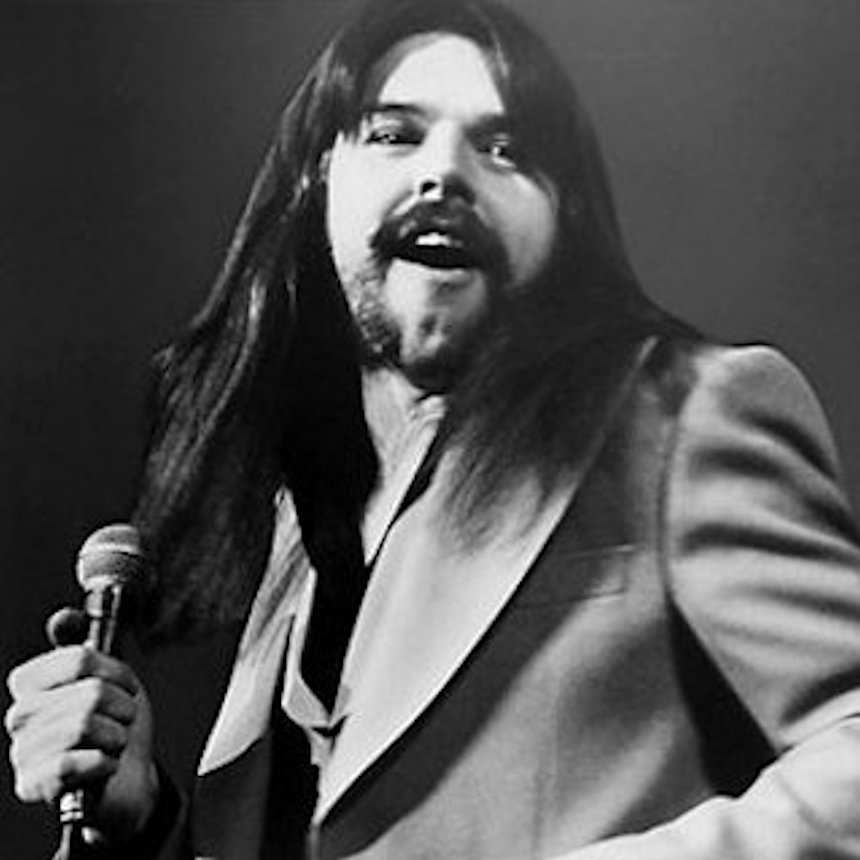
Bob Segar, Live at Boston Garden Oct 7, 1980

Against The Wind is the title track from Bob Seger’s 11th Studio Album released in February, 1980. It is Seger’s only number 1 album to date. The album spent 6 weeks at number 1 and knocked off Pink Floyd’s The Wall from the top spot. I am not conversant with a lot of his discography, but I sure did wear out his Greatest Hits record. I have fond memories of this song in particular when I went on long drives through Gipsland, Victoria, Australia in the 1990’s. So when I hear this song it transports me back to the gorgeous rolling-green hills on those trips and the carefree period I found myself.

It seems like yesterday
But it was long ago

Janey was lovely, she was the queen of my nights
There in the darkness with the radio playlng low
And the secrets that we shared
The mountains that we moved
Caught like a wildfire out of control
Till there was nothing left to burn and nothing left to prove

And I remember what she said to me
How she swore that it never would end
I remember how she held me oh so tight
Wish I didn’t know now what I didn’t know then

I consider this song a bastion of classic Americana songwriting. The way the rhythm and texture of sound coalesce with these lyrics, elicits great emotion in the listener. However, many critics were harsh on Seger after the release of this album. One such example is Rock critic Dave Marsh, writing for Rolling Stone, who strongly criticized the album as a betrayal of Seger’s longtime fans: “I’d like to say that this is not only the worst record Bob Seger has ever made, but an absolutely cowardly one as well“.  In a more positive review in the Los Angeles Times, critic Robert Hilburn said the album was “close to [Seger’s] earlier works” but represented a “mastering of the form” and that the reflective ballads stood out.

Wikipedia describes Seger as ‘a roots rocker with a classic raspy, powerful voice, Seger wrote and recorded songs that dealt with love, women, and blue-collar themes, and is one of the best-known examples of a heartland rock artist‘. With a career spanning six decades, Seger has sold more than 75 million records worldwide, making him one of the world’s best-selling artists of all time. Seger was inducted into the Rock and Roll Hall of Fame in 2004.

References:
1. Against the Wind (album) – wikipedia

Tagged with: ,
Posted in Music

‘The Prescription of Happiness’ – Love and Other Demons (Final) – Gabriel Garcia Marquez

“Sierva María de todos los Ángeles” drawn by Julian Escobar Gomez

The Prescription of Happiness is the second and final book extract from Gabriel Garcia’s short novel Love and Other Demons. More information about the author and book can be found in my first article.

Sierva Maria de Todos Los Angeles is the twelve-year-old daughter of the Marquis and his wife Bernarda. Her hair has never been cut, and was promised to the saints when she was born with the umbilical cord around her neck. She was raised by the slaves on the Carribean-coast in Colombia, fluent in multiple African languages, and familiar with the customs. In the beginning of the book she is bit by a rabid dog. She is subject to multiple “healing” methods, which can be considered torture. Today’s extract in-part deals with her father’s (Marquis) intent on using ‘whatever-means’ by healers available in the town to alleviate Maria’s suffering.

Márquez presents a society that is steeped in superstition and sees evil and signs of doom everywhere. The disease of rabies has always been loaded with myths and otherworldly references. As it is transmitted by animal bites, it has been associated with creatures from all fantasy spectrums, from werewolves and vampires to the Devil himself. Furthermore, the psychological implications of the virus and the way in which victims were dying helped in elevating rabies to the sphere of the metaphysical and the unexplainable. Márquez used these myths to perfection in this novella.
Some readers might find some of this content distressing:

He continued with the prescription of happiness for Sierva Maria. From San Lázaro Hill they observed the fatal swamps to the east, and to the west the enormous red sun as it sank into a flaming sea. She asked what was on the other side of the ocean, and he replied: ‘The world.’ For each of his gestures he discovered an unexpected resonance in the girl. One afternoon they saw the Galleon Fleet on the horizon, its sails full to bursting.

The city was transformed. Father and daughter were entertained by Puppet shows, by fire-eaters, by the countless fairground attractions coming into port during that April of good omen. In two months Sierva Maria learned more about white people’s ways than she ever had before. In his effort to transform her, the Marquis also became a different man, and in so drastic a manner that it did not seem an alteration in his personality as much as a change in his very nature.

The house was filled with every kind of wind-up ballerina, music box, and mechanical clock displayed in the fairs of europe. The Marquis dusted off the Italian theorbo. he restrung it, tuned it with a perseverance that could be understood only as love, and once again accompanied the songs of the past, sung with the good voice and bad ear that neither years nor troubled memories had changed. This was when she asked him whether it was true that love conquered all, as the songs said.

‘It is true’ he replied ‘but you would do well not to believe it.’

Pleased by these good timings, the Marquis began to consider a trip to Seville so that Sierva Maria could recover from her silent sorrows and finish learning about the world. the dates and the itinery had already been arranged when Caridad de Cobre woke him from his siesta with brutal news:

‘Señor, my poor girl is turning into a dog.’

Called in for the emergency, Abrenuncio refuted the popular superstition that the victims of rabies became identical to the animal that had bitten them. He confirmed that the girl had a slight fever, and although this was considered a disease in itself and not a symptom of other ailments, he did not disregard it. He warned the grief-stricken nobleman that the girl was not safe from any illness, for the bite of a dog, rabid or not, offered no protection against anything else. As always, the only recourse was to wait.

The Marquis asked him: ‘Is that all you can tell me?’
‘Science has not given me the means to tell you anything else,’ the physician replied with the same acerbity. ‘But if you have no faith in me you still have another recourse: Put your trust in God’.
The Marquis did not understand.
‘I would have sworn you were an unbeliever,’ he said.
The doctor did not even turn to look at him:
‘I only wish I were, Señor.’


The Marquis put his trust not in God but in anything that might offer some hope. The city had three other physicians, six pharmacists, eleven barber-surgeons, and countless magical healers and masters of the arts of sorcery, although the Inquisition had condemned thirteen hundred of them to a variety of punishments over the past fifty years, and burned seven at the stake. A young physician from Salamanca opened Sierve Maria’s closed wound and applied caustic poultices to draw out the rank humors. Another attempted to achieve the same end with leeches on her back. A barber-surgeon bathed the wound in her own urine, and another had her drink it. At the end of two weeks she had been subjected to two herbal baths and two emollient enemas a day, and was brought to the brink of death with potions of natural antimony and other fatal concoctions.

The fever subsided, but no one dared proclaim that rabies had been averted. Sierva Maria felt as if she were dying. At first she had resisted with her pride intact, but after two fruitless weeks she had a fiery ulcer on her ankle, her body was scalded by mustard plasters and blistering poultices, and the skin of her stomanch was raw. She had suffered everything: vertigo, convulsions, spasms, deliriums, looseness of the bowels and bladder, and she rolled on the floor howling in pain and fury. Even the boldest healers left her to her fate, convinced she was mad or possessed by demons. The Marquis had lost all hope when Sagunta appeared with the key of Saint Hubert.

It was the end. Sagunta stripped off her sheets, smeared herself with Indian ointments, and rubbed hisbody against the body of the naked girl. She fought back with her hands and feet despite her extreme weakness, and Sagunta subdued her by force. Bernarda heard their demented screams from her room. She ran to see what was going on and found Sierva Maria kicking in a rage on the floor, and Sagunta on top of her, wrapped in the copper flood of the girl’s hair and bellowing the prayer of Saint Hubert. She whipped them both with the clews of her hammock. First on the floor, where they huddled against the surprise attack, and then pursuing them from corner to corner until she was out of breath.


Tagged with: ,
Posted in Reading

A Salty Dog (1969) – Procol Harum

For the next month or so we will be backtracking alphabetically in the music library project to discuss new songs added to the collection. What entails the ‘Music Library Project’?
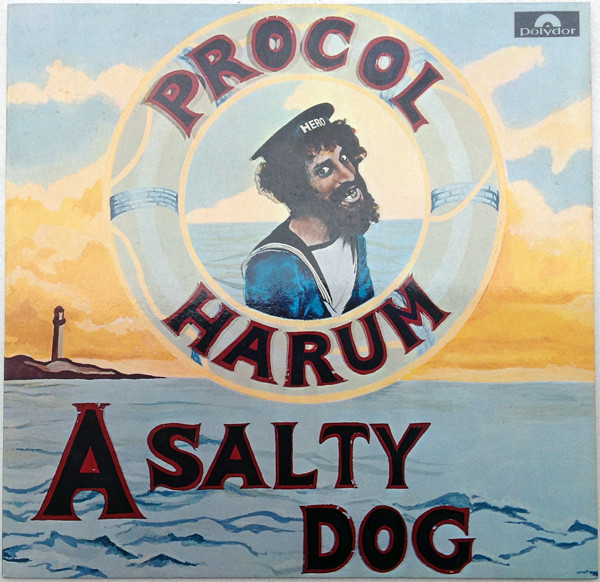
Most of these songs were presented in other bloggers’ Word Press articles, so I have all of you to thank for your input. The first of the new songs added is today’s featured song – A Salty Dog by the English Band Procol Harum. It has an ostensible nautical theme as indicated by the cover, seagulls in the introduction, and the maritime lyrics.

All hands on deck, we’ve run afloat
I heard the Captain cry
Explore the ship, replace the cook
Let no one leave alive
Across the straits, around the horn
How far can sailors fly?
A twisted path, our tortured course
And no one left alive

This title track itself was the first Procol track to use an orchestra and reached number 44 in the UK Singles Chart in 1969 and the album itself number 27 in the Albums Chart. The band formed in Southend-on-Sea, Essex in 1967 and named themselves after a male blue Burmese cat, which belonged to Liz Coombes, a friend. Their best-known recording is the 1967 hit single “A Whiter Shade of Pale“, one of the few singles to have sold over 10 million copies. Although noted for their baroque and classical influence, Procol Harum’s music is described as psychedelic rock and proto-prog with hints of the blues, R&B, and soul.

I enjoy letting this song Salty Dog enswathe me and just ride with it. The strings and chord progressions convey the feeling of floating on the sea extremely well. It’s a beautiful song which honors all those sailors who have been lost at sea over the centuries. The nameless and faceless many who braved the sea with as much hope and passion as those who made it through their journeys alive. A lot of Sailors have stories that border on the paranormal. I guess it’s the mystery of the sea.

References:
1. A Salty Dog – Wikipedia
2. Procol Harum – Wikipedia

Tagged with: ,
Posted in Music

Follow Blog via Email

Enter your email address to follow this blog and receive notifications of new posts by email.

Join 753 other subscribers

← Back

Thank you for your response. ✨