Near Death and Contemplation of God from Robinson Crusoe – Daniel Defoe

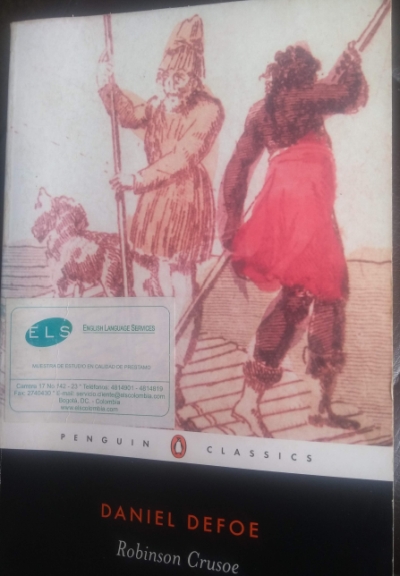
Robinson Crusoe

As you may have gleaned from my recent book quotations I have been working my way through the literary classics with great gusto. I aim to present a weekly book quote on this blog every Wednesday. I’m currently reading Robinson Crusoe which ashamedly I had never read before. Talk about a page-turning adventure soaked travel journey of realistic fiction.

According to wikipedia: Robinson Crusoe was first published on 25 April 1719. The first edition credited the work’s protagonist Robinson Crusoe as its author, leading many readers to believe he was a real person and the book a travelogue of true incidents.

I read the following section this morning regarding one of his many near-death experiences and contemplation of God which struck a particular chord because I found myself in a similar predicament recently regarding my health and I was vigorously trying to find God’s place in it all. My scrambling thoughts during that event were eerily similar way to how Robinson Crusoe described his. It would be too presumptuous of me to just go right into the excerpts without shedding a little detail of the circumstances Crusoe found himself. It doesn’t do this spectacular story the least bit of justice, but at least for those readers unfamiliar with Crusoe or even for those that are it provides a refresher of sorts in order to appreciate the passage to which this post is dedicated.

Crusoe set sail from Kingston upon Hull on a sea voyage in August 1651, against the wishes of his parents, who wanted him to pursue a career in law. Even after having just survived a brutal storm in his maiden journey his lust for sea remained so strong that he sets out to sea again. After many adventures and mishaps on the high seas including being enslaved for two years and eventually escaping and soon thereafter with the help of a Portuguese captain he is able to procure a plantation. Years later, Crusoe joins an expedition to bring slaves from Africa, but he is shipwrecked in a storm about forty miles out to sea on an island (which he calls the Island of Despair). Overcoming his immediate despair as the sole survivor he is able to salvage much of the ships cargo and supplies. He even writes out a like a debtor and creditor the comforts he enjoyed, against the miseries he suffered and determines the following:
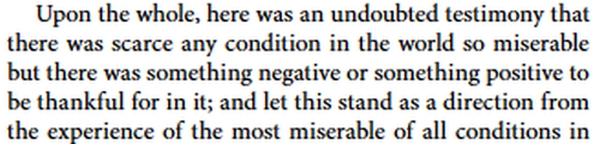

Robinson Crusoe 1
Robinson Crusoe 2

After having forged a relative comfortable existence on the island and found himself in a good disposition as the quote above alludes, Crusoe is suddenly beset by a ghastly fever:
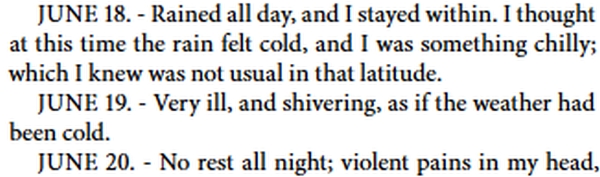
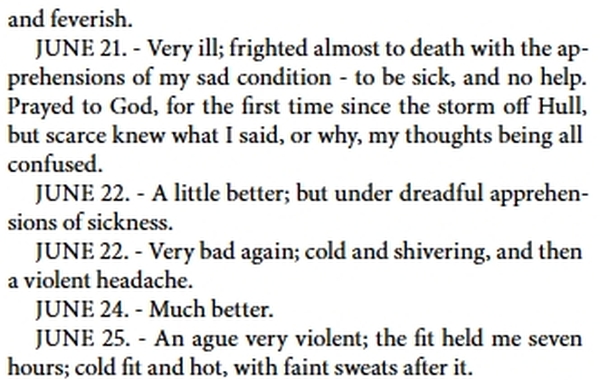
Robinson crusoe 3
Robinson crusoe 4

The fever doesn’t abate and after having a particularly wicked dream Crusoe is compelled to reevaluate his soul as it were:

Robinson crusoe 5
Robinson crusoe 6

Then the following flurry of thoughts from Crusoe is what confounded me most as he viewed death before him:
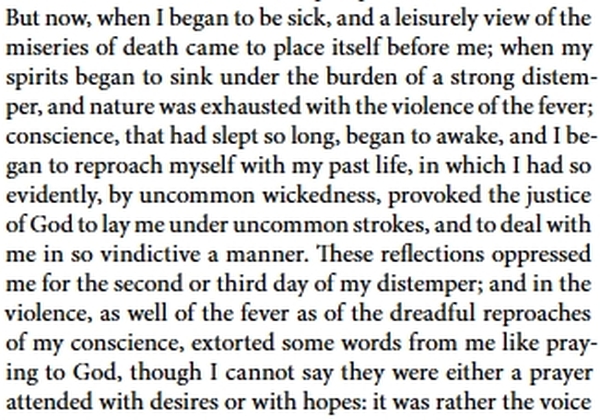
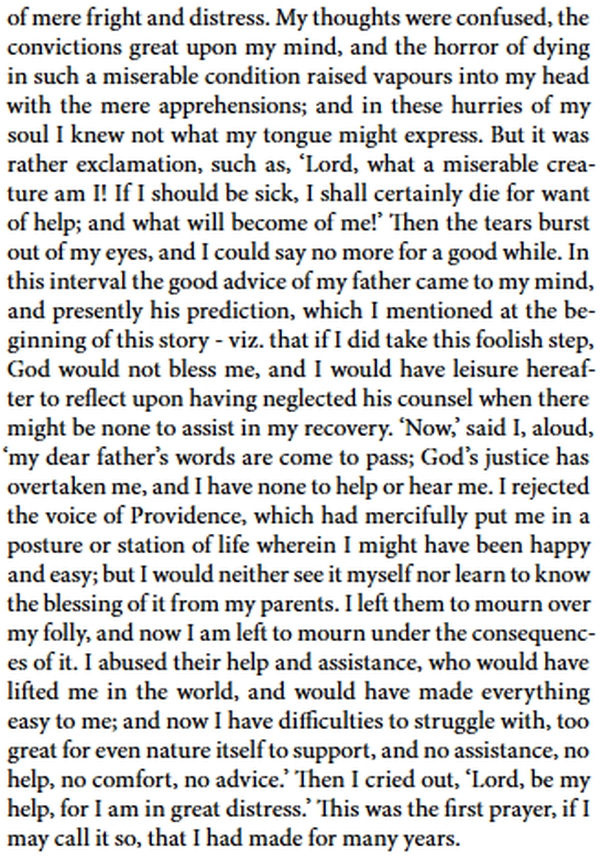
Robinson crusoe 7
Robinson crusoe 8
Tagged with: , , ,
Posted in Reading, Reflections

A Lovely Night – Justin Hurwitz (La La Land)

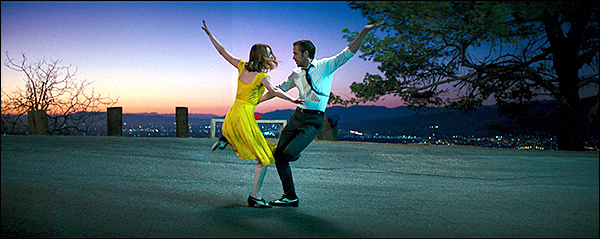
A Lovely Night - la la land.jpg

According to Oscar-nominated cinematographer Linus Sandgren, the roughly six-minute uninterrupted take, which was shot in September 2015 in Griffith Park overlooking Burbank, required a lot of careful planning.

“We found a very remote spot — a paved road with no streetlight,” he says. “We wanted to shoot it in one take to give the audience that sense that it was happening for real. To do that, we had to shoot on a crane. There were 27 different marks on the crane to hit, and the actors had to hit their marks as well.”

Perhaps my least favourite genre in cinema was the musical, that is until I saw La la Land.

Wikipedia: La La Land is a 2016 American romantic comedy-drama musical film written and directed by Damien Chazelle. It stars Ryan Gosling as a jazz pianist and Emma Stone as an aspiring actress, who meet and fall in love while pursuing their dreams in Los Angeles.

When I first saw La La Land I was pleasantly surprised, but not astounded. In the days following I was perplexed why the movie stayed in my psyche until I felt this insatiable desire to revisit it again at the cinema. What I didn’t see in it the first time I saw more of in the second and what my ears didn’t hear in the first they did so in the second. This went on and on until I saw La La Land in the cinema 5 times! That is my cinema attendance record for any one movie. Suffice to say I was entranced by the movie.

May be I was part of a lost generation in the appreciation of the ‘musical’ and La La land acted like a portal to transport me back to a time when cinema was grandiose. La la land represented that kind of movie they just don’t make anymore. It’s a montage of sorts of all that was great about cinema in particular 50’s Hollywood musicals. It’s a wonderful family movie as well, at least for this family. My kids are crazy for it like their Dad. It currently sits 8th in my all time favourite movie list. Oh, and when it lost to Moonlight at the 2017 Oscars I was pissed. Just like when Roma lost this year to the Green Book.

From the page seeing-stars: This song ‘A Lovely Night’ was filmed near the top of a 1,640-foot mountain in Los Angeles’s Griffith Park. The lovely night scene was shot in a single unbroken shot. Mia and Sebastian the two protagonists go looking for a car and end up stumbling across a wonderful sunset view of Los Angeles from a hill top vantage point. In the song Sebastian laments that such a wonderful spot is wasted on the two of them since they clearly have no chance of romance.

‘We’ve stumbled on a view
That’s tailored-made for two
what ashame those two
Are you and me’

The song evolves into a competitive dance number (such as the one at the top of this page) have become the iconic poster image of the movie.

‘After plenty of rehearsals, Chazelle filmed two takes once the sun was in the desired spot, one at 7:20 p.m. and one at 7:30 p.m. The following day, the schedule was repeated, and the take filmed at 7:30 p.m. on the second day became the one that appears in the movie’.

Reference:
1. Hollywood Reporter – How la la land got 6 minute sunset dance just right

Posted in Movies and TV, Music

30/7 – 5/8/19 More Mass Shootings and DA Pennebaker Remembered

The idea of this new Monday weekly event post is to present my meandering thoughts and reflections on various news or ‘other event’ related topics of the past week and provoke readers into discussion. While I aim for it to be ongoing I do not intend it to be considered a news related article per se about the ‘biggest’ stories. Instead this weekly post should be regarded as an informal journal about random events or topics I feel inclined to write about; and if it were not for the seriousness of some events; that which ‘tickles my fancy’ may be a more apt description. Furthermore, I foresee that a great deal of these posts will contain links to articles for additional information purposes and/or direct quotes from such articles.

2 more mass shootings in the US

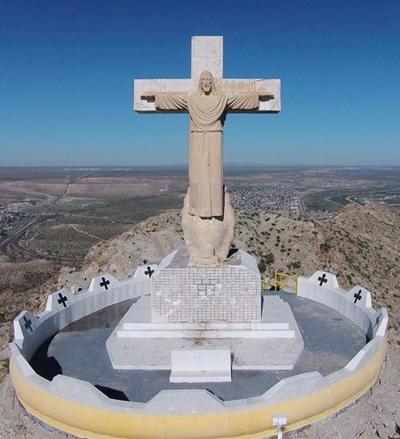
Mount Cristo Rey
Mt Cristo Rey – El Paso Texas (Urbici Soler)

I wrote ‘random events’ above, but these horrific occurrences in the US are becoming less random ie more frequent it appears at least statistically. It’s a difficult topic to discuss as these incidents elicit such strong emotions in people including yours truly, but after the initial shock and anger I find myself compelled to revisit the gun control debate and try to do so dispassionately to ascertain with a clearer head the arguments. Also as a non-US resident it is hard to weigh in on it, as the second amendment is so coveted and what may work in one culture such as Australia may not work in another. I read a fascinating article in the NY times titled Australia’s Gun Laws Are Not a Model for America which I would recommend anyone with interest on the subject to read.

I think the following response from Reddit user scoogsy aligns more or less with what I would like to see happen with regards to gun control:

‘I think stricter regulation, with annual re-review of licences. I’d also advocate for a higher base level of training. People who own guns need to be highly trained, and are required to attend regular training in their use (say quarterly. You are reviewed on proficiency, and if you fail multiple sessions, your licence is suspended and you need to be trained to earn it back). Due to their lethality, and the psychological influence firearms have on power dynamics (you start to feel invincible against unarmed victims), I think something like this is proportional to the responsibility one takes when having a firearm. Added training aims at a couple of things. Enhancing the ability for those to defend themselves in active shooter situations, reducing accidental shootings, and bringing those who have extremist tendencies into more regular contact with the greater community. This culture of safty-ism, and a requirement for regular engagement with the greater gun ownership community may help in identifying offenders earlier.

I tend to think semi-auto rifles should be banned, other than with special permits (occupation, farmers etc. this means they must be safely stored).

I also think more development of self defence mechanisms is needed. It would be great to have an array of highly effective self defence weapons that rival that of a firearm, but are typically not lethal. A taser is about as close as I’ve seen, however something even more effective would be even better.’

– From the reddit discussion ‘So with the recent mass shootings..’

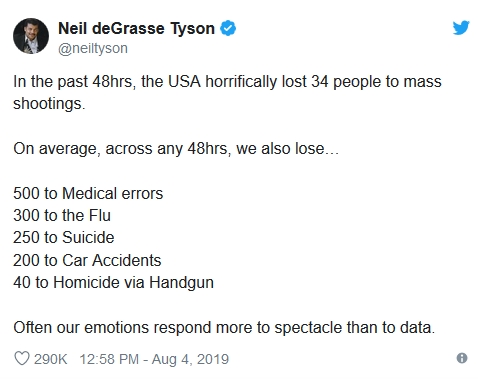
In addition, I don’t know why Neil DeGrasse Tyson felt the need to apologise over the following tweet:

Neil de Grasse Tyson tweet

You can read more about the reaction to Neil DeGrasse Tyson’s tweet here.

Also,  Sam Harris’ discusses the recent mass shootings in the US in his latest podcast #164 Cause and Effect (with Judea Pearl) which can be heard here.

DA Pennebaker Remembered


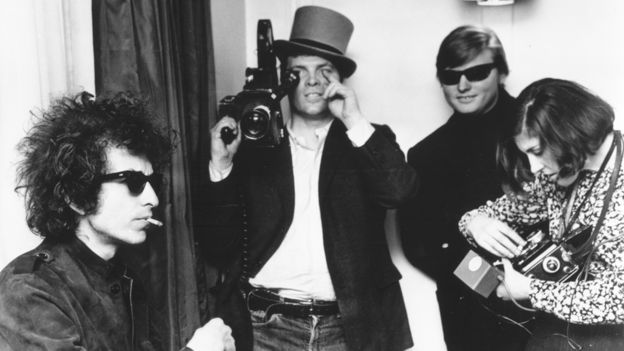
DA Pennebaker
DA Pennebaker (centre) filming Dylan (left) for Don’t Look Back

DA Pennebaker who was best known for the music documentary on Bob Dylan Don’t Look Back passed away on the 1st August, 2019.

I wrote in another article: The Wonder Years and ‘Catch The Wind:

I would eventually watch the classic D. A. Pennebaker documentary Don’t Look Back of Dylan’s 1965 concert tour of England. Dylan and Donovan would confront each other for a famous folk duel (see below) where funnily enough, I saw both leave the ‘ol’ corral’ as the victor.

It was extremely satisfying watching that. I felt a sense of vindication apprehending the circle was now complete.

Some interesting facts about Pennebaker in this BBC news article – Cult music film-maker DA Pennebaker dies, aged 94

Pennebaker teamed up with British film-maker Richard Leacock to develop one of the first hand-held, synchronous-sound cameras – which allowed him to get closer to his subjects, capturing unguarded moments and snatches of conversation, dispensing with the need for overbearing narration.

The first film to use the camera was Primary (1960) which followed John F Kennedy and Hubert Humphrey from dawn to midnight for five days, as they campaigned for the Democratic presidential nomination.

Roger Ebert said Pennebaker’s film “invented the rock documentary”; while the opening sequence, in which a young, scruffy Dylan holds up cue cards with the lyrics to Subterranean Homesick Blues served as a prototype for the modern music video.

In 1973, he was invited to London to shoot David Bowie’s final concert in the guise of alien rock star Ziggy Stardust. He had no idea who Bowie was – in fact, he initially thought he’d be filming Marc Bolan – but quickly fell under his spell.

“What I saw when David got on stage, was one person totally holding that stage for two hours,” he later recalled. “I thought, ‘There’s not many people who can do that, I better get this all on film while it lasts.”

Tagged with: , ,
Posted in Music, News

A Day Without Rain (2000) – Enya

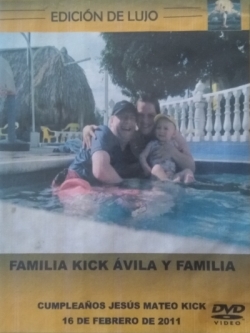
Family DVD 1

Such is the strong impression this song had on me I used it to conclude a family DVD I created for my son’s third birthday (image inset). Call me sentimental, but I think it is one of the most beautiful tunes I’ve ever heard. A Day Without Rain comes from Enya’s 5th studio album called (low and behold) A Day Without Rain released on the 20th of November 2000.
According to Wikipedia: In the aftermath of the 11 September attacks, sales of the album and its lead single, “Only Time”, surged after the song was widely used during radio and television coverage of the events, leading to its description as “a post-September 11 anthem”.

Enya Patricia Brennan known professionally as Enya, is an Irish singer, songwriter, record producer and musician. She began her music career with her family band Clannad, but left in 1982 with their manager and producer Nicky Ryan to pursue a solo career. She has sung in 10 languages; eight more than me. The commercial and critical success of Watermark (1988) propelled her to worldwide fame. You could describe her music as new-age Celtic.

In 2001 she wrote and performed two tracks for the soundtrack of The Lord of the Rings: The Fellowship of the Ring (2001) at the request of director Peter Jackson.

Tagged with: ,
Posted in Music

1812 Overture Op 49 (1882)- Tchaikovsky’s Frankenstein Monster

……although the most celebrated section of the work is inevitably Tchaikovsky’s flamboyant, proto-cinematic finale, its opening passage is equally spectacular – albeit spectacularly understated. – ClassicFM.com

Let us dispel a common misconception before we begin:
The idea that the overture was written to represent the United States victory over England in the War of 1812 is false.

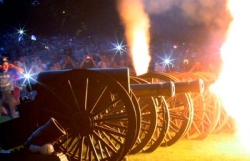
1812 Overture cannons

One of the most famous climactic pieces of classical music commonly used in fireworks displays and patriotic events such as Independence Day in the US and the 5th of November in Britain (Guy Fawkes Night), The Year 1812 Solemn Overture commonly known as the 1812 Overture was composed by Pyotr Ilyich Tchaikovsky to commemorate the successful Russian defence against Napoleon’s invading Grande Armée in 1812. Having heard the most celebrated section more often than I care to in cinema, other media and new years eve events I listen to 1812 Overture mainly for its opening passage which as described above ‘is equally spectacular – albeit spectacularly understated‘.

According to Wikipedia: The overture debuted in Moscow on August 20, 1882, conducted by Ippolit Al’tani under a tent near the then-unfinished Cathedral of Christ the Saviour, which also memorialized the 1812 defence of Russia. Tchaikovsky himself conducted another performance at the dedication of Carnegie Hall in New York City. That was one of the first times a major European composer visited the United States.

The overture is best known for its climactic volley of cannon fire, ringing chimes, and brass fanfare finale. The 1812 Overture went on to become one of Tchaikovsky’s most popular works, along with his ballet scores to The Nutcracker, The Sleeping Beauty, and Swan Lake.

Other interesting information about the Overture from the Classic FM.com:

*Tchaikovsky hated the piece.

That infamous assessment of it as “very loud and noisy and completely without artistic merit, obviously written without warmth or love,” was penned by Tchaikovsky himself. The overture’s popularity was a source of deep frustration to this sensitive, serious-minded symphonist whose imaginative fantasy and whimsical, melodic turn of phrase had also managed to transform the art of composing ballet music to a high calling.

Tchaikovsky cranked out the 1812 Overture in six weeks, cutting his imagination loose with every note and theme designed to tug at Russian heartstrings. And although the most celebrated section of the work is inevitably Tchaikovsky’s flamboyant, proto-cinematic finale, its opening passage is equally spectacular – albeit spectacularly understated.

Needing to ground the music in some fundamental truths about the Russian mind and spirit, Tchaikovsky opens by recalling a soulful Orthodox hymn, ‘Troparion of the Holy Cross’. A lesser composer might have sentimentalised the harmonies, but Tchaikovsky places this objet trouvé delicately on four violas and eight cellos, like an ethereal and wistful sound borrowed from the memory bank of history.

Tchaikovsky ought to have been proud. He had written the ultimate showpiece, but his faith in the 1812 Overture quickly unravelled. His aspiration to see it performed in the cathedral square, with a brass band marching on stage to clinch the climax – only to top that with cathedral bells and cannon fire – proved impractical.

Tchaikovsky hadn’t reckoned on a basic logistical flaw: that the arithmetic of exploding cannon shots in time to the music proved trickier than splitting the atom. A time lag between releasing the barrel and the shot sounding made shot-to-score co-ordination impossible. Then in 1881, the Emperor of Russia, Alexander II, was assassinated and triumphalist music suddenly seemed inappropriate. The work had its first hearing – indoors – at the Arts and Industry Exhibition two years later; no brass band, no cannon shots, no cathedral bells.

If he didn’t like his 1812 he’d have hated how its been used since….

  • 1962 Used in a commercial for Quaker Puffed Wheat and Puffed Rice – with the slogan, ‘This is the cereal that is shot from guns.’
  • 1967 Charlie Drake as orchestral musician, then conductor, tickles the nation’s funny bone by performing the 1812 Overture single-handedly, dressed in an ill-fitting tuxedo.
  • 1971 Woody Allen uses the 1812 Overture on the soundtrack to a love scene in his comedy Bananas.
  • 1974 The piece becomes part of American folklore after a televised Boston Pops performance captures the national mood.
  • 1976 In an episode of The Muppet Show, Gonzo grows a tomato plant to the accompaniment of the 1812 Overture.
  • 1990 In an episode of The Simpsons, Bart hums the 1812 Overture manically as he prepares an Evel Knievel-style death- defying stunt with his skateboard.
  • 1995 The Swingle Singers release an a cappella 1812 Overture, complete with air-raid sirens and machine gun fire.
  • 2005 The dystopian thriller V For Vendetta gives the
 1812 Overture a sinister twist, referencing it alongside music by The Velvet Underground and The Rolling Stones to suggest a society out of balance.

  • 2009 An advert for Vodafone New Zealand recreates the
 1812 Overture using the ringtones of 1000 mobile phones. It sounded horrible.

Tagged with: , ,
Posted in Music

Put to Seinfeld… ‘Actor, Writer, Producer – Which of Larry David’s Skills do you admire the most?’

Posted in Movies and TV

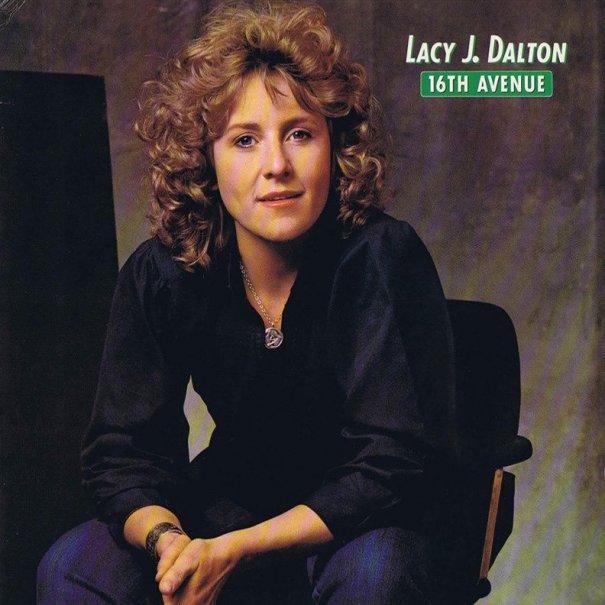
16th Avenue (1982) – Lacy J. Dalton

Today’s next song from the music library collection is ’16th Avenue’ – Lacy J Dalton. I came across it reading Badfinger’s Powerpop blog which features a dizzying array of excellent music from various genres. He has kindly allowed me to reblog his original post since I knew I couldn’t do the song justice like he had. Also I believe ‘Bad’ is from Nashville where the famous 16th avenue is located.

Badfinger (Max)'s avatarPowerPop... An Eclectic Collection of Pop Culture

I remember this song as a teenager and have never grown tired of it. It’s a salute to the unheralded songwriters. This song means a lot me because I have talked to a few songwriters that this song was about. Back in the 1980s, Nashville wasn’t the clean tourist spot that it has turned into now. I saw many songwriters trying to hawk their songs to anyone that would listen.  Many did live out of their car (and still do) or with anyone who would take them. Many gambled their lives to achieve their dreams. Some made it but most had to find their way back home.

A songwriter by the name of Thom Schuyler wrote the song the same year he moved to Nashville. He knew a lot of the songwriters that were around and the song rang true to many of them.

Lacy J. Dalton was born in…

View original post 557 more words

Tagged with: ,
Posted in Music

4th Of July, Asbury Park (Sandy) – Bruce Springsteen

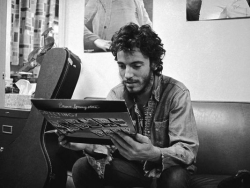
Bruce 1973

Bruce Springsteen 1973

As a preadolescent, high octane, emotionally fragile youngen, I’m glad I had Bruce Springsteen in my corner. There was a small band of us at school who cherished his music. We felt through his music we could sidestep some of those landmines in middle school. You see, he had already loved and lost. He was someone much older than us and had got out the other end and was telling us stories of what he had seen and learnt growing up. I’m looking forward to seeing the new movie about to hit cinemas called Blinded By the Light which is reflective of what I’m talking about.

4th Of July, Asbury Park (Sandy), the second track from his second studio album The Wild, the Innocent & the E Street Shuffle released in 1973 is one of my favourite pre-Born to Run songs. Even today when I hear him confess so meekly, ‘Sandy, that waitress I was seeing lost her desire for me‘ floors me every time. As if that wasn’t enough he professes: ‘I spoke with her last night, she said she won’t set herself on fire for me anymore.’ Ouch!

She worked that joint under the boardwalk, she was always the girl you saw bopping down the beach with the radio

The kids say last night she was dressed like a star in one of them cheap little seaside bars, and I saw her parked with lover boy out on the Kokomo

I like how the writer Ariel Swartley interpreted the lyrics: ‘The narrator is something of an “adolescent loser … [who’s] ruining his chances with the girl: he can’t stop telling her about the humiliations, about the girls who led him on, about the waitress that got tired of him.”
I always found it a wistful love ballad set in an irresistibly romantic atmosphere. It evokes such powerful imagery nearly overflowing the senses with a deep and rich tapestry of characters and warm settings. Robert Santelli in his book Greeting from E Street described 4th of July as “the perfect musical study of the Jersey Shore boardwalk culture.”

Interesting trivia about 4th of July (wikipedia):
* Springsteen wanted a children’s choir to sing on it, but they did not show up for the session.
* Van Morrison’s influence can be heard in this song, as “4th of July, Asbury Park (Sandy)” closely parallels his romanticization of Belfast
* No singles were released from The Wild, the Innocent & the E Street Shuffle. “Sandy” would, however, along with “Rosalita (Come Out Tonight)”, become fan favorites from the album.
*The “Madam Marie” mentioned in the song was a real-life fortune teller on the Asbury Park boardwalk named Marie Castello, who died June 27, 2008, aged 93.

Tagged with: , ,
Posted in Music

The Highly Anticipated ‘The Irishman’ – Martin Scorsese

The year was 1995. Scorsese, De Niro, & Pesci teamed up in CASINO (and GOODFELLAS in 1990) and De Niro & Pacino in HEAT. And now all four have finally come together in Scorsese’s ‘The Irishman’. Arguably the greatest cast of a crime drama in living memory and perhaps the most highly anticipated crime movie since Scorsese’s The DEPARTED. The trailer above has just been released and is set for a US release date of September 27, 2019.

Below is a video of comedian Sebastian working on the set with this mega-cast in The Irishman:

Tagged with: , ,
Posted in Movies and TV

‘A Morning Inspiration’ – James Joyce

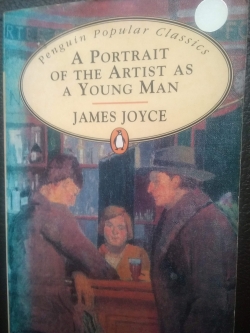
A Portrait of the Artist as a young Man

I thought it nigh impossible someone could adequately describe the spirit and unfettered freedom the instant upon waking in the morning just prior to awakening wholly, but I believe James Joyce in A Portrait of the Artist as a Young Man has done it.

Portrait is about the intellectual awakening of a young man Stephen Dedalus, an alter ego of the author James Joyce. I find it challenging reading as it uses techniques of the Modernist style (described as a self-conscious break from traditional ways of writing) that were very popular in the late 19th and early 20th century. As the wikipedia page describes it: ‘….dispensing with strict realism and making extensive use of free indirect speech that allows the reader to peer into Stephen’s developing consciousness‘. Joyce would fully embrace this style in his masterpiece Ulysses; a book I am still daunted to read if Portrait is anything to go by. Interestingly, I found To the Lighthouse by Virginia Woolf which also employs this stream of consciousness / modernist method a more satisfying read which I posted about here.

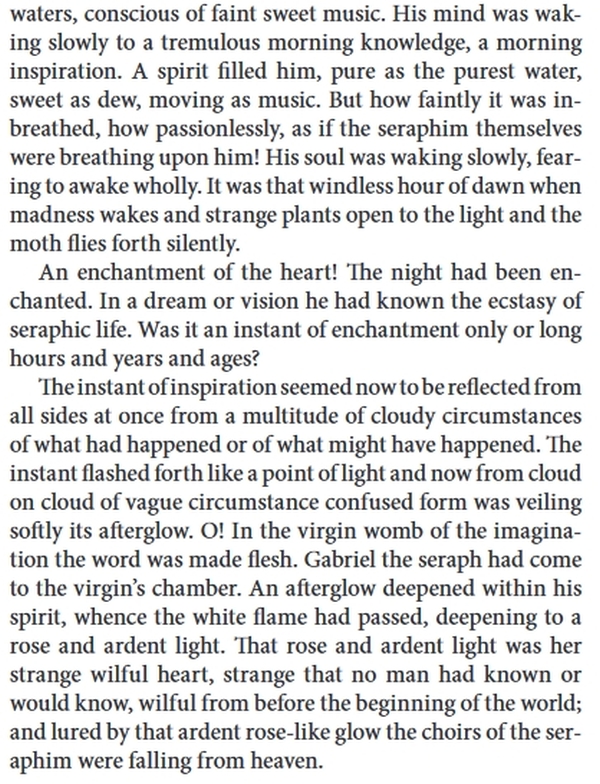
Despite my difficulty engaging with Portrait there are some spectacular passages which I noted down so I could come back to them. One of them is Joyce’s description about early morning inspiration. Without further or do ladies and gentlemen I present to you – James Joyce from Portrait of the Artist as a Young Man:

Portrait 1
Portrait 2
Tagged with: , ,
Posted in Reading

Follow Blog via Email

Enter your email address to follow this blog and receive notifications of new posts by email.

Join 783 other subscribers

← Back

Thank you for your response. ✨