I saw ‘Fellowship of the Ring‘ with my father in Mornington and it was the last movie I would see with him. It remains my favourite of the three from the trilogy. But I must say how impressed I was at this ‘breakdown’ of the aftermath of the third movie and its release. I can’t imagine the hours and years many worked on it. It kind of gives J.R.R’s novel justice and holds up.
The video doesn’t appear for me here due to copyright restrictions, but you can search: LOTR: The Appendices – Return Of The king Premiere – Cast reacts to winning the 76th Oscars.
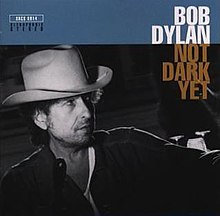
It is befitting Not Dark Yet is the first song to appear from Bob Dylan’s 3-time grammy award winning Time Out of Mind since for me it is the highlight of the record and in my top 20 all – time from him. When I looked at the album listing to doublecheck I hadn’t overlooked a song I noticed Make You Feel My Love should have already been included in the music library project. So, I will need to backtrack and add that later. Others coming from the record are Standing in the Doorway and Trying to Get to Heaven.
I remember distinctly where I was when I first heard Not Dark Yet for the first time. I was flat mates with with an old Academy buddy Kevin in a run-down house in Canberra’s suburb called Dickson. One day I was just ‘lamping’ as Leon referred to on Curb Your Enthusiasm and as soon as I heard this song, I knew it would be the soundtrack for me during my time there. I ended up leaving it in there on repeat. No young person could have written this song . . . not even a young Bob Dylan . . . There are years of hard living in this amazing song.
Dylan’s version will always reign supreme, but I like Eric Clapton’s version a lot and I have presented it at the bottom of this post.
[Verse 1] Shadows are fallin’ and I’ve been here all day It’s too hot to sleep and time is runnin’ away Feel like my soul has turned into steel I’ve still got the scars that the sun didn’t heal
[Chorus] There’s not even room enough to be anywhere It’s not dark yet, but it’s gettin’ there
[Verse 2] Well, my sense of humanity has gone down the drain Behind every beautiful thing there’s been some kind of pain She wrote me a letter and she wrote it so kind She put down in writin’ what was in her mind
[Chorus] I just don’t see why I should even care It’s not dark yet, but it’s gettin’ there
[Verse 3] Well, I’ve been to London and I’ve been to gay Paris I’ve followed the river and I got to the sea I’ve been down on the bottom of a world full of lies I ain’t lookin’ for nothin’ in anyone’s eyes
After producer Daniel Lanois success’ with Dylan’s 1989 Oh Mercy album he rejoined Bob again on Time Out of Mind.
From Wikipedia:
“Not Dark Yet” was recorded in the early sessions for Time Out of Mind in a version that featured “a radically different feel”, according to Daniel Lanois. “[The demo of ‘Not Dark Yet’] was quicker and more stripped-down and [later during the formal studio sessions], he changed it into a civil war ballad”.
In their book Bob Dylan All the Songs: The Story Behind Every Track, authors Philippe Margotin and Jean-Michel Guesdon describe the album version, recorded at Criteria Studios in Miami in early 1997, as one where Lanois “uses multiple instruments to fuel a sonic vision that he alone has the talent and skill to create. All the musicians contribute to this sound: Augie Meyers’s organ is scored; the two drummers provide a heavy, haunting tempo; and Tony Garnier on bass moves in the depths of the sound spectrum. The guitars confer a rock-music atmosphere on the piece, but also contribute to its dreamlike ambience. Dylan delivers one of his best vocal performances on the album, touched with sincerity and resignation”.
“Not Dark Yet” has been prominently featured on the soundtracks of many films and television shows, including Wonder Boys, The Passion of the Christ: Songs Inspired by The Passion of the Christ.
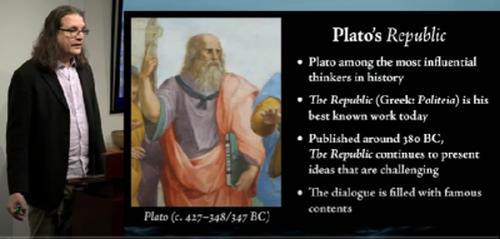
Exploring Plato’s Republic is the second lecture to appear here from John Hamond at Centre Place (the Toronto congregation of Community of Christ). The first lecture entailed The Flood Myth which I wrote about back in July. ‘I have been going on a John Hamer – Centre Place binge for at least a month‘. It’s now September and my bender hasn’t moderated. It’s neat when you know you have this page available at your fingertips which houses more than 100 lectures on history, theology, philosophy, religious studies, comparative religion, neuroscience, and more.
I am less familiar with Plato’s works than some other ancient philosophers like Plato’s teacher Socrates. So, I was looking forward to watching this. I found it fascinating, and I know I will need to revisit this lecture multiple times to grasp the meaning of many of the concepts that went over my head the first time. I feel grateful towards Centre Place for their imparting this information in an illuminating and well spirited manner which has only enhanced my curiosity of learning about those subjects previously mentioned.
The Republic is one of the most influential works of philosophy and political theory. John Hamer of Toronto Centre Place looks at the ideal state Plato outlines in its context and consider its ongoing relevance for understanding society and individuals today.
Absolute Beginners is a song about unrequited young love, but there’s so much to listen to in this. It’s very broad sounding – eclectic music at its best. It’s theatrical as most of Bowie’s music I find. Absolute Beginners is considered one of his finest songs from the – ‘Let’s Dance‘ era. I only discovered this song recently such is my ignorance of his discography. It is said his career was marked by reinvention and visual presentation, and his music and stagecraft had a significant impact on popular music. Absolute Beginners was the theme song to the 1986 film of the same name (itself an adaptation of the book Absolute Beginners). Although the film was not a commercial success, the song was a big hit, reaching No. 2 on the UK Singles Chart.
[Verse 1] I’ve nothing much to offer There’s nothing much to take I’m an absolute beginner And I’m absolutely sane As long as we’re together The rest can go to hell I absolutely love you But we’re absolute beginners With eyes completely open But nervous all the same
[Chorus] If our love song Could fly over mountains Could laugh at the ocean Just like the films There’s no reason To feel all the hard times To lay down the hard lines It’s absolutely true
[Verse 2] Nothing much could happen Nothing we can’t shake Oh we’re absolute beginners With nothing much at stake As long as you’re still smiling There’s nothing more I need I absolutely love you But we’re absolute beginners But if my love is your love We’re certain to succeed
Excerpts from Wikipedia:
Bowie developed an interest in music from an early age. He studied art, music and design before embarking on a professional career as a musician in 1963. He eventually achieved fame achieving his first top five entry on the UK Singles Chart with Space Oddity in 1969. After a period of experimentation, he re-emerged in 1972 during the glam rock era with the flamboyant and androgynous alter ego Ziggy Stardust. Then these two records: Heroes (1977) and Lodger (1979) reached top five in the UK and received lasting critical praise.
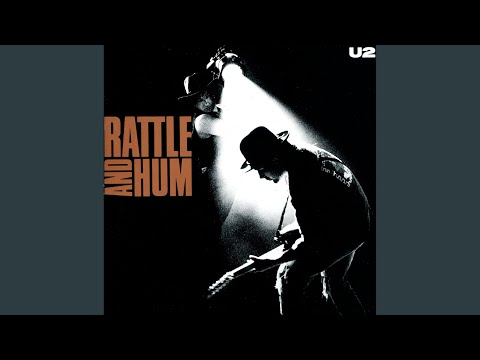
All I Want is You was released in the era of U2 I enjoyed the most; namely between years 1987 and 1991 when the successive albums: The Joshua Tree, Rattle and Rum and Achtung Baby were produced. The last time I heard this song was just the other day when I saw the 1994 movie Reality Bites which will feature here next Friday. My favourite song from them is One which won’t be long in coming. All I Want is You is the final track on their 1988 album, Rattle and Hum, and was released as its fourth and final single June 1989.
I’m afraid I don’t like All I Want is You anywhere near like I used to. But this song resonated so much with me back then and I wanted to post it for mainly nostalgic reasons. To me it is a fragment of history representing that happy place in time when the world was not so bad, but ironically this song captures the disappointment, longing and sadness when we have lost someone.
[Verse 1] You say you want Diamonds on a ring of gold You say you want Your story to remain untold
[Chorus] But all the promises we made From the cradle to the grave When all I want is you
[Verse 2] You say you’ll give me A highway with no one on it Treasure just to look upon it All the riches in the night
[Verse 3] You say you’ll give me Eyes in the moon of blindness A river in a time of dryness A harbour in the tempest
[Chorus] But all the promises we make From the cradle to the grave When all I want is you
Excerpts from the Wikipedia article below: It reached number 4 on the UK charts and number 2 in Australia. Director Meiert Avis shot the promotional video in the town of Ostia, outside Rome in 1989. The video takes an unusual cinematic approach to the song, with U2 band members making only brief cameo appearances. The video tells the story of a person with dwarfism, played by Paolo Risi, who falls in love with a trapeze artist, played by Paola Rinaldi. The video pays homage to Fellini, who was shooting his last movie, La voce della luna, only a few miles away from the U2 set, and also to Tod Browning’s 1932 film Freaks.
The second time I saw Dead Poets Society was with my family in Camden Haven on the mid-north coast, New South Wales, Australia (see image inset). That’s where we went to visit my grandmother on school holidays and where my mother currently resides. Allow me to digress…The mountain you see in the background is called North Brother Mountain which was named by British explorer Captain James Cook in 1770. Well technically he named them the Three Brothers, but this is the northern most. The mountain was originally called Dooragan by the Australian Aboriginal local Birpai people. They tell a dreamtime story of three brothers of the Birpai tribe who were killed by a witch called Widjirriejuggi and were buried where the mountains stand. The youngest of the three was Dooragan, for whom the mountain is named. You can find a short story I wrote here of our family’s attempt to trek down Dooragan mountain.
Any-hows, in the small town Laurieton you see sitting at the foot of Dooragan (North Brother Mountain), I cajoled my family to see Dead Poets Society after I had just seen a screening which left me flabbergasted. I remember the cinema was restored to showcase the classic aesthetics of cinemas yesteryear. The only problem was, is the session was a double billing. Beaches and today’s featured movie Dead Poets Society. I think after Beaches my mother was left a bit strung out.
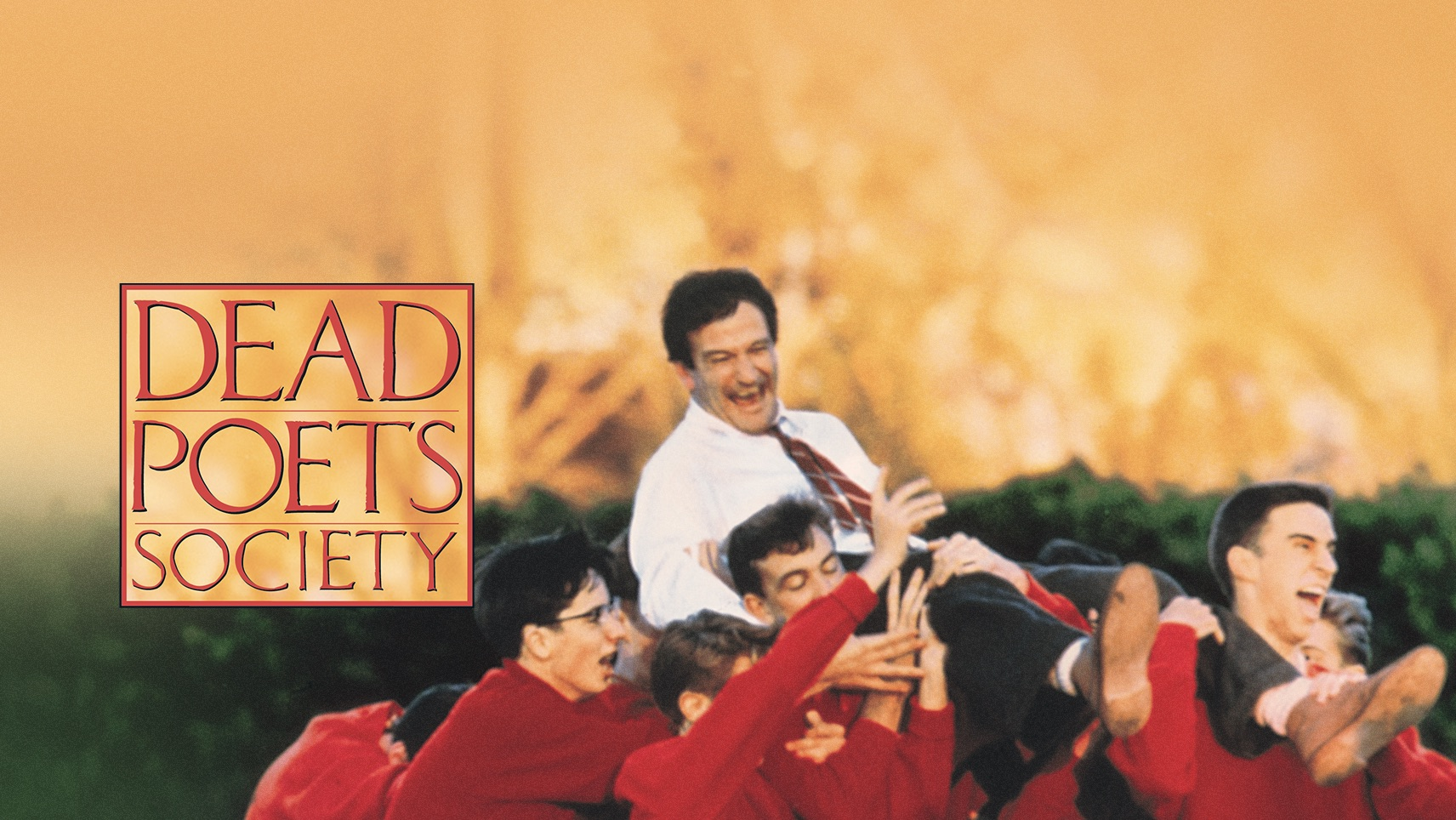
Dead Poets Society is the fourth movie to be presented here from legendary Australian director Peter Weir. The movie holds a special place in my memory because of the aforementioned experience with my family and the endearing location we saw it. Not to mention how it inspired me to ‘seize the day’ (Carpe Diem) as far as my studies and sports were concerned. I have presented at the end of this post two of my favourite scenes in the movie, namely the Carpe Diem scene and the ending.
Painfully shy Todd Anderson has been sent to the school where his popular older brother was valedictorian. His roommate, Neil Perry, although exceedingly bright and popular, is very much under the thumb of his overbearing father. The two, along with their other friends, meet Professor Keating, their new English teacher, who tells them of the Dead Poets Society, and encourages them to go against the status quo. Each does so in his own way, and is changed for life.
Below are excerpts from the Wikipedia reference:
The film, starring Robin Williams, is set in 1959 at the fictional elite boarding school Welton Academy, and tells the story of an English teacher who inspires his students through his teaching of poetry. The film was a critical and commercial success and received numerous accolades, including Academy Award nominations for Best Picture, Best Director, and Best Actor for Williams. The worldwide box office was reported as $235,860,579 – the fifth highest for 1989, and the highest for dramas. The original script was written by Tom Schulman, based on his experiences at the Montgomery Bell Academy in Nashville, Tennessee, particularly with his inspirational teacher Samuel Pickering. During the shooting, Weir requested the young cast not to use modern slang, even off camera.
Here is some other cool movie trivia:
During filming, Williams used to crack many jokes on set, which Ethan Hawke found incredibly irritating. For the scene where Todd Anderson is spontaneously incited by John Keating to make a poem in front of the class, Williams apparently made a joke saying that Hawke was intimidating, which Hawke later realized was serious and that the joke referred to his earnestness and intensity as a young man. Ironically, Hawke’s first agent signed with Hawke once Williams told him that Hawke would “do really well”.
Put Adagietto on in the background while you’re doing chores or whatever and believe you me, you won’t regret it.
According to Merriam Webster the first known use ofadagiettowas in 1841. Adagio is an Italian musical term that means “slowly” or “at ease.” It is typically used to indicate a slow tempo in a piece of music. Adagietto, on the other hand, is a slightly faster tempo marking, meaning “moderately slow.” It is often used as a transitional tempo between adagio and allegretto. This movement was recommended to me here and I find it endearing. This movement reminds me of the quote from Remains of the Day– ‘It’s not scandalous at all. It’s just a little sentimental old love story‘. Gustav Mahler was a romantic composer after all.
From the Wikipedia article below:
Today’s piece: the the fourth movement may be Mahler’s most famous composition and is the most frequently performed of his works. The British premiere of the entire Symphony No. 5 came in 1945, 36 years after that of the Adagietto, which was conducted by Henry Wood at a Proms concert in 1909.
It is said to represent Mahler’s love song to his wife Alma. According to a letter she wrote to Willem Mengelberg, the composer left a small poem:
Wie ich Dich liebe, Du meine Sonne, ich kann mit Worten Dir’s nicht sagen. Nur meine Sehnsucht kann ich Dir klagen und meine Liebe, meine Wonne!
In which way I love you, my sunbeam, I cannot tell you with words. Only my longing, my love and my bliss can I with anguish declare.
As seen below: Leonard Bernstein also conducted it with the Vienna Philharmonic Orchestra. A biographical film ‘Maestro‘ is coming out about him shortly. He also did this movement during the funeral Mass for Robert F. Kennedy at St. Patrick’s Cathedral, Manhattan, on 8 June 1968, and briefly discusses this section along with the opening bars of the second movement in his Charles Eliot Norton Lectures from 1973.
In February 1901 Gustav Mahler had suffered a sudden major hemorrhage and his doctor later told him that he had come within an hour of bleeding to death. The composer spent quite a while recuperating. He moved into his own lakeside villa in the southern Austrian province of Carinthia in June 1901. Mahler was delighted with his newfound status as the owner of a grand villa. According to friends, he could hardly believe how far he had come from his humble beginnings.
The musical canvas and emotional scope of the work (5th Symphony), which lasts nearly seventy minutes, are huge.
I did warn you folks I would present nearly all songs from The Travelling Wilburys Volume 1 record and it’s fast approaching the finale. This is the eighth song (of 10) presented so far from this stand – out record. I believe after today’s song we just have one left to go – Tweeter and the Monkey Man. The Travelling Wilburys consisted of some of the greatest talent in contemporary rock history – George Harrison, Jeff Lynne, Bob Dylan, Roy Orbison and Tom Petty.
Almost every song on the record is equal favourite for me, but if I had to choose just one for the ‘Desert Island’, it would most likely be today’s track which is spectacularly sung by Roy Orbison; although Handle With Care would sure give it stiff competition. Not Alone Anymore serves as Orbison’s main contribution to the album. I know others here have other personal favourites from the record and that’s fine by me since all are fantastic tracks. Congratulations – my first post from the supergroup record continues to rack up the views in my blog which is encouraging.
You always said that I’d be back again That I’d come running to you in the end I thought that you were on your own And now I find you’re not alone
[Chorus] (Not alone) I’ll see you through the rain (Not alone) Through the heartache and pain (Not alone) It hurts like never before You’re not alone anymore
You always said that I would know someday Just how it feels when your love walks away I let you down, I let you go I lost you how was I to know?
[Chorus] (Not alone) I’ll see you through the rain (Not alone) Through the heartache and pain (Not alone) It hurts like never before You’re not alone anymore
I never knew I could feel this way I never could see past yesterday You feel that everything is gone I feel it too, you’re not alone
From Wikipedia:
A longtime admirer of Orbison, Jeff Lynne wrote Not Alone Any More as a vehicle for the singer’s operatic vocal style. The song’s lyrical theme of loneliness similarly recalls Orbison’s dark ballads of the early 1960s.
On release, the song was much admired by music critics. With the commercial success of the Wilburys, and the recognition afforded Orbison following his death in December 1988, it marked his full return from the career downturn he had experienced since the mid 1960s.
Lynne chose Roy Orbison as a potential bandmate, while Harrison’s first choice was Bob Dylan. Later that year, Lynne began working in Los Angeles on Orbison’s album Mystery Girl. As a result of this collaboration, Orbison, whom Harrison had befriended during a 1963 Beatles tour, joined Harrison, Lynne, Dylan and Tom Petty at the April 1988 recording session for Handle with Care.
Harrison said that they had considerable difficulty writing a song that suited Orbison, given that his best songs from the 1960s contained unusual elements in their composition and structure. Initially, Not Alone Any More was “simple beyond belief”, according to Lynne, and had just three chords. In its completed form, the song was written mainly by Lynne. Petty recalled in 2012: “Not Alone Any More was really Jeff and Roy’s song. I mean, we all contributed a little bit, but in the end, they had the handle on that one … the rest of us kind of backed off and let them go.”
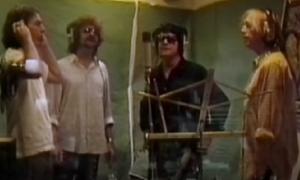
Below is the released studio version and a cool unreleased studio demo with footage.
Australian Aboriginal singer Archie Roach can certainly tell a good yarn through song and Charcoal Lane is evidence of that. This title track is the third song to appear him from his 1991 debut album Charcoal Lane. I was a fascinated by this album as a young adult and still cherish it. From the 1960s through to the 1980s, the inner-city Melbourne suburb of Fitzroy was a meeting place for Aboriginal people who had left missions, Aboriginal reserves, and other government institutions and drifted to the city in a bid to trace their families. and Roach was one of these. A street behind a factory was a meeting and drinking place known to the community as Charcoal Lane.
Side by side We walk along To the end of Gertrude Street Then we topple in muster for a quart of wine
Thick or thin Right or wrong In the cold or in the heat We cross over Smith Street to the end of the line
And we laugh and sing And do anything To take away the pain Trying to keep it down as it first went round In Charcoal Lane
Spinning yarns And telling jokes Now the wine is tasting good As its getting closer and closer to it’s end
Archibald William Roach (1956 – 2022) was an Australian singer-songwriter and Aboriginal activist. Often referred to as “Uncle Archie“, Roach was a Gunditjmara (Kirrae Whurrong/Djab Wurrung) – Aboriginal Australian people of southwestern Victoria, Australia. He was a Bundjalung elder who campaigned for the rights of Aboriginal and Torres Strait Islander people. His wife and musical partner was the singer Ruby Hunter (1955–2010) who wrote and sung with him on the magnificent Down City Streets.
Vika and Linda Bull were backing vocalists on the album, and they will feature here when we reach the ‘W’ songs in the alphabet listing with When Will You Fall For Me. They already appeared here as backing vocalists of Paul Kelly’s live performance of Leaps and Bounds played at the Melbourne Cricket Ground. It’s a small world since Paul was a coproducer of Charcoal Lane.
The album Charcoal Lane was released in May 1990 and peaked at number 86 on the ARIA Charts in April 1991. Rolling Stone said, “In the best singer-songwriter tradition, Charcoal Lane is deeply moving in both personal and political terms“. The album was certified gold in 1992. A 25th Anniversary Edition of the album was released in 2015; including the original disc plus new interpretations by Australian artists (including Paul Kelly, Courtney Barnett and Gurrumul).
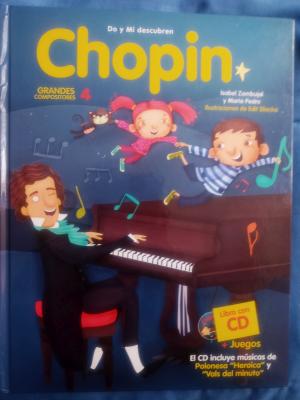
Nocturne op.9 No.2 is the third composition from Chopin to be presented here after the last entry – Prelude, Op. 28, No. 15. A friend sent me this piece a few years ago and I was captivated. For that reason, I bought my daughter this children’s book (image inset) which included a CD of 15 of some of Chopin’s greatest compositions. This was our first ‘proper’ taste hearing Chopin’s music. Interestingly, it doesn’t include today’s exquisite piece, but it does have Nocturne No1.
Below are some cool excerpts from the book and my humble attempt to translate it for you:
Do you feel like going on a big trip? So get ready to go with your friends Do and Mi to know the life of Chopin. No need to pack: just start your magic CD and you will travel to another time. Have fun!
The siblings landed in Poland in the middle of a palace garden where Chopin lived in his childhood. ‘How lucky, so much space to play’. Over there is Chopin. ‘Let’s see what he is drawing’, said Do approaching the child composer.
Son of a Frenchman and Polish woman, Chopin was born 22 de February, 1810. Before he could learn to read he wanted to compose melodies. When he was 8-years old he played for large audiences and at 15 he was considered the finest pianist in Warsaw. A huge round of applause for him!
Chopin wanted tranquility but in Warsaw large marching bands and the yells from angry people annoyed him. So, he decided to move to Paris where he discovered fame, luxury and high fashion. He was so vain that he spent a fortune on tailors and hairdressers.
In Paris everyone celebrated the arrival of Chopin. ‘Who wants to play the game – To see who can catch the most top-hats’? He was renowned as the ‘Prince of Pianists’. Chopin fell in love with a Baroness and writer who signed his books with the name: George Sand. The artist couple moved to the Mediterranean Island Mallorca where they lived surrounded by water, art and music.
Chopin died in Paris at age 39. His last wishes were that they play Mozart at his funeral and let his heart rest forever in the Warsaw Cathedral. ‘He loved his country, like we love ours. Let’s go back home’. Mi opened his arms like they were wings of an airplane.
Wiki article below:
The Nocturnes, Op. 9 are a set of three nocturnes for solo piano written and 1832, published in 1832, and dedicated to Madame Marie Pleyel. A Nocturne is a short composition of a romantic nature, typically for piano. These were Chopin’s first published set of nocturnes. Today’s piece the second nocturne of the work is often regarded as Chopin’s most famous piece.