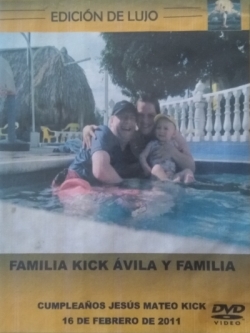
Such is the strong impression this song had on me I used it to conclude a family DVD I created for my son’s third birthday (image inset). Call me sentimental, but I think it is one of the most beautiful tunes I’ve ever heard. A Day Without Rain comes from Enya’s 5th studio album called (low and behold) A Day Without Rain released on the 20th of November 2000. According to Wikipedia: In the aftermath of the 11 September attacks, sales of the album and its lead single, “Only Time”, surged after the song was widely used during radio and television coverage of the events, leading to its description as “a post-September 11 anthem”.
Enya Patricia Brennan known professionally as Enya, is an Irish singer, songwriter, record producer and musician. She began her music career with her family band Clannad, but left in 1982 with their manager and producer Nicky Ryan to pursue a solo career. She has sung in 10 languages; eight more than me. The commercial and critical success of Watermark (1988) propelled her to worldwide fame. You could describe her music as new-age Celtic.
In 2001 she wrote and performed two tracks for the soundtrack of The Lord of the Rings: The Fellowship of the Ring (2001) at the request of director Peter Jackson.
……although the most celebrated section of the work is inevitably Tchaikovsky’s flamboyant, proto-cinematic finale, its opening passage is equally spectacular – albeit spectacularly understated. – ClassicFM.com
Let us dispel a common misconception before we begin: The idea that the overture was written to represent the United States victory over England in the War of 1812 is false.
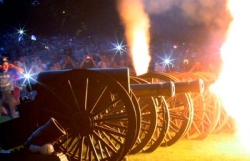
One of the most famous climactic pieces of classical music commonly used in fireworks displays and patriotic events such as Independence Day in the US and the 5th of November in Britain (Guy Fawkes Night), The Year 1812 Solemn Overture commonly known as the 1812 Overture was composed by Pyotr Ilyich Tchaikovsky to commemorate the successful Russian defence against Napoleon’s invading Grande Armée in 1812. Having heard the most celebrated section more often than I care to in cinema, other media and new years eve events I listen to 1812 Overture mainly for its opening passage which as described above ‘is equally spectacular – albeit spectacularly understated‘.
According to Wikipedia: The overture debuted in Moscow on August 20, 1882, conducted by Ippolit Al’tani under a tent near the then-unfinished Cathedral of Christ the Saviour, which also memorialized the 1812 defence of Russia. Tchaikovsky himself conducted another performance at the dedication of Carnegie Hall in New York City. That was one of the first times a major European composer visited the United States.
The overture is best known for its climactic volley of cannon fire, ringing chimes, and brass fanfare finale. The 1812 Overture went on to become one of Tchaikovsky’s most popular works, along with his ballet scores to The Nutcracker, The Sleeping Beauty, and Swan Lake.
Other interesting information about the Overture from the Classic FM.com:
*Tchaikovsky hated the piece.
That infamous assessment of it as “very loud and noisy and completely without artistic merit, obviously written without warmth or love,” was penned by Tchaikovsky himself. The overture’s popularity was a source of deep frustration to this sensitive, serious-minded symphonist whose imaginative fantasy and whimsical, melodic turn of phrase had also managed to transform the art of composing ballet music to a high calling.
Tchaikovsky cranked out the 1812 Overture in six weeks, cutting his imagination loose with every note and theme designed to tug at Russian heartstrings. And although the most celebrated section of the work is inevitably Tchaikovsky’s flamboyant, proto-cinematic finale, its opening passage is equally spectacular – albeit spectacularly understated.
Needing to ground the music in some fundamental truths about the Russian mind and spirit, Tchaikovsky opens by recalling a soulful Orthodox hymn, ‘Troparion of the Holy Cross’. A lesser composer might have sentimentalised the harmonies, but Tchaikovsky places this objet trouvé delicately on four violas and eight cellos, like an ethereal and wistful sound borrowed from the memory bank of history.
Tchaikovsky ought to have been proud. He had written the ultimate showpiece, but his faith in the 1812 Overture quickly unravelled. His aspiration to see it performed in the cathedral square, with a brass band marching on stage to clinch the climax – only to top that with cathedral bells and cannon fire – proved impractical.
Tchaikovsky hadn’t reckoned on a basic logistical flaw: that the arithmetic of exploding cannon shots in time to the music proved trickier than splitting the atom. A time lag between releasing the barrel and the shot sounding made shot-to-score co-ordination impossible. Then in 1881, the Emperor of Russia, Alexander II, was assassinated and triumphalist music suddenly seemed inappropriate. The work had its first hearing – indoors – at the Arts and Industry Exhibition two years later; no brass band, no cannon shots, no cathedral bells.
If he didn’t like his 1812 he’d have hated how its been used since….
1962 Used in a commercial for Quaker Puffed Wheat and Puffed Rice – with the slogan, ‘This is the cereal that is shot from guns.’
1967 Charlie Drake as orchestral musician, then conductor, tickles the nation’s funny bone by performing the 1812 Overture single-handedly, dressed in an ill-fitting tuxedo.
1971 Woody Allen uses the 1812 Overture on the soundtrack to a love scene in his comedy Bananas.
1974 The piece becomes part of American folklore after a televised Boston Pops performance captures the national mood.
1976 In an episode of The Muppet Show, Gonzo grows a tomato plant to the accompaniment of the 1812 Overture.
1990 In an episode of The Simpsons, Bart hums the 1812 Overture manically as he prepares an Evel Knievel-style death- defying stunt with his skateboard.
1995 The Swingle Singers release an a cappella 1812 Overture, complete with air-raid sirens and machine gun fire.
2005 The dystopian thriller V For Vendetta gives the 1812 Overture a sinister twist, referencing it alongside music by The Velvet Underground and The Rolling Stones to suggest a society out of balance.
2009 An advert for Vodafone New Zealand recreates the 1812 Overture using the ringtones of 1000 mobile phones. It sounded horrible.
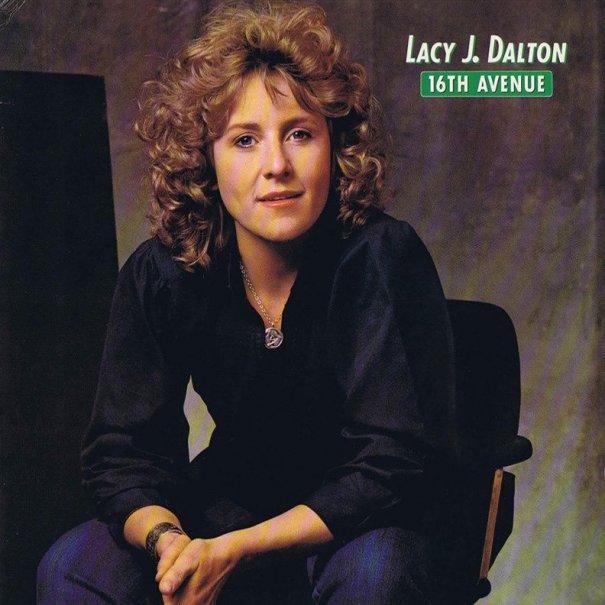
Today’s next song from the music library collection is ’16th Avenue’ – Lacy J Dalton. I came across it reading Badfinger’s Powerpop blog which features a dizzying array of excellent music from various genres. He has kindly allowed me to reblog his original post since I knew I couldn’t do the song justice like he had. Also I believe ‘Bad’ is from Nashville where the famous 16th avenue is located.
I remember this song as a teenager and have never grown tired of it. It’s a salute to the unheralded songwriters. This song means a lot me because I have talked to a few songwriters that this song was about. Back in the 1980s, Nashville wasn’t the clean tourist spot that it has turned into now. I saw many songwriters trying to hawk their songs to anyone that would listen. Many did live out of their car (and still do) or with anyone who would take them. Many gambled their lives to achieve their dreams. Some made it but most had to find their way back home.
A songwriter by the name of Thom Schuyler wrote the song the same year he moved to Nashville. He knew a lot of the songwriters that were around and the song rang true to many of them.
As a preadolescent, high octane, emotionally fragile youngen, I’m glad I had Bruce Springsteen in my corner. There was a small band of us at school who cherished his music. We felt through his music we could sidestep some of those landmines in middle school. You see, he had already loved and lost. He was someone much older than us and had got out the other end and was telling us stories of what he had seen and learnt growing up. I’m looking forward to seeing the new movie about to hit cinemas called Blinded By the Light which is reflective of what I’m talking about.
4th Of July, Asbury Park (Sandy), the second track from his second studio album The Wild, the Innocent & the E Street Shuffle released in 1973 is one of my favourite pre-Born to Run songs. Even today when I hear him confess so meekly, ‘Sandy, that waitress I was seeing lost her desire for me‘ floors me every time. As if that wasn’t enough he professes: ‘I spoke with her last night, she said she won’t set herself on fire for me anymore.’ Ouch!
She worked that joint under the boardwalk, she was always the girl you saw bopping down the beach with the radio
The kids say last night she was dressed like a star in one of them cheap little seaside bars, and I saw her parked with lover boy out on the Kokomo
I like how the writer Ariel Swartley interpreted the lyrics: ‘The narrator is something of an “adolescent loser … [who’s] ruining his chances with the girl: he can’t stop telling her about the humiliations, about the girls who led him on, about the waitress that got tired of him.”
I always found it a wistful love ballad set in an irresistibly romantic atmosphere. It evokes such powerful imagery nearly overflowing the senses with a deep and rich tapestry of characters and warm settings. Robert Santelli in his book Greeting from E Street described 4th of July as “the perfect musical study of the Jersey Shore boardwalk culture.”
Interesting trivia about 4th of July (wikipedia):
* Springsteen wanted a children’s choir to sing on it, but they did not show up for the session.
* Van Morrison’s influence can be heard in this song, as “4th of July, Asbury Park (Sandy)” closely parallels his romanticization of Belfast
* No singles were released from The Wild, the Innocent & the E Street Shuffle. “Sandy” would, however, along with “Rosalita (Come Out Tonight)”, become fan favorites from the album.
*The “Madam Marie” mentioned in the song was a real-life fortune teller on the Asbury Park boardwalk named Marie Castello, who died June 27, 2008, aged 93.
The year was 1995. Scorsese, De Niro, & Pesci teamed up in CASINO (and GOODFELLAS in 1990) and De Niro & Pacino in HEAT. And now all four have finally come together in Scorsese’s ‘The Irishman’. Arguably the greatest cast of a crime drama in living memory and perhaps the most highly anticipated crime movie since Scorsese’s The DEPARTED. The trailer above has just been released and is set for a US release date of September 27, 2019.
Below is a video of comedian Sebastian working on the set with this mega-cast in The Irishman:
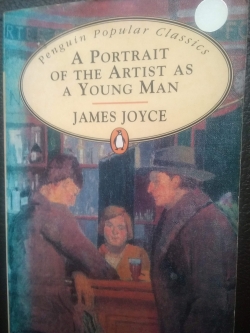
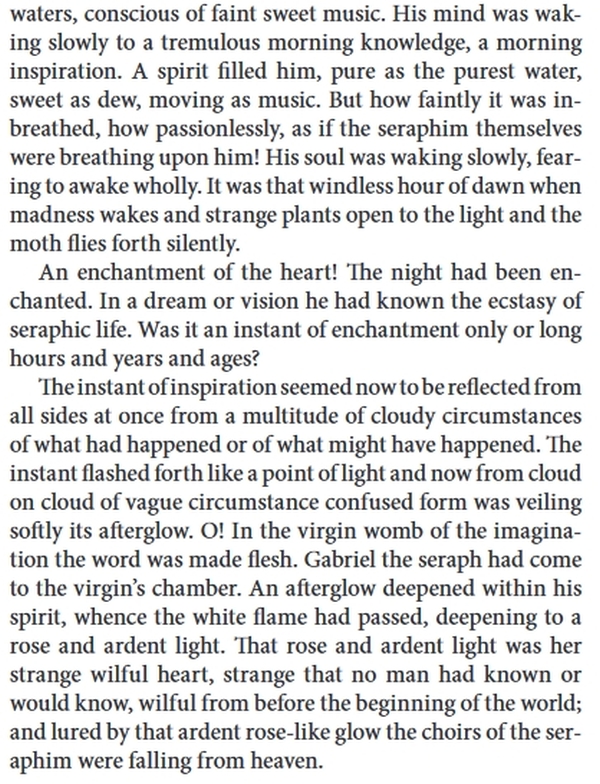
I thought it nigh impossible someone could adequately describe the spirit and unfettered freedom the instant upon waking in the morning just prior to awakening wholly, but I believe James Joyce in A Portrait of the Artist as a Young Manhas done it.
Portrait is about the intellectual awakening of a young man Stephen Dedalus, an alter ego of the author James Joyce. I find it challenging reading as it uses techniques of the Modernist style (described as a self-conscious break from traditional ways of writing) that were very popular in the late 19th and early 20th century. As the wikipedia page describes it: ‘….dispensing with strict realism and making extensive use of free indirect speech that allows the reader to peer into Stephen’s developing consciousness‘. Joyce would fully embrace this style in his masterpiece Ulysses; a book I am still daunted to read if Portrait is anything to go by. Interestingly, I found To the Lighthouse by Virginia Woolf which also employs this stream of consciousness / modernist method a more satisfying read which I posted about here.
Despite my difficulty engaging with Portrait there are some spectacular passages which I noted down so I could come back to them. One of them is Joyce’s description about early morning inspiration. Without further or do ladies and gentlemen I present to you – James Joyce from Portrait of the Artist as a Young Man:
Anyone that has followed my blog for some time is probably aware that I am a Bob Dylan fan. There are varying degrees of Bob Dylan appreciation ranging from those who listen occasionally to his greatest hits package all the way across to the stark raving loonies who count ‘2 x 2’ a guilty listening pleasure. Throw away the keys, I’m in with that lot!
2 x 2 is a track off his critically scorned Under the Red Sky album which was released September 10, 1990. If the universally despised ‘Wiggle Wiggle’ had been left off it, I suspect it may not have been so widely panned although Dylan echoed critic’s complaints saying that the recording was rushed due in part to his Travelling Wilbury commitments. Anyway, it was considered a disappointing follow up to his critically acclaimed Oh Mercy album. He’s played 2 x 2 just 4 times in concert – all in 1992. Lamentably the original studio recording is unavailable online (edited: below is the original), but I found below an outtake from the studio sessions.
2 x 2 is one of a handful of tracks from the album seemingly rooted in children’s nursery rhymes. According to wikipedia: ‘The album is dedicated to “Gabby Goo Goo”, later explained to be a nickname for Dylan’s four-year-old daughter. This has led to the popular assumption that the album’s more childlike songs were for her entertainment, something that has never been confirmed nor denied by Dylan.’
One by one, they followed the sun One by one, until there were none Two by two, to their lovers they flew Two by two, into the foggy dew Three by three, they danced on the sea Four by four, they danced on the shore Five by five, they tried to survive Six by six, they were playing with tricks
I enjoy listening to 2 x 2 much more so now than when I first listened to the record. It possesses this weird mythical symbolism within a Judaeo-christian substrate. Compare and contrast these verses if you will:
How many paths did they try and fail? How many of their brothers and sisters lingered in jail? How much poison did they inhale? How many black cats crossed their trail?
Seven by seven, they headed for heaven Eight by eight, they got to the gate Nine by nine, they drank the wine Ten by ten, they drank it again
Not exactly a nursery rhyme for the very timid, is it?
If you would like to read more about the interpretation of 2 x 2 you can check out Tony Attwood’s blog called Untold Dylan. He writes about Clinton Heylin’s account of how Dylan changed the last stanzas amidst recording reflecting a more cyclical and panpsychism interpretation as opposed to a ‘thy will be done’ old testament interpretation. This is demonstrated in the outtake below which ends with the following:
One by one Thy will be done Two by two I’m telling it true Three by three, why can’t you see Four by four you’ve seen it before.
In the actual studio release version it ends:
One by one, they follow the sun Two by two, to another rendezvous
(Looking for) the Heart of Saturday Night comes from Tom’s second studio album called The Heart of Saturday Night. It was released 10 months after I was born in October 1974 which makes Tom pretty frickin’ old. Not really, he’s just 69 years young. I last saw him appear in the Coen Brother’s latest movie The Ballad of Buster Scruggs. Not only is he arguably the most original singer songwriter in contemporary music history he’s also a pretty fine actor as seen by his memorable performance in his ‘gold mining’ vignette in this Coen’s western about ‘death’.
I would consider myself a relative newcomer to Tom’s music although my music library is peppered with Tom’s songs. This music project will provide an ideal opportunity to dig a little deeper and engage with people who may be more attuned with his background and discography. I wrote a short post about Tom many moons ago about his appearance on Dave Letterman’s show where he described New York City: ‘It’s like a big ship and the water’s on fire’. Anyone who isn’t familiar with Tom Waits should check that performance out to see the type of artist we are dealing with here. It’s an other-wordly performance and the interview is a ‘real hoot’. It’s almost impossible to put a definitive label on Tom because he is just so inventive and original. Probably the best I could find is the Rolling Stone’s: ‘urban romantic poet’. I’ve also got a penchant for ‘minstrel of the downtrodden’.
(Looking for) the Heart of Saturday Night is a more subdued melancholic piece about the familiar places Tom liked to visit in his early works- the bar, the cocktail lounges, the smokey places he play at. As Janet Maslin from the Village voice put it “It demands to be listened to after hours, when that cloud of self-pitying gloom has descended and the vino is close at hand”. But she was hardly enamored with it calling it ‘boozy vertigo’!
Apart from with the Beats like Keroac and Ginsberg I often associate Tom in this era with Charles Bukowski particularly his screenplay ‘Barfly’, ‘Notes of a Dirty Old Man’ and ‘Post Office’. Waits, of course was a huge admirer of Bukowski having narrated his poems and using a text on one of his albums.
Tell me is the crack of the pool balls, neon buzzin’?
Telephone’s ringin’, it’s your second cousin
Is it the barmaid that’s smilin’ from the corner of her eye?
Magic of the melancholy tear in your eye
Makes it kind of quiver down in the core
‘Cause you’re dreamin’ of them Saturdays that came before
And now you’re stumblin’
You’re stumblin’ onto the heart of Saturday night
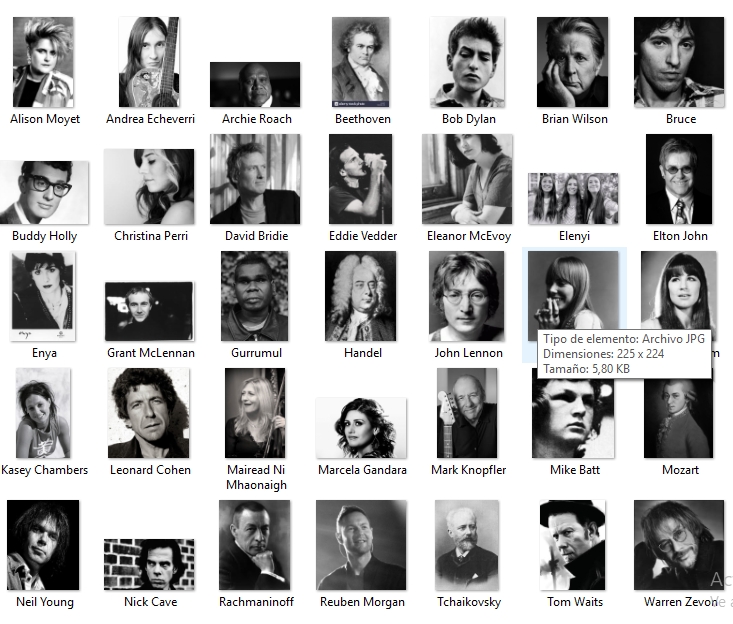
This project is literally all my life in the making, in the sense I have always felt compelled to safe-keep songs (even when I was a little tacker) that made an impact on me. The montage above captures those artists which have had the biggest bang for buck. I imagine given my music library currently houses 1222 songs this project of writing three song articles per week may take in the vicinity of 10 years to complete not including new songs which come to my attention.
Since I was very young, perhaps just after I heard Catch the Wind (Donovan) on the Wonder Years (see my post on that) I had this insatiable desire to replicate in real life what these songs meant. I failed more than I succeeded, but they remain ‘The Logos’ of sorts coalescing to form a divine-animated-universal principle pervading everything.






 Observation Blogger