Fyodor Pavlovich (FP): ‘…I’d put an end to that little monastery of yours. Take all this mysticism and abolish it at once all over the Russian land, and finally bring all the fools to reason. And think how much silver, how much gold would come into the mint!‘
Ivan: ‘But why abolish it?‘
FP: ‘To let the truth shine forth sooner, that’s why‘.
Ivan: ‘But if the truth shines forth , you will be the first to be robbed and then……abolished‘.
FP: ‘Bah! You’re probably right. Ah, what an ass I am.‘
Fyodor Pavlovich suddenly cried, slapping himself lightly on the forehead.
FP: ‘ Well then, Alyoshka, in that case let your little monastery stand. And we intelligent people will keep warm and sip cognac.’
– The Brothers Karamazov – Fyodor Dostoevsky
The only way I could describe reading Russian author Fyodor Dostoevsky it is like putting a mirror up to your soul. I often find when people refer to the soul it often has a dualistic emphasis and interpreted with rose-tinted glasses. Rather your soul which Dostoevsky’s writing probes is scarred beyond recognition and malevolent at its core, but their remaining a spark of goodness therein.
There is a crack, a crack in everything
That’s how the light gets in – Leonard Cohen – Anthem
It is the realisation of when you see yourself in one or more of the characters, and you don’t like what it says about you. This kind of exposure to one’s self can be very painful and extremely humbling. It is often these uncomfortable journeys into the murky waters of our souls which can serve as opportune times to make reassessments about truly what drives us and how we approach life’s inevitable challenges. Our worldviews, in fact our entire direction in life, can shift as a result of this experience.
As I alluded to in a previous post – The Art of Disagreeing, Jordan Peterson summed up so powerfully why Dostoevsky is the absolute model of a true intellectual:
‘(Dostoevsky) when he sets up two ideas to go to war he embodies both sets of ideas and the most powerful characters he can imagine. You can see two parts of Dostoevsky fighting it out in the book. So he was at war inside and he put those parts of him in those characters and let them just go at it’.
In the playing out of this war in his mind (and our minds) Dostoevsky seems to be tackling the fundamental question of human existence–how best to live one’s life–in a truly engaging way. As one Good Read‘s reviewer Rawley put it about The Brothers Karamazov:
Dostoevsky articulates, better than anyone, how human beings really are what I would call “walking contradictions”. Perhaps all of our struggles in life boil down to the reality that we desire contradictory things, simultaneously. If you like your novels with good character development, this is the masterwork. Dostoevsky’s characters are more real, more human, than any other. At different points along the way, you will identify with them, sympathize with them, curse them, agonize over them, celebrate them. You will be moved.
After having devoured Dostoevsky’s Crime and Punishment, I am now well into his other epic masterpiece The Brothers Karamazov which not unlike the former I am floored by this dense philosophical work. It won’t be the first and last time I have read these books. I will be coming back to them often I suspect.
To conclude this post, I feel it most befitting to present the following video of why you should read Crime and Punishment:
https://www.youtube.com/watch?v=Vtkv3-endYc






 From
From 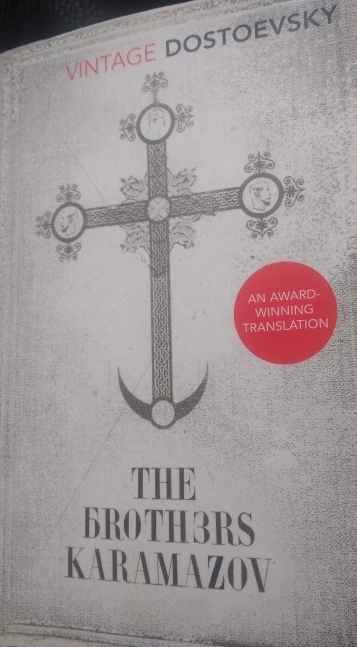


 Observation Blogger