|
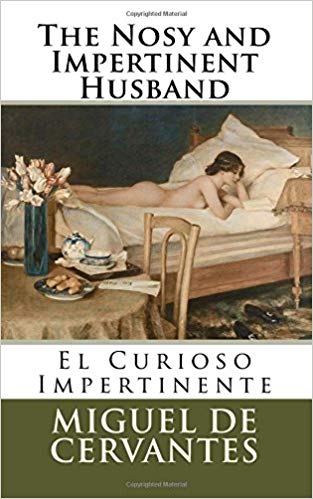
‘In Florence, a rich and famous city of Italy, in the province called Tuscany, there dwelt two rich and principal gentlemen called Anselmo and Lothario, which two were so great friends, as they were named for excellency, and by antonomasia, by all those that knew them, the Two Friends. They were both bachelors, and much of one age and manners; all which was of force to make them answer one another with reciprocal amity. True it is that Anselmo was somewhat more inclined to amorous dalliance than Lothario, who was altogether addicted to hunting. But when occasion exacted it, Anselmo would omit his own pleasures, to satisfy his friend’s; and Lothario likewise his, to please Anselmo. And by this means both their will were so correspondent, as no clock could be better ordered that were their desires. Anselmo being at last deeply enamoured of a principal and beautiful young lady of the same city, called Camilla, being so worthily descended, and she herself of such merit therewithal, as he resolved (by the consent of his friend Lothario, without whom he did nothing) to demand her of her parents for wife; and did put his purpose in execution; and Lothario himself was the messenger, and concluded the matter so to his friend’s satisfaction, as he was shortly after put in possession of his desires; and Camilla so contented to have gotten Anselmo, as she ceased not render Heaven and Lothario thanks, by whose means she had obtained so great a match. The first days, as all marriage days are wont to be merry, Lothario frequented, according to the custom, his friend Anselmo’s house, endeavouring to honour, feast, and recreate him all the ways he might possibly. But after the nuptials were finished, and the concourse of strangers, visitations, and congratulations somewhat ceased, Lothario also began to be somewhat more slack that he wonted in going to Anselmo his house, deeming it (as it is reason that all discreet men should) not so convenient to visit or haunt so often the house of his friend after marriage as he would, had he still remained a bachelor. For although true amity neither should nor ought to admit the least suspicion, yet notwithstanding a married man’s honour is so delicate and tender a thing, as it seems it may be sometimes impaired, even by very brethren; and how much more by friends? Anselmo noted the remission of Lothario, and did grievously complain thereof, saying that, if he had wist by marriage he should thus be deprived of his dear conversation, he would never have married; and that since through the uniform correspondency of them both being free, they had deserved the sweet title of the Two Friends, that he should not now permit (because he would be noted circumspect without any other occasion) that so famous and pleasing a name should be lost; and therefore he requested him (if it were lawful to use such a term between them two) to return and be master of his house, and come and go as he had done before his marriage, assuring him that his spouse Camilla had no other pleasure and will, than that which himself pleased she should have; and that she, after having known how great was both their friendships, was not a little amazed to see him become so strange.
‘To all these and many other reasons alleged by Anselmo, to persuade Lothario to frequent his house, he answered with so great prudence, discretion, and wariness, as Anselmo remained satisfied of his friend’s good intention herein; and they made an agreement between them two, that Lothario should dine at his house twice a week, and the holy days besides. And although this agreement had passed between them, yet Lothario purposed to do that only which he should find most expedient for his friend’s honour, whose reputation he tendered much more dearly than he did his own; and was wont to say very discreetly, that the married man, unto whom Heaven had given a beautiful wife, ought to have as much heed of his friends which he brought to his house, as he should of the women friends that visited his wife; for that which is not done nor agreed upon in the church or market, nor in public feasts or stations (being places that a man cannot lawfully hinder his wife from frequenting sometimes at least) are ofttimes facilitated and contrived in a friend’s or kinswoman’s house, whom perhaps we never suspected. Anselmo on the other side affirmed, that therefore married men ought every one of them to have some friend who might advertise them of the faults escaped in their manner of proceeding; for it befalls many times, that through the great love which the husband bears to his wife, either he doth not take notice, or else he doth not advertise her, because he would not offend her to do or omit to do certain things, the doing or omitting whereof might turn to his honour or obloquy; to which things, being advertised by his friend, he might easily apply some remedy. But where might a man find a friend so discreet, loyal, and trusty as Anselmo demands? I know not truly, if not Lothario: for he it was that with all solicitude and care regarded the honour of his friend; and therefore endeavoured to clip and diminish the number of the days promised, lest he should give occasion to the idle vulgar, or to the eyes of vagabonds and malicious men to judge any sinister thing, viewing so rich, comely, noble, and qualified a young man as he was, to have so free access into the house of a woman so beautiful as Camilla. For though his virtues and modest carriage were sufficiently able to set a bridle to any malignant tongue, yet notwithstanding he would not have his credit, nor that of his friends, called into any question; and therefore would spend most of the days that he had agreed to visit his friend, in other places and exercises; yet feigning excuses so plausible, as his friend admitted them for every reasonable. And thus the time passed on in challenges of unkindness of the one side, and lawful excuses of the other.
‘It so fell out, that, as both the friends walked on a day together in a field without the city, Anselmo said to Lothario these words ensuing: “I know very well, friend Lothario, that among all the favours which God of His bounty hath bestowed upon me by making me the son of such parents, and giving to me with so liberal a hand, both the goods of nature and fortune; yet as I cannot answer Him with sufficient gratitude for the benefits already received, so do I find myself most highly bound unto Him above all others, for having given me such a friend as thou art, and so beautiful a wife as Camilla, being both of you such pawns, as if I esteem you not in the degree which I ought, yet do I hold you as dear as I may. And yet, possessing all those things which are wont to be the all and some that are wont and may make a man happy, I live notwithstanding the most sullen and discontented life of the world, being troubled, I know not since when, and inwardly wrested with so strange a desire, and extravagant, form the common use of others, as I marvel at myself, and do condemn and rebuke myself when I am alone, and do labour to conceal and cover mine own desires; all which hath served me to as little effect, as if I had proclaimed mine own errors purposely to the world. And seeing that it must finally break out, my will is, that it be only communicated to the treasury of thy secret; hoping by it and mine own industry, which, as my true friend, thou wilt use to help me, I shall be quickly freed from the anguish it causeth, and by thy means my joy and contentment shall arrive to the pass that my discontents have brought me through mine own folly.”
‘Lothario stood suspended at Anselmo’s speech, as one that could not imagine to what so prolix a prevention and preamble tended; and although he revolved and imagined sundry things in his mind which he deemed might afflict his friend, yet did he ever shoot wide from the mark which in truth it was; and that he might quickly escape that agony, wherein the suspension held him, said that his friend did notable injury to their amity, in searching out wreathings and ambages in the discovery of his most hidden thoughts to him, seeing he might assure himself certainly, either to receive counsels of him how to entertain, or else remedy and means how to accomplish them.
‘“It is very true,” answered Anselmo, “and with that confidence I let thee to understand, friend Lothario, that the desire which vexeth me is a longing to know whether my wife Camilla be as good and perfect as I do account her, and I cannot wholly rest satisfied of this truth, but by making trial of her, in such sort as it may give manifest argument of the degree of her goodness, as the fire doth show the value of gold; for I am of opinion, O friend, that a woman is of no more worth or virtue than that which is in her, after she hath been solicited;1 and that she alone is strong who cannot be bowed by the promised, gifts, tears, and continual importunities of importunate lovers. For what thanks is it,” quoth he, “for a woman to be good, if nobody say or teach her ill? What wonder that she be retired and timorous, if no occasion be ministered to her of dissolution, and chiefly she that knows she hath a husband ready to kill her for the least argument of lightness? So that she which is only good for fear or want of occasion, will I never hold in that estimation, that I would the other solicited and pursued, who notwithstanding, comes away crowned with the victory. And therefore, being moved as well by these reasons as by many other which I could tell you, which accredit and fortify mine opinion, I desire that my wife Camilla do also pass through the pikes of those proofs and difficulties, and purify and refine herself in the fire of being requested, solicited, and pursued, and that by one whose worths and valour may deserve acceptance in her opinion; and if she bear away the palm of the victory, as I believe she will, I shall account my fortune matchless, and may brag that my desires are in their height, and will say that a strong woman hath fallen to my lot, of whom the wise man saith, ‘Who shall find her?’ And when it shall succeed contrary to mine expectation, I shall, with the pleasure that I will conceive to see how rightly it jumps with mine opinion, bear very indifferent[ly] the grief which in all reason this so costly a trial must stir in me. And presupposing that nothing which thou shalt say to me shall be available to hinder my design, or dissuade me from putting my purpose in execution, I would have thyself, dear friend Lothario, to provide thee to be the instrument that shall labour this work of my liking, and I will give thee opportunity enough to perform the same, without omitting anything that may further thee in the solicitation of an honest, noble, wary, retired, and passionless woman.
‘“And I am chiefly moved to commit this so hard an enterprise to thy trust, because I know that, if Camilla be vanquished by thee, yet shall not the victory arrive to the last push and upshot, but only to that of accounting a thing to be done, which shall not be done for many good respects. So shall I remain nothing offended, and mine injury concealed in the virtue of thy silence; for I know thy care to be such in matters concerning me, as it shall be eternal, like that of death. And therefore if thou desirest that I may lead a life deserving that name, thou must forthwith provide thyself to enter into this amorous conflict, and that not languishing or slothfully, but with that courage and diligence which my desire expecteth, and the confidence I have in our amity assureth me.”
‘These were the reasons used by Anselmo to Lothario, to all which he was so attentive, as, until he ended, he did not once unfold his lips to speak a word save those which we have above related; and seeing that he spoke no more, after he had beheld him a good while, as a thing that he had never before, and did therefore strike him into admiration and amazement, he said, “Friend Anselmo, I cannot persuade myself that the words you have spoken be other than jests, for, had I thought that thou wert in earnest, I would not have suffered thee to pass on so far, and by lending thee no ear would have excused this tedious oration. I do verily imagine that either thou dost not know me, or I thee; but not so, for I know thee to be Anselmo, and thou that I am Lothario. The damage is, that I think thou art not the Anselmo thou was wont to be, and perhaps thou deemest me not to be the accustomed Lothario that I ought to be; for the things which thou hast spoken are not of that Anselmo my friend, nor those which thou seekest ought to be demanded of that Lothario, of whom thou hast notice. For true friends ought to prove and use their friends, as the poet said, usque ad aras, that is, that they should in no sort employ them or implore their assistance in things offensive unto God; and if a Gentile was of this opinion in matters of friendship, how much greater reason is it that a Christian should have that feeling, specially knowing that the celestial amity is not to be lost for any human friendship whatsoever. And when the friend should throw the bars so wide, as to set heavenly respects apart, for to compliment with his friend, it must not be done on light grounds, or for things of small moment, but rather for those whereon his friend’s life and honour wholly depend. Then tell me now, Anselmo, in which of these two things art thou in danger, that I may adventure my person to do thee a pleasure, and attempt so detestable a thing as thou dost demand? None of them truly, but rather dost demand, as I may conjecture, that I do industriously labour to deprive thee of thine honour and life together, and, in doing so, I likewise deprive myself of them both. For if I must labour to take away thy credit, it is most evident that I despoil thee of life, for a man without reputation is worse than a dead man, and I being the instrument, as thou desirest that I should be, of so great harm unto thee, do not I become likewise thereby dishonoured, and by the same consequence also without life? Hear me, friend Anselmo, and have patience not to answer me until I have said all that I think, concerning that which thy mind exacteth of thee; for we shall have after leisure enough, wherein thou mayst reply, and I have patience to listen unto thy reasons.”
‘“I am pleased,” quoth Anselmo; “say what thou likest.” And Lothario prosecuted his speech in this manner: “Methinks, Anselmo, that thou art now of the Moors’ humours, which can be no means be made to understand the error of their sect, neither by citations of the Holy Scripture, nor by reasons which consist in speculations of the understanding, or that are founded in the Articles of the Faith, but must be won by palpable examples, and those easy, intelligible, demonstrative, and doubtless, by mathematical demonstrations, which cannot be denied. Even as when we say, ‘If from two equal parts we take away two parts equal, the parts that remain are also equal.’ And when they cannot understand this, as in truth they do not, we must demonstrate it to them with our hands, and lay it before their eyes, and yet for all this nought can avail to win them in the end to give credit to the verities of our religion; which very terms and manner of proceeding I must use with thee, by reason that the desire which is sprung in thee doth so wander and stray from all that which bears the shadow only of reason, as I doubt much that I shall spend my time in vain, which I shall bestow, to make thee understand thine own simplicity, for I will give it no other name at this present; and, in good earnest, I was almost persuaded to leave thee in thine humour, in punishment of thine inordinate and unreasonable desire, but that the love which I bear towards thee doth not consent I use to thee such rigour, or leave thee in so manifest a danger of thine own perdition. And, that thou mayst clearly see it, tell me, Anselmo, hast not thou said unto me, that I must solicit one that stands upon her reputation; persuade an honest woman; make proffers to one that is not passionate or engaged; and serve a discreet woman? Yes, thou hast said all this. Well, then, if thou knowest already that thou hast a retired, honest, unpassionate, and prudent wife, what seekest thou more? And, if thou thinkest that she will rest victorious, after all mine assaults, as doubtless she will, what better titles wouldst thou after bestow upon her, than those she possesseth already? Either it proceeds, because thou dost not think of her as thou sayst, or else because thou knowest not what thou demandest. If thou dost not account her such as thou praisest her, to what end wouldst thou prove her? But rather, as an evil person, use her as thou likest best. But, if she be as good as thou believest, it were an impertinent thing to make trial of truth itself. For, after it is made, yet it will still rest only with the same reputation it had before. Wherefore, it is a concluding reason, that, to attempt things, whence rather harm may after result unto us than good, is the part of rash and discourseless brains; and principally when they deal with those things whereunto they are not compelled or driven, and that they see even afar off, how the attempting the like is manifest folly. Difficult things are undertaken for God, or the world, or both. Those that are done for God are the works of the saints, endeavouring to lead angels’ lives, in frail and mortal bodies. Those of the world are the travels and toils of such as cross such immense seas, travel through so adverse regions, and converse with so many nations, to acquire that which we call the goods of fortune. And the things acted for God and the world together are the worthy exploits of resolute and valorous martial men, which scarce perceive so great a breach in the adversary wall, as the cannon bullet is wont to make; when, leaving all fear apart, without making any discourse, or taking notice of the manifest danger that threatens them, borne away, by the wings of desire and honour, to serve God, their nation and prince, do throw themselves boldly into the throat of a thousand menacing deaths which expect them.
‘“These are things wont to be practised; and it is honour, glory, and profit to attempt them, be they never so full of inconveniences and danger; but that which thou sayst thou will try and put in practice shall never gain thee God’s glory, the goods of fortune, or renown among men; for, suppose that thou bringest it to pass according to thine own fantasy, thou shalt remain nothing more contented, rich, or honourable than thou art already; and, if thou dost not, then shalt thou see thyself in the greatest misery of any wretch living; for it will little avail thee then to think that no man knows the disgrace befallen thee, it being sufficient both to afflict and dissolve thee that thou knowest it thyself. And, for greater confirmation of this truth, I will repeat unto thee a stanza of the famous poet Luigi Tansillo, in the end of his first part of St. Peter’s Tears, which is:
|
“‘The grief increaseth, and withal the shame
In Peter when the day itself did show:
And though he no man sees, yet doth he blame
Himself because he had offended so.
For breasts magnanimous, not only tame,
When that of others they are seen, they know;
But of themselves ashamed they often be,
Though none but Heaven and earth their error see.’
|
So that thou canst not excuse thy grief with secrecy, be it never so great, but rather shall have continual occasion to weep, if not watery tears from thine eyes, at least tears of blood from thy heart, such as that simple doctor wept, of whom our poet makes mention, who made trial of the vessel, which the prudent Reynaldos, upon maturer discourse, refused to deal withal. And, although it be but a poetical fiction, yet doth it contain many hidden morals, worthy to be noted, understood, and imitated; how much more, seeing that by what I mean to say now, I hope thou shalt begin to conceive the great error which thou wouldest wittingly commit.
‘“Tell me, Anselmo, if Heaven or thy fortunes had made thee lord and lawful possessor of a most precious diamond, of whose goodness and quality all the lapidaries that had viewed the same would rest satisfied, and that all of them would jointly and uniformly affirm that it arrived in quality, goodness, and fineness to all that to which the nature of such a stone might extend itself, and that thou thyself didst believe the same without witting anything to the contrary; would it be just that thou shouldest take an humour to set that diamond between an anvil and a hammer, and to try there by very force of blows whether it be so hard and so fine as they say? And further: when thou didst put thy design in execution, put the case that the stone made resistance to thy foolish trial, yet wouldest thou add thereby no new value or esteem to it. And if it did break, as it might befall, were not then all lost? Yes, certainly, and that leaving the owner, in all men’s opinion, for a very poor ignorant person. Then, friend Anselmo, make account that Camilla is a most precious diamond as well in thine as in other men’s estimation; and it is no reason to put her in contingent danger of breaking, seeing that, although she remain in her integrity, she cannot mount to more worth than she hath at the present; and if she faltered, or did not resist, consider even at this present what state you would be in then, and how justly thou mightest then complain of thyself for being cause of her perdition and thine own. See how there is no jewel in the world comparable to the modest and chaste woman, and that all women’s honour consists in the good opinion that’s had of them; and seeing that of thy spouse is so great, as it arrives to that sum of perfection which thou knowest, why wouldest thou call this verity in question? Know, friend, that a woman is an imperfect creature, and should therefore have nothing cast in her way to make her stumble and fall, but rather to clear and do all encumbrances away out of it, to the end she may without impeachment run with a swift course to obtain the perfection she wants, which only consists in being virtuous.
‘“The naturalists recount that the ermine is a little beast that hath a most white skin; and that, when the hunters would chase him, they use this art to take him. As soon as they find out his haunt, and places where he hath recourse, they thwart them with mire and dirt, and after when they descry the little beast, they pursue him towards those places which are defiled; and the ermine, espying the mire, stands still, and permits himself to be taken and captived in exchange of not passing through the mire, or staining of his whiteness, which it esteems more than either liberty or life. The honest and chaste woman is an ermine, and the virtue of chastity is whiter and purer than snow; and he that would not lose it, but rather desires to keep and preserve it, must proceed with a different style from that of the ermine. For they must not propose and lay before her the mire of the passions, flatteries, and services of importunate lovers; for perhaps she shall not have the natural impulse and force, which commonly through proper debility is wont to stumble, to pass over those encumbrances safely; and therefore it is requisite to free the passage and take them away, and lay before her the clearness of virtue and the beauty comprised in good fame. The good woman is also like unto a bright and clear mirror of crystal, and therefore is subject to be stained and dimmed by every breath that toucheth it. The honest woman is to be used as relics of saints, to wit, she must be honoured but not touched. The good woman is to be kept and prized like a fair garden full of sweet flowers and roses, that is held in estimation, whose owner permits no man to enter and trample or touch his flowers, but holds it to be sufficient that they, standing afar off, without the rails, may joy at the delightful sight and fragrance thereof. Finally I will repeat certain verses unto thee that have now come to my memory, the which were repeated of late in a new play, and seem to me very fit for the purpose of which we treat. A prudent old man did give a neighbour of his that had a daughter counsel to keep and shut her up; and among many other reasons he used these:
|
‘“Truly woman is of glass;
Therefore no man ought to try
If she broke or not might be,
Seeing all might come to pass.
Yet to break her ’tis more easy;
And it is no wit to venture
A thing of so brittle temper,
That to solder is so queasy.
And I would have all men dwell
In this truth and reason’s ground,
That if Danaes may be found,
Golden showers are found as well.’
|
‘“All that which I have said to thee, Anselmo, until this instant, hath been for that which may touch thyself; and it is now high time that somewhat be heard concerning me. And if by chance I shall be somewhat prolix, I pray thee to pardon me; for the labyrinth wherein thou hast entered, and out of which thou wouldest have me to free thee, requires no less. Thou holdest me to be thy friend, and yet goest about to despoil me of mine honour, being a thing contrary to all amity; and dost not only pretend this, but dost likewise endeavour that I should rob thee of the same. That thou wouldest deprive me of mine is evident; for when Camilla shall perceive that I solicit her as thou demandest, it is certain that she will esteem of me as of one quite devoid of wit and discretion, seeing I intend and do a thing so repugnant to that which the being that him I am, and thine amity do bind me unto. That thou wouldest have me rob thee thereof is as manifest, for Camilla, seeing me thus to court her, must imagine that I have noted some lightness in her which lent me boldness thus to discover unto her my depraved desires, and she holding herself to be thereby injured and dishonoured, her disgrace must also concern thee as a principal part of her. And hence springs that which is commonly said, That the husband of the adulterous wife, although he know nothing of her lewdness, nor hath given any occasion to her to do what she ought not, nor was able any way to hinder by diligence, care, or other means, his disgrace, yet is entitled with a vituperious name, and is in a manner beheld by those that know his wife’s malice with the eyes of contempt; whereas they should indeed regard him rather with those of compassion, seeing that he falls into that misfortune not so much through his own default, as through the light fantasy of his wicked consort. But I will show thee the reason why a bad woman’s husband is justly dishonoured and contemned, although he be ignorant and guiltless thereof, and cannot prevent, nor hath given to it any occasion. And be not grieved to hear me, seeing the benefit of the discourse shall redound unto thyself.
‘“When God created our first parent in the terrestrial paradise, the Holy Scripture saith, That God infused sleep into Adam, and that, being asleep, He took out a rib of his left side, of which He formed our mother Eve; and as soon as Adam awaked and beheld her, he said, ‘This is flesh of my flesh, and bone of my bones.’ And God said, ‘For this cause shall a man leave his father and his mother, and they shall be two in one flesh.’ And then was the divine ordinance of matrimony first instituted, with such indissoluble knots as only may be by death dissolved. And this marvellous ordinance is of such efficacy and force, as it makes two different persons to be one very flesh; and yet operates further in good married folk; for, although they have two souls, yet it makes them to have but one will. And hence it proceeds, that by reason the wife’s flesh is one and the very same with her husband’s, the blemishes or defects that taint it do also redound into the husband’s, although he, as we have said, have ministered no occasion, to receive that damage. For as all the whole body feels any pain of the foot, head, or any other member, because it is all one flesh, and the head smarts at the grief of the ankle, although it hath not caused it; so is the husband participant of his wife’s dishonour, because he is one and the selfsame with her. And by reason that all the honours and dishonours of the world are, and spring from flesh and blood, and those of the bad woman be of this kind, it is forcible, that part of them fall to the husband’s share, and that he be accounted dishonourable, although he wholly be ignorant of it. See then, Anselmo, to what peril thou dost thrust thyself by seeking to disturb the quietness and repose wherein thy wife lives, and for how vain and impertinent curiosity thou wouldest stir up the humours which are now quiet in thy chaste spouse’s breast. Note how the things thou dost adventure to gain are of small moment; but that which thou shalt lose so great, that I must leave it in his point, having no words sufficiently able to endear it. But if all that I have said be not able to move thee from thy bad purpose, thou mayst well seek out for some other instrument of thy dishonour and mishaps; for I mean not to be one, although I should therefore lose thine amity, which is the greatest loss that might any way befall me.”
‘Here the prudent Lothario held his peace, and Anselmo remained so confounded and melancholy, as he could not answer a word to him for a very great while. But in the end he said, “I have listened, friend Lothario, to all that which thou hast said unto me, with the attention which thou hast noted, and have perceived in thy reasons, examples, and similitudes the great discretion wherewithal thou art endowed, and the perfection of amity that thou has attained; and do also confess and see, that, if I follow not thine advice, but should lean unto mine own, I do but shun the good, and pursue the evil. Yet oughtest thou likewise to consider, how herein I suffer the disease which some women are wont to have, that long to eat earth, lime, coals, and other far worse and loathsome things event to the very sight, and much more to the taste; so that it is behooveful to use some art by which I may be cured; and this might be easily done by beginning only to solicit Camilla, although you did it but weak and feignedly; for I know she will not be so soft and pliable as to dash her honesty about the ground at the first encounters, and I will rest satisfied with this commencement alone; and thou shalt herein accomplish the obligation thou owest to our friendship, by not only restoring me to life, but also by persuading me not to despoil myself of mine honour. And thou art bound to do this, for one reason that I shall allege, to wit, that I being resolved, as indeed I am, to make this experience, thou oughtest not to permit, being my friend, that I should bewray my defect herein to a stranger, whereby I might very much endanger my reputation, which thou labourest so much to preserve; and though thy credit may lose some degrees in Camilla’s opinion whilst thou dost solicit her, it matters not very much, or rather nothing; for very shortly, when we shall espy in her the integrity that we expect, thou mayst open unto her sincerely the drift of our practice, by which thou shalt again recover thine impaired reputation. Therefore seeing the adventure is little, and the pleasure thou shalt do me by the enterprising thereof so, too great, I pray thee do it, though ever so many encumbrances represent themselves to thee, for, as I have promised, with only thy beginning, I will rest satisfied and account the cause concluded.”
‘Lothario perceiving the firm resolution of Anselmo, and nothing else occurring forcibly dissuasive, not knowing what other reasons to use that might hinder this his precipitate resolution, and noting withal how he threatened to break the matter of this his indiscreet desires to a stranger, he determined, to avoid greater inconvenience, to give him satisfaction, and perform his demand, with purpose and resolution to guide the matter so discreetly, as, without troubling Camilla’s thoughts, Anselmo should rest contented; and therefore entreated him not to open his mind to any other, for he himself would undertake that enterprise, and begin it whensoever he pleased. Anselmo embraced him very tender and lovingly, and gratified him as much for that promise as if he had done him some very great favour, and there they accorded between them that he should begin the work the very next day ensuing; for he would give him place and leisure to speak alone with Camilla, and would likewise provide him of money, jewels, and other things to present unto her. He did also admonish him to bring music under her windows by night, and write verses in her praise, and if he would not take the pains to make them, he himself would compose them for him. Lothario promised to perform all himself, yet with an intention far wide from Anselmo’s; and with this agreement they returned to Anselmo’s house, where they found Camilla somewhat sad and careful, expecting her husband’s return, who had stayed longer abroad that day than his custom. Lothario, leaving him at his house, returned to his own, as pensive as he had left Anselmo contented, and knew not what plot to lay, to issue out of that impertinent affair with prosperous success. But that night he bethought himself of a manner how to deceive Anselmo without offending Camilla; and so the next day ensuing he came to his friend’s house to dinner, where Camilla, knowing the great good-will her husband bore towards him, did receive and entertain him very kindly with the like. Dinner being ended, and the table taken up, Anselmo requested Lothario to keep Camilla company until his return, for he must needs go about an affair that concerned him greatly, but would return within an hour and a half. Camilla entreated her husband to stay, and Lothario proffered to go and keep him company; but nothing could prevail with Anselmo, but rather he importuned his friend Lothario to remain and abide there till his return, because he must go to treat of a matter of much consequence. He also commanded Camilla not to leave Lothario alone until he came back. And so he departed, leaving Camilla and Lothario together at the table, by reason that all the attendants and servants were gone to dinner.
‘Here Lothario saw that he was entered into the lists which his friend so much desired, with his adversary before him, who was with her beauty able to overcome a whole squadron of armed knights; see then if Lothario had not reason to fear himself; but that which he did at the first onset was to lay his elbow on the arm of his chair and his hand on his cheek, and, desiring Camilla to bear with his respectlessness therein, he said he would repose a little whilst he attended Anselmo’s coming. Camilla answered that she thought he might take his ease better on the cushions of state; and therefore prayed him he would enter into the parlour and lie on them. But he excused himself, and so remained asleep in the same place until Anselmo’s return, who, coming in, and finding his wife in her chamber and Lothario asleep, made full account that, by reason of his long stay, they had time enough both to talk and repose; and therefore expected very greedily the hour wherein his friend should awake, to go out with him and learn what success he had. All succeeded as he wished; for Lothario arose, and both of them went abroad; and then he demanded of him what he desired. And Lothario answered that it seemed not to him so good to discover all his meaning at the first; and therefore had done no other thing at that time than speak a little of her beauty and discretion; for it seemed to him that this was the best preamble he could use to gain by little and little some interest and possession in her acceptance, to dispose her thereby the better to give ear again to his words more willingly, imitating therein the devil’s craft when he means to deceive any one that is vigilant and careful; for then he translates himself into an angel of light, being one of darkness, and laying before him apparent good, discovers what he is in the end, and brings his intention to pass, if his guiles be not at the beginning detected. All this did greatly like Anselmo, who said that he would afford him every day as much leisure, although he did not go abroad; for he would spend the time so at home as Camilla should never be able to suspect his drift.
‘It therefore befel that many days passed which Lothario did willingly overslip, and said nothing to Camilla; yet did he ever soothe Anselmo, and told him that he had spoken to her, but could never win her to give the least argument of flexibility, or make way for the feeblest hope that might be; but rather affirmed that she threatened him that, if he did not repel his impertinent desires, she would detect his indirect proceedings to her husband. “It is well”, quoth Anselmo. “Hitherto Camilla hath resisted words; it is therefore requisite to try what resistance she will make against works. I will give thee to-morrow four thousand crowns in gold, to the end thou mayst offer, and also bestow them on her; and thou shalt have as many more to buy jewels wherewithal to bait her; for women are naturally inclined, and specially if they be fair (be they ever so chaste), to go brave and gorgeously attired; and if she can overcome this temptation, I will remain pleased, and put thee to no more trouble.” Lothario answered, that, seeing he had begun, he would bear his enterprise on to an end, although he made full account that he should depart from the conflict both tired and vanquished. He received the four thousand crowns the next day, and at once with them four thousand perplexities, for he knew not what to invent to lie anew; but concluded finally to tell his friend how Camilla was as inflexible at gifts and promises as at words; and therefore it would be in vain to travail any more in her pursuit, seeing he should do nothing else but spend the time in vain.
‘But fortune, which guided these affairs in another manner, so disposed, that Anselmo, having left Lothario and Camilla alone, as he was wont, entered secretly into a chamber, and through the crannies and chinks did listen and see what they would do; where he perceived that Lothario, in the space of half-an-hour, spoke not a word to Camilla, nor yet would he have spoken, though he had remained there a whole age, and thereupon surmised straight that all that which his friend had told him of Camilla’s answers and his own speech were but fictions and untruths; and that he might the more confirm himself, and see whether it were so, he came forth, and, calling Lothario apart, he demanded of him what Camilla had said, and in what humour she was at the present? Lothario answered, that he meant not ever any more to sound her in that matter; for she replied unto him so untowardly and sharply, as he durst not attempt any more to speak unto her of such things.
‘“Oh,” quoth Anselmo, “Lothario, Lothario! how evil dost thou answer to the affection thou owest me, or to the confidence I did repose in thee? I have stood beholding thee all this while through the hole of that lock, and saw how thou never spokest one word to her. Whereby I do also collect that thou hast not yet once accosted her; and if it be so, as doubtlessly it is, say, why dost thou deceive me? or why goest thou about fraudulently to deprive me of those means whereby I may obtain my desires?” Anselmo said no more, yet what he said was sufficient to make Lothario confused and ashamed, who, taking it to be a blemish to his reputation to be found in a lie, swore to Anselmo that he would from thenceforward so endeavour to please his mind, and tell him no more leasings, as he himself might perceive the success thereof, if he did again curiously lie in watch for him; a thing which he might well excuse, because his most serious labour to satisfy his desire should remove all shadow of suspicion. Anselmo believed him, and that he might give him the greater commodity, and less occasion of fear, he resolved to absent himself from his house some eight days, and go to visit a friend of his that dwelt in a village not far from the city; and therefore dealt with his friend, that he should send a messenger to call for him very earnestly, that, under that pretext, he might find an excuse to Camilla for his departure.
‘O unfortunate and inconsiderate Anselmo! what is that which thou dost? what dost thou contrive? or what is that thou goest about? Behold, thou workest thine own ruin, laying plots of thine own dishonour, and giving order to thy proper perdition. Thy wife Camilla is good; thou dost possess her in quiet and peaceable manner; no man surpriseth thy delights, her thoughts transgress not the limits of her house. Thou art her heaven on earth, and the goal to which her desires aspire. Thou art the accomplishment and sum of her delectation. Thou art the square by which she measureth and directeth her will, adjusting wholly with thine and with that of Heaven. Since then the mines of her honour, beauty, modesty, and recollection bountifully afford thee, without any toil, all the treasures contained in them, or thou canst desire, why wouldst thou dig the earth and seek out new veins and ne’er-seen treasures, exposing thyself to the danger that thy labours may turn to wreck, seeing, in fine, that they are only sustained by the weak supporters of her frail nature? Remember how he that seeks the impossible may justly be refused of that which is possible, according to that which the poet saith:
|
“‘In death for life I seek,
Health in infirmity;
For issue in a dungeon deep,
In jails for liberty,
And in a treachour loyalty.
“‘But envious fate, which still
Conspires to work mine ill,
With heaven hath thus decreed,
That easy things should be to me denied
’Cause I crave the impossible.’”
|
‘Anselmo departed the next day following to the village, telling Camilla, at his departure, that, whilst he was absent, his friend Lothario would come and see to the affairs of his house, and to eat with her, and desired her therefore to make as much of him as she would do of his own person. Camilla, like a discreet and modest woman, was grieved at the order her husband did give to her, and requested him to render how indecent it was that any one should possess the chair of his table, he being absent, and if he did it as doubting her sufficiency to manage his household affairs, that at least he should make trial of her that one time, and should clearly perceive how she was able to discharge matters of far greater consequence. Anselmo replied, that what he commanded was his pleasure, and therefore she had nothing else to do but hold down the head and obey it. Camilla answered, that she would do so, although it was very much against her will. In fine, her husband departed, and Lothario came the next day following to the house, where he was entertained by Camilla very friendly, but would never treat with Lothario alone, but evermore was compassed by her servants and waiting maidens, but chiefly by one called Leonela, whom she loved dearly, as one that had been brought up with her in her father’s house, even from their infancy, and when she did marry Anselmo she brought her from thence in her company.
‘The first three days Lothario spoke not a word, although he might, when the tables were taken up, and that the folk of the house went hastily to dinner, for so Camilla had commanded, and did give Leonela order besides to dine before herself, and that she should still keep by her side; but the girl, who had her fancy otherwise employed in things more pleasing her humour, and needed those hours and times for the accomplishing of them, did not always accomplish so punctually her lady’s command, but now and then would leave her alone, as if that were her lady’s behest. But the honest presence of Camilla, the gravity of her face, and the modesty of her carriage, was such, that it served as a bridle to restrain Lothario’s tongue. But the benefit of Camilla’s many virtues, setting silence to Lothario’s speech, resulted afterward to both their harms; for though the tongue spoke not, yet did his thoughts discourse, and had leisure afforded them to contemplate, part by part, all the extremes of worth and beauty that were cumulated in Camilla, potent to inflame a statue of frozen marble, how much more a heart of flesh! Lothario did only behold her in the time and space he should speak unto her, and did then consider how worthy she was to be loved. And this consideration did by little and little give assaults to the respects which he ought to have borne towards his friend Anselmo; a thousand times did he determine to absent himself from the city, and go where Anselmo should never see him, nor he Camilla; but the delight he took in beholding her did again withhold and hinder his resolutions. When he was alone, he would condemn himself of his mad design, and term himself a bad friend and worse Christian; he made discourses and comparisons between himself and Anselmo, all which did finish in this point, that Anselmo’s foolhardiness and madness were greater than his own infidelity, and that, if he might be as easily excused before God, for that he meant to do, as he would be before men, he needed not to fear any punishment should be inflicted on him for the crime. Finally, Camilla’s beauty and worth, assisted by the occasion which the ignorant husband had thrust into his fists, did wholly ruin and overthrow Lothario his loyalty; and therefore, without regarding any other thing than that to which his pleasure conducted him, about three days after Anselmo’s departure (which time he had spent in a continual battle and resistance of his contending thoughts), he began to solicit Camilla with such trouble of the spirits and so amorous words, as she was strucken almost beside herself with wonder, and made him no other answer, but, arising from the table, flung away in a fury into her chamber. But yet, for all this dryness, Lothario his hope (which is wont evermore to be born at once with love) was nothing dismayed, but rather accounted the more of Camilla, who, perceiving that in Lothario which she never durst before to imagine, knew not what she might do; but, it seeming unto her to be a thing neither secure nor honest, to give him occasion or leisure to speak unto him again, determined to send one unto her husband Anselmo the very same night, as indeed she did, with a letter to recall him home to her house. The subject of her letter was this.
|







 Stacey was raised in the San Fernando Valley but born in San Francisco, where she left part of her heart. She has worked on a dude ranch, coached gymnastics, and captions for the hearing impaired. Her work has appeared in several literary magazines in New York and L.A., including Ginosko and The Rag. She is currently working on the sequel to her novel Day for Night. She lives in “beautiful downtown Burbank,” as Johnny Carson used to say, with her husband who is also a writer.